|
Monthly newsletter from the City of Chula Vista
Sustainability Team
| | |
Volunteers Needed—Beautify Chula Vista Day Is Almost Here!
Saturday, October 18 • 8:00 a.m. – 12:00 p.m.
There’s less than two weeks left until Chula Vista’s biggest community cleanup event—Beautify Chula Vista Day! Don’t miss your chance to roll up your sleeves and make a real impact on our city’s parks, streets, and neighborhoods.
For 22 years, this beloved annual event—hosted by the City of Chula Vista and the South Bay Sustainable Communities Network—has brought residents together to remove litter, erase graffiti, and restore our shared spaces. Last year, 400 dedicated volunteers made a huge difference. Now it’s your turn to help keep Chula Vista beautiful and thriving!
Why Volunteer?
A few hours of your time helps build a cleaner, greener, and more connected community. Plus, students can earn community service hours while giving back.
What to Know:
• Pre-registration is required—sign up now before spots fill up!
• Wear sturdy shoes and outdoor work clothes.
• Bring gloves, a refillable water bottle, and snacks or lunch.
Don’t wait—register today and be part of something meaningful. Together, we can make this year’s Beautify Chula Vista Day the biggest and most impactful yet!
Register and learn more here
Questions?
environmentalservices@chulavistaca.gov
(619) 691-5122
Let’s beautify Chula Vista—together!
| | |
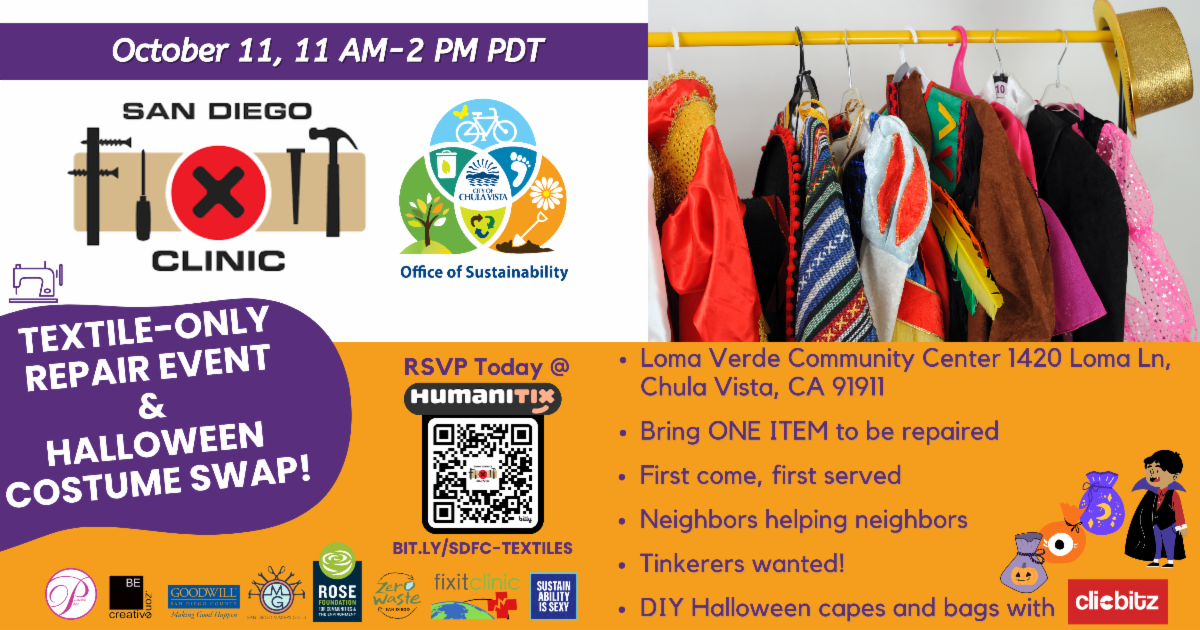
Fix, Swap, and Celebrate a Sustainable Halloween!
Halloween is right around the corner — the perfect time to refresh your costume sustainably! Join the San Diego Fixit Clinic on Friday, October 11, from 11 AM to 2 PM at the Loma Verde Community Center (1420 Loma Lane, Chula Vista, CA 91911).
This textile-only repair event invites you to learn hands-on skills from expert Fixit Clinic Coaches who will help you repair, mend, or upcycle your favorite clothing and costumes. Bring your creativity and curiosity for these family-friendly activities that teach the art of repair and reuse:
- Mend your favorite outfit
- Create a Halloween bag or costume cape with Clicbitz
- Swap and style your Halloween costume
Participation is free, but space is limited—spots are available on a first-come, first-served basis. Don’t miss this chance to make your Halloween both spooky and sustainable!
Register or learn more here
| | |
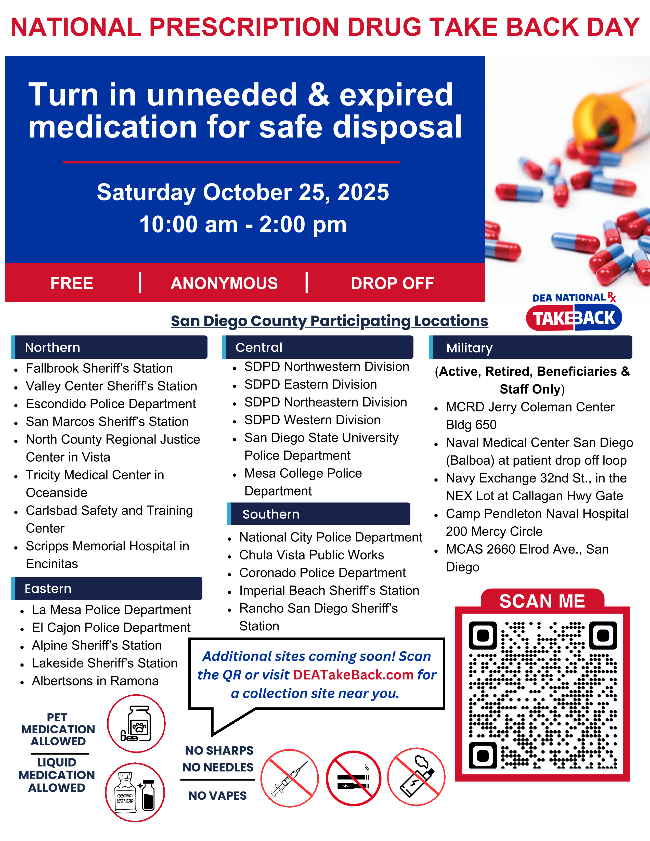
Drug Take Back Event
The bi-annual Drug Take Back event on October 25, a joint venture with the Drug Administration and the City of Chula Vista, helps residents to dispose of unused and expired medication. Too often, unused prescription drugs find their way into the wrong hands which is dangerous and often tragic. That is why it is always great to see thousands of people from across the country, clean out their medicine cabinets and turn in - safely and anonymously – expired, unneeded, or unused prescription drugs.
Date & Time: Saturday, October 25, from 10 am to 2 pm
Location: City Chula Vista’s Public Works yard located at 1800 Maxwell Road, Chula Vista. Bring your unwanted medication. If you have sharps (needles) you can drop those off at our Household Hazardous Waste Facility, which is located next to the take back event location. See you there!
| | |
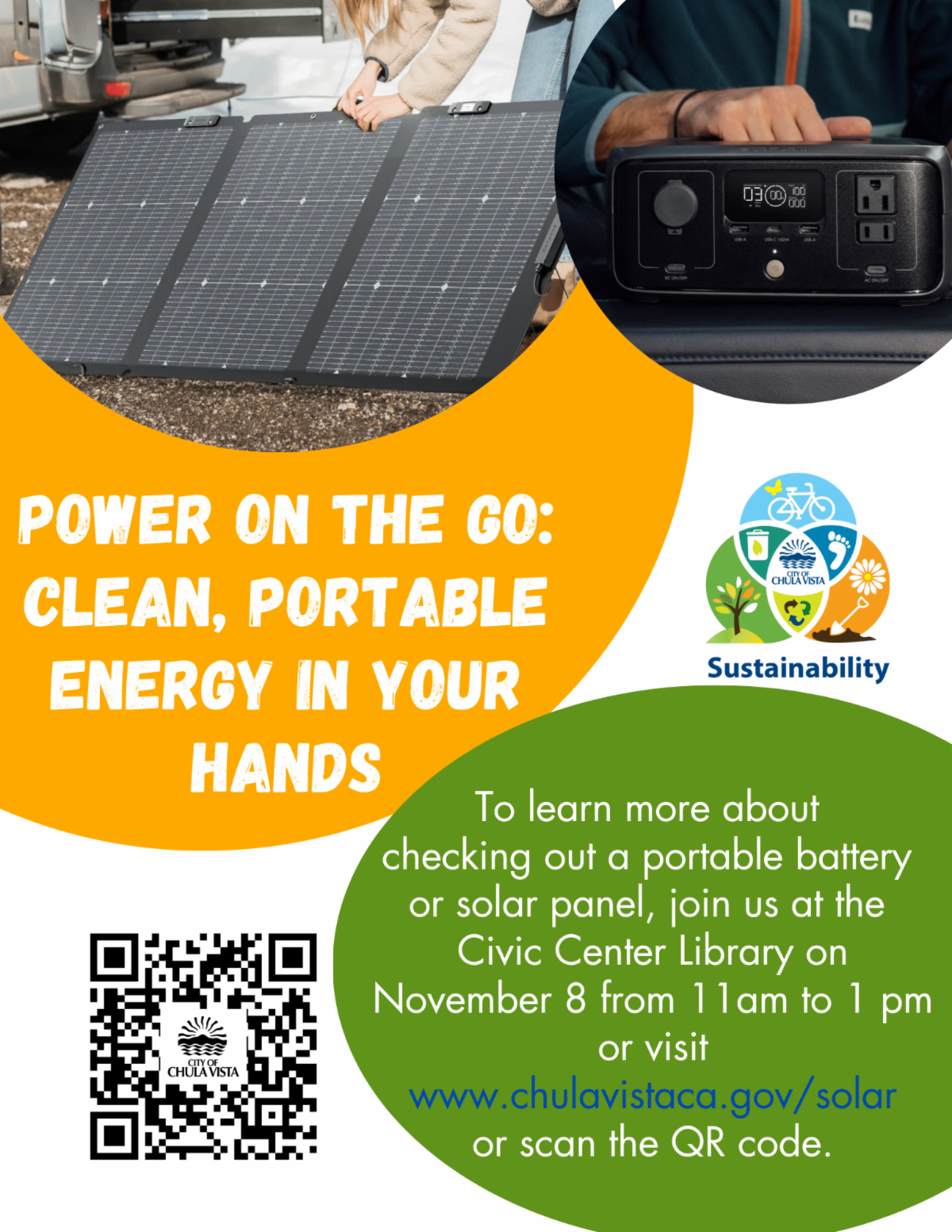
Free Event: Launch of Portable Battery and Solar Panels Lending at Library November 8
Exciting news - the City of Chula Vista is expanding what resources library members can borrow by adding portable solar panels and batteries to the library’s collection. The small batteries can be used to power some devices beyond the electricity grid and can provide emergency backup if a blackout takes place. When paired with the solar panels, the batteries can also create their own clean and free electricity. To celebrate this addition to the library, we will be hosting an event at the Civic Center Library on November 8 from 11 am to 1 pm. Attendees will get a chance to view and learn about the new devices while enjoying inflatable archery and free popcorn, both powered by clean energy from batteries. These devices were purchased with a grant from San Diego Community Power to promote clean energy. For more information about the new devices, please visit www.chulavistaca.gov/solar. The website will also have a link for more information about checking out the devices when they are available.
| | |
Chula Vista Fire Department Utilizes Portable Solar Panels and Batteries in the Wilderness
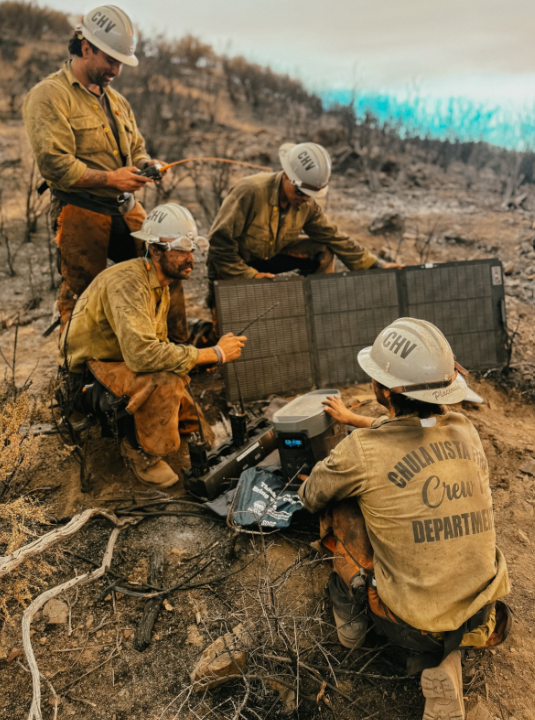
Chula Vista Fire Department Crew 1 recently used a solar powered battery bank loaned by the Chula Vista Sustainability Division to charge their radios in the field. Crew 1 was fighting the Gifford Fire (August 2-17, 2025) in an extremely remote location in the Los Padres National Forest San Rafael Wilderness, requiring the crew to be flown in by helicopter. The loaned battery bank allows crews to charge their radios, phones and satellite hub without utilizing a generator in the wilderness.
This new portable solar/battery program, led by the Sustainability Division, allows for the deployment of clean energy for a variety of city operations including recharging landscaping equipment, powering items like inflatable movie screens and popcorn machines at community events and recharging devices during public safety emergencies, like pictured here. The portable solar panels and battery packs were made available through a grant from San Diego Community Power. Stay tuned for some exciting new public battery and solar programs, coming soon.
| | |
Chula Vista Energy Benchmarking
Do you own or manage a multi-family, commercial or industrial building in Chula Vista that is 20,000 square feet or greater? If so, you are required to report your energy use data to the City of Chula Vista according to the Building Energy Saving Ordinance.
Reporting energy use, otherwise known as benchmarking, helps building owners understand how they can improve their energy efficiency to save money and reduce greenhouse gas emissions.
For questions, please visit chulavistaca.gov/benchmark or email benchmark@chulavistaca.gov.
| | |
City of Chula Vista Receives Platinum Diamond Award
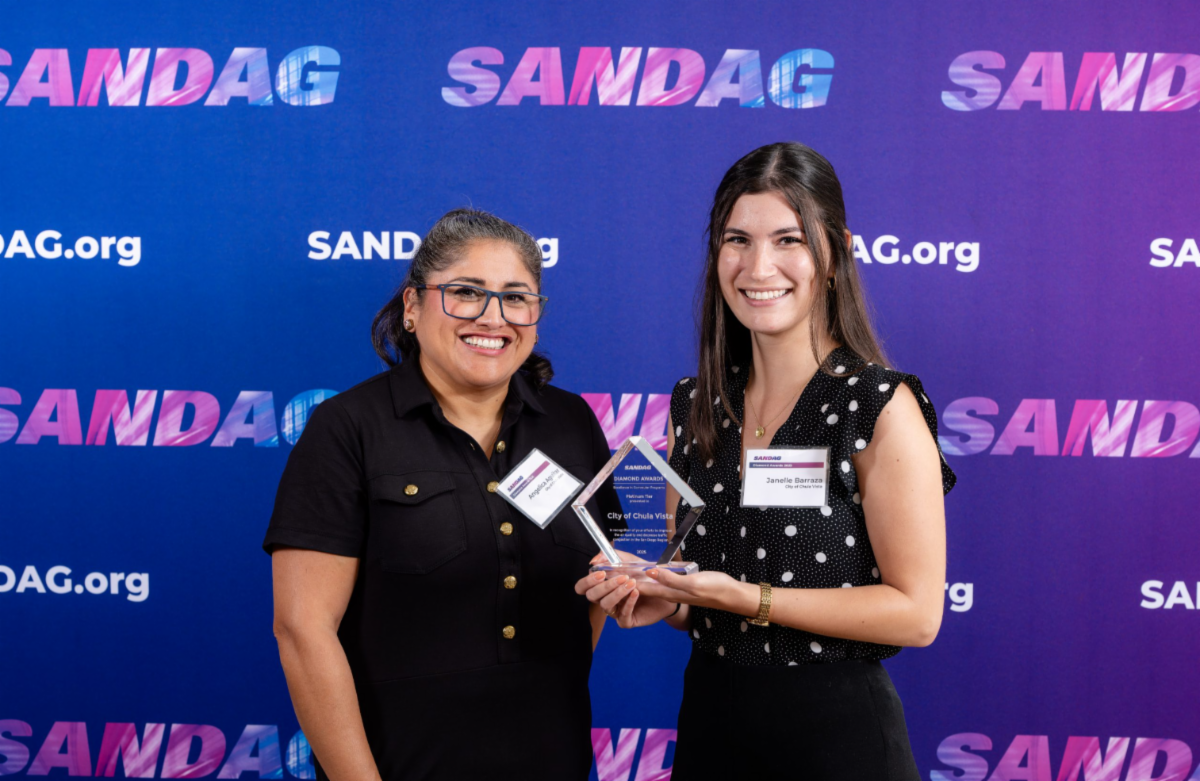
At the annual Diamond Awards reception, SANDAG recognizes organizations in their Employer Commuter program from across the San Diego region for their accomplishments in promoting sustainable commute choices in the workplace. By offering their employees a variety of transportation options like vanpools, public transit, carpools, emergency ride home reimbursements, bike lockers, and more, organizations can earn points to receive recognition in one of four tiers: Bronze, Silver, Gold, or Platinum. The City of Chula Vista was awarded Platinum Status Diamond Award to recognize our work in promoting sustainable transportation.
Platinum-tier recipients were responsible for:
- Reducing close to 718,000 vehicle miles traveled
- Reducing close to 89,000 tons of CO2 emissions
To learn more about SANDAG’s diamond award click here. For questions, email jbarraza@chulavistaca.gov.
| | |
Growing Green in Chula Vista - How to Care for Drought Tolerant Plants
Chula Vista's climate is the perfect place to embrace drought tolerant landscaping. Whether you have planted native sages or succulents, these plants save water and help support the local wildlife and keep your yard beautiful all year-round. But “low water” does not mean “no care”. Here are some ways that you can help your drought tolerant plant thrive:
Watering
- Watering the plant in the morning reduces evaporation and gives plants time to soak up the water before a day full of sun.
- Deep Infrequent watering is key - water thoroughly once every 2-3 weeks during the dry months. This will help the roots grow deep and strong.
- Remember, too much water can harm the drought tolerant plant.
Sun and Placement
- Drought tolerant plants love full sun exposure and it is recommended that they have at least 6 hours of sunlight a day.
- For new plants, it is good practice to provide them with shade to help them adjust to the sun so they don't dry out.
Mulch and Maintenance
- Add 2-3 inches of mulch (wood ships, bark, or gravel) around the base of the plants.
- The mulch locks in soil moisture, reduces weeds and regulates the soil temperature
- Keeping the mulch away from the plants stem helps prevent rot.
- It is great practice to trim off dead or damaged branches to keep the plant healthy and pruning will encourage new growth.
- Removing weeds will help the plant get more water and will help the presentation of the plant.
For more information, contact environmentalservices@chulavistaca.gov or 619-691-5122.
| | |
Having a Spooky Eco-Friendly Halloween
As Halloween approaches, it is a perfect time to start thinking about new ways to be sustainable, while still having a fun holiday with friends and family. There is an excess amount of plastic from Halloween, so it is important to reduce that amount as much as we can.
Here are some easy ways to make your Halloween more sustainable:
1. Look Around Your Home Before You Go Shopping
Look around at home for reusable clothing items to create a costume instead of buying brand new items. The most creative costumes are the ones you never expect, so think outside the box! You can even host a costume-swap with your family, or with people in your neighborhood to see what kind of costume combinations you can create.
2. Safer Candy
There is so much plastic that comes from the candy wrappers, so try to buy in bulk for candy that uses minimal wrapping. Also, try to look for natural and ethically-made candy. To reduce plastic even more, use a pillowcase for trick-or-treating.
3. Power of Pumpkins
When carving your pumpkin, roast the seeds or make it into a pie! And after your pumpkin lantern is all done scaring the trick-or-treaters, compost it instead of throwing it into the trash.
4. Sustainable Decorations
There are many ways of using sustainable materials for decorations, such as pumpkins, corn stalks, hay bales, and even leaves, which are all compostable materials. You can also use solar powered lights.
5. Support Local Businesses
Remember to walk throughout your neighborhood instead of driving for trick-or-treating. Also, try to support local farms and businesses for our Halloween needs, such as natural treats and pumpkins.
Have a spooky and sustainable Halloween!
| | |
San Diego Community Power Brings Back Popular Solar and Storage Program
San Diego Community Power (SDCP) announced a program intended to make solar power more affordable for thousands of their ratepayers while strengthening the region's power grid. SDCP, a not-for-profit public agency providing power to nearly a million customers in the county, said its new Solar Battery Savings program is backed by nearly $55 million over the next five years. Some of that funding is dedicated to providing extra financial assistance to purchase solar panels in historically underserved communities.
"With the Solar Battery Savings program launching, we are giving San Diegans more tools to cut energy bills, keep the lights on during outages and build a cleaner and more resilient grid," said County Supervisor Terra Lawson-Remer, chair of the Community Power board of directors. "This program helps us build out our rooftop solar network — and creates lower bills for families, cleaner air for our kids and good-paying jobs for local workers."
The program provides upfront rebates on panels as well as incentives for residential customers who install new solar-plus-storage systems or add batteries to their existing setups. Residents will need to work with a pre-qualified contractor to receive the incentives. A list of qualified contractors and more information can be found at: https://sdcommunitypower.org/solar-battery-savings/
| |
Free EV Test Drive Event October 18 and New Rebate Opportunity!
Are you interested in EVs for your home or business but not sure where to start? Join SDG&E and MAAC for an EV test drive experience at the MAAC Community Center in Chula Vista.
Residential customers can learn about SDG&E’s Pre-Owned EV Rebate Program that provides customers with rebates of up to $4,000 on a used EV.
Business customers can learn about how the SDG&E TEAS program can help your business' electrification goals.
Why Attend?
• Choose from an assortment of EVs to test drive
• Learn about at-home and public charging
• Discover incentives that reduce the cost to purchase or lease an EV
• Chat with local EV owners about their experiences
Click here to Pre-register for the event today and reserve your test drive time.
Location:
MAAC Community Center
1355 Third Ave, Chula Vista 91911
When:
Saturday, October 18, 2025
Time:
10:00 AM – 3:00 PM
| | |
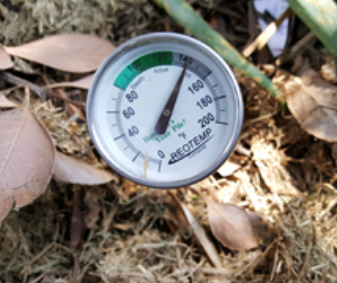
Goal: Zero Contamination in Compost
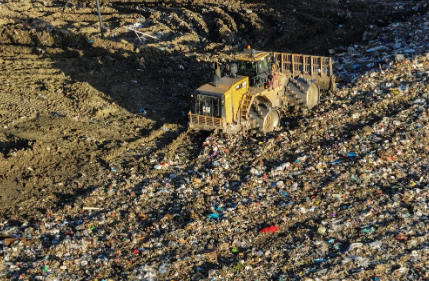
When Republic Services collects your food and yard waste at the curb, it then travels to the composting site at the Otay Sustainability Park where it is ground up and placed into a compost heap. Unfortunately, there is contamination that must be removed before it goes into the heap. The removal of the contamination is done by hand since there is no machinery that can do it well and for a low cost. Ideally, the contamination is removed prior to the grinding.
You can help us to produce top-notch compost! Keep your food and yard waste cart free of non-organic materials such as rocks, cigarette butts, metal, plastics, and ceramics. These items do not break down and therefore contaminate the compost.
| | |
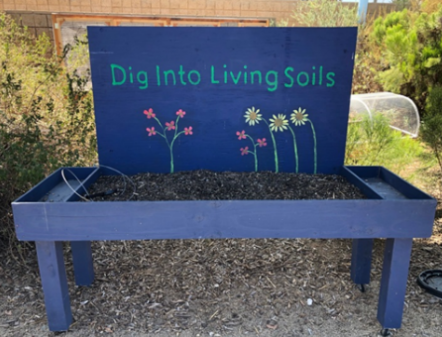
Free Compost for Chula Vista Residents
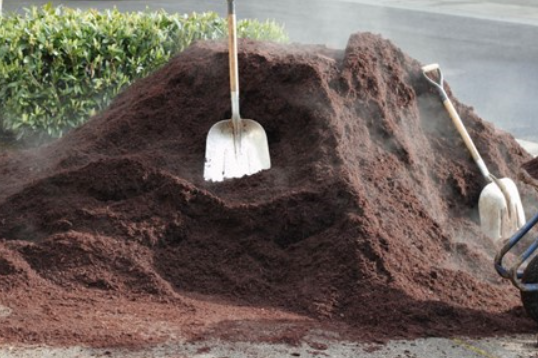
For those of you that missed the City’s free compost event in September, you can attend the next one on November 8, 8:00 am - 12:00 pm at the Otay Landfill (1700 Maxwell Road).
Bring your shovels for loading, containers to fill, and don’t forget the tarps to cover your compost!
All events happen on the 2nd Saturday of the odd numbered months and are posted on the City’s calendar and the events calendar of the City’s Sustainability Division.
| |
|
Master Composter Training Course
This seven-week course provides education and experience to anyone interested in learning the ins and outs about composting and there is no experience required.
Students are given presentations on the many topics that include “bugs” in the compost pile, healthy soils, and several different methods of composting. Two field trips are also included.
The Fall 2025 course is in full swing. If you are interested in our Spring 2026 course, click here to find out more details and to be put on a waiting list.
| | |
Home Composting Workshops
If you can’t wait until next spring to learn about compost, you can attend a workshop at the Living Coast Discovery Center. Home Composting workshops are held at 11:30 AM on Sundays.
Chula Vista residents attending workshops can purchase a Soil Saver compost bin for $35 and can also receive free admission to the Living Coast! Click here to sign up.
For more information on the free compost events or the home composting program click here.
| | |
Gleaning
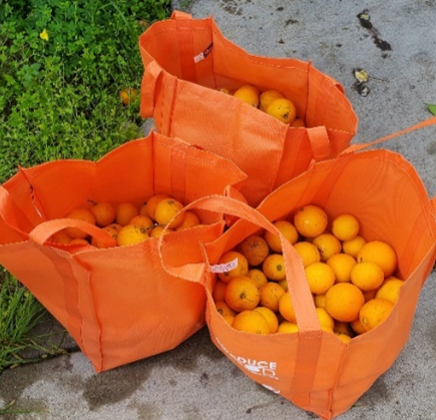
Too much fruit? If you have fruit trees, donate your extra backyard fruit! Reduce the nuisance of rotting fruit attracting rodents and insects. Volunteers will pick the fruit and distribute it to the hungry.
Two Gleaning organizations that can assist are:
| | |
Using Compost to Reduce Incarcerations
The connection between compost and crime isn’t normally obvious. Exception being, of course, that it is truly a crime not to compost food waste. As we all know, a rind is a terrible thing to waste. But there are connections.
Composting is now common practice in many prisons. Statistics from programs such as the Sustainability in Prisons Project in Washington State have shown that exposure to nature and natural systems is a highly effective tool for both improving the well-being of incarcerated individuals, as well as reducing rates of recidivism. Composting is one of the programs that the Sustainability in Prisons Project sponsors.
Beyond prison life, composting is shown to keep formerly incarcerated individuals out of prison and actively participating in related community programs. Besides the successes in reducing recidivism, it promotes personal growth and enhances mental well-being. Engaging with nature through gardening and composting is a proven method for reducing stress and improving mood. This can be particularly impactful in the restrictive environment of a prison, promoting emotional regulation and mental stability. Fortunately, many prisons in California now offer gardening and composting programs and the expectations are that the same positive outcome will be experienced in the reduction in recidivism.
The Garden Project at the San Francisco County Jail reported a recidivism rate of just 24% for its participants, compared to the local average of 55%. Analysis of composting and sustainability programs suggests that based on results from similar programs, a 66% reduction in recidivism is possible. Prison compost programs also foster a positive mindset with the sense of accomplishment that comes from producing something valuable from waste empowers inmates. It shifts their perspective from feeling useless to feeling like a positive contributor to the prison and the planet.
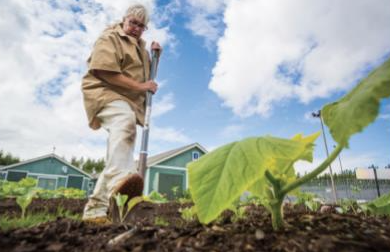
Another perspective and outlook to reduce recidivism: Several studies have looked at what happens in cities when we take derelict lots and bring them back to their natural beauty. You get a range of health benefits including reduced stress, reduced mortality, increased physical activity and improved moods (Kondo, 2018), and a reduction in crime including family violence (Branas 2018; Fleckman, 2025). The Branas study also found that greening urban abandoned lots reduced burglary by 22%, gun violence by 29% and nuisance crimes by 30%. Overall, the study found that crime in general decreased by over 13%.
Compost is highly effective way to green up run-down properties, including vacant lots. It also does its part to reduce any hazards associated with contamination in urban soils. As individuals go back to their communities to apply their knowledge from these programs, it could also lead to employment opportunities, thus providing economic opportunities which can reduce the chance to reoffend.
Involving formerly incarcerated individuals in community beautification fosters a sense of ownership and pride, improving rehabilitation and societal reintegration. It builds community cohesion, enhances public health through green spaces, and boosts the local economy by improving aesthetics and property values. For participants, it offers job skills, a chance for positive community engagement, and a way to demonstrate they are more than their past conviction.
| | |
California’s Landfill Regulation Proposal Tightens Methane Management Rules
The State of California recently released a draft of its updated Landfill Methane Rule. The proposal tightens numerous requirements related to landfill gas collection and control systems, including response times for leaks. The California Air Resources Board (CARB), the agency in charge of the rule, said the changes are in line with state targets intended to drive down methane emissions 40% below 2013 levels by 2030. CARB is scheduled to consider the proposal at an upcoming meeting.
Landfill gas collection and control systems capture all gases, including methane, but sometimes these systems are inefficient. As awareness of methane’s potency as a greenhouse gas has increased, some states have set regulatory thresholds or more stringent efficiency requirements to improve gas collection and avoid releasing methane into the atmosphere. That’s in contrast to federal landfill air emissions requirements, which are based on non-methane organic compounds.
California’s landfill methane rule, adopted in 2010, was the first to put restrictions on landfill emissions based on methane rather than other gases. But in the years since, other states have begun to propose more stringent methane-based requirements that incorporate new technology. States like Oregon, Washington, Maryland, and Colorado have tightened their landfill rules in several ways to capture more greenhouse gas emissions. Those strategies include requiring the installation of gas collection and control systems earlier in a landfill’s life and expanding those systems earlier into active sections. The states have also expanded the acceptance of drones as a suitable method of monitoring a landfill’s surface for emissions leaks.
Colorado is in the advanced stages of implementing its first-ever state regulation for landfill methane, which builds on California’s precedent. California’s current rule, which hasn’t been updated in the 15 years since its adoption, covers 190 public and privately owned landfills. It requires 153 of those facilities to operate a gas collection and control system.
California’s draft landfill methane rule incorporates certain provisions that include requiring operators to promptly fix leaks if they are detected by third-party remote monitoring data. California was among the first states to test aerial and satellite monitoring of landfills and CARB now believes the data collected via those efforts can help catch leaks in hard-to-monitor areas like a landfill’s working face.
The rule will also tighten the timeline by which landfill operators must respond to a leak and it clarifies monitoring requirements for landfills with and without gas collection and control systems. Reacting to new technology in the market, the rule would also require using handheld or drone-mounted laser scanners to identify leaks in inaccessible areas that are currently excluded from monitoring. The rule seeks to encourage the use of continuous monitoring technologies by reducing regulatory barriers and clarifying certain language, as well.
The state’s existing landfill methane rule still includes some provisions that have yet to be adopted at the federal level. These include requiring surface emissions monitors to walk the landfill surface at 25-foot intervals rather than the federally required 100-foot intervals.
Monitoring landfill gas is crucial for public safety and environmental protection, preventing explosive hazards, health risks from toxic components, and controlling greenhouse gas emissions that contribute to climate change. It allows operators to detect gas migration, ensure regulatory compliance, safeguard nearby communities and infrastructure, and identify opportunities to capture gas for renewable energy.
| |
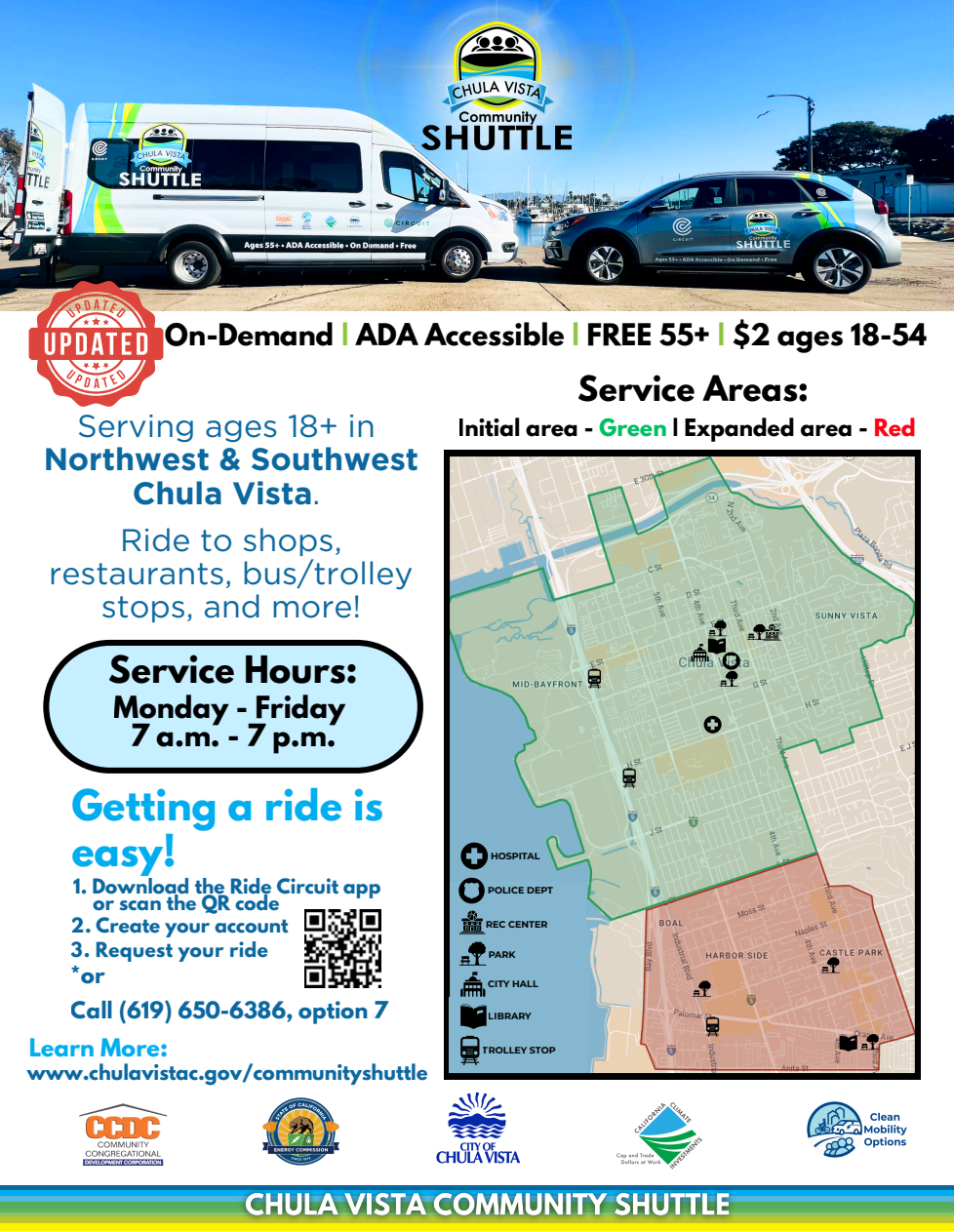
On Demand Accessible Rides: FREE for 55+ · $2 for Under 55
Need a ride? The Chula Vista Community Shuttle is here for you!
Monday - Friday · 7 AM - 7 PM
Now serving all ages in Northwest Chula Vista!
It's easy:
- Download the CIRCUIT RIDE app.
- Set up your account.
- Share your location and drop a pin where you want to go.
Whether you need to get an appointment, visit family and friends, catch the trolley, or grab lunch or happy hour after work in northwest Chula Vista, leave it to us.
The covered service area for the shuttle has recently expanded further south!
To learn more about this service and the newly expanded service area, visit the Chula Vista Community Shuttle website.
| | | | |