New reports explore costs and scalability of Irrigation as a Service business models | |
Two recent DWFI reports provide insights into scalable and sustainable irrigation solutions for smallholder farmers.
Unit economics refers to the revenues and costs of delivering a single unit of a good or service. "The Unit Economics of Irrigation as a Service" report provides insight into the unit economics of irrigation as a service (IaaS), in which farmers can access irrigation equipment and services without owning it outright. The report analyzes diverse IaaS approaches, including those adopted by entrepreneurial farmers, multisided market makers, and dealer subsidiaries. It offers a framework for understanding how these services can achieve both financial viability and broader reach.
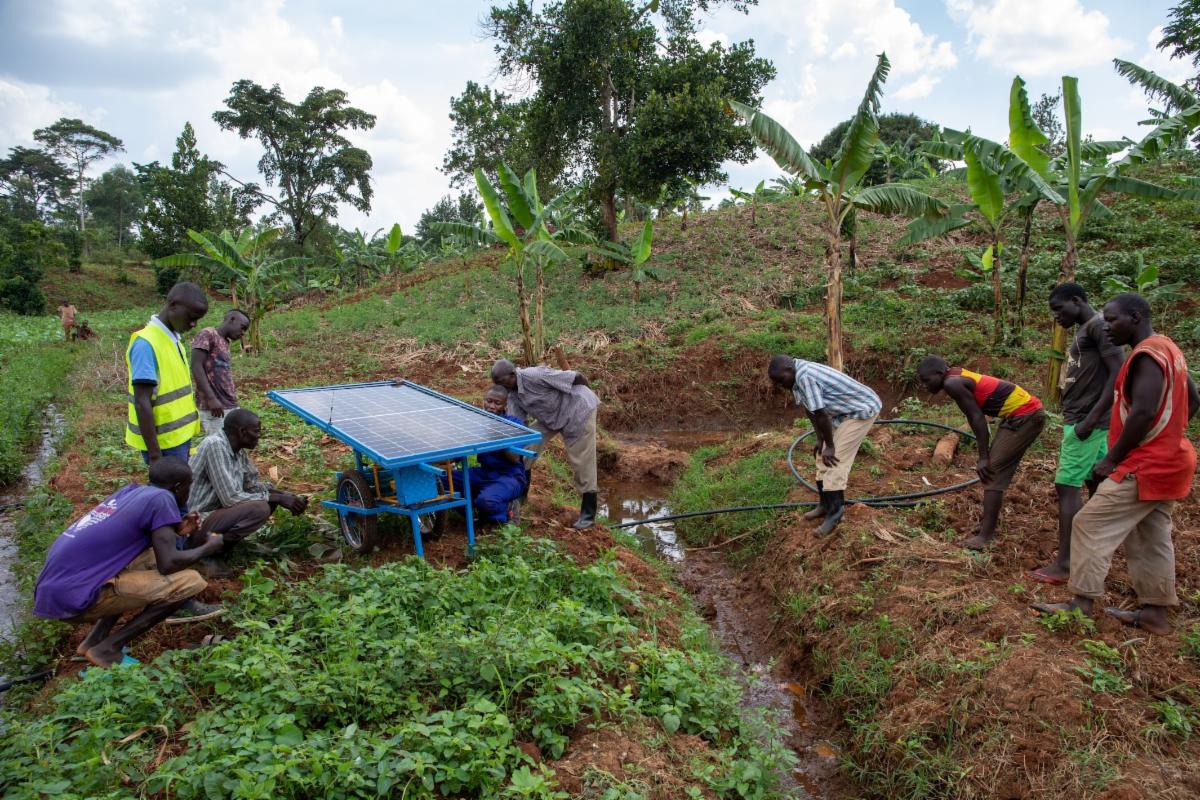
An additional DWFI report, the “Pay-N-Pump Business Model Canvas,” offers an in-depth look at one of these approaches. Pay-N-Pump is an innovative irrigation service provider that offers long-term rentals of solar pumps and mobile irrigation kits, overcoming capital limitations. By combining reliable solar tech, local community engagement, and efficient logistics, Pay-N-Pump makes irrigation–and its benefits–more accessible and affordable for smallholder farmers.
This research informs future investments and strategic collaborations by analyzing various irrigation solutions and complements DWFI’s other IaaS-focused work.
| | |
New Water for Food Podcast episode explores the power of unexpected connections
Episode 45 of the Water for Food Podcast explores the valuable collaborations that can arise from in-person interactions, even in a digital age. Host Frances Hayes, DWFI director of communications and public relations, shares a story that perfectly illustrates the lasting impact of those face-to-face moments, which can lead to unexpected and valuable partnerships.
Adam Keough, program manager with Catholic Relief Services and Treaven Scheideler, a University of Nebraska student, discuss their cross-cultural collaboration, sparked by a chance meeting at a tractor museum during the 2023 Water for Food Global Conference. Adam's team in El Salvador needed hands-on training with mechanized equipment and Treaven, drawing on his own farming experience in Nebraska, provided assistance while taking advantage of a formative learning experience.
| |
|
Conference bridges DWFI research and farmer perspectives on agricultural resilience
At the 2025 Water for Food Global Conference, DWFI Postdoctoral Research Associate Harshanee Jayasekera found a direct link between the "View From the Field" grower panel and her recent work on agricultural resilience.
Both growers on the conference panel and those she interviewed for a fact-finding project stressed the the importance of proactive measures, sustainability, and adaptability in farm operations. Both also touched on the roles of technology, peer-to-peer support, and agricultural producers' access to affordable resources, education and financial support to create a resilient and sustainable future for food production.
| | |
DWFI welcomes eleven new supported students in 2025-2026 academic year
Since it was initiated in 2014, the Daugherty Water for Food Global Institute’s student support program has made more than 150 awards to DWFI Faculty Fellows supporting postdoctoral, graduate and undergraduate students on all four University of Nebraska campuses and invested $4.8 million, most of which has been matched one-to-one by faculty. The awards provide stipends to students working on projects that contribute to the institute’s mission to have a lasting impact on achieving more food security with less pressure on scarce water resources.
Congratulations to the newest round of student support grantees who began their work in Fall 2025 (with one still to be determined):
-
Somdatta Achar, Ph.D. Agronomy, Specialization: Cropping Systems
-
Lucia Bonfanti, Ph.D., Agronomy, Specialization: Crop Physiology and Crop Production
-
Anmol Singh, for a Ph.D. in Agronomy, Specialization: Soil and Water Sciences
-
Katie Liske, for a Ph.D. in NR Sciences
-
Edwin Antonio Ojeda Olivares, for a Ph.D. in Civil and Environmental Engineering
-
Cesar Augusto Gomez Pena, for a Ph.D. in Civil and Environmental Engineering
-
Chi-En Chiang, for a Ph.D. in Biological Systems Engineering
-
Kalynn Meyer, for a Master’s in Agricultural and Biological Systems Engineering
-
Sujani De Silva, for a Ph.D. in Agronomy, Specialization: Soil and Water Sciences
-
Samuel Nshutiyayesu, for a Ph.D. in Agronomy
-
Murilo Rampazzo Favoretto, for a Master's in Agronomy, Specialization: Digital Agriculture
These students join the 22 returning students who will continue their research and receive DWFI funding, bringing the total number of DWFI supported students to 33 total for the 2025-2026 academic year.
| |
|
Ugandan delegation explores partnerships with NU for food, water, and health
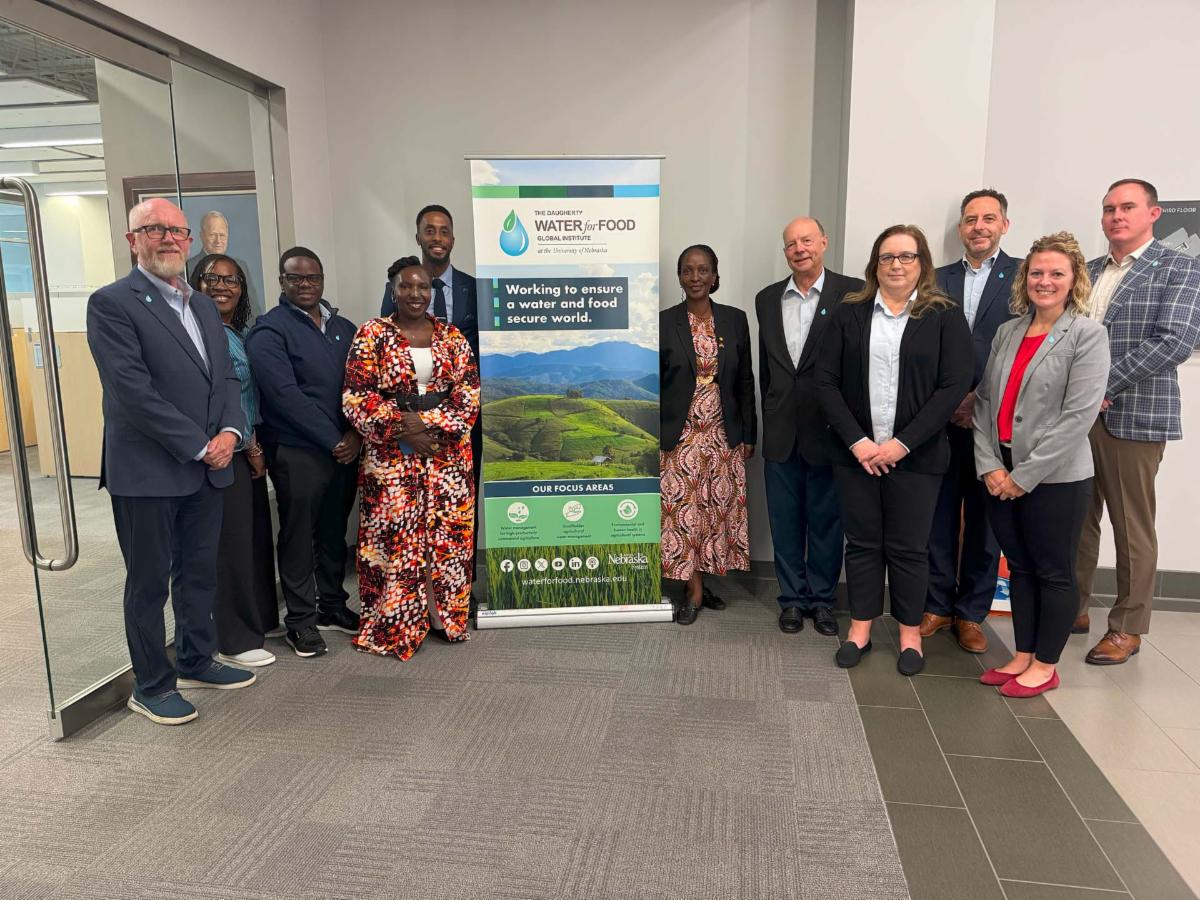
In August 2025, a delegation from the Uganda Embassy, including H.E. Ambassador Robinah Kakonge and Monica Musenero Masanza, state minister of science, technology and innovation for the Government of Uganda, visited the University of Nebraska (NU) to explore partnerships in public health, food security, agriculture, and student exchange.
The group engaged with DWFI to discuss potential collaborative solutions for Uganda’s challenges related to food and water. The discussion centered on DWFI’s current and past work in Uganda and Sub-Saharan Africa on entrepreneurial irrigation, agricultural supply chain development, and integrating nutrition and human health into food and water security initiatives.
During their time in Nebraska, the delegation also met with NU President Jeffrey P. Gold, M.D. and leaders from the Institute of Agriculture and Natural Resources and the University of Nebraska Medical Center.
| |
|
Congratulations to graduating DWFI supported students!
DWFI would like to extend a congratulations to several DWFI supported students who received degrees last month:
-
Daniel Gschwentner, for a Ph.D. Natural Resource Sciences with specialization in Applied Ecology, SNR. Dissertation: A Study of Ice and Fire: Environmental Change Impacts on Lakes of the Nebraska Sandhills. DWFI Faculty Fellow Advisor: Jessica Corman, Assistant Professor, UNL Agronomy & Horticulture, for the project: Looking to the past to understand the future of freshwater in the Sandhills
-
Kaitlin Steinauer, M.S., Geology. DWFI Faculty Fellow Advisor: Irina Filina, Assistant Professor, UNL Earth and Atmospheric Sciences, for the project: Gravity and seismic measurements over Nebraska aquifers to detect seasonal changes in water level
-
Sarah Tucker, Ph.D., UNMC Toxicology, Environmental Health & Occupational Health. DWFI Faculty Fellow Advisor: Kristina Kintziger, Professor of Health & Environment, UNMC Environmental, Agricultural & Occupational Health, for the project: Detection of Poly- and Perfluoroalkyl Substances in Nebraska Drinking Water and Exposure Assessment in Adult Rural and Service Member Populations.
-
Shivendra Srivastava, Ph.D., Water Resources Engineering. DWFI Faculty Fellow Advisor: Tirthankar Roy, Assistant Professor, UNL Civil and Environmental Engineering, for the project: A comprehensive framework to assess flood risk within the context of public health.
-
Gustavo Castro Garcia, Ph.D., Biological Systems Engineering. Dissertation: Evaluation of Performance Characteristics and Groundwater Contamination Risks Associated with On-Farm Swine Carcass Disposal via Composting and Shallow Burial with Carbon. DWFI Faculty Fellow Advisor: Amy Schmidt, Professor, UNL Biological Systems Engineering, for the project: Evaluation of Potential Water Quality and Health Risks Associated with Leachate Produced During On-Farm Livestock Mortality Disposal.
We wish them the best in their future careers!
| |
Trends in nitrate contamination: implications for communities reliant on groundwater for drinking
A recent publication co-authored by DWFI researchers analyzed decades of data from Nebraska's Water Quality Clearinghouse to understand the long-term trends of nitrate levels in the state's groundwater.
In Nebraska, treated community water systems provide more than 80% of drinking water needs. However, about 400,000 Nebraska residents depend on domestic wells, which do not require contaminant testing, for their drinking water. While nitrate concentrations are generally rising across Nebraska, findings show that these changes are not uniform and vary significantly by location and well type. Researchers included Harshanee Jayasekera, DWFI postdoctoral research associate; Siddhi Munde, research data analyst with the Water Climate and Health Program; Dan Snow, director of the Water Sciences Lab; and Renata Rimšaitė, DWFI senior program manager. They found that simple trend analyses can be misleading, so their study uses a more sophisticated approach to account for time-related dependencies.
This research provides a clearer, more accurate picture of nitrate movement, which is crucial for policymakers and water managers in order to strengthen the alignment between agricultural subsidies and incentives with environmental outcomes and enhance sustainable groundwater governance. Understanding these patterns is key to helping communities, especially those in rural communities, plan for the potential costs of water treatment and ensure the long-term resilience of their water supplies.
| | |
Water and Natural Resources Tour ventures west to Arizona in November
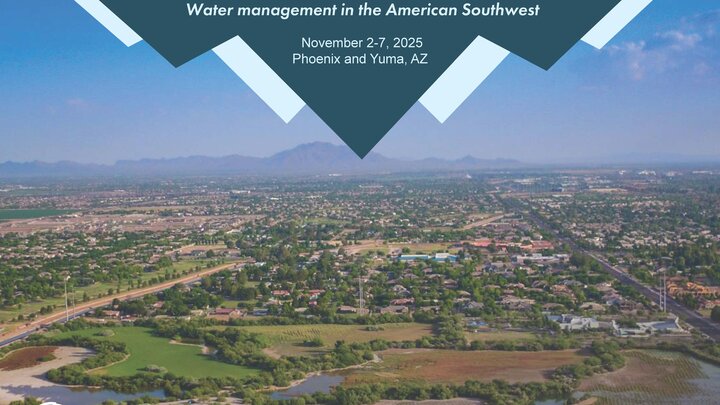
Register now for the 2025 Water and Natural Resources Tour to be held November 2-7, 2025. Join the Nebraska Water Center and Central Nebraska Public Power and Irrigation District to experience urban water management, winter agriculture, and transboundary aquifer management. You’ll go behind the scenes and meet the experts to get a first-hand look at water and natural resources in the American Southwest. This tour has been rescheduled from the original dates of February 2-7, 2025.
$1440 per person, single occupancy room
$1365 per person, double occupancy room
Registration will be open until September 26, 2025. Spaces are limited, so act fast to secure your seat!
The tour is sponsored by the DWFI, the University of Nebraska Institute of Agriculture and Natural Resources, HDR, Lower Platte South Natural Resource District, Olsson, Water Futures Partnership – Nebraska, and Reinke.
| | |
Drought and Health National Workshop hosted by Water, Climate and Health Program
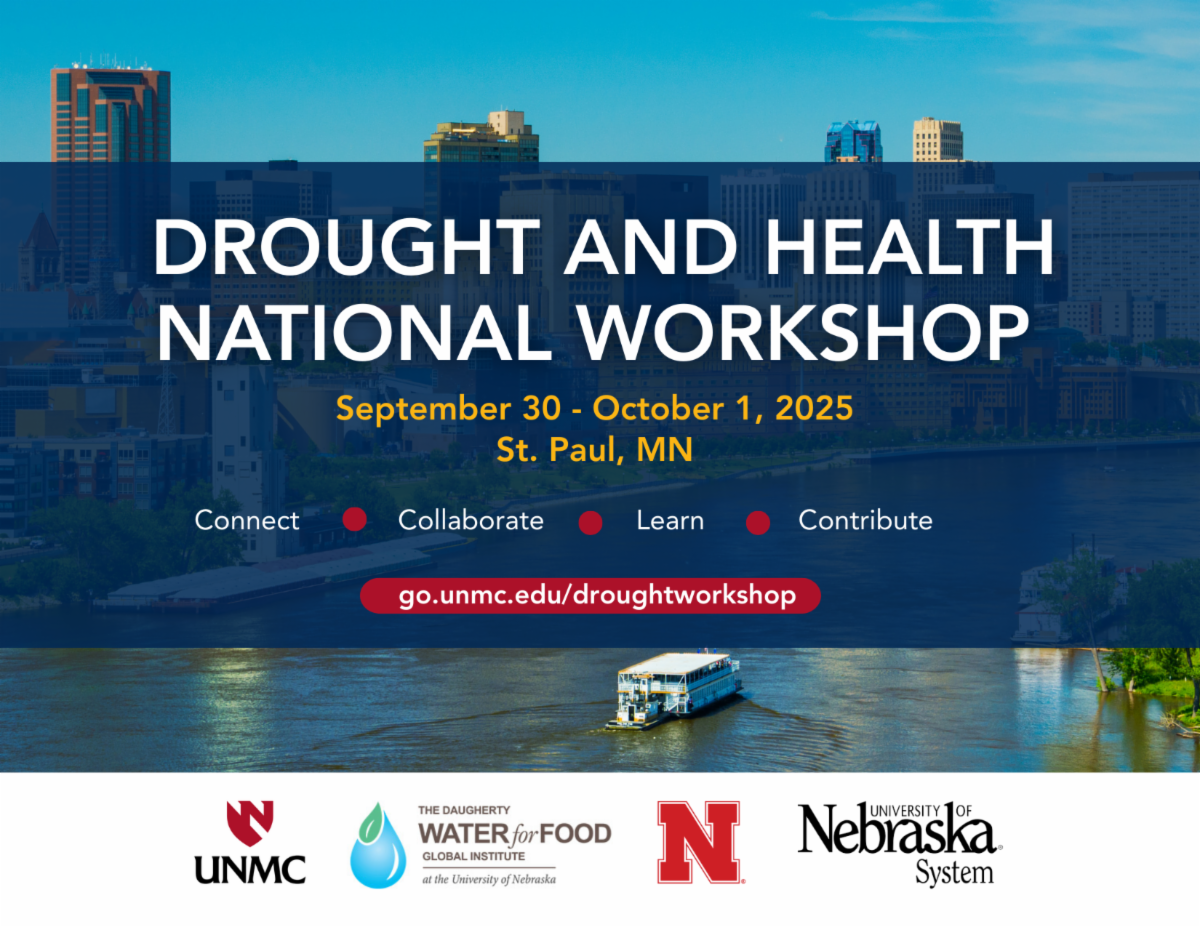
The Water, Climate and Health Program will host a two-day workshop September 30-October 1, 2025, to advance the science, policy, and practice at the intersection of drought and health. This event, hosted at the Science Museum of Minnesota in Saint Paul, Minnesota, will bring together researchers, public health professionals, and climate resilience leaders to exchange knowledge, strengthen partnerships, and examine actionable strategies for mitigating the health impacts of drought. Interactive sessions will be designed to promote cross-sector collaboration and support progress toward more resilient communities. There is no registration fee for this event, which will be limited to in-person participation only.
| | |
2025 OLLI Fall Symposium focused on global and regional water issues
The University of Nebraska–Lincoln (UNL) Osher Lifelong Learning Institute (OLLI) will host its fall symposium on September 27, 8:30 a.m.-2:30 p.m., focused on global and regional water issues.
The event begins with an overview of global water issues and then move to a regional approach, exploring the topics of groundwater depletion, agricultural runoff, and the sustainability of the Ogallala Aquifer. Experts will examine policies, conservation strategies, and scientific advancements aimed at securing water resources for future generations. Speakers include Chittaranjan Ray, director of the Nebraska Water Center; Dan Snow, Director of the Water Sciences Lab; DWFI Faculty Fellow Anthony Schutz; and Ethan Freese, who will highlight the Platte Basin Timelapse Project, supported in part by DWFI.
The symposium is targeted toward researchers, farmers, policymakers, and anyone concerned about water’s role in shaping the future of our environment and economy.
Registration is $20 for those attending in person on UNL's East Campus Union or $15 for those attending online.
| |
|
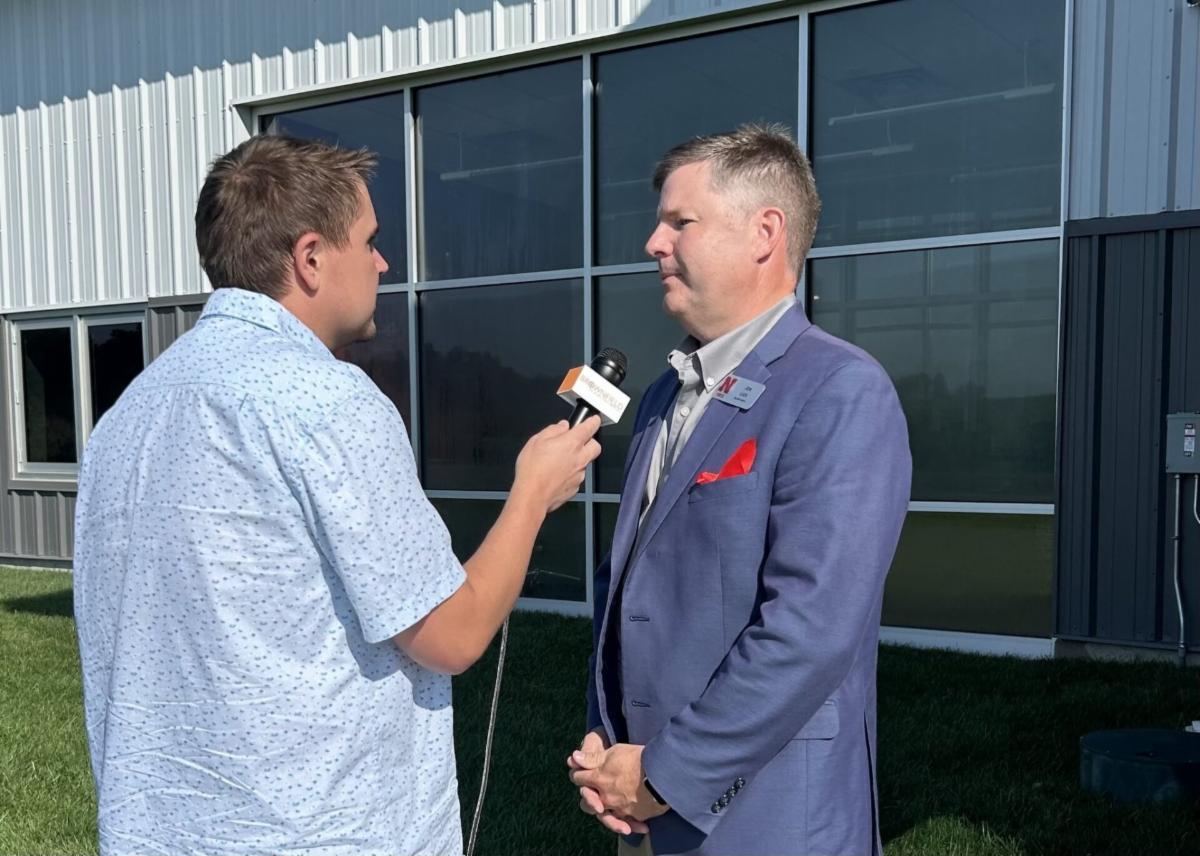
Photo: Brownfield's Kellan Heavican interviews Joe Luck with UNL. Credit: Brownfield Ag News.
NFarms facility will improve data management for producers, businesses
By Brownfield Ag News
The new NFarms facility at the University of Nebraska-Lincoln (UNL) is set to improve data management for agricultural producers and businesses by creating a central hub for various types of precision agriculture data. DWFI Faculty Fellow Joe Luck, the associate director of the Eastern Nebraska Research Extension and Education Center (ENREEC), played a key role in the initiative. In an interview with Brownfield Ag News, Luck explained that the NFarms building is a "gold standard" for collecting and integrating diverse data sets, including production data from machinery, remote sensing data, and information on soil and groundwater. He emphasized the unique innovation of the facility, which will combine data from different systems, such as crop production and irrigation, to help producers make better management decisions. Additionally, Luck highlighted that the facility's 10,000 acres of farmland will be available for private businesses to partner with UNL and test new technology before it is released to the market.
| |
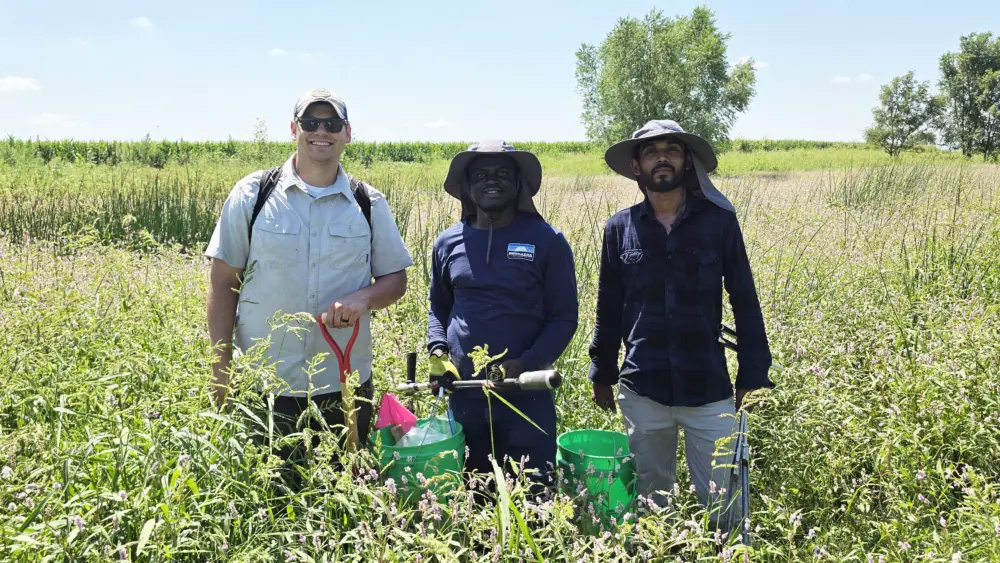
(From left) Riley Hackbart, USDA NRCS, with Godfred Ankomah and Dilshan Ekanayaka, UNL PREEC, standing in one of Nebraska Soil Health Coalition’s Hub 1 locations in south-central Nebraska. The team identified a native community of plant species representing undisturbed, natural rangeland before extracting both probe and core soil samples to establish a comparison reference point in five locations. Courtesy Photo
Nebraska Soil Health Benchmarking
The Nebraska Soil Health Coalition (NSHC), in partnership with DWFI Faculty Fellow Bijesh Maharjan, associate professor in soil science and agronomy at the University of Nebraska-Lincoln (UNL), is establishing a soil health benchmarking system in Nebraska. The first of five "hubs" is located in the south-central region of the state. The project involves comparing working agricultural fields with nearby undisturbed rangeland sites to create a baseline for soil health. Researchers are analyzing factors such as soil organic matter, nutrient cycling, and microbial activity to understand how different farming practices, like cover crops and reduced tillage, impact soil function. The goal is to provide producers with science-based tools to help them balance productivity with long-term land stewardship and build a statewide monitoring network.
| |
Interns from Four Continents Cultivate Knowledge and Collaboration in the UNL Soil Science Lab
By PREEC Communications
A group of international interns has recently completed a summer research program at the University of Nebraska-Lincoln (UNL), cultivating new knowledge and fostering global collaboration in soil science. The program brought together students from four different continents—Africa, Asia, Europe, and North America—to work on hands-on research projects under the guidance of UNL faculty. This unique opportunity provided the interns with valuable experiential learning, enabling them to apply classroom knowledge to real-world agricultural challenges. The program aims to prepare the next generation of professionals to address critical issues related to food production and environmental sustainability through a collaborative, interdisciplinary approach.
DWFI Faculty Fellow Bijesh Maharjan, a UNL assistant professor and extension soil and nutrient management specialist, played a key mentoring role in the program. He guided two interns, Tonny Ruhinda and Joviale Uwase, at the Panhandle Research, Extension, and Education Center. Their research focused on two crucial projects: using high-carbon char as a soil amendment and measuring environmental nutrient losses from fertilized soils. Maharjan said the interns were instrumental in collecting soil and gas samples and that they quickly adapted to the research environment, making them a great fit for his team. His mentorship underscores the program's success in providing students with practical skills and a supportive learning environment.
| |
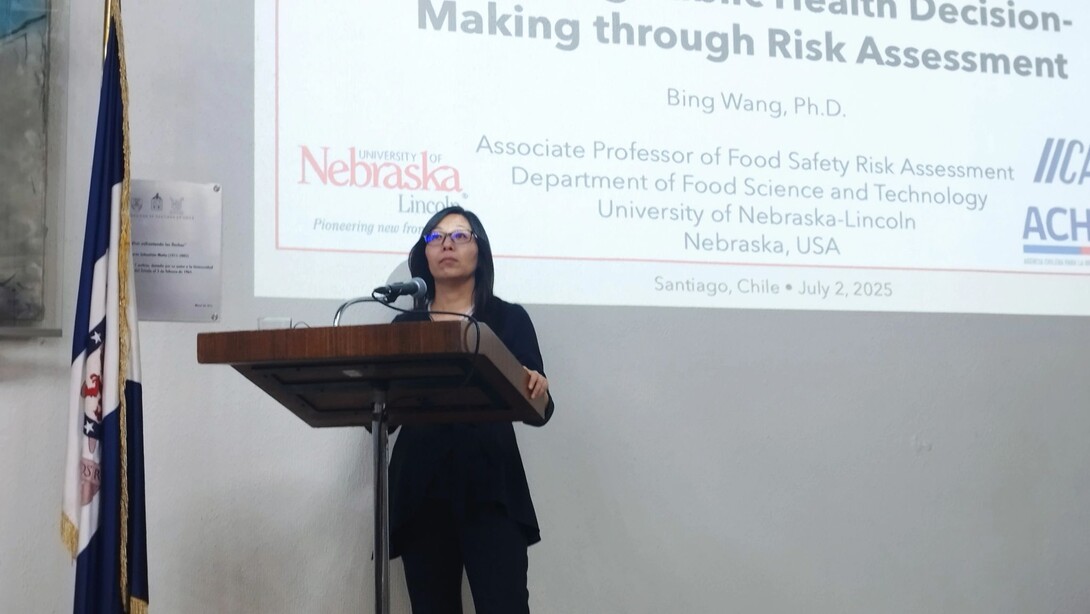
Bing Wang speaks during a symposium in Chile.
UNL team helps shape Chilean food safety policy through groundbreaking research
By Nebraska Today
A team from the University of Nebraska-Lincoln (UNL), including DWFI Faculty Fellow Bing Wang and DWFI supported student Andrew Ortiz, is playing a pivotal role in shaping Chile's food safety policy. Through their groundbreaking research on the microbial risks of using greywater for irrigation, the UNL team is providing the scientific foundation for Chile's first set of risk-based standards for agricultural water safety. The work has been supported by DWFI and the Inter-American Institute for Cooperation on Agriculture (IICA) and included a symposium and workshops in Santiago, demonstrating how research can directly inform public policy.
This partnership, which Wang calls is a "bridge between nations," highlights the institute's commitment to advancing water and food security worldwide. The research has not only positioned Husker researchers at the forefront of global food safety initiatives but has also helped to establish a new era of collaboration, setting a precedent for how countries can integrate science and policy to create more robust and effective food safety legislation.
| |
Staff, Fellow and Supported Student Publications | | |
Performance Mapping and Weighting for the Evapotranspiration Models of the OpenET Ensemble
Reitz M.; Volk J.M.; Ott T.; Anderson M.; Senay G.B.
Forage biomass estimation using UAV-based remote sensing and machine learning: A tool for assessing management practices
Zhao, Biquan; Hiller, Jeremy; Awada, Tala; Wardlow, Brian; Erickson, Galen
Development and Evaluation of the Forest Drought Response Index (ForDRI): An Integrated Tool for Monitoring Drought Stress Across Forest Ecosystems in the Contiguous United States
Tadesse, Tsegaye; Connolly, Stephanie; Wardlow, Brian; Svoboda, Mark; Zhang, Beichen
Remote sensing of soil organic carbon in varied tillage-crop systems
Zoller, Amy L.; Birru, Girma; Kharel, Tulsi; Jin, Virginia L.; Schmer, Marty R.
Pesticide concentrations in multiple physical and biological stream matrices are impacted by a bioenergy production facility receiving pesticide-coated corn seeds
Hladik, Michelle L.; Kolpin, Dana W.; De Parsia, Matthew D.; Snow, Daniel D.; Bartelt-Hunt, Shannon
Soil organic carbon fractionation in sandy soils in the semiarid grasslands and forested areas of Nebraska Sandhills
Li, Lidong; Fossum, Britt; Sleem, Mahmoud; Awada, Tala; Hiller, Jeremy
Glyphosate-Induced Hormesis Enhances Soybean Biomass but Not Yield Under Field Conditions in Nebraska, USA
Milosevic, Luka; Awada, Tala; Jhala, Amit J.; Gogos, George; Wortman, Sam E.
Estimating groundwater recharge and water balance dynamics in the Akaki catchment of the tropical environment
Singh, Arshdeep; Rudnick, Daran; Snow, Daniel D.; Patel, Swetabh; Misar, Christopher
Soil health management system impacts on dynamic soil hydraulic functions before and after rainfall
Tangen, Bailey L.; Vetsch, Jeffrey A.; Johnson, Gregg A.; Strock, Jeff S.; M. Daigh, Aaron Lee
No more laborious stem counting: AI-powered computer vision enables identification and quantification of solid and hollow alfalfa stems at the pixel level
Brandon J. Weihs, Zhou Tang, Somshubhra Roy, Zezhong Tian, Deborah Jo Heuschele, Zhiwu Zhang, Cranos Williams, Zhou Zhang, Garett Heineck, Swayamjit Saha, Zhanyou Xu
| |  | |
Arbuscular mycorrhizal fungi inoculation inhibits plant Zn toxicity and promotes Zn biofortification for lettuce (Lactuca sativa L.)
Kailer, Endy; Souza, Pedro; Daigh, Aaron Lee M.; Kasuya, Maria Catarina Megumi; da Silva, Marliane de Cássia Soares
Emerging issues and research opportunities in vadose zone processes
Stewart, Ryan D.; Flury, Markus; Ajami, Hoori; Anderson, Ray G.; Green, Timothy R.
Seasonal Influences of Precipitation and River Stage on Groundwater Levels in Platte River Watersheds Vulnerable to Spring Floods
Kim, Incheol; Koya, Sinan Rasiya; Roy, Tirthankar; Eun, Jongwan
Is an economically optimal corn nitrogen rate also environmentally optimal?
Bandura, Christopher J.; Laboski, Carrie A. M.; Camberato, James J.; Carter, Paul R.; Clark, Jason D.
Mapping Hydrological Ecosystem Services (HESS) in major Vietnamese river basins using remote sensing and hydrological modelling to promote nature-based solutions
Ha, Lan Thanh; Bastiaanssen W.G.M.; Das, Narendra; Hessels, Tim
Screening Terminal Drought Tolerance in Dry Bean Genotypes and Commercial Bean Cultivars in Chile
Tay, Kianyon; Zapata, Nelson; Urrea, Carlos A.; Elazab, Abdelhalim; Garriga, Miguel
Productivity of intermediate wheatgrass responds more to local soil and climate factors than fertility treatments in the first establishment year
Cassani, M. Tomás; Gutknecht, Jessica L.; Basche, Andrea; Brunsell, Nathaniel A.; Crews, Timothy E.
Determining Terrestrial Ecosystem Gross Primary Productivity From PACE OCI
Huemmrich, Karl Fred; Caplan, Skye; Gamon, John A.; Campbell, Petya Krasteva Entcheva
Groundwater Pricing in Agriculture in South Asia: Research for Practical PolicyMaking
Balasubramanya, Soumya
| | |
World Water Monitoring Day
September 18
Nebraska Water Conference
UNO - Milo-Bail Student Center
September 18-19
Learn more
NARD Annual Conference
Kearney, Nebraska
September 28-30
First Day of Autumn
September 1
World Rivers Day
September 28
Water New Year
October 1
| |
The Daugherty Water for Food Global Institute at the University of Nebraska was founded in 2010 by the Robert B. Daugherty Foundation to address the global challenge of achieving food security with less stress on water resources through improved water management in agricultural and food systems. The institute is committed to ensuring a water and food secure world while maintaining the use of water for other human and environmental needs.
The Nebraska Water Center, established by Congress in 1964, focuses on helping the University of Nebraska become an international leader in water research, teaching, extension and outreach by facilitating programs that will result in UNL becoming a premiere institution in the study of agricultural and domestic water use.
| | | | |