Climate Education Collaborative on topographic map background
 

SEPTEMBER 2026 NEWSLETTER

"It made me so happy."


—Hanover High student, talking about a school clothing swap

Dear Collaborative community,


Joy and a sense of pride: both are emotions that can keep us engaged in climate resiliency efforts. To that end, last month, we shared hopeful stories from across the country of communities tackling climate challenges. This month, we focus on promising practices closer to home led by teachers in the Upper Valley region of New Hampshire and Vermont. Teachers and local organizations have teamed up through the Equitable Climate Action Partnership (ECAP) for the last three years to help students learn how to take care of their communities through place-based learning and climate stewardship. Below are just a few of these stories, but you can visit their webpage for more examples of the various ways this intergenerational collaboration is creating healthier ecological and social systems in the Northeast.

 
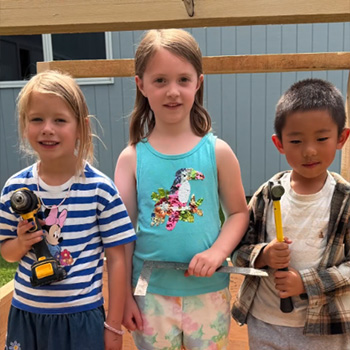
Three young people smile holding power tools

At the Woodstock Elementary School in Vermont (video), preschoolers discovered that all those joyful trips sliding down their favorite hillside were contributing to erosion. Third graders helped them tell their story. Local high school students with the C.R.A.F.T. program joined them to learn about native plants and restore the hillside, eventually planting close to 100 grasses and flowers to help stabilize a hillside in a region that knows what heavy rain can do. 

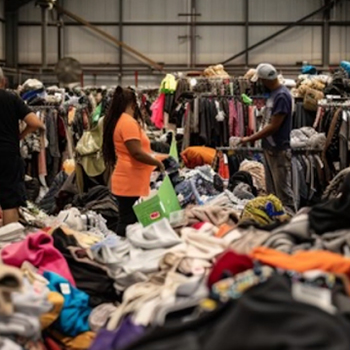
People sort through clothes at a large clothing swap

Across the Connecticut River to New Hampshire, ninth graders at Hanover High School (video) researched the surprising climate justice impacts of fast fashion, created a lesson for their peers, and then decided that learning about the problem wasn't enough, so they organized a clothing swap.

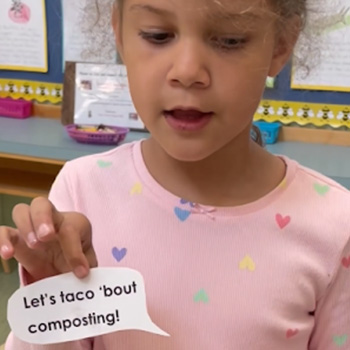
A young girl holds a speech bubble that reads lets taco bout composting

Up the road at Bernice A. Ray School (video), students and teachers learned the food scraps they thought they were composting were actually being hauled to a landfill. So kindergarteners, first graders, fifth graders, teachers, administrators, high school students, a composting expert from The Upper Valley Super Composting Project, and a community carpenter began figuring out together how to change the system. Younger students weighed food waste as older students analyzed the data. Together they built compost bins and created a system they hope can spread beyond their own school.

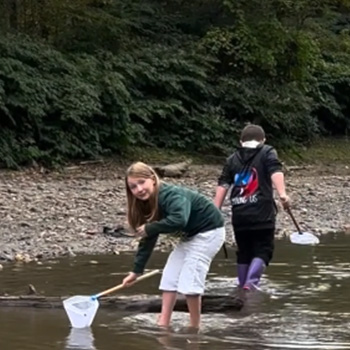
Two young people dip into a river with nets

According to teachers, the connections students made were remarkable. For example, third graders raising trout at the White River Valley School (video) in Vermont followed their curiosity outward into streams, farms, Vermont history, land use, food, and the essential question of how we care for landscapes that, in turn, sustain us.


And what teacher doesn’t want to hear “It made me so happy!”? 


None of these projects, by itself, is going to solve climate change. But in the Upper Valley, teachers, students, and local organizations are learning from each other about what works. And, perhaps even more importantly, building a sense of collective efficacy, noticing the systemic changes that are possible when we work toward a common vision and support one another. In fact, IMHO, we need each other more than ever now.


In this spirit, we head into our (full!) Climate Education Collaborative Summit on September 24 and 25 at Shelburne Farms. And guess what? Our ECAP Educator Leaders will be joining us!


We are deeply grateful to the New Hampshire Charitable Foundation for supporting the ECAP work and for recognizing the importance of investing in education and the relationships that make this kind of learning and resilience possible. If we want a future in which people know how to take care of our communities and climate, education is how we get there.


Joan Haley, Ed.D., Climate Education Specialist, Shelburne Farms


Feeling It: Climate Art


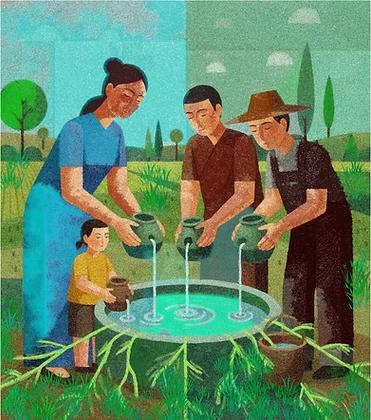
One Source by Himanshi Tyagi "explores the idea of collective power through visual representations of unity, care, and shared responsibility. The work features interconnected human figures and hands holding the Earth, symbolizing how people across cultures and generations come together in response to the climate crisis."


As featured in the Human Impacts Institute’s 2026 Creative Climate Awards


Power in Numbers


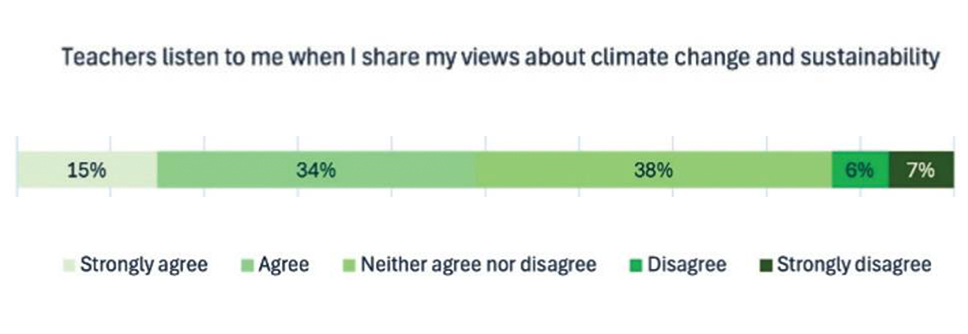
76% of students in England say learning about climate change and sustainability is important, but fewer than half feel that teachers listen when they share their views about it. (Click the image to view more data.)

A chart depicting data related to climate change and student voice

This data reveals a critical cultural shift we need to support in climate education. That is, students as contributors rather than just recipients of climate knowledge; learning about climate change with young people, not simply teaching it to them. 


This 2025 research, Student perspectives on climate change and sustainability education in England: experiences and expectations, offers many insights into areas where climate education is making progress and where it still needs work.


Connect, Learn & Share


👥 Climate Club: Meaningful Ways to Excite Students to Make a Difference

(Morristown, NJ) | Sept. 14, 2026 

A hands-on workshop for educators interested in helping students move from climate learning into action through cross-disciplinary, student-driven climate clubs. 


🏔️ Powering Up with Mount Washington Observatory

(North Conway, NH) | Sept. 21, 2026

A climate- and energy-focused professional learning day that moves from “learning about” to student-driven “figuring out,” using systems thinking, data, and real-world problem solving to strengthen student agency. Free for NH and VT educators. 


⚡️ AI and the Climate Crisis: Energy, Infrastructure, and Environmental Impact (Mahwah, NJ) | Oct. 3, 2026 

A timely workshop for K–12 educators exploring the climate impacts of AI and data centers, including energy, water, and mineral use, along with ways to help students think critically about responsible technology use. 


🌎 NAAEE 2026 Conference & Research Symposium

(Portland, OR) | Oct. 6–9, 2026

This year's “Imagine If…” theme feels especially fitting: environmental educators from around the world will gather to explore what becomes possible when education drives connection, action, and positive change. 


🍎 Integrating the NY Inspires Climate Education Mandate Into Any K–12 Classroom

(Yorktown Heights, NY) | Oct. 15, 2026

An interdisciplinary workshop on weaving climate and sustainability into what teachers already teach, with an emphasis on place-based learning, community partnerships, and real-world application rather than treating climate as an add-on. 


🌿 NYSOEA Annual Conference: From the Ground Up, Growing Knowledge Through Nature and Community

(Silver Bay, NY) | Nov. 5–8, 2026

Hundreds of teachers and environmental educators will gather for professional learning, outdoor experiences, and, importantly for this issue, the chance to strengthen the networks that help educators keep this work going. 


Expanding Our Vision


Talk about working together! Since 1979, New Hampshire Environmental Educators has been strengthening environmental education across the state. Much of that work has been powered by educators and volunteers who have kept showing up and finding new ways forward.


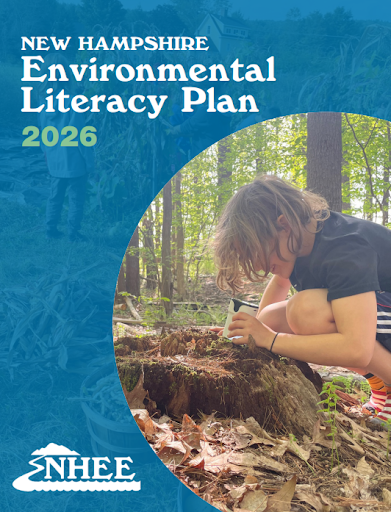
Their newly updated New Hampshire Environmental Literacy Plan is a great example of what sustained collaboration can accomplish. Watch NHEE's story and learn how they made it happen.


But wait, there’s more! NHEE representatives, along with NAAEE Affiliate leaders from Maine, Massachusetts, Connecticut, Rhode Island, New York, and Vermont, will be at our upcoming Summit. If you can't make it to the Summit, be sure to check out your local NAAEE Affiliate to see how you can get involved with supporting climate education in your state.


What Do You Think...

 
What is most needed to strengthen climate education in your state?

Last month's poll: We asked, “What seems to generate the most hope for your learners?” It was a three-way tie between seeing measurable progress, participating in meaningful action, and considering what is still possible.

The Northeast Climate Change Education Collaborative encompasses 200+ organizations and individuals collaborating to support systems-level change for climate action, justice, and education. Join the Collaborative.


Your perspectives and experiences are what make this newsletter a rich source of learning and inspiration. Share your submissions for our next edition.


View as Webpage