|
Dear Friends of Shoals Marine Laboratory,
A colleague of mine from the College of the Atlantic, Dr. John Anderson, recently published
an article
in
American Scientist
that called for renewed focus within science education on Natural History. I strongly agree with Dr. Anderson that science is suffering because of the reduced educational focus on Natural History. Dr. Anderson states, “Students are encouraged to spend more time indoors, conducting lab 'experiments' with predetermined outcomes and running increasingly sophisticated simulations of behaviors rather than observing actual organisms in an uncontrolled context.”
The focus on technology in science instead of observation of the natural world is leading to real problems. Climate change, habitat loss, pollution, etc. are dramatically changing our landscape. Are these changes good? Bad? Neutral? How will we know if we don't examine what we have right now and the role of organisms in their environment? How will we even see the changes if we don't have long-term field monitoring?
Long-term, detailed observation of nature is not exciting to granting agencies, and the struggle to find funding for SML’s long-term monitoring programs that serve our undergraduate internships is a classic example
–
and we are not alone! Almost all field stations and marine labs struggle to find support for field courses and field monitoring. However, even a quick read of Billick and Price’s book
The Ecology of Place: Contributions of Place-Based Research to Ecological Understanding
(2011) demonstrates that long-term field research is critical to our understanding and ultimately our management of the natural environment.
I am grateful that SML has been committed to cultivating field science and long-term monitoring in the Gulf of Maine and Isles of Shoals
for over 50 years.
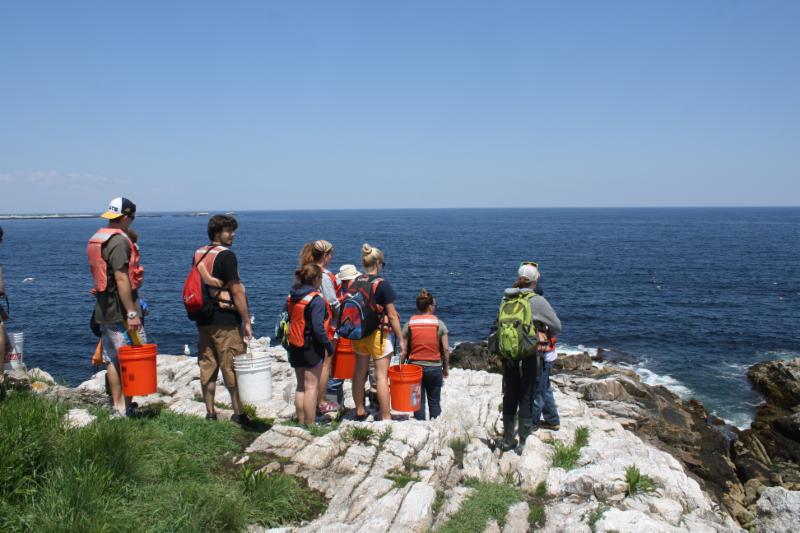
Each summer, and certainly this summer, dozens of students helped us continue to study changes on Appledore Island and beyond. At SML, we proudly wave the flag of place-based field science and natural history because we know it is critical to engaging students in science, expanding knowledge, and protecting this big blue planet.
With deep appreciation and warm wishes,
|
|
|
Jennifer Seavey, Ph.D.
Kingsbury Director of the Shoals Marine Laboratory
|
|
|
|
SML's 51st season in review!
|
|
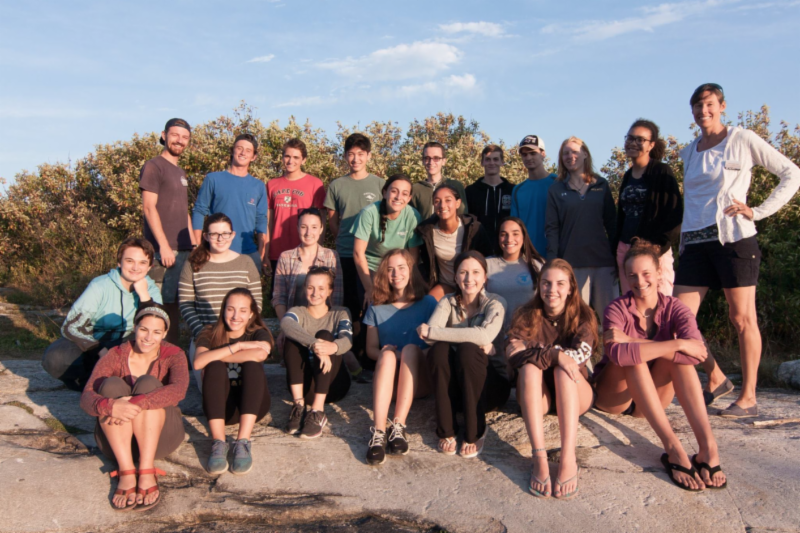
While the island staff spend this week closing facilities and wrapping up operations on Appledore Island, we are thrilled to reflect upon another amazing summer at Shoals Marine Laboratory. Here is a quick 2017 season review by the numbers!
Student education:
- 17 credit courses offered
- NEW Shoals Semester program
- NEW Shoals Research Apprenticeship program
- 39 course faculty members and TAs (including 10 new-to-SML's teaching staff)
- 140 student enrollments (39 Cornell student enrollments, 21 UNH student enrollments, 29 enrollments from other colleges/universities, and 51 high school student enrollments)
- 7 Artists-in-Residence working with SML courses
- 2 Scientist-in-Residence Fellows expanding research mentoring and science at SML
Research:
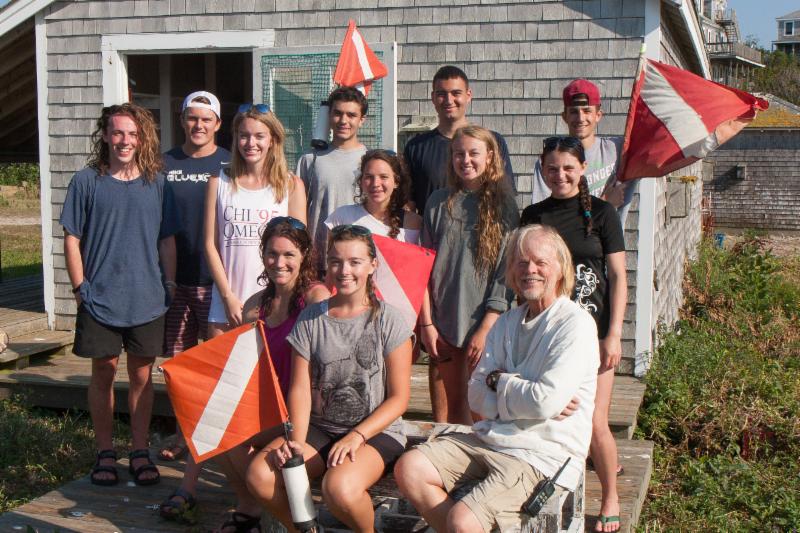
- 15 undergraduate research interns in 7 internship programs
- 1st Annual SML Research Symposium
- 12th Annual Sustainable Engineering Internship Symposium
- Continued research and monitoring efforts on White and Seavey Islands for the Tern Conservation Program (watch video here!)
- Dozens of visiting researchers from institutions across the country: Cornell University, the University of New Hampshire, Dartmouth College, Canisius College, UMass Boston, Tufts University, Northern Essex Community, Dickinson College, and more!
Outreach:
In all, over 1,500 people enjoyed the magic of Appledore Island and Shoals Marine Laboratory this summer! We know that the impact of the SML experience is impossible to capture with a statistic, but we are honored to share SML with you and our ever-expanding community! Here's to 2017!
|
|
|
|
|
Biology of Sharks, Skates, and Rays 2017
|
|
|
Celia Thaxter's Garden Piazza reconstruction complete!
|
|
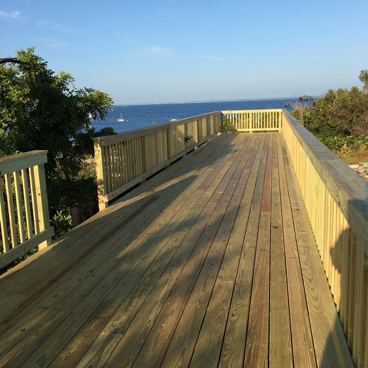
Such a lovely view! We are excited to announce that Celia Thaxter’s beloved porch, or rather “piazza,” was reconstructed this summer on Appledore Island. Those of you who visited the island after mid-August or regularly watch the
Appledore Webcam
may have noticed renewed activity behind the garden. Relying on the expertise of local archaeologists and old photos of Celia’s cottage, SML’s Director of Facilities, Ross Hansen, along with our skillful Island Engineers were able to design and build the piazza structure in the exact position behind the garden where it last stood 103 years ago.
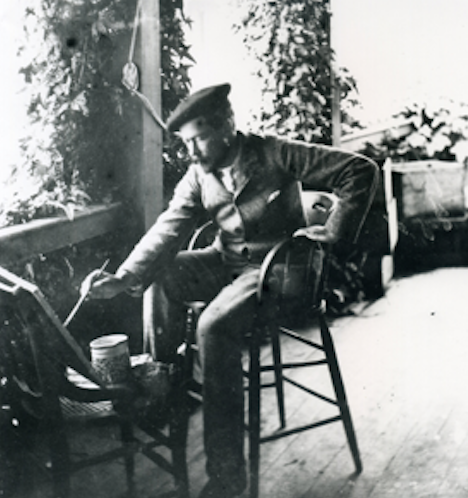
Celia’s piazza famously hosted members of the Appledore Artists' Colony, like Childe Hassam, John Appleton Brown, and many other artists, writers, and musicians who frequented her parlor and salon during the hotel era of the 1800’s.
In summers to come, the reconstructed piazza will enhance SML’s ability to interpret and highlight the historical significance of Celia Thaxter, her garden, and the artists’ colony that thrived on Appledore. It will also inspire interdisciplinary approaches to tackling the challenges of marine conservation in the Gulf of Maine and beyond.
We look forward to an official piazza opening and celebration next season, but could not wait to share the good news with all of you! This project was made possible thanks to generous support from the Thaxter Foundation and several private donors. We are grateful for their support!
|
|
|
Reconstructed Thaxter piazza (2017) and Childe Hassam painting on the original piazza (c. 1886)
|
|
|
A Special Shoals Tribute:
|
|
|
Jeffrey Prince
1943 – 2017
Jeff Prince was there at the very beginning. He was the Teaching Assistant for the very first class of the nascent Shoals Marine Laboratory, Introduction to Marine Science, taught on Star Island in 1966. He was J.B. Heiser’s TA when he took the course in 1967. He worked with a group of alumni in 1970 that helped John Kingsbury ready Appledore for future classes. Jeff was John Kingsbury’s graduate student at Cornell, and earned his Ph.D. in 1971. He joined the SML faculty in 1976 and taught Introduction to Marine Science, which eventually became Field Marine Science, every June until 1993.
In Jeff’s
other
life, he served on the faculty at the University of Miami in Coral Gables beginning in 1976, and was Director of the University of Miami Electron Microscopy Laboratory from 1979.
Jeff Prince was an inspired teacher. At Shoals he wowed students with his enthusiasm – and his antics. He taught about the life cycles of algae, then dressed in a hula skirt made from kelps. The University of Miami presented him with their Outstanding Biology Educator and Excellence in Teaching Awards.
The Chair of Miami’s Biology Department, Athula Wikramanayake, wrote “Jeff Prince was one-of-a-kind, and he lived life to the fullest.” As one Old Shoaler, Rod Getchell, put it, “I am not sure anyone ever had more fun on Appledore than Dr. Jeff Prince.” Anyone who knew Jeff would agree. His love of life was infectious, and he was often leading the charge, drawing in those around him in some unlikely, but fun, group activity involving faculty, staff, students, or combinations of Appledore residents. His informal staff gatherings on Hewitt Hall’s third-floor “porch” were famous, and his frequent renditions of “Twinkie Doodle Dee” delighted almost everyone (it drove Kingsbury crazy
–
he said he could never get it out of his head).
He became a dedicated, if unorthodox, traveler. He stayed in student hostels (and I’ll bet the students couldn’t keep up) and local homes (what they must have learned about Americans from Jeff). His yearly Christmas letters told of his exploits and showed off his family
–
his daughter Kate and husband Brian, his son Graham and wife Amanda, and his grandchildren Sean, Evan, and Chloe. He was obviously very proud.
Jeff Prince touched the lives of many people. His unbounded enthusiasm, willingness to try just about anything, and irreverent approach to just about everything made him a charismatic magnet to students and colleagues alike. He had many friends from his years at Shoals.
On a personal note, I worked with Jeff in the Field Marine Science course for twelve Junes – we spent a year on Appledore together (not all at once, that surely would have been overload). I learned much about teaching from watching Jeff teach, and I learned much about living from watching him enjoy Appledore. Everyone who knew him from those years will miss him.
Jeffrey Prince died too soon on April 27, 2017, at 74. Kate and Graham wrote that he met his illness “with courage, integrity, positivity and love in his heart” and passed peacefully. “We are so very thankful for the time we had with him and know that he will live on through our memories and forever in our hearts.”
–
written by Jan Factor (SML 1970 and SML faculty since 1981)
|
|
|
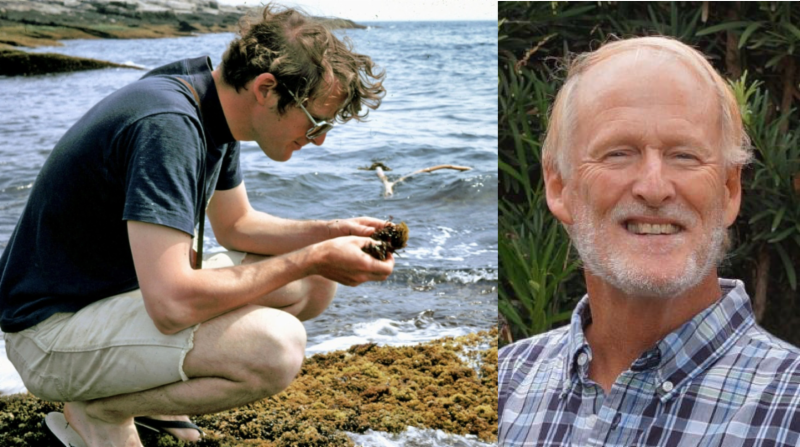
Photos of Jeff Prince courtesy of Jan Factor.
|
|
|
|
|
FOLLOW US ON SOCIAL MEDIA:
|
|
|
Shoals Marine Laboratory is a joint partnership between
Cornell University and the University of New Hampshire.
|
|
|
|
|
|
|