Service, Sacrifice

and the Spirit of Free Enterprise

As our nation approaches the 250th anniversary of the Declaration of Independence, October offers powerful reminders of how service and sacrifice have shaped America’s story. The coming weeks mark key moments that secured our independence and established the foundations of a free nation. From those earliest days, freedom has always been safeguarded by those willing to serve, whether on distant seas, in battlefields or within our own communities.

The Founding of the Navy and Marine Corps: 250 Years of Service


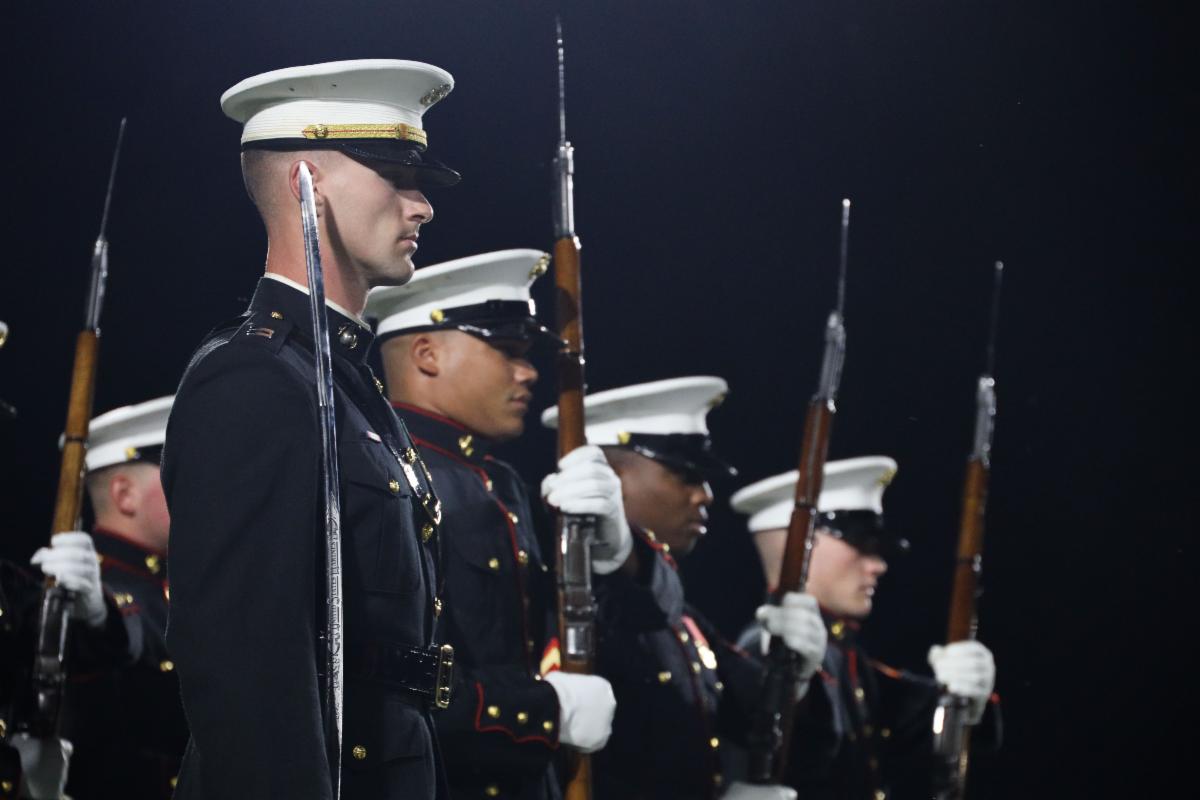
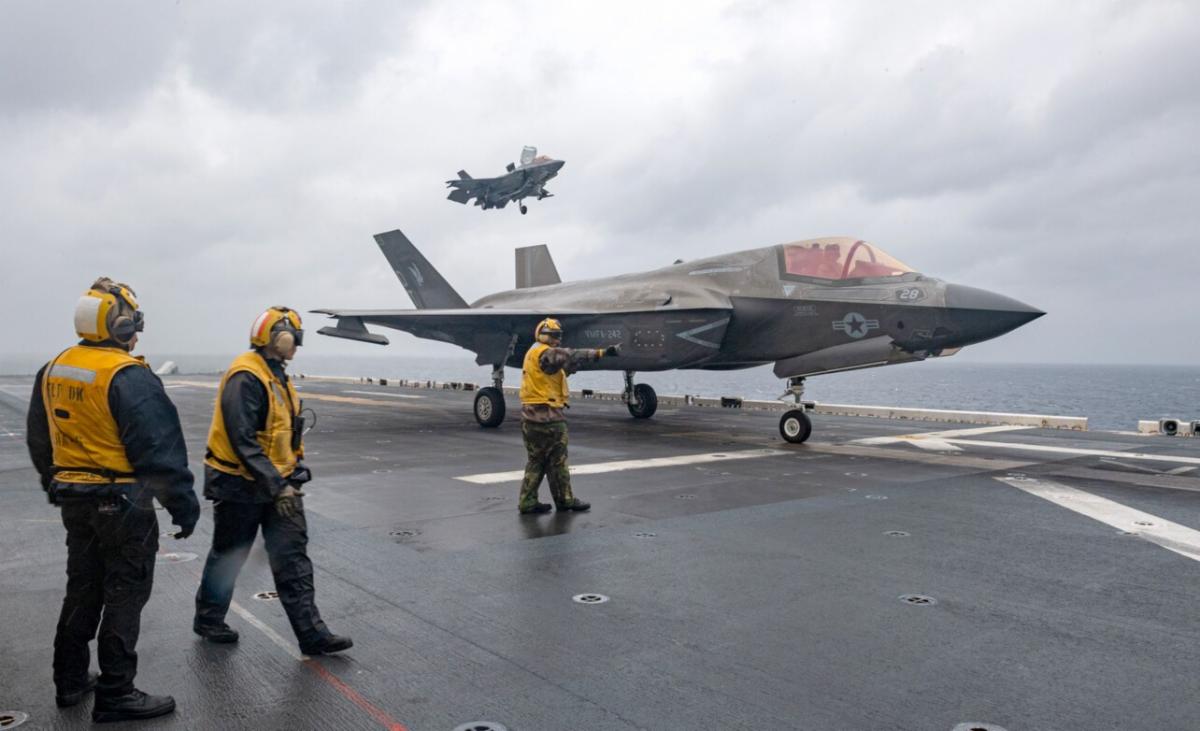
In 1775, as the Revolution began, the Continental Congress authorized the creation of two forces that would become cornerstones of American defense: the United States Navy on October 13 and the United States Marine Corps on November 10. For 250 years, Sailors and Marines have stood shoulder to shoulder, projecting American strength, protecting freedom of the seas and answering the nation’s call.

Guided by the enduring values of honor, courage and commitment, the Navy and Marine Corps have shaped history together, from the Revolution to Midway, Iwo Jima and beyond. Today, both services remain forward-deployed and mission-ready, ensuring America’s security while upholding a maritime tradition that has enabled commerce, innovation and free enterprise to flourish both at home and abroad. Their mottos, “Forged by the Sea” and “Semper Fidelis,” continue to symbolize faithful service to country and to one another.

Homecoming 250: Celebrate the 250th Anniversary of the U.S. Navy & Marine Corps


Celebrations will be held in Philadelphia and New Jersey for both the Navy & Marine Corps' Anniversaries.


Several events will be held, including various concerts, gatherings, galas, balls, tours of ships, air shows and parades.

The Battle of Yorktown: A Nation Secured


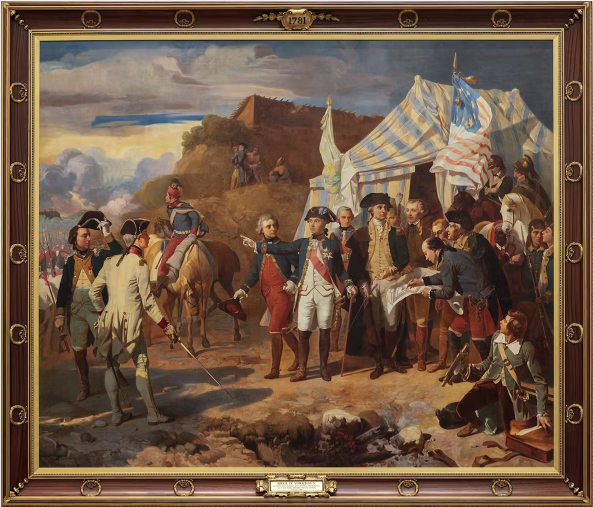
The Battle of Yorktown, fought from September 28 to October 19, 1781, marked the turning point that secured America’s independence. Under General George Washington’s leadership, and with the vital support of French allies by land and sea, United States forces surrounded and defeated British General Cornwallis’s army. More than 8,000 British troops surrendered, breaking Britain’s will to fight and proving what citizens and allies united in service to freedom could achieve.


Yorktown was won not only by generals, but by farmers, blacksmiths, merchants, and ordinary colonists who contributed supplies, risked livelihoods and served in militias. Their perseverance reminds us that America’s foundation rests on the sacrifices of citizens who chose service over self. This spirit would later define our system of free enterprise, where innovation, hard work, and shared responsibility fuel prosperity.

The Legacy of Service and Free Enterprise


Both the founding of the Navy and Marine Corps and the victory at Yorktown highlight one enduring truth: America’s strength lies in the willingness of its people to serve. From sailors who ventured out in hastily armed ships to tradesmen who dug trenches at Yorktown, their service laid the groundwork for a free nation where opportunity could thrive.


Today, service to country takes many forms: military duty, civic engagement, volunteerism and the quiet, everyday acts that strengthen our neighborhoods and communities. In that same spirit, American businesses, large and small, carry forward this legacy by creating jobs, driving innovation and fueling the prosperity that sustains our free society. Together, they reflect the unbroken connection between service, freedom and free enterprise that has defined the United States for nearly 250 years.

A True Patriot:

Our Friend, Hershel "Woody" Williams

From "Quiet Dell" to National Hero

Hershel Woodrow “Woody” Williams was born on October 2, 1923, in Quiet Dell in Marion County, West Virginia, where his family ran a dairy farm.


When the U.S. entered World War II, Williams felt a strong desire to serve and he joined the United States Marine Corps Reserve on May 26, 1943, in Charleston, West Virginia. After training in San Diego, he specialized in using flamethrowers and worked with tanks and demolition units.

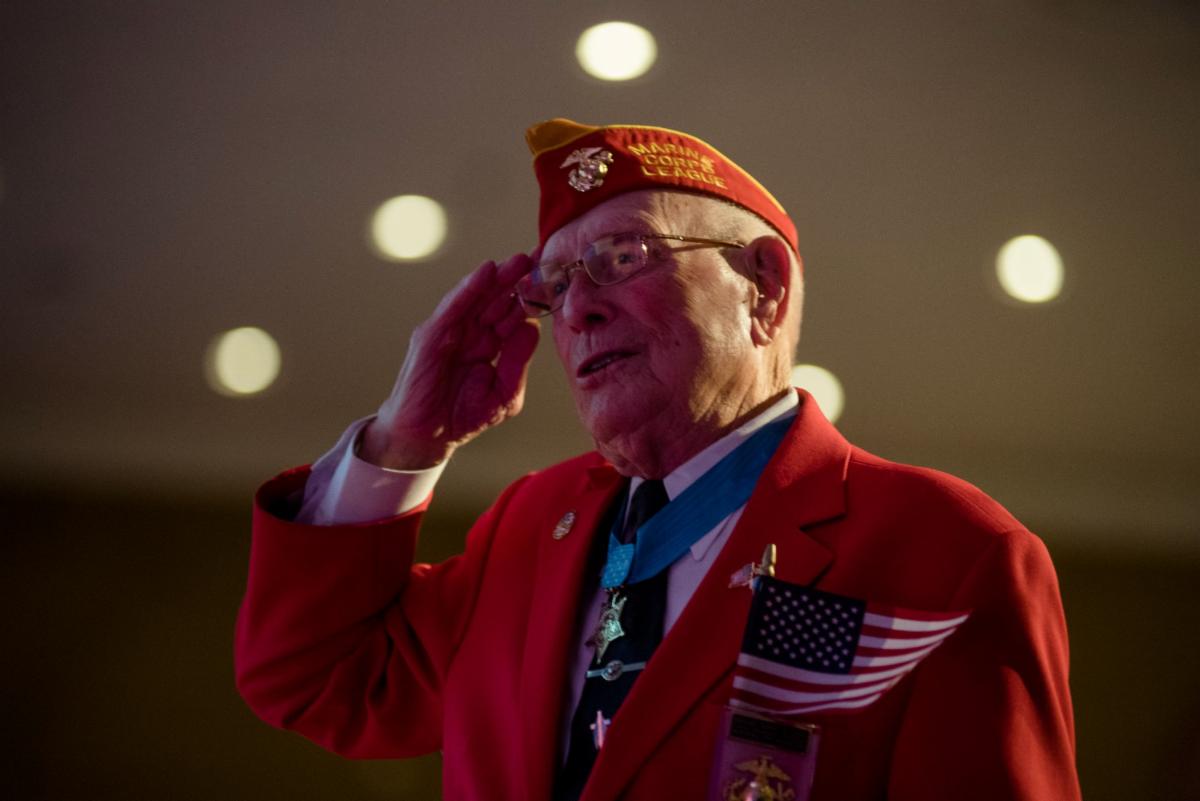
Pictured above: Woody Williams leading the Pledge of Allegiance at the 83rd Annual Meeting & Business Summit in 2019.

Heroism at Iwo Jima & The Medal of Honor


Williams served in the 1st Battalion, 21st Marines, during the Battle of Iwo Jima. On February 23, 1945, he volunteered to attack enemy strong points with a flamethrower when American tanks could not break through fortified positions. His courageous actions were crucial and saved the lives of countless American soldiers.


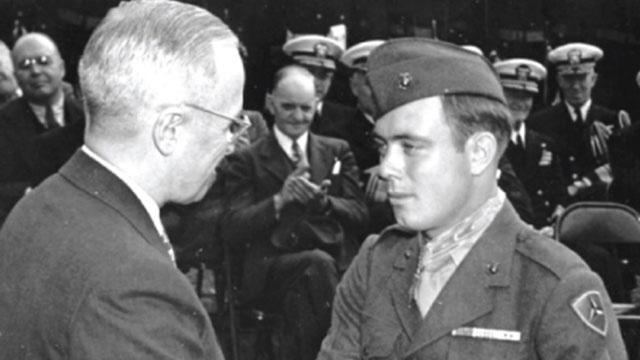
For his bravery, he received the Medal of Honor from President Harry S. Truman on October 5, 1945. Williams also earned a Purple Heart for a leg wound sustained during the battle and was one of the few surviving flamethrower operators from Iwo Jima.

Pictured above: Woody Williams receiving the Medal of Honor in Valor from President Harry S. Truman in 1945.

Postwar Life, Legacy and Significance


After the war, Williams dedicated his life to serving veterans and their families as a Veterans Service Representative for 33 years and later served in the Marine Corps Reserve, retiring as Chief Warrant Officer 4. He recognized the need to support Gold Star families and founded the Woody Williams Foundation, establishing over 148 Gold Star Family Memorial Monuments across the U.S. 

In West Virginia, he was honored as a Distinguished West Virginian, inducted into the West Virginia Hall of Fame, and has several landmarks named after him, including the Hershel “Woody” Williams VA Medical Center. Nationally, the USS Hershel “Woody” Williams (ESB-4) was commissioned in his honor.


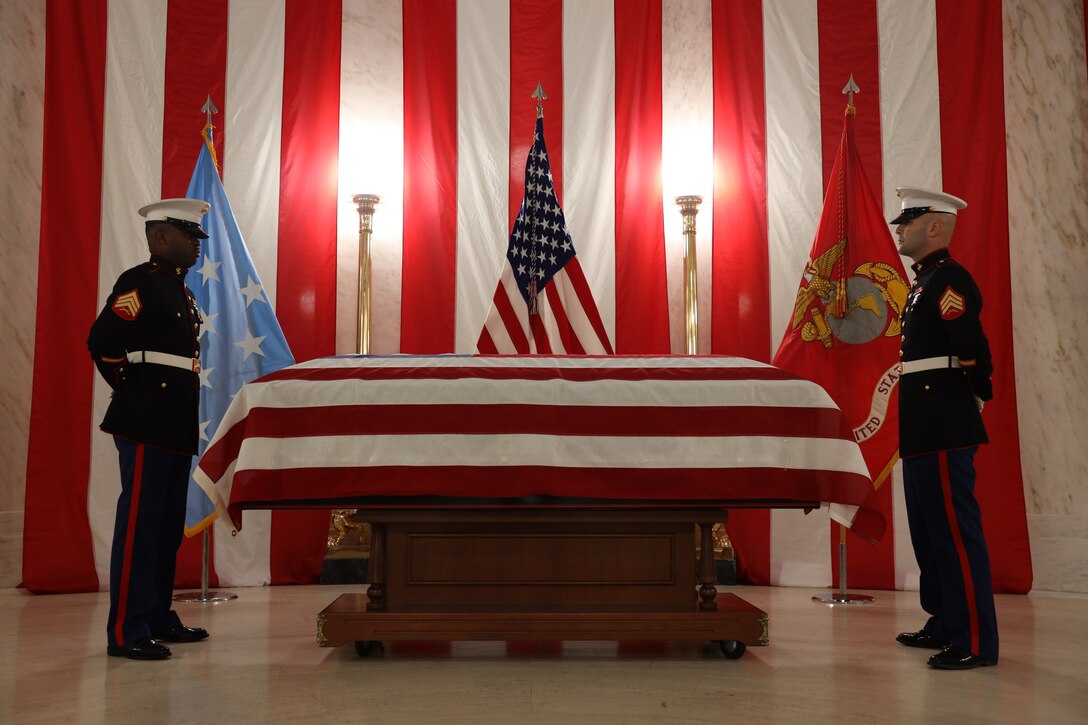
Upon his death on June 29, 2022 at 98 years old, Hershel “Woody” Williams, the last surviving World War II Medal of Honor recipient, lay in honor at the U.S. Capitol before being laid to rest with full military honors at the West Virginia State Veterans Cemetery in Institute, WV.


Woody was a true American hero, a great ambassador of West Virginia and a cherished friend of the West Virginia Chamber. 

Pictured above: Hershel "Woody" Williams lay in state in the West Virginia Capitol Rotunda in July 2022.

WEST VIRGINIA HISTORY THIS MONTH

October 1 On October 1, 1789, Kanawha County was established from portions of Greenbrier County and Montgomery County.


October 2 On October 2, 1786, Stephen West was granted 400 acres of land in Harrison County.


October 3 On October 3, 1763, About 150 troops under Colonel Charles Lewis defeated Native American warriors in a skirmish during Pontiac’s War on the headwaters of the South Fork near Fort Seybert, present-day Pendleton County.


October 4 Adam Stephen reported about 150 Native Americans were in the vicinity of Fort Cumberland on October 4, 1755.


October 5 On October 5, 1770, George Washington left Mount Vernon accompanied by Dr. James Craik to locate lands in the Ohio Valley for himself and other soldiers from the French and Indian War.


October 6 Forces under Colonel Andrew Lewis reached Point Pleasant, Mason County, on October 6, 1774, in preparation for the Battle of Point Pleasant against the Shawnee.


October 7 On October 7, 1763, the King of England announced the Proclamation of 1763, prohibiting settlement west of the Allegheny Mountains in an attempt to avoid conflict with Native Americans.


October 8 On October 8, 1764, Harman Blennerhassett was born in Hampshire, England.


October 9 On October 9, 1720, land speculator Andrew Lewis was born in Donegal, Ireland.


October 10 On October 10, 1774, the Battle of Point Pleasant, the only major conflict of Lord Dunmore’s War and regarded by some as the first battle of the American Revolution, was fought between the Virginia Militia and Shawnee and Mingo warriors at Point Pleasant, Mason County. Native forces under Chief Cornstalk attacked Virginia militiamen under Colonel Andrew Lewis, hoping to halt Lewis’s advance into the Ohio Valley. The Shawnee forces were eventually forced to retreat, leading to the signing of the Treaty of Camp Charlotte.


October 11 Due to a territorial dispute with Pennsylvania, the council of Virginia created the District of West Augusta, including all of present-day West Virginia, on October 11, 1773.


October 12 On October 12, 1792, Chronicles of Border Warfare author Alexander Scott Withers was born.


October 13 While surveying land for Lord Thomas Fairfax, Thomas Lewis reached the crest of the Allegheny Mountains in present-day West Virginia on October 13, 1746.


October 14 On October 14, 1769, author Joseph Doddridge was born in Pennsylvania.


October 15 On October 15, 1783 Alexander McClanahan was granted 200 acres of land in Greenbrier County.


October 16 On October 16, 1798, Isaac Williams was paid $10.00 for work on the road from Salem to Vienna.


October 17 On October 17, 1785, James Rumsey first tested his steamboat near the mouth of Sir Johns Run, present-day Morgan County.


October 18 On October 18, 1770, British representative John Stuart signed the Treaty of Lochaber with the Cherokee tribe, relinquishing all Cherokee claims to property from the North Carolina and Virginia border to a point near Long Island on the Holston River to the mouth of the Kanawha River at present-day Point Pleasant, Mason County. In this treaty, the Cherokee surrendered their rights to land in present-day southern West Virginia not included in the Treaty of Hard Labour in 1768.


October 19 On October 19, 1795, William Hays was granted 288 acres of land in Berkeley County.


October 20 On October 20, 1770, George Washington left Fort Pitt for western Virginia in search of lands he planned to claim as payment for his service in the French and Indian War.


October 21 On October 21, 1793, the Virginia Assembly convened in Richmond.


October 22 On October 22, 1792, George Fisher, Jr. was granted 60 acres of land in Pendleton County.


October 24 On October 24, 1768, negotiations of the Treaty of Fort Stanwyx began between British representative Sir William Johnson and the Six Nations of the Iroquois, relinquishing all Iroquois claims to the property west of the Allegheny Mountains and east of the Ohio River, comprising all of present-day West Virginia except the extreme southwestern part of the state. Along with the Treaty of Hard Labour, this effectively repealed the Proclamation of 1763, which had prohibited settlement west of the Alleghenies.


October 25 On October 25, 1785, John Prickett was granted 400 acres of land in Monongalia County.


October 26 On October 26, 1755, George Washington ordered Lieutenant John Bacon to select a location for what became Fort Ashby. He chose a place on the plantation of John Sellers at present-day Fort Ashby, Mineral County. He also ordered Bacon to construct Fort Cocke about one mile south of present-day Headsville, Mineral County.


October 27 George Washington and his party reached the mouth of the Little Kanawha and camped near the site of Harris’ Ferry, Wood County on October 27, 1770.


October 28 On October 28, 1805, Executors of the estate of the late John Dickinson sued the executors of the estate of the late Joseph Ruffner because Ruffner had failed to properly develop a salt manufacturing operation at Campbell’s Creek, Kanawha County, per the terms of the original sale. Ruffner’s executors, David Ruffner and Joseph Ruffner, reached an out of court settlement with the Dickinson executors several years later.


October 29 On October 29, 1751, The Greenbrier Company was authorized to stake out 100,000 acres of land along the Greenbrier River.


October 30 On October 30, 1776, A petition to the Virginia General Assembly argued the plan to create the colony of Westsylvania in western Virginia did not have the unanimous support of western Virginians.


October 31 Under the orders of Virginia Governor Robert Dinwiddie, George Washington and Christopher Gist demanded the French surrender its forts on the Ohio River on October 31, 1753, leading to the outbreak of the French and Indian War.

All images in this newsletter are linked and credited to their source.

Facebook  Instagram  X  YouTube