By Gil Cruz and Rachel Klein Khalil
On a mild January day in 2019, RSA member Jonathan Shelley is inside the Metro Reentry Facility, a men’s prison in Atlanta, Georgia.
He’s standing in front of a dozen inmates—ranging in age from twenty-five to sixty-seven—and Shelley is talking Shakespeare.
“Does Shakespeare effectively speak to the experiences related to incarceration?” he asks. “Or does the experience of incarceration inform the reading of Shakespeare in ways that have not been fully considered?”
These are just two of the questions Shelley’s been pondering with Metro Reentry students for some time—questions he hopes to continue exploring through his 2020-21 Whiting Seed Grant. He was awarded the grant for his project, "Shakespeare and the Common Good Atlanta." A ten-year-old organization, Common Good Atlanta provides access to higher education for incarcerated people.
“I’m particularly interested in exploring how Shakespeare can be effectively used as a gateway into other kinds of literary or humanities study, or if there are other avenues for making such study more accessible,” Shelley says.
Shelley, a Marion L. Brittain Postdoctoral Fellow at the Georgia Institute of Technology, is the first RSA-nominated Whiting Seed Grant recipient. He says he’s honored and grateful to have earned the distinction and that receiving a broad range of support was the most helpful piece to navigating the year-long submission process.
“I was very lucky to have a large number of colleagues both within Common Good Atlanta and at Georgia Tech that were willing to help.”
Receiving input throughout the entire application has proven to be a crucial element in Shelley’s success, enabling him to identify areas of the application that needed to be expanded and improved.
“All that activity provided more background and ideas that made it into the later iterations of the application,” he says.
This iterative process is indicative of Shelley’s proactive approach to volunteerism and community outreach. It was only after he had volunteered in the community and engaged with its members, that Shelley decided to apply for the grant.
“Practically speaking, I think it's much better to start a project and then apply for funds than to apply for funds and start the project if you get those funds,” he says. “I don’t think I would have known how to utilize the funds effectively if I didn’t have some sort of existing experience related to the project.”
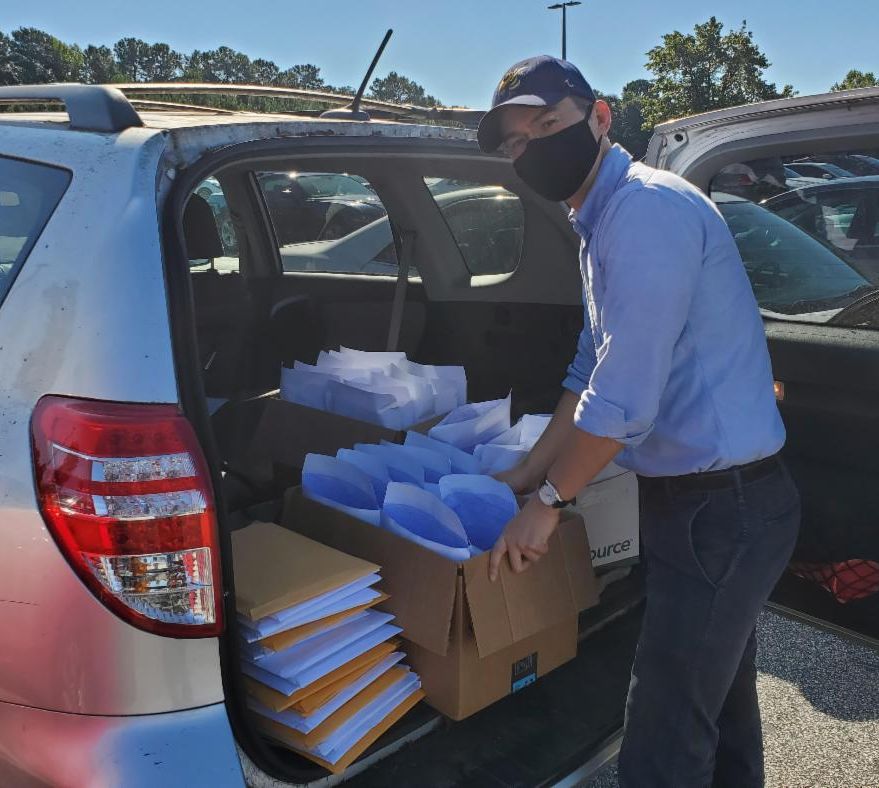
That same initiative led Shelley to volunteer in Atlanta, a city he had just moved to in 2018 as a postdoctoral fellow.