|
Bus Lines are Shifting Gears to Win New Riders
Intercity Bus E-News, May 2026
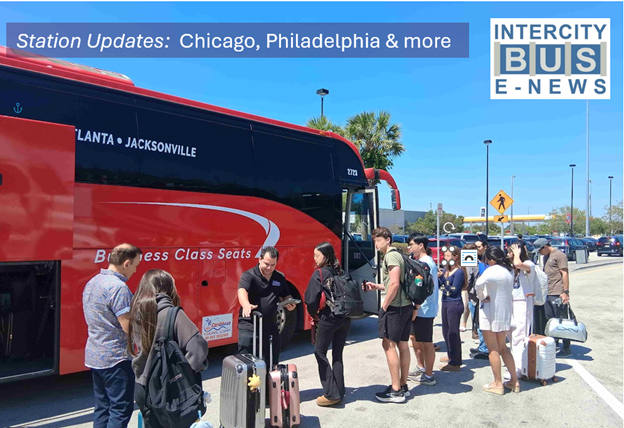
May 7, 2026 | Above: A RedCoach service for Orlando is boarding in West Palm Beach on March 23, 2026
| |
Editor’s Perspective
Our “Big Trends in Intercity Bus Travel” webinar highlighted practical ways that bus lines can respond to intense competition from private autos and Amtrak. Brian Antolin noted that lines are well-positioned to add more direct-service itineraries, establish new and convenient pickup and drop-off points, and experiment with new types of onboard services. Antolin, CEO of intercity travel company Metrolane, believes that bus lines are doing much of this effectively on the New York–Washington route (see analysis below) by strategically choosing stops and itineraries that lessen dependence on downtown-to-downtown travel, in which Amtrak and airline competition looms large. This mirrors the "Allegiant Air Strategy" of focusing on routes in which major airlines are absent.
| The ability to "shift gears" in this way is a critical advantage for bus travel. It helps combat the tendency for many travelers--prices and schedules being equal--to opt for train over bus travel. In the Northeast, FlixBus, OurBus, Peter Pan, Trailways, and other brands have prioritized new through-service options and added secondary stops, which often vary by day and season. As most readers know, it is far easier—and less risky—to experiment in this way in bus-size than train-size units. Amtrak faces higher hurdles in making such adjustments. | |
This Intercity Bus E-News edition showcases how bus lines are succeeding through such measures. You’ll find coverage of how:
-
In South Florida, travelers have a tantalizing range of bus (and train) options that encourage shifts away from private vehicles. Miami even has a busy bus stop at the doorstep of a major tourist attraction.
-
In Philadelphia, most major bus lines have relocated the newly reopened downtown terminal, with Greyhound and FlixBus also expanding suburban options in Cherry Hill, NJ.
-
Texas’s Vonlane and Virginia’s Virginia Breeze are rolling out new services on routes that have long lacked direct service options, but each has its own twist.
| It is encouraging to see how bus lines can attract riders beyond their core markets of university students, those with tight budgets, the mobility-challenged, and urban dwellers without cars. The innovations described below help point the way to attracting a much more diverse clientele. | |
Joseph Schwieterman, PhD
Intercity Bus E-News Editor | Professor and Director, Chaddick Institute at DePaul University
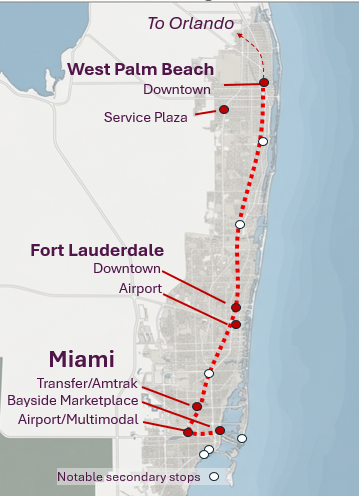
| Chasing the Sun on South Florida's Buses & Trains | The Miami–Fort Lauderdale–West Palm Beach (WPB) corridor, densely populated and packed with attractions, has something for almost everyone, including tourists or those seeking practical ground transportation. This 72-mile route is the country’s only intercity route (defined as 60 miles or more) with three rail service providers and 3+ bus service providers offering 2+ daily departures. It has five bus lines if you include Tornado Bus’s once-daily service and count Greyhound and FlixBus as separate entities. All except Tri-Rail’s regional (commuter) service also serve the longer Miami–Orlando route, making South Florida a compelling case of how giving travelers myriad options can entice them to avoid private vehicle travel. | |
A Firsthand Look at the Services
The Intercity Bus E-News editor set out on March 23–24, 2026, to explore the differing niches of the corridor rail providers, Amtrak, Brightline, and Tri-Rail, as well as JetSet Express, Red Coach, and Greyhound/Flix. The bus lines have four boarding locations in WPB and Fort Lauderdale and, remarkably, 12 in metro Miami.
Brightline’s amenities—especially its superbly designed stations, some of which are akin to premium airport lounges—are extensively described in other publications, so I won’t gush over them here. Suffice it to say that, for my Saturday evening Orlando–West Palm Beach trip, Brightline was affordable ($60 one-way, booked in advance), punctual, low-stress, and well patronized, with 150+ on board. A similarly timed RedCoach service was about $20 less expensive but took a bit longer. The Brightline rideshare pickup zone at my destination was well-marked and orderly.
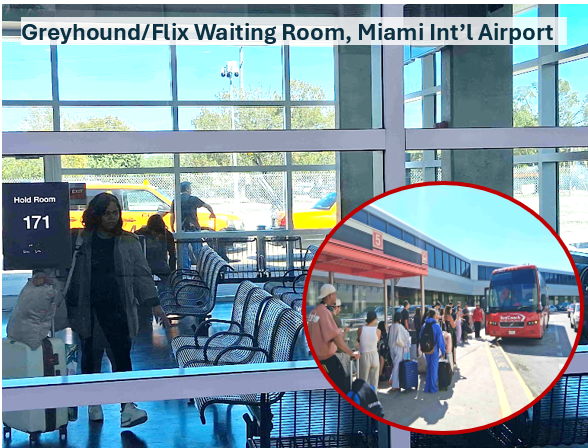
| The next day, my RedCoach premium economy trip departed from a tollway service plaza near WPB (see masthead photo), which required paying a toll to reach (something my Uber driver grumbled about), but the spacious indoor seating and the massive food court were positives. Around half of the 40+ passengers onboard alighted at Fort Lauderdale’s international airport, with the remainder continuing to Miami International Airport, where many headed to summon rideshares, a pattern indicative of how RedCoach—like the West’s Salt Lake Express and New England’s C&J Bus Lines and Concord Coach—doubles as an airport shuttle and traditional intercity carrier. A lengthy queue was present for the coach’s subsequent northbound departure (see inset photo below). | |
Why Miami is an Outlier
Miami is an outlier among major metropolitan regions for having neither a stand-alone intercity bus station nor a centrally located intermodal hub used by these buses. Instead, Greyhound’s and Flix’s primary Miami station is at the airport's Intermodal Center. This facility, around a half mile from RedCoach’s terminal curb and accessible via a skybridge and people mover, has a well-maintained glass-enclosed waiting room and a rideshare/taxi drop-off area far calmer than those at airport terminals. JetSet Express also operates daily here. Miami Metro’s airport station is next door, but its service to downtown is relatively slow because it's circuitous, so many intercity buses serve both the airport and downtown.
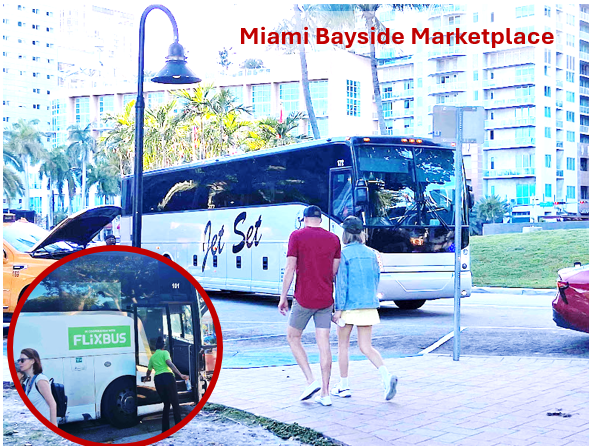
| FlixBus’s main stop downtown is in front of Bayside Marketplace, one of the city’s premier tourist attractions, which bustles from dawn to dusk. This spot had a festive ambiance during my visit, which helped compensate for the lack of shelter and limited seating. I don’t recall ever being at a prominent U.S. intercity bus stop so close to the heart of a major tourist haunt—a pleasant surprise. The Marketplace sees around 12 Flix and a pair of JetSet schedules on busy days. Flix offers extensive express service, while JetSet caters to vacationers willing to bend their schedules to use stops near their hotels and major attractions. A morning trip to here from Orlando has 13 intermediate stops but is well-suited for Miami day trips and cruise connections, making JetSet a bus-travel unicorn. | |
My return trip to WPB began on Tri-Rail’s two-car downtown shuttle, which was filled with youthful passengers and their bicycles (which must be properly packed when on intercity buses). The shuttle, launched in 2024, leaves from a downtown terminus connected to, but separate from, Brightline’s palatial MiamiCentral Station. Most riders, like me, transferred at Metrorail Transfer to the main line train from the airport, within view of Amtrak’s Miami station. The ride to WPB takes around two hours, though a weekday express—like certain intercity buses — takes considerably less, with Brightline faster still.
On busy days, there are 14 bus trips in each direction; the range of stops and fares illustrates the high degree of market segmentation. Greyhound/Flix and Tri-Rail are often the least expensive, well under $20 each way in advance, with other options somewhat higher. Flix also has stops at Miami Beach and Golden Glades.
All this makes South Florida an example of the power of giving travelers an impressive array of bus and rail options rather than aging (and sometimes dreary) downtown stations and desolate curbside spots. Credit the City of Miami and Dade County, which operates Miami International Airport, and service providers for cultivating such options in a historically auto-dependent region.
| |
Virginia Breeze. The rollout of the Tidewater Current linking Virginia Beach and Norfolk to Richmond and Harrisonburg, VA, in mid-April was a milestone for Virginia Breeze, giving it a fifth route—its first not involving Washington, DC. The Tidewater Current is operated by Academy Bus, whereas other state-supported routes are run by Coach USA’s Dylan’s Bus Service. The once-daily round-trip has stops near several major college campuses and at both Richmond’s international airport and the Main Street Station bus plaza, next to a busy Amtrak stop. The route also calls on Amtrak’s Newport News and Williamsburg, VA, stations, making it a case study in multimodal connections. Virginia uses its Breeze network to fill gaps in its large state-supported rail system, which has also grown, creating a well-coordinated statewide network.
| |
Vonlane. This Texas-based first-class line has launched its twelfth route, linking The Woodlands to Austin, TX. The Woodlands, a northern Houston suburb experiencing rapid growth and boasting above-average levels of educational attainment and household income, is home to many business travelers. The new route complements Vonlane’s The Woodlands-to-Houston service launched last year. One-way fares on the day of departure are around $99. There are generally four trips on the busiest days of the week and two on mid-week days and Sundays, all leaving from the Woodlands Waterway Marriott Hotel.
| |
Greyhound. Greyhound has launched Indianapolis–Peoria, IL–Des Moines, IA service, which runs approximately 4 hours later than Jefferson Lines on this route. A key difference is that Greyhound runs via Burlington and Ottumwa, IA, while Jefferson follows a more northerly route via Iowa City, IA and the Quad Cities, IL/IA, which was previously served by Burlington Trailways
| |
Flixbus. FlixBus launched a new route linking Boston and Worcester, MA, to Amherst, MA, and Albany, NY, in April. Running five days a week, the service caters to student populations in the Hub City, the University of Massachusetts Amherst, and the State University of New York at Albany. “College campuses are some of the busiest travel hubs in the Northeast, with students frequently traveling between school, home, and nearby cities,” said Karina Frayter, head of communications at Flix North America, in a release.
| |
Pennsylvania Intercity Bus Website. A new website launched by the Pennsylvania Department of Transportation exemplifies the growing emphasis of state governments on bus-service marketing. The website provides practical information about state-supported services. Information on whom to contact if you miss your bus, FAQs, and other guidance is presented in a way that reduces apprehension among travelers new to bus travel. The site also includes photos and easy-to-read downloadable schedules for each of 10 routes, such as Harrisburg–Scranton (Fullington Trailways) and Pittsburgh–Erie (Greyhound), with a map for each.
| NY - WAS: Fewer Shuttles, More Schedule Nuances | |
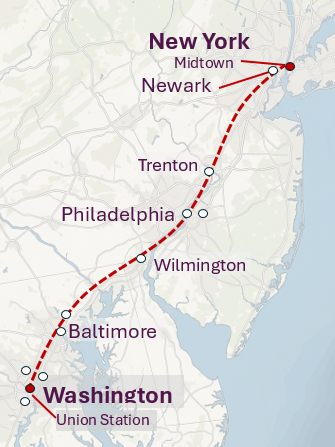
The largest intercity bus lines have moved away from nonstop shuttle service on New York (NY)- Washington route in favor of creating through-bus service options involving a wider variety of locations. The NY Midtown to Washington Union Station (WUS) route is a case in point. A decade ago, the largest bus lines shuttled between these major stations. Today, only about 15% of direct schedules on the routes operated by FlixBus, Greyhound, and Peter Pan (cumulatively) have no intermediate stops, our May peak-day review shows.
Among the notable patterns we observed are these:
-
Slightly more than half (54%) of schedules have 2+ stops.
-
Baltimore is the most popular stop, appearing on 53% of schedules. Peter Pan often runs express to Baltimore before stopping at White Marsh park-and-ride and the downtown station
-
FlixBus and Greyhound together have more than a dozen unique stop combinations. Several of Flix's nonstop trips to WUS continue to Richmond, VA, and beyond.
| |
Bus lines are finding particular success with neighborhood and suburban stops around Washington. BestBus still emphasizes nonstop NY - WUS service but its buses continue on to Northern Virginia and other locations. Washington Deluxe (part of Tripper) has ended WUS service altogether in favor of Dupont Circle. Flixbus just launched a new route to Virginia's Tysons Corner through an extension of NY - Bethesda, MD service.
The new approach, while adding time to schedules, reflects changing travel patterns in post-pandemic times, particularly the greater emphasis on work-from-home lifestyles and the decline in downtown activity. It also reflects bus lines' efforts to differentiate their service from airlines and Amtrak, which tend to serve a fixed set of (mostly downtown) stations. Amtrak's dynamic pricing, which often makes discounts available for off-peak travel, is also a factor. Yet, despite the big NY - WAS shifts, NY - Boston South Station still has a high preponderance of nonstop and one-stop schedules.
| |
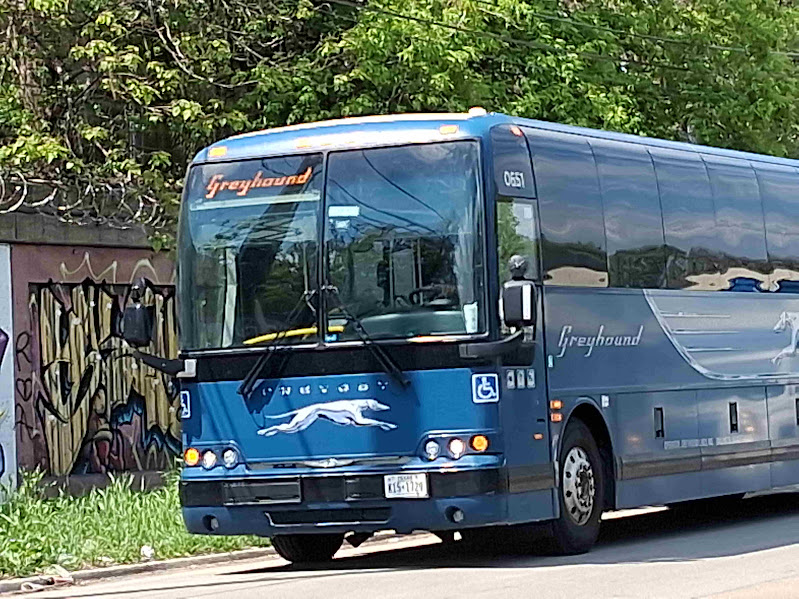
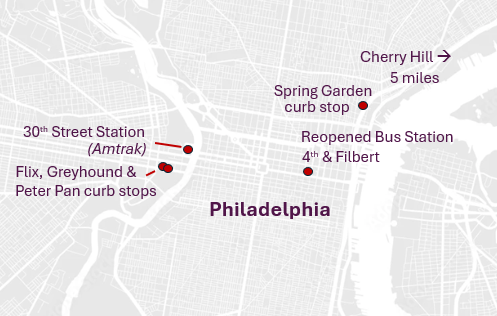
Philadelphia. The reopening of Philadelphia’s downtown intercity bus station on May 1 attracted considerable media attention and ended several years of turmoil about the city’s bus stop arrangements. This facility is operated under a lease from the Philadelphia Parking Authority while the search for a site for a new, permanent station continues. Fullington Trailways, FlixBus, Greyhound, and Peter Pan all use the terminal, with Greyhound/Flix alone having 54+ departures on busy days.
| |
However, there is more to Philadelphia’s comeback story. Greyhound has moved its main South Jersey stop from the Westampton Academy Park & Ride to the Cherry Hill Mall in Camden County. This consolidates its service in this suburban region with FlixBus’s. Around 32 buses now depart from this location on busy days, including many that bypass downtown Philadelphia via Interstate 295. Less favorably, as part of the push to consolidate downtown service at the reopened terminal, Fullington has ended curbside stops at Schulykill & Walnut, a popular boarding spot close to 30th Street Station, and Peter Pan will do so at the end of this month. Other possible changes remain to be seen. Greyhound and FlixBus schedules still show stops at this curbside location into the future.
| |
Chicago. The Windy City's Community Development Commission voted unanimously in April to expand a downtown tax-increment financing district for the City’s planned acquisition of its intercity bus terminal on Harrison Street. This sets the stage for a possible City Council vote in mid-June to complete its acquisition, but concerns about public safety around the deteriorating station continue. The lease for the privately run station ends on June 30, 2026, likely making an interim arrangement necessary to facilitate an orderly transition to municipal ownership and operation. The Intercity Bus E-News team has been attending public hearings alongside other civic and educational groups. Separately, FlixBus has added three-day trips on busy days from the station to the St. Louis route, closing a gap in the Midwestern network.
| |
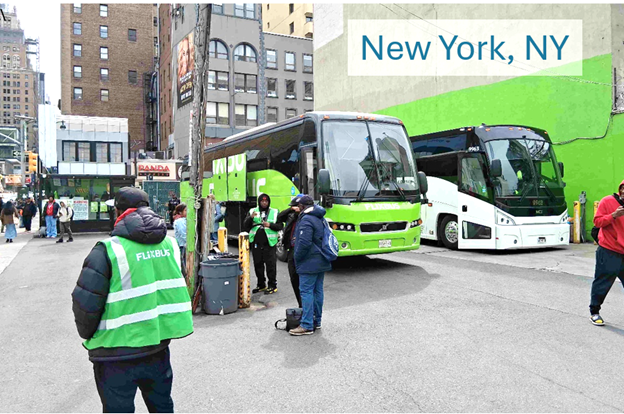
New York. The Port Authority of New York and New Jersey will impose a new arrival fee for buses at its Midtown terminal starting in July. It previously focused primarily on departure fees and other charges. Short-haul buses will be charged $2 per arrival, with the fee increasing by $2 annually, while long-haul buses will pay $30, increasing each year similarly. These fees are intended to offset a small share of the $11 billion reconstruction of the Port Authority Bus Terminal, but have raised concern among bus operators. Although intercity bus lines are mostly exempt from New York’s congestion fee, they are also likely to face sharply increased Lincoln Tunnel tolls. We’ll be following the developments.
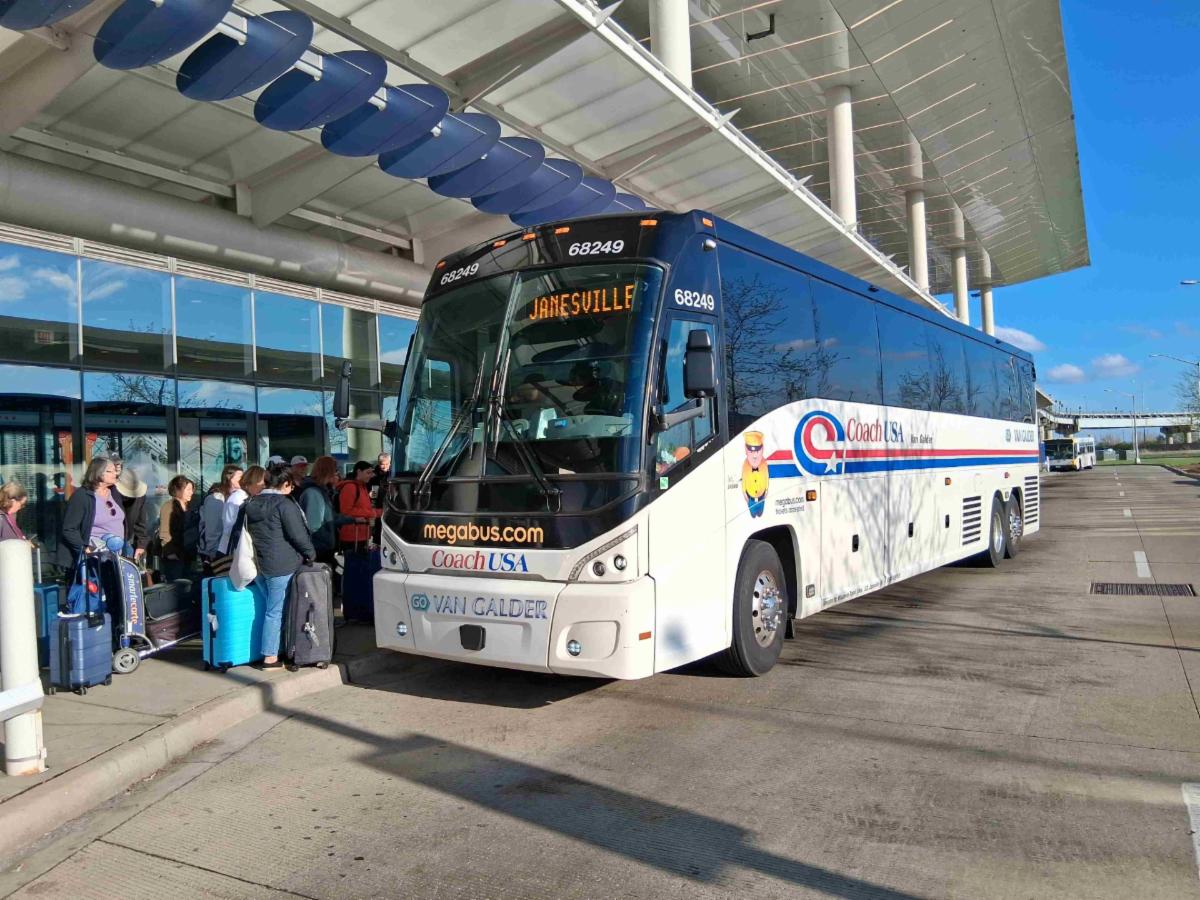
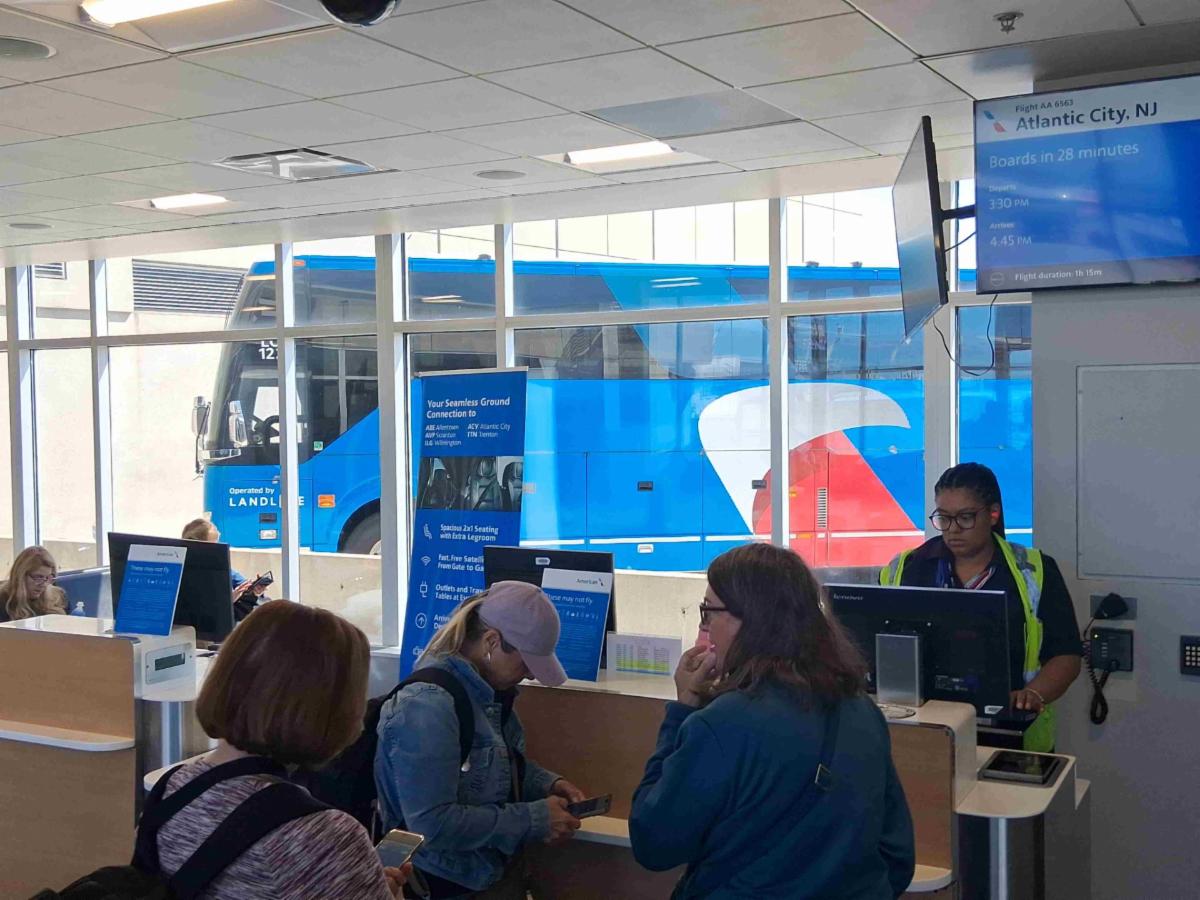
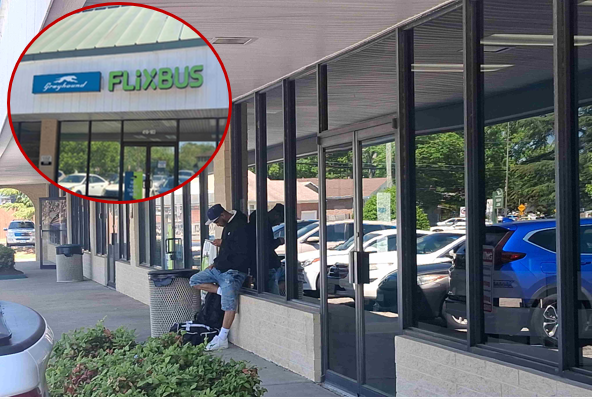
| News Photos from Around the Country | A Coach USA Van Galder Coach Lines service from Chicago O’Hare to Madison, WI, is preparing to leave the airport’s Multi-Modal Facility on April 18, 2025. | Philadelphia International Airport | Passengers at Philadelphia International Airport wait to board a Landline service to Allentown-Bethlehem, PA, operated by American Airlines in April 2026. The service uses Gate F8, which is relatively close-in at the terminal American uses for regional flights. The gate can handle several coaches simultaneously. | A passenger waits with his luggage outside Greyhound/FlixBus’s Norfolk Station, which is in a mini-mall (see the sign in the inset photo). The storefront station has a small waiting room and ticket counter; boarding and alighting take place in the rear of the building. | | |
Invite others to join Intercity Bus Listserv
For a link to this newsletter, our past newsletters, and reports, click here
Invite your colleagues to join our Intercity Bus Listserv. To become part of our Intercity Bus Listserv and receive 8 – 10 emails per year, email Zaria by replying to this email. No spam. Free. Also, check out our recent studies, briefs, and podcasts below. The Intercity Bus E-News team is Zaria Bonds, Samantha Rouzan, and Joe Schwieterman.
-
For a link to our March Intercity Bus E-News, click here
This independently produced e-newsletter brief has been shared with our Intercity Bus (IB) and Transportation listservs. The Chaddick Institute does not receive funds from transportation companies or related industries.
| | | | |