Great question, Kaitlyn. Thank you for kicking off a perfect topic for this month's TTS newsletter:
In this month's newsletter we will look more closely at this third key: The Strong, Emotional Business Case.
1.
What is The Business Case?
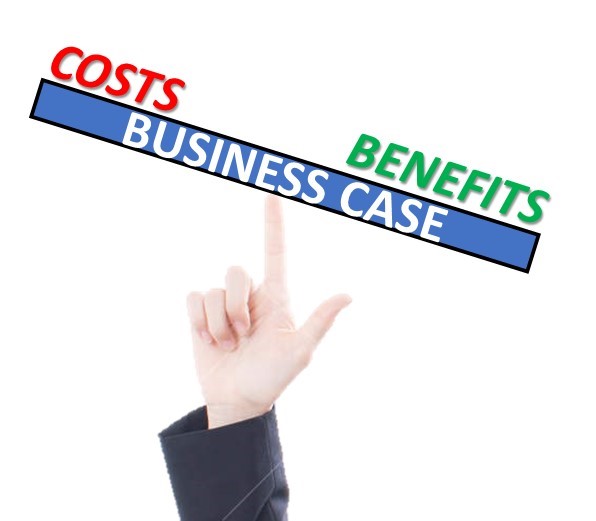
A business case is what explains the reasoning for starting a major project in an organization.
2. When is the Business Case Used?
The business case is typically used as an integral part of the budgeting process. So it is used early in the customer's buying process and a Sales Superstar's selling process.
3. Why Do We Need A Business Case?
Anytime your customer is about to spend a significant amount of his scarce resources (money, time & labor) on a project, a formal request is necessary which is called the budgeting process. During the budgeting process, the executives and financial professionals make use of business cases to evaluate and compare various funding requests.
There is serious competition from various departments in a business to vie for very limited dollars. The business case is critical to determining which projects are approved and which projects are rejected or delayed.
4. How Does A Business Case Compare To A Value Analysis?
A value analysis and business case are very different tools despite the fact that many selling organizations tend to see them as one. The business case is used at the very beginning of the customer's buying process to determine whether an investment in the project is worthwhile.
Before vendor selection, a business case typically compares the status quo to a generic project.
In contrast, a value analysis is very narrow in scope. It is utilized toward the end of a buying process to help the decision makers make a final vendor selection. It compares the solutions offered by Vendors A, B and C on a feature-by-feature basis and tries to help make the best choice. The reason that the business case and value analysis are frequently misunderstood is that the business case includes sections which compare the status quo (Vendor A's solution) to a preferred future state (Vendor B's solution).
Both the Value Analysis and Business Case will include a ROI (Return on Investment) and/or TCO (Total Cost of Ownership) analysis.
5. Why Must a Business Case Be Emotional?
I say that decisions are made emotionally. Decisions concerning which projects get budgeted and which get the ax are no different. There is very fierce competition for scarce resources among departments within a business. I have spoken with many senior financial executives who all say that the budgeting process is similar to a child pleading for 50 gifts from Santa. Santa can't give 50 gifts to every child. Successful budget requests will need to be strong and emotional to separate themselves from all of the other "urgent" requests.
Let's look at an example of an emotional business case. Let's say you sell cloud-based storage software within the healthcare market. The business case could include the standard Excel spread sheet and financial department budget request form. It could mention the speeds, feeds and capacity of the requested technology project. Or, the smart business case author could tell a compelling story that accessing stored information across the enterprise will improve outcomes and reduce costs by accelerating physician decision making. Maybe the author will include a case study documenting a four-year-old's speedy discharge from the ER into the arms of her loving family because of instant access to decision-making information. The cover of the business case project document may include a large photo of a physician accessing data on a tablet while treating a smiling toddler.
6. Where In The Customer's Buying Process Is The Business Case Utilized?
As mentioned above, very early! Typically, no major purchase or project is formally initiated without budget approval. And the business case is critical to the budget approval.
7. What Does A Business Case Look Like?
Here is a sample of what the outline of strong, emotional business case would include:
- Executive Summary: Present State vs. Future State. Highlight the challenge or opportunity along with an emotional story
- Alignment with Corporate Strategic Goals (HINT: If you cannot tie the project to one of the top three corporate initiatives you are spinning your wheels. You must make the strong connection between a top corporate strategic goal and the requested project)
- Alternatives & Favored Option
- Show Me The Money (Financial Analysis which will likely include TCO - ROI - NPV (Net Present Value) and/or IRR (Internal Rate of Return). Note: For companies working in the healthcare market Outcomes or Quality of Care is included.
- Estimated Timeline & Implementation Plan
You can download a template for a Business Case HERE. The pa
ssword is "Trust."
8. Who Should Create The Business Case? Isn't This The Client's Job?
If you are an average rep, the answer is that the business case and budgeting process are the responsibility of the client. If you are a Superstar, you know that you will gain tremendous trust if you can be a valuable resource to your client. Assisting with the budgeting process and business case positions you to act as a trusted adviser to your client.
9. How Does Your Client Benefit From This Tool?
The client benefits by getting his budget approved. She also benefits by preventing project cancellation. A project without a strong emotional business case is in jeopardy of cancellation as a result of less-than-stellar financials.
10. How Does A Sales Superstar Benefit From This Tool?
Sales Superstars gain three major benefits as a result of assisting their clients with the Business Case:
A. Trust
As a trusted adviser, you want to be able to guide, teach, sell value, handle price pressure, create urgency and prevent project cancellation. Assisting the client early in her buying process with something as important as obtaining budget for a professional business case makes your customer look great in the eyes of senior executives. You become an invaluable resource. You gain enormous TRUST!
B. Budget Dollars
A strong business case helps you and your customer to obtain the funds for your project in the face of stiff competition for budget dollars from other areas of your customer's business. Note: In most cases, your customers will need to budget for large expenditures. However, if your business case is strong enough you may even bypass the budget process.
C. Urgency
It is not enough to simply get budget approval. Sales Superstars know that you also must create urgency for your project. Without urgency the project runs the risk of being delayed or cancelled.
11. Should I Slant The Document To Favor My Company?
My response here will be controversial. Unlike many, I train my future Superstars to understand the importance of helping the client create GENERIC bid specifications as opposed to slanted, lock-out specs (
Lockout Bid Specifications Newsletter
). Your goal when assisting a client with either a business case or bid specifications is singular--GAIN TRUST. You will lose trust if you assist the client, and yet take the opportunity to blatantly promote your solution. Remember this important quote:
"Trust arrives on foot but leaves on horseback." You run the risk of losing trust if you promote your solution in such a biased fashion.
12. What If A Client Balks At The Need For A Strong, Emotional Business Case?
This is not an uncommon situation. It typically comes from a mid-level manager who has little experience with major projects in an organization. Small projects often times do not need a business case. The best way to address this objection is to anticipate it. Use both positive and negative references from other similar clients. A positive reference would be a client who saw huge value in a strong, emotional business case. A negative reference would be a client who experienced chaos and disaster as a result of the lack of a business case. Perhaps the project was placed on the cancellation chopping block after 6 months of hard work by the evaluation committee.
Kaitlyn, start gaining trust with your client early in the buying process by assisting her with her budget and the associated Strong, Emotional Business Case!
Good Selling!