Sign Hill Stewards
June Newsletter
|
|
Greetings Sign Hill Stewards,
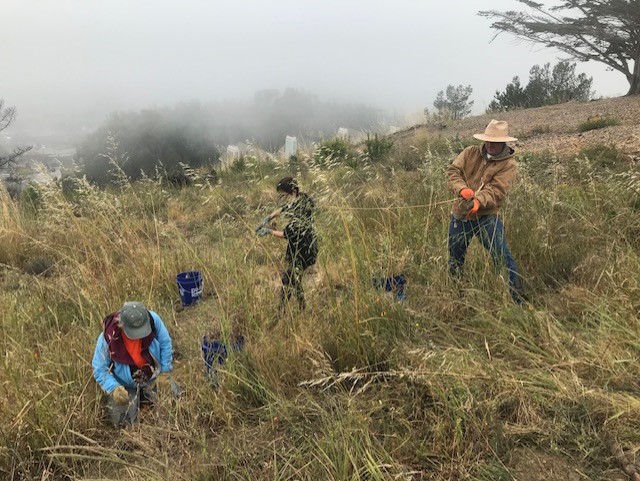
As we near the end of spring, many of our grassland plants are dropping seed with the onset of warm and dry summer months. Over the past month, we have dedicated much of our efforts to removing as many invasive plants as possible before they can add to the seed bank. We have also taken advantage of this time to collect some native seed for later plantings. It has been a pleasure to welcome several new volunteers to this work, many of whom visit Sign Hill for the first time when they come to support in our restoration efforts. It is a privilege to be able to introduce them to this beautiful open space, which for many is right in their own backyard.
Our monitoring of the mission blue butterfly (Icaricia icariodes missionensis) has continued over the last month and the flight season is nearly finished. As one flight ends, another is just beginning. The callippe silverspot (Speyeria callippe callippe) is a federally endangered butterfly that was observed on Sign Hill in 2021 for the first time since the 1980's. It has been incredibly exciting to have 3 callippe silverspot butterfly observations on Sign Hill so far this season! This fills us with hope that our restoration efforts are helping to welcome this species back to Sign Hill.
Some visitors of Sign Hill come to take in the city views and may not notice much more than sprawling tall grasses seemingly devoid of life, however California grasslands have significant ecological importance. The rich soils and wide-open spaces of grasslands make them particularly attractive to farmers and ranchers, and consequentially over 99% of grasslands in California have been altered by agriculture and development, or invaded by non-native species (CCBER). This makes the few remnants of native grasslands all the more precious for endangered grassland species like the mission blue and callippe silverspot butterflies.
Sign Hill park as we know it today only exists thanks to the vigilance and activism of a caring few who have taken the time to look a bit closer and appreciate the fascinating diversity of wildflowers and rare species that live there. According to National Geographic, only 10% of the world’s grasslands are protected. The people of South San Francisco are very fortunate to be able to visit one of these rare preserved grasslands, and those who do may begin to discover the beauty and complexity of this threatened ecosystem.
Candace LaCroix
Natural Resource Specialist
Leading the Sign Hill Restoration Project
|
|
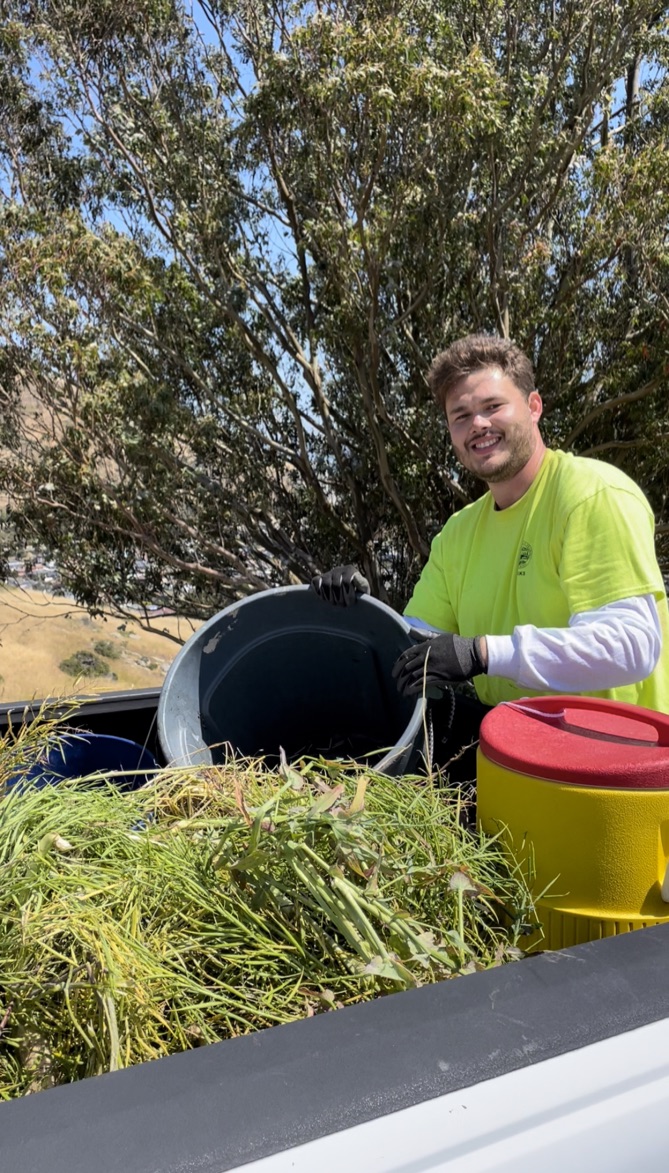
Daniel Simoni Promoted to Full-Time Park Maintenance Worker
|
Daniel Simoni was hired by the City of South San Francisco's Parks Department in 2019 as the part-time Natural Resource Aide. Over the past 3 years, he has been an integral part of our restoration efforts on Sign Hill and has earned a reputation for being hard-working, knowledgeable and always upbeat!
We are incredibly grateful for the countless hours of hard work that Daniel has put into healing the land on Sign Hill. While his new role comes with many new responsibilities, we are pleased that he will continue to be involved in the Sign Hill Restoration Project.
Please join us in congratulating Daniel on this momentous occasion!
|
|
|
Announcement: Tree Removals on Sign Hill |
|
Over the coming weeks and months, visitors to Sign Hill will notice some changes taking place. Much of the forested areas will be thinned to reduce fire risk and restore the natural landscape of Sign Hill. It may be surprising to find out that Sign Hill was not always covered with the trees and shrubs that you see today, it is naturally a grassland. Take a look at this picture from the 1930's, Sign Hill is still connected to San Bruno Mountain and there is not a tree or shrub in sight!
|
|
Starting in the late 1950's and continuing until nearly the turn of the century there have been efforts to convert Sign Hill from a grassland to a forest. While these trees were planted with sincere intentions to beautify the park, the changes to the landscape have negatively impacted the local ecosystem. The deep roots and large biomass of these non-native trees outcompete native plants for soil moisture and nutrients, increasing the presence of invasive plants and altering the natural landscape. In addition, these trees increase the danger to local residents in the event of a fire by adding fuel to keep it burning longer and hotter.
The fire of 2020 taught us even more about the effect of these trees on the ecosystem. When many of the burned trees were removed, natural springs were rediscovered on Sign Hill. The trees had been tapping into this water before it could make it to the surface! A long time local resident who grew up next to Sign Hill recently shared that in the 1960's and 70's there were springs which harbored wildlife like toads and even tree frogs!
The tree work will be completed in tandem with ongoing nesting bird and rare plant surveys that will ensure that all wildlife is protected during this period of change. We hope that our with our efforts to restore Sign Hill more exciting rediscoveries await!
|
|
Callippe Silverspot Butterflies Observed on Sign Hill 2nd Year in a Row! |
|
|
|
During our volunteer event Saturday, May 14 we observed something amazing, 2 federally endangered callippe silverspots butterflies (Speyeria callippe callippe) flying at the top of Sign Hill! They were found near a protected patch of their host plant johnny-jump-ups (Viola penduculata).
On the following volunteer event, May 20 there was another sighting in the same spot! The rare opportunity to see an endangered species in nature is so wonderful to share with the volunteers that come out to support this important work!
There had not been any reported sightings of the callippe silverspot butterfly on Sign Hill for over 30 years, until 2021 when one was observed by our previous Natural Resource Specialist, Emma Lewis. It appears that a positive trend may be emerging. Mid-May through mid-July is the callippe silverspot's flight period and we hope that our efforts to protect and improve habitat on Sign Hill will welcome more of these special butterflies!
This video shows our third sighting so far in 2022!
|
|
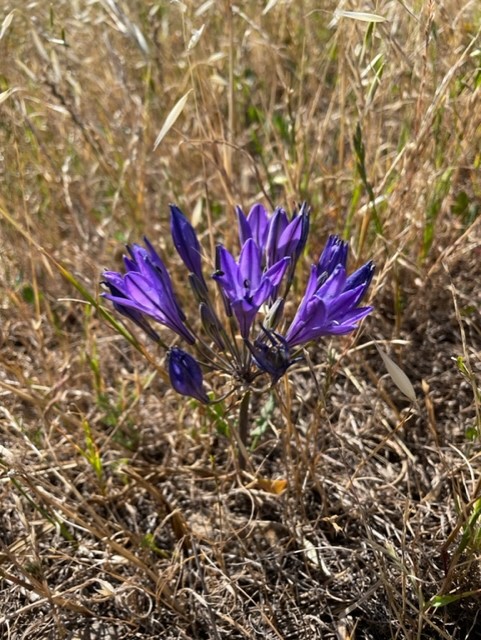
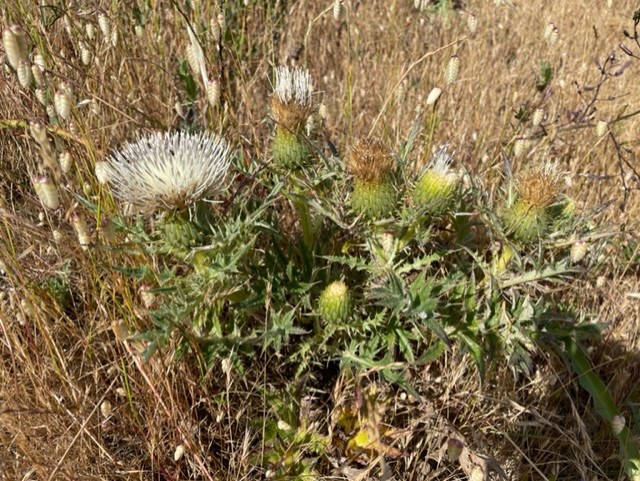
As spring continues on Sign Hill, the wildflowers continue to progress and change. Early spring wildflowers have gone to seed, while late bloomers continue to open. Here are some of the flowers that are blooming now. Remember not to pick wildflowers and take pictures instead in order to protect sensitive habitat and ensure that everyone can enjoy the beautiful wildflowers of Sign Hill.
|
|
Ruby Chalice Clarkia (Clarkia rubicunda)
|
Pearly Everlasting (Anaphalis margaritacea)
|
Fleabane (Erigeron foliosus)
|
Ithuriel's Spear (Triteleia laxa)
|
Buff Lettuce (Dudleya farinosa)
|
|
Coast Buckwheat (Eriogonum latifolium)
|
Sticky Monkeyflower (Diplacus aurantiacus)
|
Brownie Thistle (Cirsium quercetorum)
|
Seaside Daisy (Erigeron glaucus)
|
Coast Tarweed (Madia sativa)
|
Coyote Mint (Monardella villosa)
|
|
Sign Hill Resident Spotlight: Pacific Gopher Snake |
|
The pacific gopher snake is tan with brown, square-shaped patches along its back. While their appearance may be alarming at first glance, their resemblance to the venomous rattlesnake is only skin deep. This mimicry is a way to warn predators such as hawks that they could be dangerous. Gopher snakes are even known to rapidly shake their tails, seemingly trying to pass for a rattlesnake. However, they are non-venomous and constrict their prey, which mostly consists of small rodents and birds. It is always a good idea to keep a safe distance from a wild animal, but this isn't one to be afraid of!
Please enjoy these videos of gopher snakes seen recently on Sign Hill. One in which a gopher snake has just constricted a pocket gopher!
|
|
Mission Blue Nursery Native Plant Sale! |
|
San Bruno Mountain Native Plant Sale!
Saturday, June 18th, 10am - 3pm
Mission Blue Nursery
3435 Bayshore Blvd, Brisbane, CA 94005
Mission Blue Nursery, a native plant nursery operated by the local non-profit San Bruno Mountain Watch, is having its summer plant sale from 10am to 3pm!
All the plants grown at Mission Blue Nursery are native to the hills, canyons, creeks, dunes, wetlands, woodlands, and meadows of beautiful San Bruno Mountain! You'll find shrubs, trees, wildflowers, succulents, edible natives, groundcovers, bunchgrasses, and more.
Please visit the page below for the plant inventory list and more information:
All proceeds from the plant sale support the restoration and education programs of San Bruno Mountain Watch.
|
|
Volunteer with Sign Hill Stewards! |
|
When: Every other Friday and the 2nd Saturday of each month from 9am-12pm. Only cancelled for heavy rains.
Registration: Registration is required. Volunteers under the age of 18 must have a youth waiver signed by a parent/guardian. Youth under the age of 15 are welcome and must be accompanied by an adult. Click the link below to RSVP.
What to bring: To prepare for working outdoors, please bring work gloves, plenty of water, sturdy shoes, long pants and long sleeves, a hat/sunscreen, and a completed waiver for each volunteer. Volunteers should expect some hiking on steep terrain.
|
|
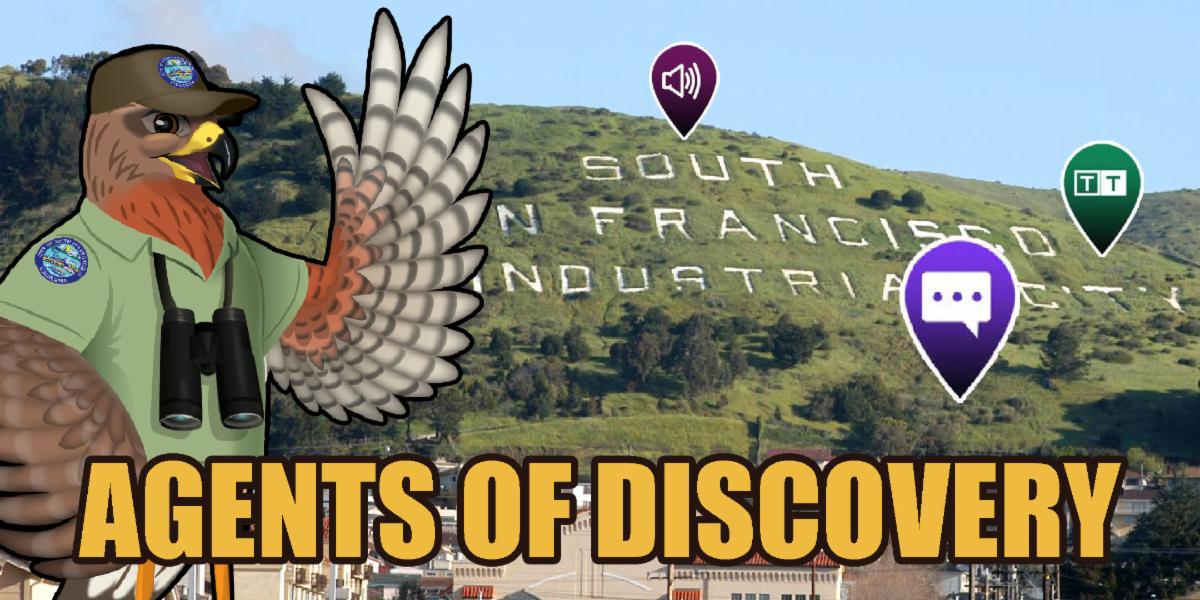
Explore the Agents of Discovery App! |
|
|
|
|
|
|