|
Sign Hill Stewards
Winter 2025 Newsletter
| | |
|
Seasons Greetings Sign Hill Stewards,
Sunday marked the winter solstice, the shortest day in the northern hemisphere. It’s little wonder that throughout history people have celebrated this time of year with holiday traditions that light up the night. To mark the season South San Francisco strings colorful lights on the flagpole at the top of Sign Hill, spreading holiday cheer for miles around.
The light tree is not the only thing brightening up Sign Hill this time of year. The season’s first rains have given rise to flashes of brilliant green grass that seem to appear overnight along the flanks of Sign Hill. Although these harbingers of winter often have us spending more time cozying up indoors, it is truly a great time to explore nature in the Bay Area. Not only can you see a wide variety of plants putting on new growth, with a closer look you can also discover a plethora of wintery treasures. You might find mushrooms in a variety of wondrous shapes and colors, moisture loving insects like snails, slugs, and earthworms, and even amphibians like frogs, salamanders, and newts.
With friends and family gathering for the holidays, there is never a better time to get out for a hike on Sign Hill. Enjoy quality time together in nature while taking in stunning panoramic views that are sure to impress. It is also an excellent time to join a Sign Hill Stewards workday, winter rainfall means restoration planting days are coming soon! We hope that the cool wet weather won’t keep you from enjoying all that Sign Hill has to offer this season.
Candace LaCroix
Natural Resource Specialist
Leading the Sign Hill Habitat Restoration Project
| | |
Fall is a time when most of Sign Hill's grasses and herbaceous plants have already gone to seed and fallen into dormancy, so there is a bit less urgency to remove many invasive plants. SSF Parks likes to take advantage of this time of year to take on some less seasonally-dependent projects around the hill.
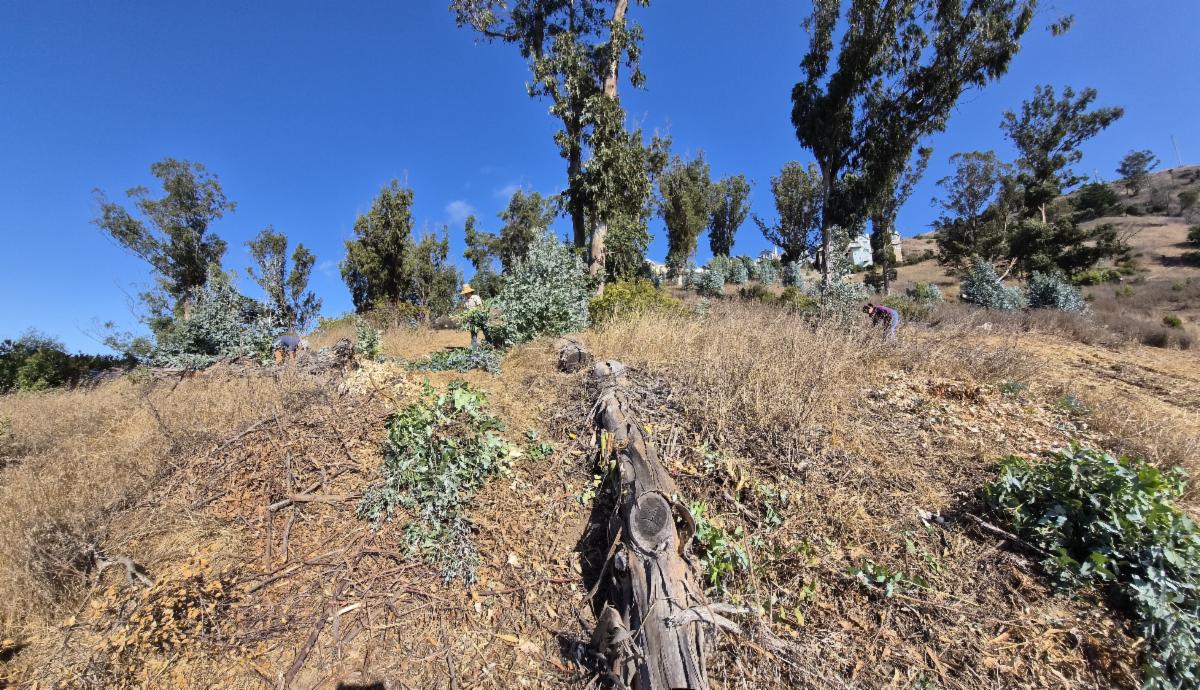
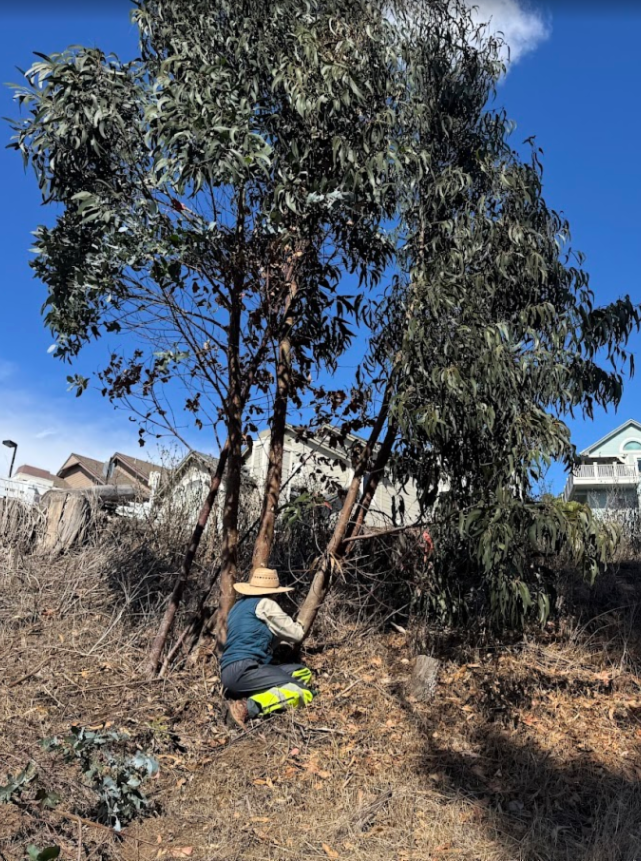
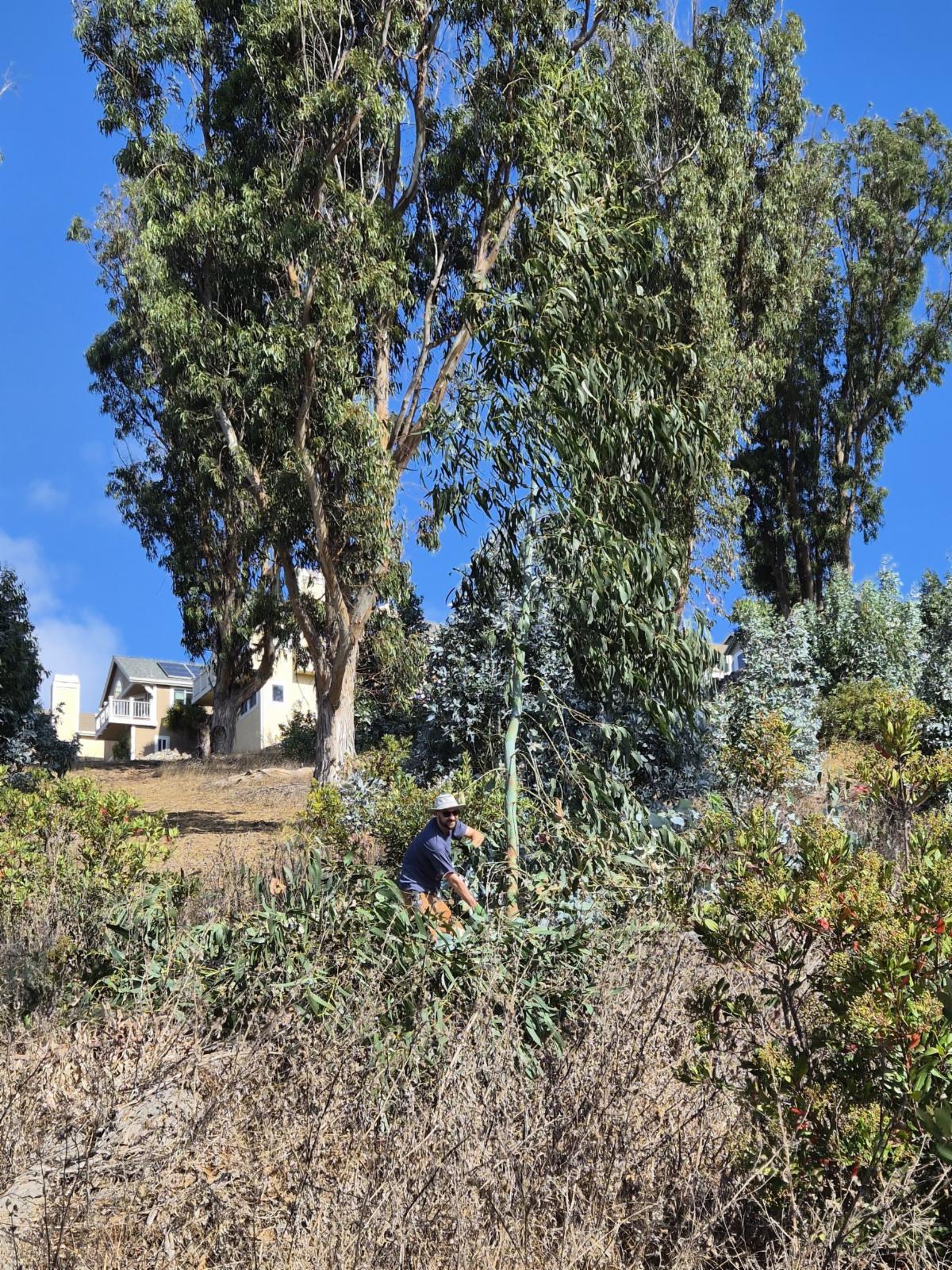
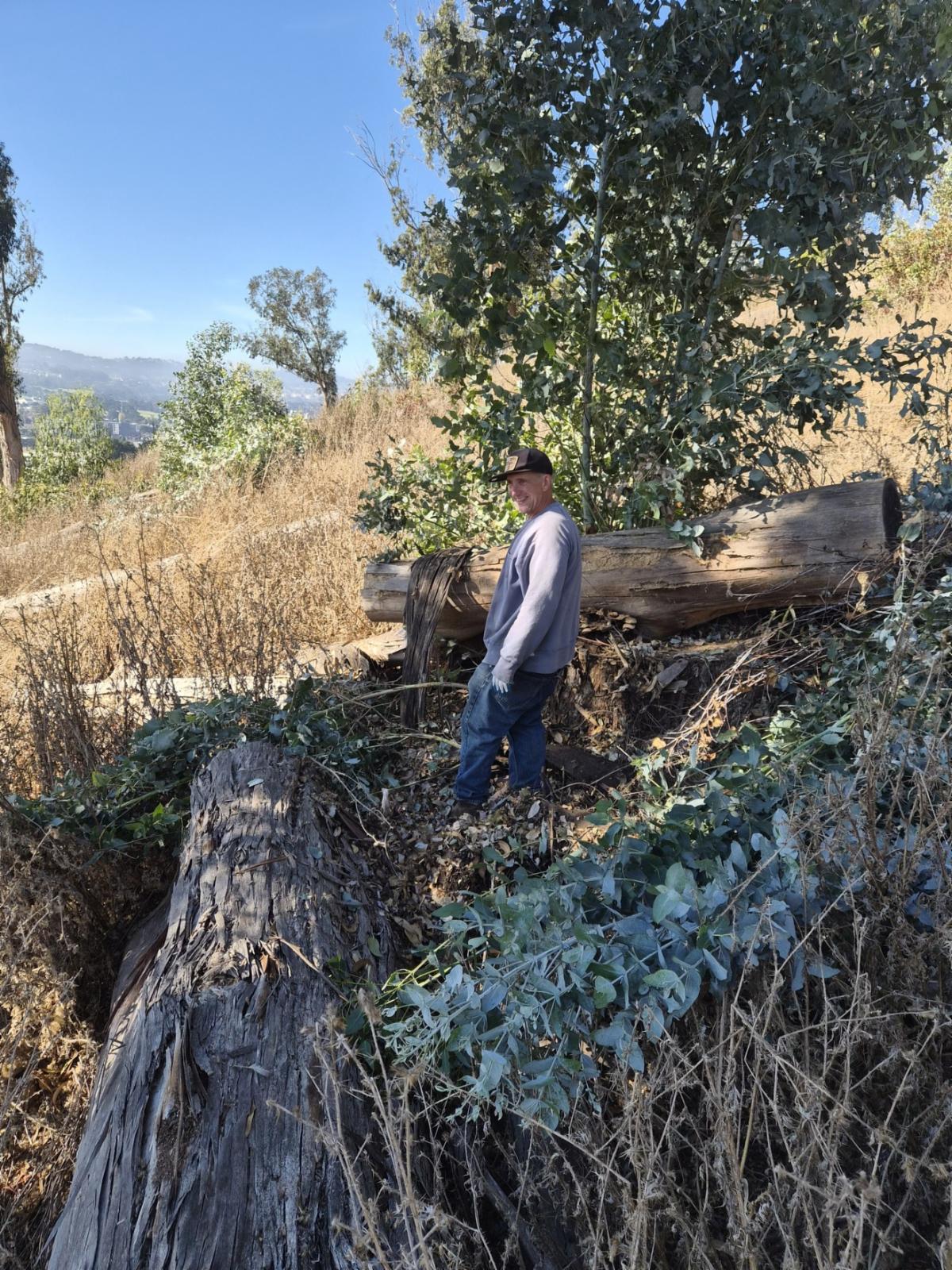
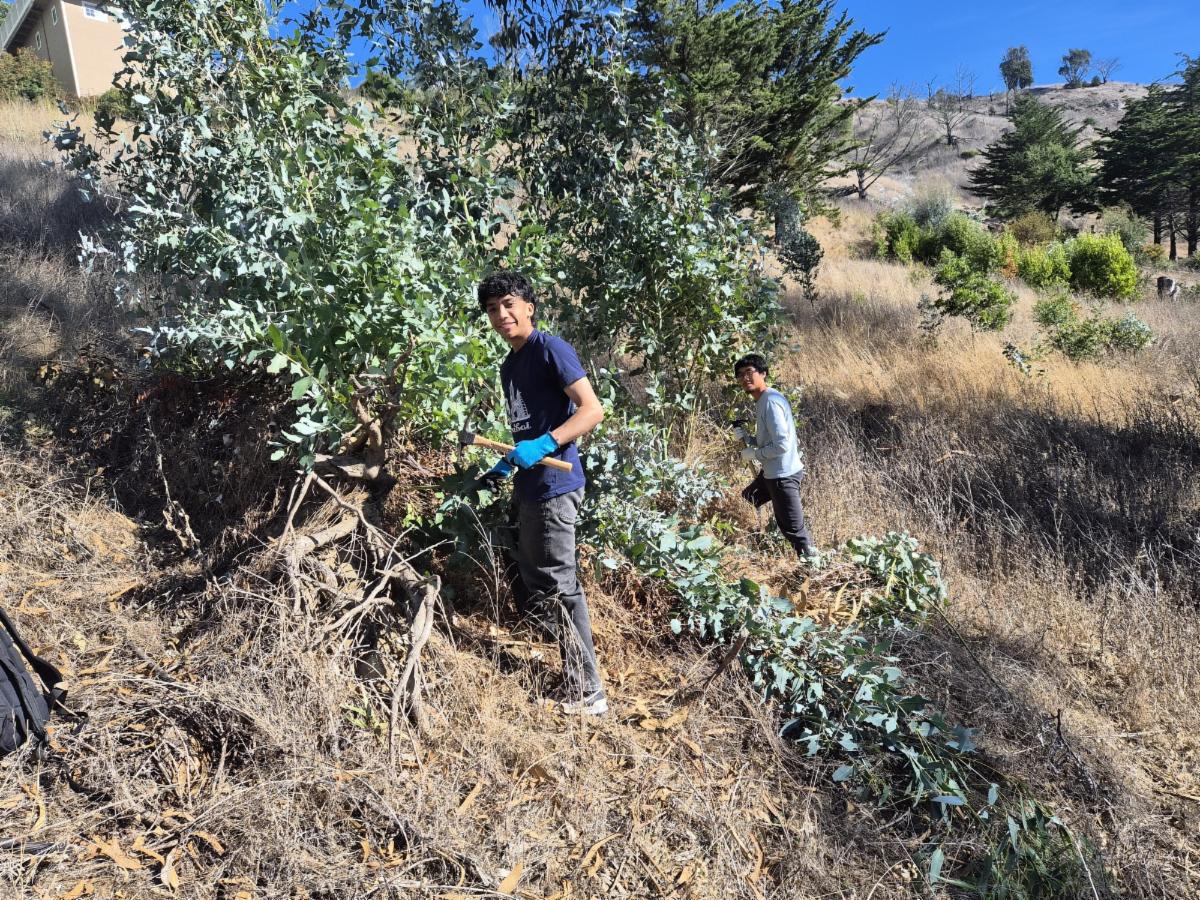
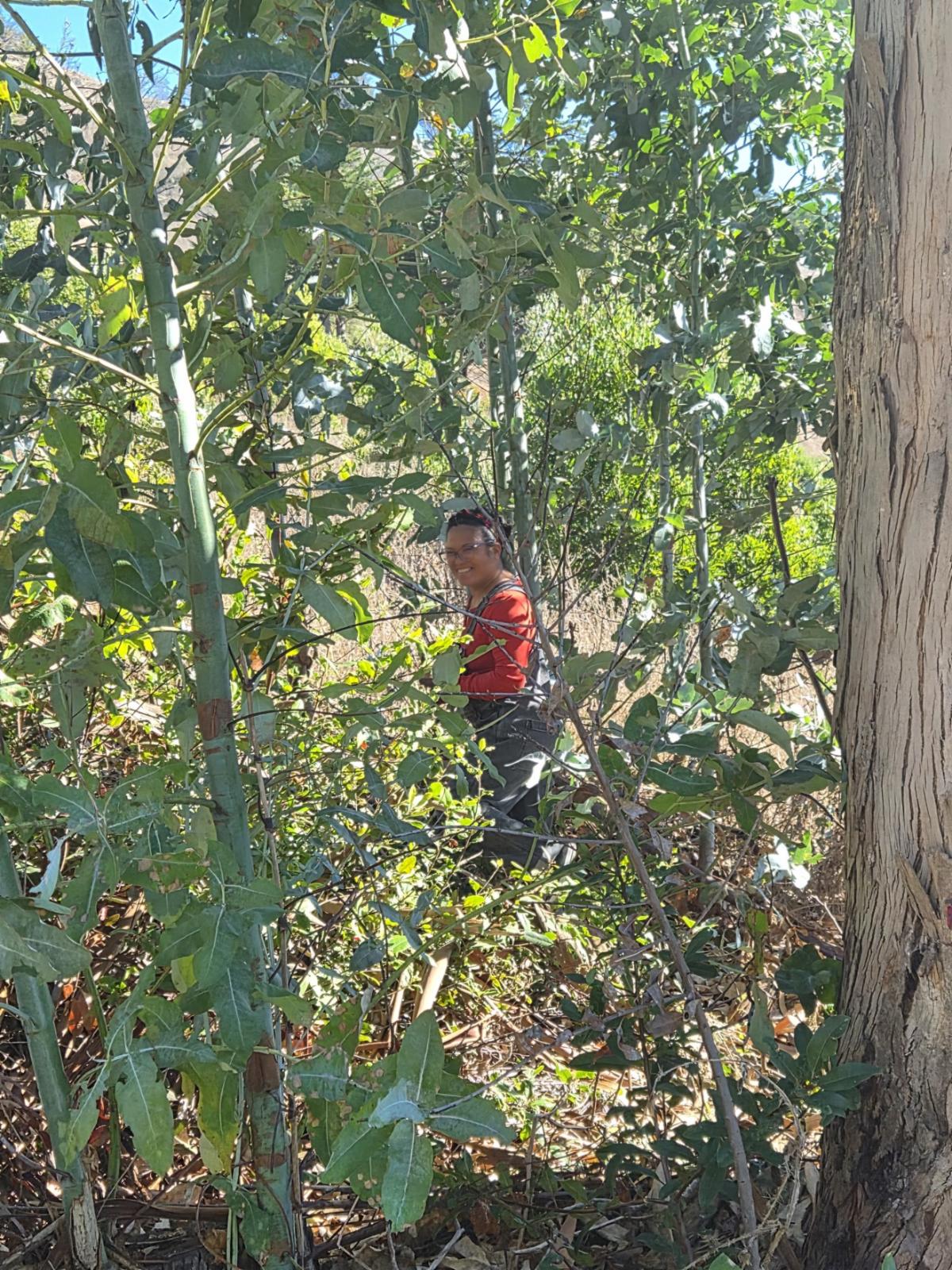
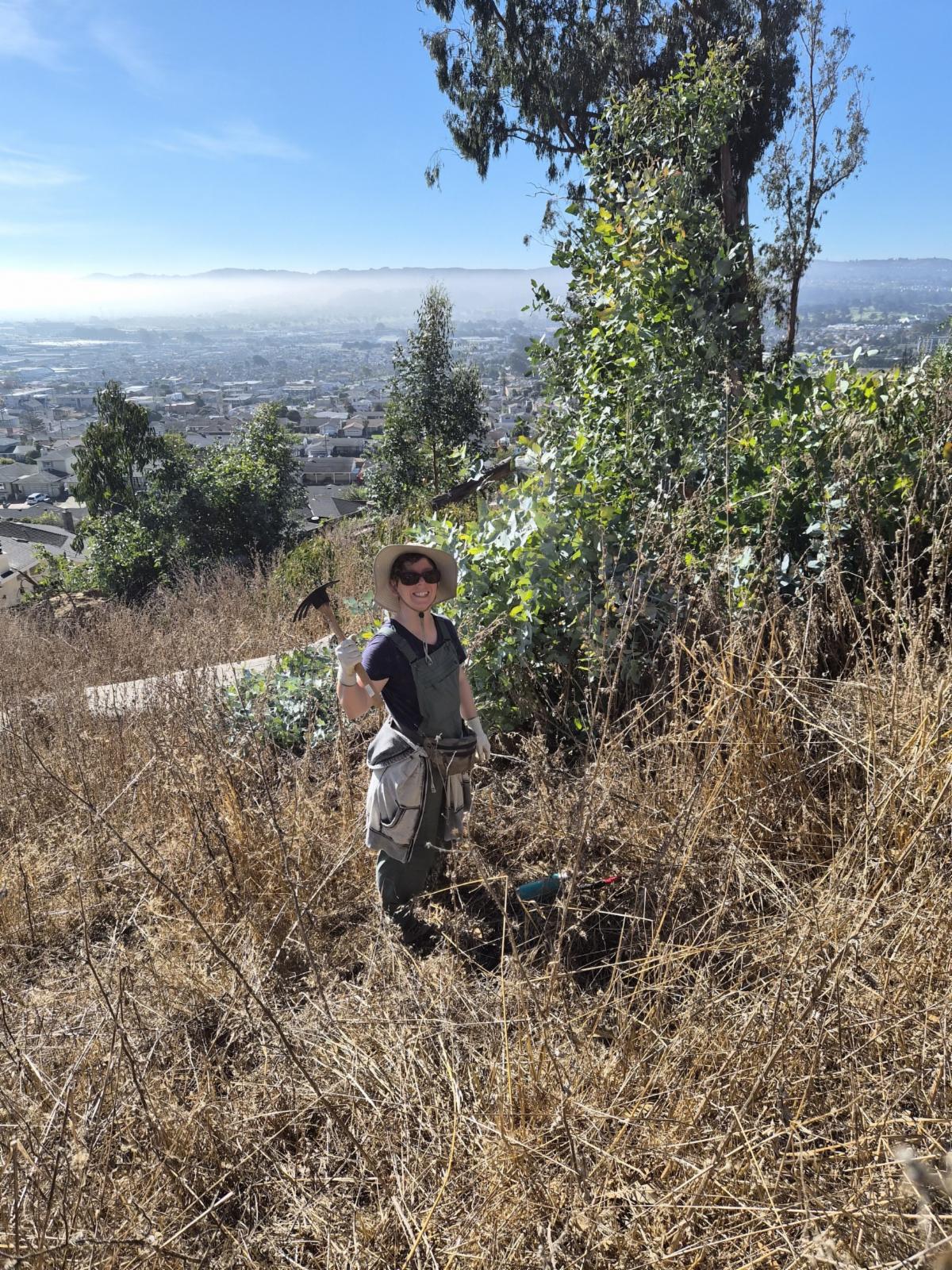
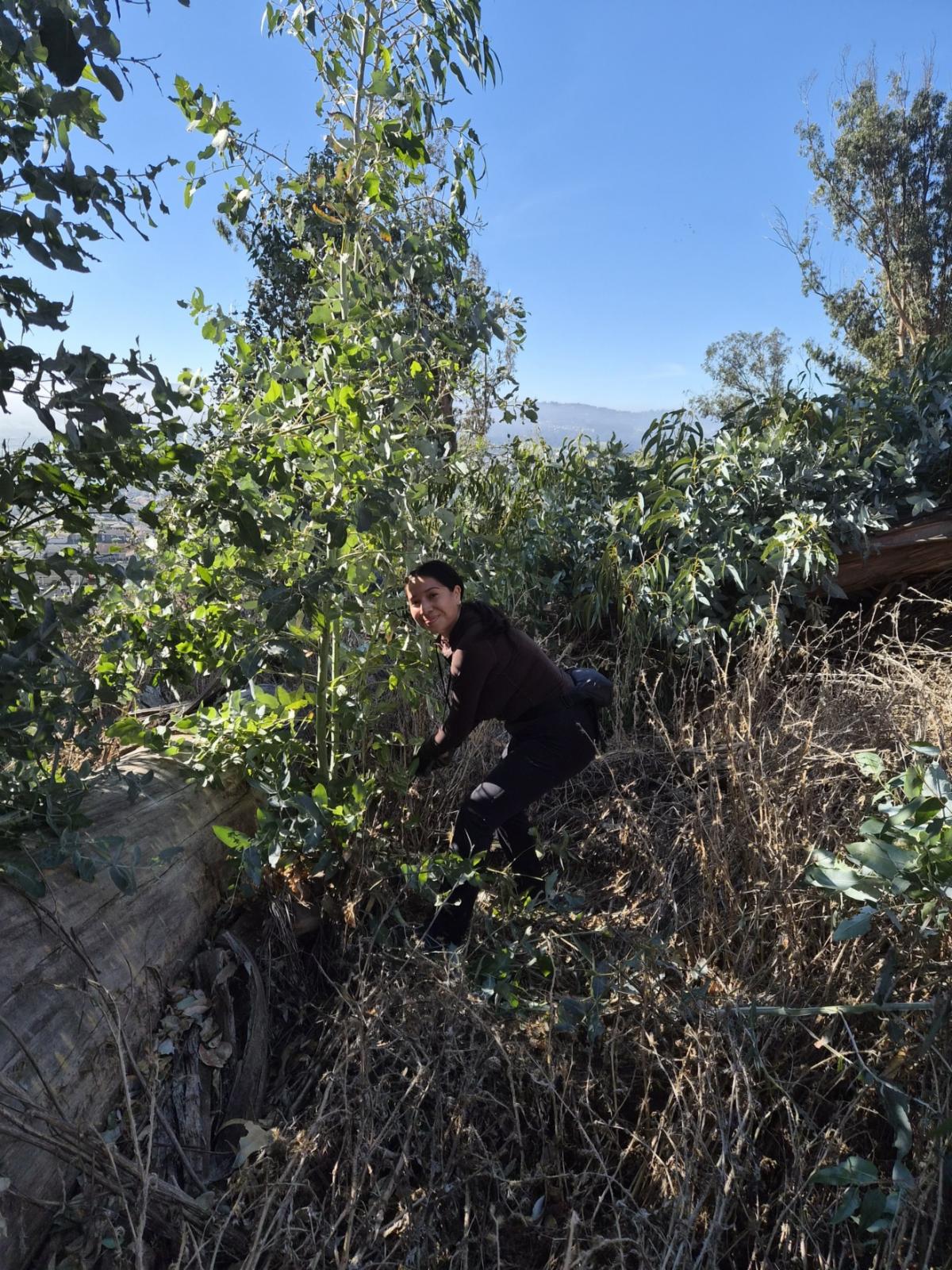
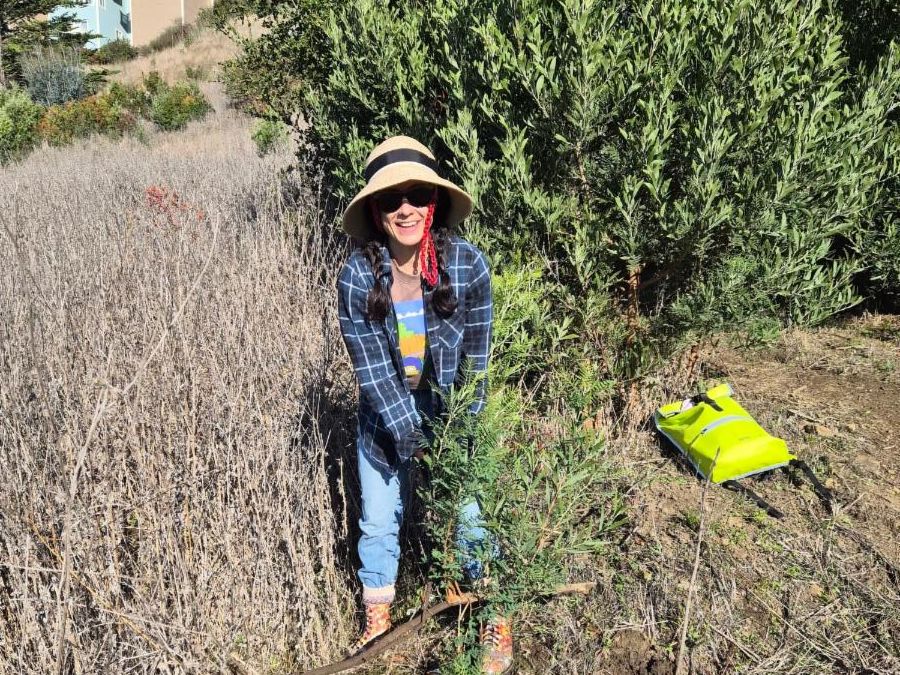
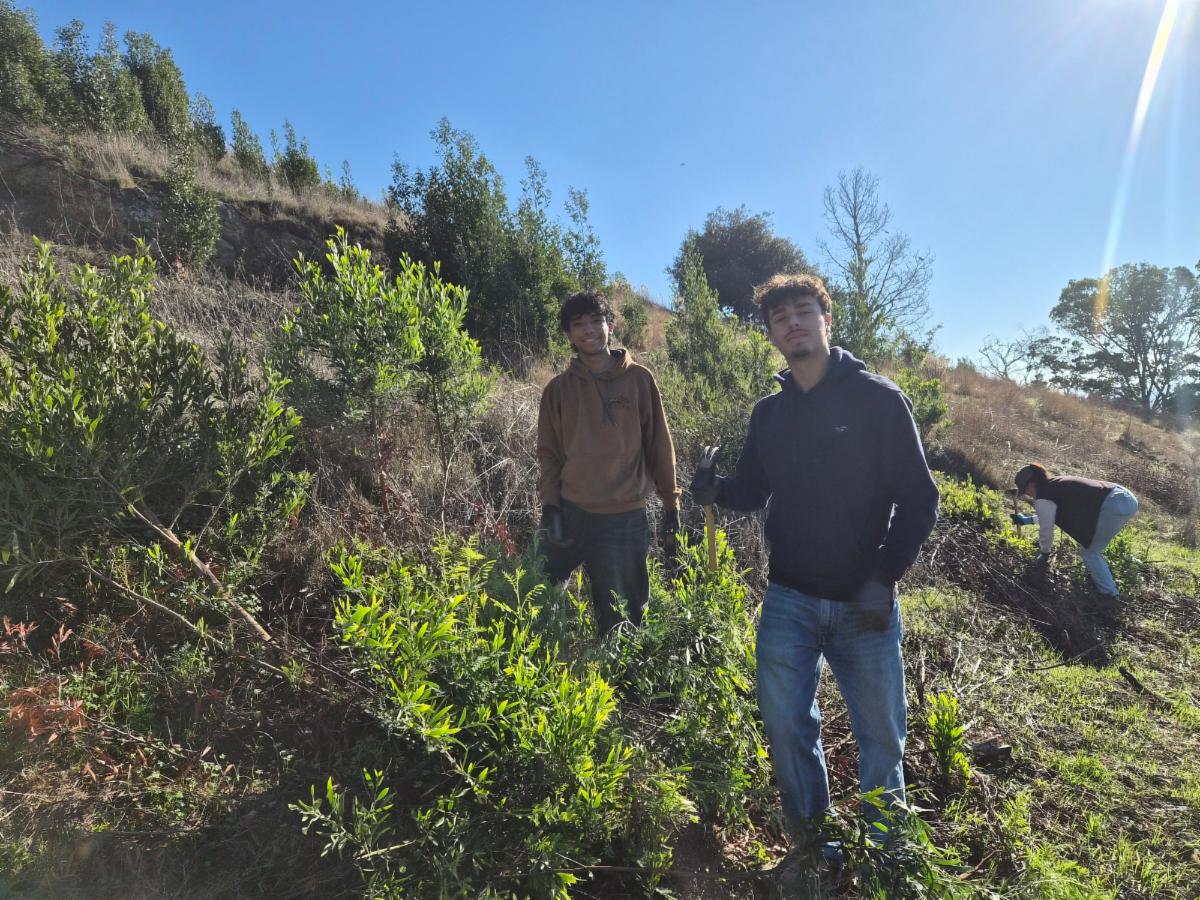
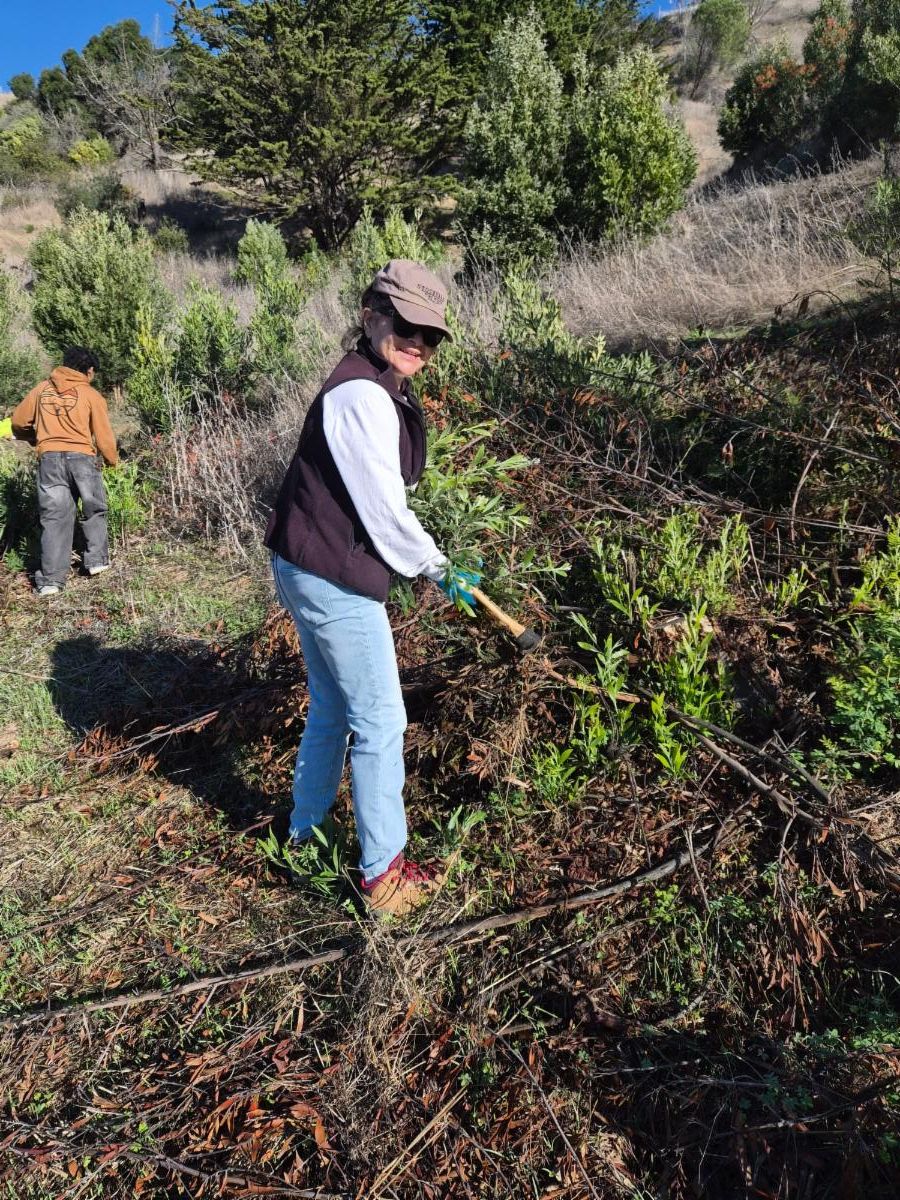
This fall our big focus was combating the regrowth of invasive eucalyptus and acacia trees. These trees were removed in 2022 in order to bring Sign Hill into alignment with CalFire defensible space guidelines, but they are vigorous resprouters that have the potential to reforest the area in very little time if not kept under control.
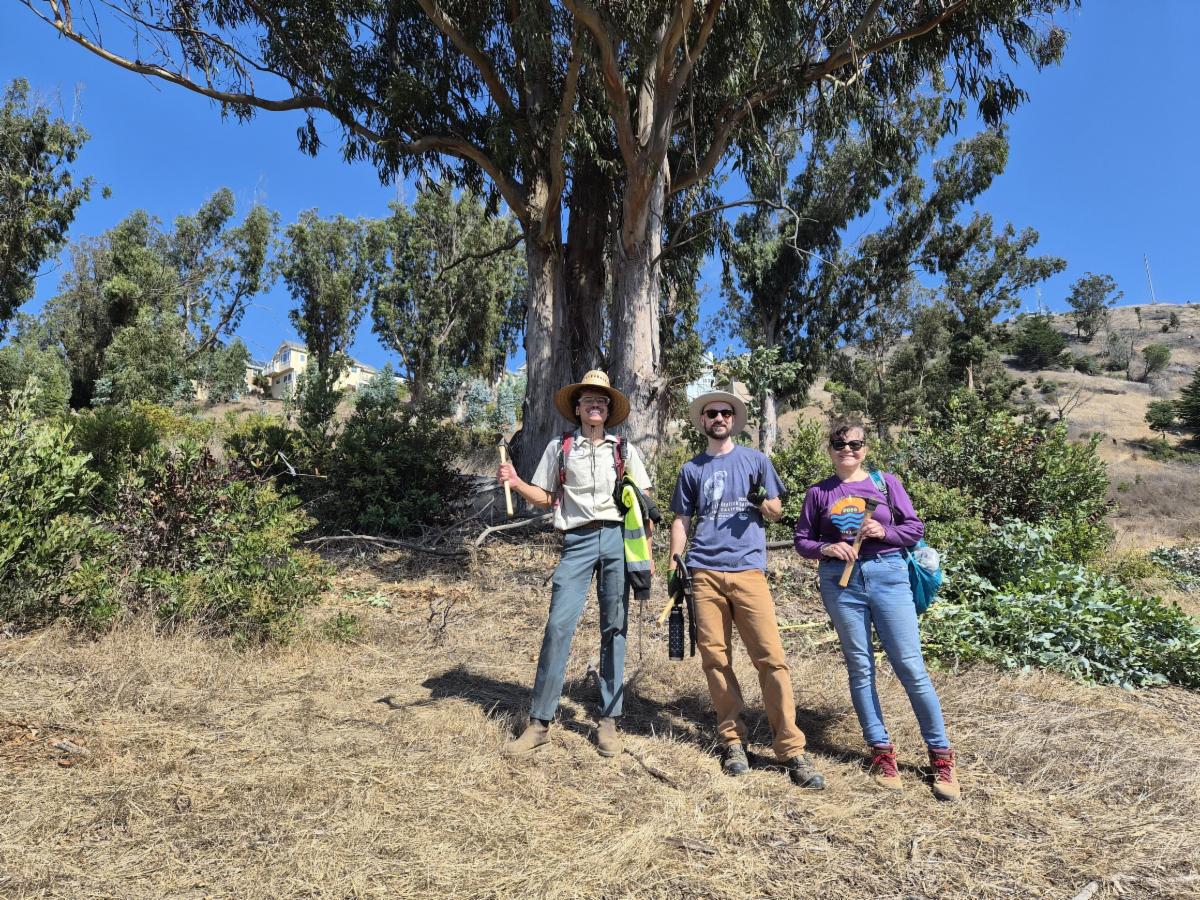
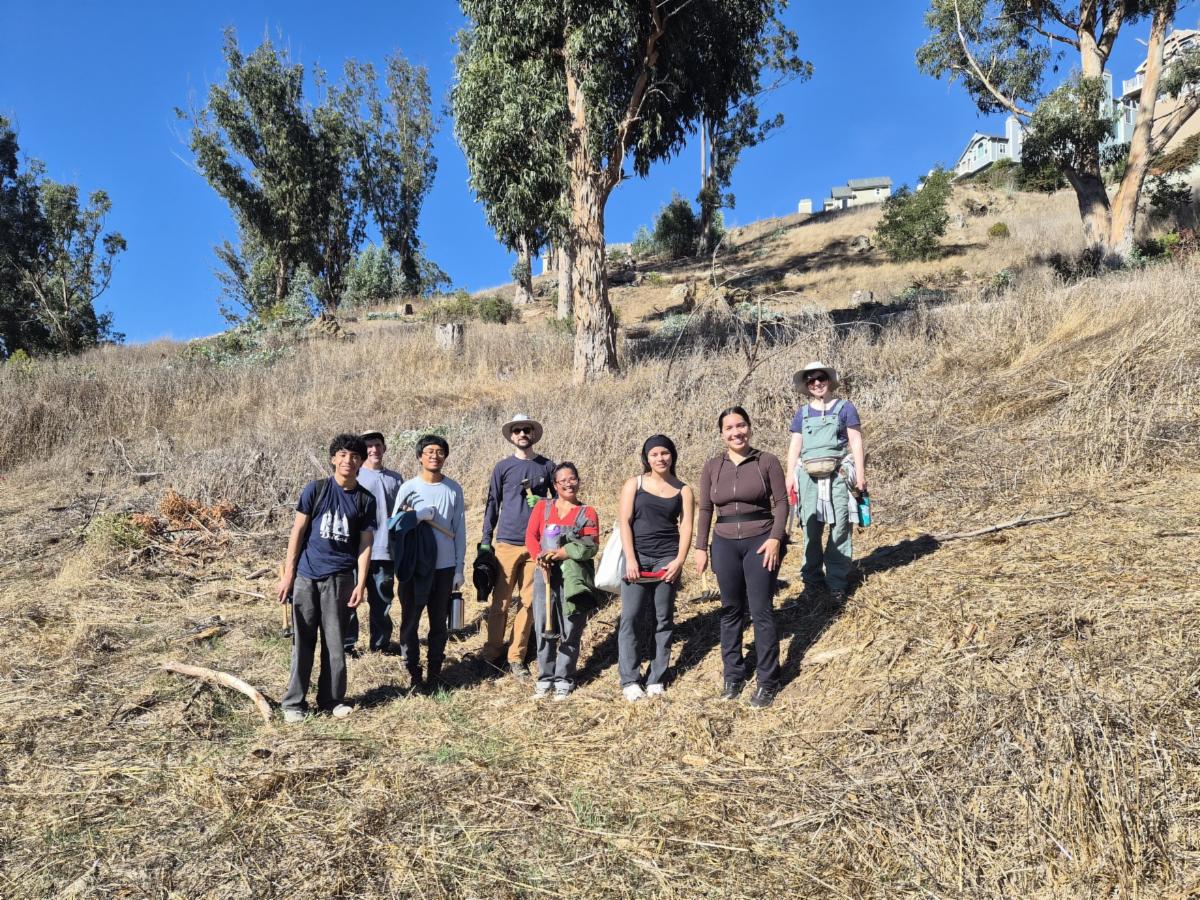
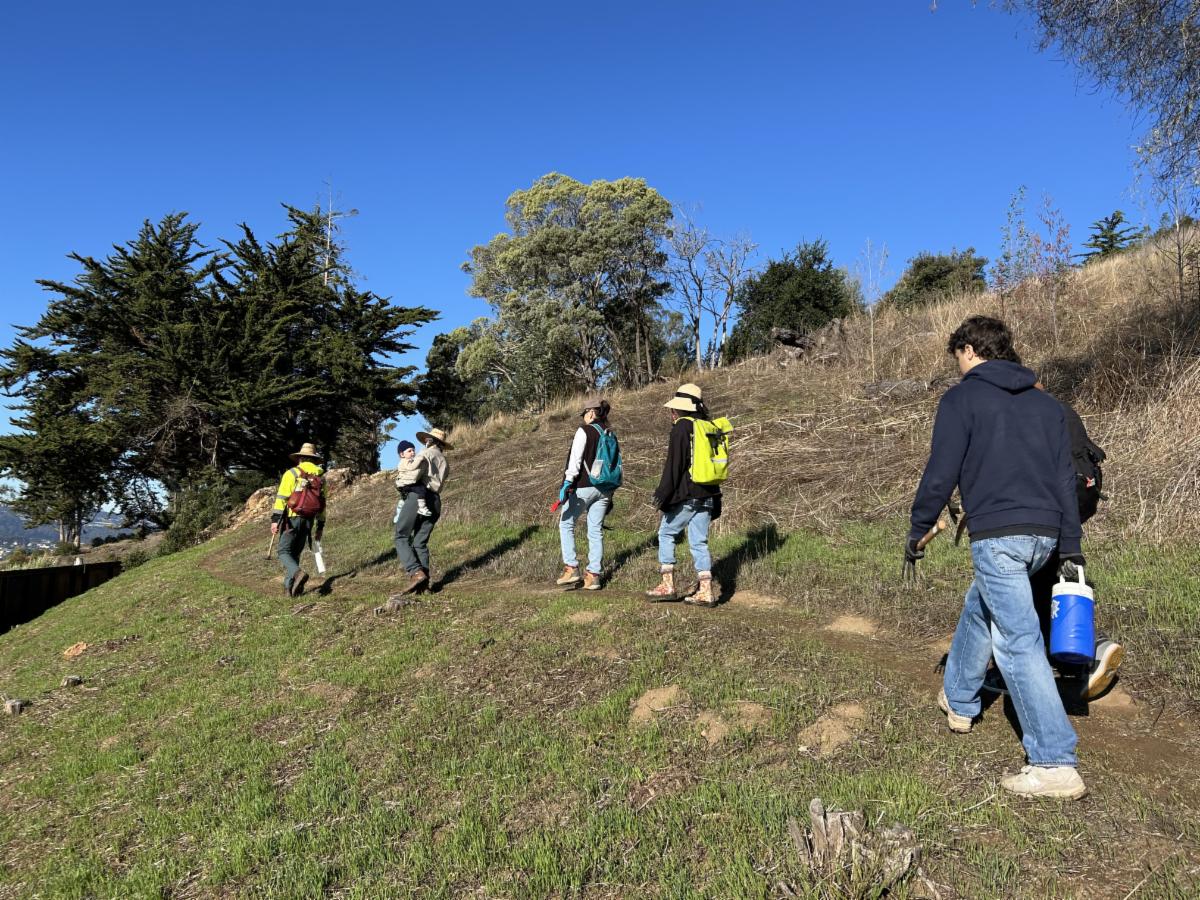
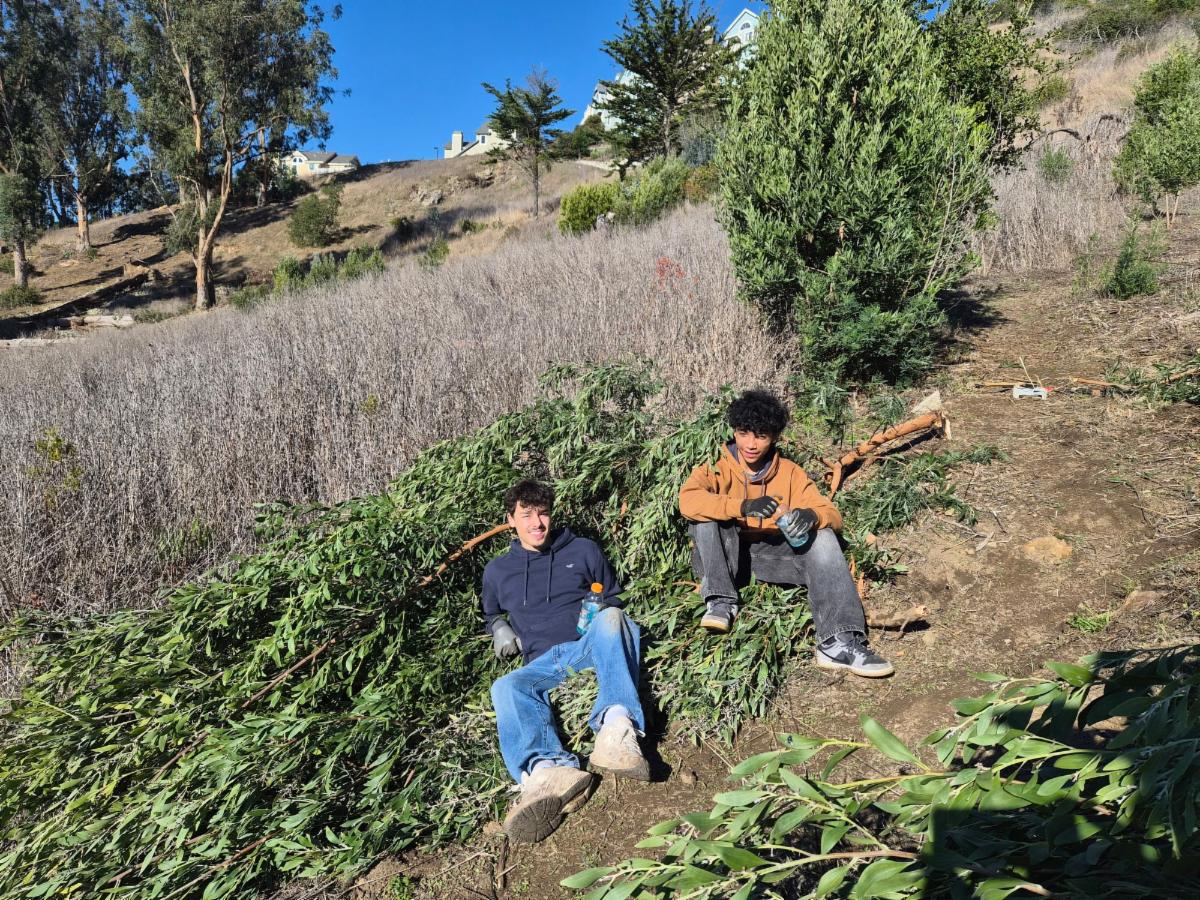
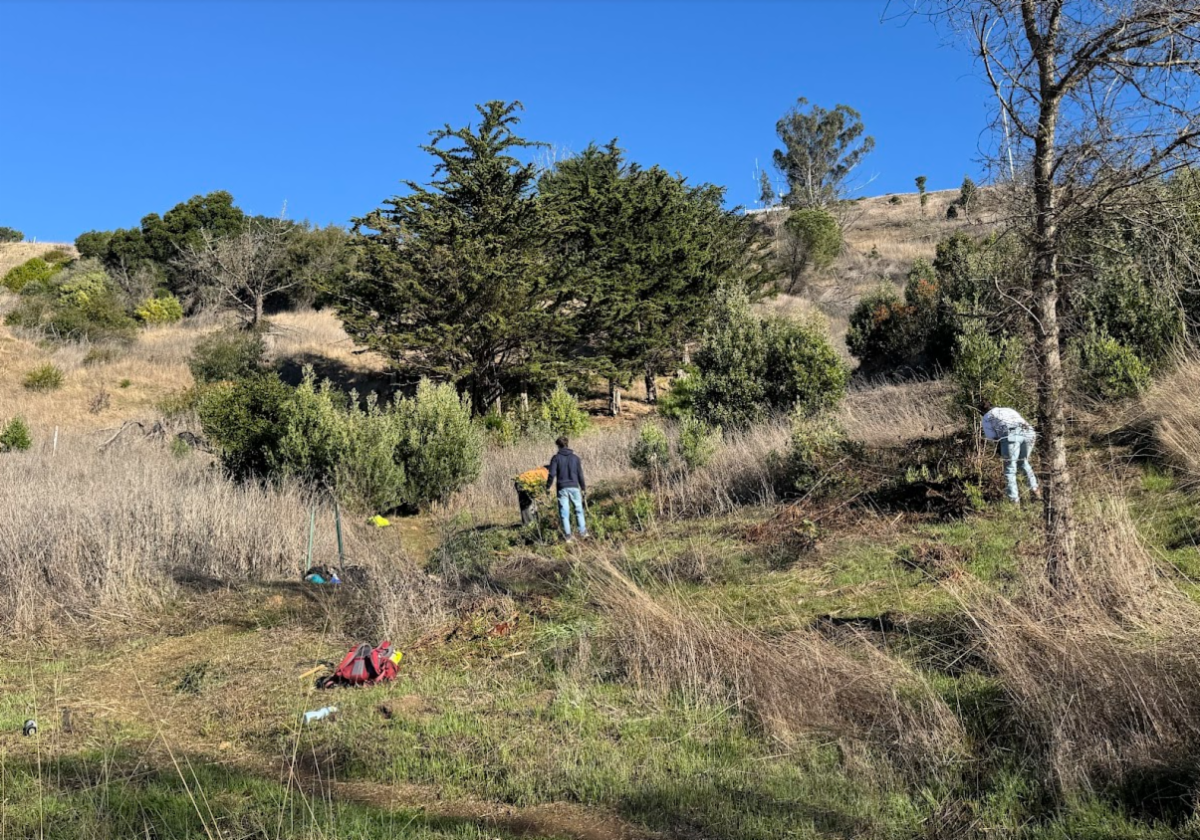
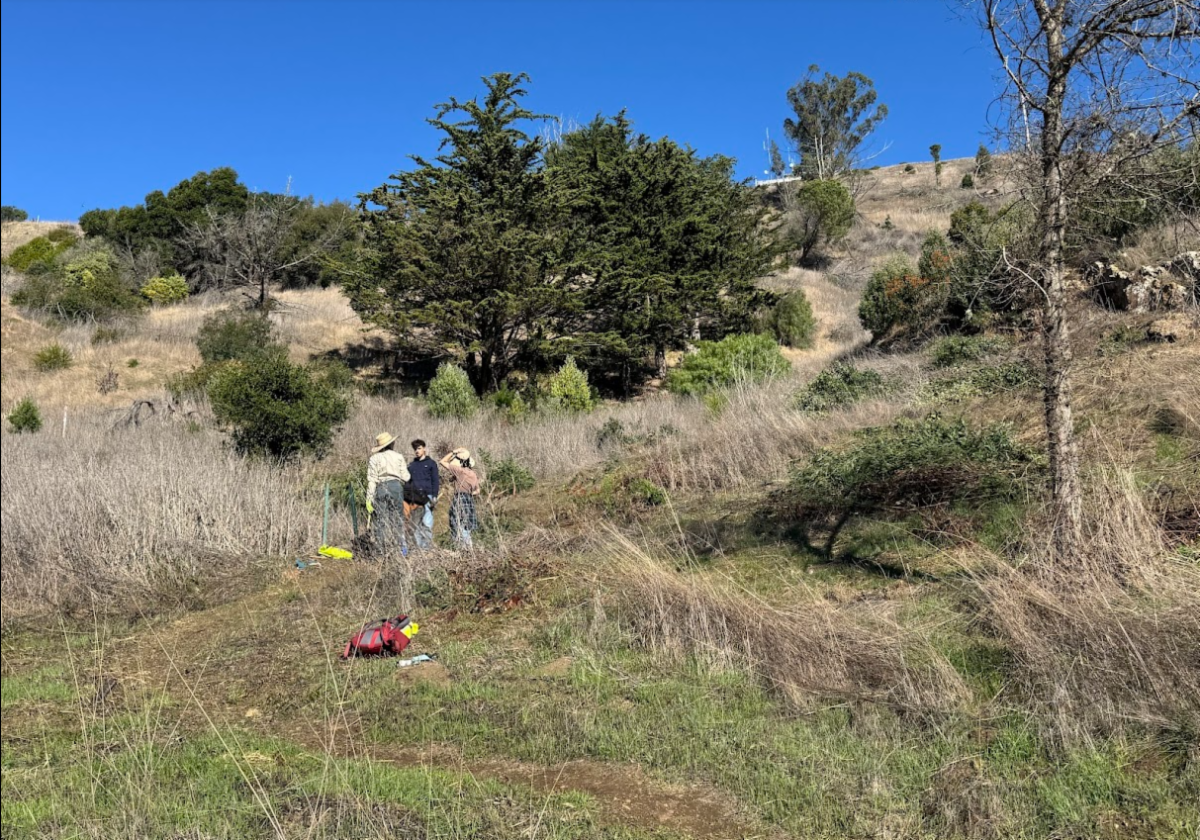
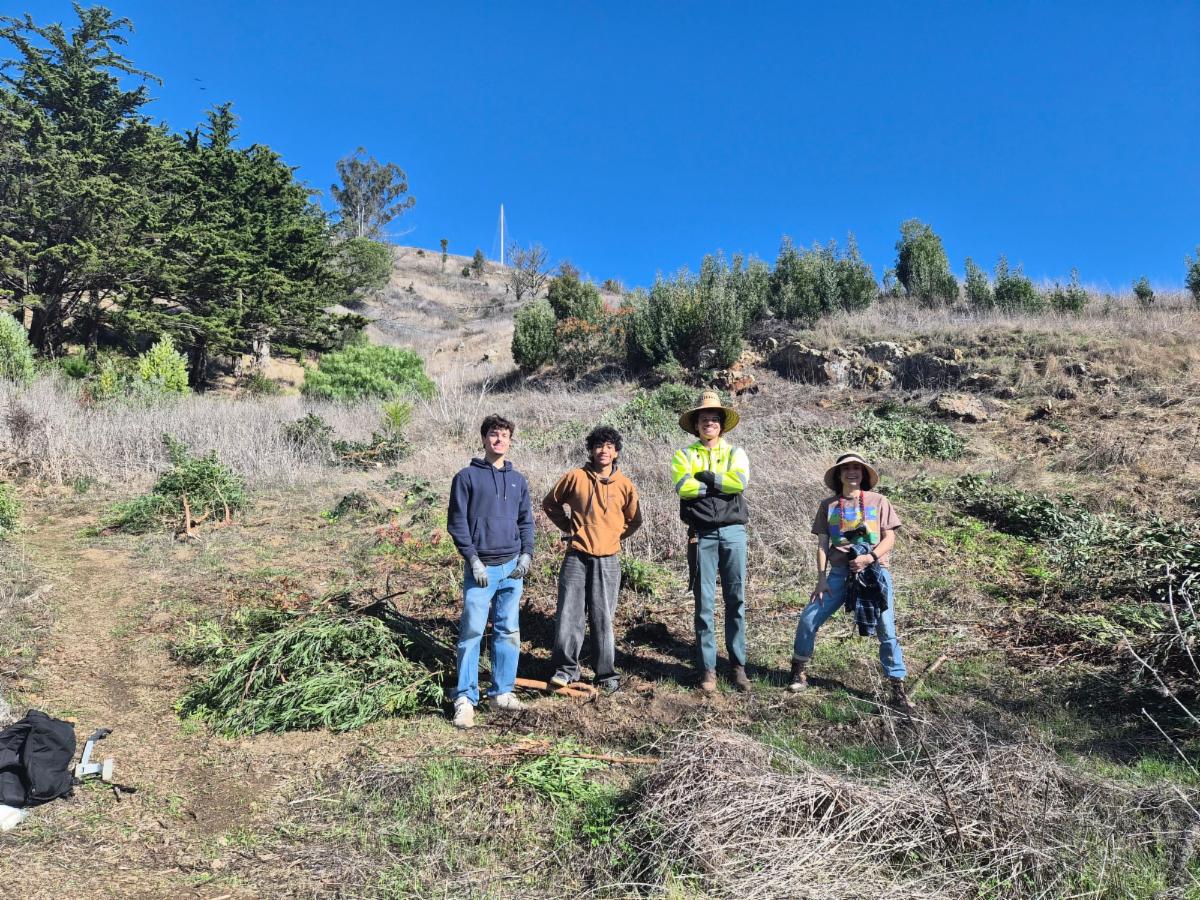
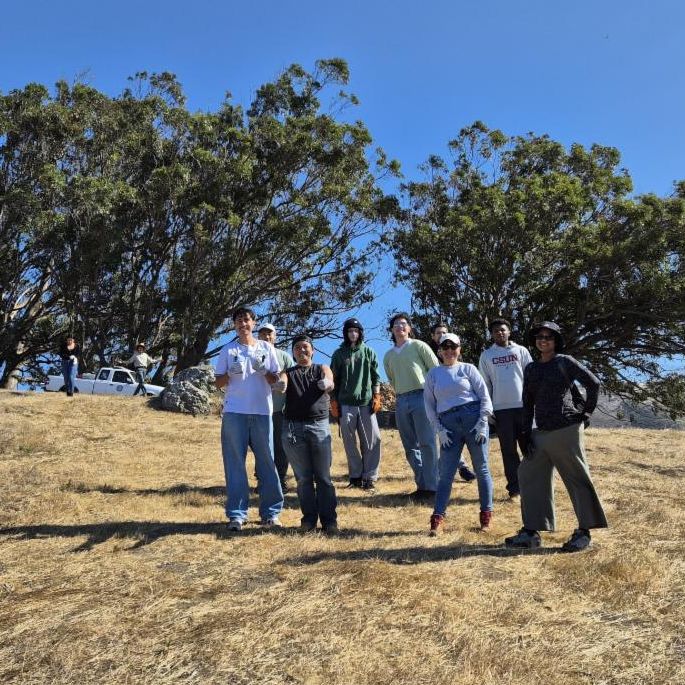
| | The regrowing stumps have lush blueish-colored foliage, these immature leaves are likely what gives these trees the name blue gum eucalyptus (Eucalyptus globulus). The mature eucalyptus leaves are a darker greens, which you can see in surrounding full-grown trees. | This small but mighty group of highly dedicated volunteers blasted through an impressive amount of regrowth! Experience really pays off with this activity since knowing exactly which way to push on the suckers helps them break off more easily. | | These had to be cut down with a saw, which is tedious work, better not to let them get so big! | | Some of the suckers had grown so large that they already had mature leaves and thick trunks. | | It is always such fun to welcome new Sign Hill Stewards to our workdays. These lovely volunteers dove head first into the action. If they can handle a first workday like this, they are ready for anything Sign Hill can throw at them! | | | On our way to take down some blackwood acacia (Acacia melanoxylon). | | | |
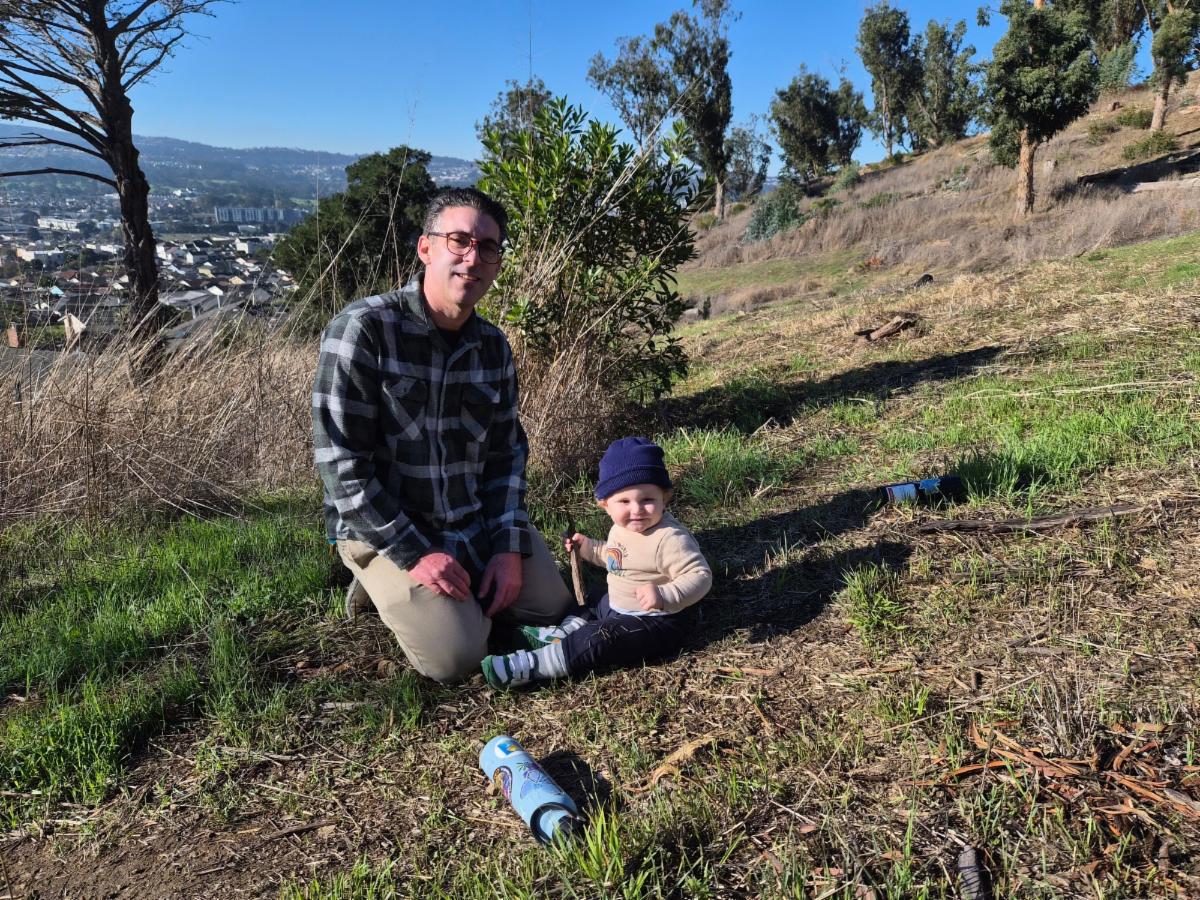
Removing these invasive trees can be tricky since they have lateral roots that grow lots of shoots. Try to pull one out and you might find it is connected to several others! | | These volunteers pulled out so many acacias that they had enough to make a comfy bench to sit on and enjoy a snack break! | | This definitely wasn't Sylvia's first time taking on the acacia! She might hold the record for most hours on Sign Hill and she has experience removing just about every type of invasive plant we have. If you see her at a workday, she is a great person to ask for pointers! | | Check out these before and after photos to see how many acacia this group cleared in a couple hours. Volunteer power! | | Even if little ones aren't ready to yank trees out of the ground, just getting out connecting with nature is a great reason to join a Sign Hill Stewards workday. They might even find a really cool stick! | | Thank you Sign Hill Stewards for all of your hard work this fall to help heal the ecosystem and protect biodiversity! | | |
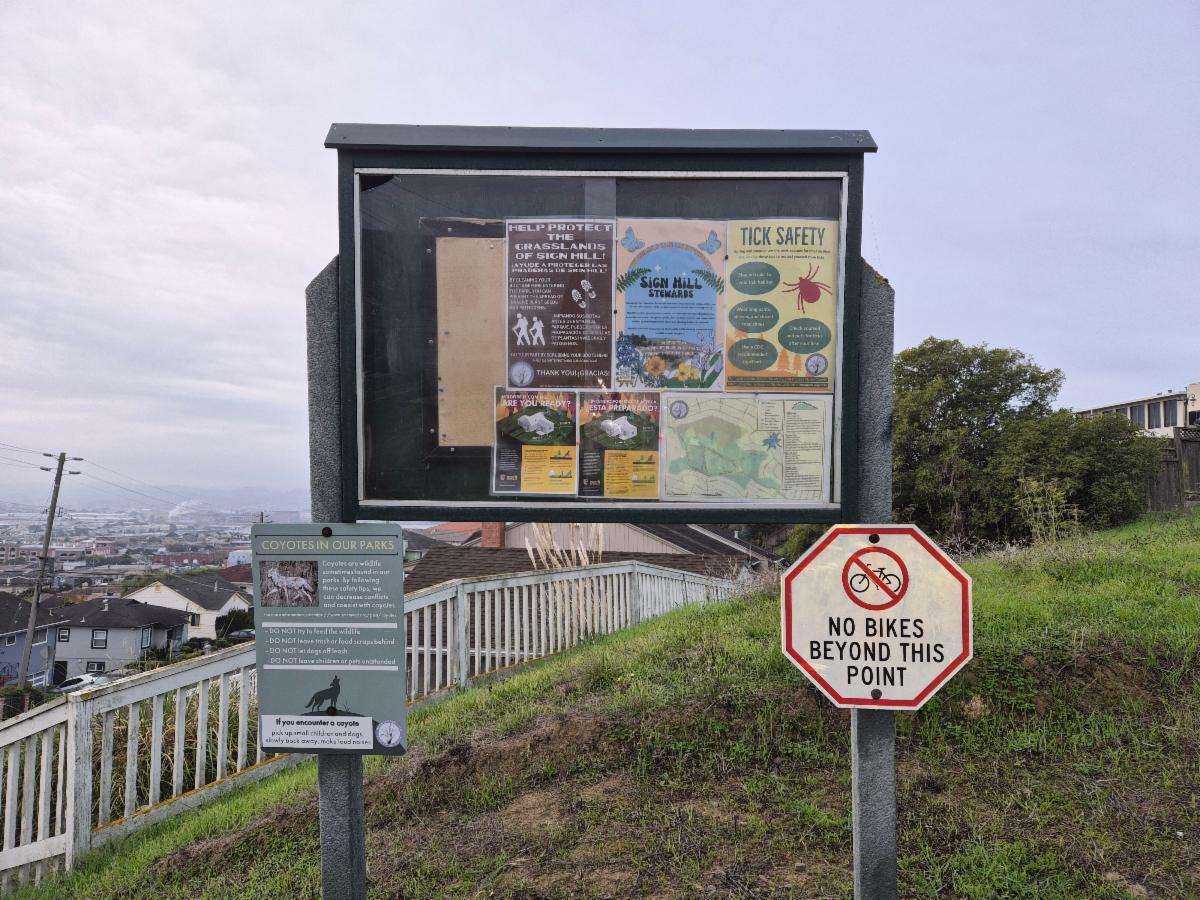
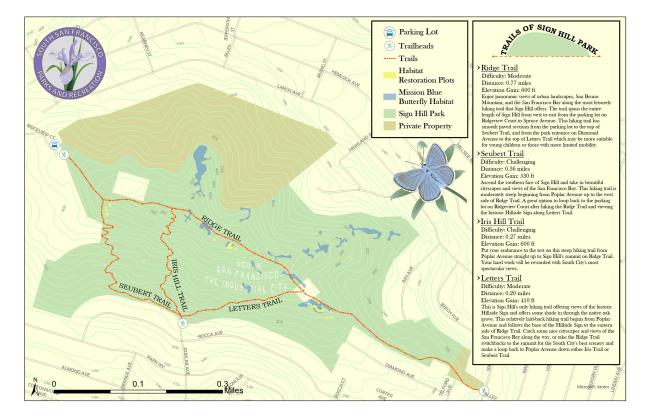
On your next visit to Sign Hill, you might notice that the trailhead kiosks have gotten a bit of a facelift. We cleaned up the clutter, replaced old signage, and did a little dusting. One of the most exciting new additions is the new and improved trail map!
The new map reflects the current trail system and has several new features including topographic lines, park facilities, property lines, mission blue butterfly habitat patches, and restoration planting areas. There are even trail descriptions to help you plan you next hike on Sign Hill!
| |
Bird Nerd!
Entry #2 - Eurasian Collared-Dove
| | |
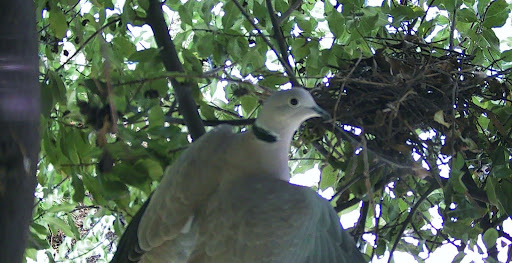
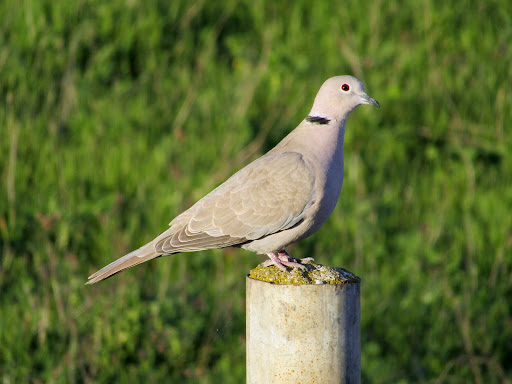
Hello everyone! Welcome back to Bird Nerd, a section of the Sign Hill Stewards Newsletter dedicated to the discussion of our avian friends on the Hill. This entry features the Eurasian collared-dove (Streptopelia decaocto).
As you may be able to gather from their name, these birds are native to Eurasia, where they are often referred to simply as “collared doves”. They found themselves in the United States in 1974 after around 50 individuals escaped from a pet store in the Bahamas during a robbery. Another small population was released from the nearby island of Guadeloupe due to fears of a destructive volcanic eruption. It is speculated that these two populations spread to Florida, and subsequently expanded to most of the United States. Despite being non-native, the collared dove has not yet had a strongly observable negative impact on native bird populations, even in states where the bird is most prolific. Research continues to better understand their impact, if any, on the ecosystems around us.
| | The collared dove can be distinguished from the native mourning dove (Zenaida macroura) by its relatively larger size, more muted coloration throughout, and the distinct black collar around the nape of its neck. Like many of the native dove species in the Bay Area, the collared dove can be found in a wide variety of places and habitats–anwhere from the tops of trees and power lines to city streets. | |
| |
They are quite the chatty bird. Many people mistake their soft calls for the hoot of an owl–they call, “coo-COO-coo”, with a strong emphasis on the second syllable. They call repeatedly to communicate with potential mates and establish their territory.
To see one of these well-adorned doves on the Hill, listen for their distinct call–this is the easiest way to locate one. Scan the tops of trees, shrubs, and even fence posts. They can be found in flocks, pairs, or by themselves. As always, bring your binoculars to spot them and make sure to keep your distance.
Happy birding!
Joe Batom
Natural Resource Aide
City of South San Francisco
| | Holiday Tree Fun at the Corp Yard | | |
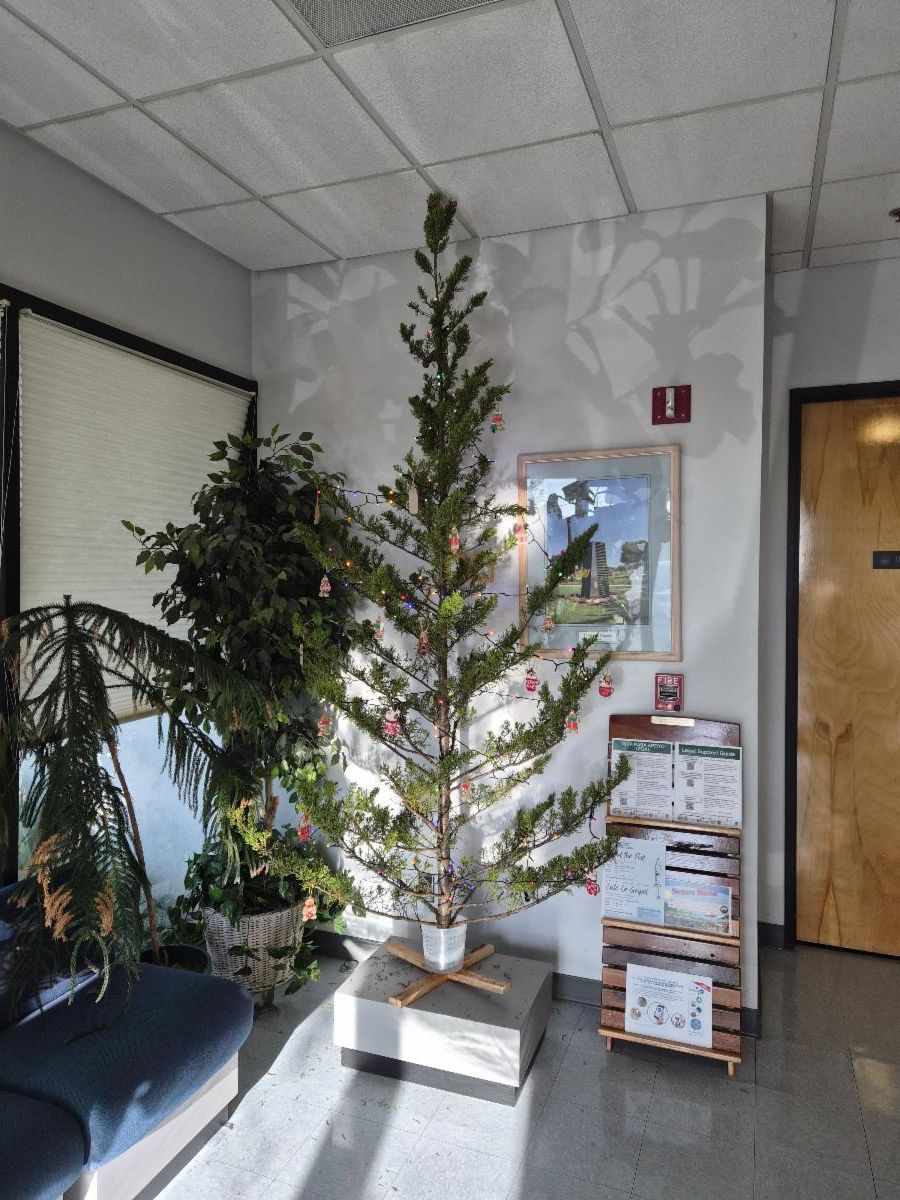
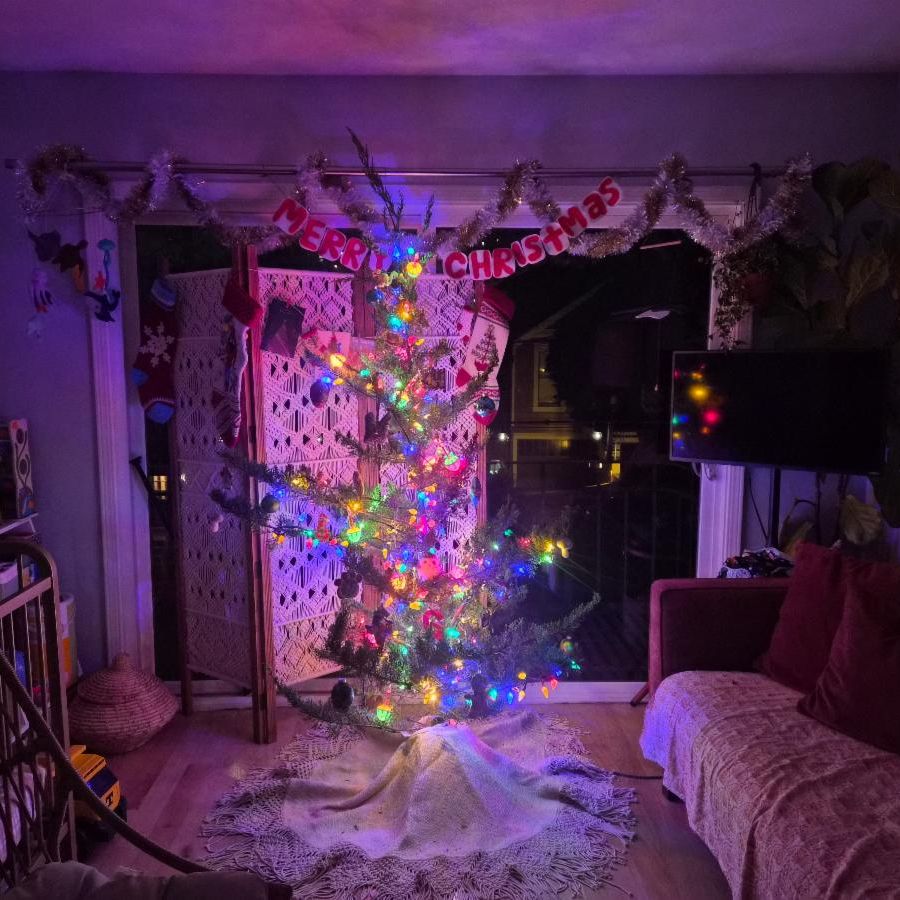
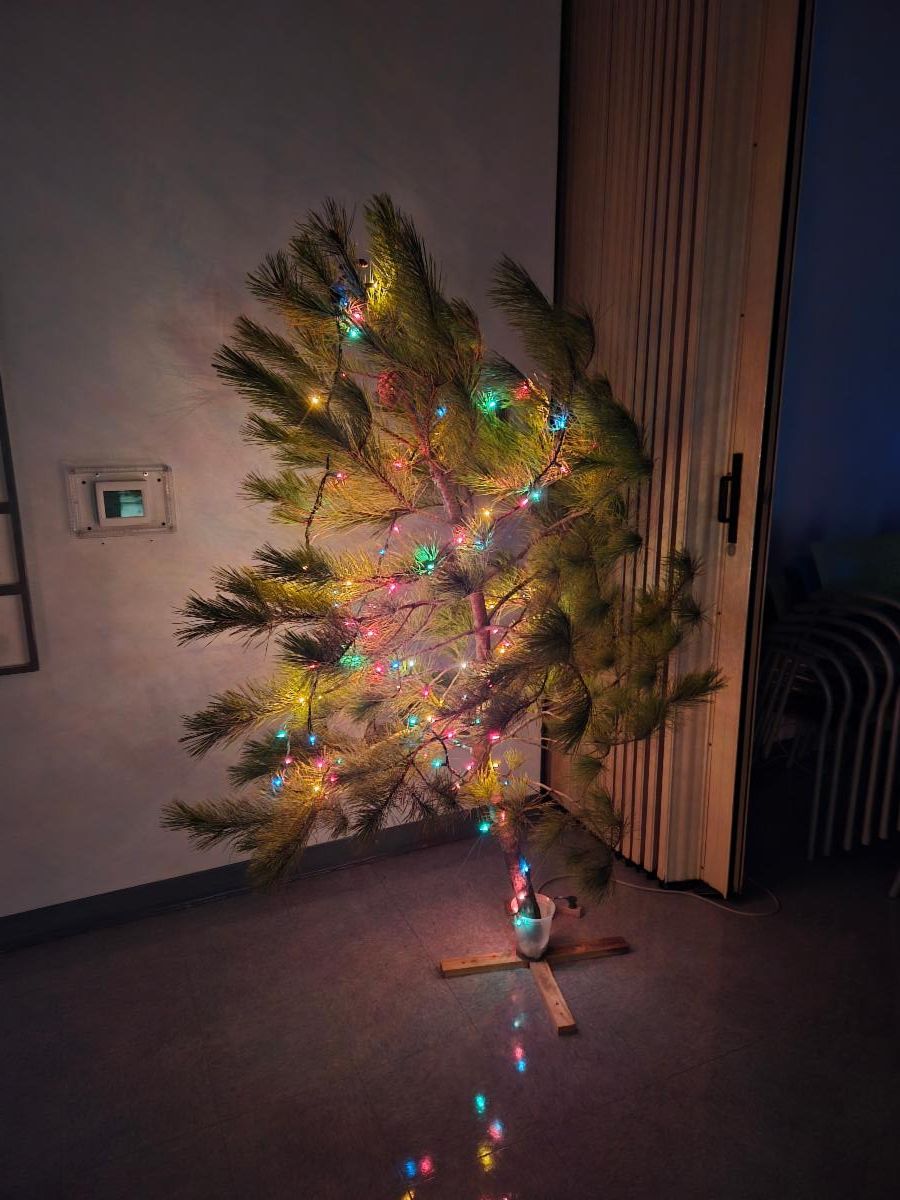
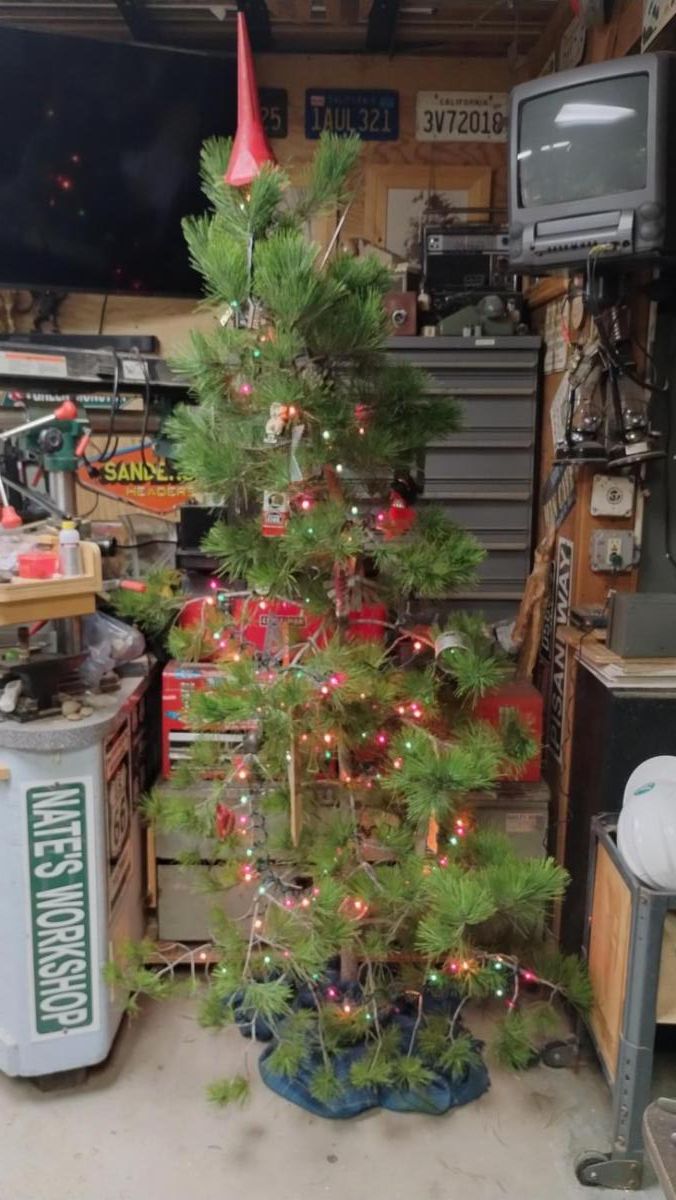
If you have been tuned into the Sign Hill Restoration Project for a while, then you might be familiar with the work we have been doing to combat reforestation.
Following the 2020 Diamond Fire, which burned over 16 acres of Sign Hill and required the evacuation of nearby residents, the City got to work bringing Sign Hill into alignment with CalFire's defensible space guidelines. This work included removing hundreds of trees that had been planted on Sign Hill in the proceeding decades, many of which were invasive species or not naturally occurring. Removing these trees also offered an opportunity to restore the coastal prairies that once dominated Sign Hill and provide habitat for the federally-endangered mission blue and callippe silverspot butterflies, as well as other native flora and fauna.
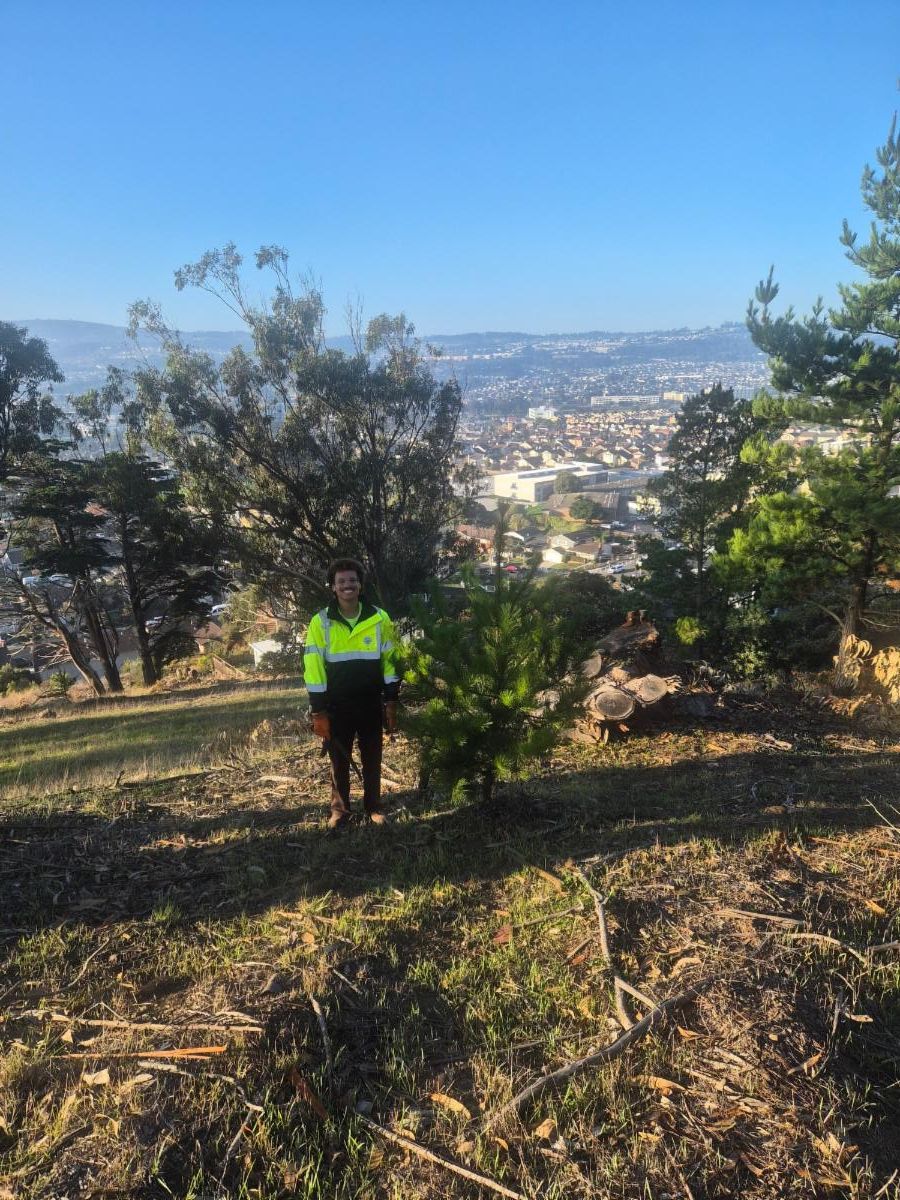
In order to prevent these areas from becoming reforested, SSF Parks Staff and Sign Hill Stewards volunteers periodically remove young tree saplings.
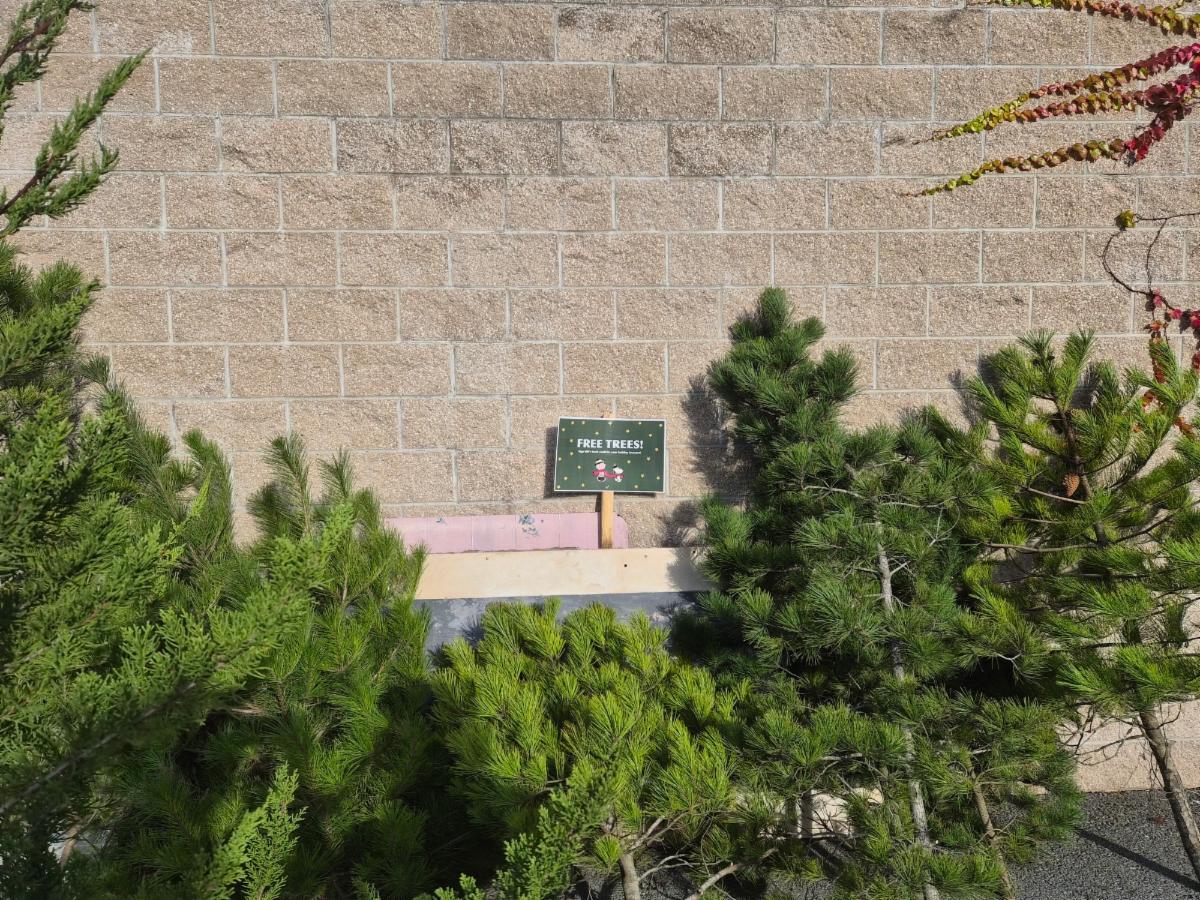
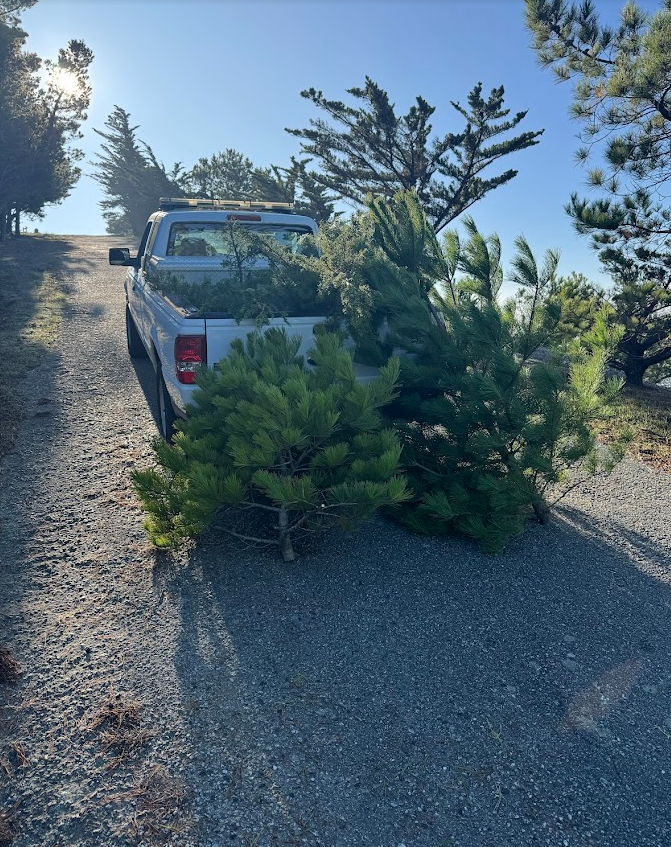
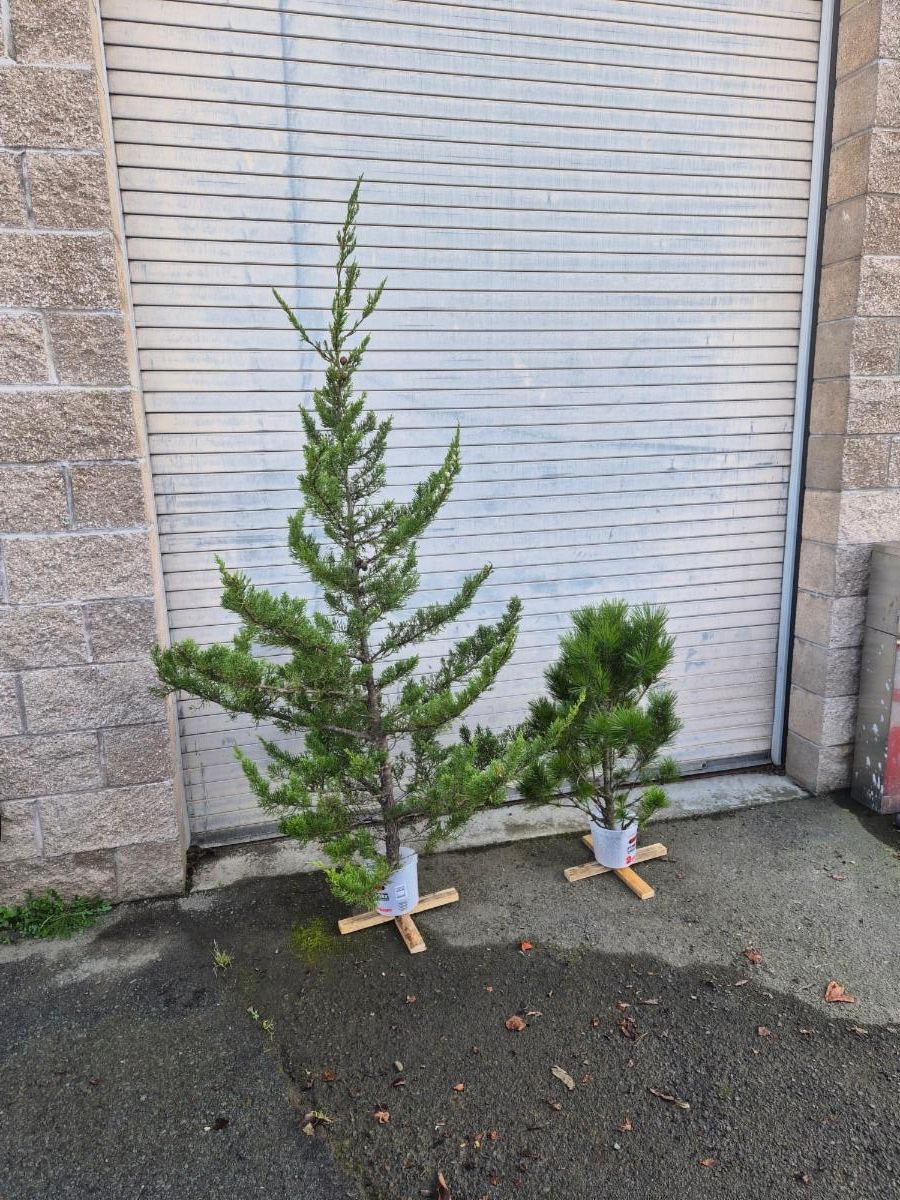
| | | This year, we decided to add a bit of whimsy to our routine work on Sign Hill by waiting until early December to fell some of the young pine and cypress saplings. We set up these trees at the corporation yard for City Workers to take home and decorate for the holidays. We also used a couple trees to bring holiday cheer to the Corporation Yard in the front office and the cafeteria. These trees would otherwise have gone straight to the green waste bin, so it was a fun opportunity to let them go out in style! | | | | These natural trees were a lovely alternative to purchasing a tree, and each one offered their own unique character and beauty. We hope you enjoy seeing how a few of them looked with lights and decorations! | | |
Trails are essential places for recreation, health, mobility, and connection to nature. California is launching a statewide effort to improve access to recreational trails, like hiking, biking, and horseback riding routes, especially for communities that have historically had less access to them. This effort is part of a larger plan to make the outdoors more inclusive and accessible, support climate resilience, honor tribal priorities, and help meet California’s “30x30” goal (protecting 30% of land and coastal water by 2030).
THE STATE WANTS TO HEAR FROM YOU: community members, advocates, and trail enthusiasts and professionals.
| | |
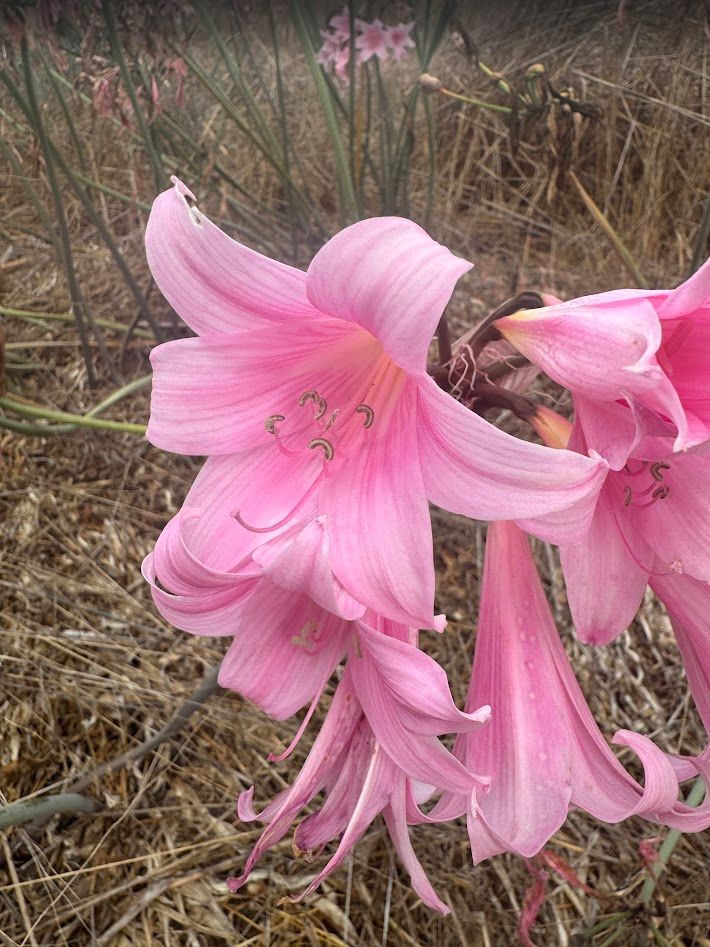
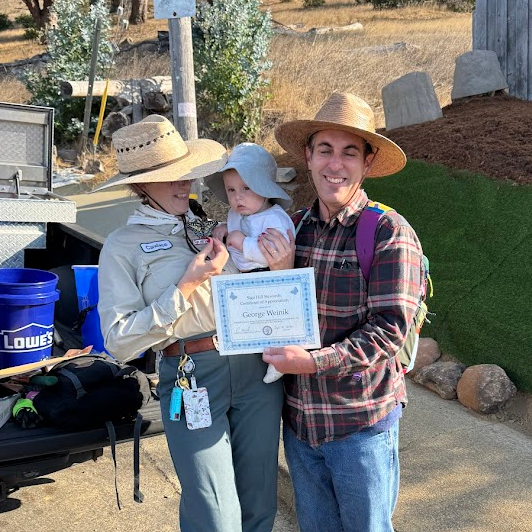
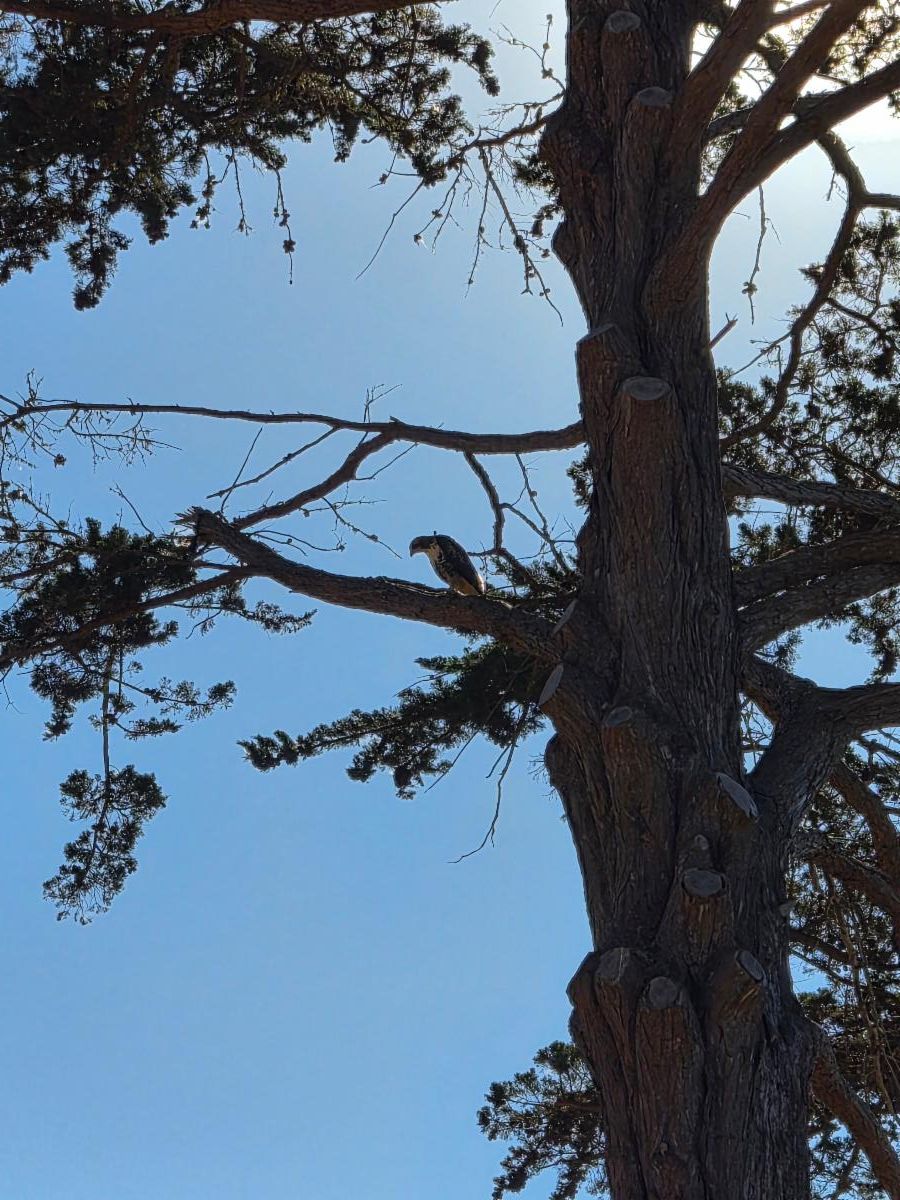
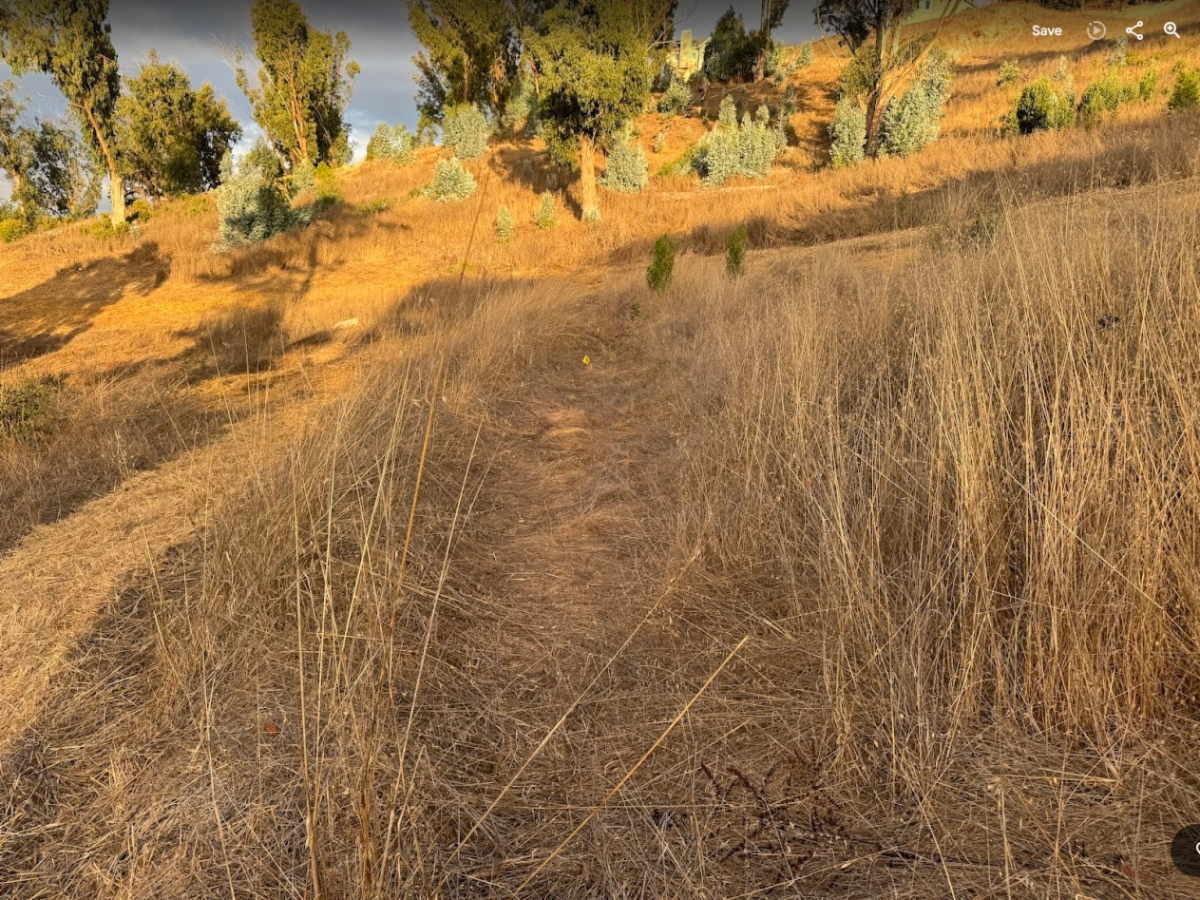
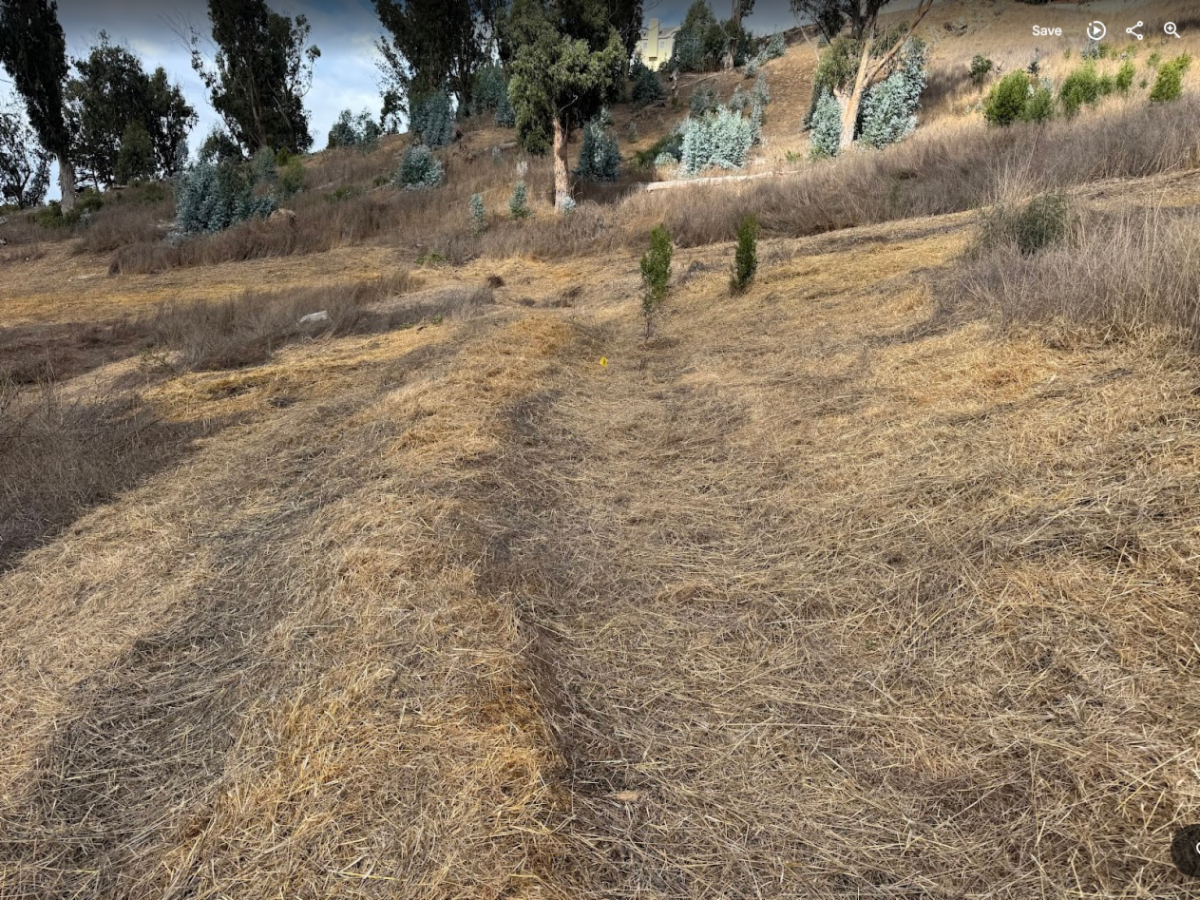
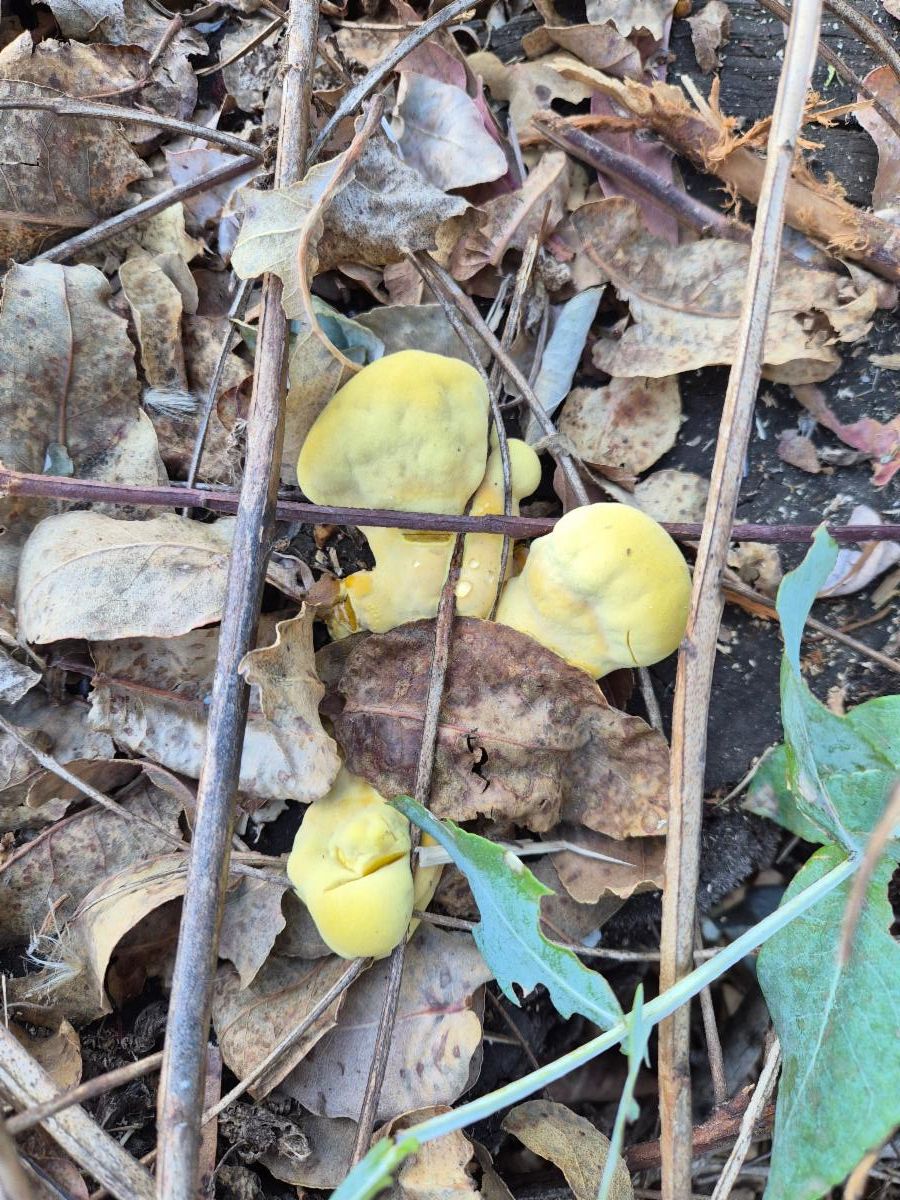
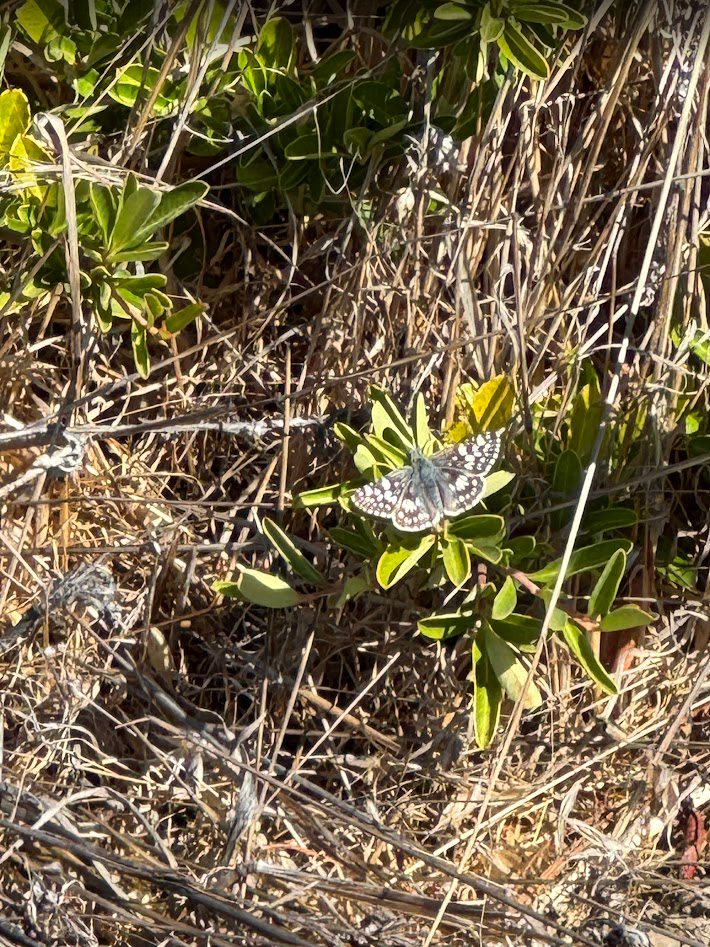
September 25, 2025 A beautiful naked lady lily (Amaryllis belladonna) blooms vibrantly on the southern slopes of Sign Hill. This flower is native to South Africa, but it is a common ornamental plant in the Bay Area that was likely introduced to Sign Hill through guerilla gardening. Please remember that Sign Hill's natural landscapes are managed by SSF Parks staff and volunteers, and unauthorized planting is strongly discouraged for the damage it can inflict on sensitive wildlife habitat. | September 27, 2025 The youngest ever recipient of the 12-work-hour anise swallowtail patch, George Weinik, has really put in the hours on Sign Hill. He has yet to pull a weed, but we are working on it! | October 7, 2025 A juvenile red-tailed hawk watches attentively as we mow with the Green Climber, the perfect opportunity to catch a harvest mouse or alligator lizard as it scurries away from the noisy machine. | | October 9, 2025 SSF Parks Natural Resources Staff mowed around the swale at to prepare for rainy season. It will be exciting to observe this area as the rains come and see what plant and animal species show up! | | October 11, 2025 A vibrant yellow sulfur shelf fungi (Laetiporus gilbertsonii) emerges from the stump of a felled eucalyptus tree. These mushrooms are sometimes referred to as "Chicken of the Woods" for their reportedly yummy mild to sour taste, but be careful as these mushrooms can cause gastrointestinal distress for some. Keep in mind that hunting mushrooms for food is not permitted on Sign Hill and can be dangerous, so make sure you only gather in areas where it is permitted and with someone who is experienced in identification! | | A checkered skipper (Burnsius communis) rests for a moment to soak up the sun. These little butterflies can sometimes be confused at first glance for mission blues because of blue color, but when they stop to rest their differences are easy to see. | | |
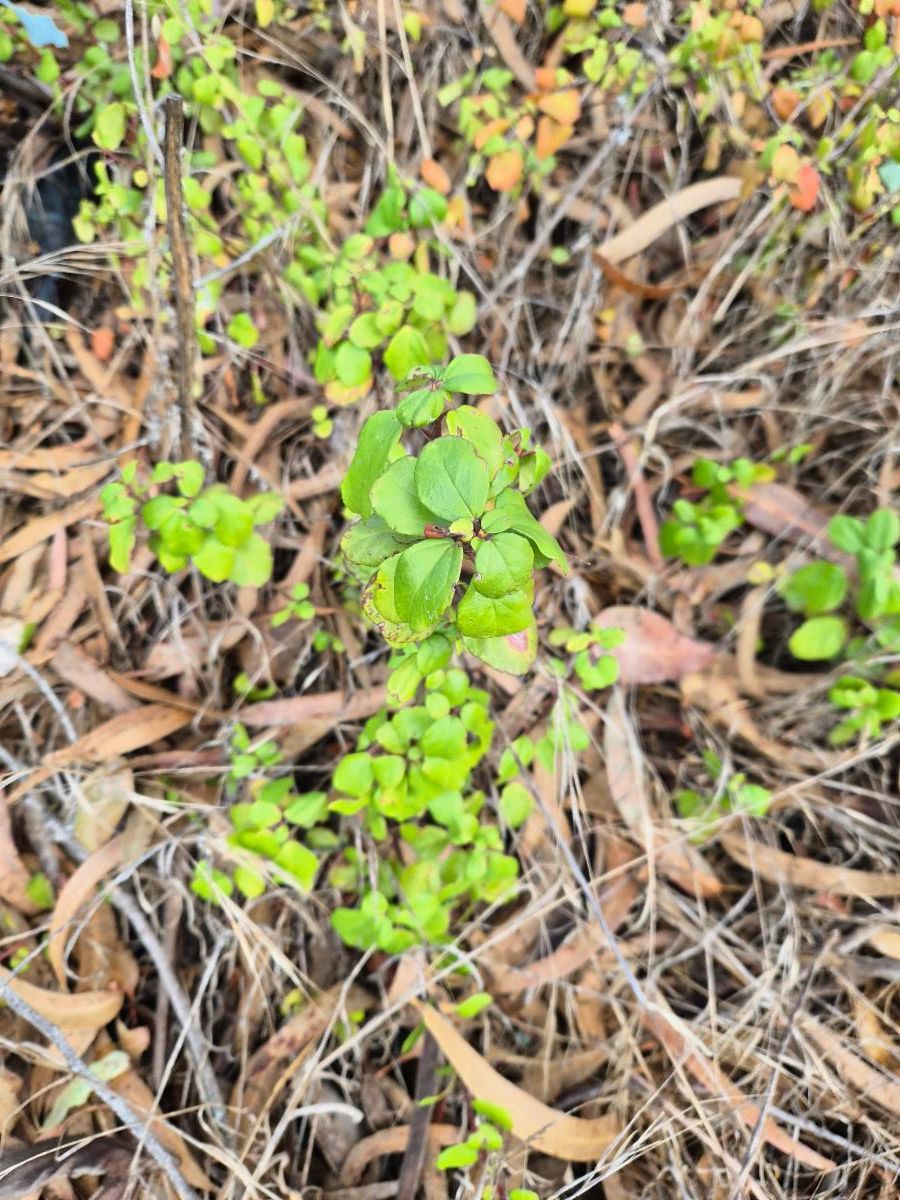
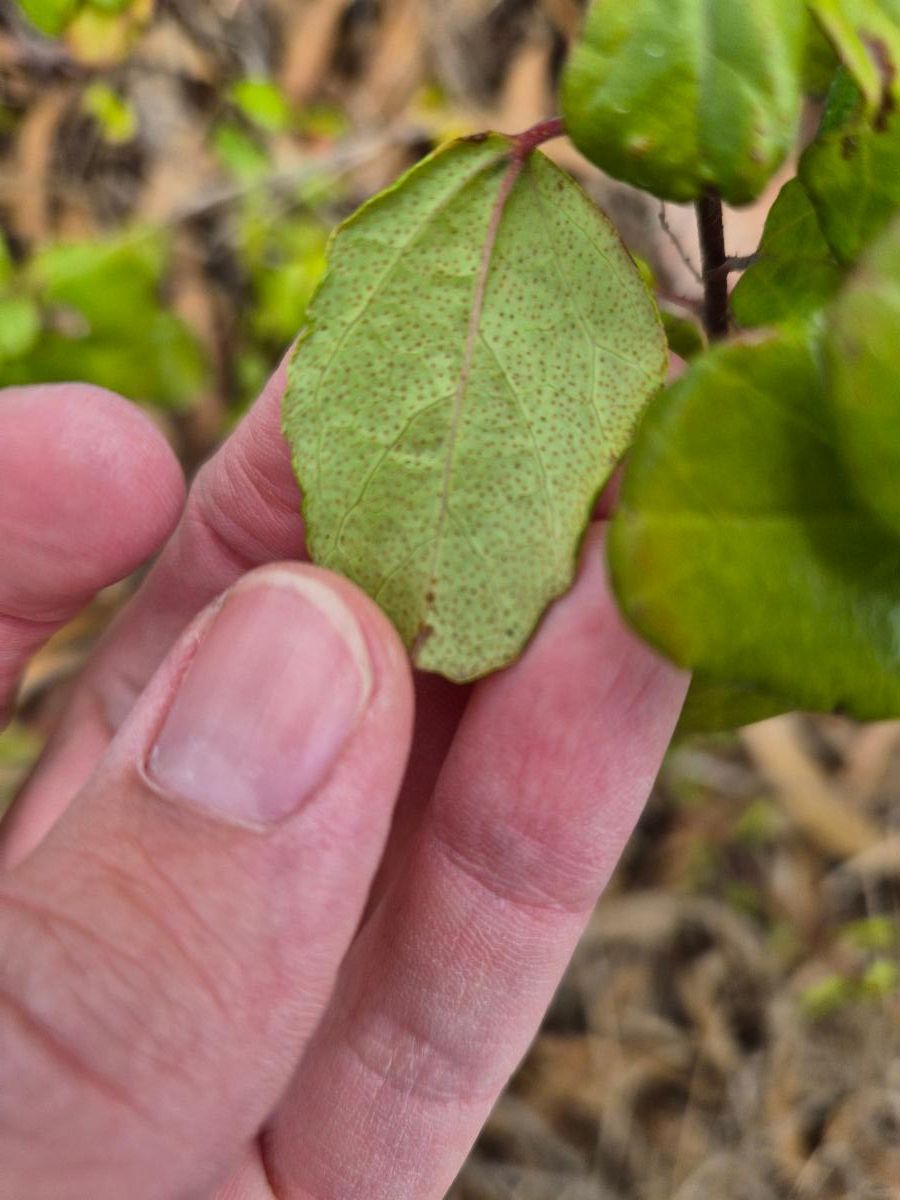
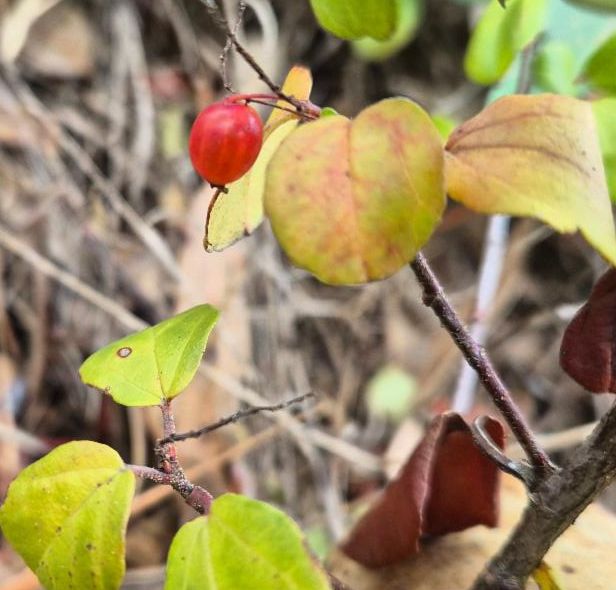
October 14, 2025 It would appear that this plant is a long way from home! While working in the area that was previously Eucalyptus Loop Trail, SSF Natural Resources staff came across a Santa Catalina island currant (Ribes viburnifolium). We were able to identify this unexpected plant species based off of a few distinctive features including its smooth red berry, white glands on the stem, and yellow glands on the under-leaf.
This plant has a California Rare Plant Rank of 1B.2, meaning that it is seriously threatened in California. This ranking would make this technically the rarest plant we know of on Sign Hill, however, since it is so far outside of its natural range (southern Califoirnia and surrounding islands), and they can be found at plant nurseries, it's presence on Sign Hill can most likely be attributed to guerilla gardening. Nevertheless, it is interesting to see that it has survived in our more cool and moist climate and even in the inhospitable understory of eucalyptus trees.
| | |
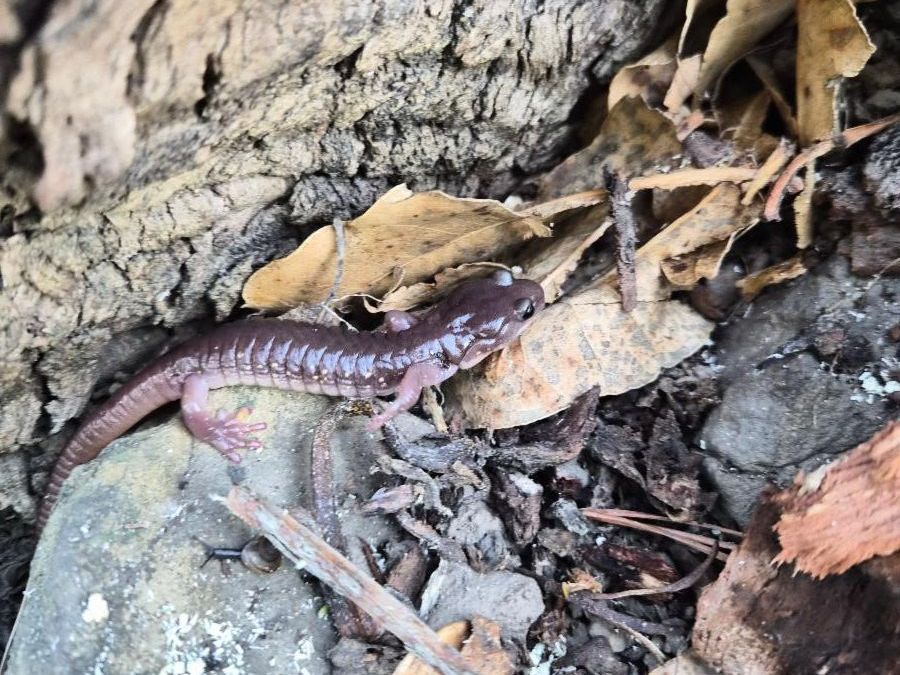
October 17, 2025 LOOK! An arboreal salamander! We could not have been more excited to come across this arboreal salamander (Aneides lugubris) while cutting down eucalyptus regrowth. SSF Park staff encountered an arboreal salamander several years ago, but they are a rare sight.
These are lungless salamanders that breath through membranes in their skin, mouth, and throat, thus they need moist environments to survive. They spend most of their time buried in leaf litter or in tree cavities, and they are also nocturnal, which adds to the improbability of crossing paths with one in the daytime.
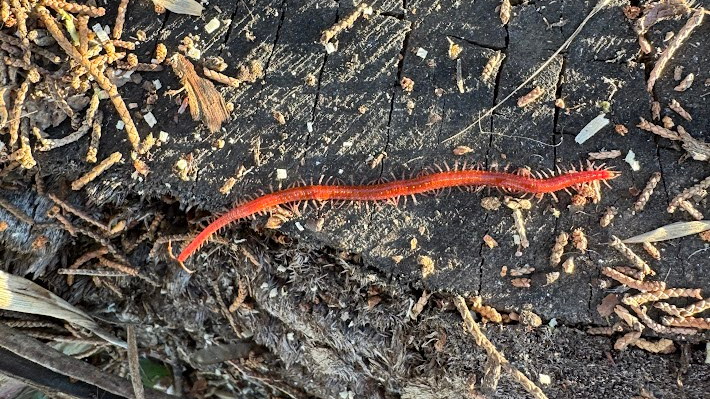
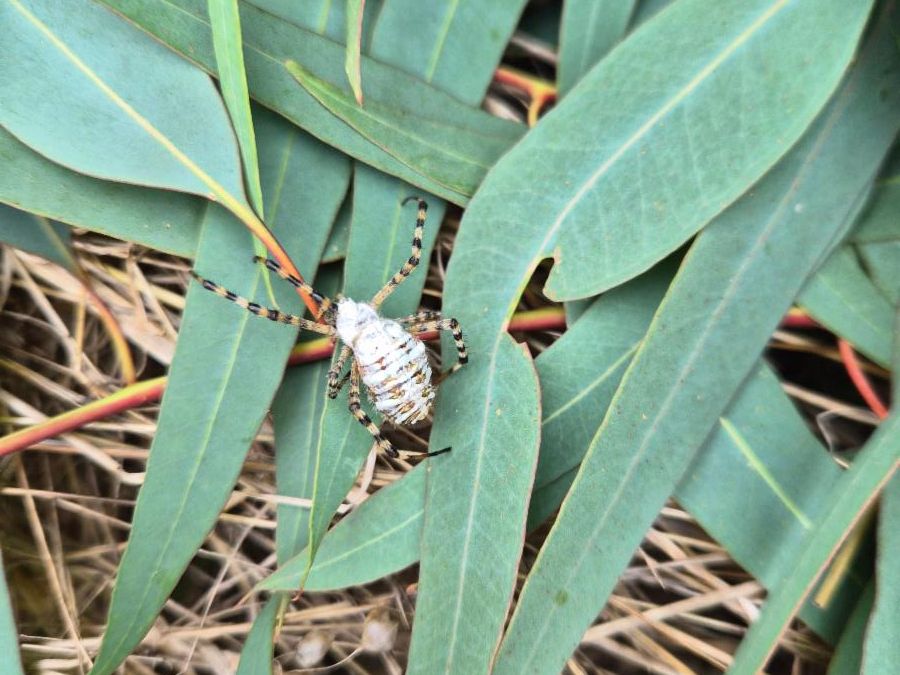
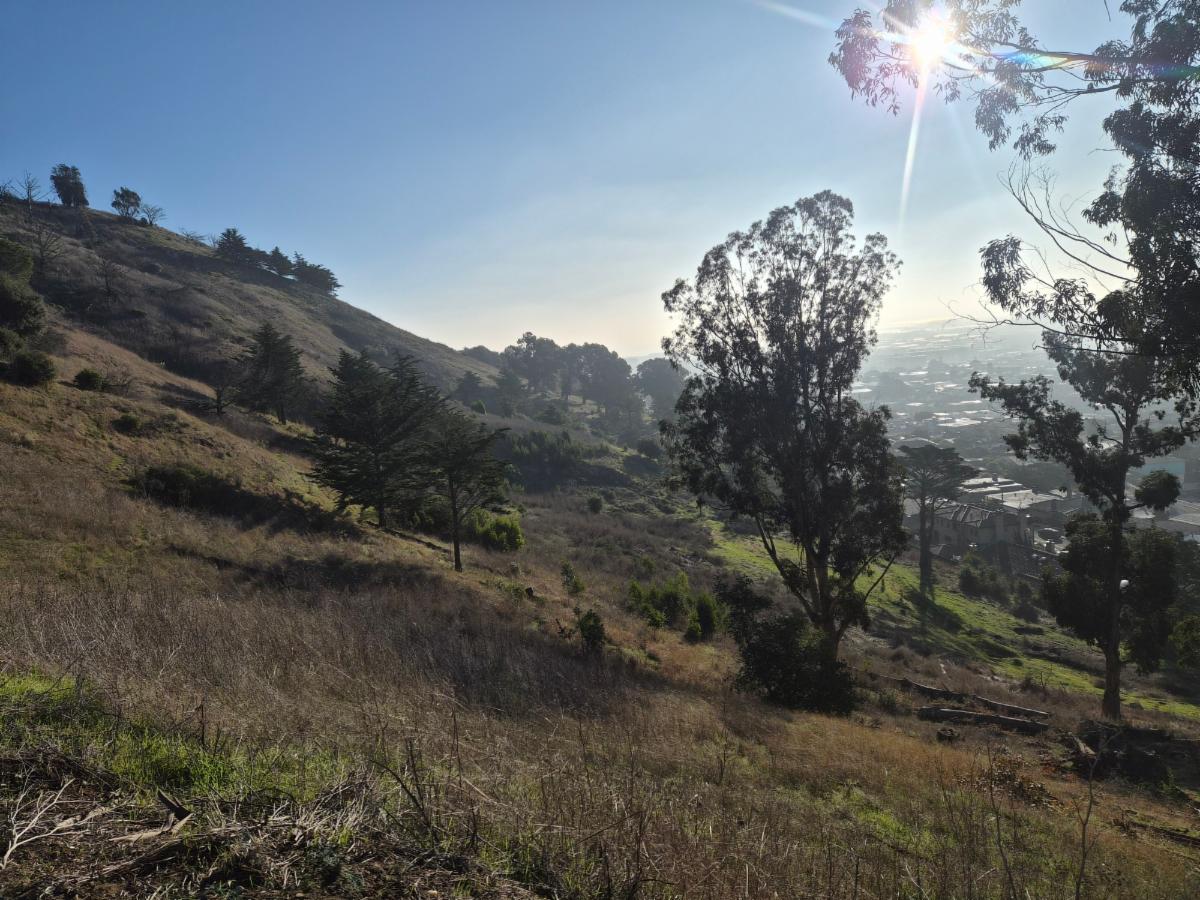
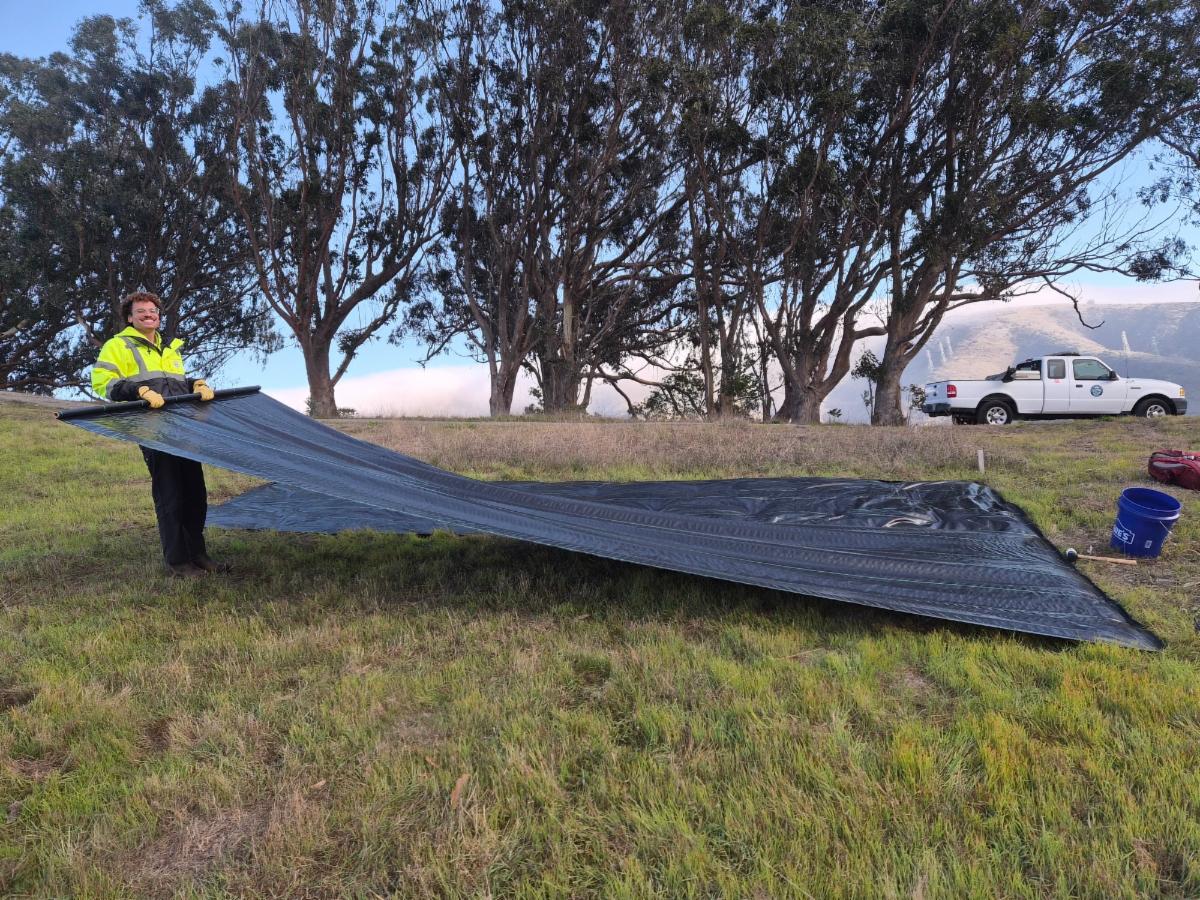
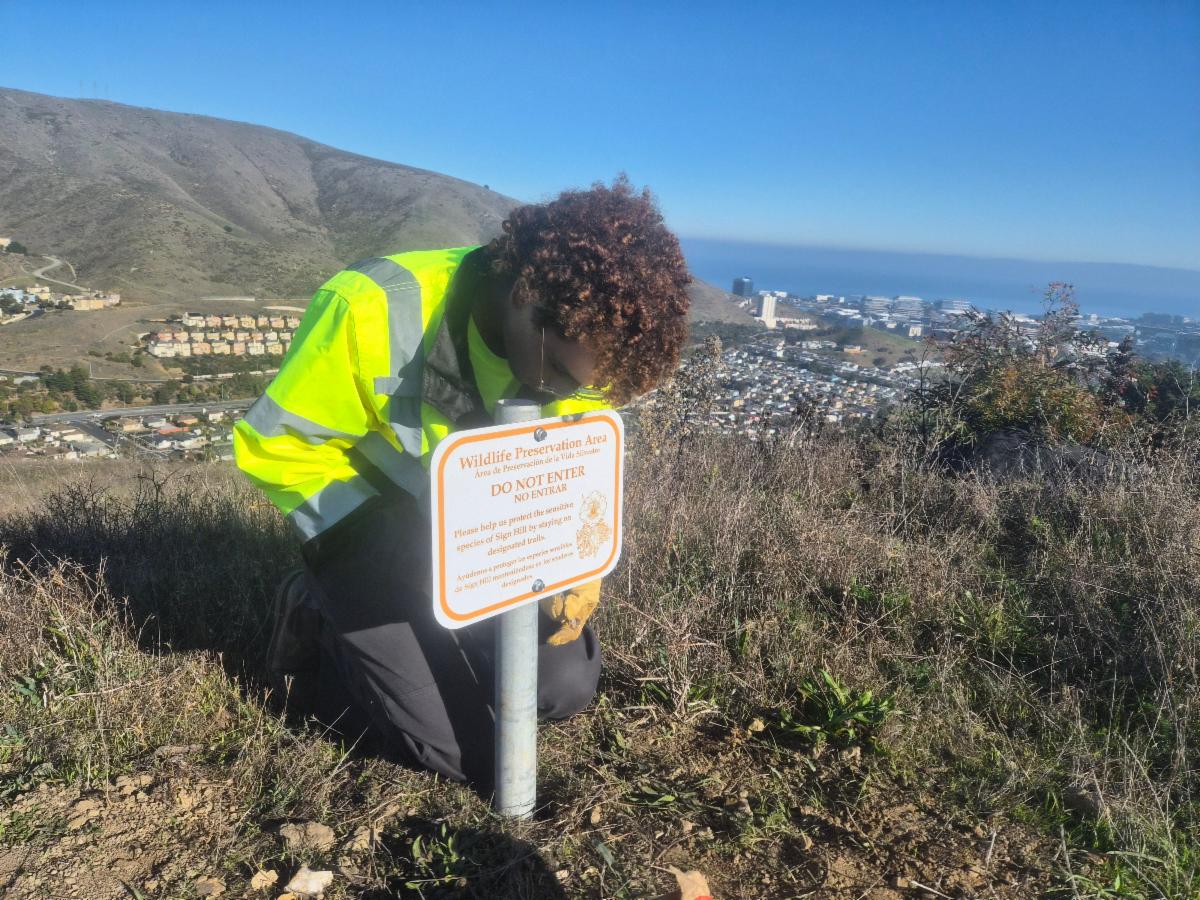
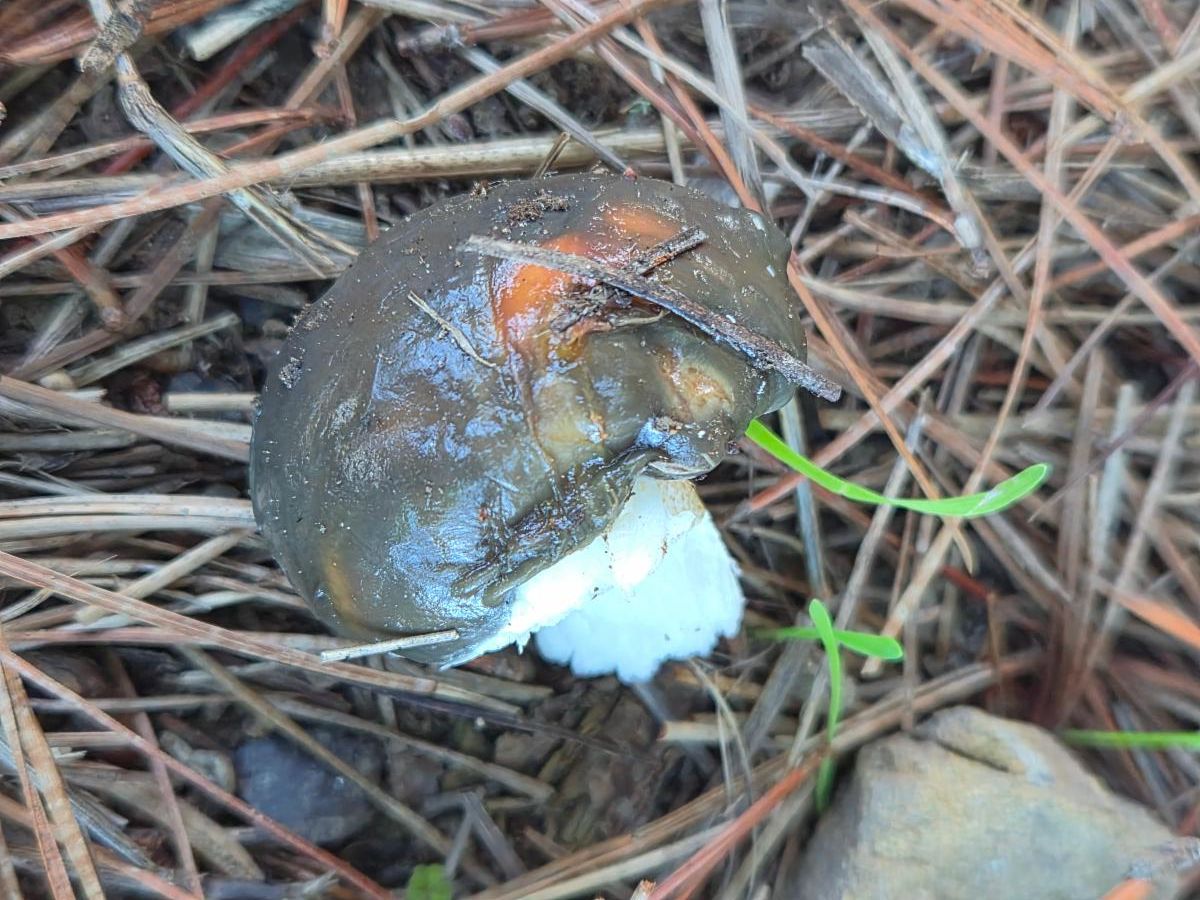
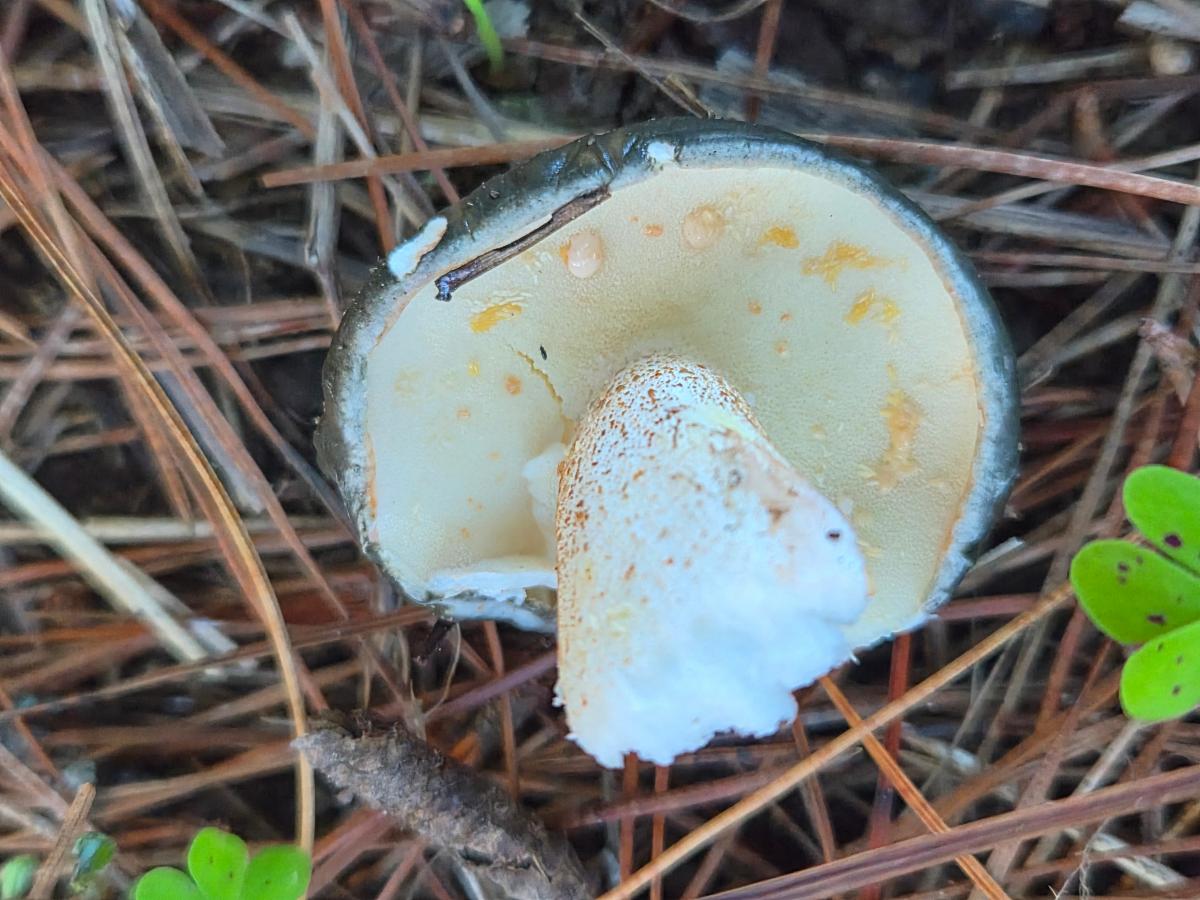
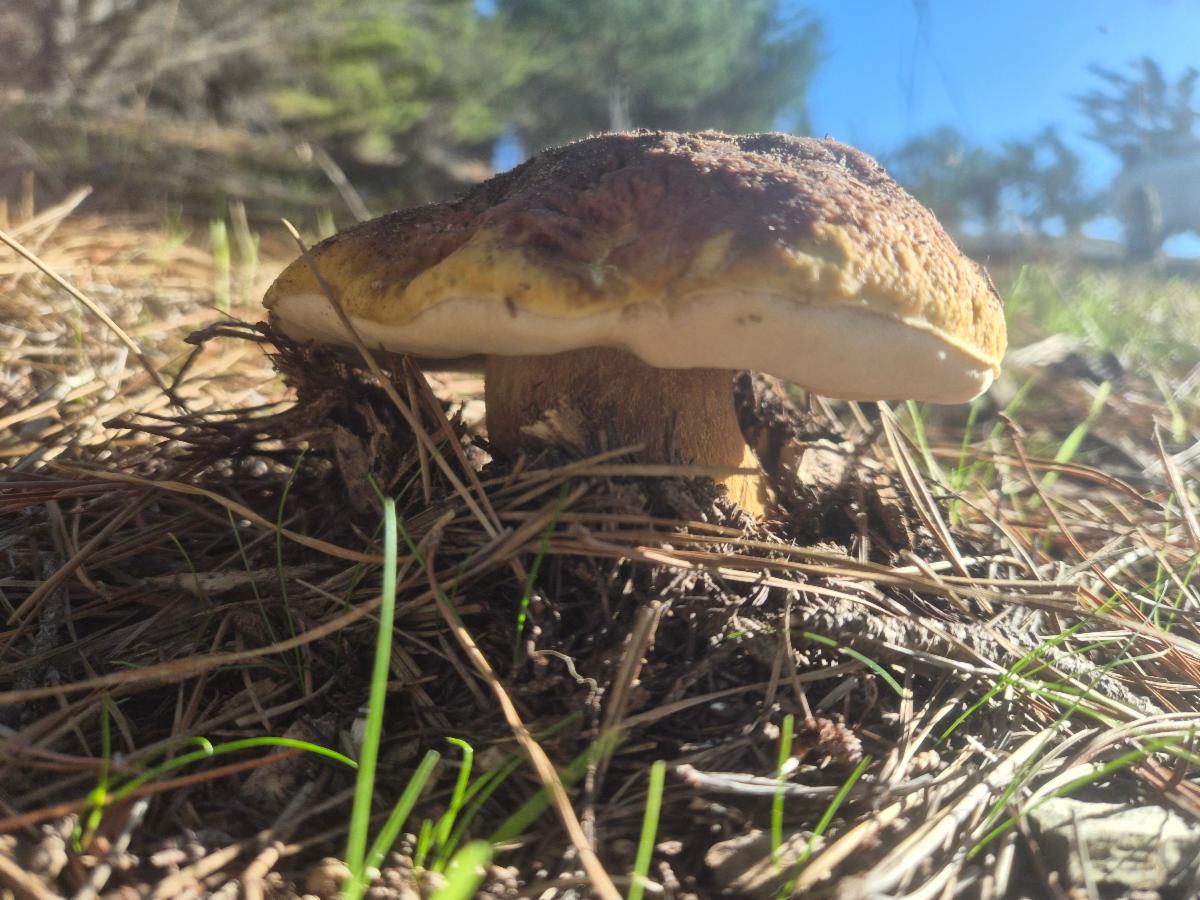
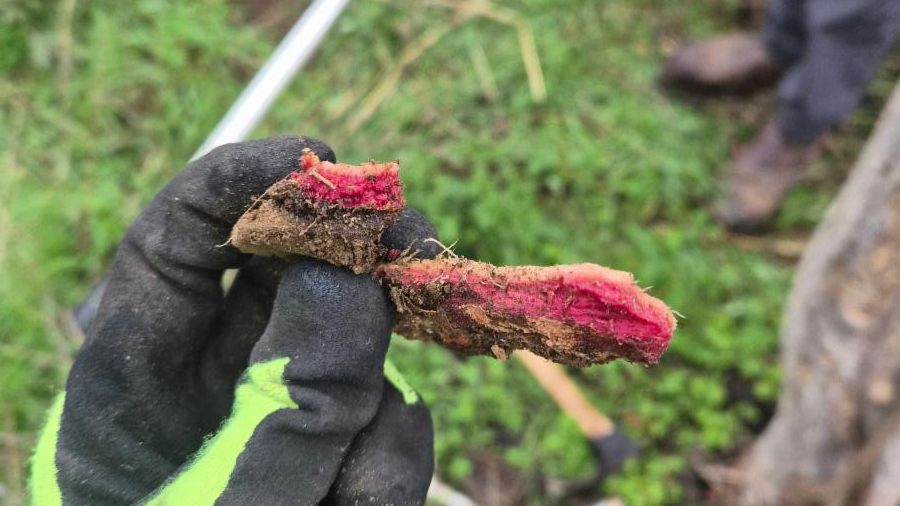
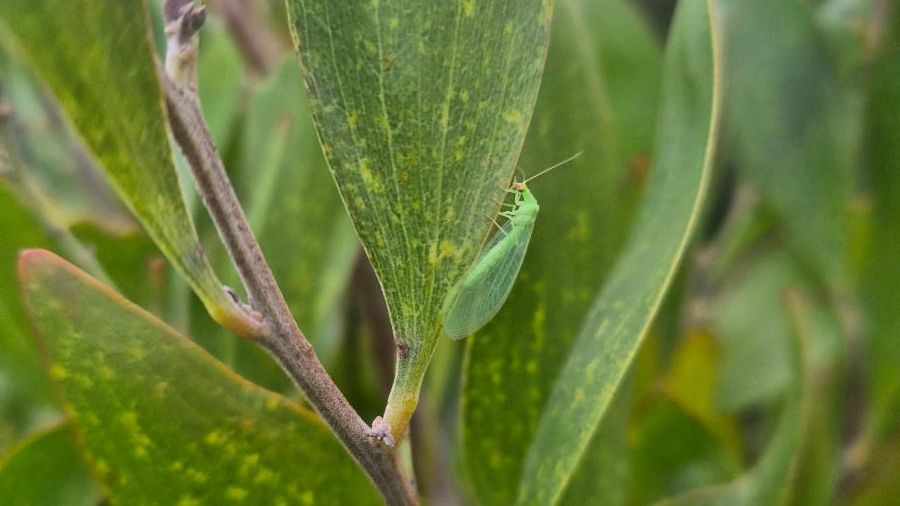
| | October 28, 2025 EEK! A centipede! | | October 30, 2025 A banded garden spider (Argiope trifasciata) makes it way across green eucalyptus leaves. | | December 2, 2025 On this dewy morning you could see how the new growth begins on Sign Hill's more moist lower flanks, eventually covering the hill in a verdant green. | | December 11, 2025 While many people are busy wrapping gifts, SSF Parks Natural Resources staff are busy wrapping Sign Hill! In preparation for winter planting each year we apply landscaping tarps over our planned habitat restoration areas to kill the weeds and give our installed plants a competitive advantage. | | When the ground is moist, it is a good time to install signage since the posts are easier to sink. This sign was posted at the top of Sign Hill near the ridge line that juts out to the north. This area is one of the most pristine grasslands of the park and hosts some of the most rare plant species. We ask park guests stay on trail and help prevent the spread of invasive species to this delicate habitat so it can continue to thrive for years to come. | | These Suillus pungens fungi, commonly known as slippery jack mushrooms, can be found pushing up pine needles along Ridge Trail. | | December 18, 2025 The roots of the acacia trees we were removing had a stunning red color, almost blood red--how interesting! | | It would be easy to miss this green lacewing (Chrysopidae sp.) but its eye-catching minty green color blew it's cover. | | |
When: Every other Saturday from 9am-12pm. Only cancelled for heavy rains.
Where: Volunteers will park at the Sign Hill Parking Lot nearby 964 Ridgeview Ct, South San Francisco, CA and hike with staff to the restoration site.
Registration: Registration is required. Volunteers under the age of 18 must have a youth waiver signed by a parent/guardian. Youth under the age of 16 are welcome and must be accompanied by an adult. Click the link below to RSVP.
What to bring: To prepare for working outdoors, please bring work gloves, plenty of water, sturdy shoes, long pants and long sleeves, a hat/sunscreen, and a completed waiver for each volunteer. Volunteers should expect some hiking on steep terrain.
| | | | |