|
Sign Hill Stewards
Winter 2024 Newsletter
| | |
|
Greetings Sign Hill Stewards,
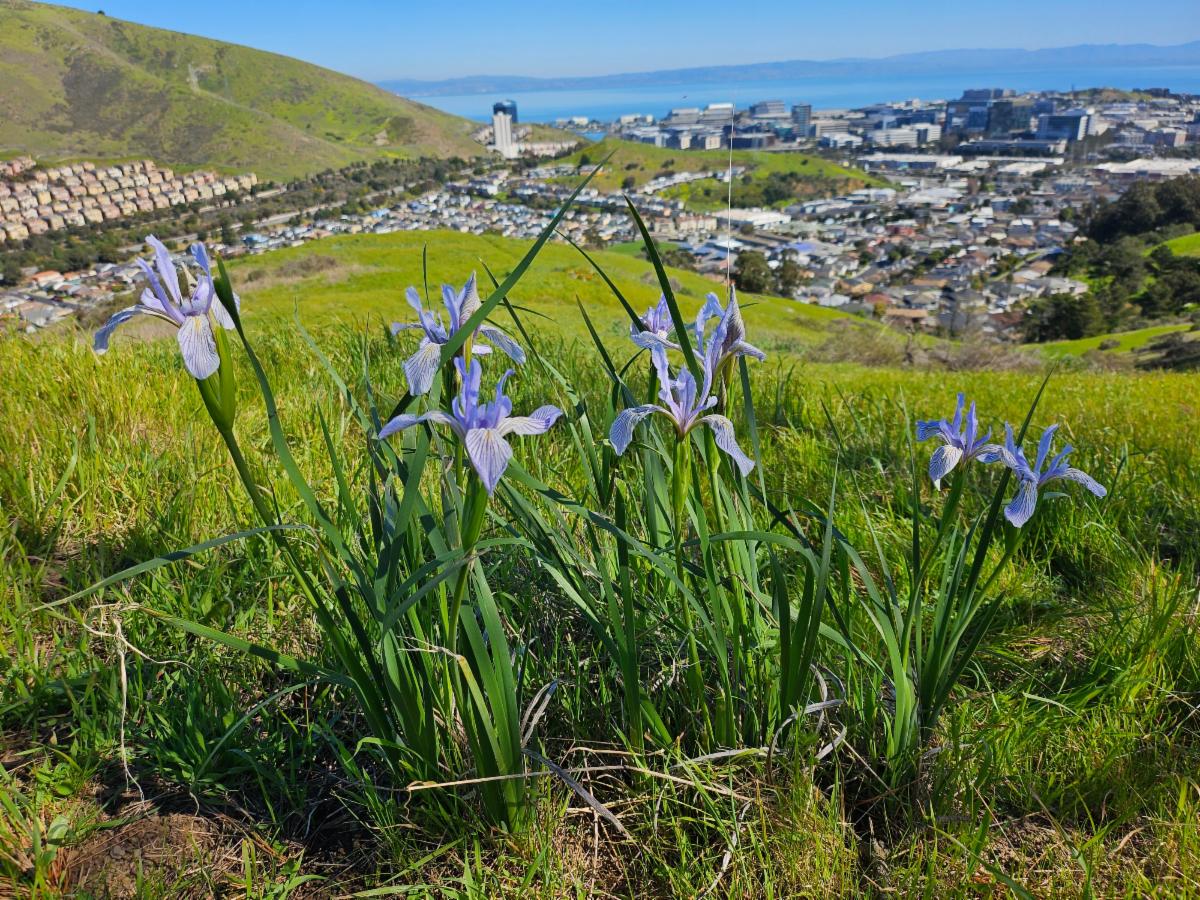
The winter rainfall has brought a flush of bright green grass to Sign Hill and beckoned the return of early spring wildflowers. As the season comes to a close, we have even observed spring's first butterflies beginning to take flight.
Winter is an exciting time on Sign Hill as the wet weather creates ideal conditions for planting. This year we installed habitat restoration plots for the mission blue butterflies packed with their host plants and many nectar flowers from Mission Blue Nursery, as well as dispersing native seeds throughout the park. We also got a jump on many of the annual invasive weeds that have begun to emerge while they are easier to remove from the moist soil.
Over the past few years of the Sign Hill Restoration Project we have seen many exciting changes to the park. Following the Diamond Fire of October 2020, we got to work bringing the park within California’s fire safety regulations, including the removal of hundreds of invasive eucalyptus and acacia trees. Within one year of these tree removals, we were already able to observe the local ecosystem beginning to heal.
As the pressure that these trees were placing on the water table was relieved we began to see plant life being revitalized and water rising to the surface in certain areas. To further enhance the habitat, Sign Hill Stewards swung swiftly into action to dig a swale. This was a considerable endeavor that involved a lot of digging, but our efforts have paid off. The swale has now provided surface water for nearly 5 months! This means that local wildlife now have access to drinking water and there is an opportunity to see an increase in biodiversity in the park.
If you have not made it to the park recently, we encourage you to come observe some of these exciting changes for yourself. Sign Hill Stewards continue to work tirelessly to restore the native grasslands of Sign Hill, and we can certainly use your help!
Candace LaCroix
Natural Resource Specialist
Leading the Sign Hill Habitat Restoration Project
| |
Animals Come Together on Sign Hill! | |
|
Sign Hill Stewards come together to do more than help restore native habitat, we also work to build community in SSF. We get to know our neighbors and have a lot of fun, but Sign Hill is more than a place for people to meet, it is also an important meeting place for animals! In an urban setting, our wild neighbors don't have many places left where they can come together with their own kind.
We hope you will enjoy this compilation of animal groups caught by our camera trapping program. Many species have been congregating near the newly constructed swale, which has been holding water since November- a powerful testament to how natural ecosystems can heal after the removal of invasive eucalyptus groves! Community volunteers and SSF Parks staff continue working to restore Sign Hill and make it a better place for people and wildlife. You can do your part to protect this beautiful natural resource by staying on trail and keeping pets on leash!
| |
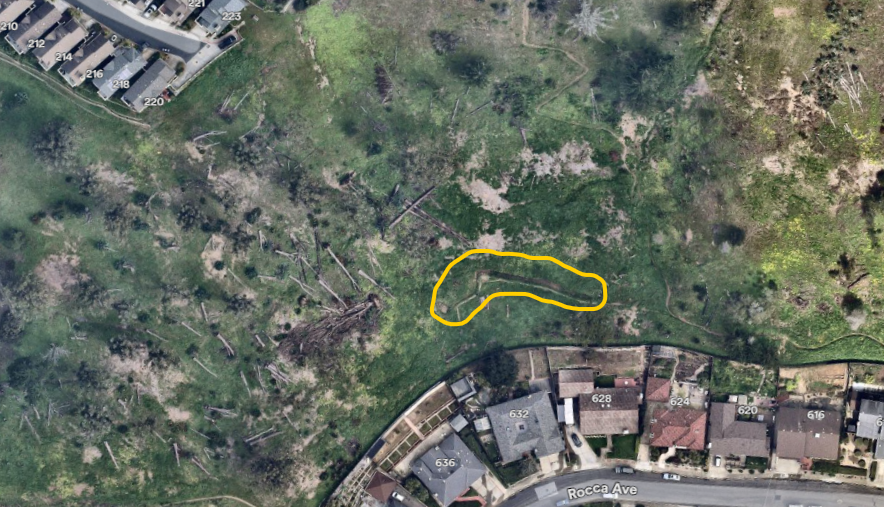
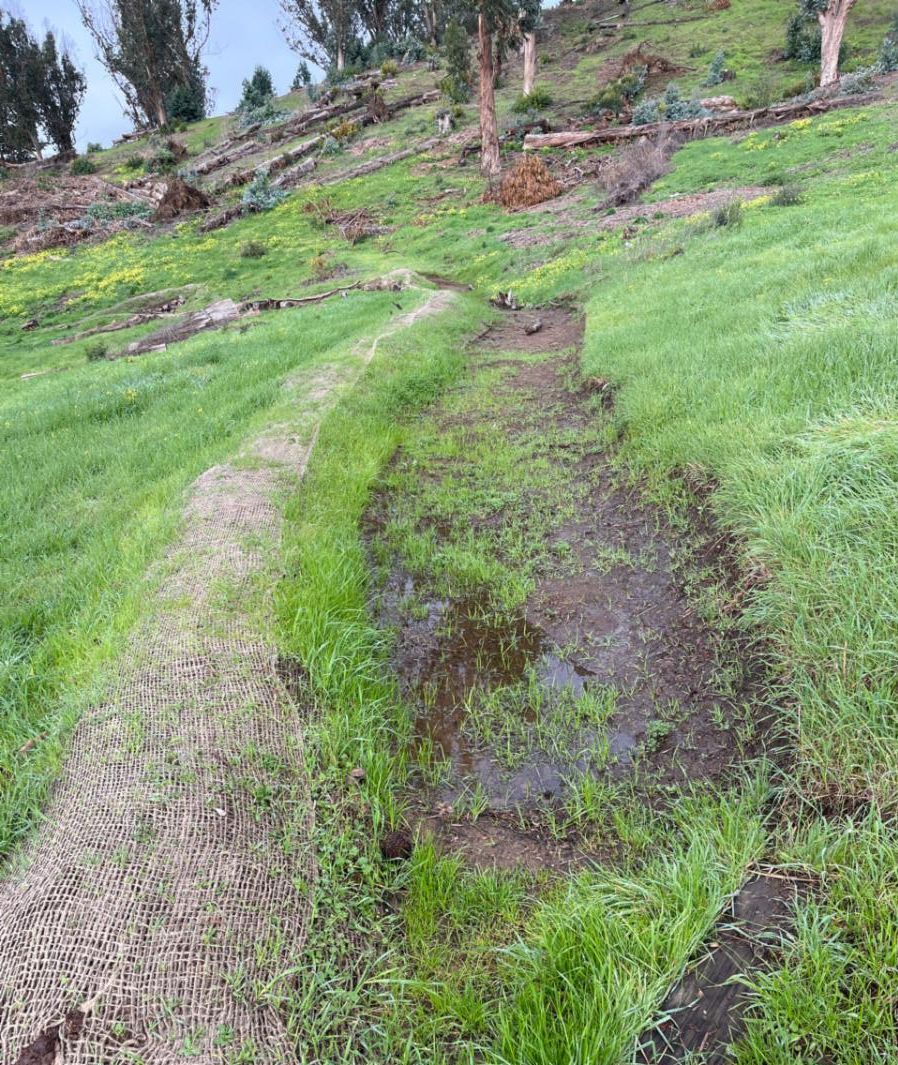
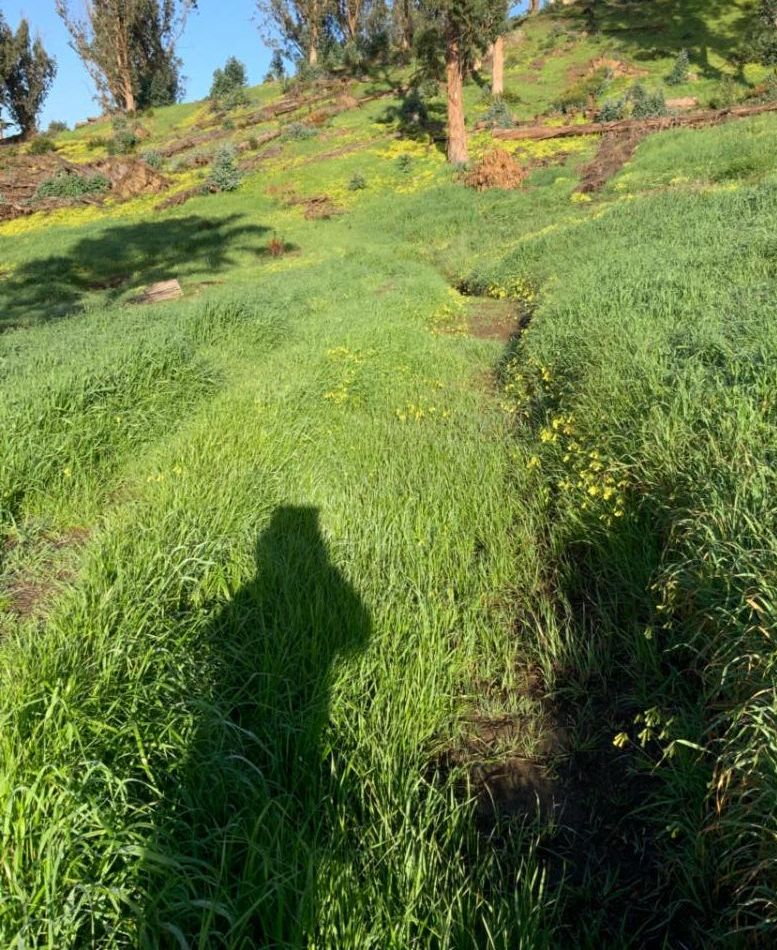
If you have been staying tuned to the Sign Hill Restoration Project you may recall that Sign Hill Stewards and SSF Parks staff invested considerable effort during fall to create a swale in the footprint of what was once Eucalyptus Loop Trail. | |
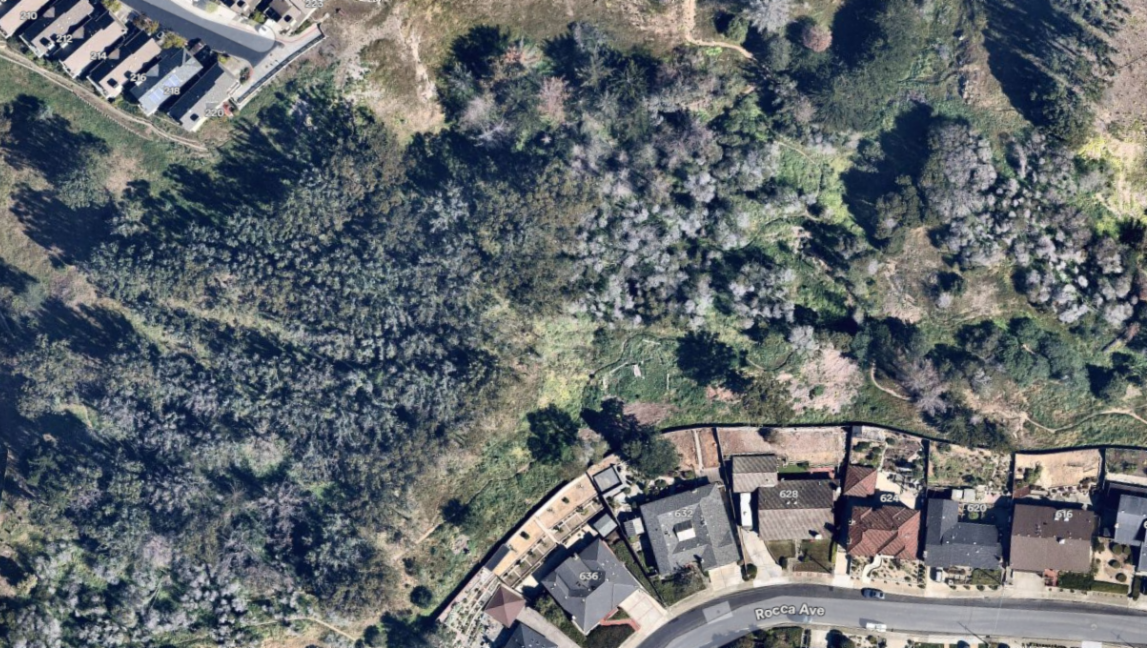
March 2022, before tree removals | |
February 2024, after tree removals. The newly constructed swale is outlined in yellow. | |
Eucalyptus trees are not only highly flammable, they also have a drying effect on the landscape because they are so effective at reaching deep sources of water, tapping into ground water up to 45 feet deep and 100 feet away from their trunks. After thousands of invasive eucalyptus and black acacia were removed to bring the park to meet California's fire safety regulations, we discovered something wonderful; The ecosystem beginning to heal! | | |
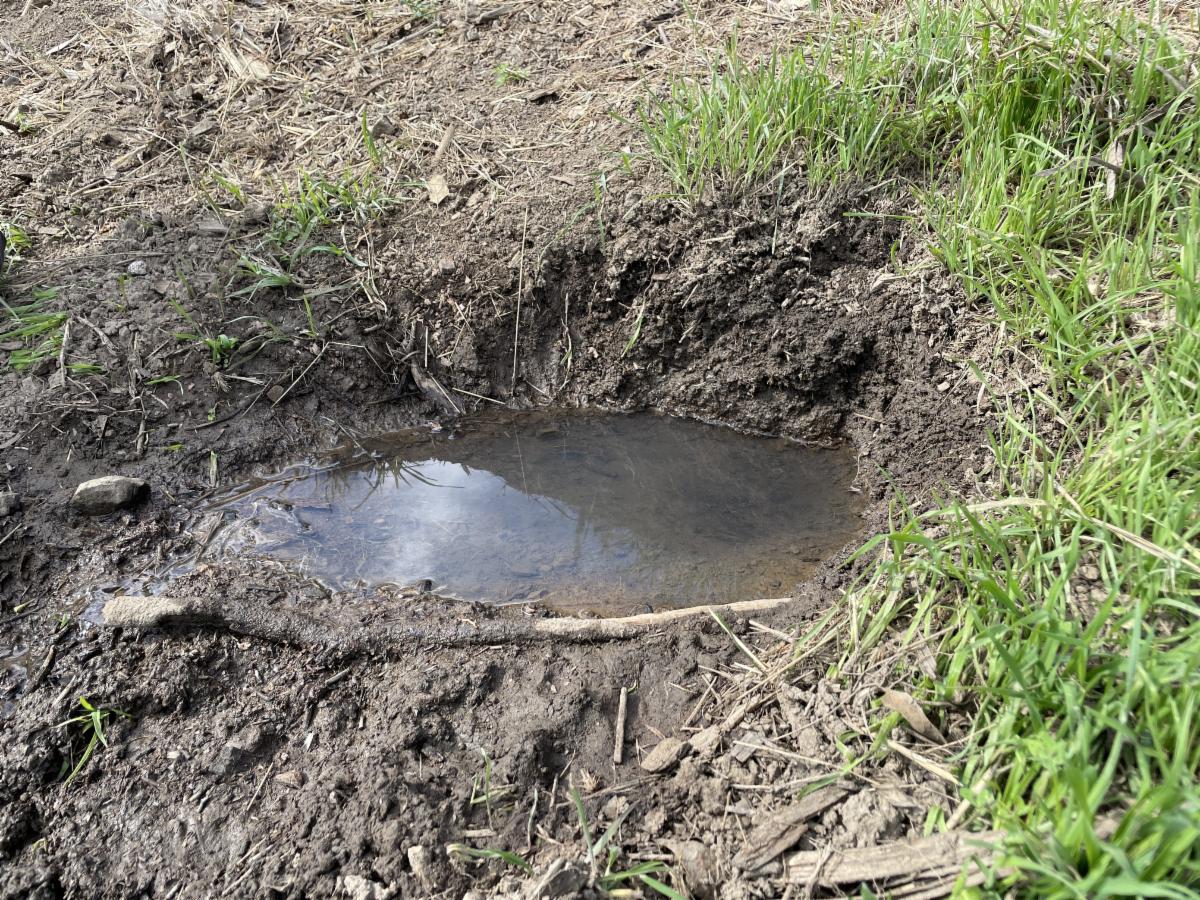
Within one year after the invasive tree removals, before any wet season rainfall, ground water had risen so close to the surface that a coyote was able to dig a hole and reveal surface water. | |
October 2023, a seep revealed by a digging coyote is discovered below in the footprint of removed trees | |
Inspired by the ecosystem changes taking place, we sprung into action to further enhance the habitat with a swale. A swale is a grassy depression that traps rainwater runoff and allows it to permeate slowly into the soil. The structure also helps to retain surface water which benefits wildlife and creates new ecological niches that can increase biodiversity. | |
January 2024, rain water has filled the upper terrace. It remained this way throughout most of the rainy winter months. | |
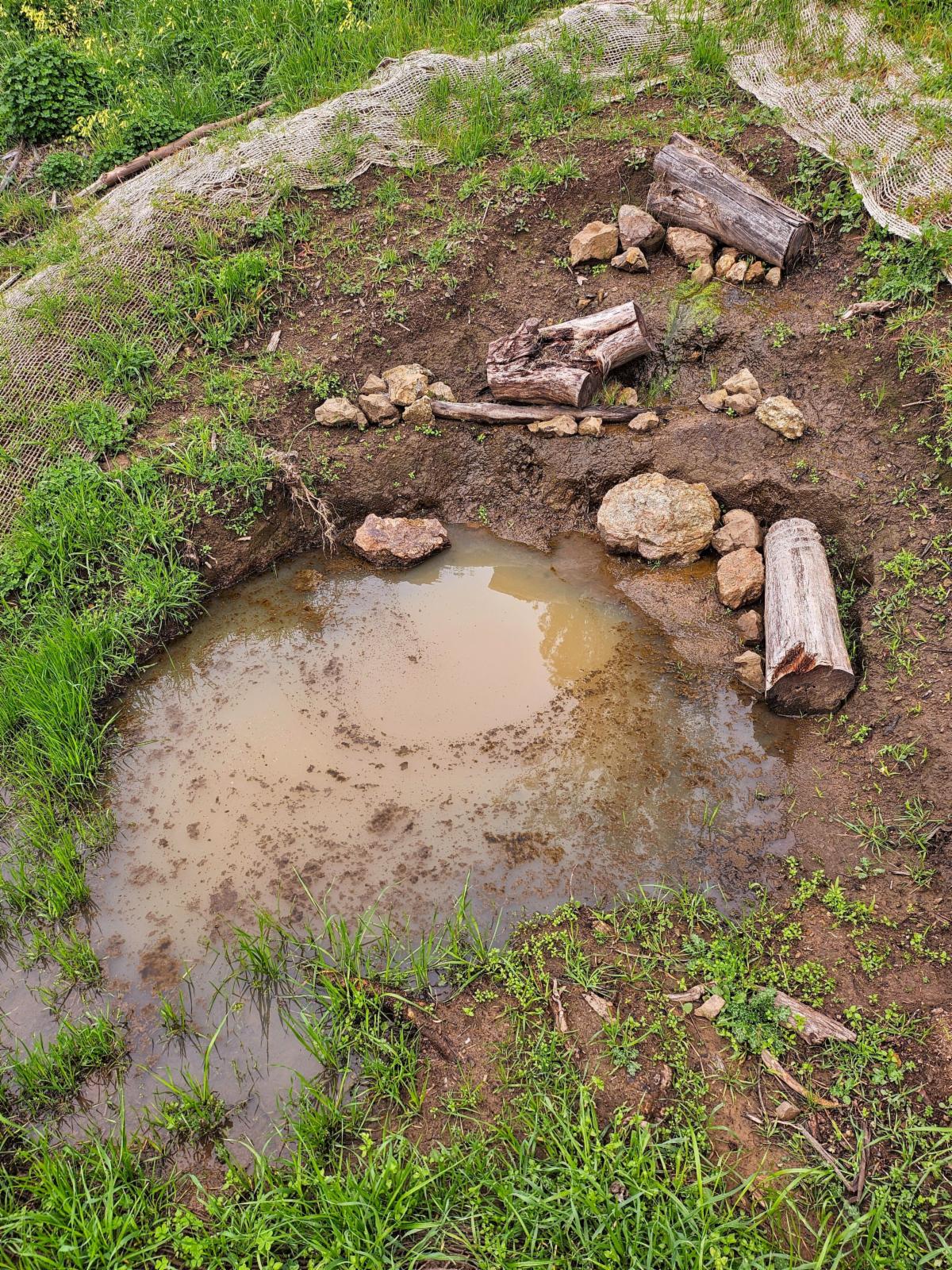
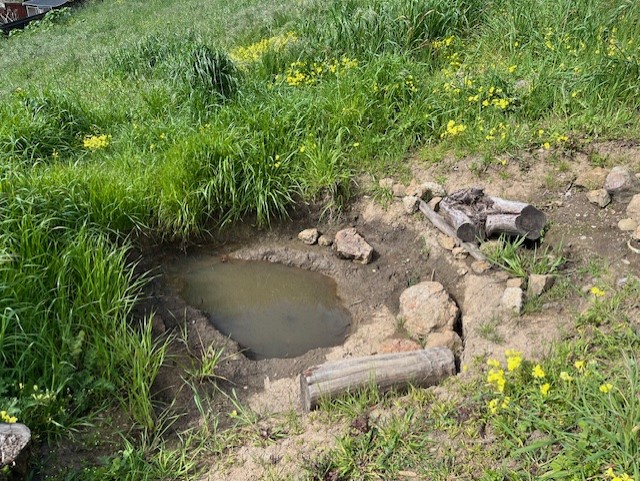
The deepest part of the swale was excavated just below where the seep was discovered. It features a terraced design that allows for incrementally greater volumes of water to be captured as winter rains fall. |
March 2024, water level has dropped to the lowest terrace as rainfall has slowed. | |
The logs and stones create pockets of moisture by trapping water flowing from the seep and make ideal habitat niches for amphibians and other soil dwellers. This could include an increase in the number of slender salamanders and arboreal salamanders, species which have been observed in the park. | | |
|
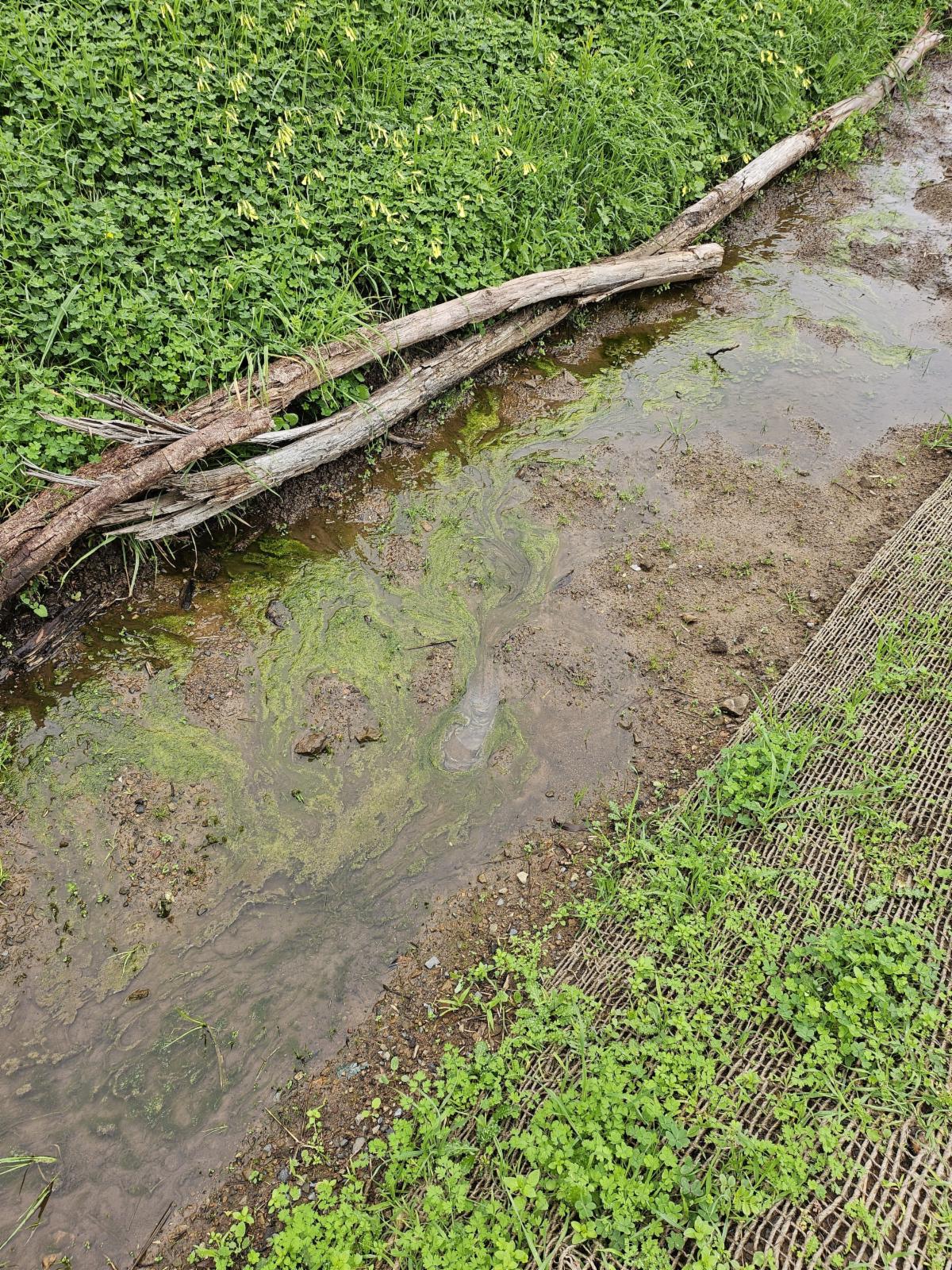
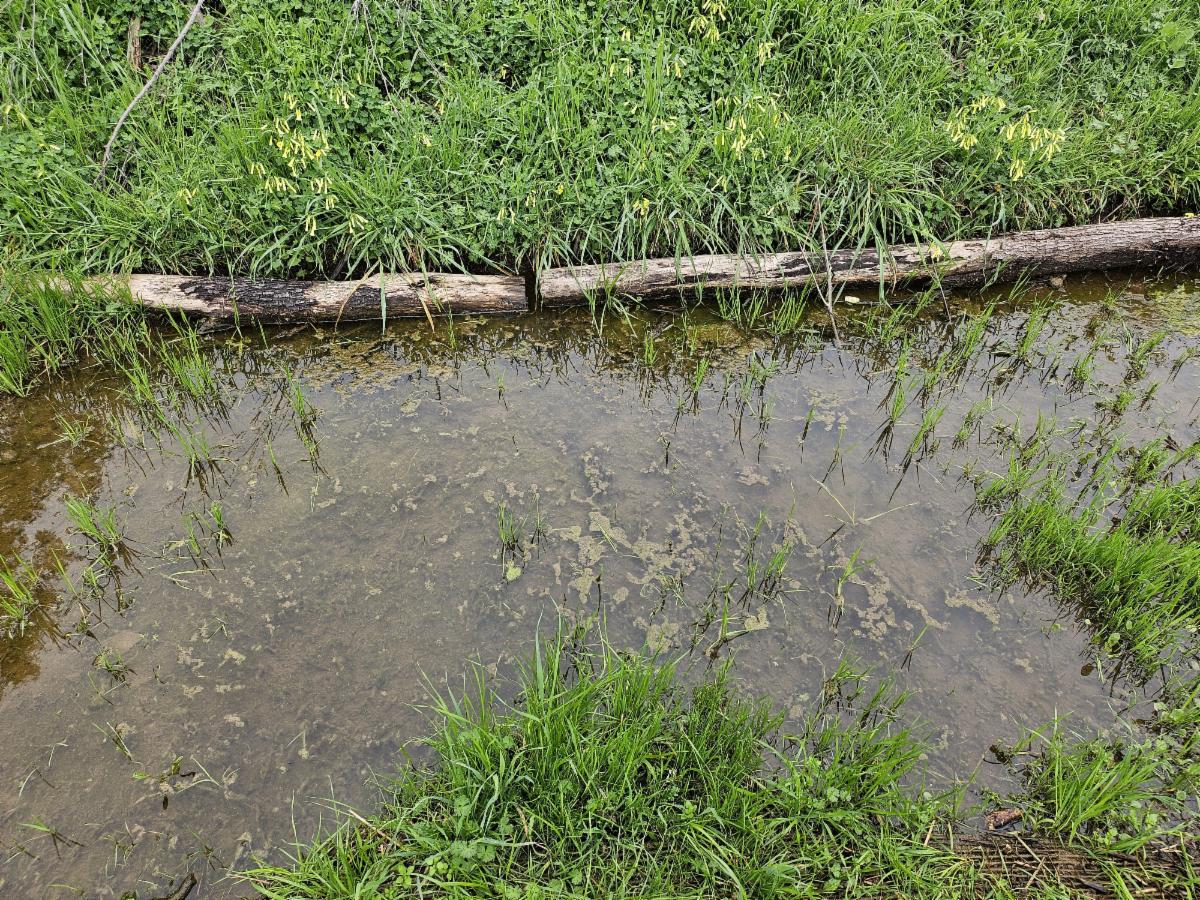
The length of the swale retained surface water for much of the wet season and allowed for the growth of aquatic mosses. | |
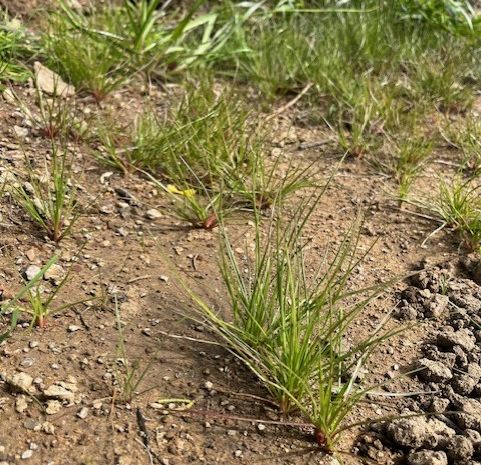
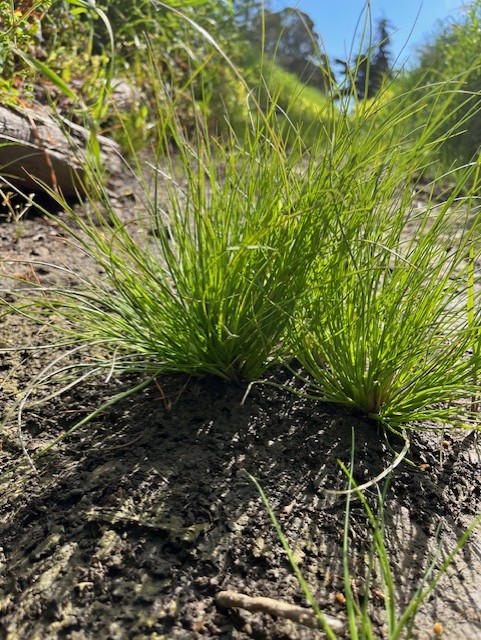
With the beginning of spring portions of the swale are beginning to dry out and we have seen many of the native grasses we planted becoming established. | |
|
It will be exciting to observe the impact the swale will have on the local vegetation and biodiversity in the years to come! | |
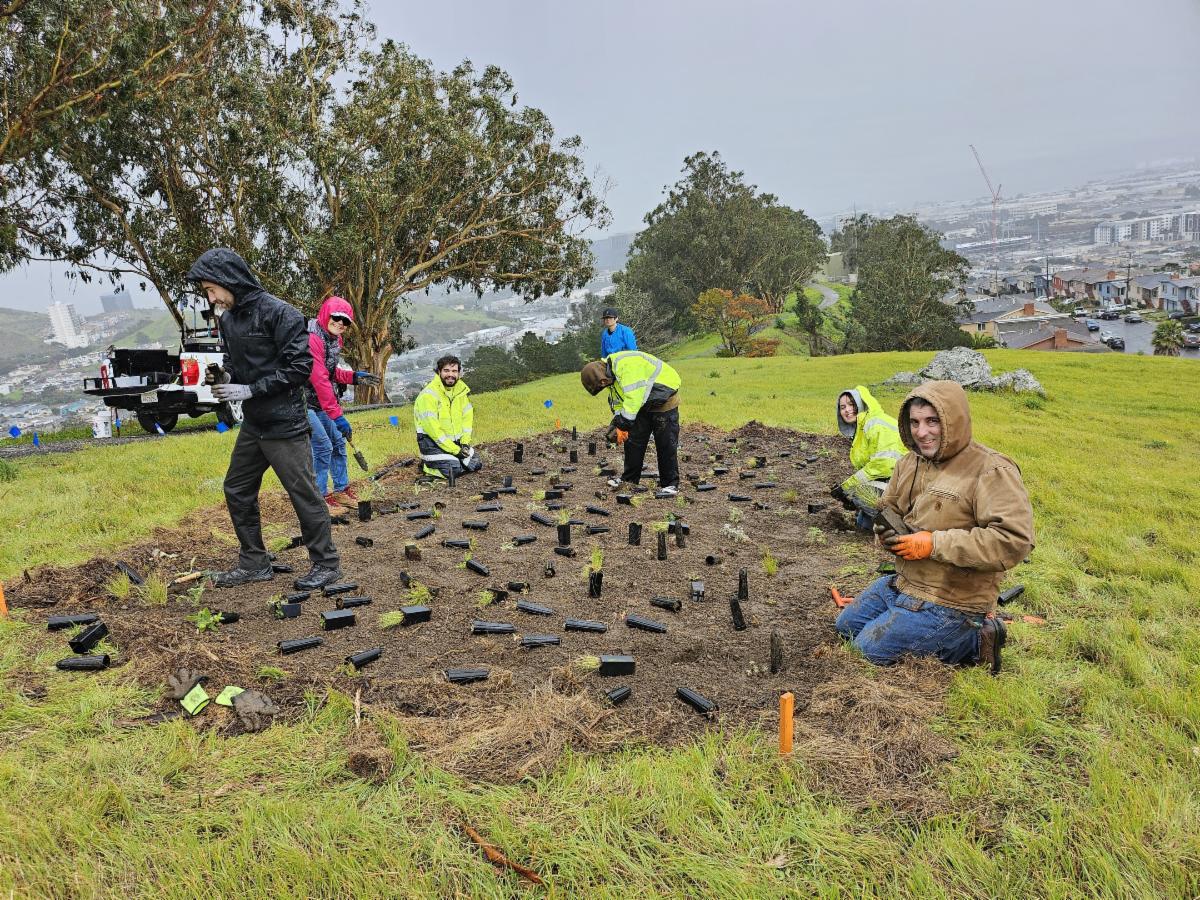
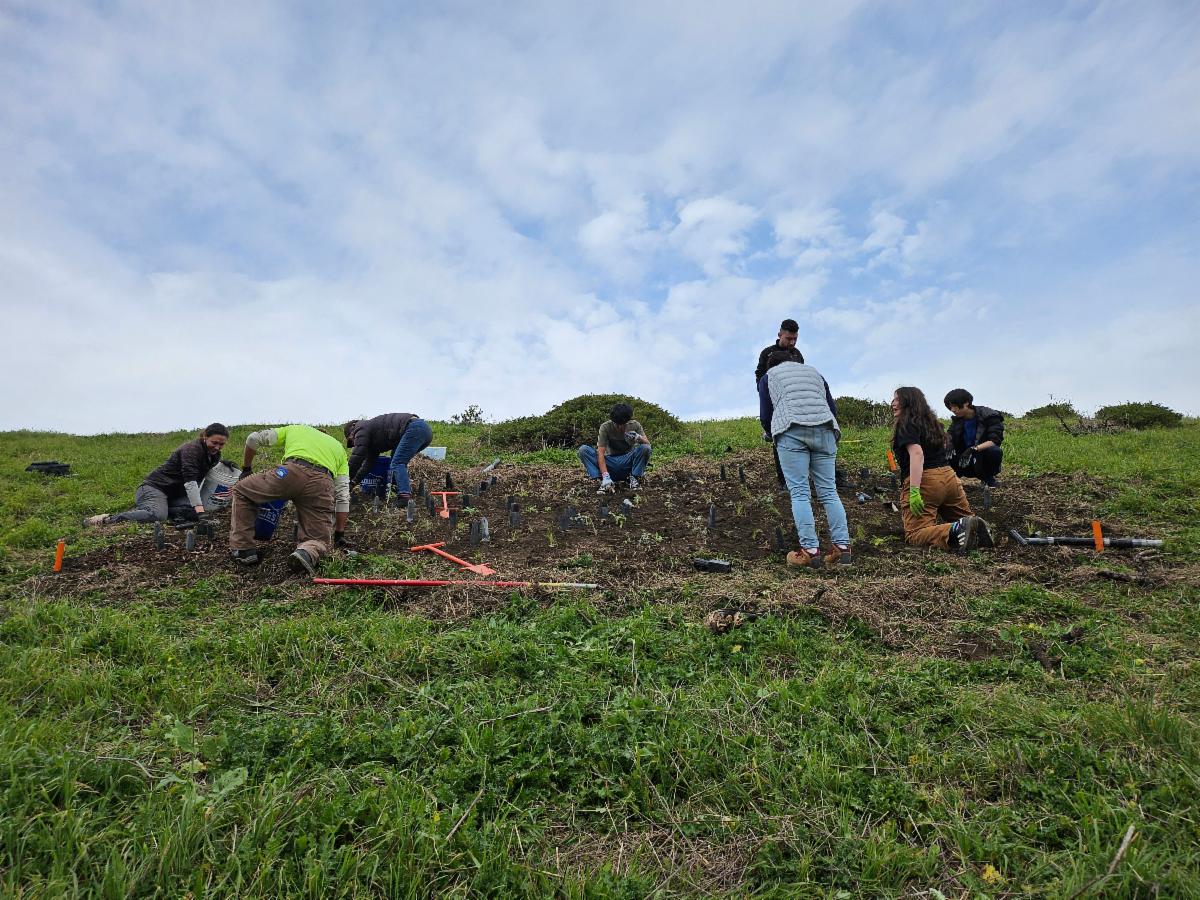
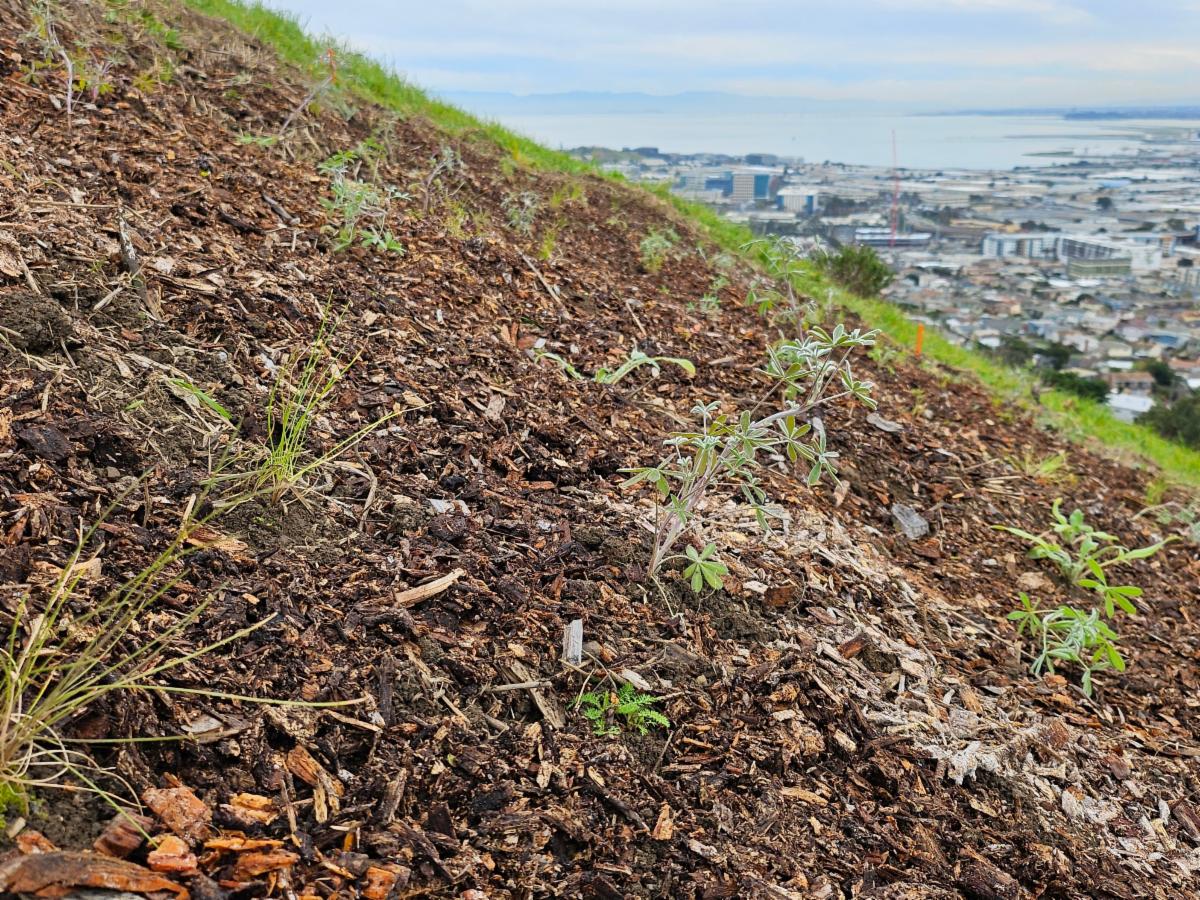
Winter is the time for planting. This year we installed two 288 square foot restoration plots for the mission blue butterfly. Together the plots contain 390 plants grown by Mission Blue Nursery, who sources all of their seed from the nearby San Bruno Mountain. These restoration plots will enhance and expand existing habitat, and increase habitat connectivity across the park. | |
|
We chose areas to restore that were near existing habitat, but did not have any beneficial plants.
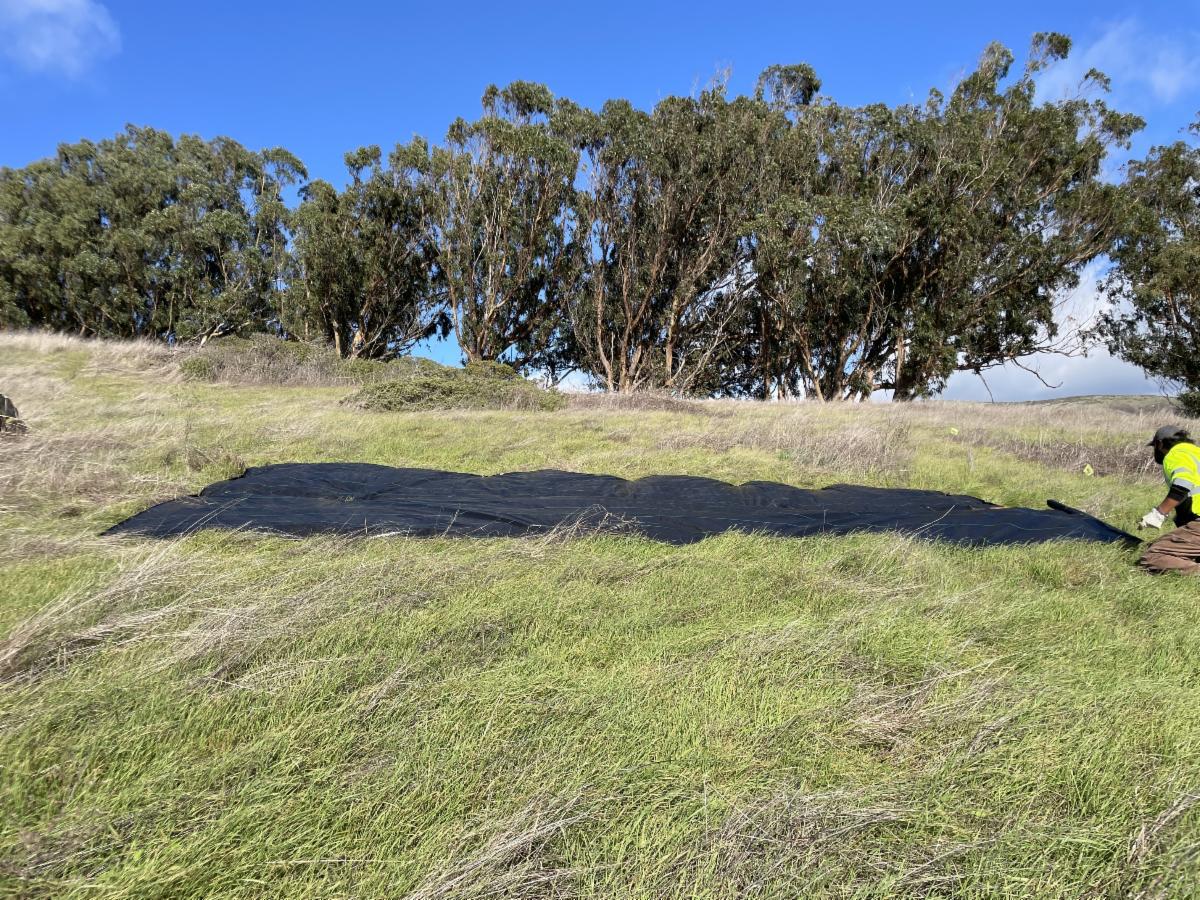
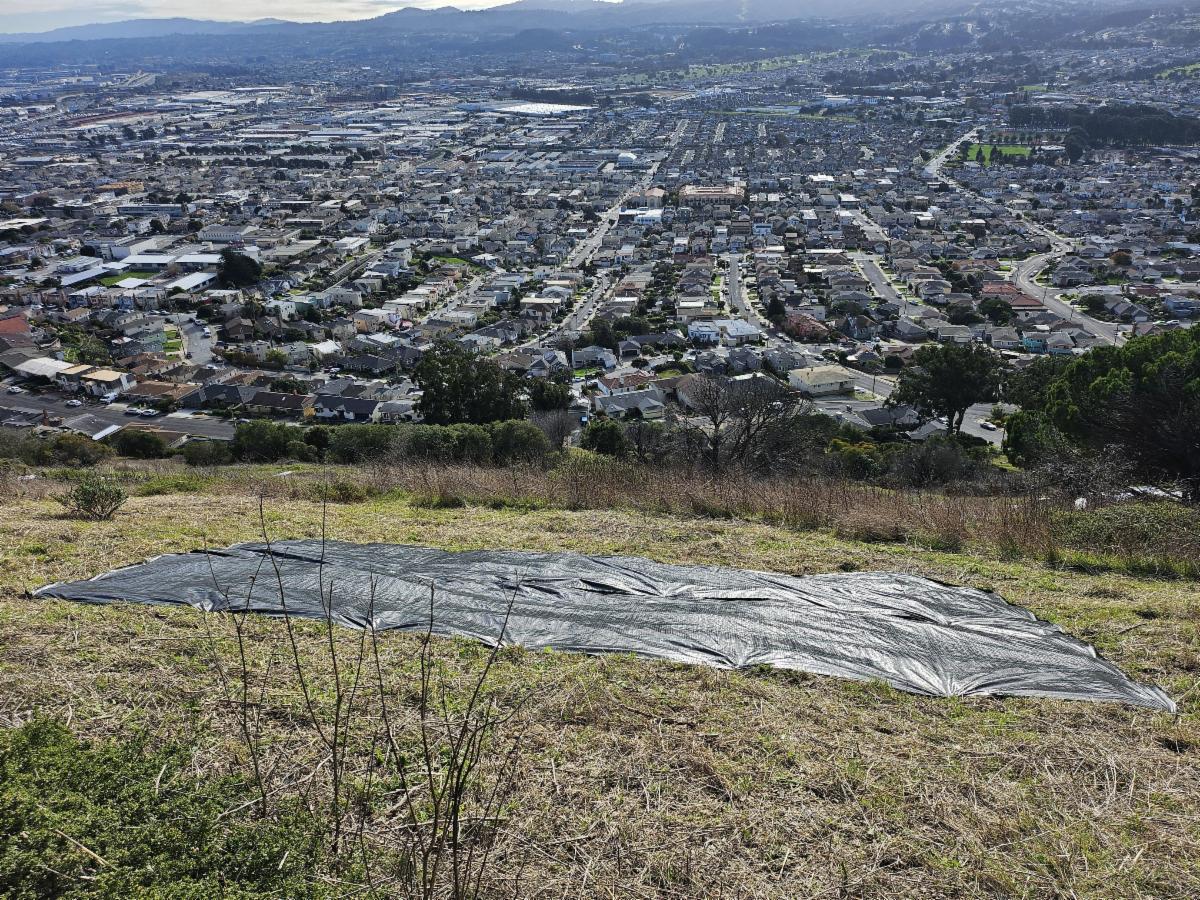
In early January landscape fabric was placed over the restoration plots and left in place for about 5 weeks to kill the weeds and create space for the installed planted to become established.
| |
|
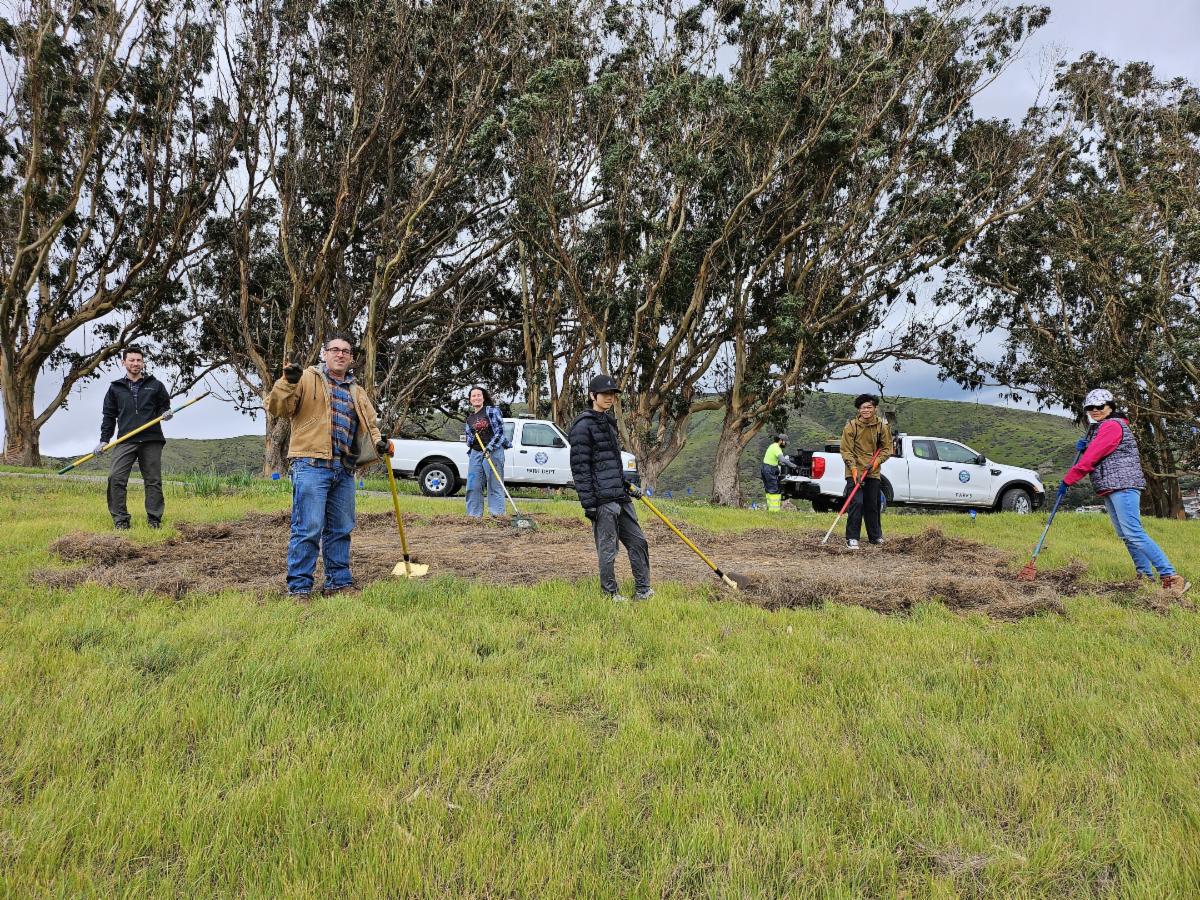
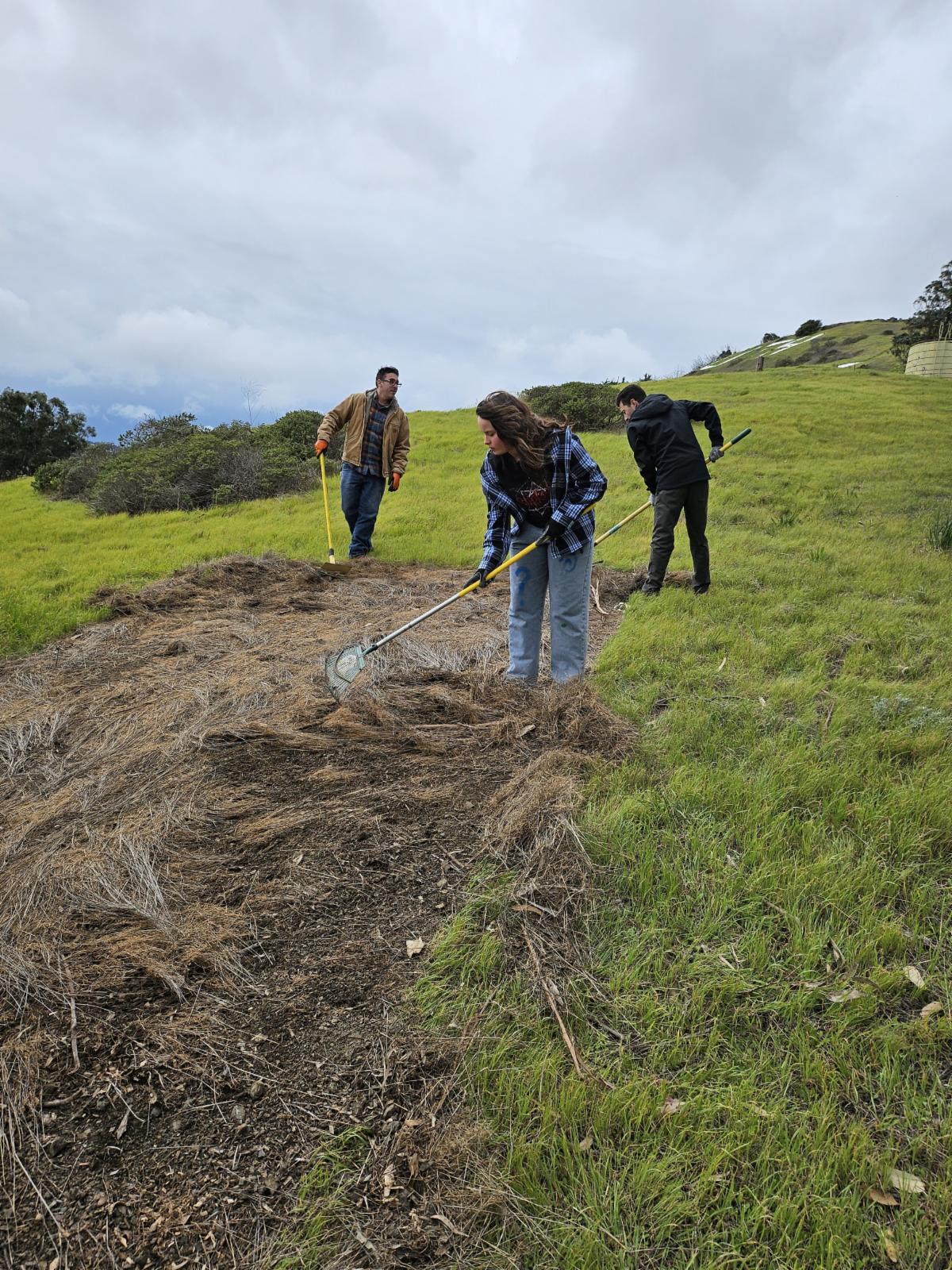
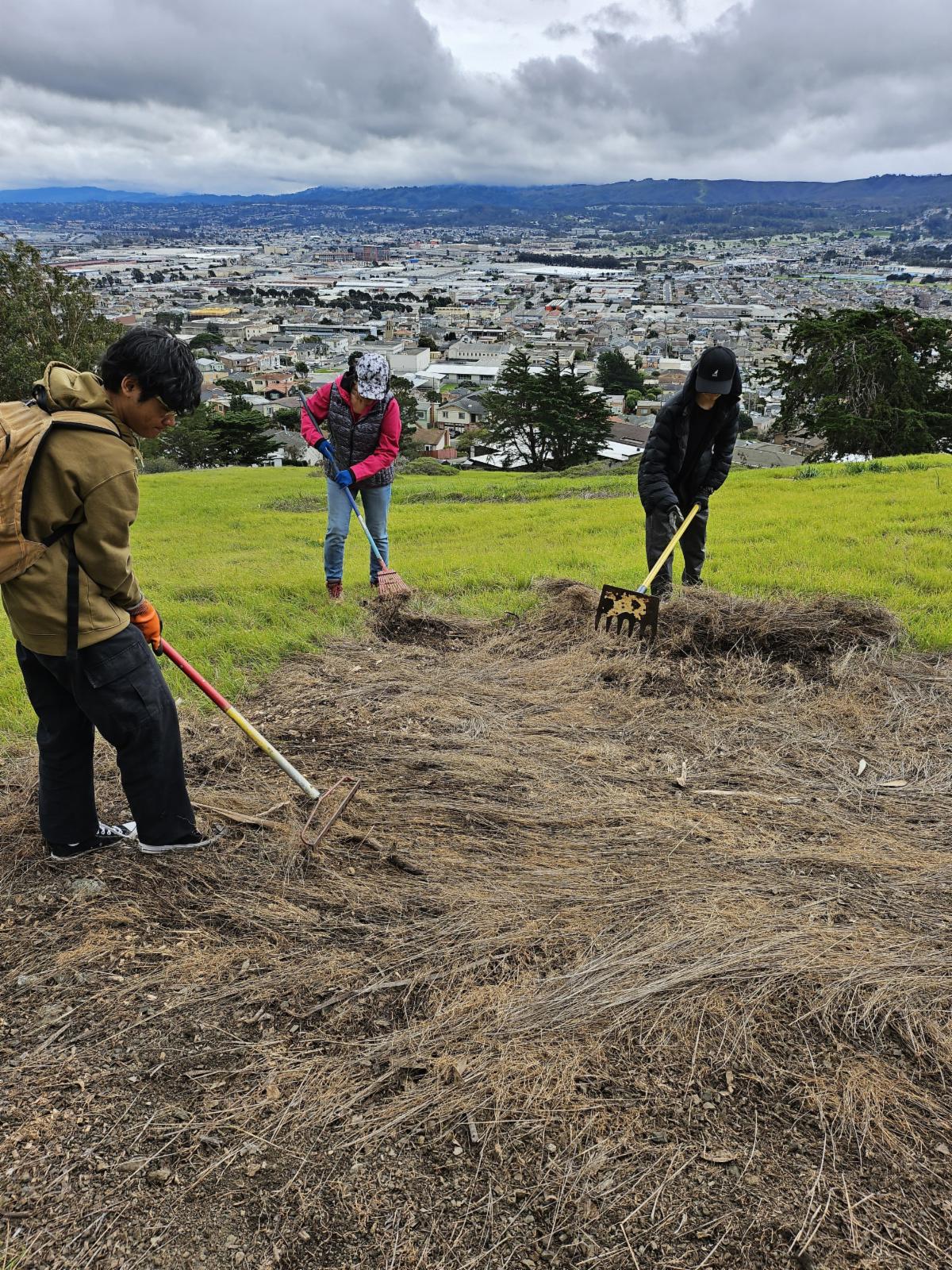
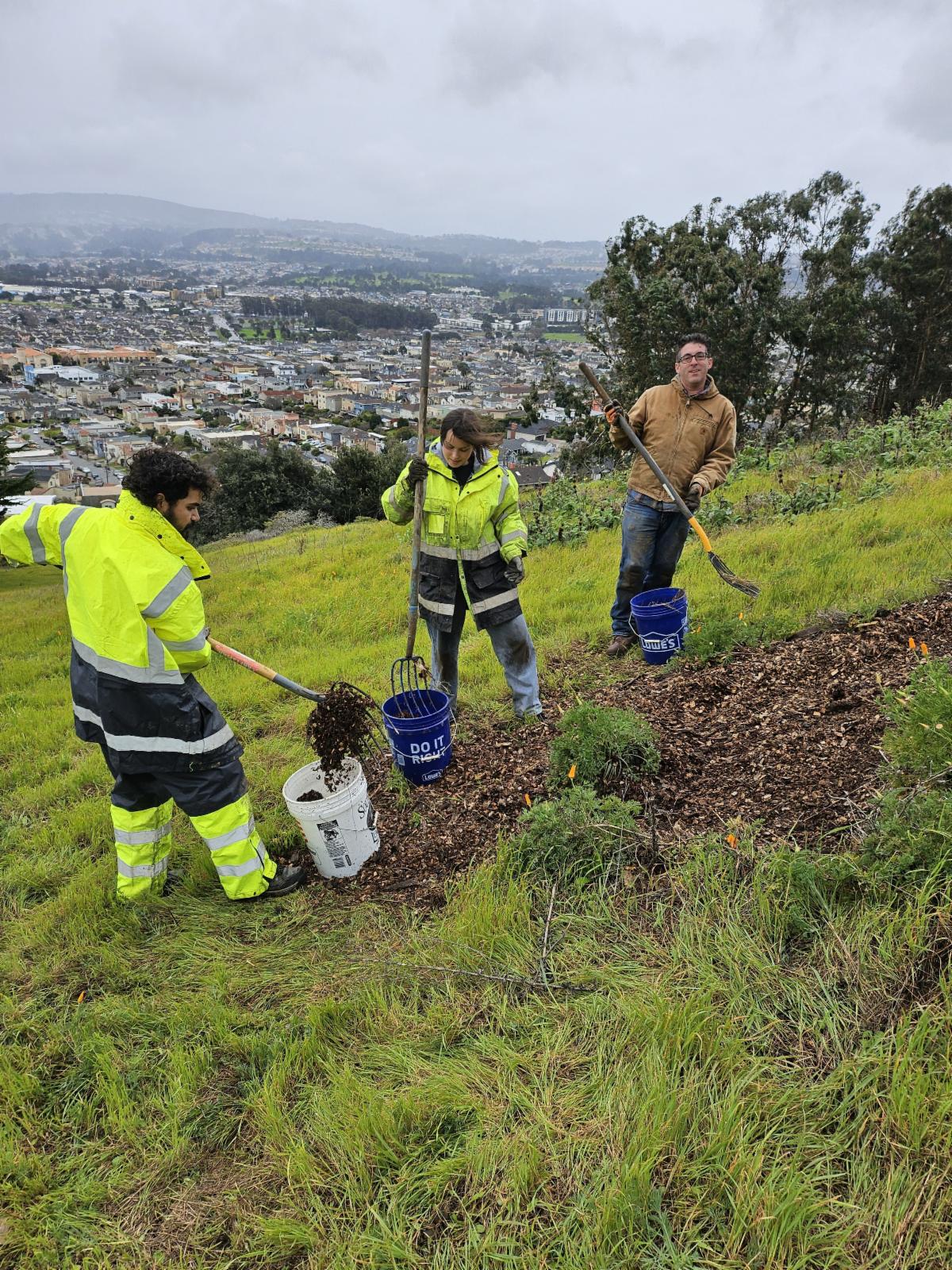
We started our planting days by scraping the dry thatch off the top off of the plot area. | |
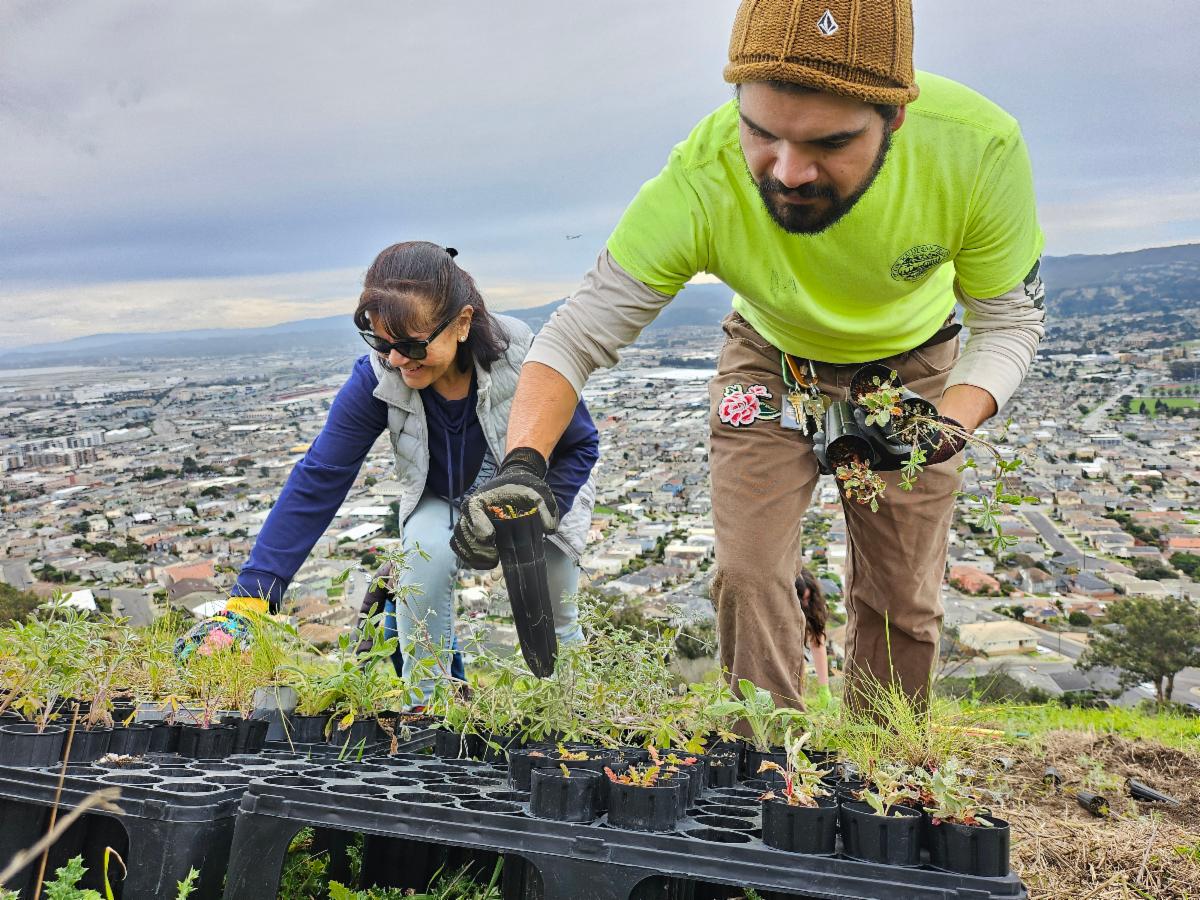
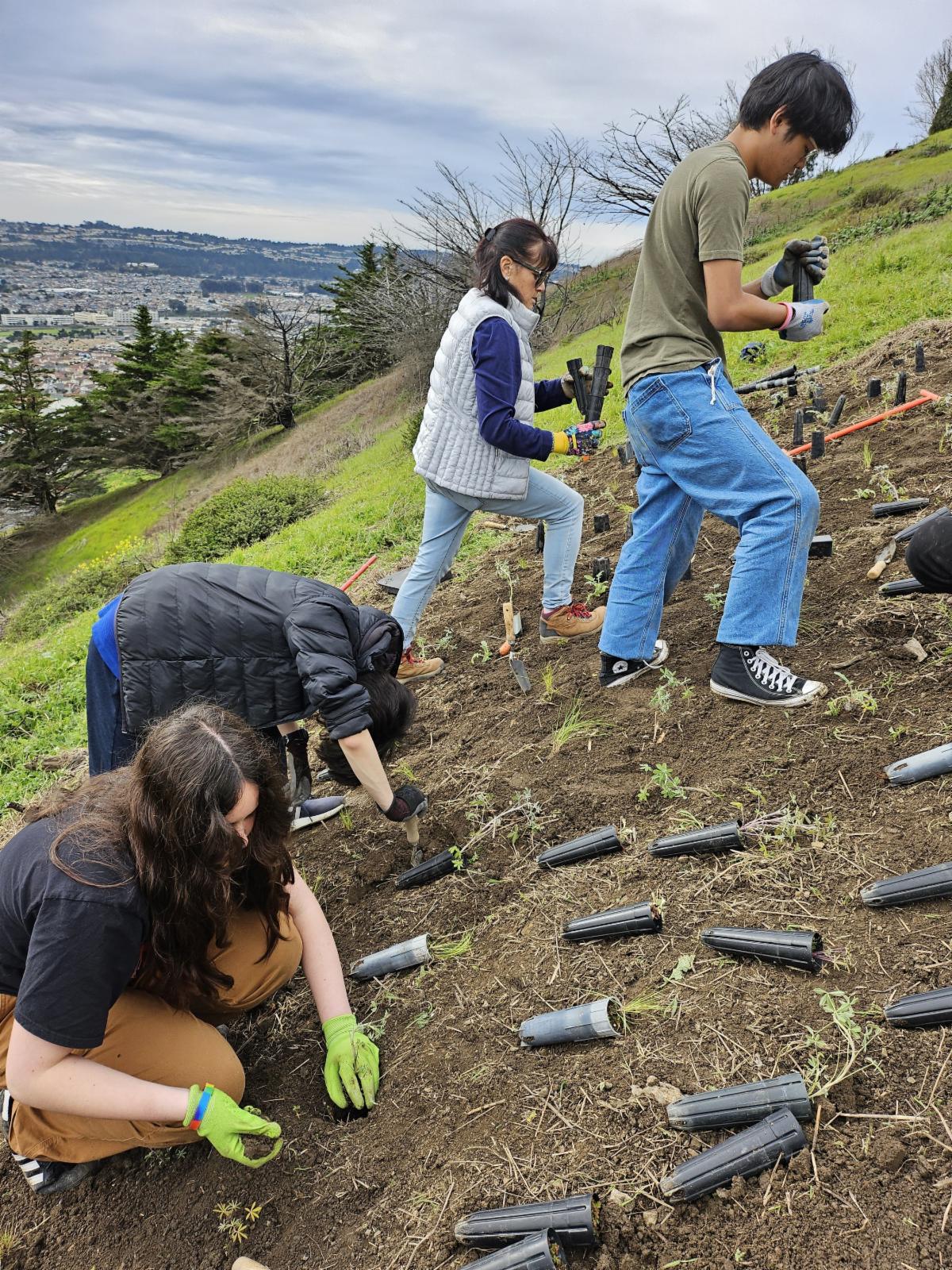
Next, we arranged the nursery plants in the plot. We created some small groupings of plants of the same species, while others were placed randomly to imitate natural grassland plant communities. | |
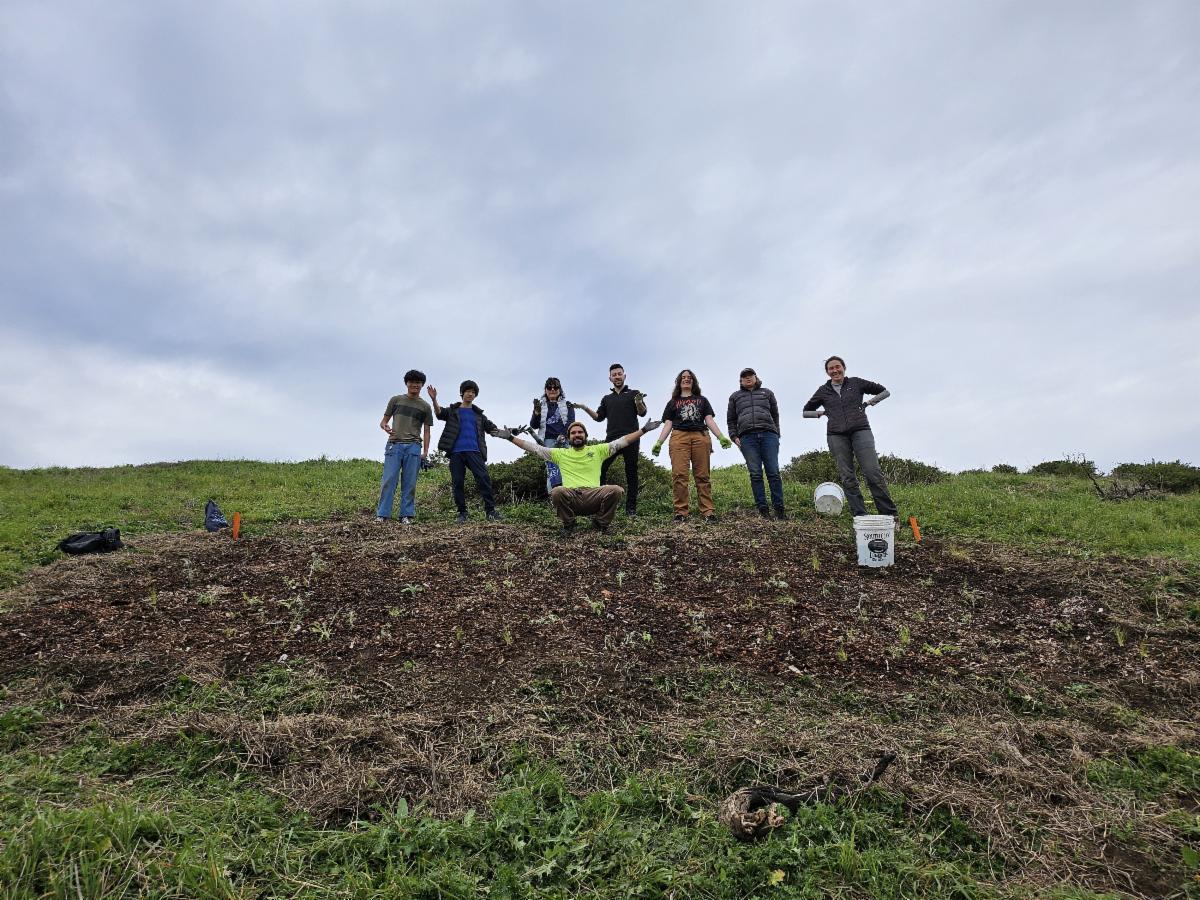
Once the plants were in place it was time to start planting. This dedicated group of volunteers planted about 100 plants per hour! | | |
The final step was to add a layer of mulch to help retain soil moisture and repress weeds. | |
|
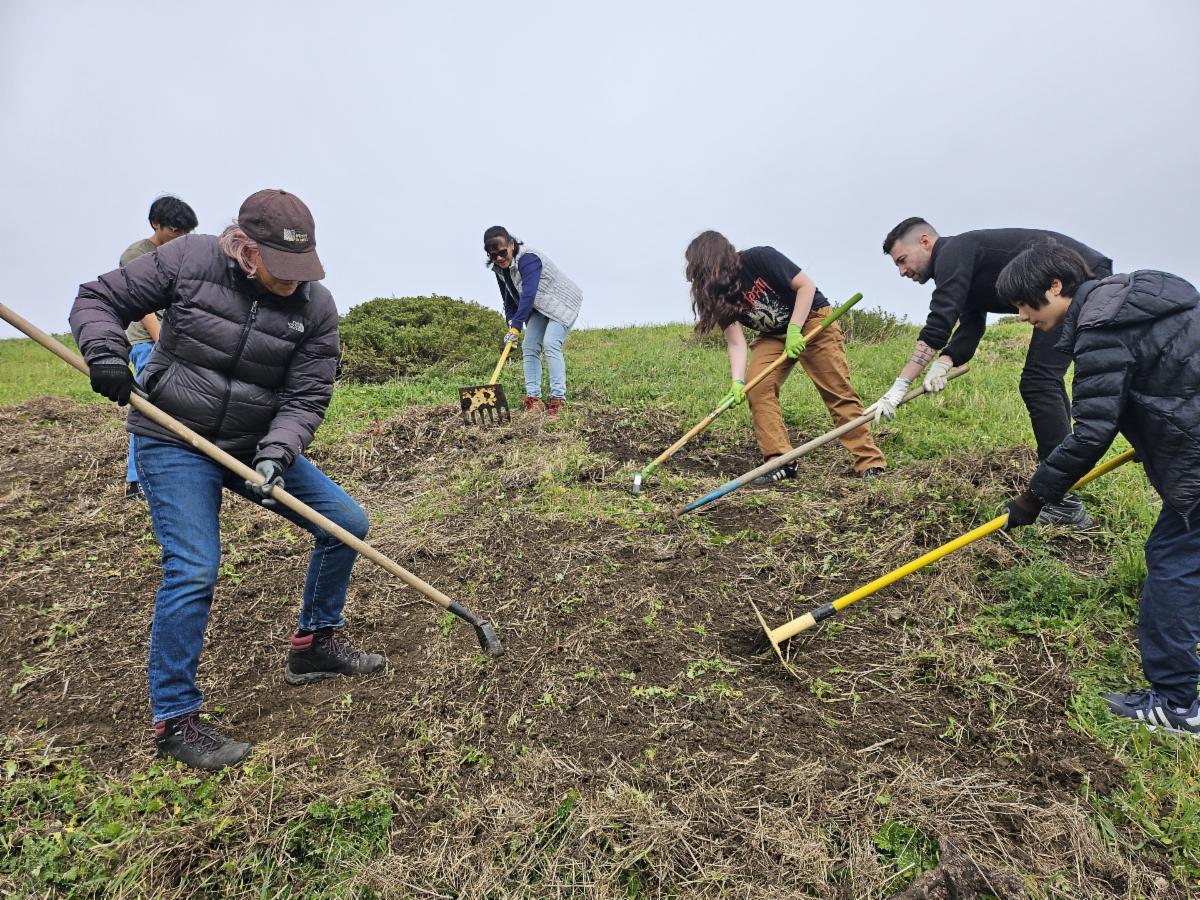
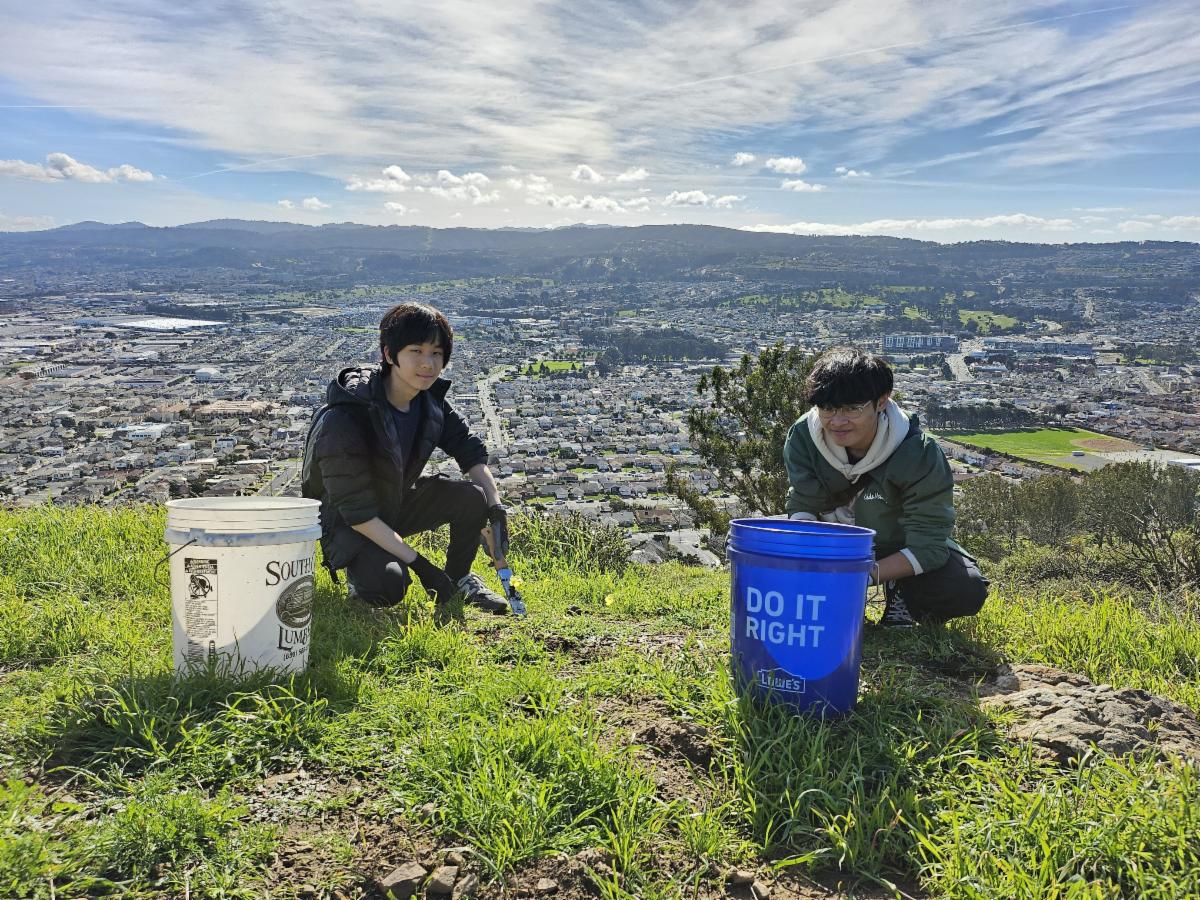
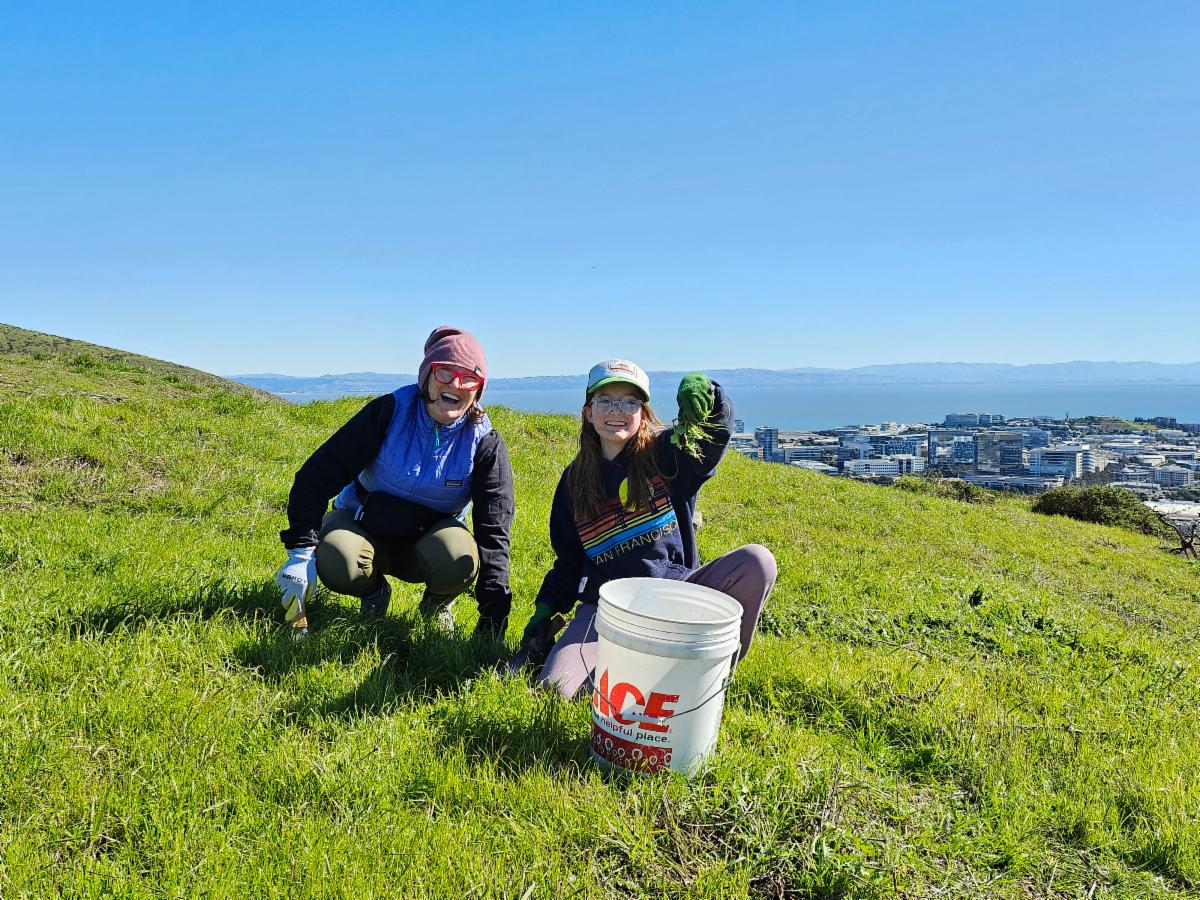
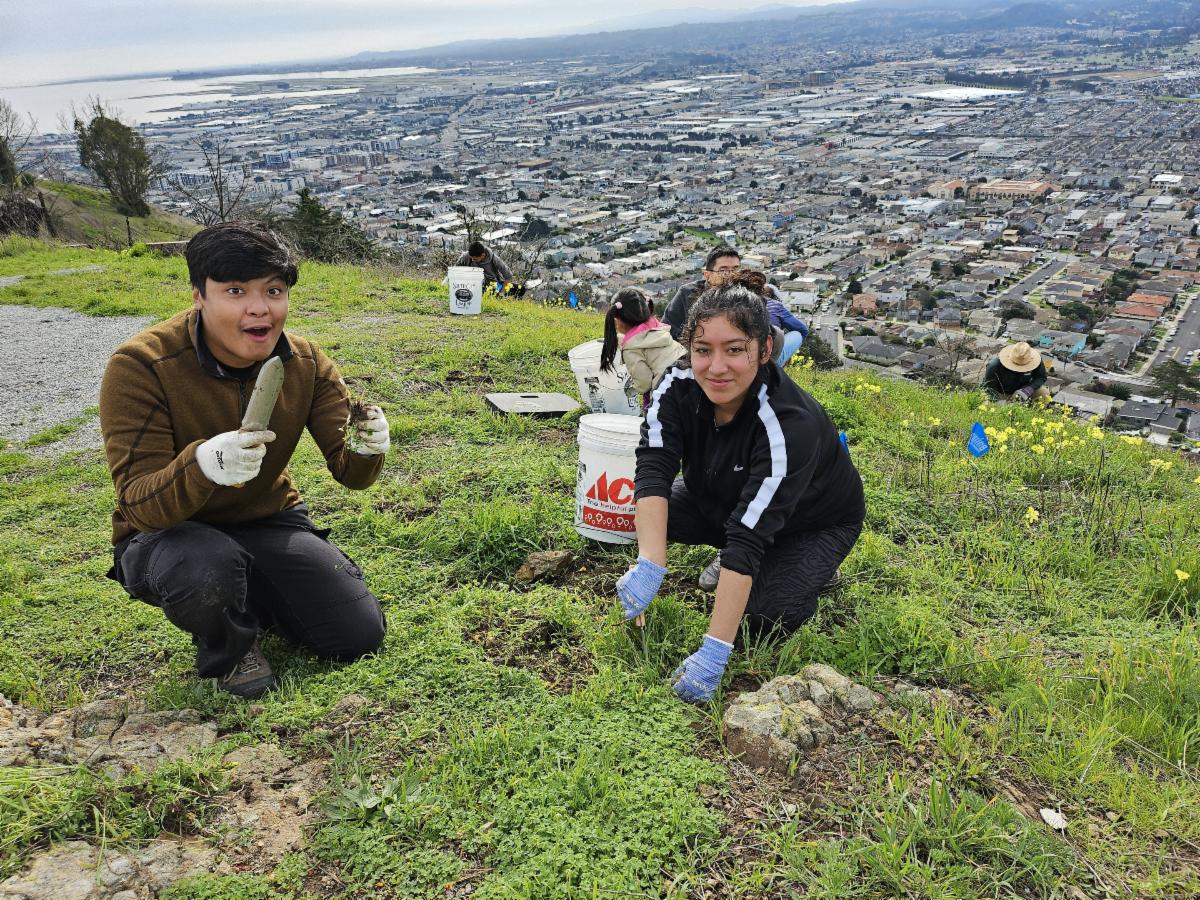
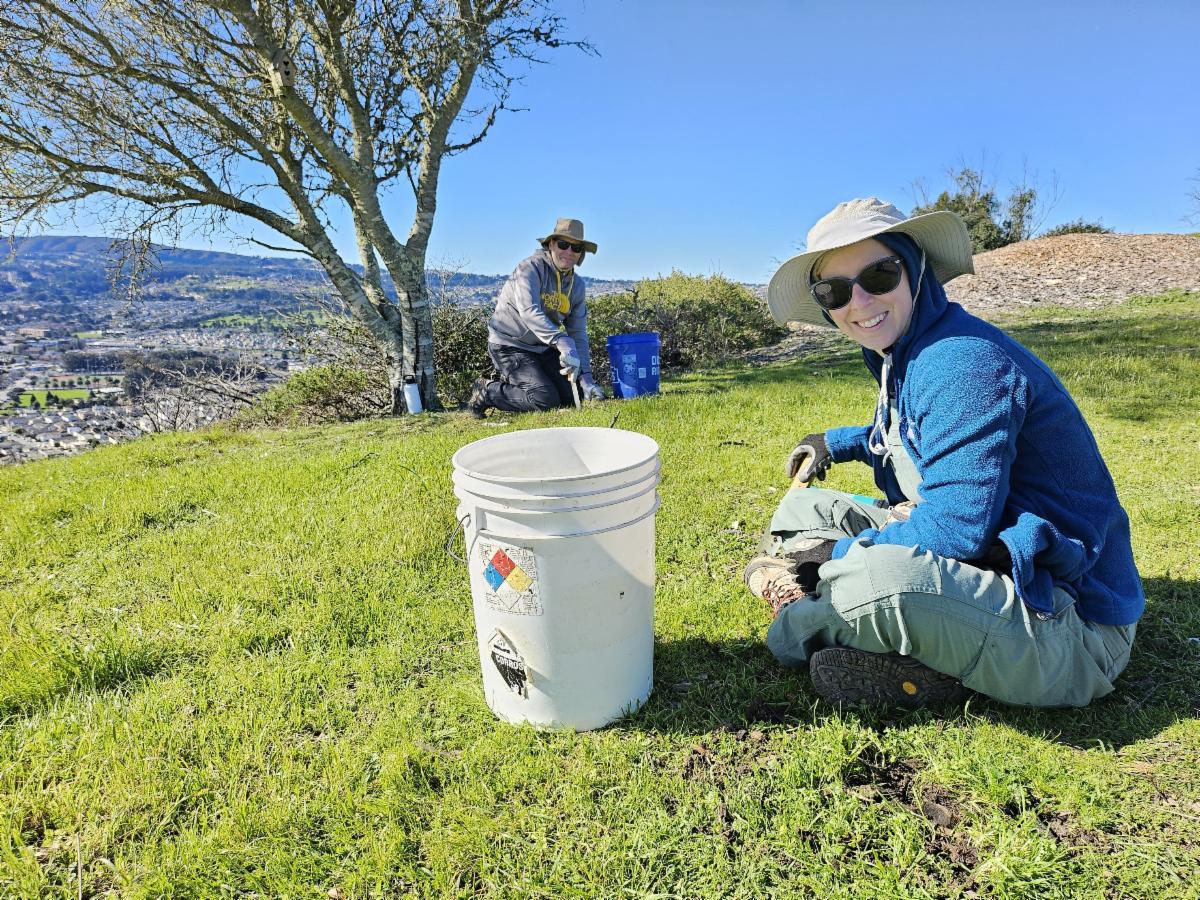
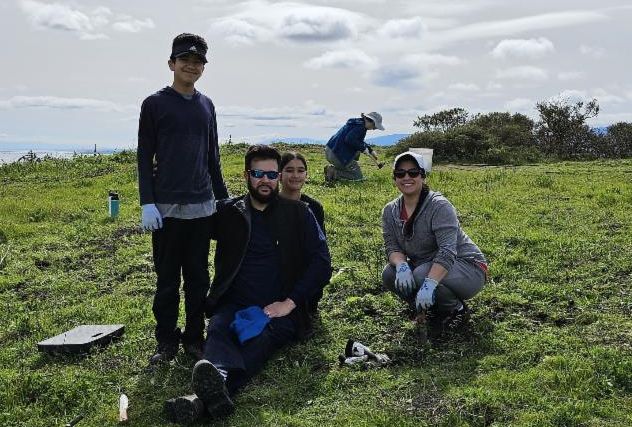
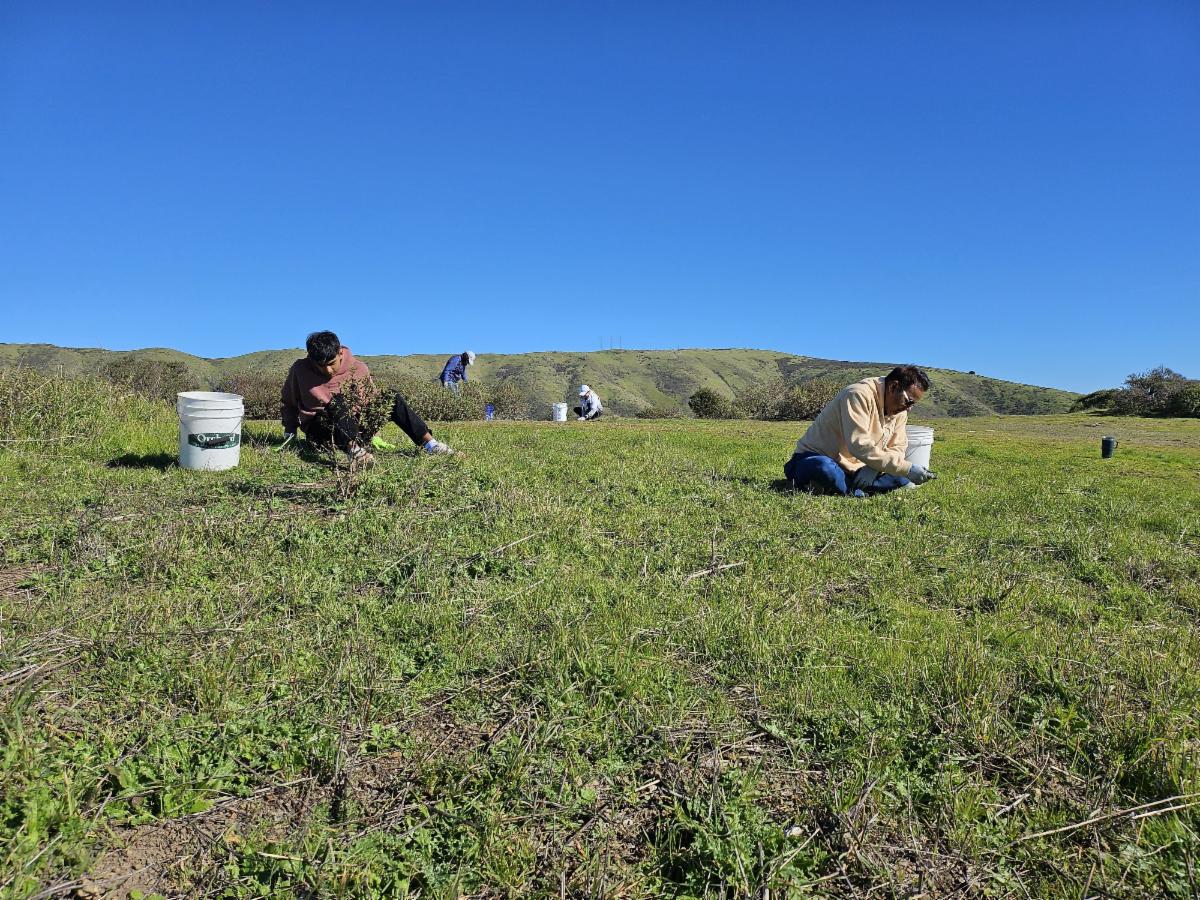
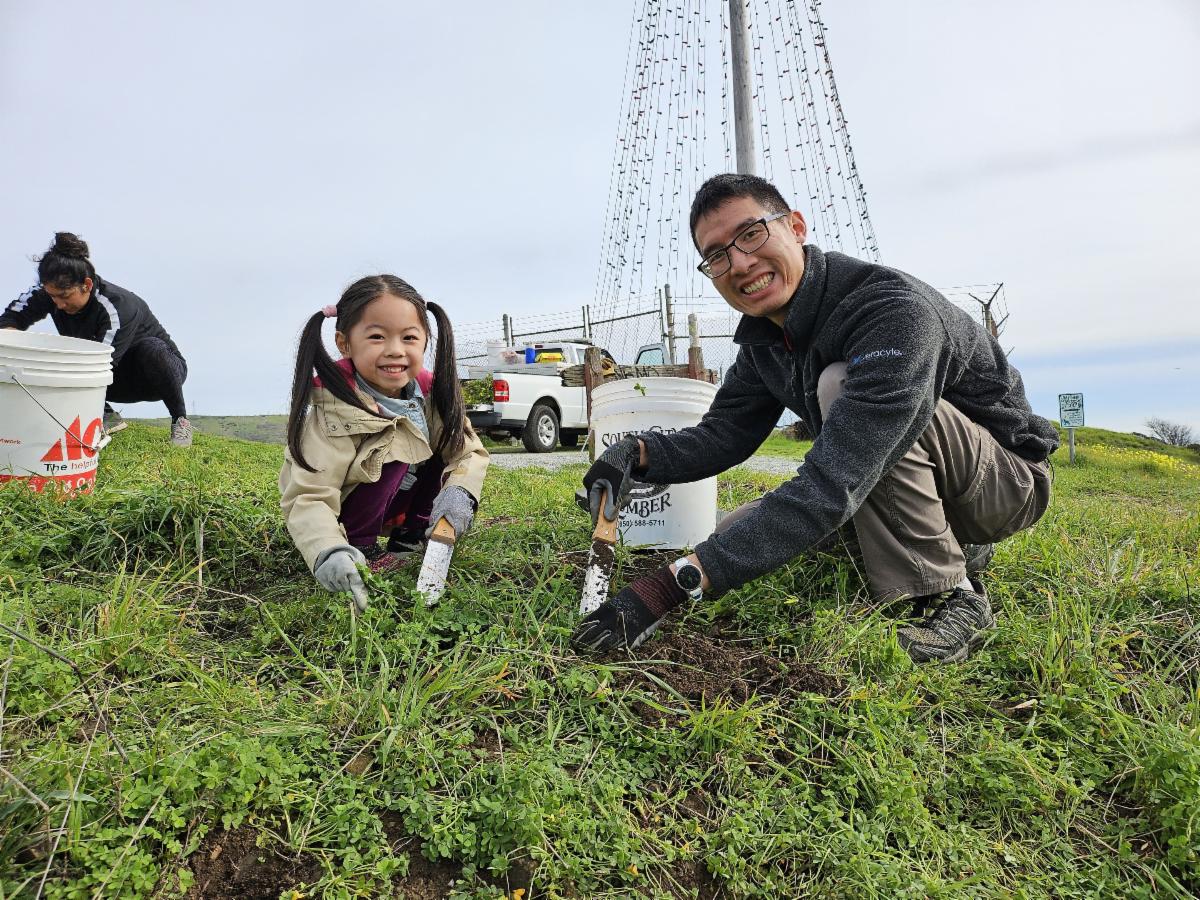
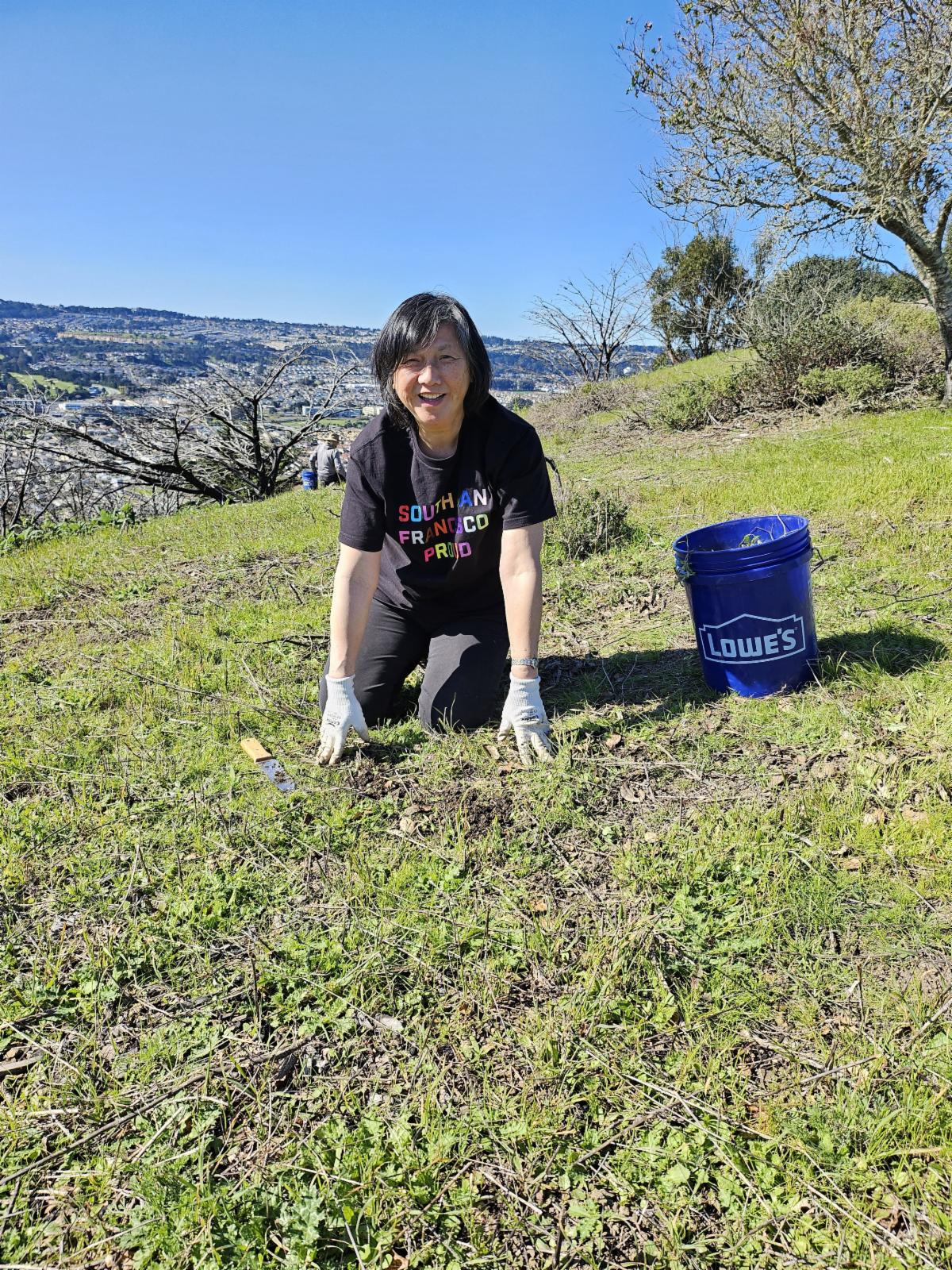
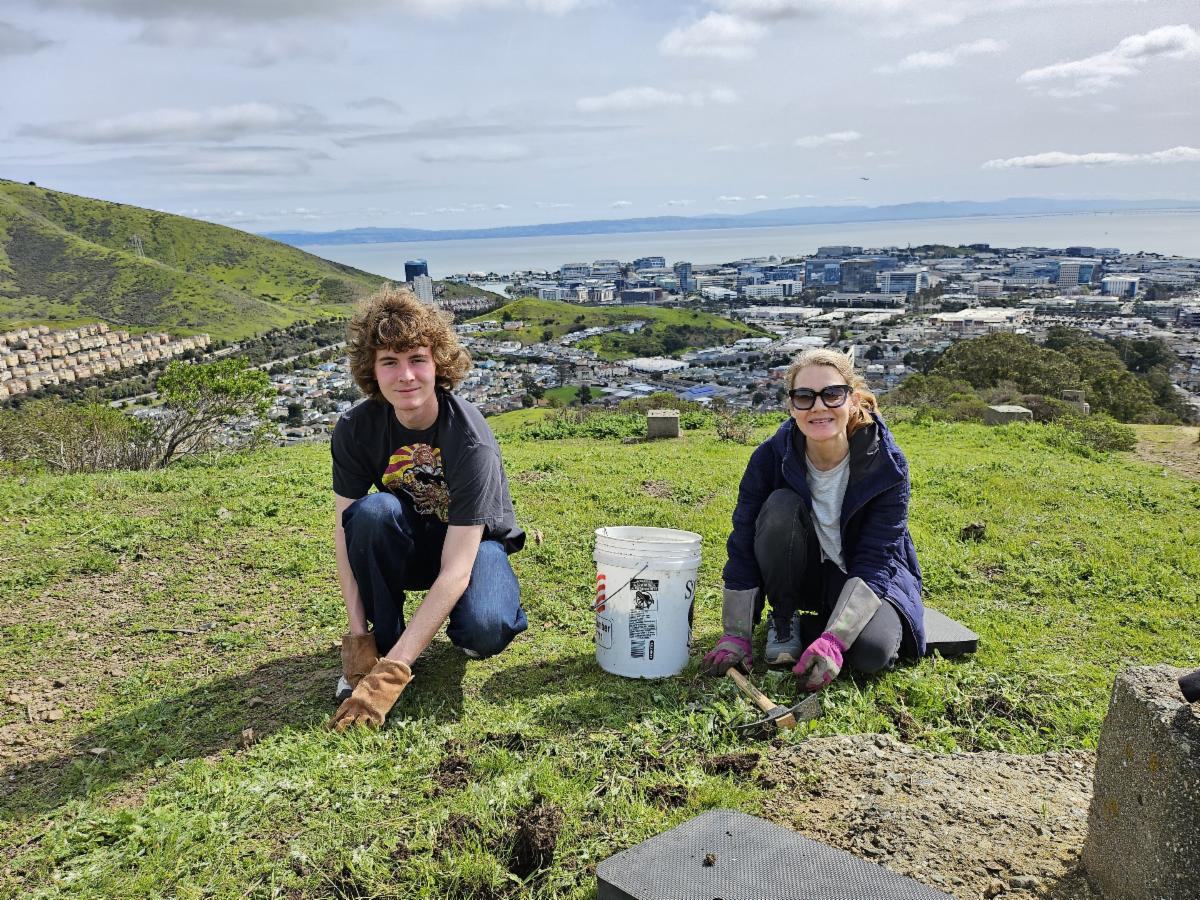
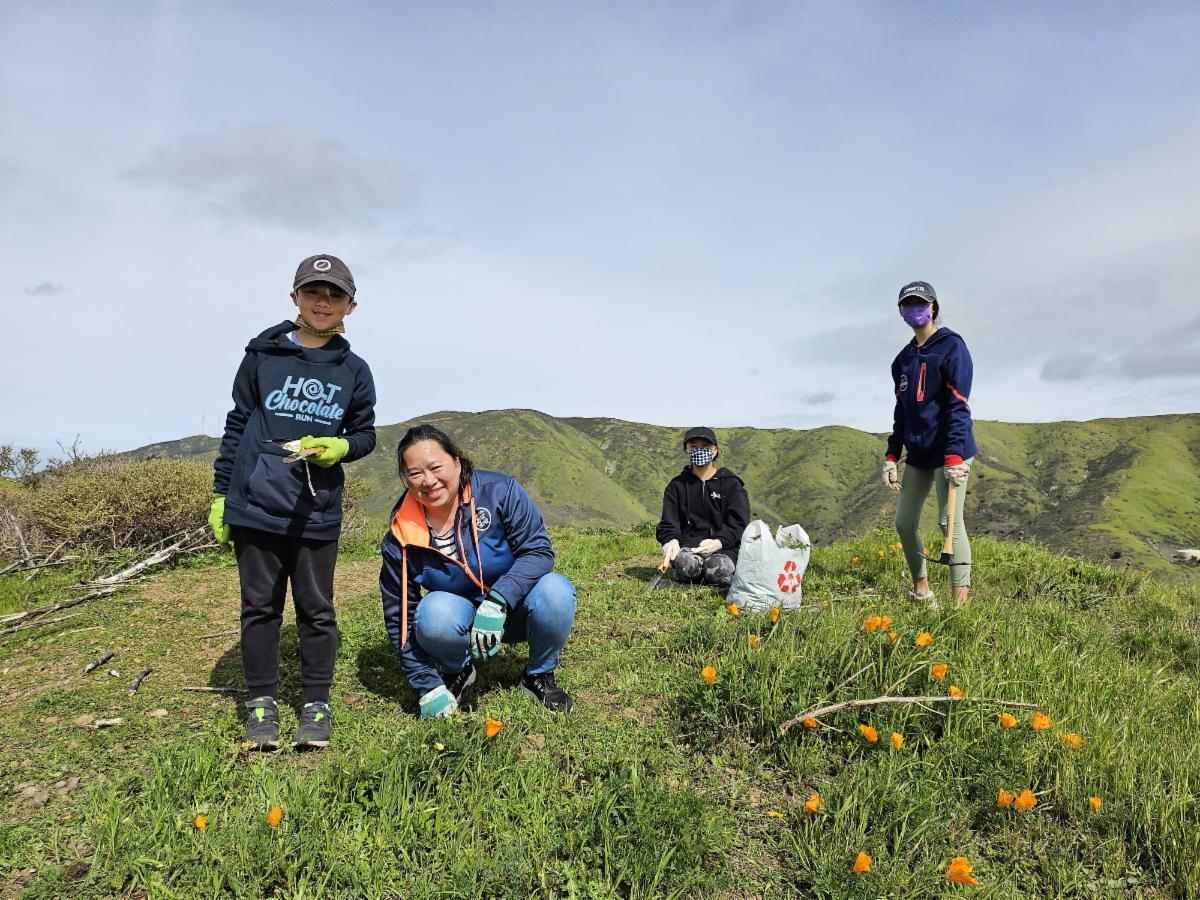
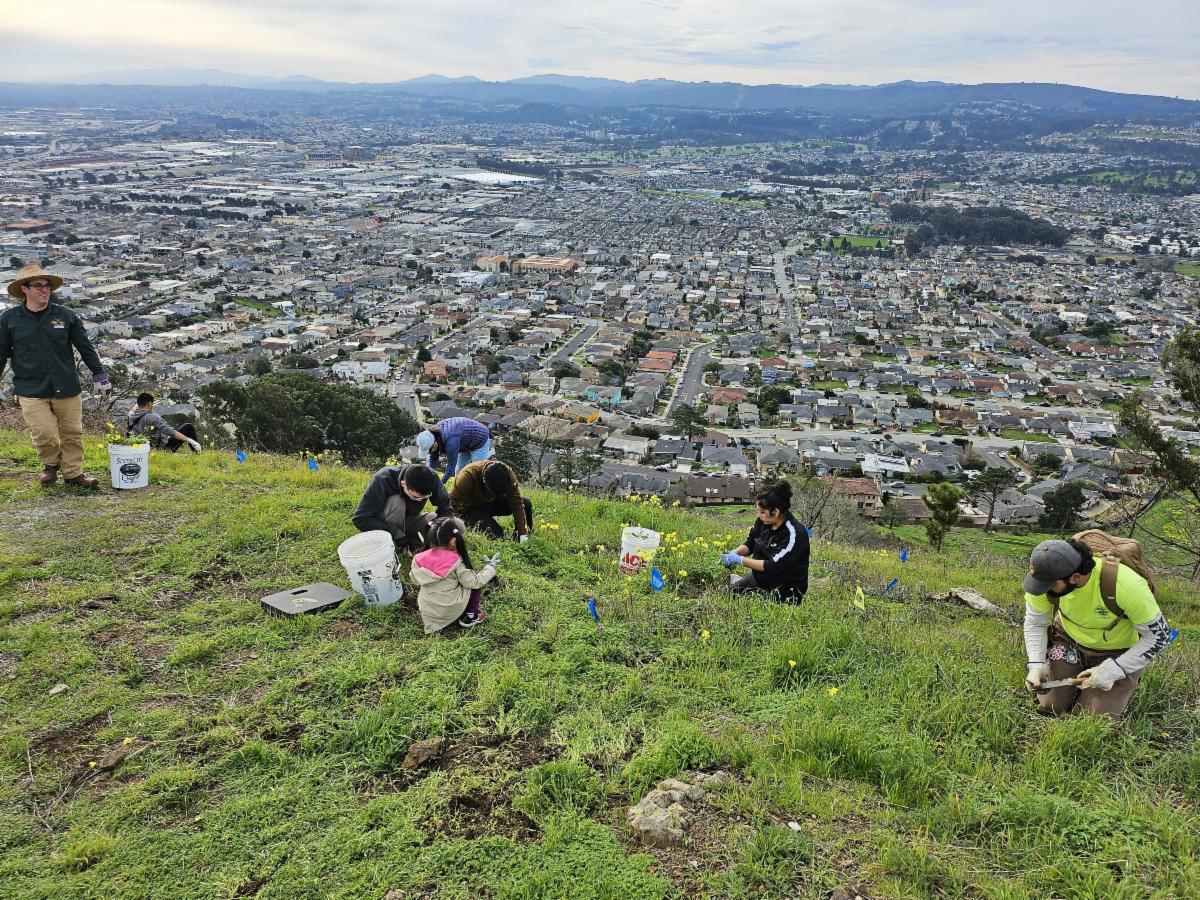
In addition to installing restoration plots with nursery plants, Sign Hill Stewards have spent a lot of time this winter restoring habitat by removing invasive weeds. We also held several Weed n' Seed events where we pulled loads of invasive weeds and finished off the day by spreading native grass and wildflower seeds in the freshly disturbed areas. | |
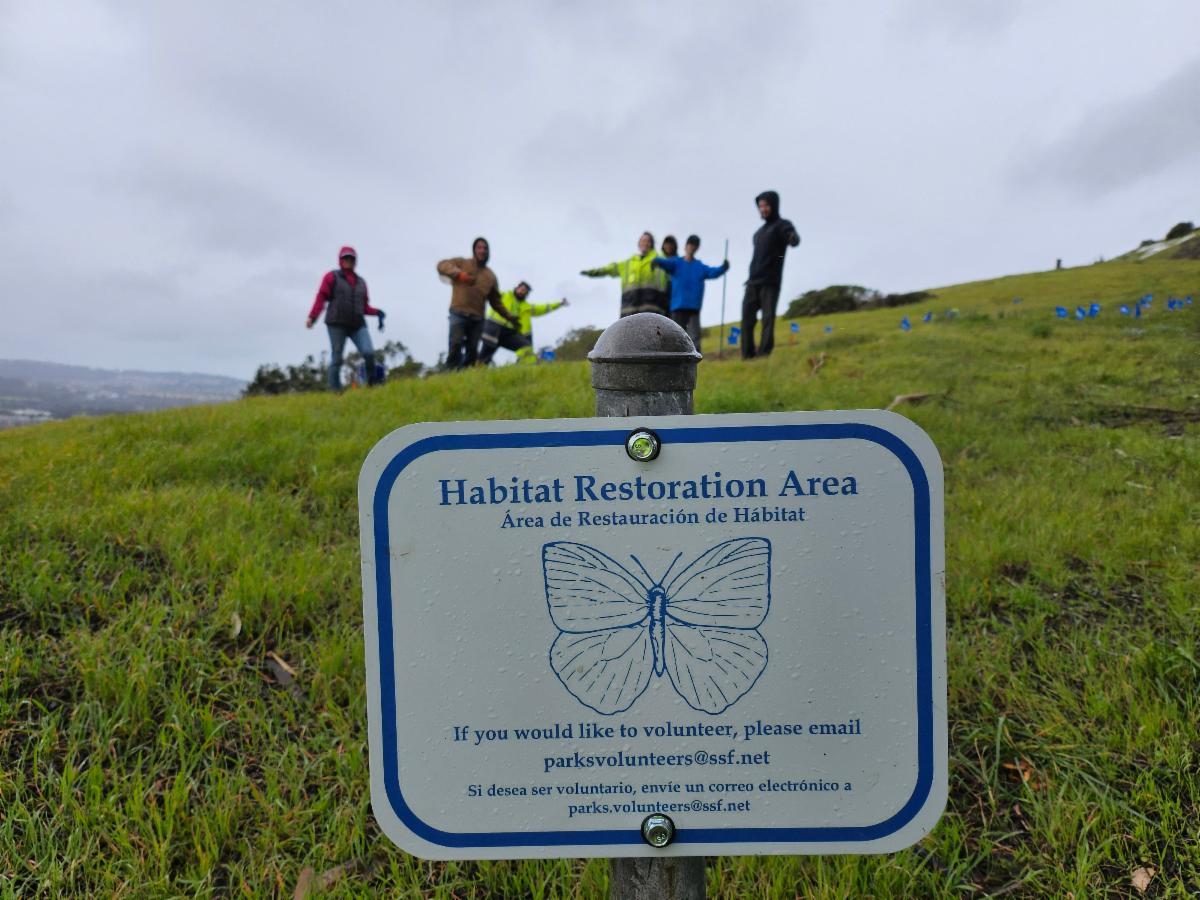
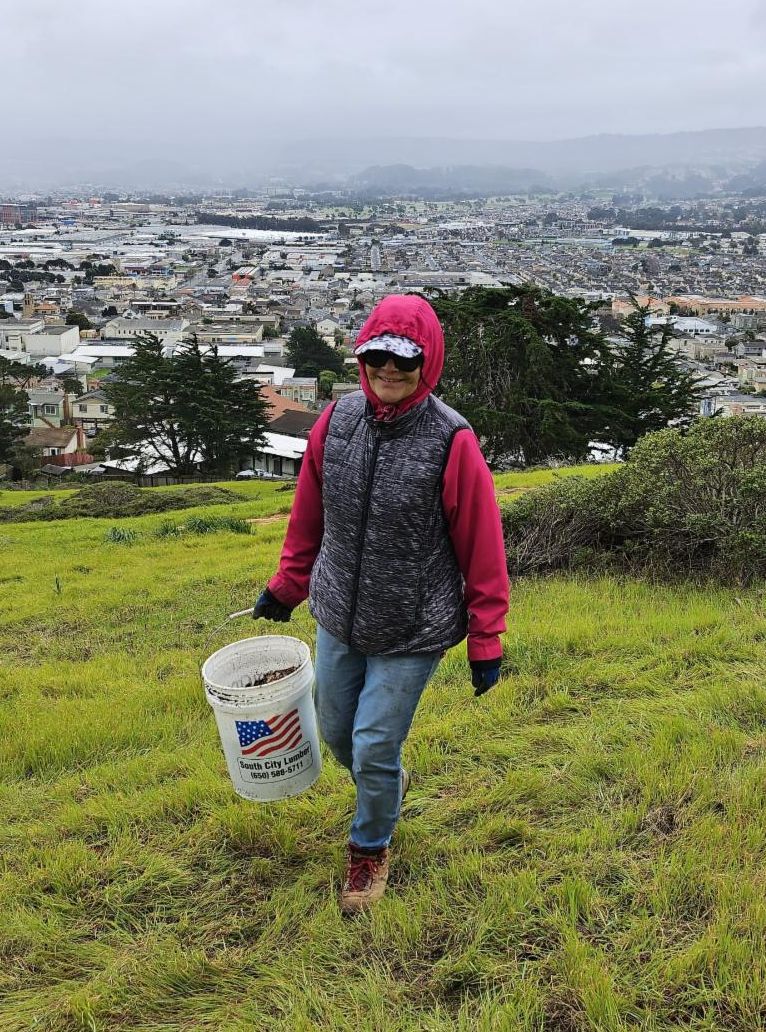
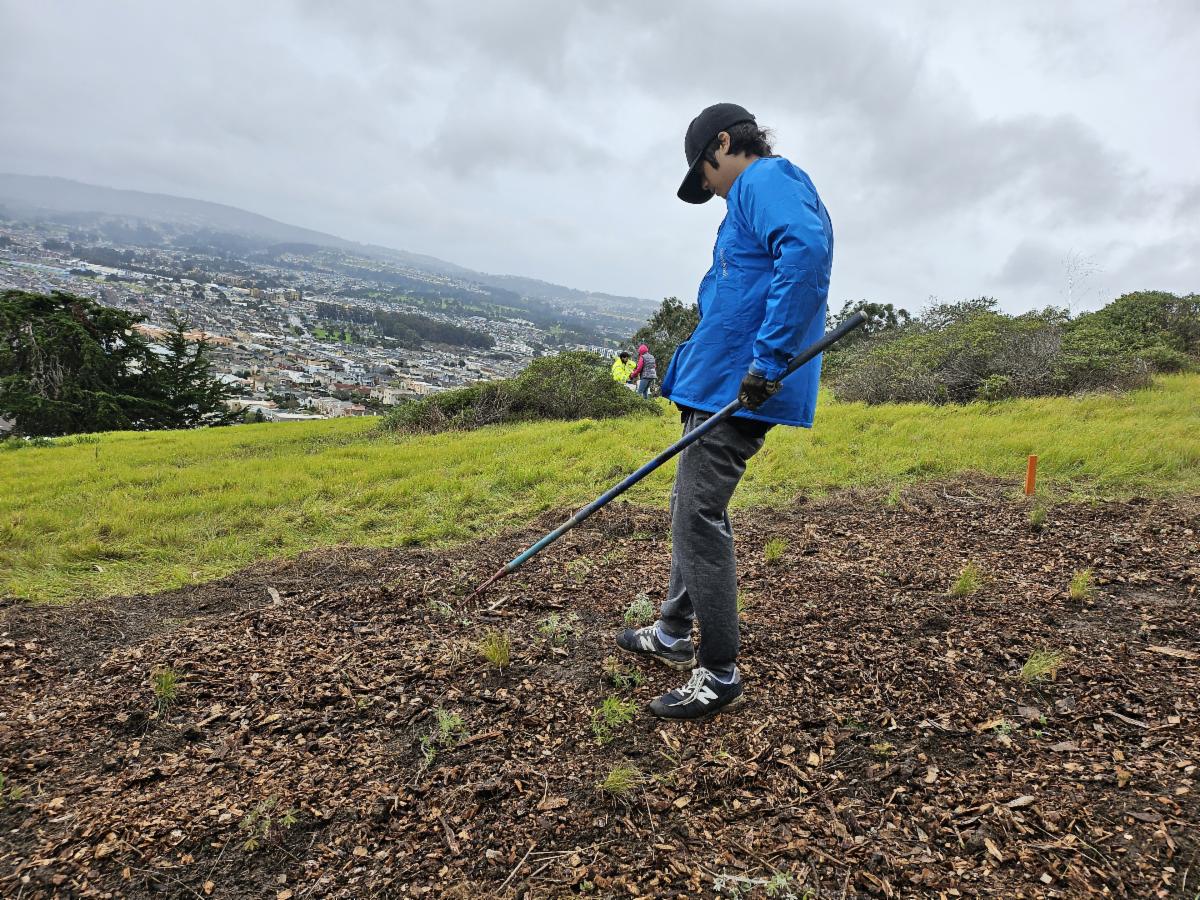
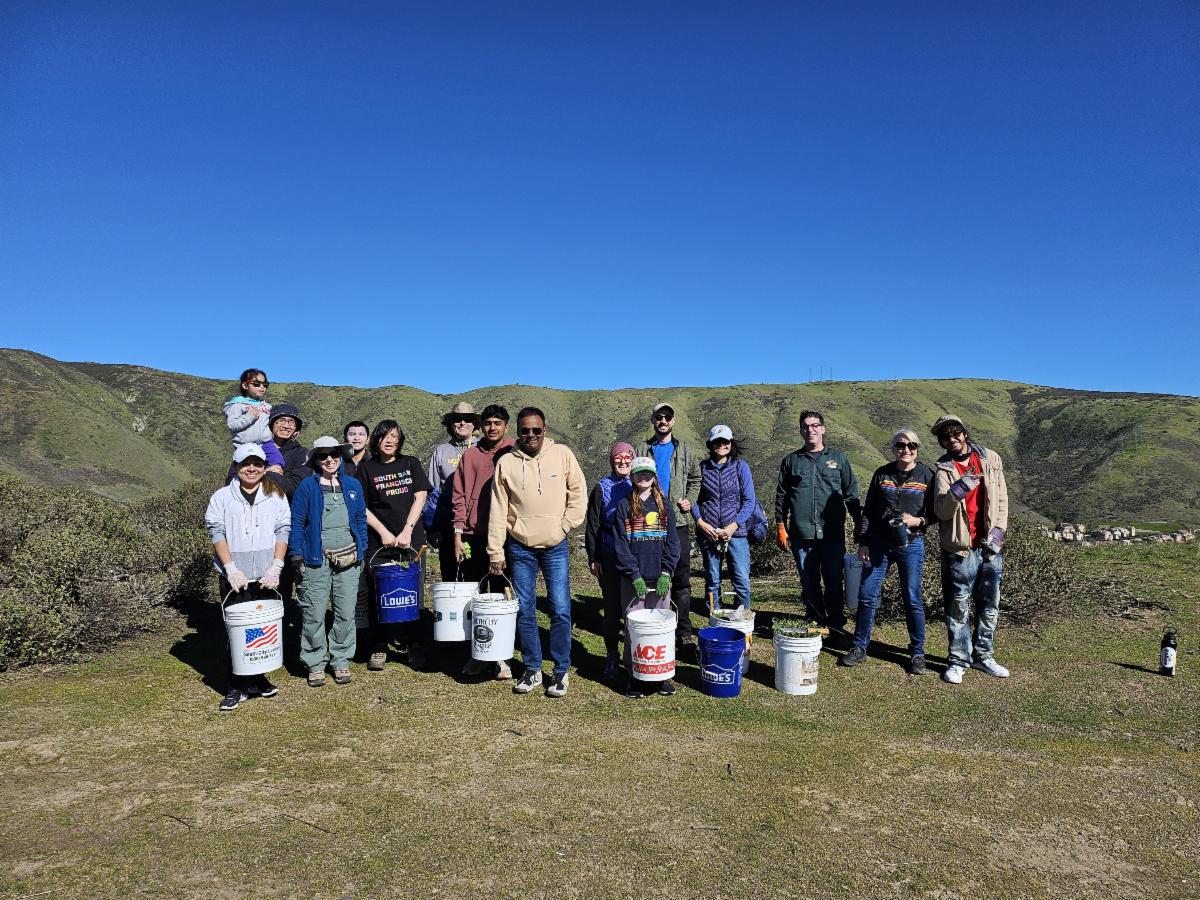
Many hands came together to help support the recovery of the mission blue butterfly including Sign Hill Stewards, SSF Parks Staff, and Interns from Design Tech High School. A big thank you to everyone who put in so much hard work to support the recovery of the mission blue butterfly, even if it meant getting soaked in the rain! | |
Fantastic Fungi of Sign Hill | |
|
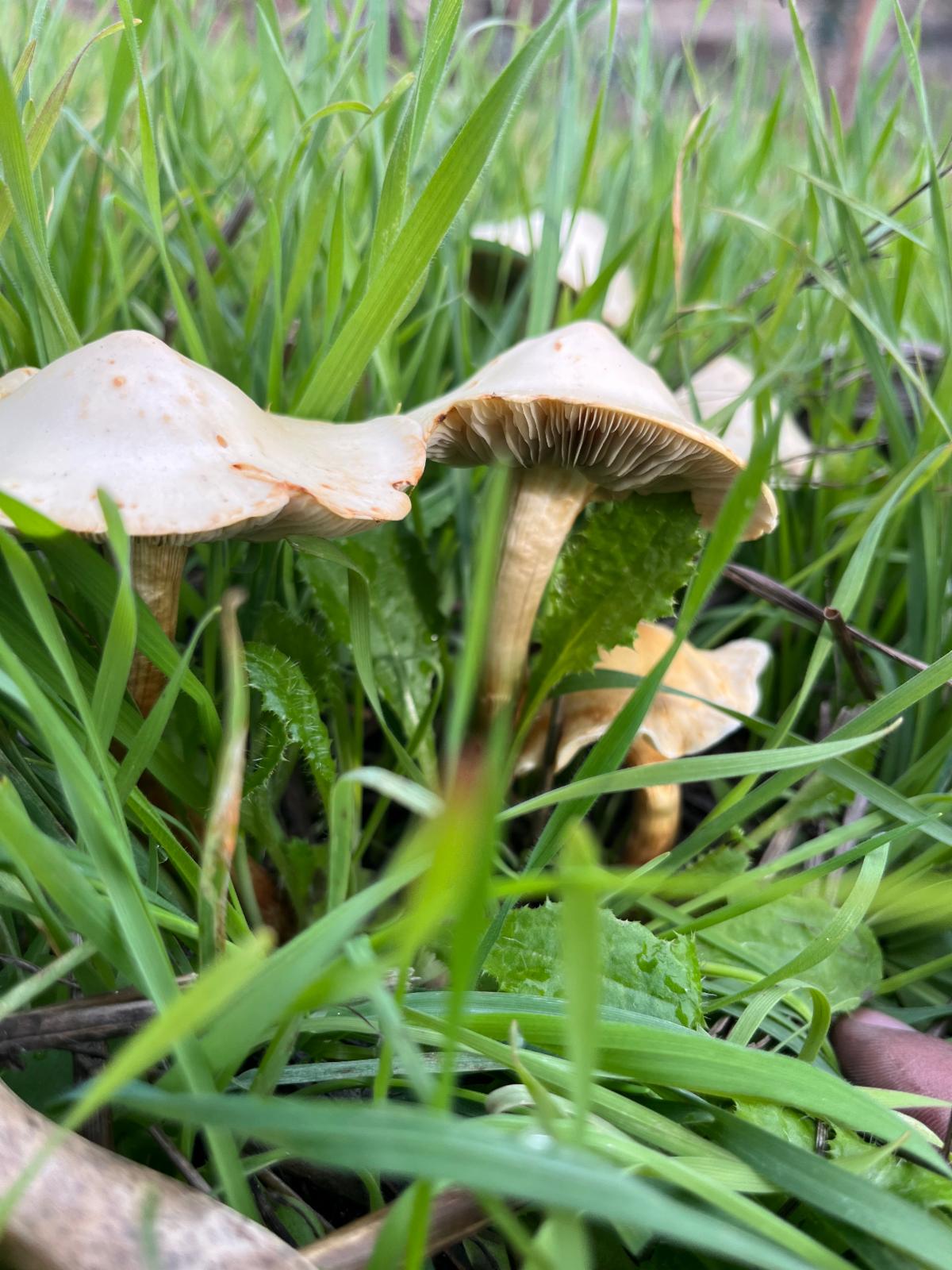
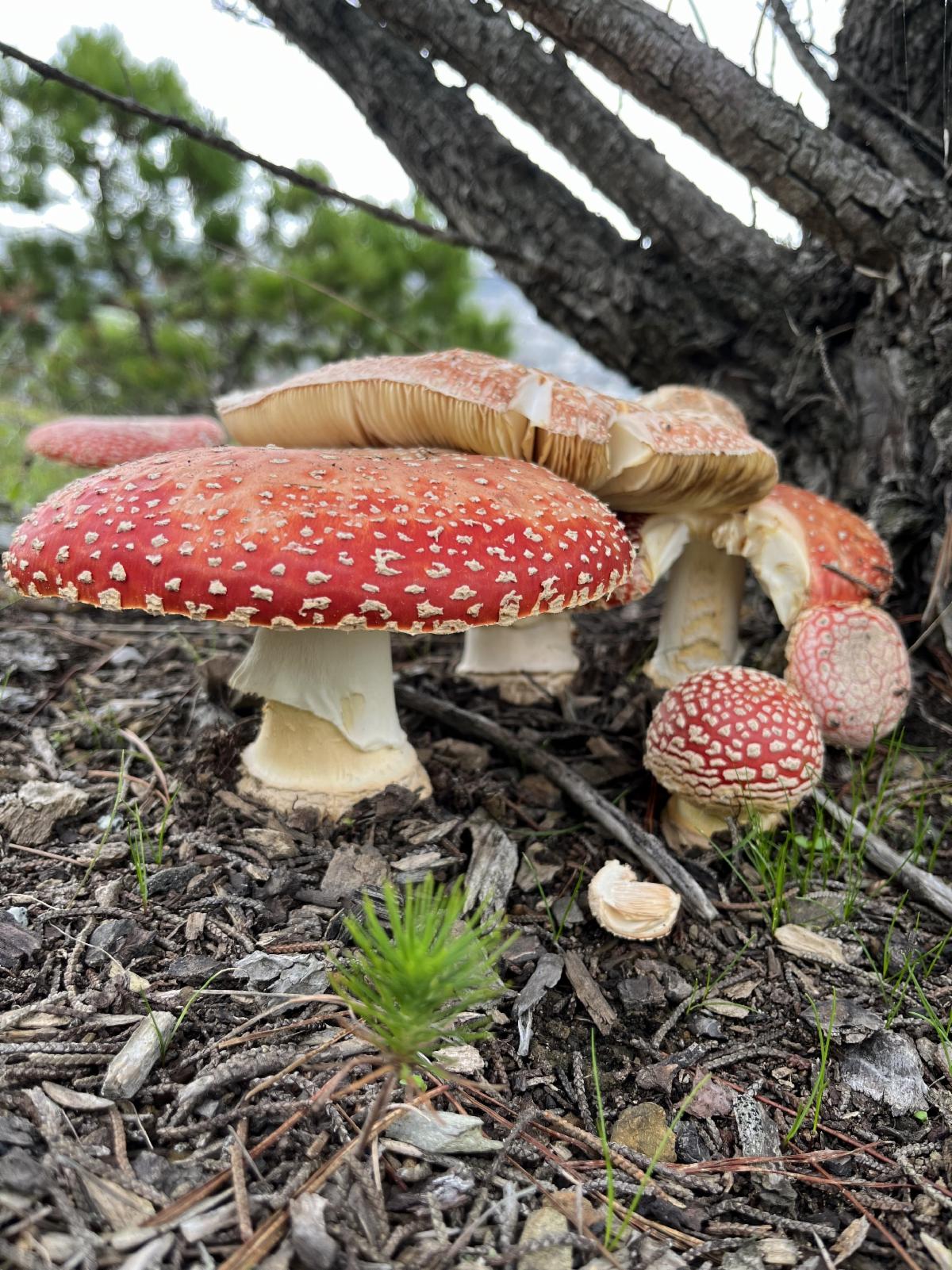
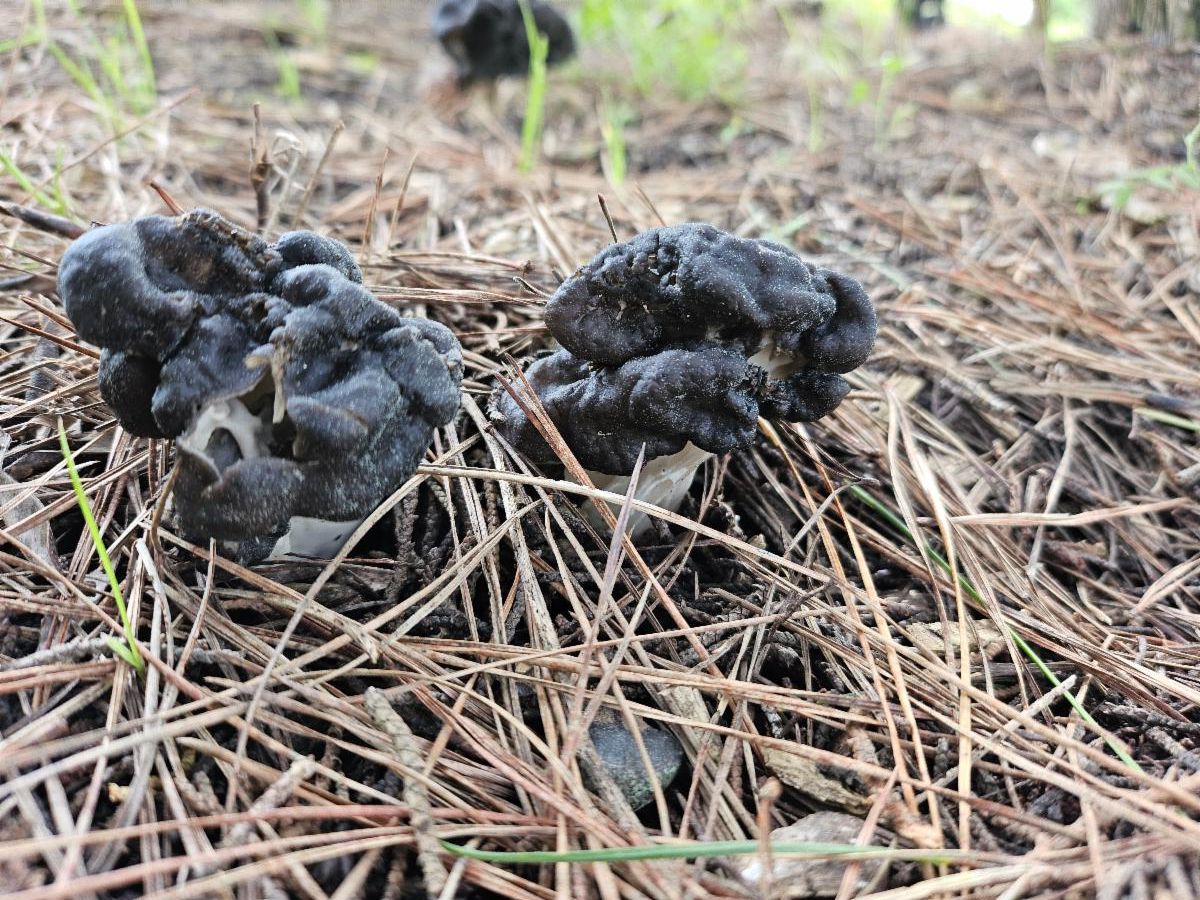
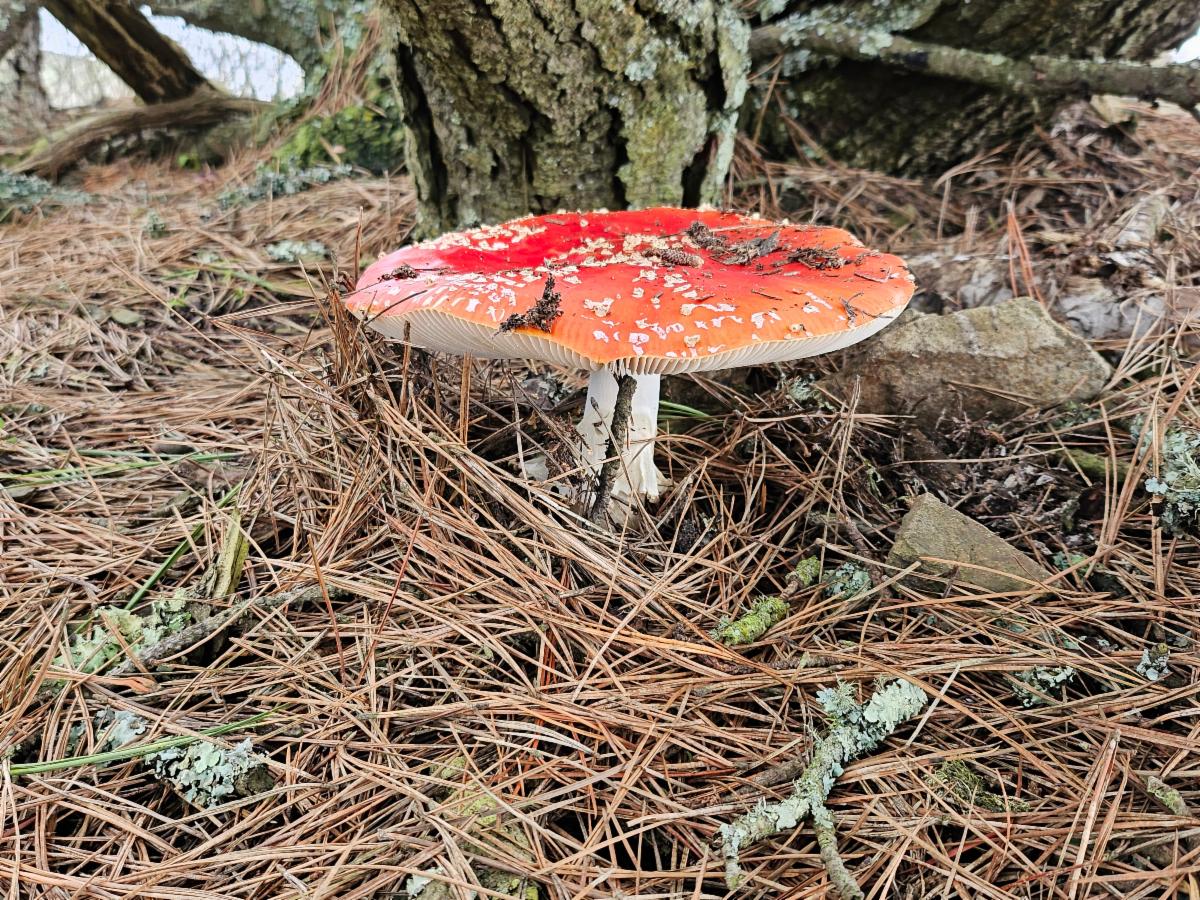
While visiting Sign Hill, year round, you are bound to discover beautiful plants and flowers or perhaps a lucky observation of local wildlife that call Sign Hill their home; however, rainy, wet months foster a small window of opportunity for other organisms you may not be able to see otherwise… fungi!
Fungi are neither animal or plant, but a group of organisms within their own kingdom. Research shows that they are more related to the animal kingdom than they are to plants! You may have seen, or maybe even eaten, a variety of mushrooms but these are only the fruiting bodies of fungi with the sole purpose of reproducing by releasing spores. The true magic behind fungi happens underground.
Fungal networks are made up of thread-like cells called hyphae, with larger connected networks being called mycelium. These hyphae explore the soil and excrete digestive enzymes onto their food, which tends to be dead organisms. Fungi play a crucial role in any ecosystem or garden setting as they break down dead plant and animal material, enriching the soil with nutrients that other organisms need to thrive. Humans also use fungi for lots of things such as food sources, medicine, and spiritual purposes.
Fungi are amazing organisms that still require lots of research to understand how they interact with other ecosystem functions. Some fungi called mycorrhizae form mutualistic relationships with plants by intertwining with their roots for the purpose of exchanging nutrients. Some researchers go as far to say that this allows trees within forests to “communicate” with each other, but more research is required before we truly understand the wonders behind fungi.
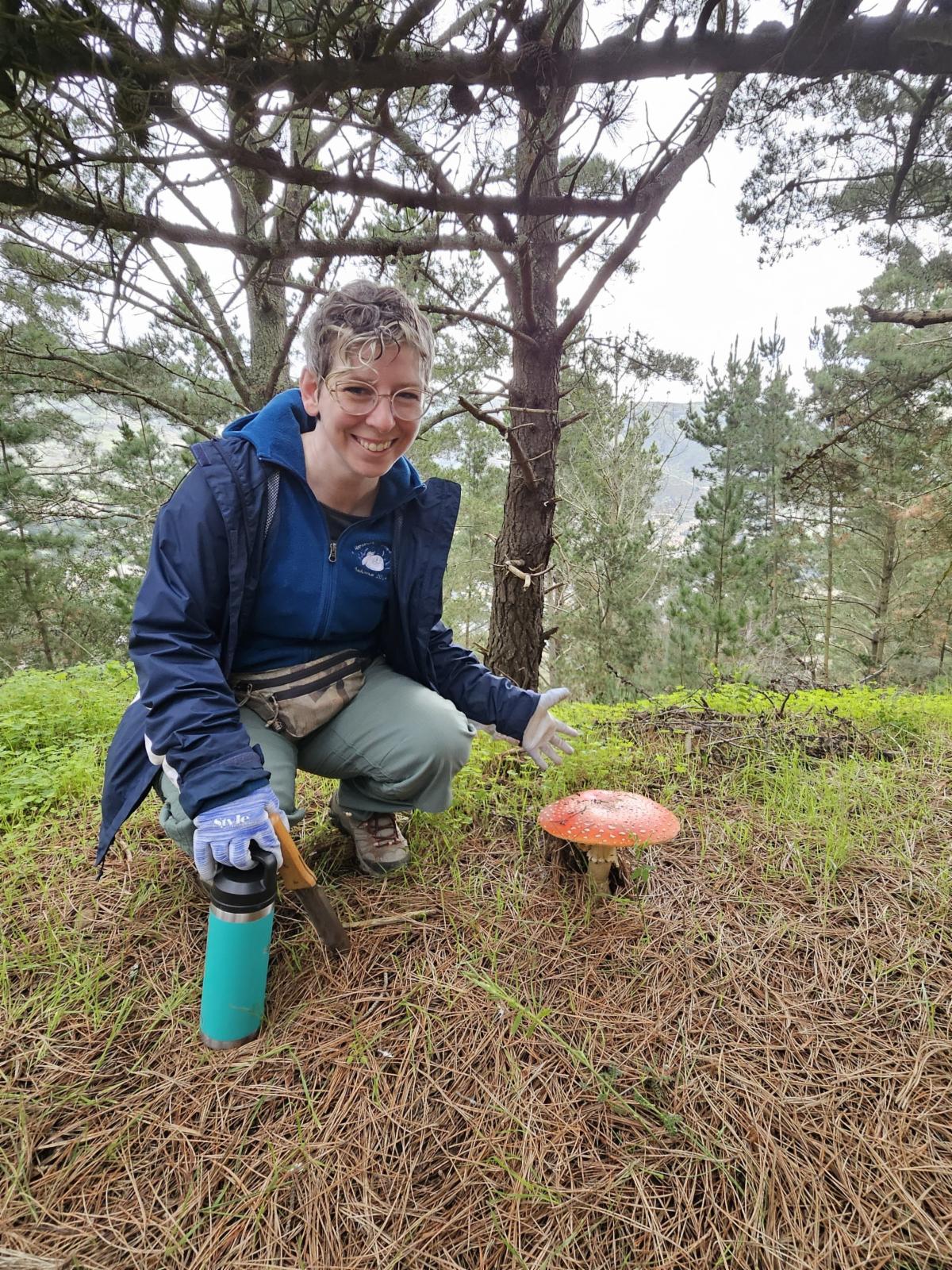
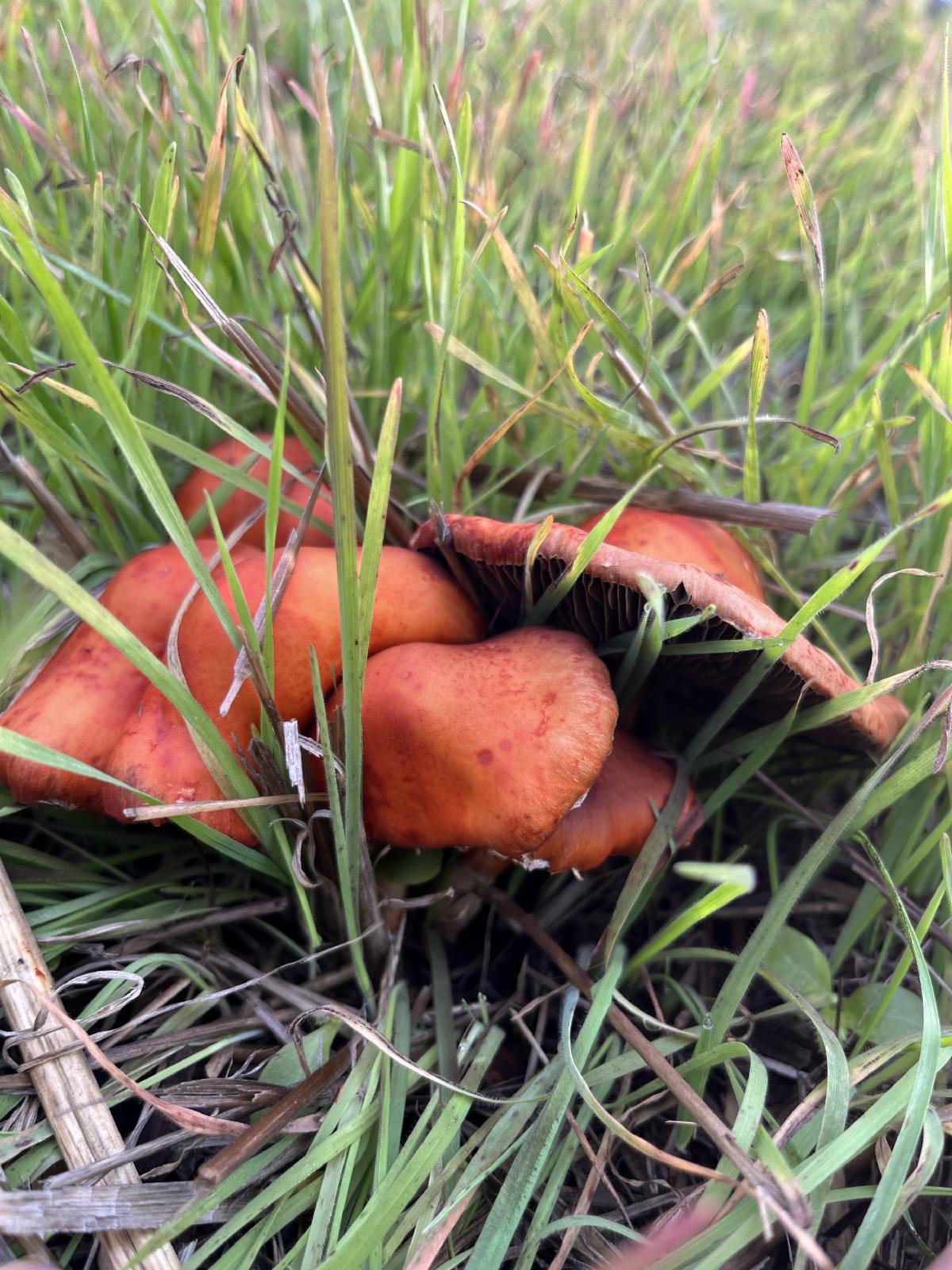
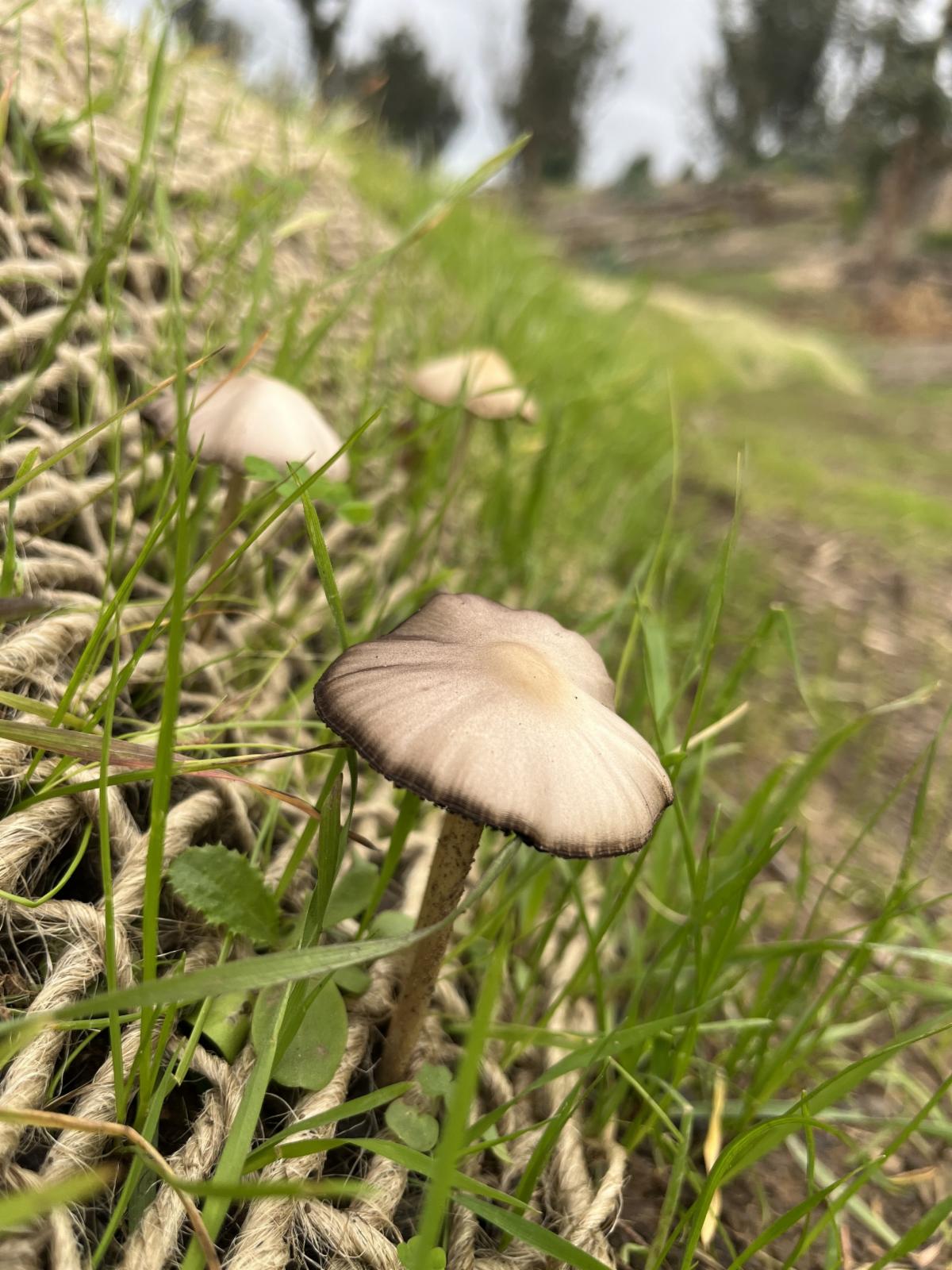
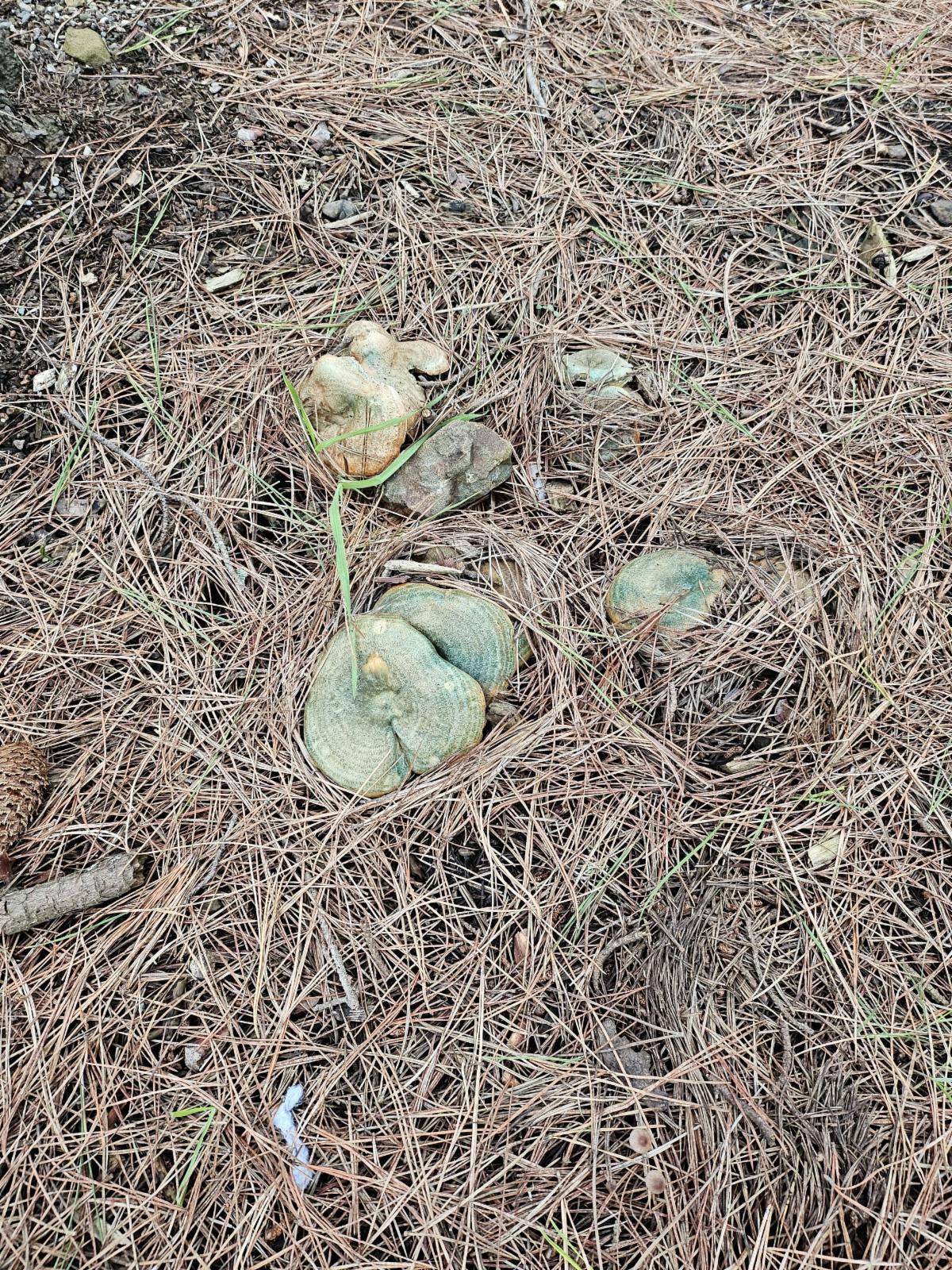
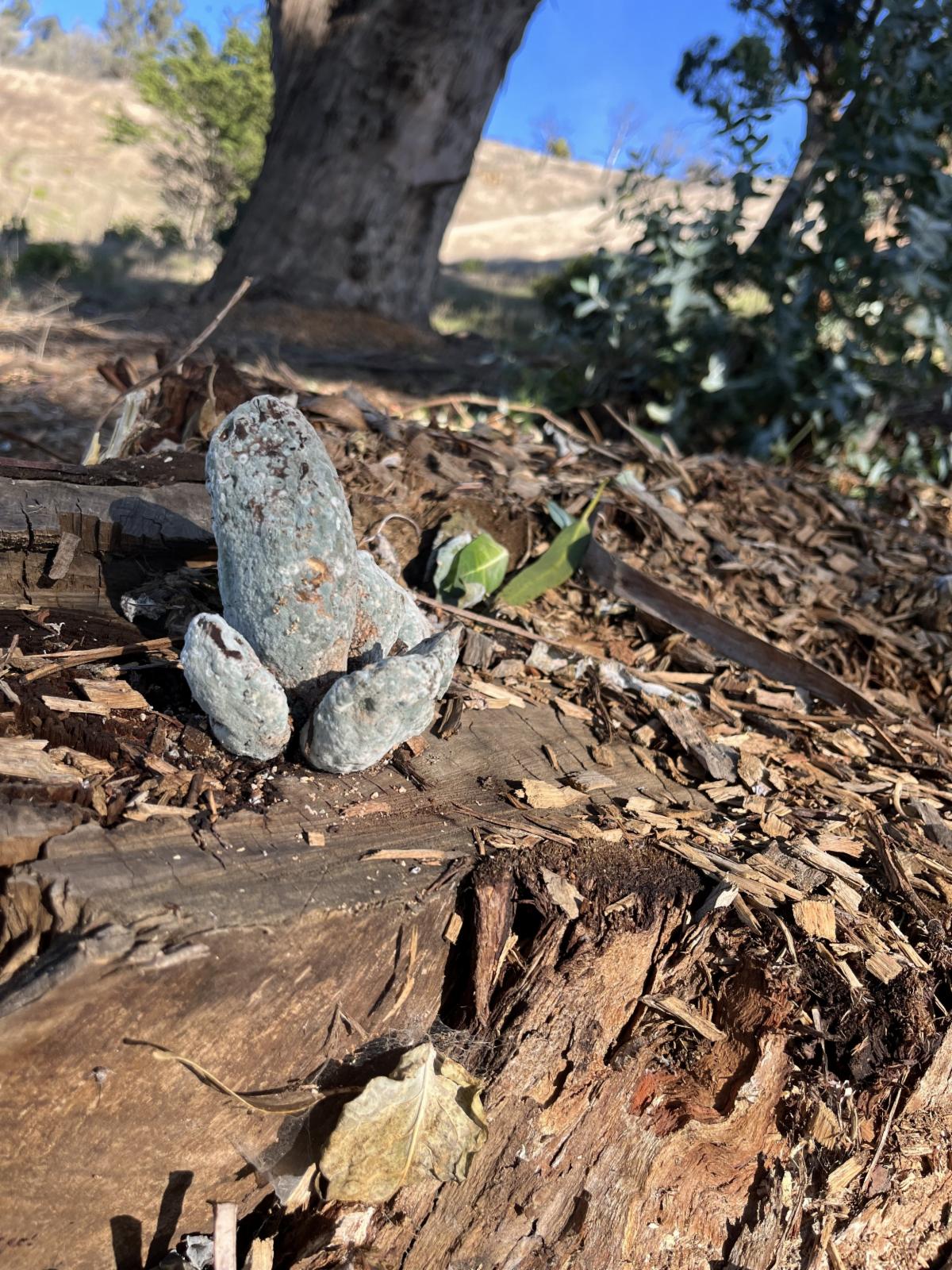
The largest organism on Earth is actually…. you guessed it, a fungus! The miraculous honey fungus (Armillaria ostoyae) is found in a forest in eastern Oregon. This organism spans 3.5 miles long underneath the forest floor! Sign Hill may not be home to the largest fungus in the world, but we do get our fair share of mesmerizing mushrooms. Take a look at some of the mushrooms that were spotted on Sign Hill this year and remember to leave them like you found them so others can enjoy, plus they can be highly poisonous!
Luis Reyes
Natural Resource Aide
| |
Volunteer Appreciation Picnic | |
Sign Hill Resident Spotlight: Raccoon | |
|
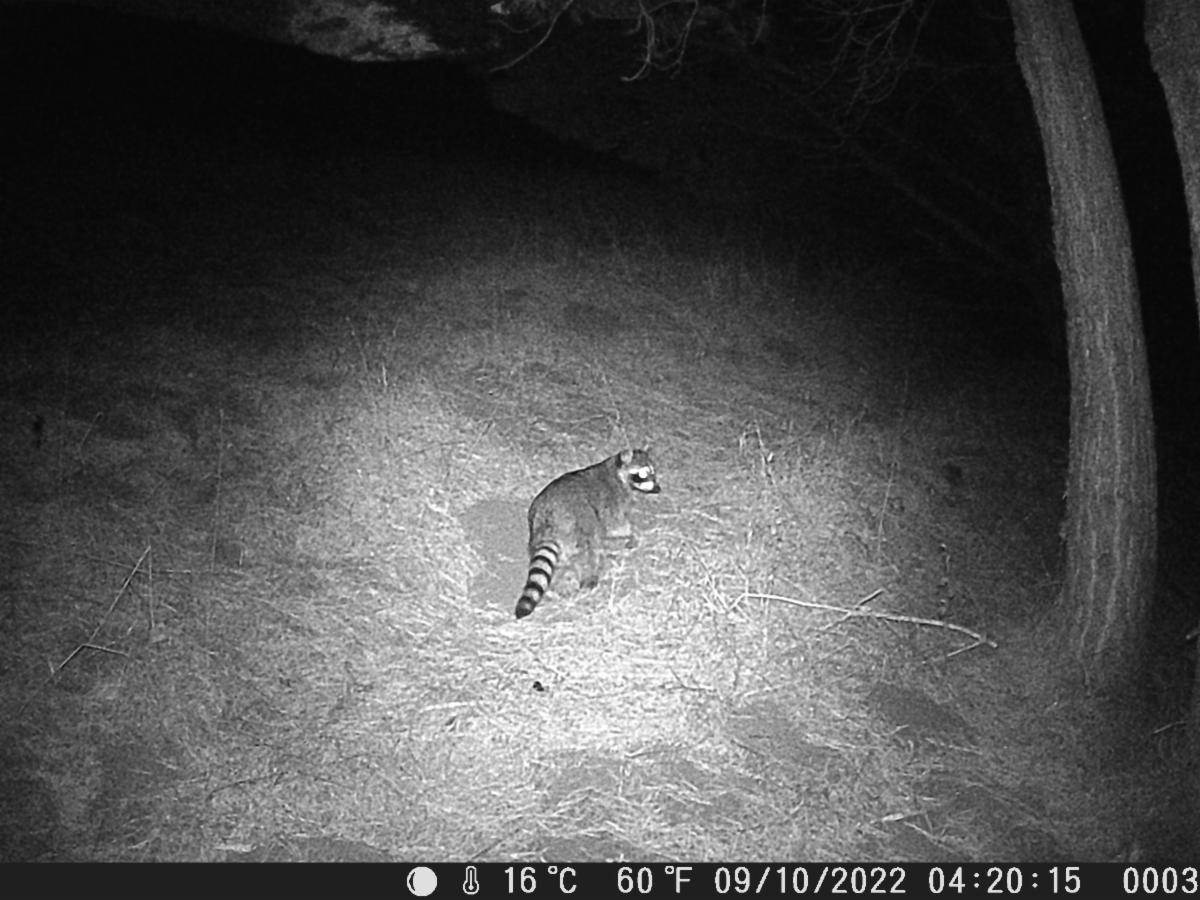
Sign Hill is home to a variety of wildlife - one most South City residents are all too familiar with are… raccoons (Procyon lotor)! These mammals are a common species found throughout California’s natural, rural, and urban environments.
Although they are predominantly nocturnal and avoid people, they are known to venture out during the day in search of food. Raccoons are curious creatures and highly adaptable, partly due to their diverse diet which includes: fruits, nuts, birds, fish, eggs, and small mammals, as well as trash. Their food habits act as positive contributions to any environment by limiting insect and small mammal populations. Raccoons are also scavangers, natures “clean up” crew; moreover, these animals are amazing gardeners. By consuming fruits and nuts, they are able to disperse seeds elsewhere with some added fertilizer to help seeds get a leg up in the surrounding environment. Please refrain from feeding wildlife so that they can continue to benefit the environments they reside in!
Like any other wildlife, it's important to keep a distance from raccoons and to watch them without getting too close. Although adorable, raccoons are known to carry diseases such as rabies or raccoon roundworm. Male raccoons also become aggressive during mating season which is January through March with both genders becoming territorial during kit birth, April through May. Take a look at Sign Hill’s raccoon residents in the "Animals Come Together on Sign Hill" video above!
Luis Reyes
Natural Resource Aide
| |
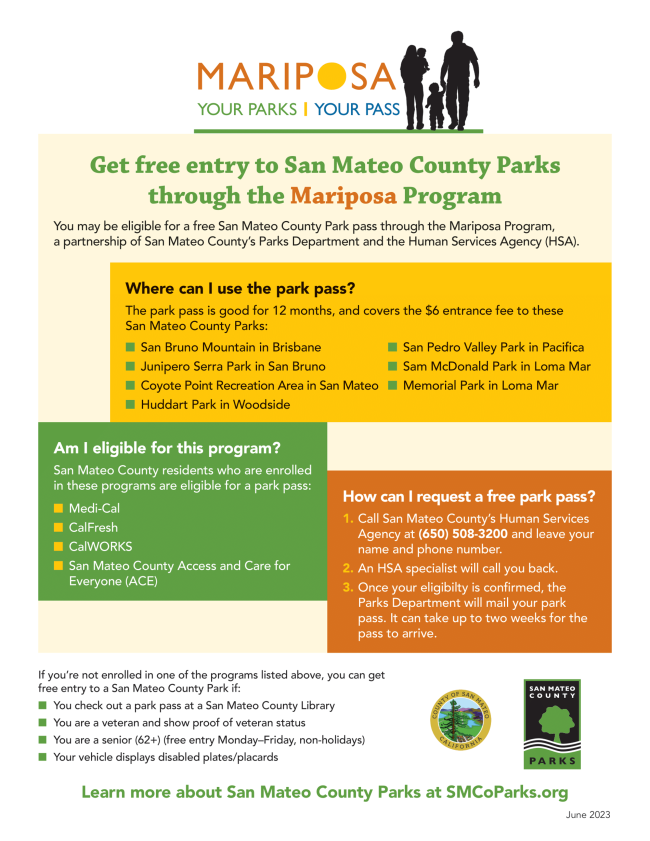
Free Entry to San Mateo County Parks! Mariposa Program | | |
|
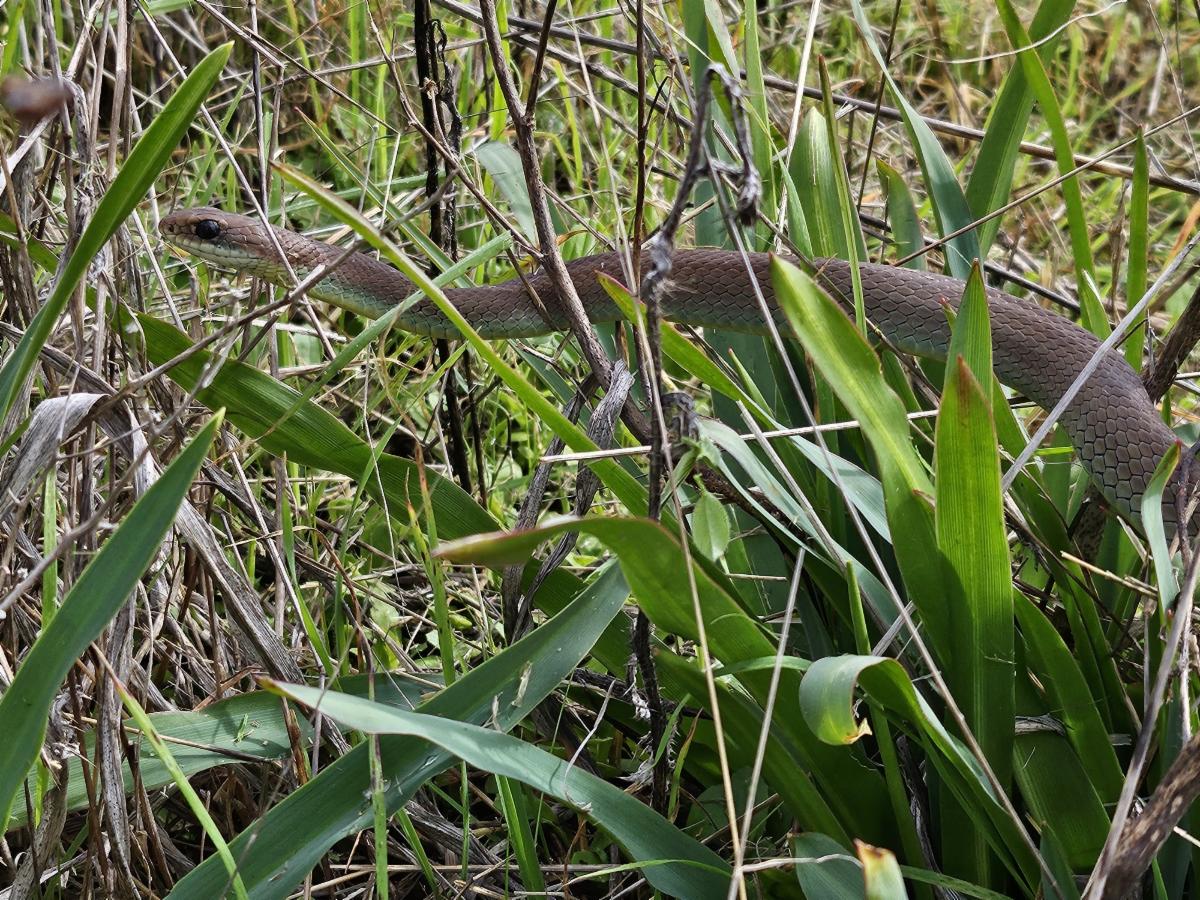
January 22, 2024
A yellow bellied racer snake is spotted while mowing mission blue habitat areas. A first time sighting on Sign Hill for SSF Parks Staff.
| |
|
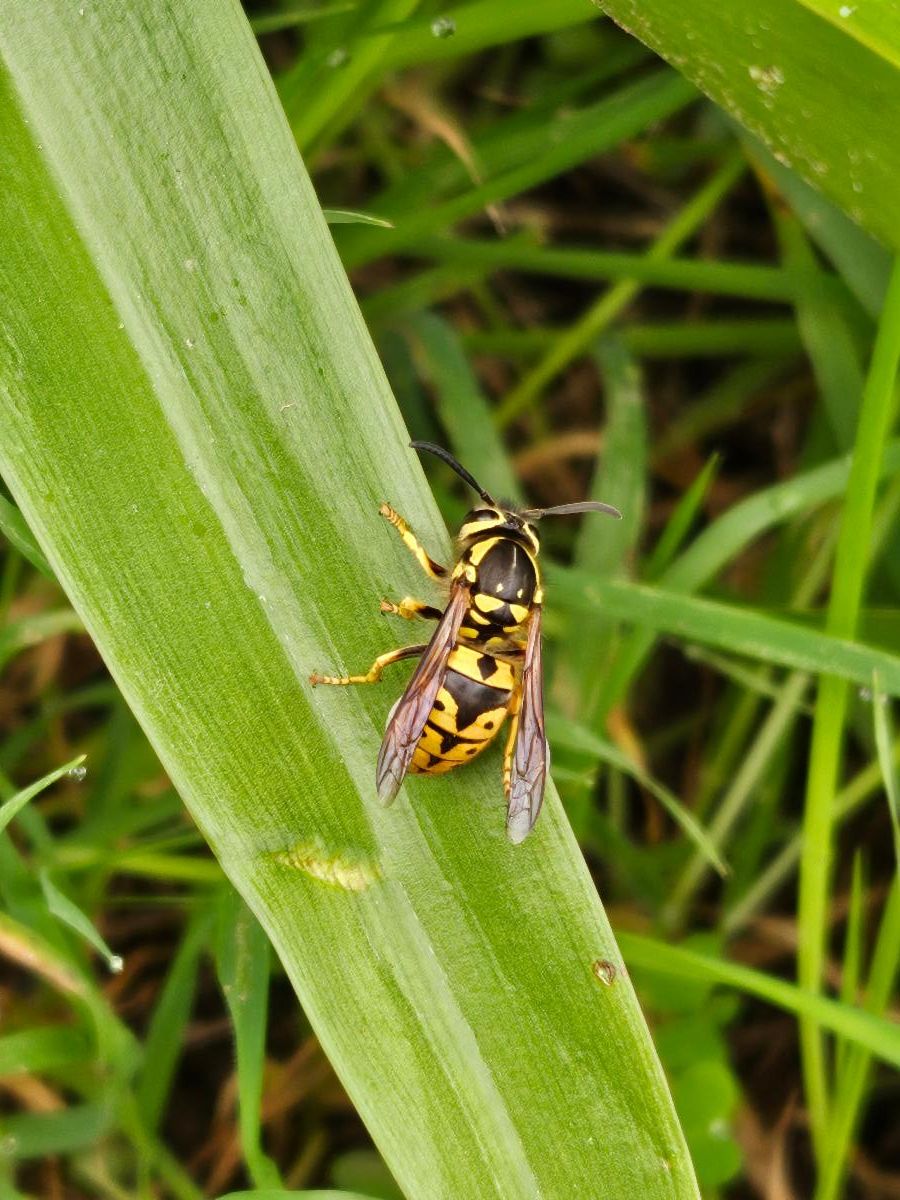
January 26, 2024
A western yellowjacket (Vespula pensylvanica) poses for a photo.
| |
|
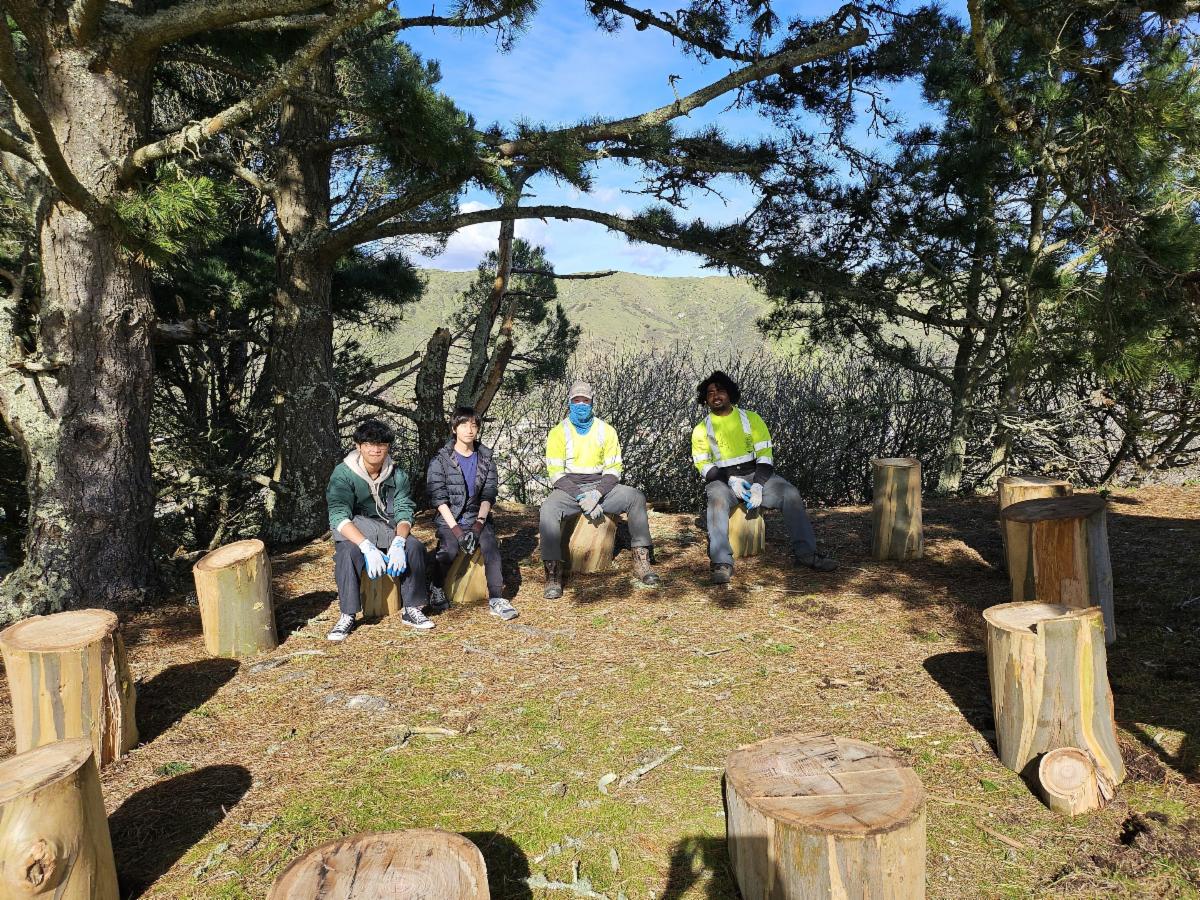
February 9, 2024
SSF Parks Staff and D-Tech High School interns help install a sitting circle near the buckeye grove at the top of the park.
| |
|
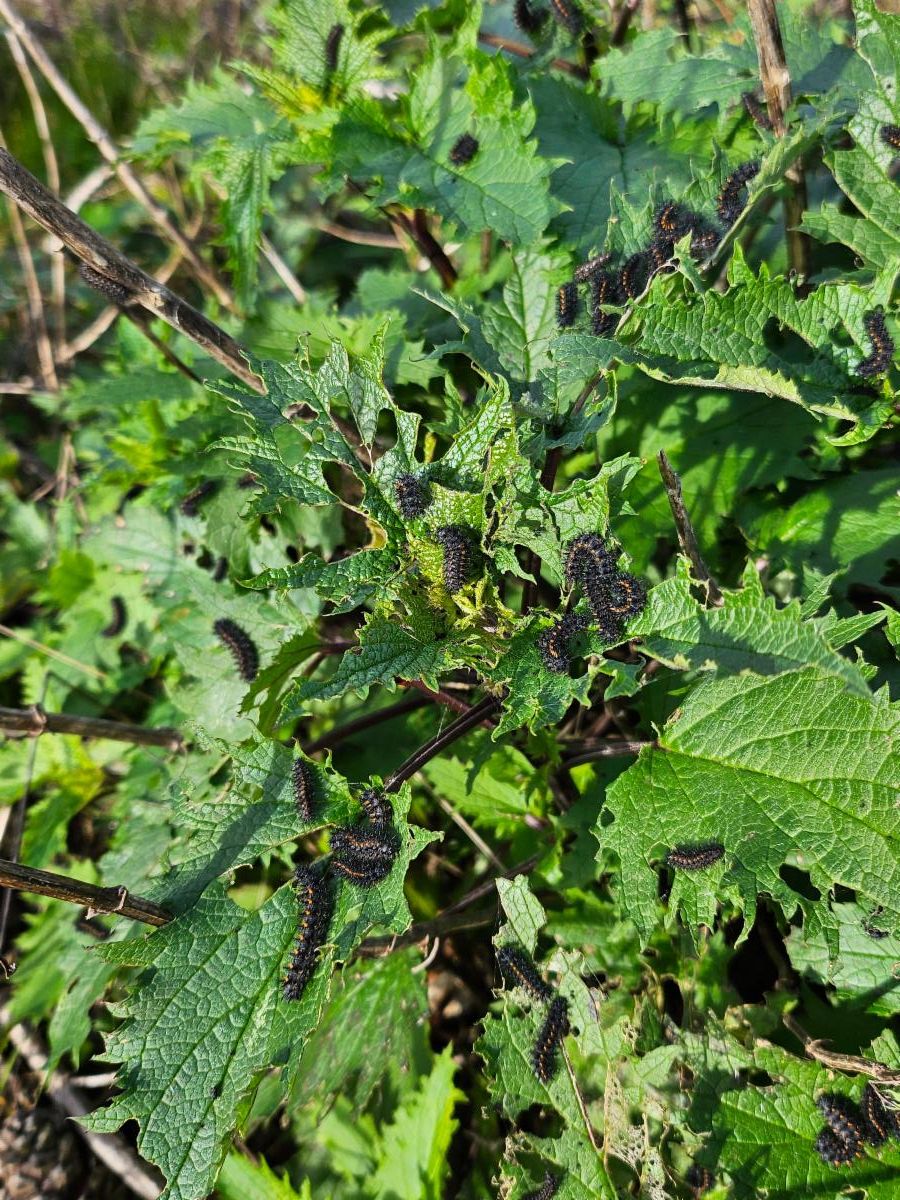
February 12, 2024
Mobs of variable checkerspot caterpillars (Euphydryas chalcedona) can be found all over Sign Hill, especially on their favorite host plant California bee plant.
| |
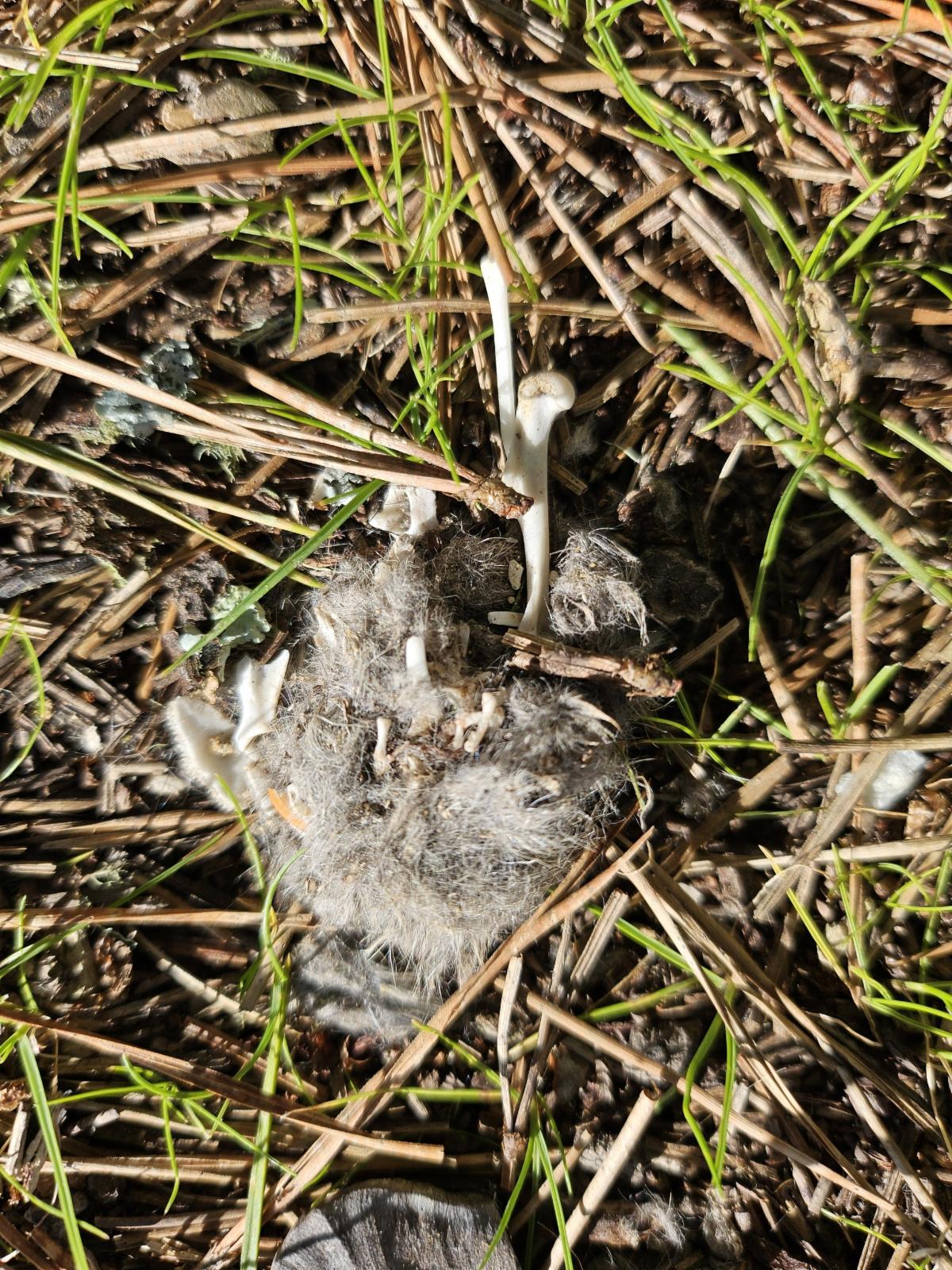
Several owl pellets have been discovered below the Monterrey pine tree near the new seating circle. | |
|
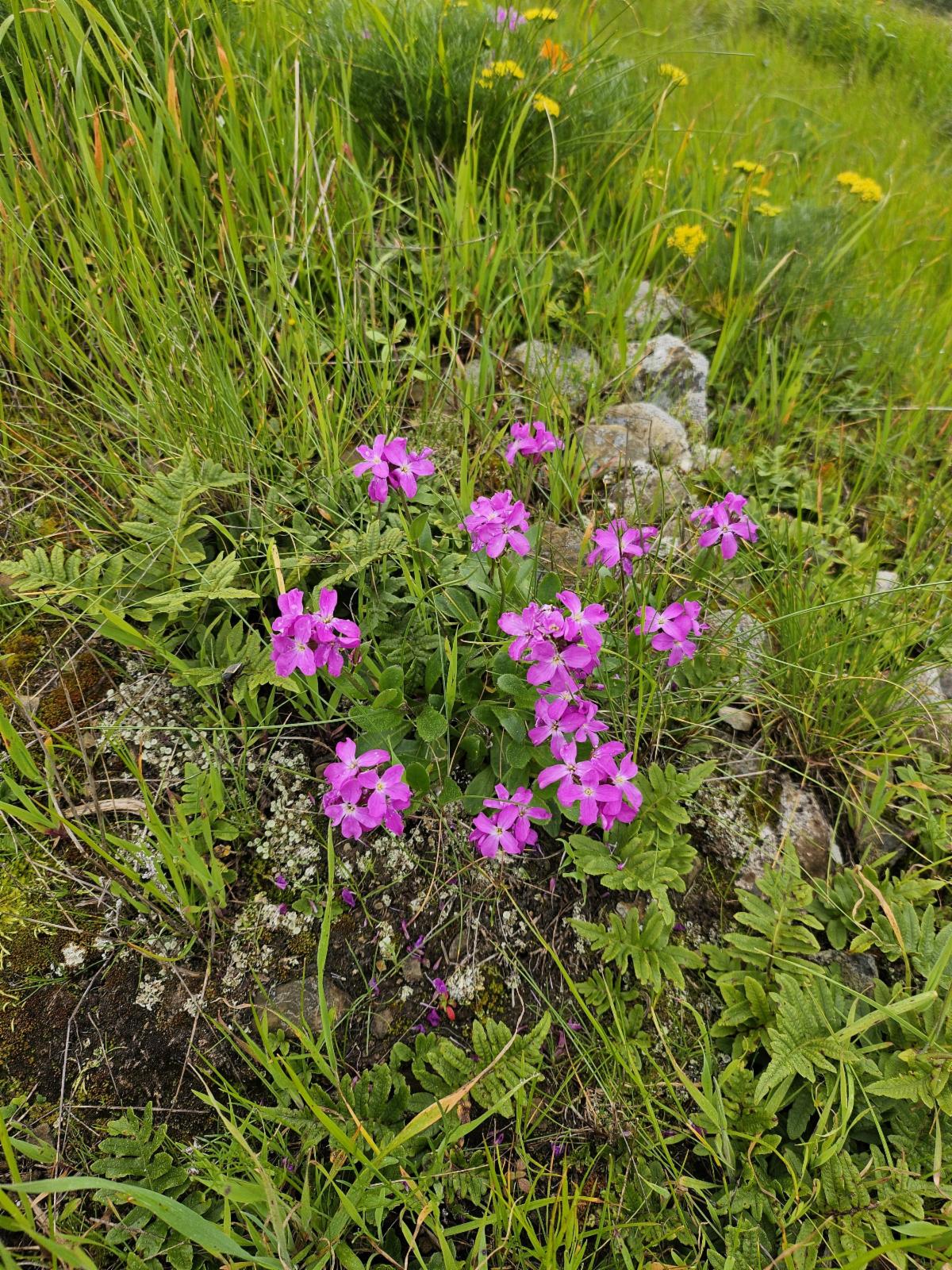
Feb 13, 2024
A focused survey is conducted for the rare coast rockcress, Arabis blepharophylla (California Rare Plant Rank 4.3)
| |
|
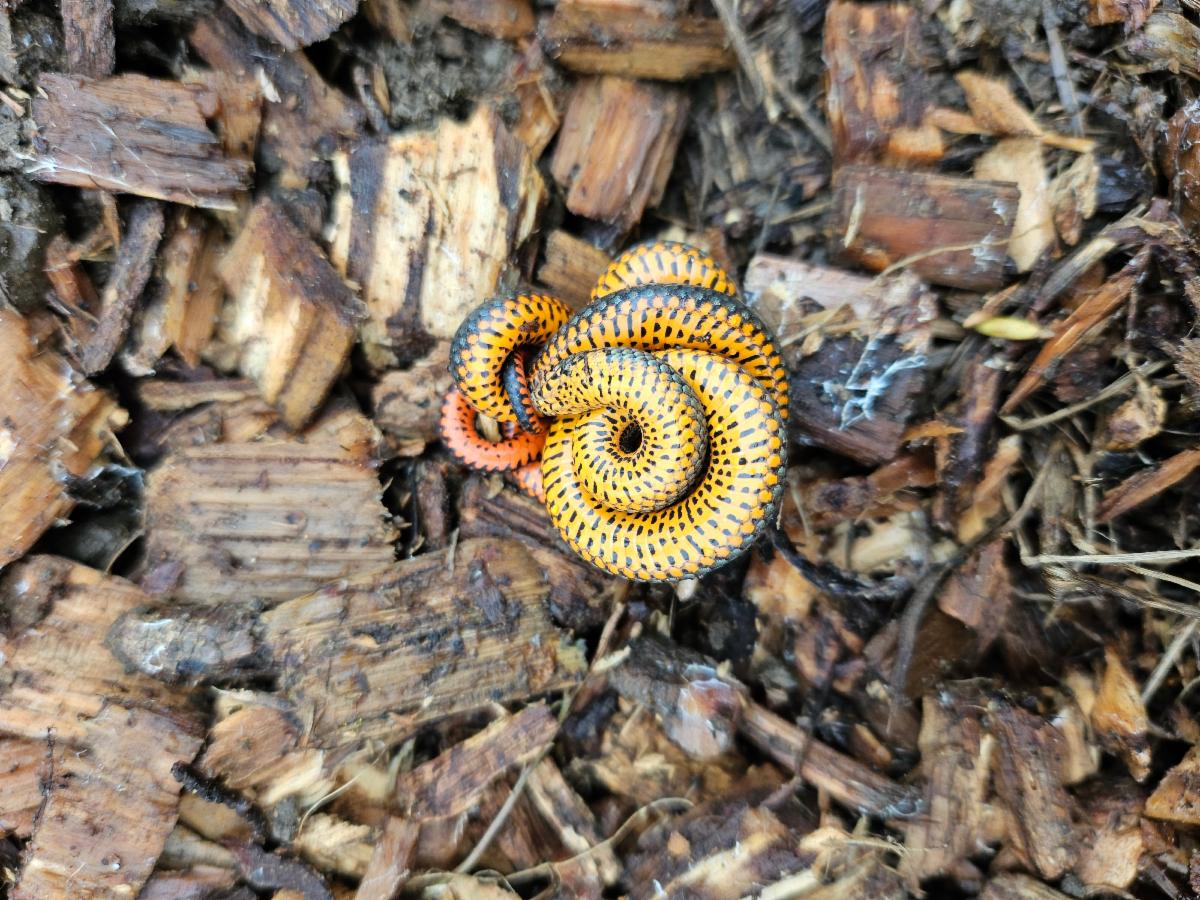
February 14, 2024
A pacific ring-necked snake is found hiding in a mulch pile while installing the planting plots. Here it is demonstrating a defensive display where it flips its orange belly upward to warn predators that it may be poisonous and they should think twice before eating it.
| |
|
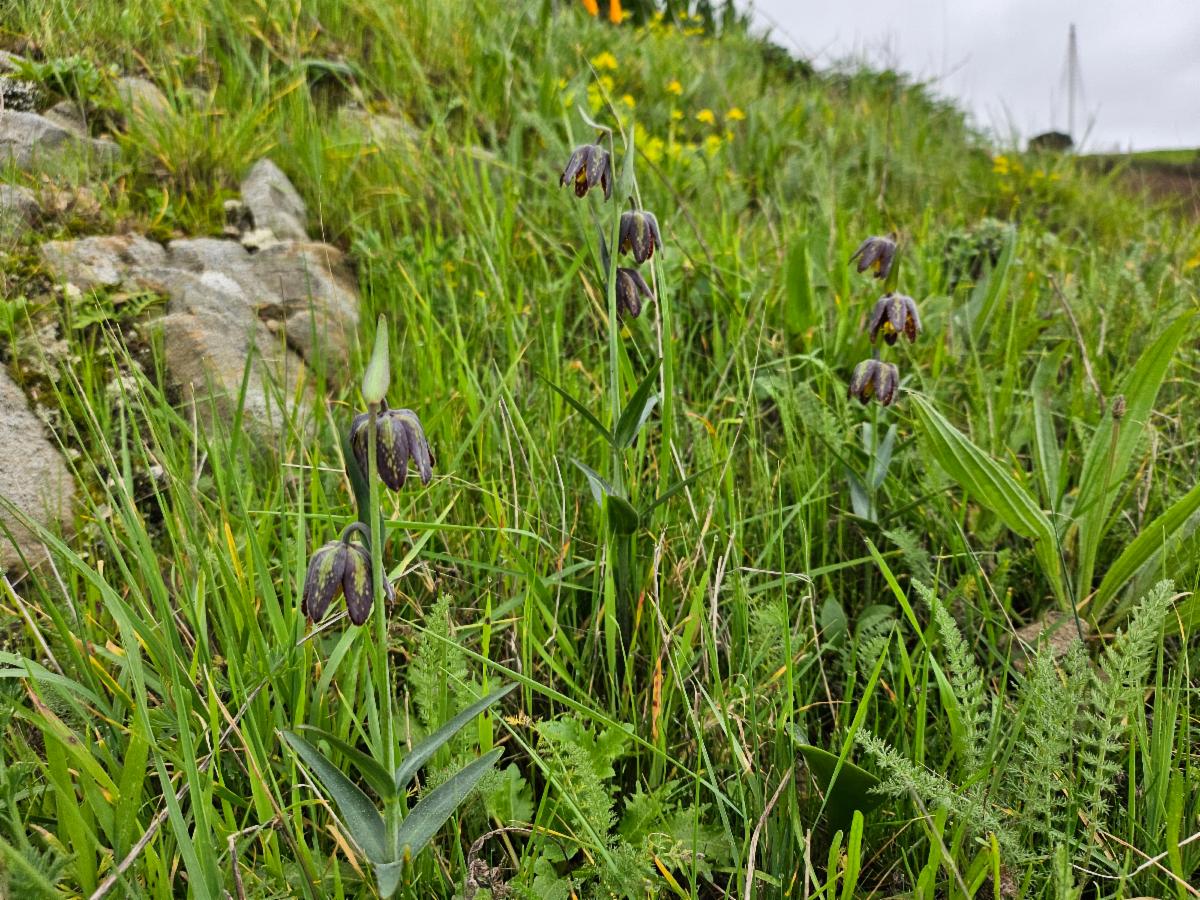
February 26, 2024
The beautiful checker lilies, Fritillaria affinis, are in full bloom.
| |
|
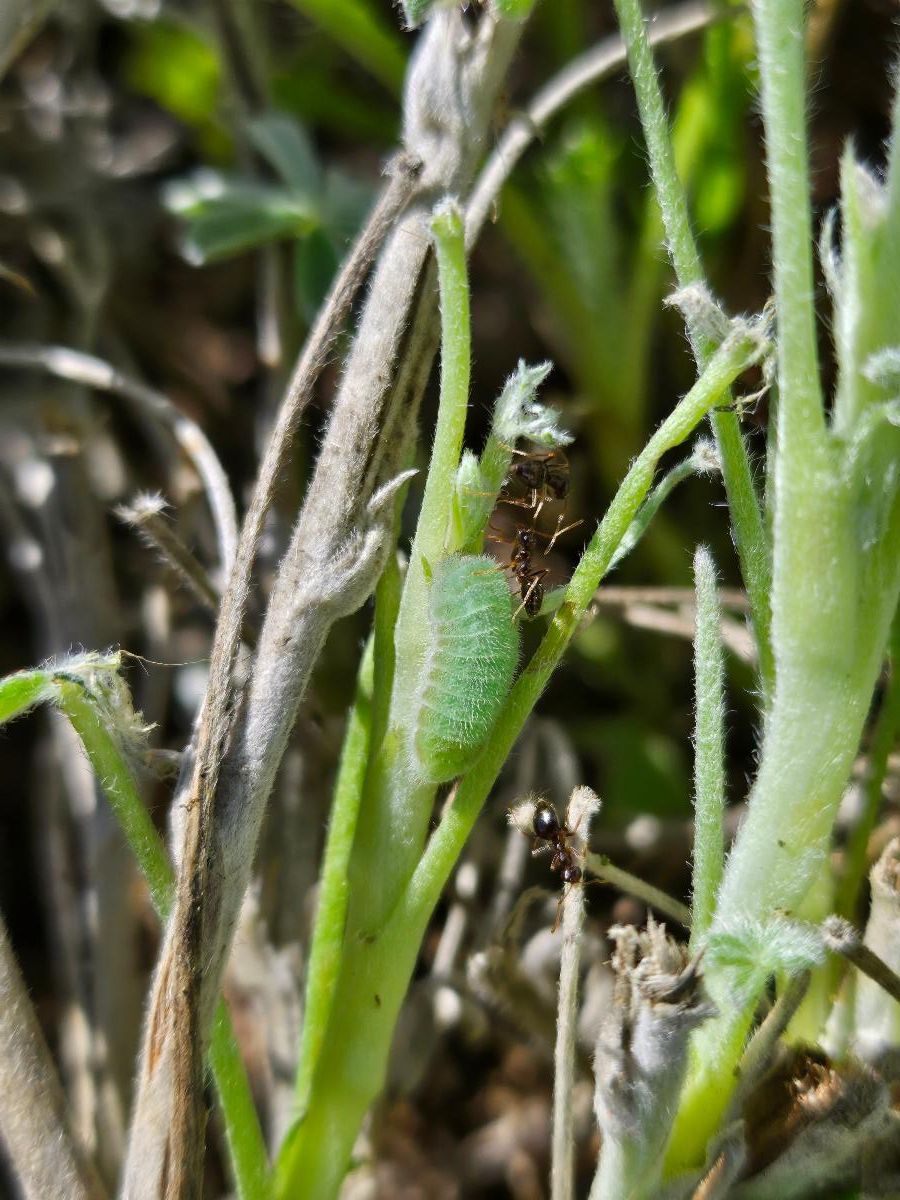
February 28, 2024
Our first mission blue egg survey of the season revealed that larvae are already on the move! This one was accompanied by symbiotic native ants that feed on the "honeydew" excreted by the larva's abdomen and in exchange keep it safe from parasites and predators.
| |
|
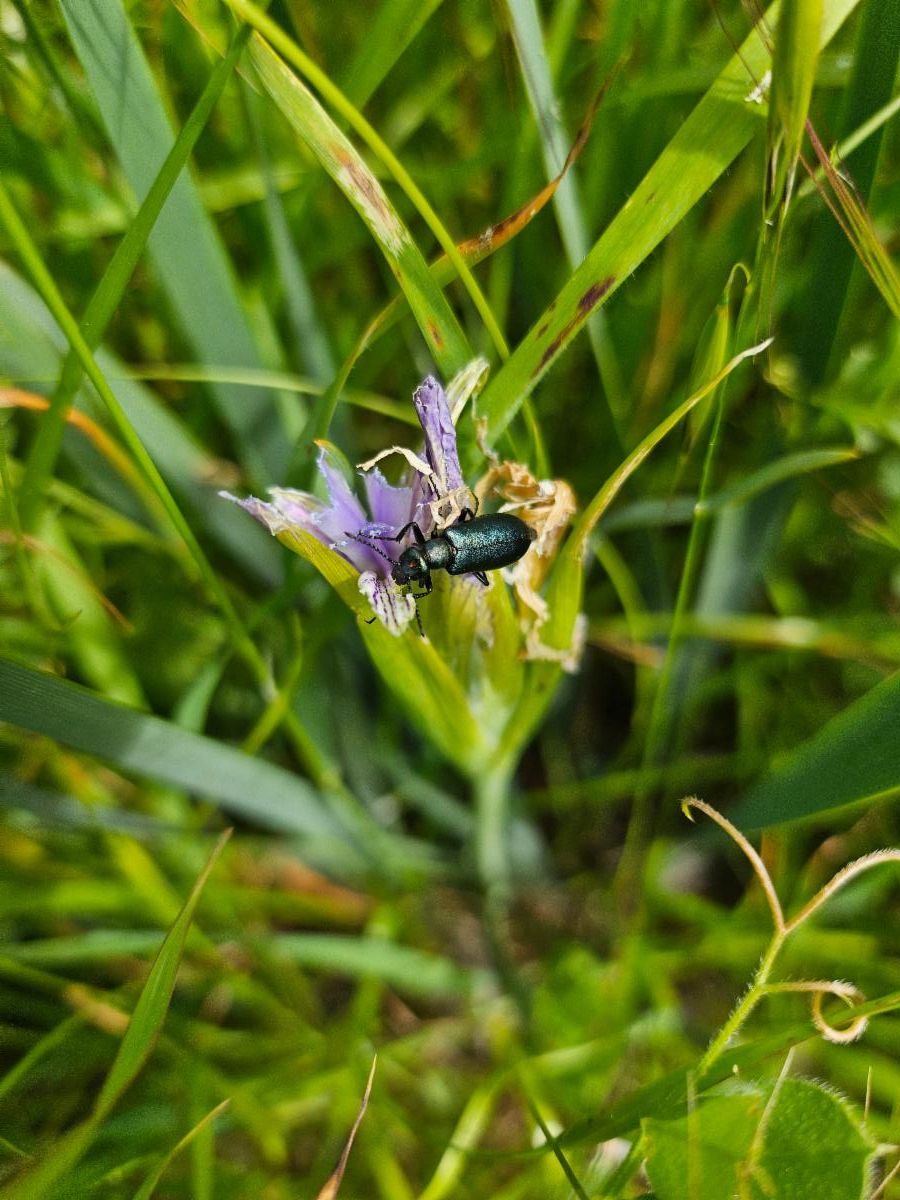
March 18, 2024
Numerous green blister beetles (Lytta cyanipennis)are found munching on coast iris flowers (Iris longipetala).
| |
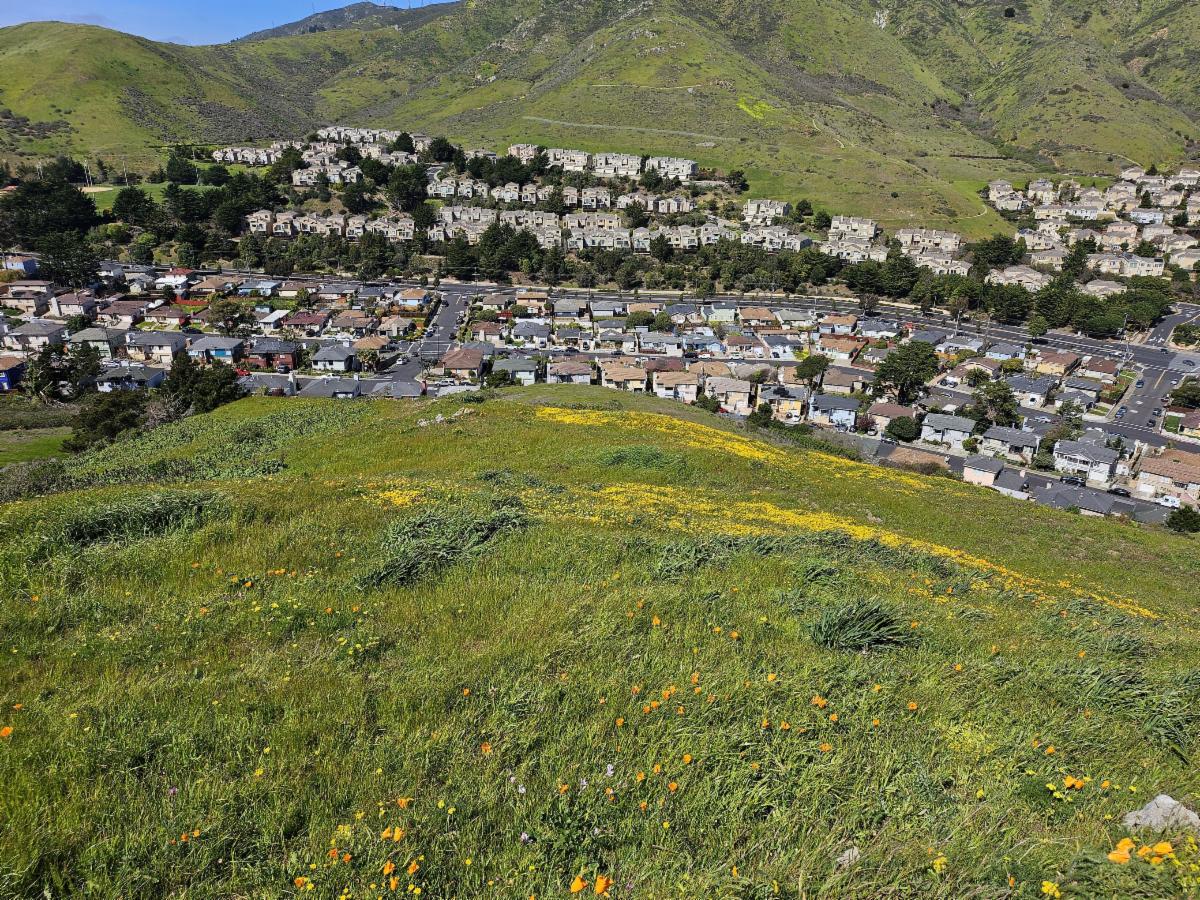
California goldfields, Lasthenia californica, begin to paint the northern ridges in yellow. | |
Volunteer with Sign Hill Stewards! | |
|
When: Every other Friday from 9am-12pm and the second Saturday of each month from 9am-12pm. Only cancelled for heavy rains.
Where: Volunteers will park at the Sign Hill Parking Lot nearby 964 Ridgeview Ct, South San Francisco, CA and hike with staff to the restoration site.
Registration: Registration is required. Volunteers under the age of 18 must have a youth waiver signed by a parent/guardian. Youth under the age of 15 are welcome and must be accompanied by an adult. Click the link below to RSVP.
What to bring: To prepare for working outdoors, please bring work gloves, plenty of water, sturdy shoes, long pants and long sleeves, a hat/sunscreen, and a completed waiver for each volunteer. Volunteers should expect some hiking on steep terrain.
| | | | |