Streetsmart News. Vol. 47, 2024

Evidence and Insight for Healthy Transportation

As the year draws to a close, I hope you can celebrate some successes - great or small - in your work to make a healthier and more inclusive transportation system. This edition of the Streetsmart newsletter highlights some examples from Spain that may provide inspiration for the coming year. In addition, this newsletter features a resource from the US DOT's Climate Change Center that shares a similar approach to Streetsmart's research synthesis and resource clearinghouse.

Barcelona's Superblocks


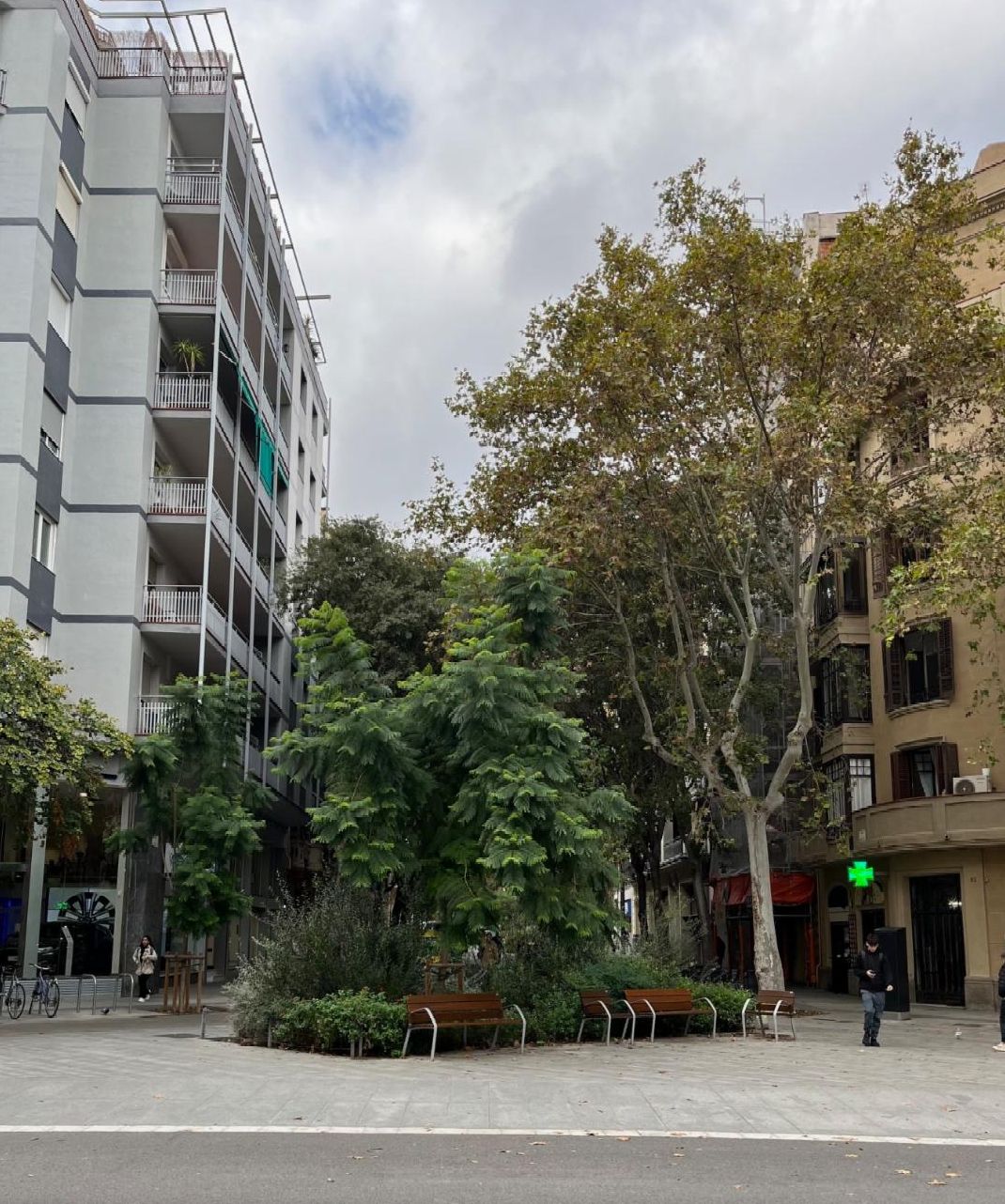
In November I traveled to Spain to learn about a few people-centered transportation innovations. I began in Barcelona to visit the Superblocks. Superblocks are 9-block areas where the internal streets have been pedestrianized (think woonerf) to create more public gathering spaces in a city with a park deficit. Drivers can get through the spaces but it is clear that they are being "accommodated" rather than the primary user - flipping the script used in most American cities where pedestrians are "accommodated."


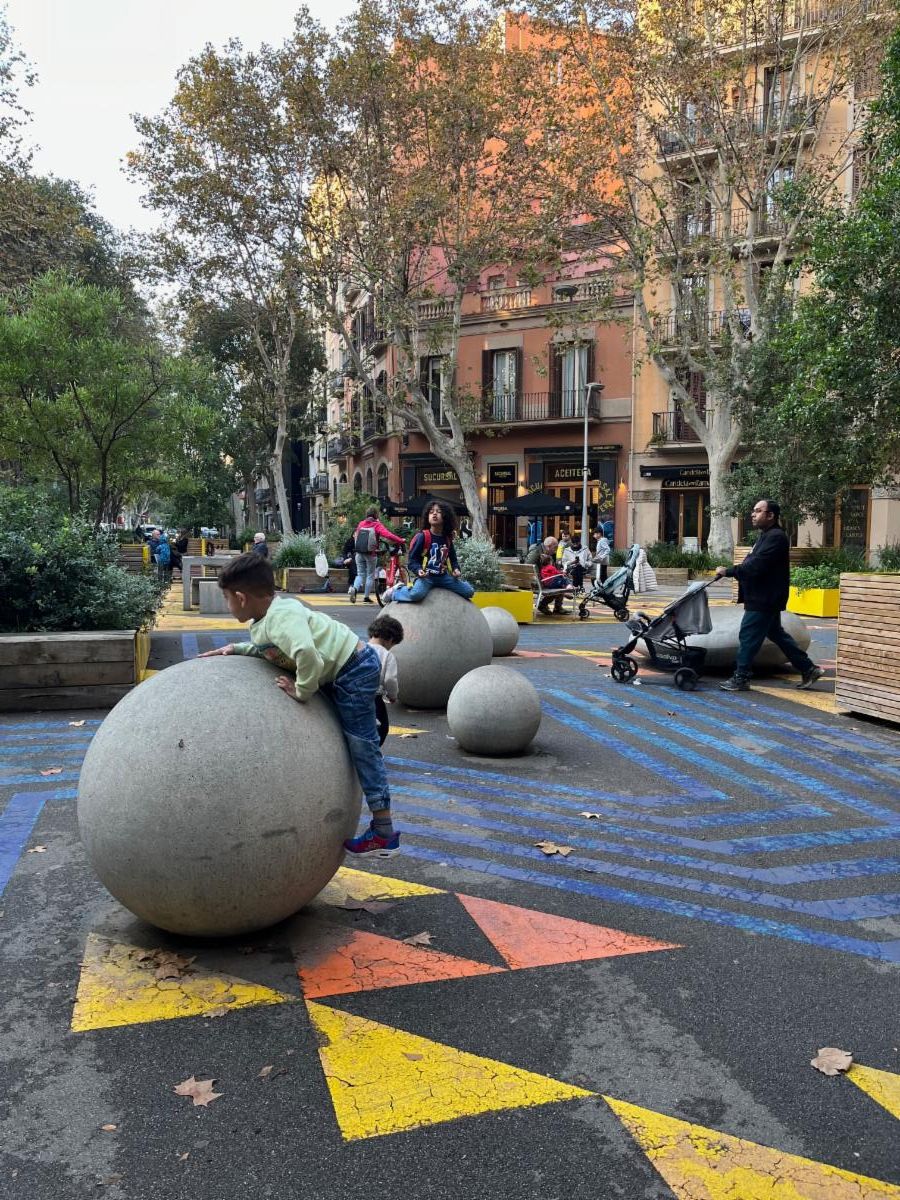
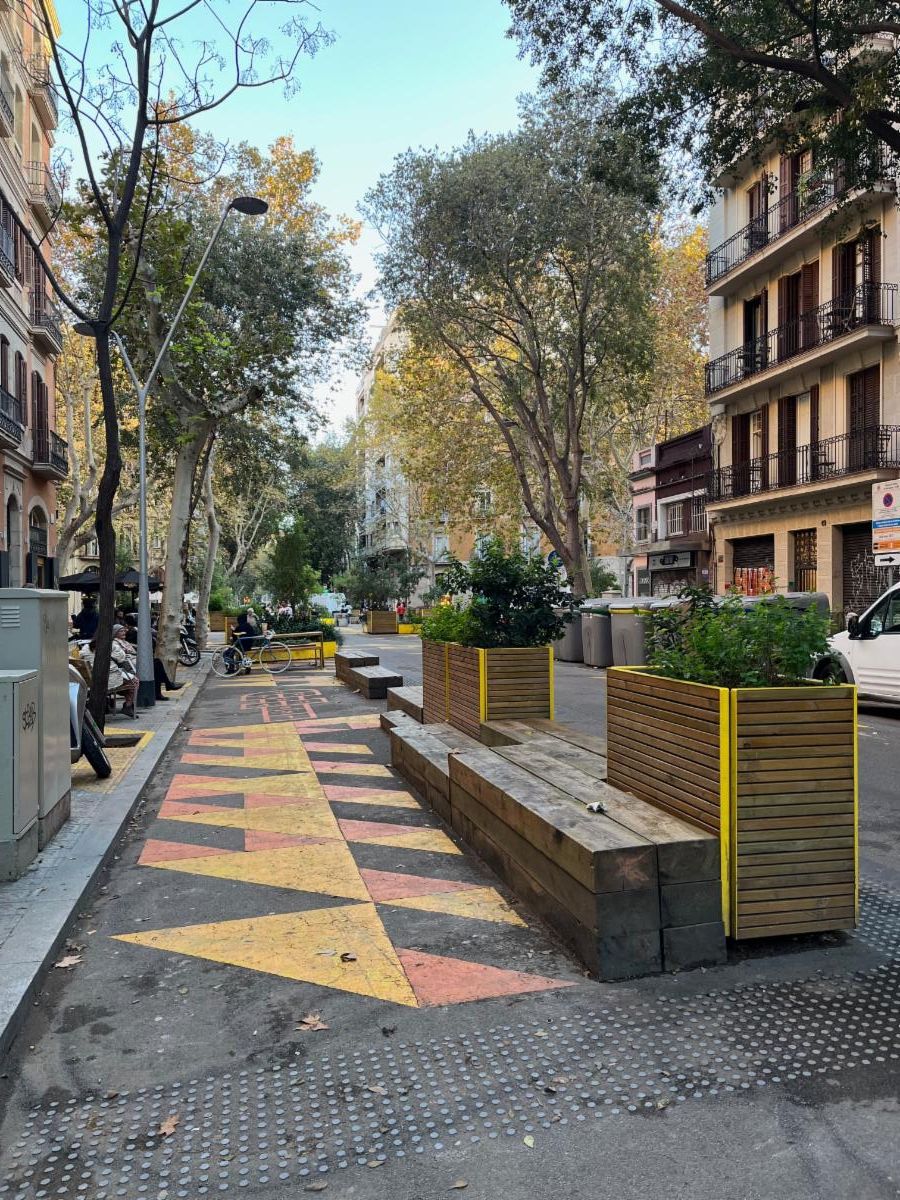
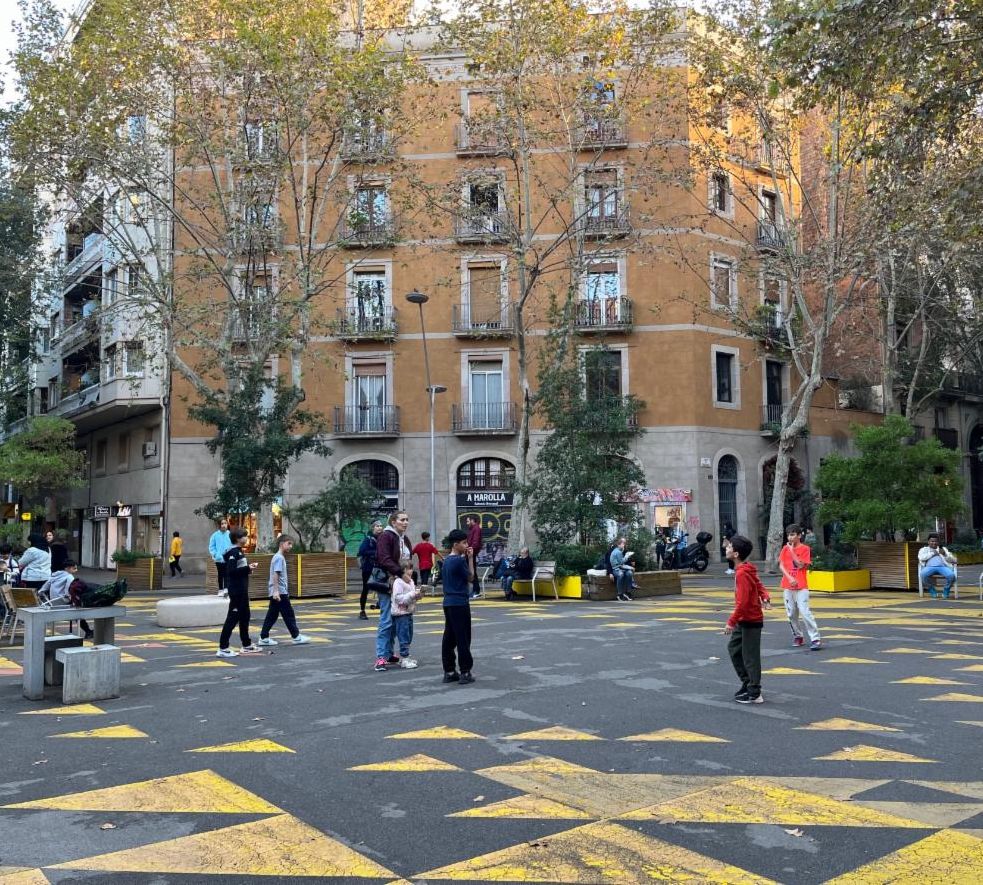
I had the good fortune of meeting with Dr. Jordi Honey-Rosés to learn about one of Barcelona's early Superblocks (photos right and below). This one was created through tactical urbanism, although it soon will be made permanent and will look more like the other Superblock I visited, described in the next section. Because it was a pilot project that used intentionally less permanent materials, you get a sense of how the street used to function -- the transformation of the intersection from a car space to people space. And especially a kids' space.

Children playing on concrete sphere bollards in the center of a re-designed intersection.
Seating and planters placed in the street.
People gathering and children playing in the center of a re-designed intersection.

Dr. Honey-Rosés introduced me to Xavier Matilla, Barcelona's former Chief Architect and the person responsible for the development of the Superblocks. We met at the newest Superblock to learn how Xaiver and the City created these pedestrianized spaces. This Superblock felt as though it had been built like this from the beginning; indeed, it appeared as the most obvious way to design streets in a city where the car mode share is only 20%.


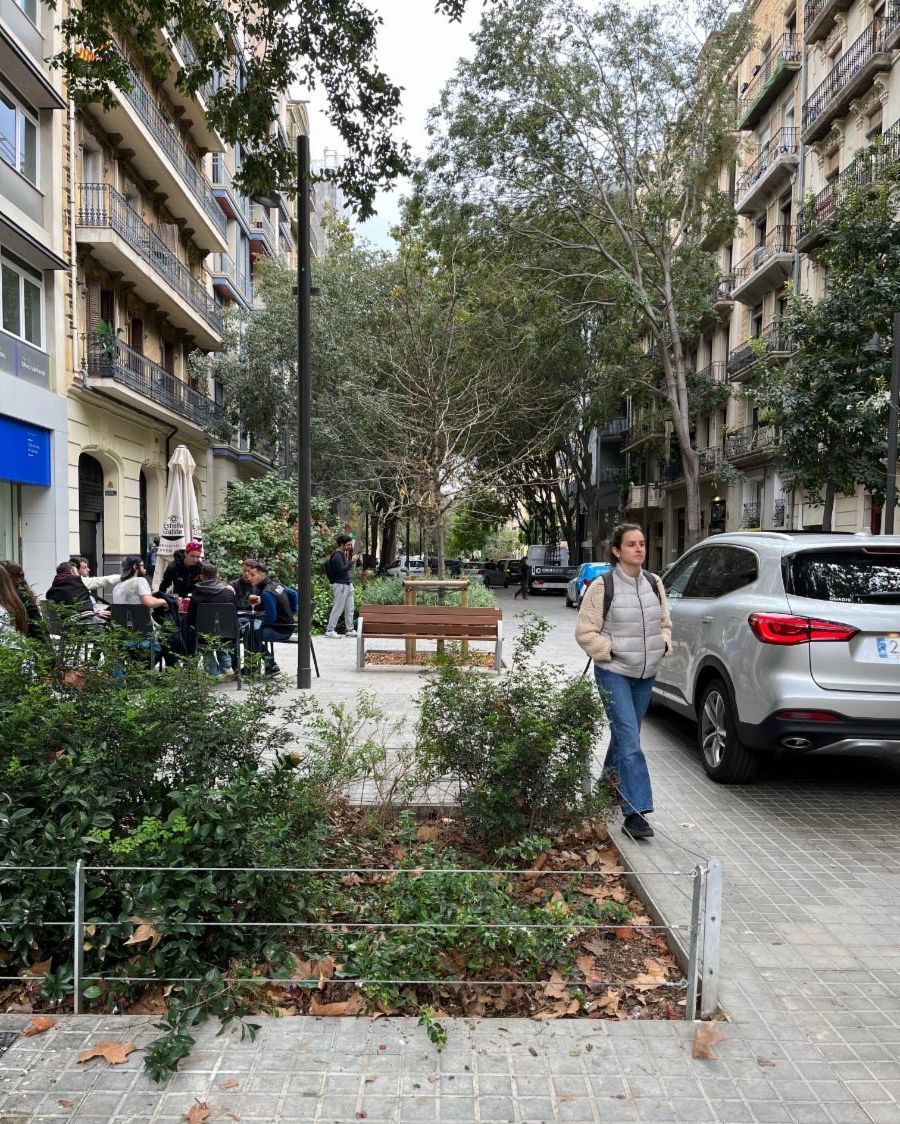
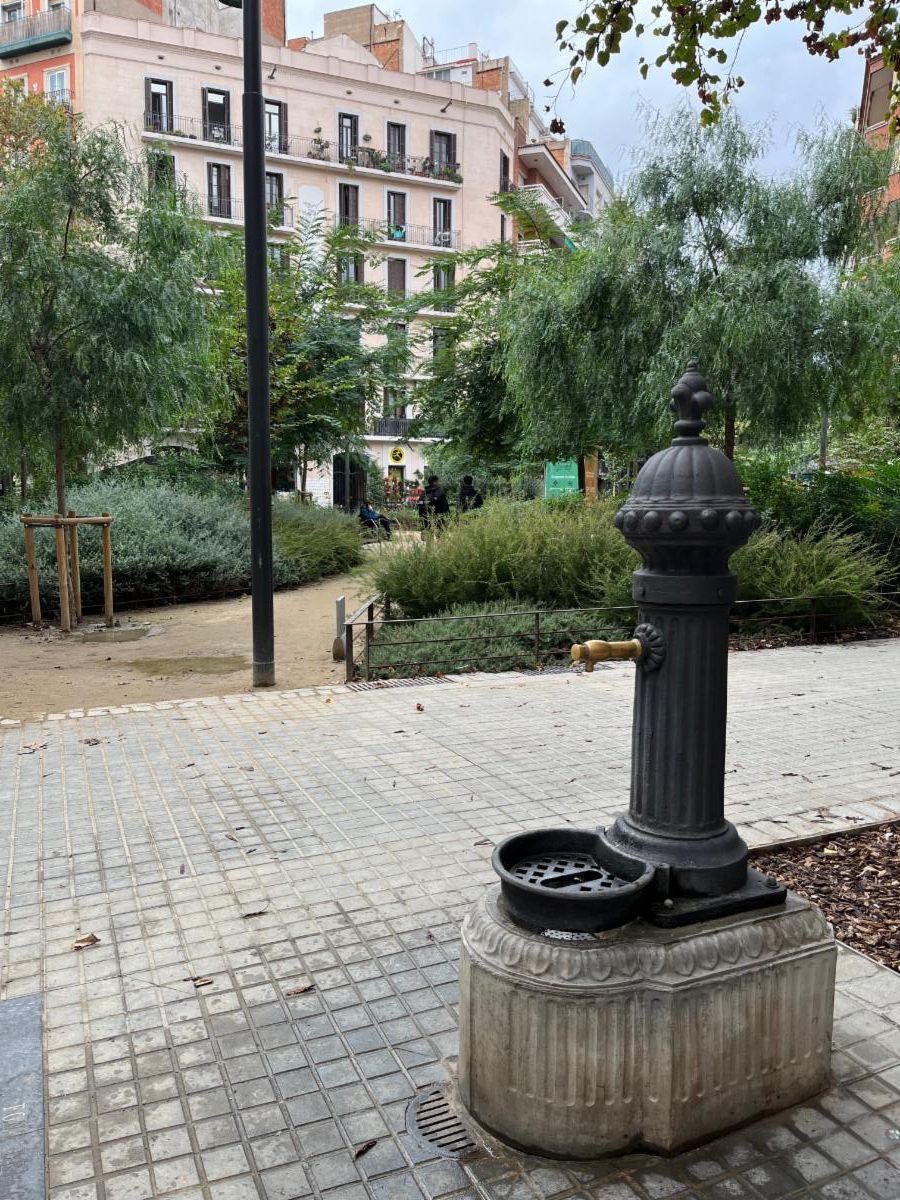
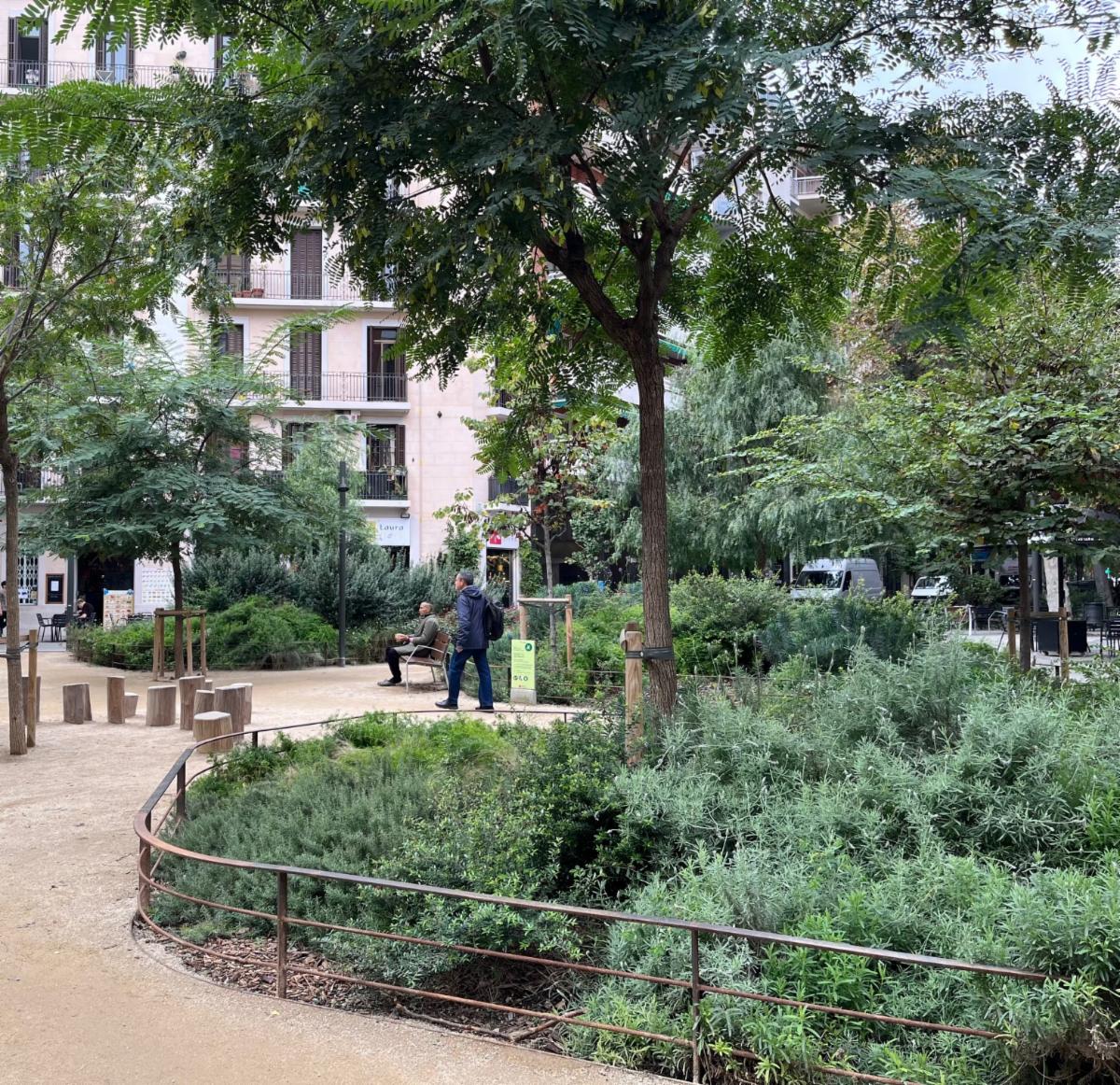
Superblocks prioritize people walking and gathering through significant traffic calming features, straight-line crossings at intersections (this relates to the chamfered corners of the blocks), and an abundance of street furniture, including picnic tables. Asphalt intersections have given way to park spaces. The new green spaces and planters are partially fed by the surface runoff and provide shade and cooling for an increasingly hot city. Air quality has improved with the reduction in traffic (which has largely "evaporated" by shifting to transit mostly and a little to cycling). Children have greater freedom to move around the city.

Trees and seating areas in the center of the local street.
A woman walking and a car passing by a planted area.
Park-like areas at street intersections.

The Bicycle Network in Seville

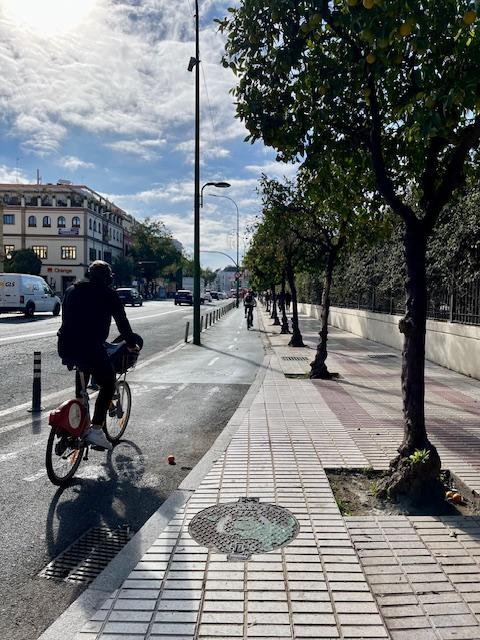
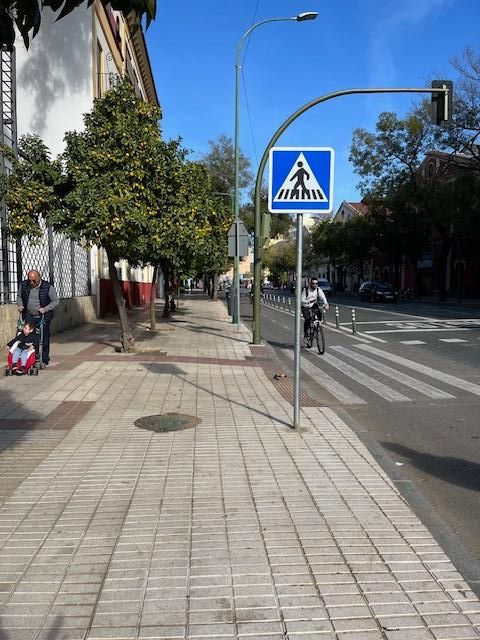
In Seville, I met with Manuel Calvo from Estudio MC to learn about the rapid implementation and growth of Seville's bicycle network. One of the fascinating things I learned is how the network was built quickly but also incrementally. In some places, the City first created wider sidewalks to place a bicycle path. Subsequently, those sidewalks were designated only for pedestrians and the bicycle path was moved over to the roadway. This was a great strategy for not only getting dedicated bicycle lanes but also to expand space for pedestrians. The first image below on the left shows the bicyclist at the transition point from the roadway bike lane to the original bike lane on the expanded sidewalk (there is a grade change). The second image shows the expanded sidewalk where the bicycle path once was (to the right of the trees) and now just serves as a wider sidewalk for pedestrians.

A person riding a bicycle on a section of the bike lane that transitions from the roadway to an elevated bike path.
A person riding a bicycle in a separated bike lane at the same grade as the roadway.

The USDOT Climate Strategies that Work Playbook


This playbook is a comprehensive resource to guide cities, regions, industry leaders, philanthropic strategists, and transportation professionals at every level in implementing the most effective strategies for reducing transportation sector greenhouse gas emissions. This playbook provides strategies to help communities grow stronger, safer, smarter, and more sustainable. Informed by the U.S. National Blueprint for Transportation Decarbonization, the playbook emphasizes convenient, efficient, and clean transportation solutions, while also considering equity, safety, and economic growth.

Why Streetsmart?

At Streetsmart Planning, we know that transportation connects people to the places that are essential for their well being. 


Yet, for many people, destinations are too far from home, transit is not reliable, walking and bicycling are impractical, or the streets are not safe. Rather than connecting people to opportunity, lack of adequate transportation is a barrier to reaching employment, schools, health care services, and social networks. Vehicular emissions expose communities to air pollution, increasing their risk of asthma and heart disease. Transportation is also the largest contributor to greenhouse gas emissions in the US, driving climate changes that will disproportionately affect children, older adults, and many communities of color.   


We believe that transportation systems can create and support healthy, just, and climate-resilient communities. Streetsmart Planning offers planning services in transportation and city planning, strategic planning, performance management, and research. Streetsmart's flagship product, the research synthesis and resource clearinghouse, is freely available here.​ Streetsmart Planning is registered as a women's business enterprise (WBE) in the state of Oregon.

Did someone send you this newsletter? You can sign up for Streetsmart News here.
 Streetsmart Planning | Kelly@thinkstreetsmart.org