|
|
SkiPost
|
Volume 19 Issue 23: Oct 5, 2017
|
|
|
|
Ask us, We Answer
Do you have a Nordic training, technique, equipment, travel, or event question?
Just email us at
weanswer@skipost.com
|
|
Skate Technique
New vs Old, 1
more feedback further below
I'm so confused! Having learned the original skate techniques back in the day, then re-learned the "new" skate (hips and shoulders square to the direction of travel), I still struggle with proper skate form. From my own experience, it seems like the new skate only works at high tempos or going uphill (when the glide phase is short). Otherwise, the old skate (toe-knee-nose) provides the flattest ski with the longest glide. I can't see how you can ride a flat ski for very long if your torso isn't aligned with the direction of ski travel. Can you shed any light on this? Thanks!
Dazed an Confused
Hello Jeff -
If it makes you feel better, I think there has been confusion in how skating is taught over the years. It's tempting to try paint with broad strokes when we discuss technique, but as your questions and experience show, we usually miss some important distinctions when we do that.
One principle of skating is that the faster a skier's velocity, the more acute the V of the skis can be. Meanwhile, the slower the velocity, the larger the angle will be. We can see that for ourselves: When we V2 fast, the angle of the skis may be around 30˚; and when we're casually skiing uphill, the V expands to 90˚ or more. There are some laws of physics at play here, but in general, we figure this concept out ourselves - it's really hard to skate up a steep hill with a tight V.
Another concept is not exclusive to skiing: The quicker you try to do something repeatedly, the less time you have between efforts. That is, if you're skiing 40 strokes per minute, you have 1.5 seconds to move from ski to ski, and if you're skiing at 90 strokes per minute, you only have 0.66 seconds to shift your weight.
As you mention, "it seems like the new skate only works at high tempos or going uphill," and I basically agree with that. When the tempo is high, you may not have enough time to shift completely over to each ski (into the "old" toe-knee-nose) - especially if you're going uphill using V1/offset, with a wider V. It's also a safe bet (hope?) that your high tempo is also making your ski speed faster, so the V in V2/one-skate is more narrow; you may actually be getting completely over each ski, but it's a less obvious weight shift.
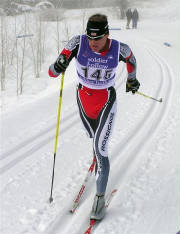
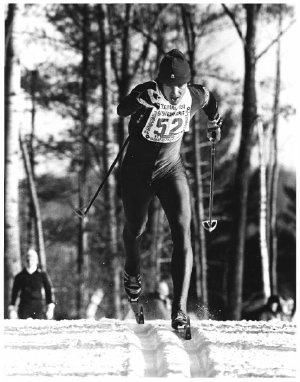
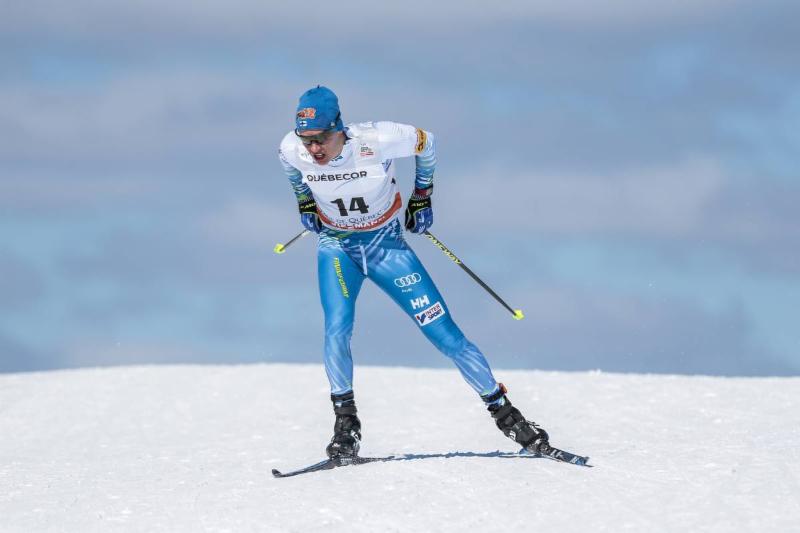
I'm not sure why there are "new" and "old" skates being taught, as both are valid. There's a continuum of how much weight shift and torso alignment you can effectively achieve in different conditions, and you need to figure out what works best for you. Ski speed and the terrain contribute to making this decision, but so does your strength and balance. If you look at this video, we can see that Sundby (leading, red bib) is able to stay squared up to his skis more effectively than Sveen (bib 17), who is using more of a toe-knee-nose approach - but they're skiing at the same velocity:
To summarize: You're fine, you're right, just keep doing what you're doing.
Jason Cork
US XC Ski Team Coach
|
|
Old vs New Skate
Q and A with Jason Kork
In Jason's comments he mentions that these two skiers are going at the same speed within different styles within the technique. What Jason doesn't mention is that Sveen is working at a much higher tempo, has to change technique, and is working much harder that Sundby. My guess is that Sundby won this race. The power that Sundby has enables him to use the most efficient method to climb, without shifting down to V1. Getting a flat ski on the snow and getting the entire body weight onto the gliding ski does not necessarily mean that notion of T-K-N. Sundby is also able to maintain a more dynamic upright body position to maximize his poling, because of his strength. Sven's body is collapsing over the pole causing much greater expenditure of energy continually lifting his torso to an upright position. There is a best way to ski if you have the power to do it.
D P
Note that Sveen executes the impulse in the direction of travel, and then seems to "directional focus". The timing is important-old school had us "nose, knee, ski" before the impulse was generated (nose over ski is incorrect as a balance reference). Sundby shifts his whole body laterally as a result of the powerful impulse without the twisting of "directional focus". Also, notice that he must break into offset as opposed to continuing in 1 skate.
GS
Jason Replies,
Those are valid points made by DP and GS, and it comes back to what I d briefly mentioned: Strength/power and balance/stability are factors that an individual needs to account for with their technique. Not many people in the world can ski that hill like Sundby, but personally, I think it s something to aspire to. This clip was from the Sunday relay, but they d had a 30km Skiathlon on Saturday. On Friday evening, Sundby was on a treadmill in the hotel gym, running while holding a ~4kg dumbbell out to his side, in front of him, above him challenging himself to maintain a stable body position. His ability to keep his body going the direction he wants it to go is no happy accident.
Nice job watching the video and thinking critically about what s going on, by the way. One suggestion that Matt Whitcomb often makes to juniors is to find video of a World Cup athlete of a similar size/physique to them, and to emulate what they re doing. A massive 16-year-old manchild is likely to find that skiing like Liz Stephen isn t effective for themselves, and end up studying Calle Halfvarsson to better effect. (Those of us who do have not physical peers on the World Cup will need to use our imaginations a bit more.)
Jason Cork
US Ski tean
I watched the video of Sunday and Sveen that you used to demonstrate the "old" vs "new skate". I stopped it several times and watched in slo-mo, but it sure looks like Sundby is still getting the nose, knees, and toes aligned just as much as Sveen. What subtlety are your practiced eyes getting that I'm missing? I do see a bit of difference in tempo, and it looks like Sundby is getting a bit higher on a flatter ski during the glide. Is that what you mean?
Thanks,
RB
Jason Replies,
The biggest thing I see with Sundby s technique vs. Sveen s is that Sundby is able to keep his core more stable. This provides a better link between the energy he puts into his arms through to his skis. This also means Sundby isn t folding at the waist as much; he s always able to get back up high, as you mentioned, and therefore on top of his poles. A physicist may tell me I m [technically] using the wrong term, but I think of him starting each cycle with more potential energy. Because of these things, Sundby is able to keep the V of his skis more narrow, relying more on his upper-body and core than his legs. It may be the camera angle, but even when Sveen is in V2/one-skate, the V of his skis seems wider than Sundby s. Perhaps he is more of a leg-centric skier. The two may ultimately be getting similar toe-knees-nose alignment, but the difference may be that Sundby is shifting 15 from the direction of travel to get that alignment, and Sveen may be shifting 25 . (Totally rough estimates, but I hope you get the concept.)
As an aside, the new skate technique may have been described as having hips and shoulders square to the direction of travel at all times, as Dazed and Confused aptly put it in his original letter, but I am guessing that something got lost in translation. Skiing with no directional shift, regardless of technique, feels awkward and blocky to me. I d rather ski feeling like I have a little flow than like a robot.
Jason Cork
US XC Ski Team
Hi Jason!
I thought your response to the new vs. old question was completely on point, and as I read it, was thinking: 'almost exactly what I would say.' Glad to know we're so in agreement about technical ideas like this. To add, for the alpine/tele dual-discipline skiers:
The observations about tempo and deviation of the upper body from the direction of travel carry over into downhill disciplines as well. The shorter the time between turns, the less the upper body rotates. In longer turns, the upper body aligns with the skis more. Aligning the upper body with the lower body in shorter turns creates lag time, making shorter turns harder, and involves more turning of the upper body, ultimately representing greater effort, and less effective skiing. So, to put it prescriptively, match the degree to which the upper body rotates, or aligns with the skis, to the tempo of cycles of movements (turns or strokes).
Best,
Scotty McGee
PSIA Nordic Demo Team
|
|
Old VS New Skate
more feedback and discussion
Thanks for your latest newsletter. I have a comment about the Old vs New Skate question. You are welcome to share this, if you like:
Jason Cork explains how speed and tempo in skate skiing influence the skis' V-angle and how much of your weight you can get over each ski in skate skiing. It's a terrific explanation of an important point many skiers misunderstand because of the widespread dogma that nordic ski techniques require "complete weight transfer".
I interpreted Dazed and Confused's question differently than Jason did. I don't think his question was about the degree of "weight transfer". I think he was asking about rotating his upper body to face the direction of his ski, rather than keeping his torso facing forward, regardless of the V-angle of his skis.
I got into skate skiing when our kids took up competitive nordic skiing 13 years ago. Even back then, none of the club coaches taught skiers to rotate the upper body to match the ski angle. We were taught to keep the torso facing straight down the trail. I didn't hear the idea of rotating the torso until it was discussed at a coaching course a number of years later.
Rotating the torso to face the direction of the ski (toe, knees, nose alignment):
- Is unnecessary for good "weight transfer". (I'm sorry - I hate that jargon.)
- Is unnecessary for healthy and safe body mechanics.
- Reduces skiing efficiency.
The issue of how much "weight transfer" you get depends on the rate of stride turnover, as Jason explained, but is independent of whether the torso rotates to face the angle of the ski or faces forward throughout the stride. You can weight your ski with your torso facing either direction, although the mechanics change.
Stand on one leg with some bend at your hip, knee and ankle. Rotate the thigh bone of your standing leg in it's hip socket. Assuming you have an aligned pelvis and a mobile and stable hip joint, your torso can face in different directions with your weight fully on a single leg. It doesn't matter which way your nose points.
Similarly, think of a basic squat - some people like toes straight ahead, others like their feet angled out. It depends on hip anatomy and mobility. The pelvis can face forward even if the feet point outward. "Toe, knee, nose" alignment is not a prerequisite for safe and healthy body mechanics.
So "toe, knees, nose" doesn't matter from the point of view of weight transfer or healthy mechanics. Next, we should think about the "toe, knees, nose" cue from the point of view of skiing efficiency.
Rotating the torso to face the ski with every stride results in wasted energy and influences how you kick (push) off your ski.
Wasted Energy: When your turn your torso to face your ski with every stride, you waste energy with unnecessarily movement and create side to side momentum that doesn't help you move forward.
Skate Kick Mechanics: You can experiment with this by mimicking a skating motion in front of a mirror. Play with a variety of foot placements: narrow, toes pointing more forward and wider with the feet angled more outward.
Keeping the torso facing ahead, you simply drop down and push out. In the "old" style of skate skiing, you have to drop down, push out and rotate away from the kicking ski in order to face the new ski. (By "drop down", I'm referring to the initial movement where you bend at the hip, knee and ankle.)
To me, rotating my upper body to face the new ski influences how my weight comes off the kicking foot. It feels like I disconnect from the ski too soon, making my kick less forceful. It also feels more difficult to keep the knee of my kicking leg from dumping inward.
Undoubtedly, there are many other factors at play. For example, I think most every sport uses the cue "look where you want to go" because the body so reliably follows the head. It works in nordic skiing too. You want to move straight down the trail, so face forward down the trail.
It's hard to change technique. New movements often feel "wrong" until we get used to them. If you want to adapt your technique to the "newer" style, you can try exercises to build single leg strength and stability, especially in deeper flexion. That's a powerful place to ski from, but it's challenging to get used to. It's hard for everyone.
|
|
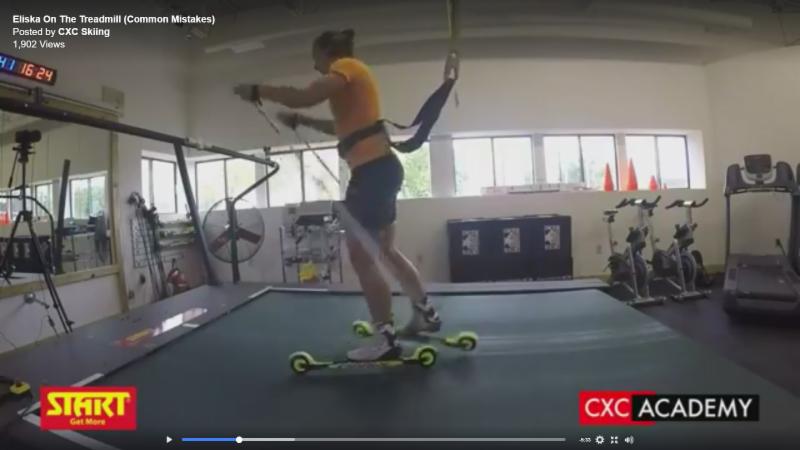
some common technique mistakes and how to fix them!
|
|
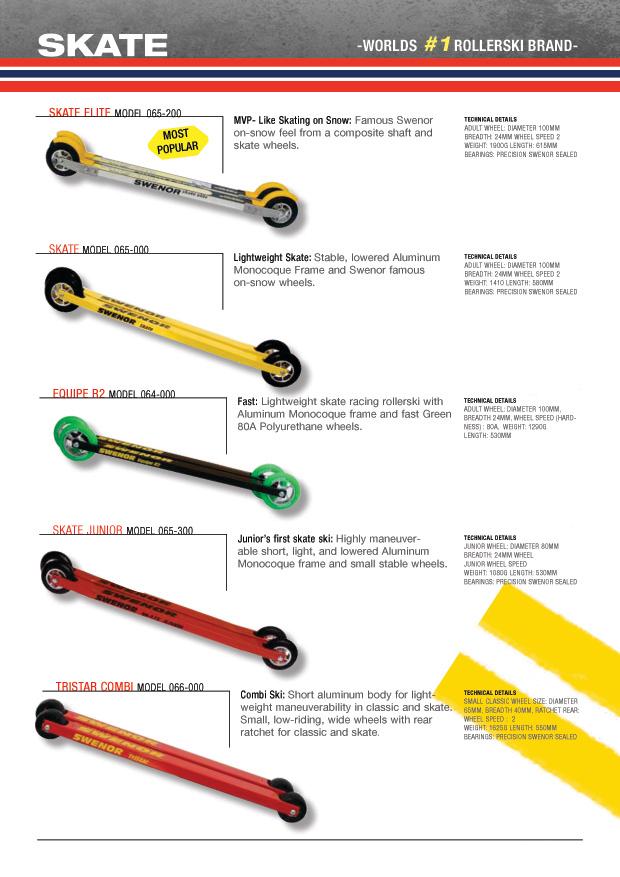
Sweet Swenors
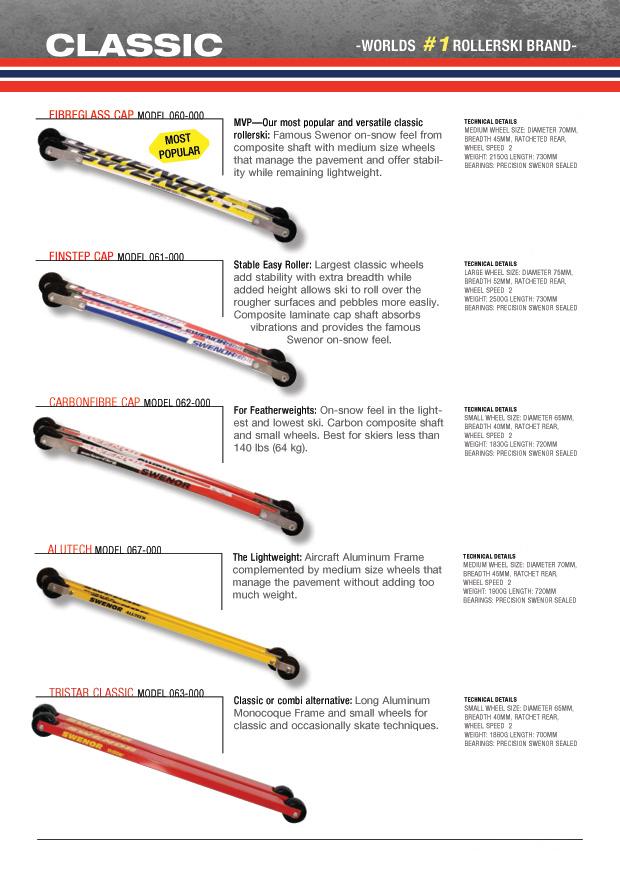
Finally got on my new Swenors today. Love them! I was able to get out on a less-traveled chip-n-seal road and the Swenors really dampened the "chatter" from the chip-n-seal!
Emaily Lovett
PSIA Nordic Demo Team
|
|
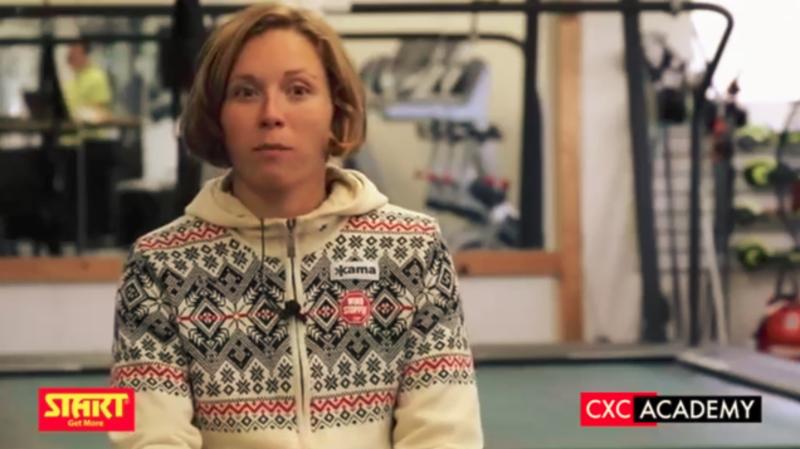
Eliska Albrigtsen gives advice about how to beat pre-race anxiety.
|
Brought to you by CXC Academy with
Start
CXC Academy offers 5-day free trial at cxcacademy.com/signup.php
|
|
Peroneal Tendinitis
Love your weekly newsletter. Very informative and wonderful to get some XC ski specific info, which often times seem very challenging to find.
Question for you or your team - do you have any tips for how to best overcome XC-ski related tendinitis? Specifically peroneal tendinitis which I know is common in skate skiing due to the high degree of lateral movement and the balance needs placed upon that tendon. I have high arches so I naturally load up that tendon to begin with. The repetition of XC skiing often exasperates this for me though. I have used custom orthotics and also taping to help off-load the tendon and that has helped some, but these soft tissue injuries are quite pesky and seem to stick around for a long, long while. In my experience and from talking with doctors/therapists, the real only proven way to heal tendinitis is through rest and building back up/taking things slow but just curious if you or your expert contacts have any other suggestions, perhaps even some specific to the peroneal tendon? Perhaps there may even be some technique pointers as well to help decrease the stress specific to that tendon.
Thank you for all that you guys do! Great work!
Signed Ouch,
Here is a suggestion for Ouch!
Dear Ouch,
Here is some advise for what it is worth from a Pedorthist at a major health center that makes orthotics for a living and a fellow skier.
If you indeed have a classic type high arched foot, often it need some help with eversion which is the purpose of the peroneal tendon. Check with the orthotic practitioner and make sure it is posted (angular corrections) optimally for skiing. Check the forefoot position. Often the great toe joint may be lower than the others and cause the foot to invert too much, especially if it is rigid or stiff. Making the orthotic thicker on the lateral edge of the forefoot can correct this and reduce the work for the peroneal tendon. Along with this check that the rear foot of the orthotic has some posting to help with eversion.
So this is some speculation, but done right, an orthotic should make a significant improvement so you can enjoy this sport without "Ouch".
Jeff Radke C. Ped.
Peroneal tendinitis certainly can be a challenge for skate skiers. I would definitely recommend a diagnostic ultrasound and/or MRI prior to wasting too much time in pre-season. Winter is coming! During the skating motion, the tendons sometimes will sublux over the lateral malleolus - the big bone on the side of the ankle. This could be missed on MRI ( in a static position), but with a dynamic ultrasound assessment it is often obvious. Also, tears in these tendons and other problems like arthritis are fairly common. You may need to see a foot/ankle specialist if you have any of the above problems.
That said, for conservative treatment I would recommend using some wedges underneath the ski binding and/or inside your boot under the orthotic to help offload the tendons. These should be thicker on the outside/lateral part of the foot, to push the foot more into pronation. If it is more of ankle impingement/arthritic condition in my feel better to do the opposite -wedge the foot into more supination to open up the outside part of the ankle.
Also - take a very good close look at your technique. If you are in fact, riding a flat ski with good body position, you shouldn't have to use a lot of ankle muscle activity for balance. Play close attention to your core and hip stabilizers in training. Hope this helps!
Michael Schaefer, MD
Physical medicine and Rehabilitation and Sports Medicine
Cleveland Clinic
|
|
Kent Eriksen Cycles Bike Drawing
The
Central Cross Country Skiing (CXC) partners with ski clubs around Midwest to provide coaching, training and competition opportunities for junior athletes with physical disabilities and visual impairments.
"With their new equipment from CXC, George and Joe stepped up their 2017 racing schedule. In addition to racing with their high school team, they made it to two of the Junior National Team Qualifier ski races and had hoped to ski the Korte. This year - a full high school race schedule, all qualifier races and the Korte! Thanks to CXC for the equipment, training help and thanks to our wonderful guides!"
- Kelli Tuttle, mother of two visual impaired junior racers
As of today we have acquired 30% (78 tickets) of our total goal of 250 tickets by October 24th.
Fundraising ticket sales contribute to the support of grassroots activities and help support year-long programming!
WHAT DO I WIN?
#1st Place
The winner will receive a custom designed, hand crafted,
Kent Eriksen Cycles © titanium road, cyclocross or hardtail mountain bike framebuilt with a Bontrager Paradigm Elite wheel-set (or similar equivalent) and SRAM Force speed component group (or similar equivalent). Total MSRP of the bike and components is $8,500.00*
|
|
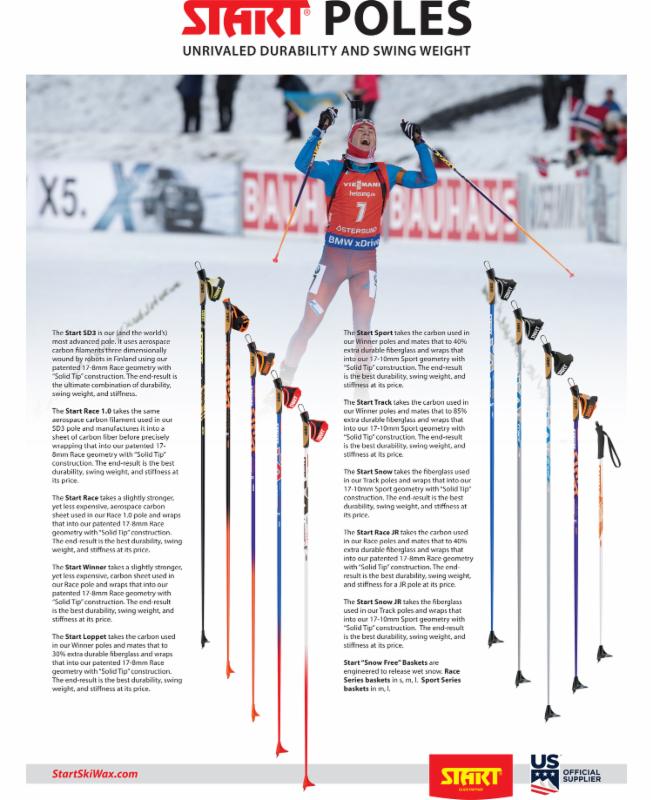
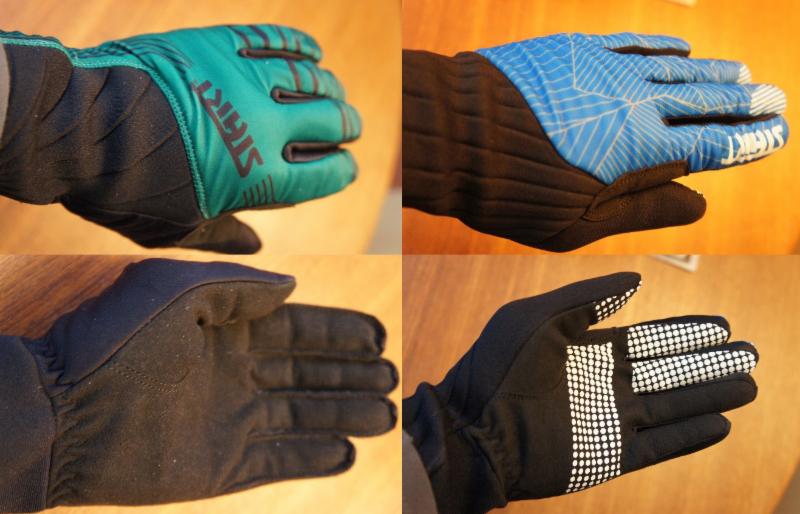
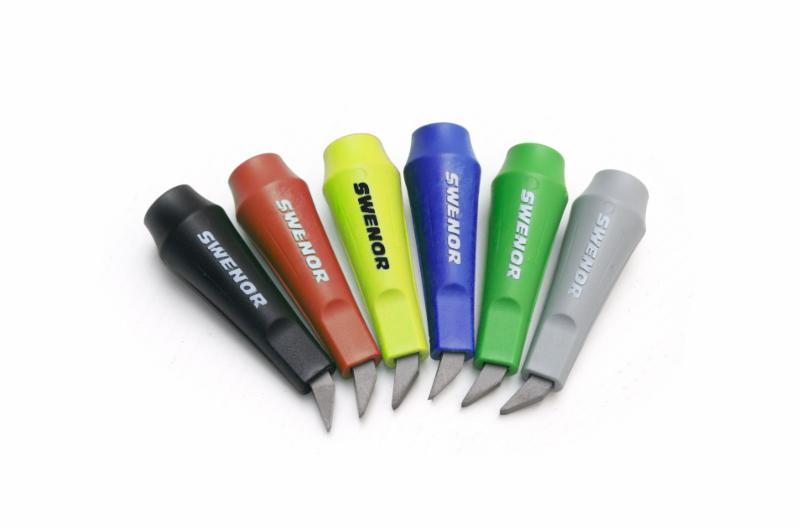
Start Poles
Tired of breaking your ski poles?
Get Start Poles, "Solid Tip" construction delivers unrivaled durability.
|
|
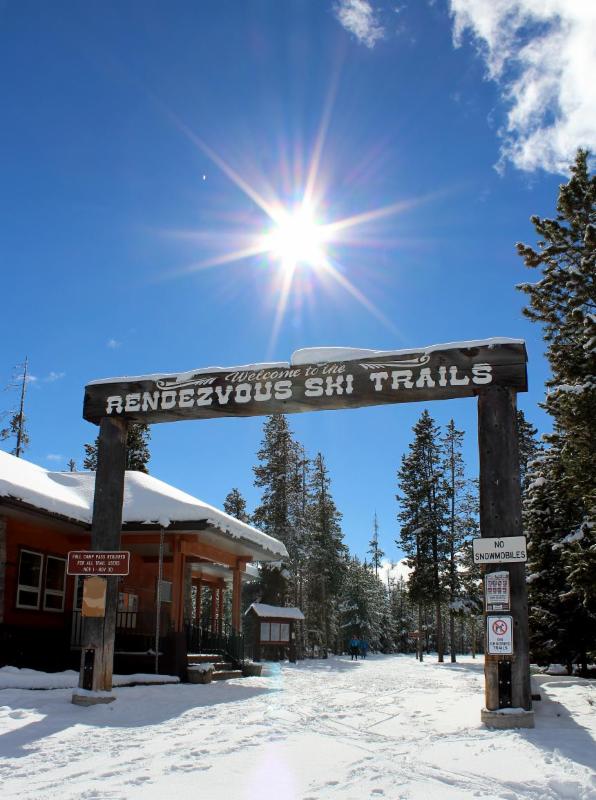
West Yellowstone Ski Festival
Registration Open
West Yellowstone Fall Training Camp - Ski with a Pro
Registration Now Open for Yellowstone Ski Festival Clinics
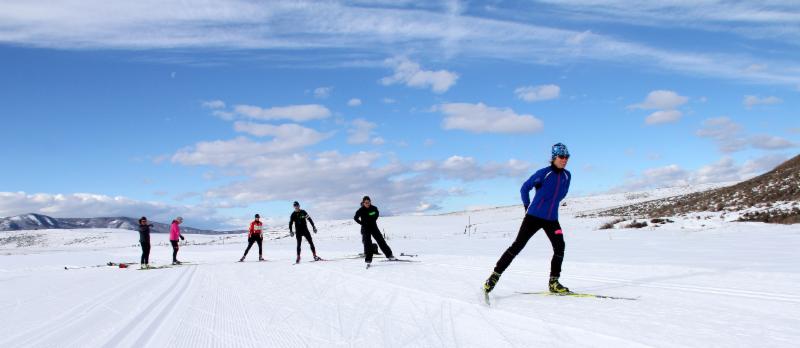
Come and join our professional coaching staff to get a "jump start" on your 2017 - 2018 ski season during the Yellowstone Ski Festival. The staff provides a solid understanding of technique, and gives you tools and drills to gain efficiency and strength at the camp and throughout your ski season. The coaching staff is composed of an elite group of XC ski professionals which includes retired world class skiers, coaches and professional instructors. Coaches will rotate through groups every ½ day session so you will get exposure to different coaches throughout your clinic. The coaches think snow and skiing just about year round, and are ready to give you just the tips and techniques you need to launch your season with the best focus for you.
This is no stand-around-and-learn kind of deal either. The coaches know that the best way ingrain effective movement is through practice. Plan on logging some k's. You'll also get feedback, in the dose that's right for you. While some just need a new focus and mileage, others benefit from a more consistent stream of information about whether and how much they're performing the task to the desired degree. The coaches know how to pace the flow of information, and offer up a great balance of new information, drills, and practice.
Not only will you get great instruction and a fitness bump for skiing 1, 2, 3 or 5 days, but you'll be immersed in a touchstone event for the cross country ski culture, with on snow demos, an indoor expo and lectures in the evening. Event organizers bring in a keynote lecture to entertain and inspire. There's even sessions called Women, Wine and Wax or Whiskers, Whiskey and Wax.
Some of the special offerings include:
- 5 and 3-Day Skate & Classic Technique for Performance (all levels)
- 3-Day Skate & Classic Camp for Master Racers
- 2-Day Skate & Classic Tune-up
- 2 and 1-Day Improve Your Skate Technique
- 1-Day Improve Your Classic Technique
- 1-Day Classic Touring (new to Nordic skiing)
- 1-Day Learn to Skate Ski
- 1-day USSA Level 100 Coaching Certification Technique Clinic
Enjoy your First Tracks in West Yellowstone. Whether First Tracks truly means the corduroy and you, or it is the first time on skis this season, or the first time on skis period; you are invited to take them at the Yellowstone Ski Festival. Think Snow and make plans now to attend the 2017 Yellowstone Ski Festival. For more information, visit
http://www.skirunbikemt.com/yellowstone-ski-festival and follow westyellxcski on Twitter, or friend Yellowstone Ski Fest on Facebook for up-to-minute news.
|
|
PSIA National XC Academy in West Yellowstone!
It's time to plan for and register for PSIA National XC Academy in West Yellowstone!
You're invited to attend PSIA's Cross Country National Academy at West Yellowstone, MT, November 26, 27, 28, 2017.
PSIA XC Academy 2017 features three days of formal indoor and on-snow training sharing the best of ideas, topics and technique to get you geared-up for the season. The event is open for PSIA members and non members. Join for one, two or three days.
You can read more about the event here:
PSIA Nordic Team members David Lawrence, Greg Rhodes and Emily Lovett will lead you in classic and skate ski technique improvement, teaching drills, progressions and the latest news and projects the National Nordic team is working on.
On behalf of the entire PSIA Nordic Team, we hope to see you there!
|
|
Steamboat Nordic Camp
Be there!
Steamboat Nordic Camp organizers announced the dates for its annual XC Ski Camp. The event will be held December 9-10, 2017 and is hosted by Lake Catamount Touring Center, Steamboat Ski Touring Center and Ski Haus.
In its 14th year of operation the camp caters to XC Ski enthusiast of all levels. New skiers learning technique to seasoned skiers looking to get a jump on training for the season all benefit from this well organized, enthusiastic camp. The camp includes the following:
- Top Level Coaching Staff
- One and Two Day Options
- All Ability Levels
- Excellent Student to Coach Ratio
- Video Analysis
- New Equipment Available to Demo
- Wax Clinic
- Lunches, Happy Hour, Prize Drawing Included
For anyone interested in attending the Steamboat Nordic Camp, you can find more information and register at
thenordiclink.com
|
|
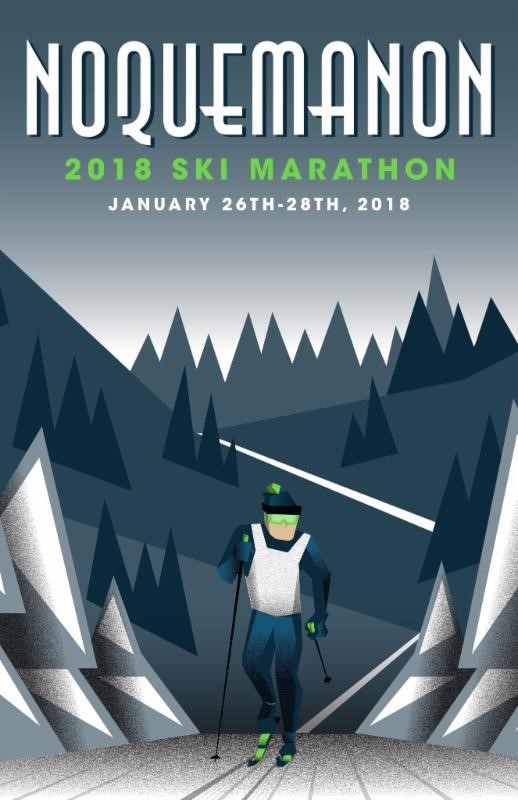
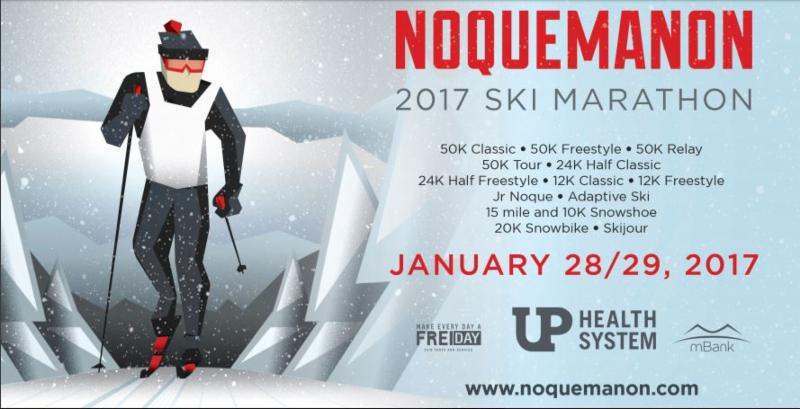
Noquemanon
20th Anniversary Year!
Join us for this special edition of the Noquemanon January 26th-28th
|
PRICE INCREASE THIS FRIDAY!
REGISTER TODAY & SAVE!
Sleep better & get Birkie Entry
Register before Friday's price increase & save!
Fall is definitely in the Air! Time to register for...
Birkie! Korte! Prince Haakon!
WAVES ARE FILLING FAST!

Buy a Slumberland Tempu-Pedic = Get a Birkie Entry
more info
|
|
Birkie Tour
Register Today! Price increases on Friday, 10/6
Why should you ski the Birkie Tour?
-Experience the Birkie Trail before February races!
-Untimed, no-pressure, supported day on the trail!
-Aid stations, cool swag, après ski
party in the heated Great Hall!
-It's all about the fun of skiing!
-Guaranteed training time!
-If you love to ski, this is the perfect event for you!
And...if it isn't on your calendar...you won't do it!
|
|
GET A JOB
Nordic Job Openings
|
|
Summit Nordic Ski Club (SNSC) is hiring!
SNSC is one of Colorado's fastest growing youth ski programs and serves Summit County, Colorado (Breckenridge, Frisco, Silverthorne, Keystone and Dillon). SNSC has a top-notch coaching staff and is looking to recruit one more. We have five winter programs and are looking for an assistant coach to primarily help with our Devo Program (ages 11-13). Olof Hedberg is the Head Coach for SNSC and is responsible for training plan design and overseeing the entire program and coaching staff. This position would report directly to the Head Coach. Assistant coaches are on the front line working with athletes to help them achieve their individual goals from Olympic hopefuls to kids who enjoy being outside and want to improve their Nordic technique.
SNSC is a relatively small organization which makes it feel more like a family. Our athletes and families are a fantastic group of people. We hope to find an excellent coach to join our community and help our club continue to grow.
The Assistant Coach position is currently seasonal (October - March) and part time, but has the potential for full time work over the winter. There is also potential to extend the job into our summer programs. Our Devo program meets 4 days per week and has four main race weekends (travel Thursday/Friday and return Sunday) over the winter.
Our ideal candidate will have a love for Nordic skiing, experience working with kids and a generally positive and energetic attitude. Strong knowledge of Nordic technique and training principles are also important.
In addition we would like someone who:
-
Has a background in high-level Nordic racing
-
USSA Level 100 Coach
-
Is a proficient roller skier (able to ski with athletes over varied terrain and long distances)
-
Has waxing experience
-
Ability to safely drive a 15 passenger van in snowy conditions
|
|
Bend Endurance Academy
Executive Director
The Bend Endurance Academy (BEA) is a public benefit 501(c)3 that organizes and operates endurance activity programs in Central Oregon, concentrating in three core disciplines: Nordic Skiing, Cycling & Climbing. The mission of BEA is to "promote healthy living through active, outdoor experiences. We emphasize teamwork, personal growth, and community responsibility." BEA envisions a world with active, inspired, and more engaged people. Since its founding in 2009, BEA has grown from humble beginnings to serving more than 1000 kids in 2017.
Where You Get To Live!
Bend, Oregon is the mountain town that has it all! Located in the in the shadows of the Cascade Mountains and surrounded by numerous lakes and rivers, Central Oregon is an outdoor enthusiast's paradise. Check out the sights and sounds of Bend at:
https://vimeo.com/200038114
What You Get To Do!
Reporting to the Board of the Directors the Executive Director (ED) has full responsibility for the daily operations of BEA corporate office and programs in accordance with BEA strategic plan, operating/business plans, Board policies, and annual budgets as approved by the Board. The operational and development activities of BEA include fundraising events, strategic planning, facility and vehicle maintenance, communications and marketing, staff training and compliance, personnel management, risk assessment and management, transportation and safety, program offerings, and financial management.
The Executive Director provides executive leadership to BEA to advance its mission and vision in part through strategic priorities adopted by the Board. The current priorities include the following:
Strategic Priority #1: Programs
o Manage growth of current programs to retain our strong commitment to quality programs for young participants at all levels of their athletic development and to build a strong platform for meeting growing demand in the future.
Strategic Priority #2: Culture
o Build a professional, collaborative, problem-solving team culture at all levels of the organization that honors the fun and joy of what we do.
Strategic Priority #3: Staff
o Retain and recruit the best staff to lead, develop and support programs
Strategic Priority #4: Revenue
o Grow and ensure diversified and sustainable revenues.
Strategic Priority #5: Communications
o Promote BEA's vision for a "world with active, inspired and more engaged people" by communicating consistent messages about our mission (what we do) and our philosophy (why we do it) to key audiences.
|
|
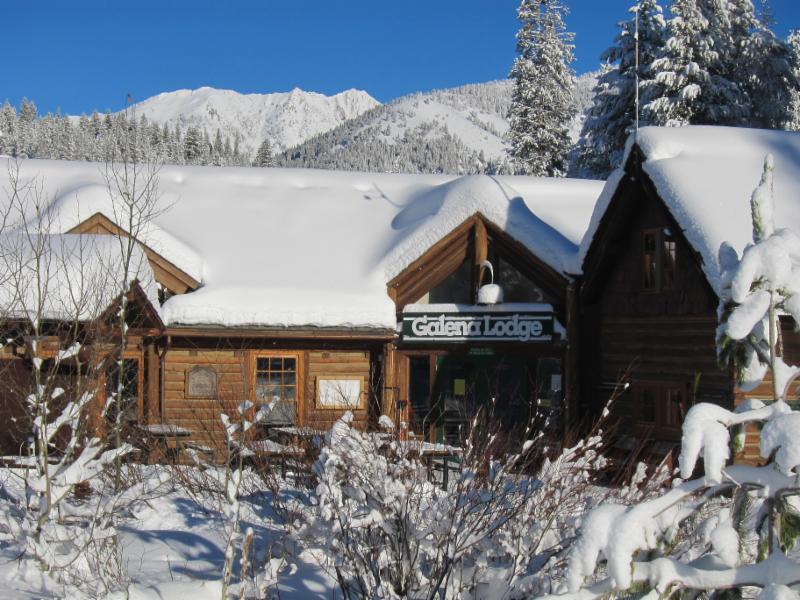
Gelena Lodge
Galena Lodge Nordic Ski Instructors Job Description Galena Lodge, 23 miles north of Ketchum (Sun Valley, Nordic Town USA), Idaho is looking for 2 full time Nordic Ski Instructors for the upcoming winter season. Season runs November 13th, 2017-April 11th, 2018. Duties
include skate and classic ski instruction, ski rentals, ski tuning, snowshoe rentals, snowshoe tours, yurt servicing, snow removal, packing snowshoe trails, retail sales and more. Room and board are provided for full time employment. Galena Lodge is a community owned day lodge located at the northern end of a 200km trail system. We have 50km of Nordic trails at the lodge. We are a small family up here that likes to work and play hard. Please only apply if you LOVE winter and are committed to this awesome lifestyle! Contact Erin at
erin@galenalodge.com for more information or to apply.
|
|
Clarkston University
Clarkson University in Northern New York is seeking a graduate assistant for cross country & Nordic (Div III). The position includes a 10k stipend plus tuition. Earn a free Masters Degree! Bachelors degree and competing in Nordic are required. Send cover letter and resume to Head Coach Jim Allott at
jallott@clarkson.edu
|
About SkiPost
Cross-Country skiing's community lodge. Where knowledge and stories are shared. The goal of SkiPost is to make the sport of Cross-Country skiing easier and more enjoyable for all who choose to participate. If you have questions on Cross-Country Skiing email us weanswer@SkiPost.com and visit SkiPost.com
Enjoy Winter,
Andrew Gerlach
Director/Editor- SkiPost
|
|
|
|
|
|
|