|
Friends:
Nettie Fowler sang "June is busting out all over" in 'Carousel' and Sinatra claimed he'd be "back on top in June'" in 'That's Life', so I expected that June would be a wonderful, fun-filled month, the time to break out the sun-screen and beach blanket and head to the pool with my favorite Lee Child, Jacqueline Susann, or Elin Hilderbrand paperback. I was ready to clear my mind and embrace escape.
'Twas not to be the case, as my reading in June went in a completely different direction. Some complex psychological "reaction formation" to the lovely weather, the longest day on the summer solstice, etc. must have led me instead to spend the month reading serious and unsettling books, poems, and plays, resulting in a massive infusion of anxiety. It was a 'Sleepless in Cambridge' scenario, as the books this month reflected the tragedy and sorrow of our world from the challenges and heartbreaks of disability to the crush of poverty, from the burdens of living under occupation and racism to the unthinkable aftermath of nuclear war, from the decline of my beloved profession of medicine to the vulnerability of children.
Through fiction, drama, poetry, and non-fiction, I was repeatedly reminded of the power and capacity of the written word to expand one's world, to enable one to walk in the shoes of another, and to grapple with important existential issues: questions of meaning, justice, kindness, and tragedy. It was heavy reading but well worth it.
Here are the books I read in June:
- God's Hotel: A Doctor, A Hospital, and a Pilgrimage to the Heart of Medicine Victoria Sweet
- The Hunter, Tana French
- Globetrotting: Writers Walk the World, ed. Gilbert Minshull
- The Novel: Who Needs It?, Joseph Epstein
- The Great Gatsby, F. Scott Fitzgerald
- Cost of Living, Martyna Majok
- Back Story, Robert B. Parker
- Normal Rules Don't Apply: Stories, Kate Atkinson
- Notes of a Native Son, James Baldwin
- So to Speak: Poems, Terrance Hayes
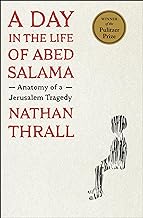
- A Day in the Life of Abed Salama: Anatomy of a Jerusalem Tragedy, Nathan Thrall
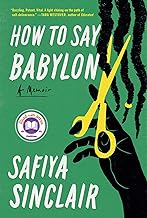
- How to Say Babylon, Safiya Sinclair
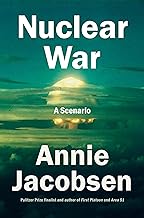
- Nuclear War: A Scenario, Annie Jacobsen
This month's lit crit book was authored by Joseph Epstein who, though not a kin, does bear some resemblance to me. Born in Chicago, Jewish, short of stature but large of ego, he's written more than 35 books while teaching at Northwestern for nearly 40 years. In 'The Novel: Who Needs It?', he makes the case that reading is important to expand our lived experience, to better understand human existence and what makes others tick. While, his book focused on fiction, the same observations can be made for each of the books I read this month, encounters which left me anxious but better informed and sensitive to the lives of others. The other Epstein, like this one is opinionated and arbitrary, but often entertaining and worth reading.
James Baldwin's 'Notes of a Native Son' comprises 11 essays writen in the 1940's and '50's. His anger and resentment about the Black experience in America comes through powerfully in these sharply focused works. Sadly, despite the progress of the last 75 years, the racism and prejudice that bedevilled and endangered Baldwin remains a terrible burden for America's people of color. This is reflected in poems in the award-winning 'So to Speak' by Lawrence Hayes, a professor at NYU and a creative and deeply feeling poet.
Martyna Majok's Pulitzer Prize-winning play 'The Cost of Living' takes a hard look at the reality of living with a serious physical disability. I read the play after noting that she had written the book for 'Gatsby', this summer's hit production at the American Repertory Theater. Refusing to be sentimental or maudlin about her two characters bound to their wheelchairs, Majok brings them to life pairing each of them into two couples---a Columbia PhD student with cerebral palsy who hires a Black Princeton graduate reduced to finding work as a bartender and health aide and a woman confined to a wheelchair following a severe accident who struggles with her estranged husband who has lost his job as a truckdriver after a DUI but who is now sober and dedicated to her care. The play was powerful to read, and it must be nearly overwhelming to see on the stage.
Another Pulitzer Prize winner, this one for general non-fiction in 2024, is Nathan Thrall's 'A Day in the Life of Abed Salama'. Salama, a 40-something Palestinian living in an Arab village outside the walls of Jerusalem, has been imprisoned as a trouble-maker in the past, but has established a somewhat livable existence despite checkpoints, blue cards, harassment, and degradation at the hands of the Israeli police and IDF. All of that changes in an instant when his five year old son is on a school bus that bursts into flames after being hit by a truck. Thrall makes this parent's nightmare into a universal experience while examining in detail how the Occupation made the unthinkable even worse. I was so uncomfortable reading this book that I set it aside for two weeks before returning to finish.
'How to Say Babylon' by Safiya Sinclair is a memoir of growing up in a Rasta household in Jamaica in the late 1990's. This is another challenging book that had me avoiding it for days because it was so painful to read. There is the Rasta experience, the Jamaican colonial experience, the racism in America and in Jamaica experience, but overarching all of these challenges is Sinclair's nightmarish home life with a father who demeaned her, beat her, struck her, and ultimately threatened to kill her with a machete. Her escape into writing poetry and reading the classics enabled her to survive. Her story is both sad and inspiring. Now a professor at Arizona State University, Sinclair's poetry has been widely praised, awarded a Whiting Writer's Award, and was long-listed for the Dylan Thomas Prize.
Before turning to the next anxiety-provoking tome, I'll comment briefly on the books that distracted me and enabled me to keep reading this month. Robert B. Parker, whose books fill a shelf in our Vermont guest house, is the perfect antidote to real world anxiety. His flippant attitude while maintaining a code of honor meshes with the clever repartee with his friend Hawk and his girlfriend Susan Silverman. The plot in 'Back Story' was as thin and silly as most of the others, and I loved it. Tana French writes much more seriously about murder and mayhem in rural Ireland in 'The Hunter', but it was still a welcome diversion. I've read all her books and they're well worth the time. Finally, Kate Atkinson, whose 2013 novel 'Life After Life' I loved, came up short for me in 'Normal Rules Don't Apply', a book of eleven short stories. A bit too sci-fi for me, but maybe good for you.
And that brings me to 'The Great Gatsby' often referred to as the Great American Novel. With a dramatic adaptation currently on the Broadway stage, a musical filling seats in Cambridge, and a recent one man show using lines from the book at the Upper Valley's Northern Stage, it well deserves that label one hundred years after it was published. I've read the book at least twice before, but this time was different. Perhaps that's because I read it slowly and took notes thouroughly appreciating the elegant writing. Or perhaps I just brought something new to this story of the rise and fall of the drifter, Jimmy Gatz from North Dakota and his transformation into Jay Gatsby, the milliionaire party thrower of West Egg, Long Island. It's a great book. Read it if you can. I keep the final sentence on my desk for daily reading: "So we go on, boats beating against the current, carried ceaselessly back into the past." Hard to top that line.
And now, drum roll, the book about what could someday become the final chapter in the 12,000 year history of modern man. Reading 'Nuclear War: A Scenario' by Annie Jacobsen, an incredibly diligent interviewer, file scourer, and imaginist, may well ruin your day and beyond, so be warned. Jacobsen takes us to a fall morning where an ICBM bearing enough nuclear bombs to level any city in the U.S. lifts off from a remote roadside launcher in North Korea and begins its 24 minute flight to America's East Coast. Second by second and minute by minute, she narrates the events in Washington, Red Rock, Colorado, and other sites around the world as NORAD and a bushelful of acronyms for specialized groups in DOD, the U.S. military, and POTUS struggle to comprehend the unthinkable---a Bolt out of the Blue nuclear attack on the U.S. The President with his advisors has only 6 minutes after the N. Korean launch to decide whether to launch a retaliatory strike. The scenario unfolds as further N. Korean missles are launched, as America launches its nuclear triad of ICBM's, submarine based Triton missles, and B52's armed with nuclear weapons, and as Russia and NATO are sucked into this chaotic maelstrom. There is no Jason Bourne or James Bond to save the world; WWIII takes only 72 hours until it's over. The final chapter is set 24,000 years in the future describing a slowly recovering planet earth where there is no evidence of Homo sapiens, a species condemed to the fate of the dinosaurs by their own hand. Tough read, but the threat of nuclear holocaust is the world we live in.
To end on a happier note, Victoria Sweet's stories in 'God's Hotel' about the last almshouse hospital in San Francisco renewed my faith in medicine as a wonderful profession, and Gilbert Minshulll's collection of writers' words about their walks in 'Globetrotting' provided consolation after the grim worlds described in the other books. Walking remains the activity that feeds me, providing quiet time for thinking while enabling my body to stay in somewhat better shape. Tune in next month for a bevy of books about walking.
Until then, I hope you enjoy the Poetry Tree on the Charles which this month features poets who lived in Cambridge in the late 1950's and were members of a writing group which included Maxine Kumin, Robert Lowell, Anne Sexton, and Sylvia Plath. Tragically, the latter two committed suicide, and Lowell had multiple stays at McLean Hospital for his bipolar disorder. Kumin, on the other hand, lived what appeared to be a happy and healthy life and marriage after moving to her New Hampshire farm. Here are some of my favorite poems by these folks.
- Welcome Morning, Anne Sexton
- Skunk Hour, Robert Lowell
- Blackberrying, Sylvia Plath
- Running Away Together, Maxine Kumin
Finally, in closing, a number of this month's works explored the question of how one's life might take on meaning given mortality and the disparity in scale between one life and the universe. Gatsby dreamed of the green light, the 'orgastic future' that he, a poor boy from North Dakota, desparately sought. Willy Loman, in 'Death of a Salesman' one of my favorite plays, is the object of his wife's statement that "attention must be paid." Paul Celine wrote 'Either you make a mark on the world, or the world will make a mark on you." In some tiny way perhaps BookMarks makes that mark.
Good reading and thoughful introspection!
|