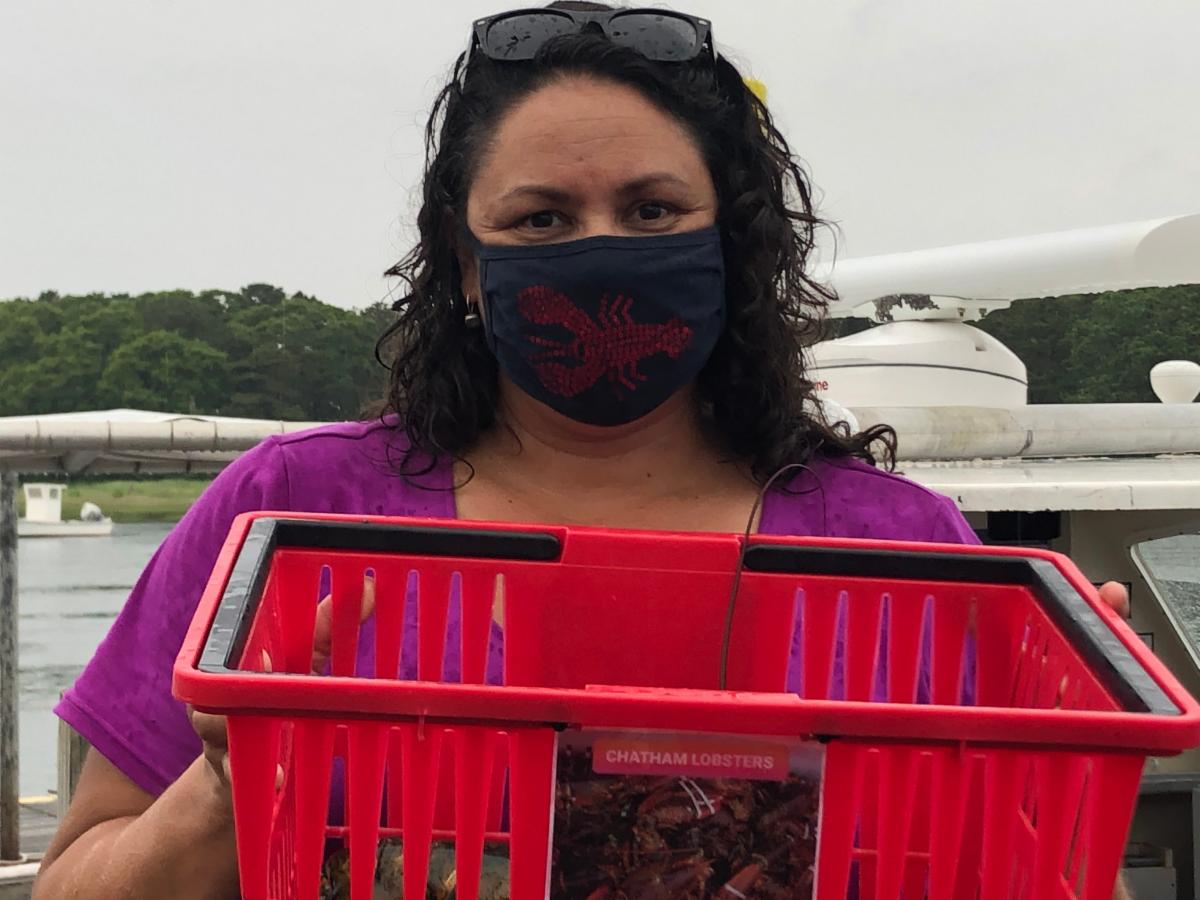
Not long ago, Faye Anderson was sitting in the office of the Fishermen’s Alliance chatting about her new lobster business with her dad, longtime fisherman Mike Anderson, while people across the Cape watched from home.
Faye, who owns Chatham Lobsters with her fiance Captain Brock Bobisink, was describing how many of the lobsters that get caught in traps are set free alive, too small for example, or laden with eggs. Faye likes that about the fishery.
Her dad looked at her and grinned, adding another scenario:
“Once in a while they eat each other.”
“That is kind of what they do in their regular life,” she retorted.
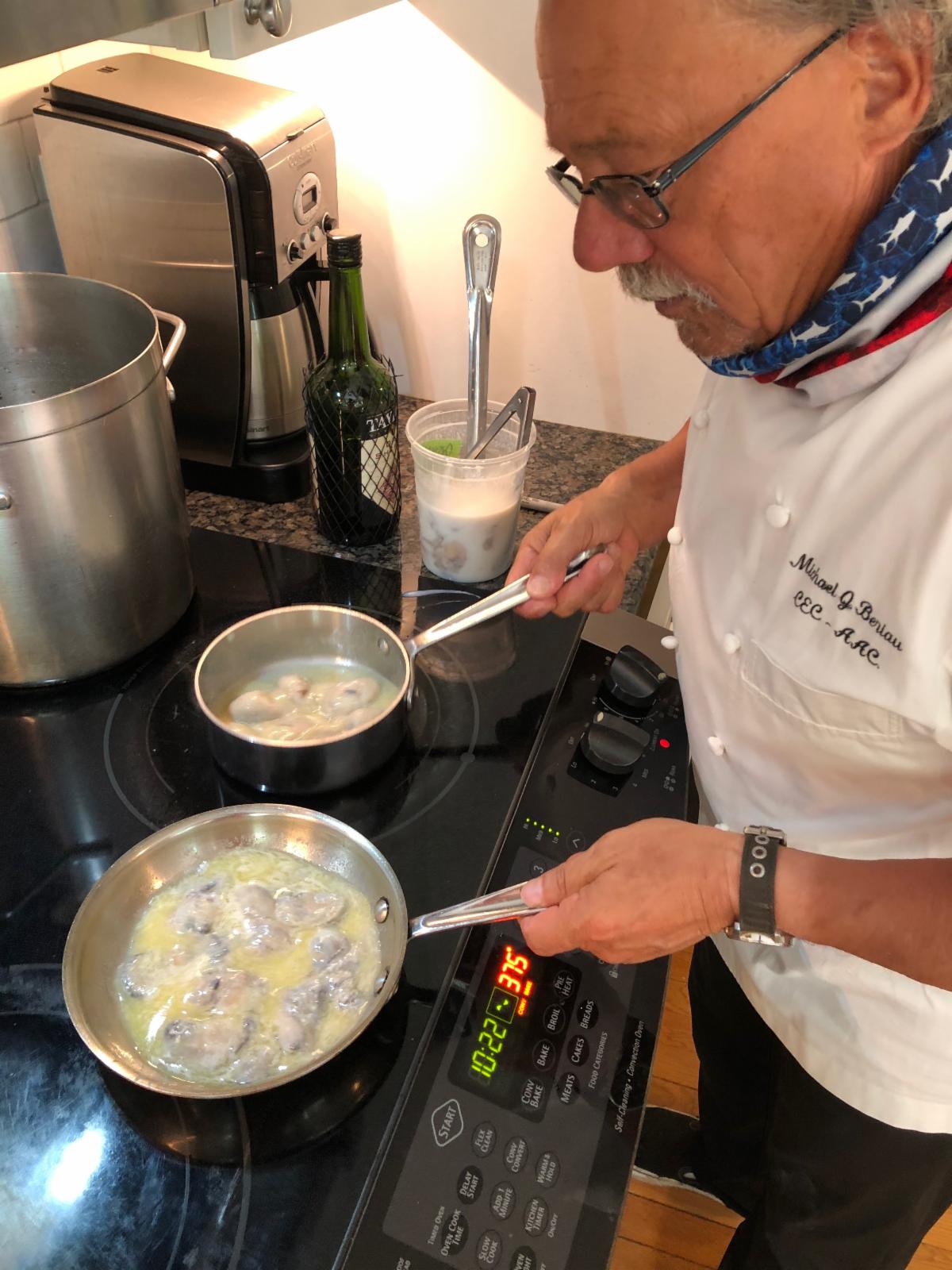
Chef Michael Beriau, a two-time winner in the culinary Olympics, is no stranger to good food. So he was thrilled when he had the opportunity to create four recipes that would showcase the potential locked in a shucked, frozen oyster from the Cape.
He prepared several dishes, including cumin-fried oysters with an enchilada vinaigrette-topped black bean, roasted corn, and rice tortilla bowl and butter-poached oyster tartlets with anisette and hollandaise glaze. Then he invited some foodie friends.
“People love oysters,” he said. “The folks that came over my house to taste oysters couldn’t wait to get there.”
He served known-to-be-tasty Maryland oysters and the untried ones from local waters. The Chesapeake Bay denizens did not disappoint, but the Cape oysters came out on top; time after time, in blind tastings, “the Cape oyster was hands down the winner, it had the most pronounced flavor profile,” Beriau said.
Every New Year’s Eve, Bill Amaru makes clam chowder for about 200 people at Chatham’s Masonic Lodge for First Night. He takes it very seriously, adds just the right spices – and a lot of butter.
But this year, on account of COVID-19, he won’t be making that chowder. He will, however, be part of a far more ambitious chowder undertaking, also born out of the pandemic.
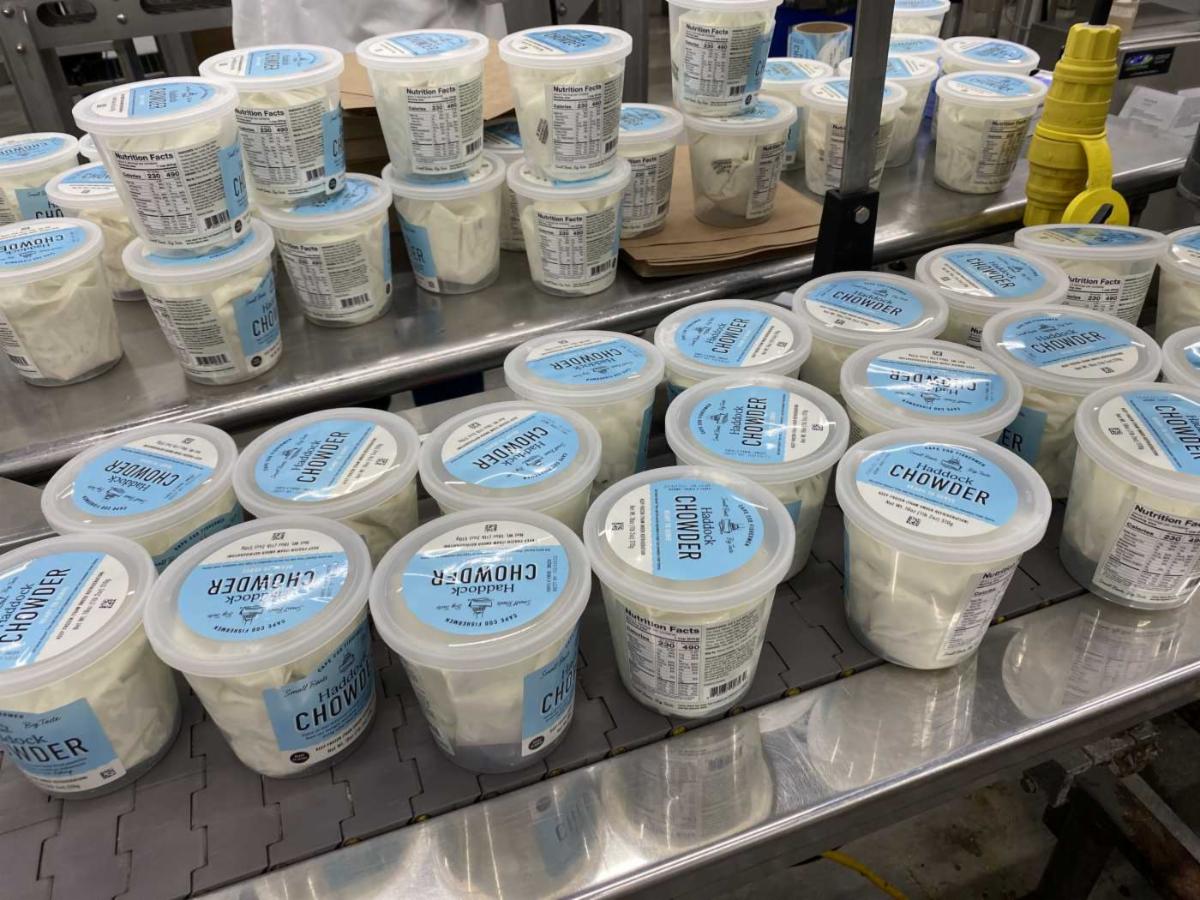
Last week, close to 20,000 18-ounce containers began rolling out to food banks across the state, a big goal accompanying those small containers: Feed America’s hungry and keep local fishermen at sea.
“If in the first year we can deliver 100,000 pounds of chowder to food banks while guaranteeing fishermen a fair price and steady buyer that would be an amazing win-win,” said Seth Rolbein, director of the Fishermen Alliance’s Cape Cod Fisheries Trust.
There was a time when Chatham fishermen got three cents a pound for cod and since there was no fish pier they unloaded right on the beach. And when the price was too low they sold them salted.
Hearing stories from that time, from those who experienced it first-hand, is a rare thing. But with oral histories collected by the Chatham Historical Society and more recently by the Fishermen’s Alliance, it’s possible to return to fishing in Chatham generations ago.
“Oral histories capture the tone and language of the times, providing an important view into the past. The spontaneous dialog of those being interviewed wanders in and out like the tide, as our locals talk about what was important at the time,” said Danielle Jeanloz, executive director of the Atwood House, home of the Chatham Historical Society. “By hearing the voices, you are transported back in time.”
If it takes a village to raise a child, it also took a village to create a haddock chowder that will help keep local fishermen on the water and support food banks and pantries feeding friends and neighbors.
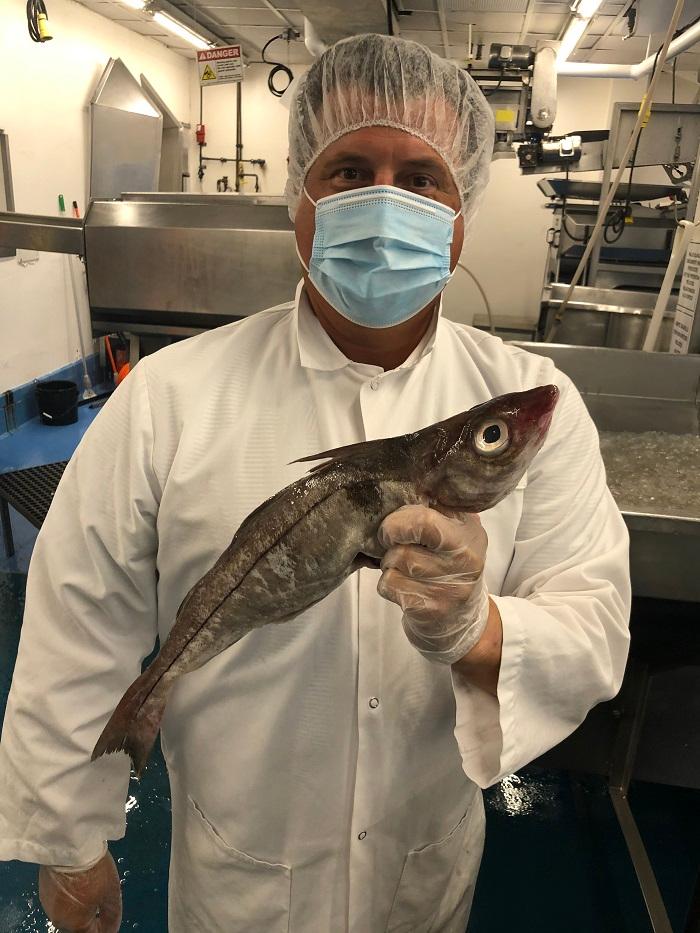
In these photos you meet some of those villagers, and see some of the steps taken to create our first big batch. With philanthropic support from Catch Together, the journey went from Great Eastern Seafood in Boston for processing to the Plenus Group in Lowell for chowder making, both companies family owned and operated. And then on to those on the front lines at food pantries across the state. Of course fishermen are at the heart of the chowder; we will share more of their stories and visit with them in the coming months.
Every year around Hookers Ball time we create a video to share with people under the tent, part recap, part celebration, always providing glimpses of some of the great fishermen and personalities we work with.
This year the ball had to become virtual, but that didn’t stop us from celebrating, or creating our annual video. So I wanted to share with you the thoughts I expressed in this year’s version, this most unusual time around:
These are uncertain times, no doubt. The impact of COVID has been described as unprecedented, the virus novel, the drumbeat of bad news relentless.
But there has been one constant, one certainty, and it gives me pride and hope: The resiliency of the fishing fleet and the communities who support and rely on that fleet.
Cape fishermen are used to rolling seas, stormy weather, and unpredictability, so when much of the world stopped they kept working -- and so did we.
In the early days of the pandemic, with markets closing, prices plummeting, fishermen still got up before dawn and took to the sea to catch fish and feed a nation. Fish buyers still sent tractor trailers over the bridges to pick up thousands upon thousands of pounds even as the beef and chicken supply faltered. If there was little money to be made, fishermen swallowed the loss to keep people working and joined together to provide meals for neighbors in need.
They boldly took chances on new initiatives. Many lobbied the state for more streamlined permitting to allow direct sales from the dock. Selling from the deck of a boat will never take the place of traditional markets, but it tapped into a yearning on the part of consumers to eat the freshest fish possible, and to connect with those who make their livings on the ocean. It was a welcome reminder of an historic time when all eyes turned to the sea, when the relationship between the food we eat, and those who catch it, was closer.
Those who bought cod, flounder, monkfish, scallop, lobsters and more at piers, farmers markets and church parking lots have realized the amazing difference between truly fresh fish and imported subpar product.
While fishermen navigated at sea and through the marketplace, they also stayed connected to regulators and elected representatives, sometimes on Zoom calls right from the dock as they advocated for themselves and the commercial industry as a whole.
Good news emerging from the bad was not a surprise to me. After all, this organization was formed by a group of fishermen who came together close to 30 years ago to make sure they not only survived, but thrived. Their tenacity, ingenuity, experience, intelligence and sometimes sheer cussedness meant they could continue to deliver the best seafood to ports across the Cape and beyond.
This time they have more resources. They have the organization they built, and they have you, a network of supporters rooted on the peninsula but extending far beyond.
The community’s support has been tremendous and we are deeply grateful. Donations are coming at extraordinary levels as many give what they can. We will continue to rely on our supporters as we navigate these uncharted waters and make sure the Cape’s fishing industry steams into a brighter future, capitalizing on theinnovative and important ideas this unique crisis has fostered.
I take great comfort in the progress we have made in truly tough times. I take comfort in the community we have built that becomes stronger as we nourish our personal relationships and realize how lucky we are to have a direct connection to the sea, and to each other.
With your continued support, we’ll weather this storm together.
Thank you to everyone who participated in this year’s virtual event. With more than 375 people participating, we raised $125,000. Do you have a great picture of your “Hookers Ball at home” celebration? Send it in to jennifer@capecodfishermen.org. We are so appreciative to everyone who joined us along the way and was ready to “Show Us Your Mussels!”
Be sure to relive - or see for the first time - the Hookers Ball festivities on our Facebook page and watch for an update on how the pandemic has affected the fishing fleet and how we are working to preserve the fishing community.
On your marks! The Fishermen’s Alliance Falmouth Road Race Team runners have started their individual races in their neighborhoods! The race goes from August 15 to August 29 for this year’s “At Home Edition." We are so appreciative of everyone’s training and fundraising efforts with the team collectively raising $12,000 so far! To help support our #fishrunfalmouth runners, Jenna Borkoski, Abbie Emery, Kelli Grew, Amy Harmon, Brigid Krug, Lizzie Lane, Elysse Magnotto-Cleary, Jen Papplardo, Brendon Parker, Bryan Ruez, Nancy Ruez, Rob Stefanic and Tracy Sylvester clickhere!
Our Pier Program resumed this month with our pier hosts busily answering visitors’ fishy questions and handing out Learning Books in the expanse of the new observation deck at Chatham Fish Pier. Download our popular Learning Book here which promotes environmental stewardship and contains fish and other marine wildlife facts, as well as information on seasonal seafood.
On the Water
Ever wonder how a boat, or a fish, got its name? Want the word on what people are catching --- or how to cook it?
Captain Bill Amaru has owned a lot of boats and many of them have been named for his wife, Joanne A.
But his newest one is called Paladin, as in the fictional knights of Charlemagne’s Court, said Amaru, on a recent day aboard the Paladin. The Joanne A III, now owned and operated by his son Jason, bobbed in agreement behind him.
“It means good soldier,” said Amaru, adding that he had been reading about Winston Churchill at the time. That included a novel, “The Paladin,” in which a 15-year-old school boy becomes a spy for Churchill.
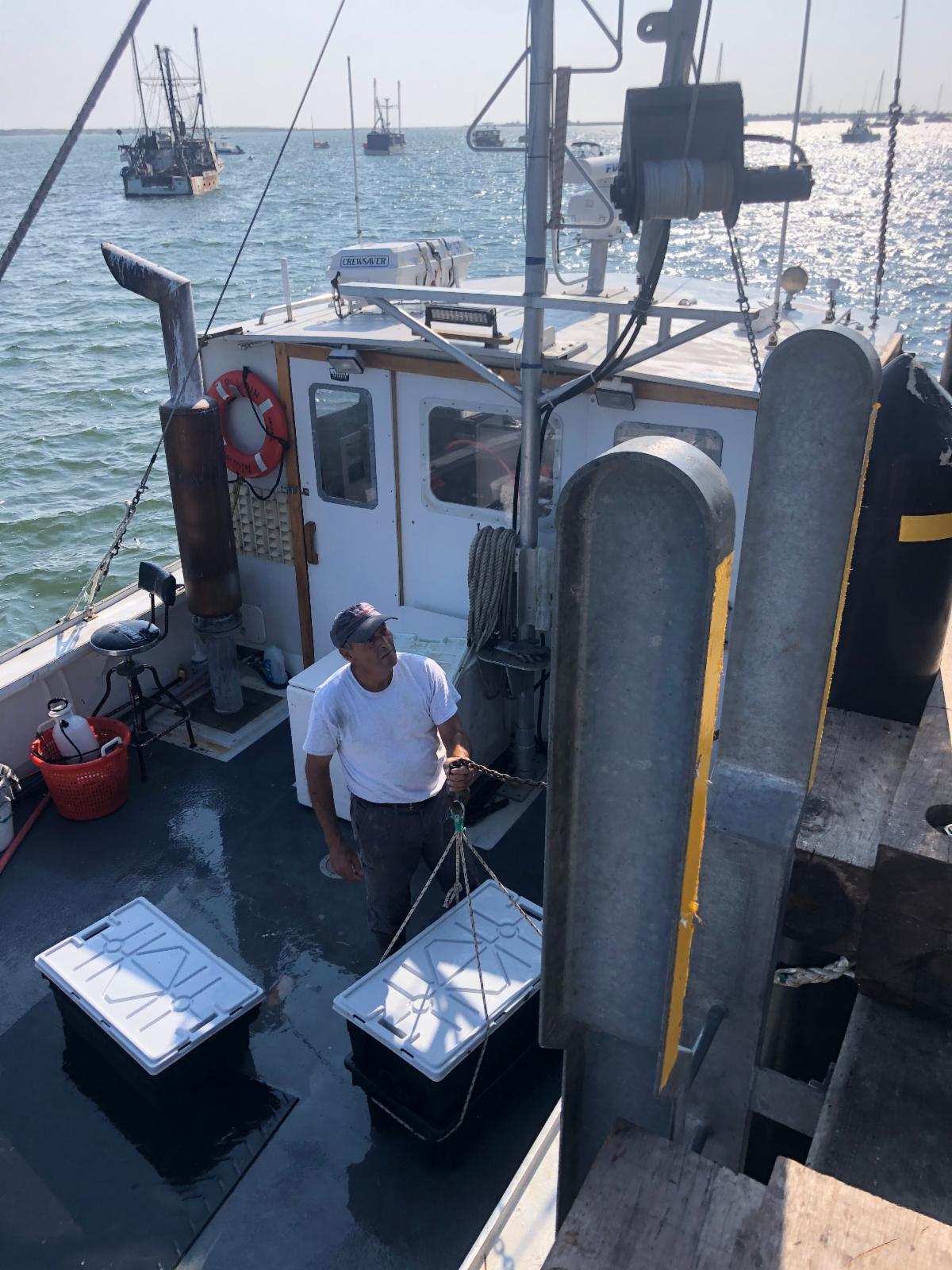
As Amaru slung the ropes on a tote of fish hoisted up by his crew, Paul Gasek, he mentioned that Paladin was also the main character in a popular TV Western in the 1950s and 60s: “Have Gun – Will Travel”.
At 70, Amaru doesn’t fish as much as he used to, but he and Gasek, also 70, fish as much as they can. Gasek (who left fishing to earn an Emmy for producing “The Deadliest Catch,” among other things) was Amaru’s first experienced crew when both were a good bit younger in the 1970s.
The Paladin, and Gasek, help Amaru with what he thinks is an important ingredient to his health these days: “Keep moving.”
One in an occasional series exploring how fishing boats are named. See Amaru at the wheel of the Paladin here.
On the Shore
This community thrives in large part because of a constellation of non-profit organizations and engaged businesses.
History is so important to a sense of place and we were reminded hearing and reading fishing stories from the early and mid-1900s that were both enjoyable and edifying. We want to thank the Chatham Historical Society for their preservation of oral histories, Sandy MacFarlane and the late Tiggie Peluso for their great book “Tiggie: The Lure and Lore of Commercial Fishing in New England.”
One of our friends to the north, the Gulf of Marine Research Institute, is looking for some insight on something that can be more important than a mousetrap – an ice machine. If commercial fishermen have advice on how to get the best ice machine possible and accessible at the Chatham Fish Pier, text Doreen at 508-887-3224 or tell any staff member you happen to come across.
On the Hook
We do a lot of reading, searching through the wide world of fisheries, and often find intriguing pieces to share. In the old days, you might call this your clipping service.
Our new haddock chowder is beginning to garner national press, but here are two local stories - from The Cape Codder and Cape Cod Chronicle - about the program with the goal of feeding America’s hungry, and keeping Cape Cod fishermen at sea and one from the Boston Globe as well.
We have long known the value of the hatchery ARC, which is why we joined a public-private partnership in 2015 to buy the 39-acre property in Dennis and help the peninsula’s vital shellfish industry. Here is a story from The New York Times, with beautiful images, about its role in sustaining the Cape.
Just another reminder that we need to eat more seafood, Seafood Source lays out how little Americans really eat: “Americans consume only 16 pounds of seafood per year, on average, compared to 402 pounds of vegetables, 252 pounds of fruit, 112 pounds of poultry, and 111 pounds of meat.”