Issue 678 - July 31, 2026

IN THIS ISSUE


  • NEWS: Report Concludes Small Modular Nuclear Reactors Not in Delaware's Near Future
  • NEWS: State Officials Dedicate Federal Funds to Improve Sussex County Healthcare Access
  • NEWS VIDEO: Three Delaware Farm Families Recognized for Incredible Agricultural Legacy

NEWS

Report Concludes Small Modular Nuclear Reactors Not in Delaware's Near Future


A state report released earlier this week on the feasibility of using small modular nuclear reactors to meet Delaware's growing demand for electricity indicates that the technology is many years away from being deployed.


The Nuclear Energy Feasibility Task Force was created through bipartisan legislation sponsored by State Rep. Jeff Hilovsky (R-Long Neck, Oak Orchard) and State Sen. Bryant Richardson (R-Seaford). The concurrent resolution was approved by the General Assembly last July.


Since last October, the group has been studying the technical and logistical feasibility of deploying small modular reactors (SMRs) in Delaware, weighing the economic benefits against the costs, and reviewing permitting, siting, and other factors.


Interest in SMRs has ratcheted up dramatically worldwide in recent years due to their potential benefits and unrealized promise.


Traditional nuclear power plants are uniquely designed and built on-site. They are massive and expensive projects that can easily take more than a decade to build. By contrast, SMRs are smaller, with the largest units producing about 300 MW of electricity—less than a third of the average site-built reactor. They are factory-made with standard components and transported to the build site, making them faster and cheaper options while being more scalable and flexible to meet local demand and blend with the existing power grid. Nuclear power, on a large or small scale, is also the most reliable form of base-load electricity generation while producing no carbon emissions.


However, in the report issued Monday, the group's members generally agreed that SMRs will not be available to meet Delaware’s needs for at least a decade, noting that SMRs “would not generate electricity before the mid-to-late 2030s at the earliest."


However, the group agreed that Delaware should take steps to lay the foundation for the possible future deployment of SMRs.


Among the task force's recommendations were the following: 


  • Delaware should establish a policy framework for nuclear energy. 
  • Conduct technical, environmental, and financing studies.
  • Launch public education and outreach efforts.
  • Engage with federal regulators to craft and streamline state rules. 
  • Interface with local municipal and county government officials to gauge support in their jurisdictions, identify suitable sites, and discuss planning and zoning issues.


To read the complete report, including all findings and recommendations, click here, scroll down to "Minutes, Reports and Information" and select "Final Task Force Report 7-27-26."

NEWS BRIEF:

State Officials Dedicate Federal Funds to Improve Sussex County Healthcare Access


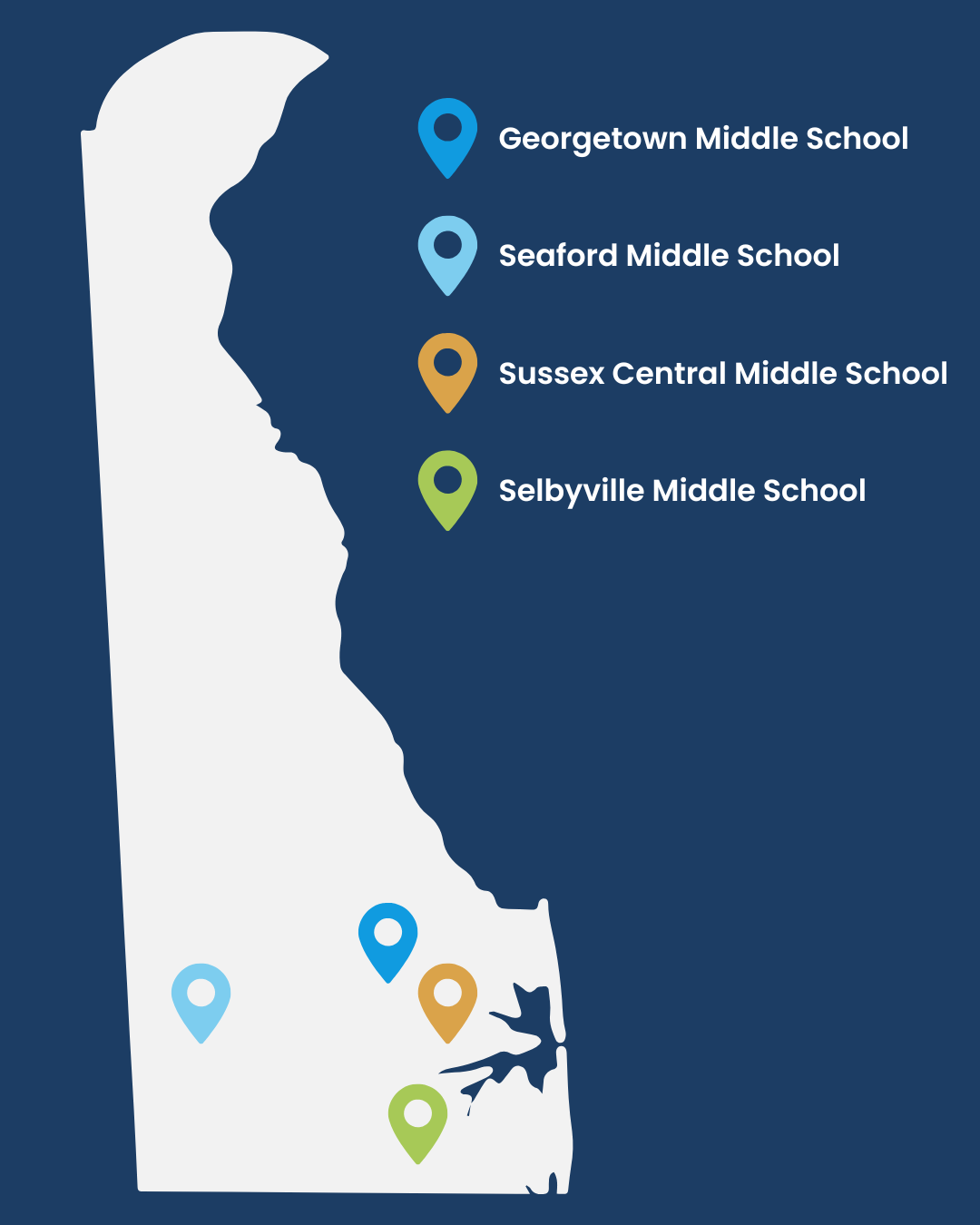
Earlier this week, state health officials unveiled plans to use federal grant money to establish four new school-based health centers in Sussex County.


The money is a portion of the nearly $157.4 million thus far awarded to Delaware under the Rural Health Transformation Program, a $50 billion, five-year federal initiative to improve rural health access in all 50 states.


The state's decision announced on Wednesday will expand access to preventive, primary and behavioral healthcare services in underserved Sussex communities to improve outcomes.


The awards include:


  • Nemours Children’s HealthSeaford Middle School
  • TidalHealthSelbyville Middle School
  • Beebe HealthcareSussex Central Middle School
  • Beebe HealthcareGeorgetown Middle School


Delaware currently has 40 school-based health centers statewide, but nearly three-quarters are located in New Castle County. Before these awards, only one middle school and one elementary school in Sussex County had a school-based health center. The four new centers will help close that gap, making it easier for Sussex students to receive care and identify concerns early.


The amounts of each award were not disclosed in the announcement.


Through Delaware's participation in the Rural Health Transformation Program, state officials have been investing in projects that improve access to care, strengthen Delaware’s healthcare workforce, modernize healthcare infrastructure, and advance better health outcomes across Kent and Sussex counties. 

NEWS VIDEO

Three Delaware Farm Families Recognized for Incredible Agricultural Legacy


At the Delaware State Fair yesterday, Governor Matt Meyer and Agriculture Secretary Don Clifton honored three farms as “America 250 Farms,” recognizing the families operating them for surpassing 250 years of continual ownership and operation.


The new honor is tied to America’s 250th birthday celebration and this year's State Fair’s theme, "America 250." Like Delaware's Century Farm Program, to qualify, farms must include at least 10 acres of the original parcel and have remained in family hands for the duration.


The honored America 250 Farms include:


  • Dukes Farm: Located southeast of Odessa, the property has been in the Dukes family since 1730. Owner Neal Dukes is the ninth generation of his family to be on the farm, with son Brody representing the upcoming 10th generation.


  • Hill Island Farm: Situated near Middletown, the property consists of approximately 430 acres, 285 of which are farmed for corn, soybeans and wheat. R. Smith III and his sister Lea Hutchins are the eighth generation to own the property, which dates to 1720. The main Hill Island Farm building, completed in 1790, has been listed on the National Register of Historic Places since 1992. 


  • Stayton Farm: Of the 295 acres that now encompass the farm near Lincoln, the original 215 acres came to the family through a grant from William Penn and have been passed down through the family. Owner Grier Stayton took over the farm from his father. His son Nicholas will be the 13th generation to steward the land, dating back to 1728. On the tillable ground, the farm produces alfalfa, corn, and soybeans.


"This is an incredible accomplishment," said State Rep. Bryan Shupe (R-Milford South), who represents the Lincoln area and attended Thursday's ceremony. "As a small businessman, I know the challenges of passing down a family enterprise from one generation to the next. This enduring legacy is a testament to the dedication and perseverance of the Stayton Family and the other families recognized here today.”