|
Wednesday’s festivities concluded with the CRISP Awards reception, which recognized significant achievements and contributions through engagement with the Congress and the federal government. On hand to receive their awards were DeKeitra Griffin, a doctoral student at Louisiana University and a nationally-recognized advocate advancing behavioral health and HIV equity, and Dr. Shannon Lane, director of the Nancy A. Humphreys Institute for Political Social Work at the University of Connecticut School of Social Work. Dr. Jo Ann Regan, dean at the National Catholic School of Social Services, brought greetings on behalf of our sponsors, and Luisa Lopez, executive director of the Latino Social Work Coalition and CRISP board member, spoke on behalf of the CRISP Board of Directors.
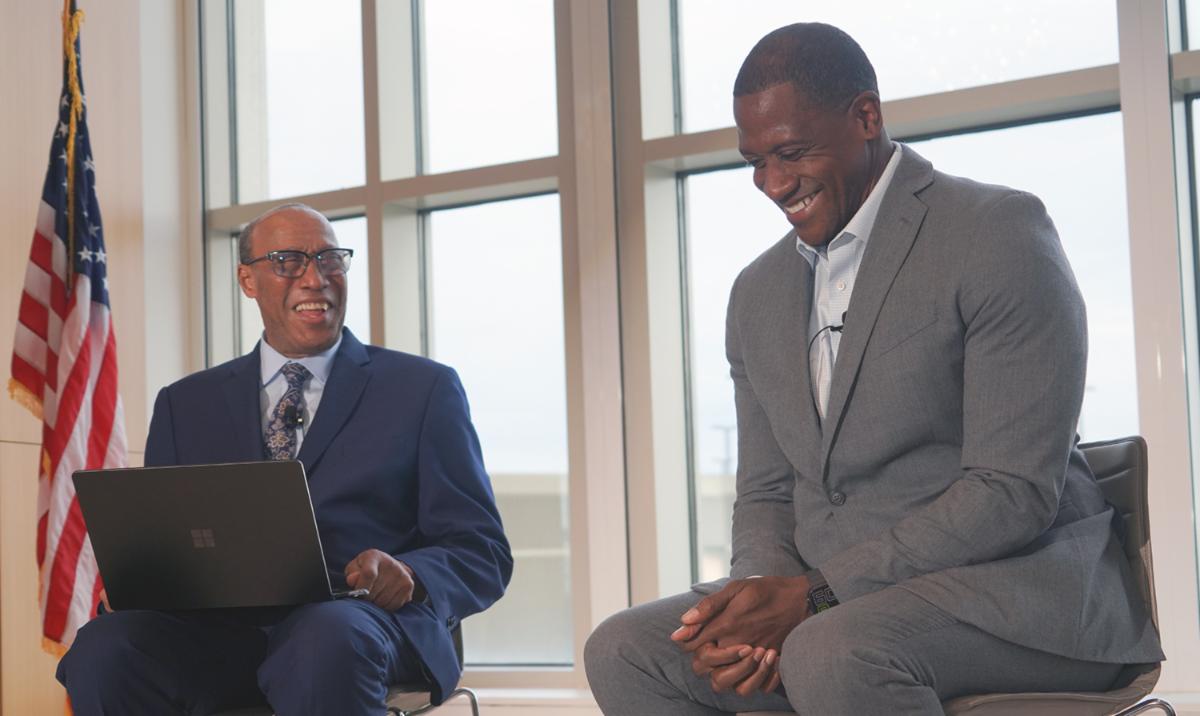
I had the pleasure of participating in a conversation with our featured guest, Michael E. Collins, an MSW graduate of Boston College School of Social Work, who served as Chief of Staff to the legendary Congressman John Lewis for 21 years. He shared with us the lessons he learned about leadership and commitment from the iconic civil rights activist. A high point of the evening was his taking questions from students who wanted to know more about what “good trouble” is today.
We were back at the Spire on Thursday morning for our Student Advocacy Day, which began with a plenary session featuring advocacy training by NASW’s Dina Kastner, more conversations with Michael Collins, and a virtual storytelling training session led by Destanie Newell, senior regional field manager at Color of Change. The highlight of the morning was the keynote address by Ja’Bree Harris, an MSW graduate of Howard University School of Social Work.
Before assuming his current position as Senior Director of Campaigns and Organizing for Color of Change, Ja'Bree sharpened his political acumen as the National Community Organizing Manager for the Democratic National Committee and then NASW’s Public Policy and Advocacy Manager. His message was well received by the students, drawing applause throughout and a standing ovation at the conclusion.
What unfolded over these two days was more than a convening—it was a demonstration of what becomes possible when a profession commits to showing up where decisions are made. Students did not simply learn about advocacy; they practiced it. Practitioners did not just observe policy; they helped shape the conversation. And across every session, a consistent message emerged: social work cannot afford to remain adjacent to power when the communities we serve are so directly affected by it. The task ahead is to sustain this momentum—building a stronger, more visible political presence that brings evidence, lived experience, and moral clarity into legislative deliberations. If these events made anything clear, it is that when social workers organize, engage, and persist, our voices do more than matter—they influence outcomes.
|