|
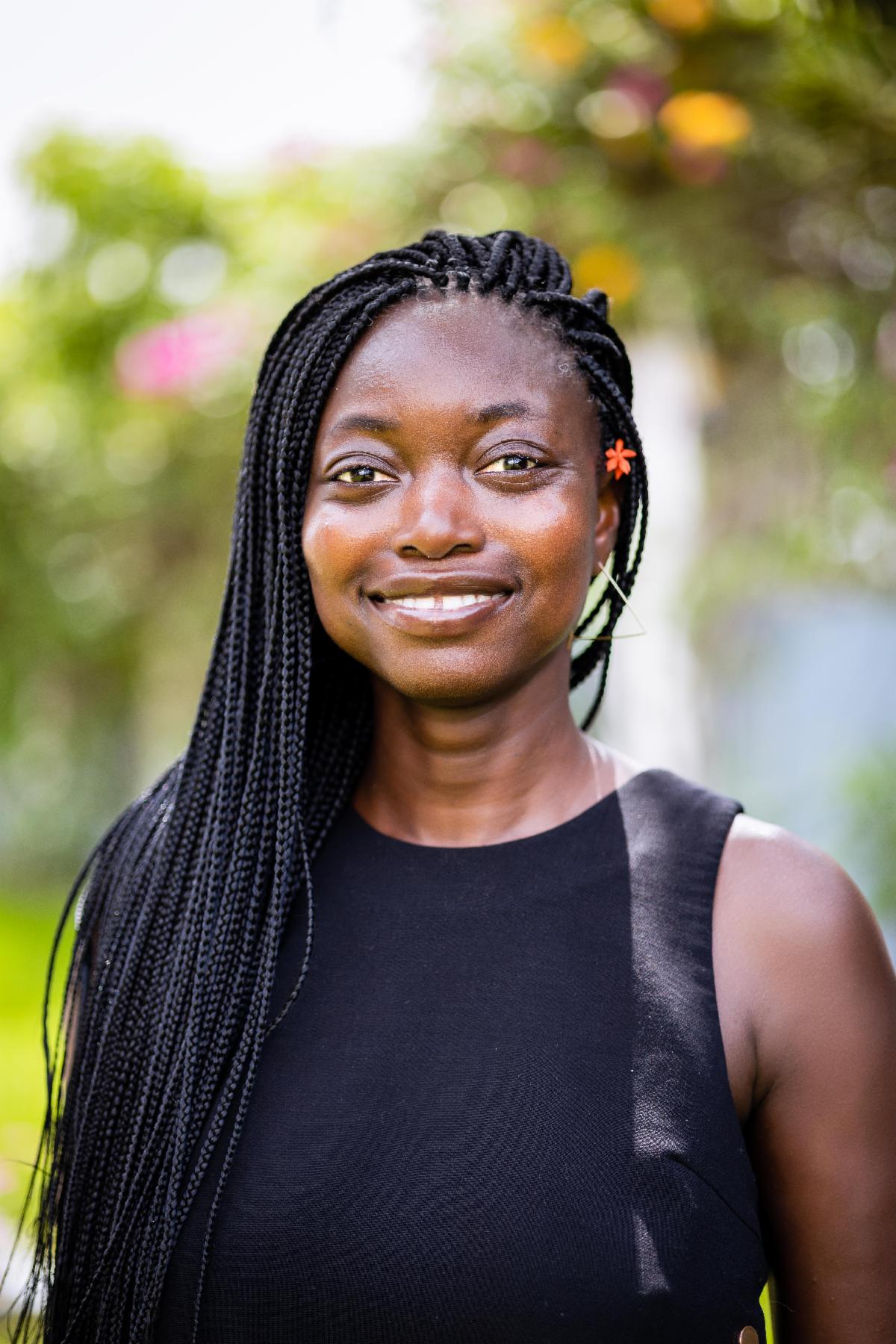
Nana Ekua Brew-Hammond is the author of the children’s picture book BLUE: A History of the Color as Deep as the Sea and as Wide as the Sky (Knopf), illustrated by Caldecott Honor Artist Daniel Minter.
Named among the best books of 2022 by NPR, New York Public Library, Chicago Public Library, Kirkus Reviews, Bank Street College of Education, and The Center for the Study of Multicultural Literature, BLUE was honored with the 2023 NCTE Orbis Pictus Award®; it was named to the 2023-2024 Texas Bluebonnet Award Master List; and it was nominated for an NAACP Image Award.
Brew-Hammond also wrote the young adult novel Powder Necklace (Atria), which Publishers Weekly called “a winning debut”. For adult readers, she edited RELATIONS: An Anthology of African and Diaspora Voices (HarperVia), of which Kirkus Reviews said in a starred review: “This smart, generous collection is a true gift.”
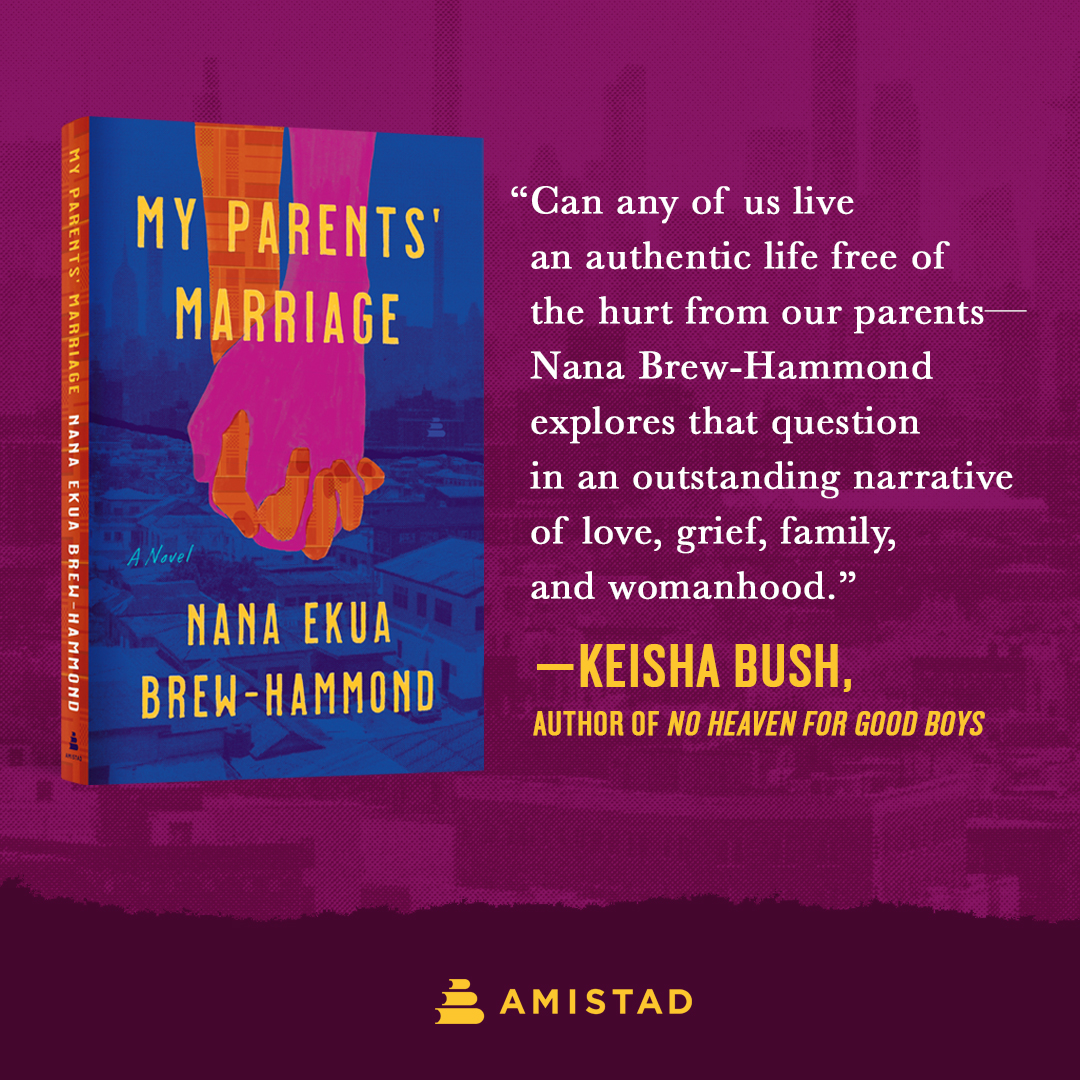
In 2023, she partnered with the curators of Brooklyn Museum’s “Africa Fashion” exhibit to pen and perform an original poem in the Museum's companion film. Her newest novel for adults, My Parents' Marriage (Amistad), released in the U.S. July 9, 2024.
Booklist called it a "vivid" read that "finely captures the formative shifts and bittersweet revelations of womanhood" while the author Melissa Rivero called it "a propulsive read that will take a hold of you with its honesty, determination, and heart."
Every month, Brew-Hammond co-leads a writing fellowship whose mission is to write light into darkness. Learn more at nanabrewhammond.com.
Soignée: When did you get your first inkling to write, and how did you advance the call for writing?
I can't pinpoint exactly when I knew I could write, but I remember just "knowing". As a kid, I always wrote stories, mostly inspired by the books I was reading. I loved the Sweet Valley High series about blonde, blue-eyed twins Elizabeth and Jessica Wakefield. Their experiences in a California suburb, living in a split-level ranch house, cheerleading for their school's football team, and dating were very different from my life in Queens, NY as the daughter of Ghanaian immigrants who raised us relatively strictly.
Still, I escaped into my imagination and would write stories about characters like Elizabeth and Jessica. When I got to college, after three years of attending high school in Ghana, I better understood that the relative lack of positive and contemporary fiction and TV shows featuring Black or immigrant characters had impacted my creative choices. I began trying my hand at writing stories that were more relatable to me.
Shortly after graduating from college, I started writing my first book, Powder Necklace, a young adult novel about a girl whose mother sent her to secondary school in Ghana.
Soignée: When did you first realize you wanted to be a published author?
I entered college as a Biopsychology major, but after a fateful Statistics class, I knew the sciences weren't for me. Around the same time, my big sister gifted me a journal for my birthday. On the journal cover was a drawing of a woman with a starburst of wild red hair. Cats and books surrounded her. The title "Book Woman" was emblazoned on the cover.
"You know, you can do this," my sister said. I took it to heart, and from that day, I began figuring out how I could change my academic concentration and set myself up to write for a living.
My parents sacrificed a lot to put me through college, so I felt pressure/responsibility to choose a route that would earn me a steady, stable income. Because I loved writing papers and thinking deeply about the topics we covered in Political Science and Africana Studies, I double-majored to enter Civil Rights Law. Ultimately, after college, I realized that it wouldn't be enough for me to write legal briefs and that the culture of the 9-5 corporate workplace was not in line with my purpose and gifts.
I needed to write stories for readers like me, desperate to see their lives and concerns on the page, stage, or screen. I wrote Powder Necklace on the bus and train to and from my job over the next several years.
Soignée: Who does your body of literary work speak to? Do you consider authors as role models?
I hope each of my books gives people access to worlds, experiences, and information that enliven them and help them connect more deeply with themselves, their neighbors, and the world. That said, I think of authors as role models only in the sense that we persevered through all the challenges of creating an original piece of writing and, by God’s grace, had the good fortune or funds to see our work published.
Outside of that, authors are imperfect humans like everyone else--and just as you would with anyone in your life, keep the nuggets of wisdom we share that you discern are worthy of applying to your own life and forget the rest.
Soignée: Do you set out to illuminate a particular subject in this book?
I aim to educate, inspire, entertain and illuminate with all of my books because I love the feeling of learning something new or gaining a deeper perspective on a topic after engaging with a good story. With BLUE, I was so surprised and delighted by what I was learning about the history of the quest to recreate the color; I felt passionate that kids would love to know about it, too!
I felt the same way with My Parents' Marriage: A Novel. Many people understand the political ramifications of colonialism, for example, but less of us understand the personal impact on individuals, families, and women in particular. In the same way, we don’t always stop to think about where or who our beliefs and opinions about family and marriage come from.
As I learned more about marriage customs and laws in Ghana, I wanted to engage readers in a conversation about how the past can show up in our present in very intimate ways and actively drive our decisions.
Soignée: What are the most important elements of good writing?
I think what separates good writing from great writing is the ability to connect with the reader's head and heart.
It's wonderful if a piece of writing has beautiful language or an airtight plot or is otherwise exemplary of the best writerly craftsmanship, but the works that stay with me are the ones that awaken me in some way. One thing I've noticed that great writing shares is a commitment to truth, i.e. a willingness to be as real as possible about a situation or experience.
For the writer, this means being a keen and compassionate observer and making yourself vulnerable enough to relay your observations, knowing that the lens you choose to express them exposes you, too.
Soignée: Do you outline, plot, and plan, or is your writing more organic?
Overall, I prefer to start with a core revelation. Inspired by a realization I've made from an experience or conversation or something I've read or seen, I love just to let my thoughts meander on the page or screen and allow what I'm writing to reveal itself to me over time. But this meandering process is not a luxury I can indulge in when I meet deadlines.
What was helpful to me when I was writing My Parents' Marriage: A Novel was keeping the one-line synopsis of the book in the footer of my document. At the bottom of every page, I had to ask myself if what I had written was in line with what I wanted the book to be about, and if it wasn't, it had to go.
Soignée: Did you learn anything personal from writing your book?
Writing my latest book, My Parents' Marriage: A Novel, taught me how important it is for me to make myself vulnerable on the page. In the book, the main character Kokui is traumatized by her father's flagrant philandering as well as her mother and stepmother's jockeying for his divided heart--she is desperate to have a diametrically opposite marriage. The story isn't about my actual parents' marriage.
Still, as I was writing it I had to delve into my thoughts and feelings about marriage, as well as the marriages I had seen growing up, my relationship history, and the impact all of these have had on me so I could really get inside Kokui's skin. It was scary going there--I found myself writing on the edge of my seat, squirming, often crying.
However, writing through the discomfort and staying committed to rendering Kokui's feelings and actions as truthfully as possible was ultimately cathartic. I think it also made for a more dimensional character and story.
Soignée: How can readers discover more about you and your work?
You can learn more about me and my work on my website nanabrewhammond.com where you can also sign up for updates via my monthly newsletter.
Connect with Nana Ekua Brew-Hammond
https://x.com/nanaekua
http://nanabrewhammond.com
https://instagram.com/nanaekuawriter
https://www.facebook.com/nanaekuawriter
My Parents' Marriage: A Novel by Nana Ekua Brew-Hammond
Coming of Age Fiction - https://a.co/d/buesAaZ
My Parents' Marriage: A Novel is about Kokui Nuga, a young Ghanaian woman desperate to escape the shadow of her parents' marriage and believes she has found her ticket out when she meets and marries a man headed for university in the States who seems nothing like her wealthy, domineering dad.
But not long after the couple moves to the U.S., she realizes she is pushing against much more than her parents' turbulent union: She's battling a web of traditions, systems, and attitudes that conspire to empower the men in her life at the expense and dignity of the women, and she’s fighting to find and value herself.
|