|
Digging for Answers: What Long-Term Soil Testing Can Tell Us About Soil Health
By: Maria Wnorowski, Sonoma Resource Conservation District
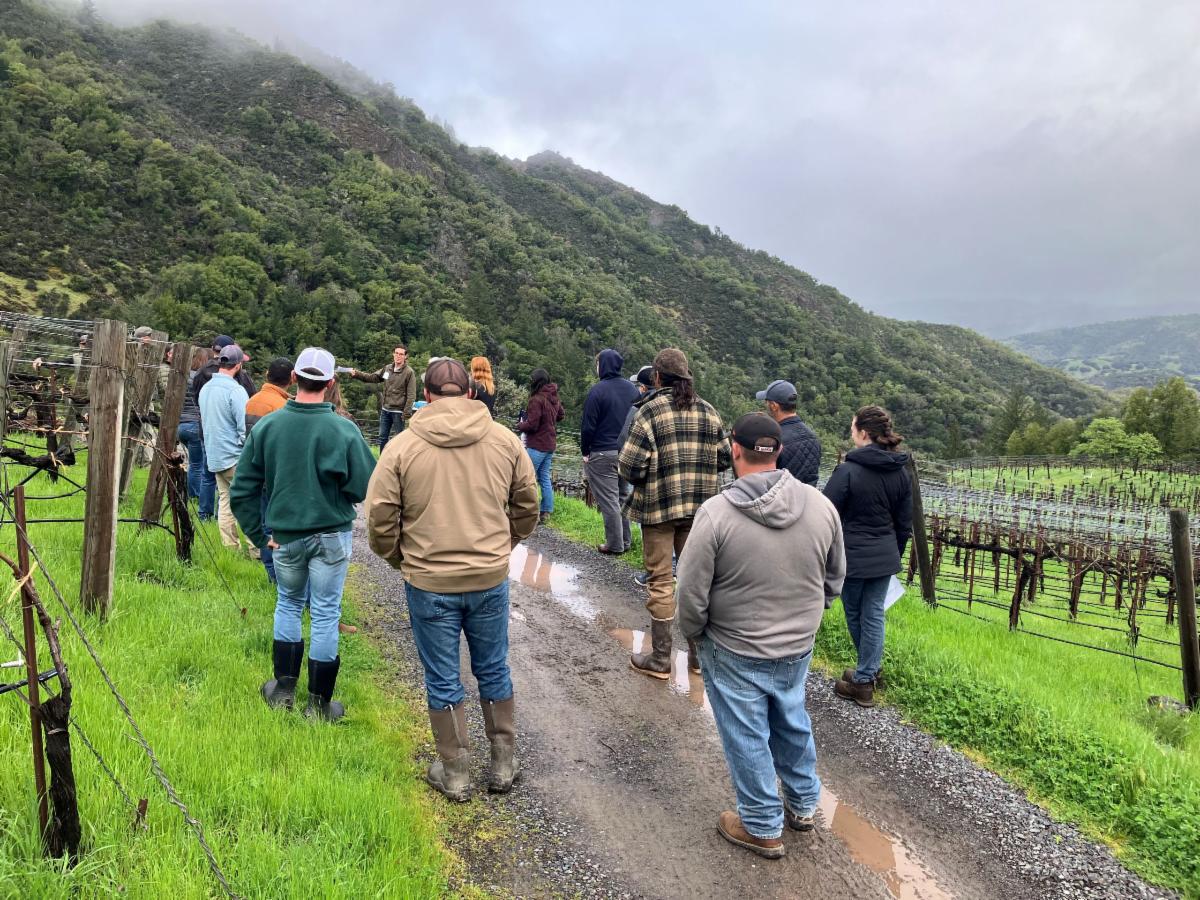
This spring, the Sonoma RCD Agriculture Team returned to one of Jackson Family Wines’ vineyards to support one of the North Coast Soil Hub's longest-running soil health studies. Originally launched in 2018 as a demonstration project funded by the California Department of Food and Agriculture (CDFA), this collaborative effort has evolved into a decade-long study now supported directly by Jackson Family Wines. Together, we are exploring how conservation practices like compost application and reduced tillage influence soil carbon, structure, and microbial life and how these practices support long-term soil health and climate resilience in working vineyards.
Soil forms at a snail’s pace—and it changes at one too. Short-term studies can miss the subtle but critical shifts that take place below ground. By tracking key soil health indicators over many years, this project allows us to build a much clearer picture of how management decisions affect the soil’s ability to store carbon, cycle nutrients, and support microbial activity.
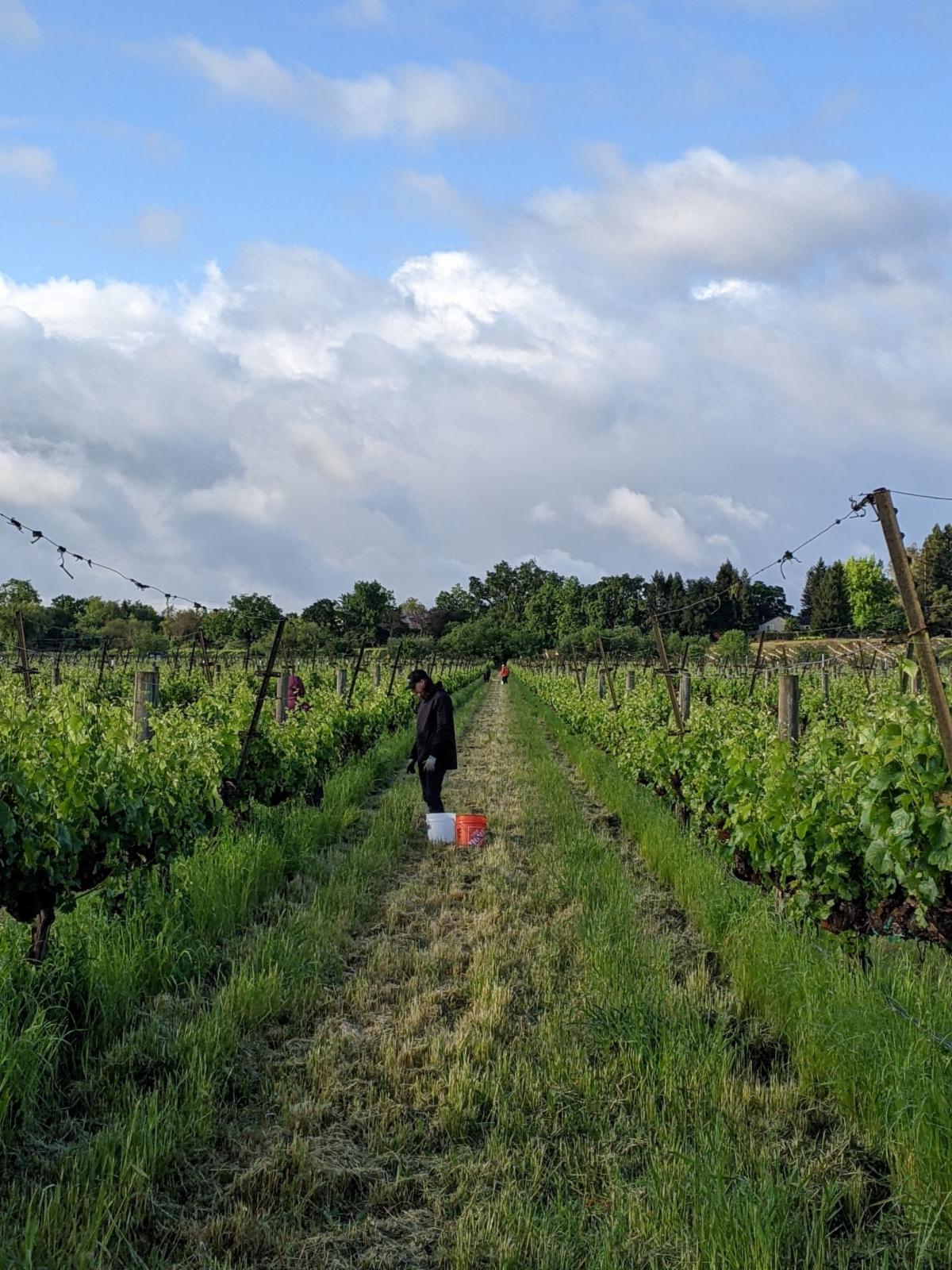
Each year, our team collects soil samples from 18 distinct treatment blocks, which are a combination of compost application and tillage levels (no-till, reduced-till, and conventional). Equipped with labeled five-gallon buckets and plenty of zip-top bags, we collected soil cores at two depths across all treatment blocks. Each sample was mixed, quality-checked, and prepped for lab testing—then packed into coolers and shipped out for analysis.
This project is a testament to the power of collaboration, curiosity, and long-term thinking. We're grateful to Jackson Family Wines for their continued partnership—and to the soil, for slowly but surely telling us its story. To learn more about the sampling effort, read the full edition of Sonoma RCD's newsletter.
|