|
UC Master Gardener Program of Sonoma County
July 2025 E-Blast Newsletter
Growing Together to Inspire the Gardener in You!
| | |
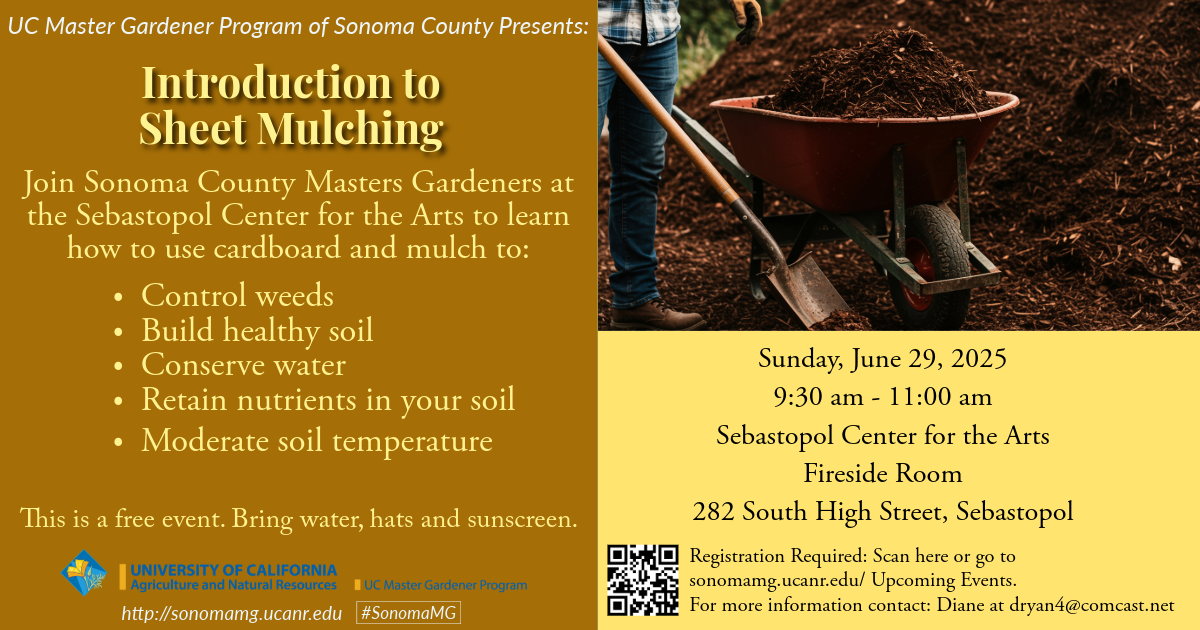
Workshop Title: Introduction to Sheet Mulching
Date: Sunday, June 29, 2025
Time: 9:30 am to 11:00 am
Location: Sebastopol Center for the Arts, Fireside Room, 282 South High Street, Sebastopol
Presented By: Sonoma County Master Gardeners
Join Master Gardeners at the Sebastopol Center for the Arts to learn how to use cardboard and mulch to control weeds, build healthy soil, conserve water, retain nutrients in your soil and moderate soil temperature. Bring water, hats and sunscreen. This is a free event.
Registration Required: Click here or go to http://sonomamg.ucanr.edu/ Upcoming Events to complete your registration. After registering, you will receive a confirmation email containing information about attending the library talk. For more information contact: Diane at dryan4@comcast.net.
| | |
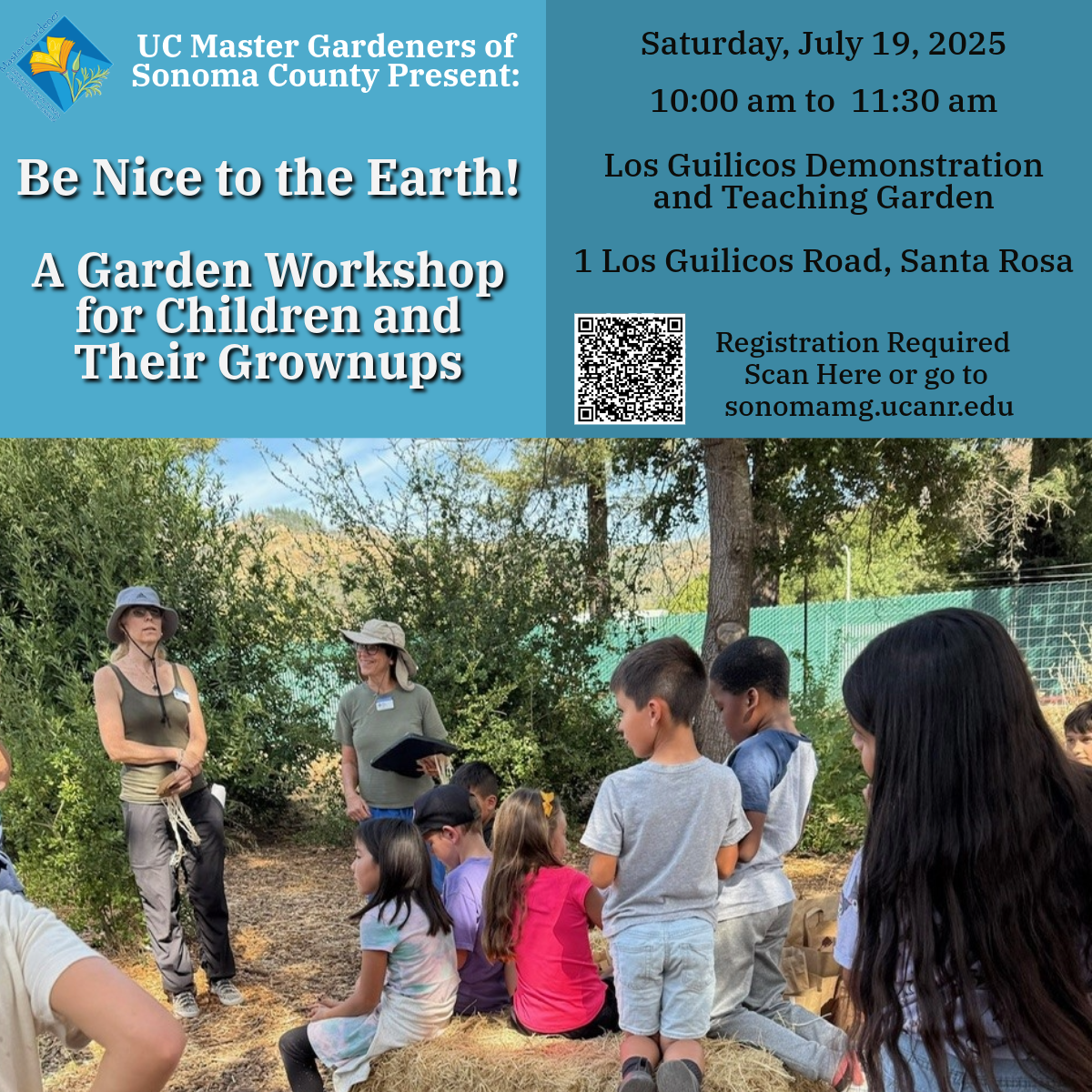
Workshop Title: Be Nice to the Earth! A Garden Workshop for Kids and their Grownups
Date: Saturday, July 19, 2025
Location: Los Guilicos Demonstration and Teaching Garden, 1 Los Guilicos Road, Santa Rosa
Time: 10:00 am – 11:30 am
Presented By: Sonoma County Master Gardener Leah Halper
Join us for a hands-on workshop led by Master Gardener and UC Climate Steward Leah Halper in our garden at Los Guilicos. We will explore simple ways families can help earth and its species build resilience to climate change. Activities will include fun and interactive “teachable moments” about soil, water, biodiversity, and climate justice with puppet Professor Maria Lodo and friends.
Registration Required: Go to https://tinyurl.com/ye2xc9kt or http://sonomamg.ucanr.edu/ Upcoming Events to complete your registration. After registering, you will receive a confirmation email containing information about attending the talk.
| | |
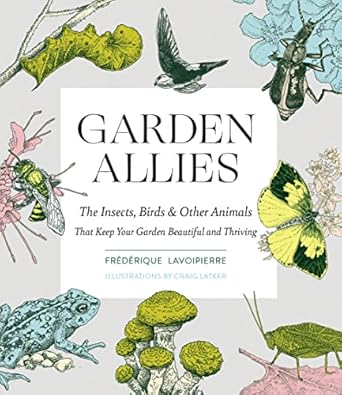
Workshop Title: Garden Allies
Date: Saturday, August 16, 2025
Location: Los Guilicos Demonstration and Teaching Garden, 1 Los Guilicos Road, Santa Rosa
Time: 10:00 am – 11:30 am
Presented By: Sonoma County Master Gardeners
Speaker: Frédérique Lavoipierre
Join Frédérique Lavoipierre for an enlightening presentation on “Garden Allies: The Insects, Birds, and Other Animals That Keep Your Garden Beautiful and Thriving” based on her highly acclaimed and beautifully illustrated book of the same title. Lavoipierre will delve into the intricate web of life within our gardens, highlighting the essential roles played by various creatures—from soil-dwelling organisms to birds and bats—in maintaining ecological balance.
Drawing on her extensive background in biology and sustainable landscaping, Lavoipierre emphasizes the concept of conservation biological control, advocating for gardening practices that support and attract beneficial wildlife. Attendees will gain insights into the life cycles of these garden allies and learn practical strategies to foster a thriving, pesticide-free garden ecosystem.
This talk is ideal for gardeners, environmental enthusiasts, and anyone interested in creating harmonious landscapes that celebrate and sustain biodiversity.
Free compost will be available after the talk. Bring your own container.
Registration Required: Go to https://tinyurl.com/msy7ryar to complete your registration. After registering, you will receive a confirmation email containing information about attending the talk.
| | |
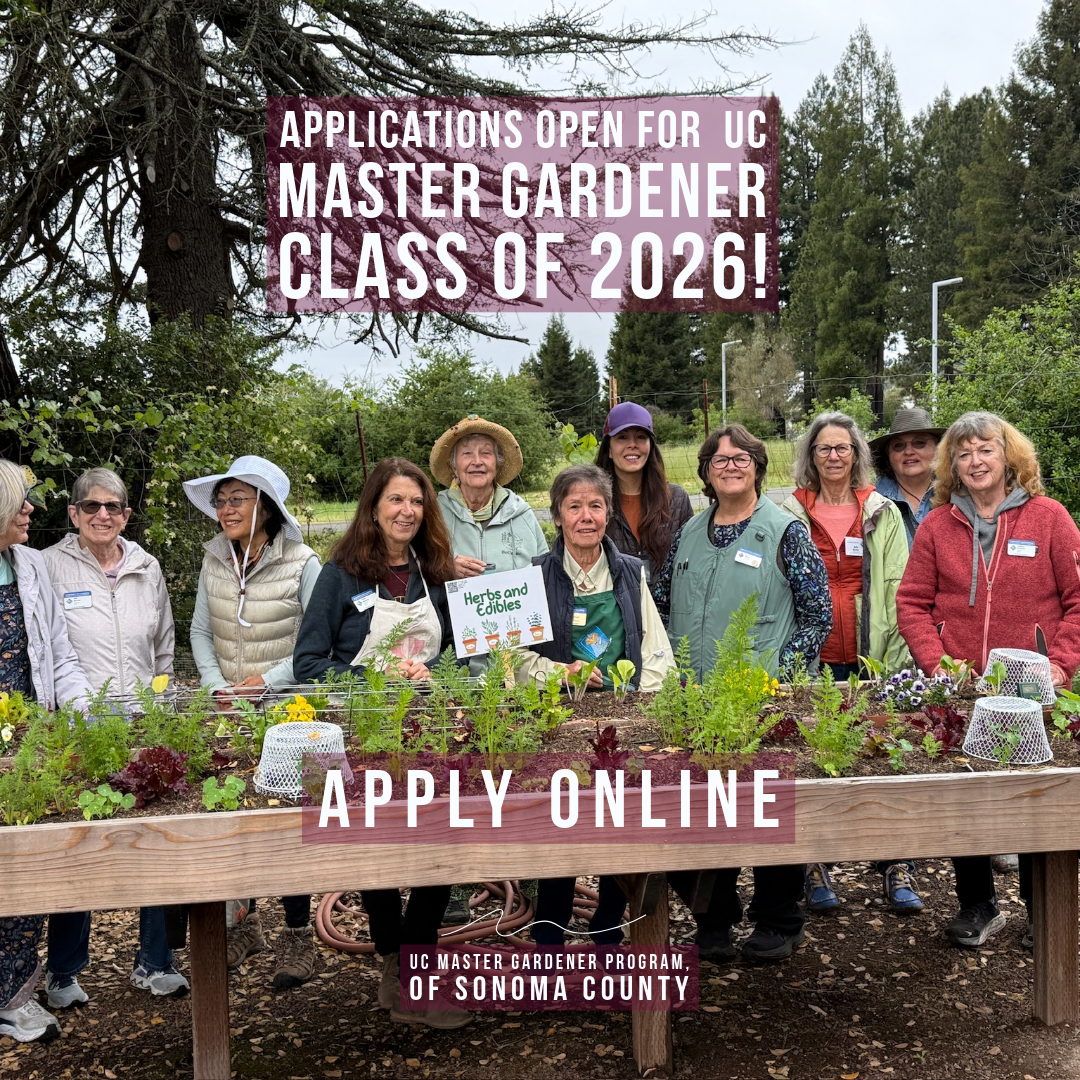
Grow Your Passion: Become a UC Master Gardener in Sonoma County
Applications Open Now Through September 3, 2025
Do you have a love for gardening and a heart for community service? Now is your chance to turn your passion into purpose! Applications are now open for residents age 18 and over for the UC Master Gardener Program of Sonoma County’s Class of 2026.
UC Master Gardeners volunteer their time and expertise to help local residents with all aspects of home gardening and landscaping. As trained educators with the University of California Cooperative Extension, they share science-based horticultural knowledge—from composting and irrigation to fire-wise landscaping and plant health.
Master Gardeners are everyday people who unite around a love of plants and a desire to make a difference. No need to be an expert! If you're eager to learn, committed to volunteering, and excited to connect with the community, this program is for you.
Training includes in-depth classes taught by UC experts and local professionals. In your first year, you’ll complete 50 hours of volunteer work, with opportunities to:
- Teach at workshops, schools, and community gardens
- Staff information booths at farmers' markets and special events
- Write gardening articles and help manage social media
- Design and maintain demonstration gardens
Ready to grow with us? Learn more and apply now: Click Here.
| | |
Curious about becoming a UC Master Gardener? Join us at our first area information session to learn about what Master Gardeners do and ask all your questions before submitting your application.
Master Gardeners will provide information and be available to answer your questions about the Master Gardener Program.
Date: Saturday, July 19, 2025
Location: Sonoma Valley Regional Library
755 West Napa Street, Sonoma
Time: 11:00 am - 12 noon
For more information contact Tami at tstolte@comcast.net. Information about additional meeting dates and locations will be announced soon.
| | Sonoma County Master Gardener Spotlight | | |
John Dennis, Class of 2022
John brings exceptional competence, warmth, and talent to our organization. From the inception of the Los Guilicos Demonstration and Teaching Garden project, John has generously contributed his expertise in landscape architecture. He led the development of the Youth Education Team’s vision for the Children’s Garden and guided its successful implementation. He also created the master plan for the larger project, ensuring it aligns seamlessly with both the site's natural character and our organizational mission.
In addition to his design work, John played a critical role in developing the budgets required for grant applications, adapting to the various iterations requested by the funding agency. Throughout this period, he also served as Membership Director on our Board.
John’s contributions extend beyond planning and design. He conducted a BioBlitz for the project, teaching Master Gardeners and the public how to use digital applications for plant and wildlife identification. His guided nature walks have provided mentorship and inspiration, helping Master Gardeners deepen their engagement with the natural world.
In times of challenge, John brings a steady hand, offering calm, confidence, and compassion to the team. We are deeply grateful for his many talents, his generous spirit, and his enduring friendship.
| | |
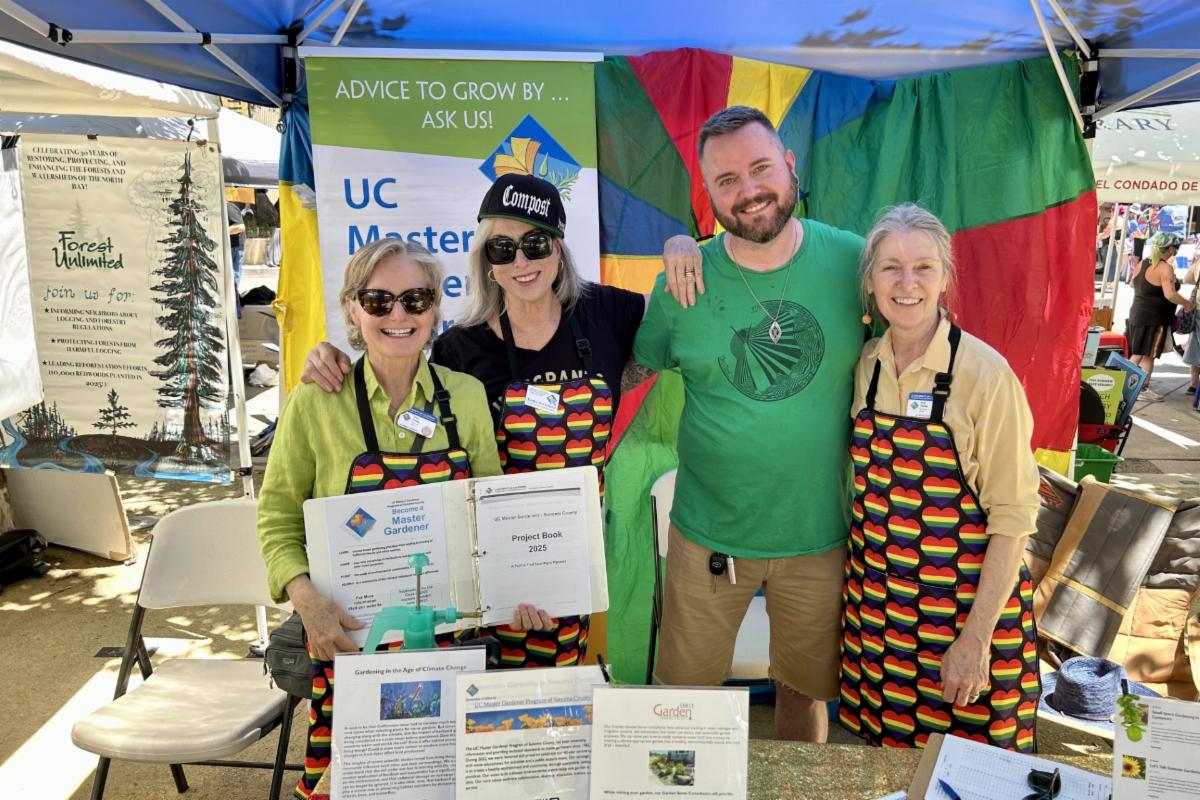
From left: Master Gardeners Tami Stolte, Eartha McClelland, Rory Kalmar and Suzi Yarian.
Sonoma County Master Gardeners joined in the celebrations at Sonoma County Pride for the first time this year on May 31, hosting an info booth to introduce our organization to a blooming and diverse part of our community. The theme, “Forty & Fierce,” denoted the 40 years that Sonoma County Pride has been providing a safe space for the LGBTQIA+ community, and we were happy to join in this milestone! Our Master Gardeners had the opportunity to share our love of sustainable gardening practices with over 100 contacts and gained nearly 30 new subscribers to our monthly newsletter. We also connected with a handful of folks who are interested in applying for the training class of 2026. The day was filled with lots of laughs and love while sharing science-based education with the community. In fact, it was so much fun we are excited to participate in this celebration again next year!
| | |
As the summer sun shines brightly, July is a critical period for gardeners to nurture their plants, ensuring they thrive during the hottest part of the year. This month is a time of significant growth and harvest, where diligent care can lead to a successful and bountiful garden. Here are gardening tips to help you make the most of your garden in July.
💧Water in the morning. Prioritize watering young plants.
🥀Monitor vegetable plants for wilting or drooping leaves.
🍒Prune apricot and cherry trees.
🥒Harvest veggies regularly at least every other day.
🌳Protect tree trunks from sunscald. Apply a 50:50 mix of interior white latex paint and water to tree trunks.
🌿Keep weeds under control.
✂️Prune berry canes. After berry harvest, prune canes that have finished flowering and bearing fruit.
🍅Tomato care: Watch for pests and diseases. Maintain a consistent watering schedule
🌹Care for roses: Prune spent flowers. Check for pests and diseases.
Click here to read more detailed information on July tips on the UCANR blog.
| | |
Summer is officially here, and for those of you who have roses, it’s a lovely time to be out in the garden admiring the flowers. But wait! As you admire the blooms, you may notice that the leaves are looking bad, maybe even really bad, and this may be due to diseases that have infected your roses.
The good news is that the most common diseases on roses in Sonoma County are easily recognized and the University of California’s Integrated Pest Management website contains helpful information on management. So what symptoms do you look for?
| | | |
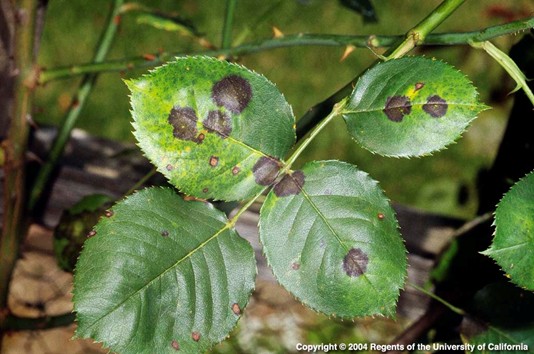
Black Spot
Do you see black spots on the leaves? This disease is easy to remember because it is called black spot. It is caused by a fungus that grows on the upper surface of the leaves when they remain wet for more than seven hours. To lower the chance of infection and help control the disease once you see symptoms, avoid overhead watering. If you need to wash the leaves, be sure to do it early in the day so leaves have a chance to dry before evening. To find additional strategies for black spot identification and management here: click here
| | | | |
Powdery Mildew
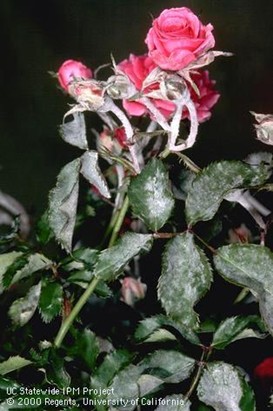
Do your rose leaves look like someone came along and sprinkled lots of powdered sugar all over them? If so, your roses have a fungal disease called powdery mildew. Unlike the fungus that causes black spot, the powdery mildew fungus does not require wet leaves to grow, so it can infect roses during California’s warm, dry summers. In fact, washing the leaves midday may limit the disease by disrupting the daily spore-release cycle while still allows time for the foliage to dry before evening can help. You can find out more about powdery mildew and many other common rose diseases here: click here
| | | | |
Psyllobora Beetle
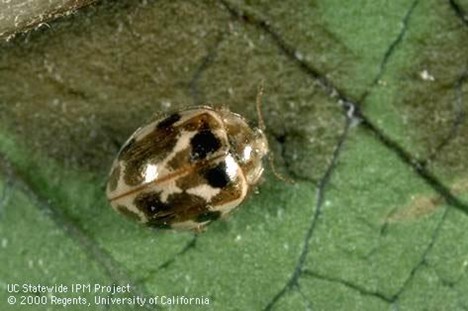
Speaking of powdery mildew, did you know that there is a tiny lady beetle that eats the powdery mildew fungus? It’s biological control in action! This Psyllobora beetle is related to the familiar lady beetle (a.k.a. ladybug) but it is smaller in size and cream-colored with brown spots. You can look for it where you find powdery mildew, and learn more about this fascinating beetle here: click here
| | | |
Herb Gardening is a Fun Activity for Kids
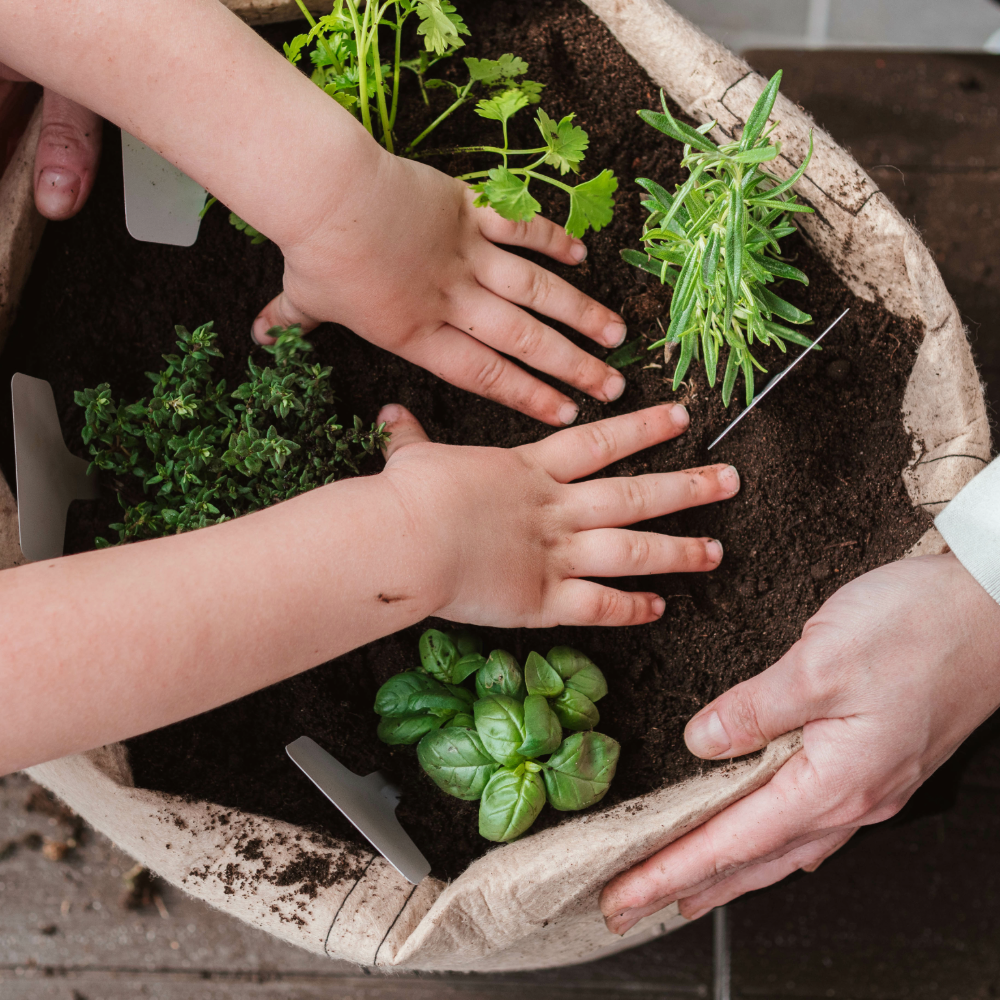
This is a wonderful time for you and your children to plant a container herb garden that will delight your senses, provide edible herbs for your kitchen and nurture pollinators and beneficial insects.
Children will be excited to plant the herbs you use in your kitchen and intrigued by their different scents. They can practice their literacy skills as they learn the different names of plants and read the seed packets and instructions. They develop physical and sensory skills by carrying tools, digging in the dirt, feeling the soil and smelling and tasting the herbs.
Children love to water plants. Show them how to do it responsibly, so the plants get just the right amount of water at the right time. As you work together, take the opportunity to teach children about the importance of water conservation.
Gardens offer children a sense of responsibility and wonder as they label the seeds they have planted, predict when they will sprout and watch them grow until the plants are ready to harvest. As a reward for all their work, allow them to pinch or snip a few bunches of herbs for cooking.
Herbs are easy to grow; many require very little water. Group together plants that have similar sunlight and water requirements. Don’t be afraid to experiment. Most herbs are fairly hardy and will survive even if you make a mistake while planting them.
These herb combinations have the same sun and water requirements:
- Chives, basil and dill
- Cilantro, dill and tarragon
- Oregano, sage and thyme
Plant your herb garden in a pot that is at least 12 inches in diameter and located near the house to give you easy access when you harvest the herbs. You and your children can have fun experimenting with combinations. For example, you could plant basil, oregano and thyme in the same pot for a pizza herb garden.
Here are a few other considerations for planting herbs:
- Basil grows well with many herbs, except for sage.
- Mint is an aggressive plant and should be planted in its own pot.
- Fennel can be invasive and should also be planted in a pot by itself.
For more information on low-water use kitchen herbs click here.
Written by Master Gardener Ellie Samuel for the Santa Rosa Press Democrat.
Image: AdobeExpress
| | | |
California Native Plants -
What's Blooming in July?
| | Sonoma County Master Gardeners love California natives. What's blooming in our gardens in July? Here are a few of our favorites. | | Coyote mint in Master Gardener Clio Tarazi's garden. | | |
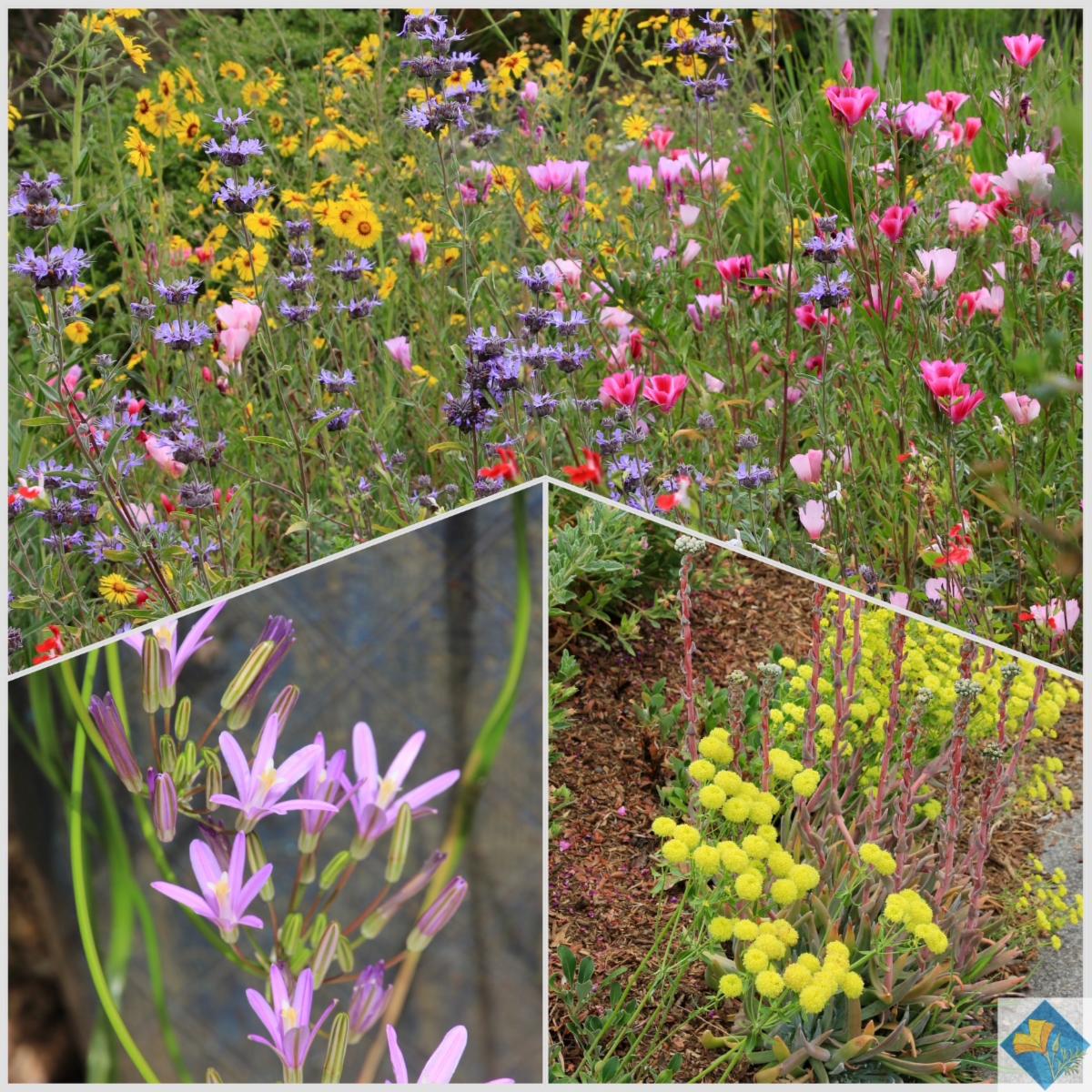
Master Gardener Bill Klausing's garden is a pollinator paradise. In July you will find many blooming natives. Among them:
Brodiaea californica 'Babylon'
Eriogonum umbellatum (sulfur buckwheat) and Dudleya caespitosa
Eriogonum nudum 'Ella Nelson's yellow', Clarkia amoena (farewell to spring), Diplacus aurantiacus 'Creamsicle'(sticky monkey flower)
Salvia clevelandii 'Pozo Blue', Clarkia amoena, Madia elegans (tarweed)
| | |
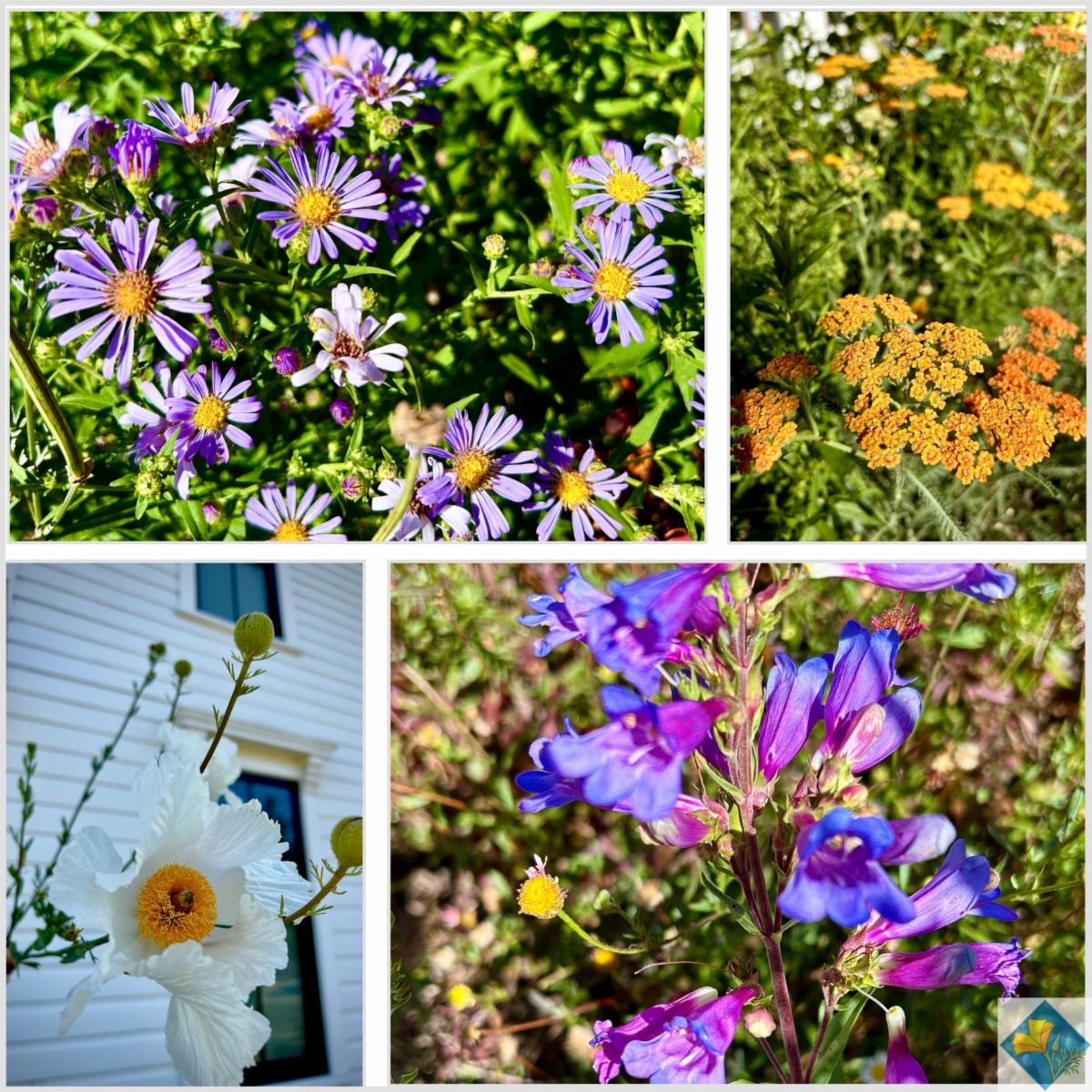
Master Gardener John Dennis describes his garden as a pollinator party! Here are a few of the natives you will find blooming in his garden in July.
Matilija Poppies Romneya coulteri
California Aster Symphyotrichum chilensis
Penstemon heterophyllus ‘Margarita BOP’
Yarrow Achillea ‘Terracotta’
| | |
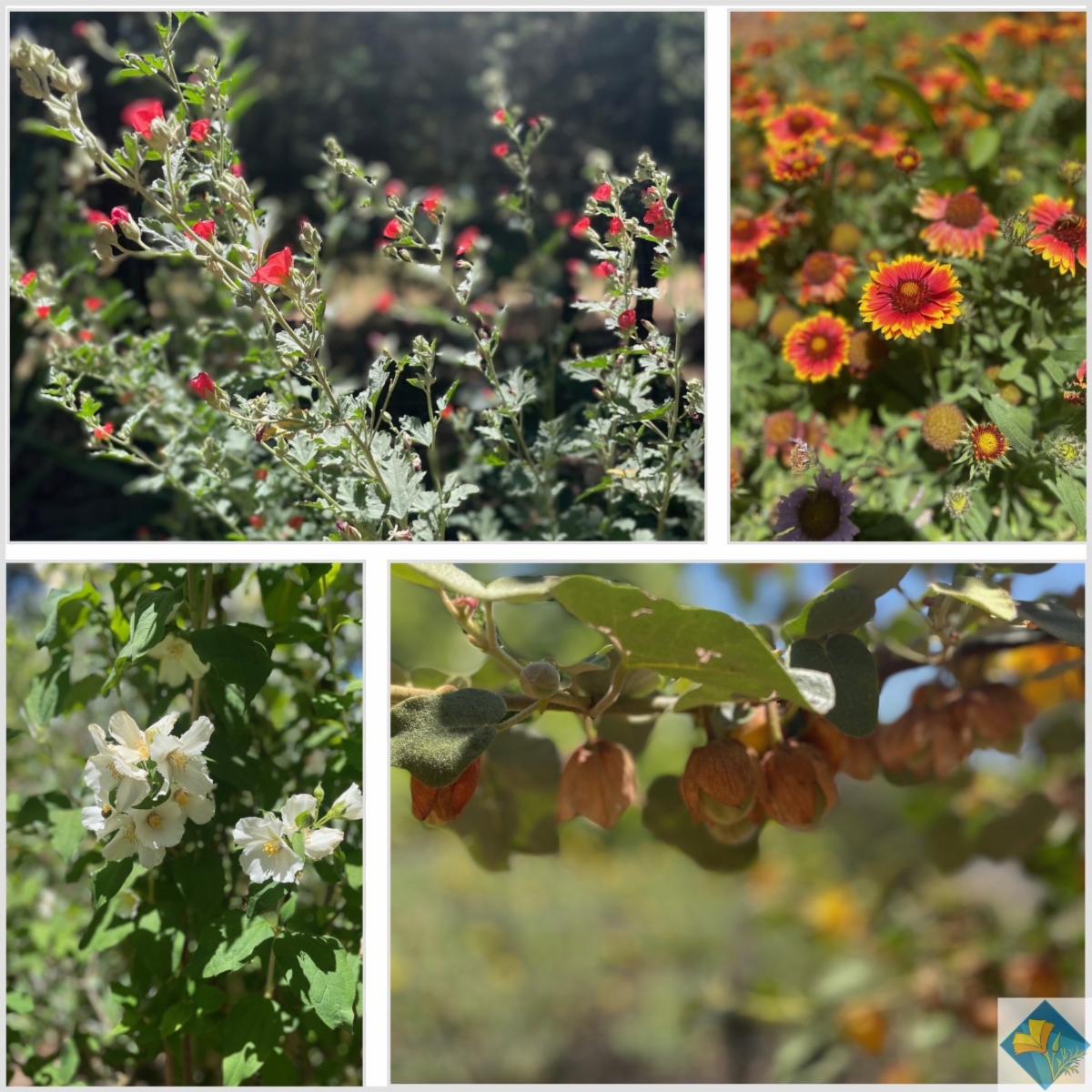
Master Gardener Dandi Hagler's garden is abundant with blooms of all color in July.
Philadelphus (mock orange)
Spharalcea ambigua (Desert Mallow)
Fremontedenron Ken Taylor (flannel bush) CAL: Fremontodendron 'Ken Taylor' (flannel bush)
Gaillardia (Blanket Flower)
Calycanthus occidentalis (spice bush)
Carpenteria californica (Bush Anemone)
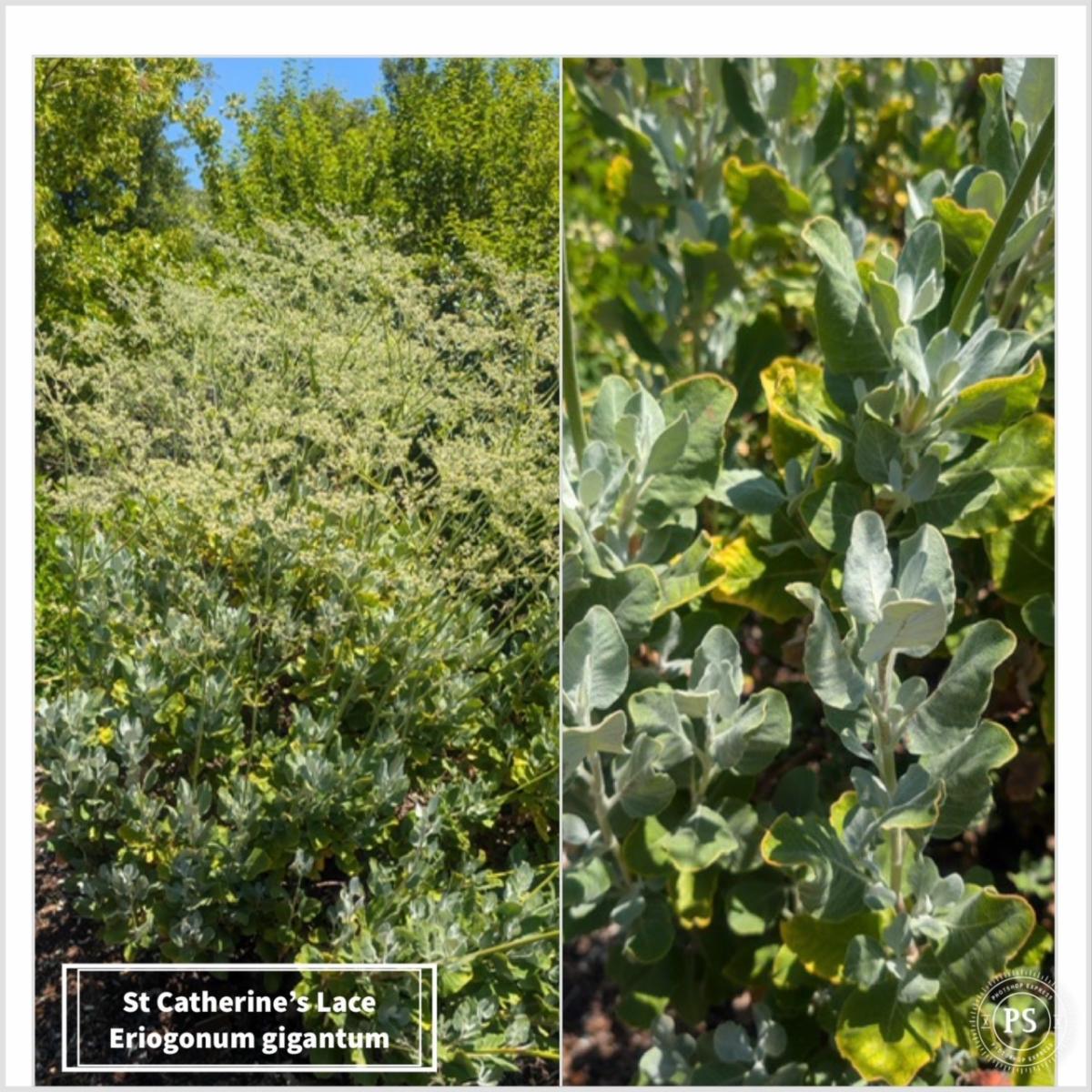
| | Master Gardener Kim Pearson is a longtime native plant gardener. In July Kim's garden features St. Catherine's Lace (Eriogonum giganteum.) The flowers which are just beginning to open, will cover the plant in white flowers for months eventually turning to rust by the end of summer. They make excellent dry flower arrangements. | | |
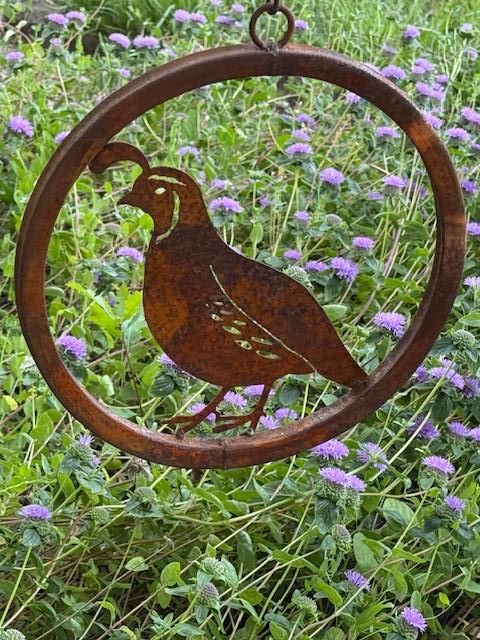
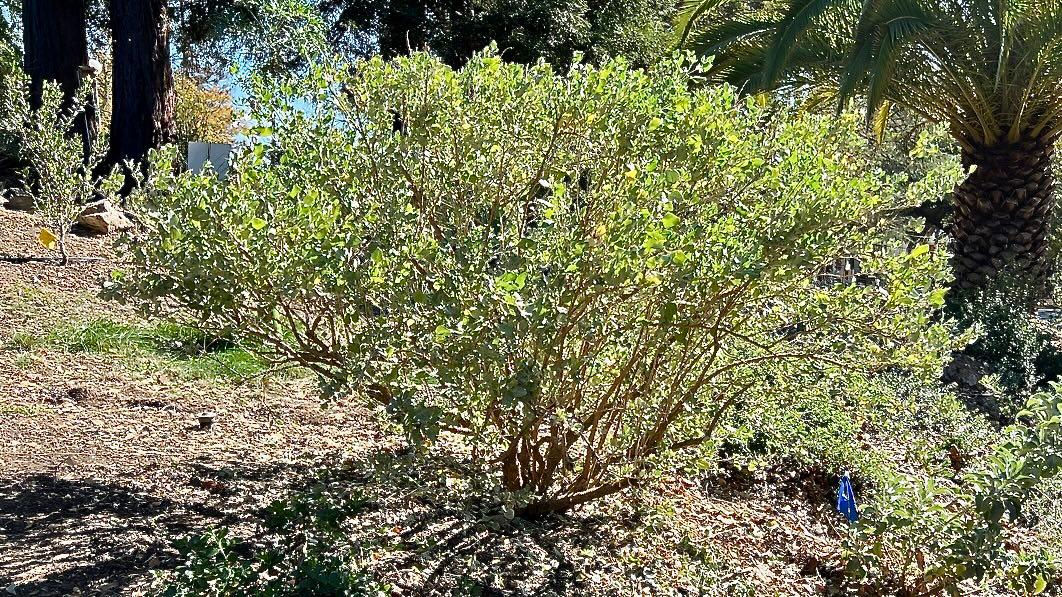
Coyote Mint, Monardella villosa is a spreading subshrub distinguished by its fragrant mint-scented foliage and delicate lavender flowers. During the summer blooming season, the flowers are attractive to bees and especially butterflies. The 'Russian River' cultivar is a popular nursery selection.
Coyote mint does best in well-drained soil. It is drought tolerant, but bloom and foliage quality improve with some summer irrigation, particularly inland. Light pruning helps maintain a neat appearance.
| | |
In the Food Garden
Keeping it Healthy and Happy
| | |
When it becomes excessively hot, humans seek out shade and drink more fluids than normal to prevent sunburn and avoid becoming dehydrated. Similarly, most plants also are vulnerable to damage and dehydration during extreme heat.
While most plants need at least six hours of sun to thrive, too much sun, especially in combination with higher-than-normal temperatures, can impact a plant’s health and productivity. Temperatures over 90 degrees can cause plants to lose their flowers and will also slow photosynthesis.
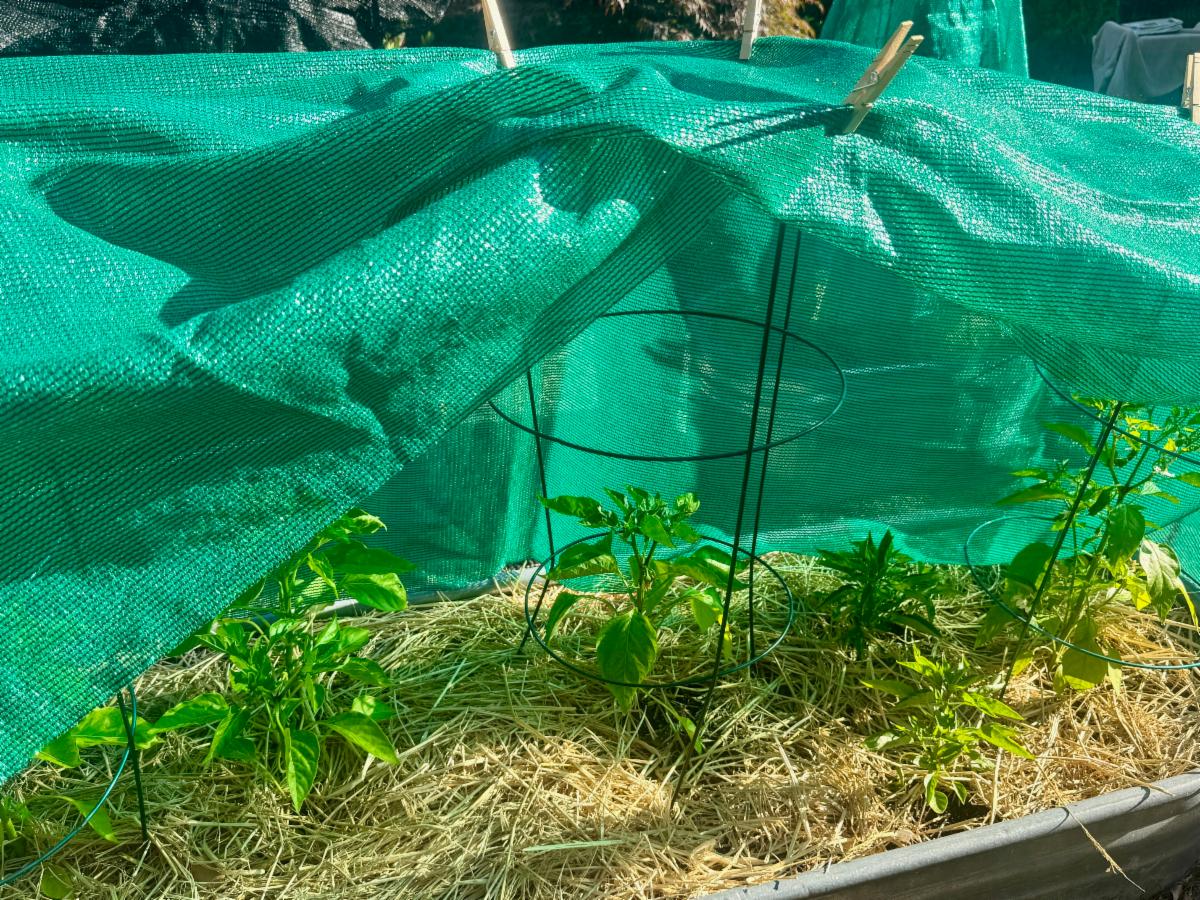
In addition to making sure your plants have ample water, a great first line of defense is to provide your plants shade. If they’re in containers that can be easily moved, a simple solution is to temporarily place the container in a shady spot during the hottest time of the day – which is midday and afternoon. To read entire article which includes links to more information click here.
| These short videos from our Master Gardener's at Harvest for Hungry Garden in Santa Rosa feature information to help you keep your vegetable garden healthy and happy! | | Summer Vegetable Supports | | Raised Bed Tips and Rice Straw Mulching | | | |
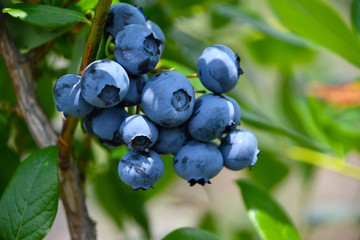
National Blueberry Day is July 8. It is a day dedicated to celebrating the health benefits and deliciousness of blueberries.
Most gardeners plant blueberries to reap the rewards of the delicious fruits, but they are often planted as an ornamental for the benefit of their attractive foliage and shrubby form. Blueberry bushes will grow in nearly any area regardless of the intensity of the sun if adequate cultural methods are adhered to, including soil acidity, sufficient water, and a protective mulch over the root zone. For more information on blueberries including soil, planting and ongoing care, and fruit protection click here
| | |
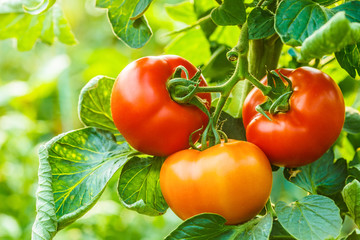
Common Tomato Problems:
One of the most frustrating tomato growing issues is poor fruit set when an apparently healthy tomato plant is repeatedly not producing tomatoes. There can be several causes:
Temperature: Depending on the variety, fruit set may fail after several days of nighttime temperatures below 55°F, or when daytime temperatures exceed 90°F. Fruit set failure due to cold weather might be improved with fruit-setting hormones available in retail nurseries, but it will not help during hot weather.
Light: Fruit set may fail when sunlight is inadequate. Tomato plants require at least 6 hours of sunlight per day.
Fertilizer: Applying high concentrations of nitrogen fertilizer causes plants to grow lush, leafy growth but will significantly delay flowering and fruit set. Wait until the first fruit is set to give plants some extra nitrogen fertilizer and apply every 4-6 weeks afterwards.
For more details on growing tomatoes in the home garden Click Here.
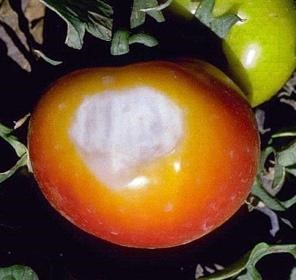
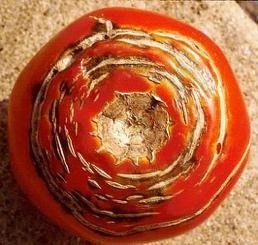
| | Sunscald is another common tomato problem. When tomatoes are exposed to the hot sun, they may develop a white leathery patch on the surface facing the sun. The exposed areas often become sunken and wrinkled. When the fruit turns red, the leathery area remains white and sometimes becomes covered by black, secondary mold. Affected tomatoes are edible unless mold has developed on them. Tomatoes are most susceptible to sunscald when they are a mature green and just starting to turn color, especially if there is insufficient foliage on the plant. Make sure not to prune leaves and branches that are protecting developing fruit. If necessary, you can cover the plants with shade cloth during the hours of the most intense sunlight. | | Cracking Another common tomato problem is cracking, which comes in two different forms: radial and concentric. Radial cracking starts at the stem end and extends toward the blossom end; concentric cracking occurs in rings around the stem scar. It is possible to have both types at once. Cracking occurs when the interior of the tomato expands faster than the skin, and the skin splits. Some varieties are more susceptible than others. Cracking is most likely to occur as the tomatoes are large but can occur at any stage of development. Cracking can be reduced by selecting less susceptible varieties, reducing fluctuations in soil moisture, and maintaining good foliage cover. Affected fruit are edible unless mold has started to grow in the cracks. | | |
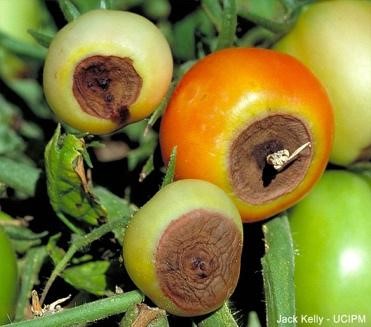
Blossom end rot is a result of a low level of calcium in the tomatoes that causes them to turn brown-black on the bottom (the blossom end). Some varieties, especially paste-type tomatoes, are more affected than others. Even though unsightly, affected tomatoes are still edible if you remove the rotted ends and the remaining portion has not begun to decay. Adding calcium to your soil will not hurt but may not help. Rot can occur even when there is an ample supply of calcium in the soil. Actively growing tomatoes must have a continuous supply of calcium to prevent these spots from developing, and the most common hindrance is inconsistent soil moisture.
Click Here for more information on reducing blossom end rot.
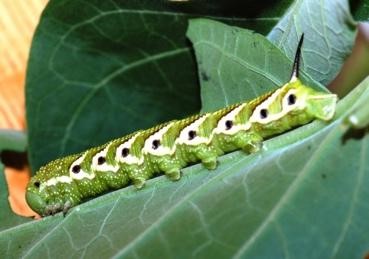
| | Tomato Hornworm The primary pest on tomato plants is the hornworm which chews holes in tomato foliage and sometimes eats the green fruit. Unchecked, they can decimate a tomato plant. The mature caterpillars are about 4” long with a distinctive horn at the rear. Bt (Bacillus thuringiensis), a naturally occurring soil bacterium, can be sprayed when caterpillars are small. Follow label directions for application. However, it is not very effective on larger caterpillars, so handpicking is often the best solution. | | Tomatoes: Preventing Problems During Heat Spells | | Tomato Care: How to Prevent Tomato Problems | | |
As Project Lead at Harvest for the Hungry demonstration garden, Master Gardener Tobi Brown and her team oversee the planning, planting, and public education of our thriving demonstration garden. With deep knowledge of seasonal crops, soil health, and sustainable growing practices, Tobi mentors volunteers and educates home gardeners on how to grow their own food successfully. Tomatoes are one of Tobi’s specialties.
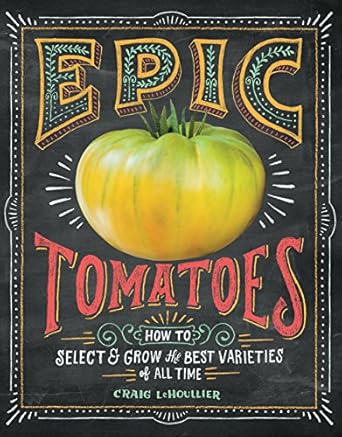
Tobi's go-to tomato book is Craig LeHoullier's Epic Tomatoes: How to Select and Grow the Best Varieties of All Time. It is very helpful when choosing varieties and it is a beautiful gift book.
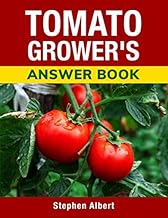
Stephen Albert's Tomato Grower's Answer Book is another of Tobi's favorites.
| | |
Question: My garden has a number of California natives. I’m thinking of adding some new non-native shrubs that do well in our climate. What do you suggest?
Answer: In making your selection, we suggest that you look for plants to complement what you already have and with similar water requirements to natives. Maybe you have plants of a certain color, or of varied heights. Perhaps you want a garden that serves a purpose like habitat support, as well as drought tolerance and disease resistance. Visit our Sonoma Superstars list for some non-native recommendations that achieve the look you want. Also consider visiting local nurseries to get a closer look at plants you’re thinking of adding. Perhaps your neighbors have plants in their gardens that you admire and will grow well in your yard.
Here are a few of our favorites:
| | |
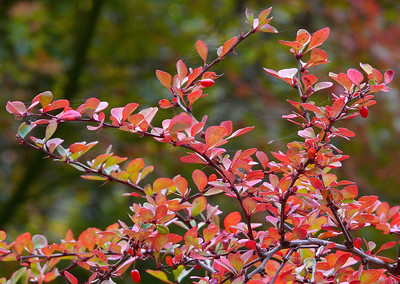
For color, barberry bushes (Berberis thunbergii and cultivars) are some of the most beautiful of landscape plants, with striking variations of spring and autumn colors. The yellow-to-orange flowers produce waxy red-purple berries.
There are both evergreen and deciduous varieties, ranging in size from one to six feet tall and wide. You can use them as specimen plants or plant them in a row and prune as a hedge. To maintain a pleasing shape, prune barberry lightly in early summer after they bloom.
Barberries thrive in sun to part shade, have moderate water needs, and are disease and deer resistant. Birds eat the berries in fall and winter as a food source and then disperse seeds in their droppings.
| | |
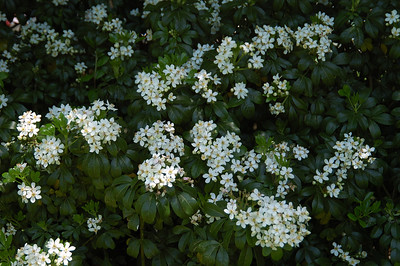
Mexican orange blossom (Choisya ternata) is an evergreen bush known for its showy white blooms in summer and intoxicating fragrance. It also attracts both butterflies and bees. Mexican orange blossom grows from four to eight feet tall and wide and prefers afternoon shade, with full shade in the hottest locations. Plant it in soil with good drainage; it is moderately drought tolerant once established. It has no serious disease or insect issues and needs little pruning other than removing dead or damaged branches.
| | |
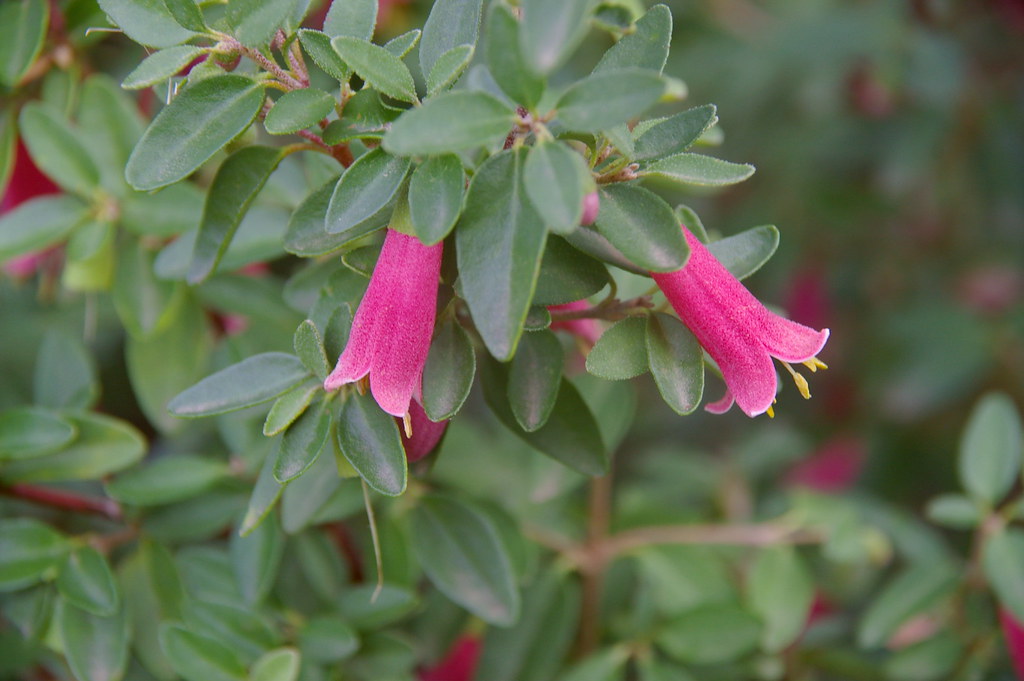
Australian fuchsia (Correa spp.) is a lovely shrub with long, narrow pink flowers that attract hummingbirds. Moderate to large plants grow up to eight feet wide; compact varieties grow two to three feet tall and wide. It likes full sun to part shade with moderate watering. It’s also deer and disease resistant.
Be careful not to overwater or over fertilize it. Regular light pruning stimulates new growth and flowering while preventing the bush from becoming rangy.
| | |
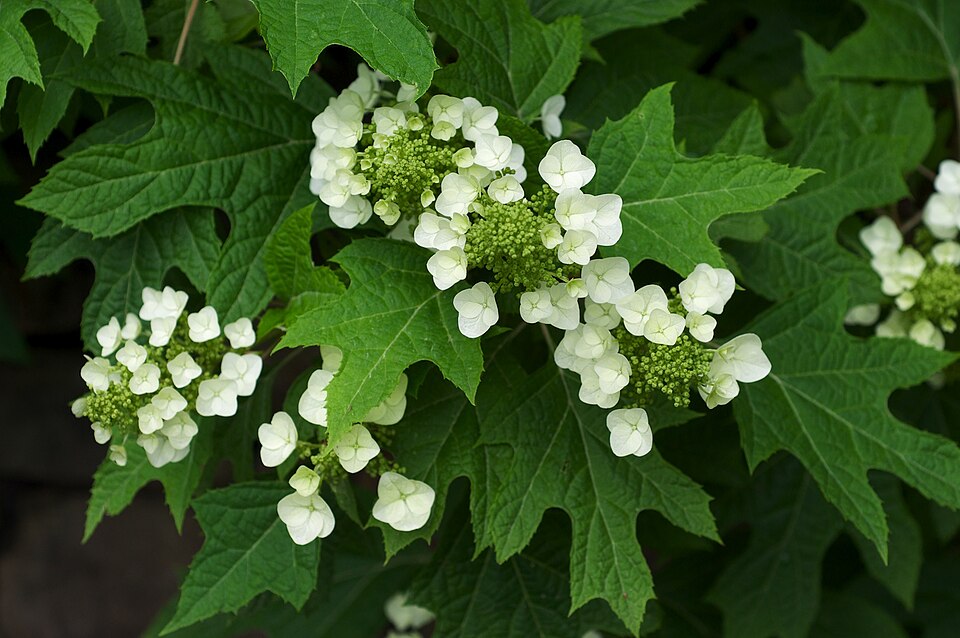
Oakleaf hydrangea bushes (Hydrangea quercifolia) are stunning plants with cone-shaped white summer flowers and leaves that turn red, purple and bronze in the fall.
They have a notably different flower and leaf appearance from most hydrangeas people are used to seeing.
The normal bush size is six feet tall, but both taller and dwarf varieties are available. These plants grow in a range of lighting from full sun to full shade but prefer dappled shade. They need less water than standard hydrangeas and do best in well-drained soil that is amended with compost.
To control size and stimulate new growth, prune them after they’ve bloomed. Next year’s flowers will appear on the tips of new growth. As shrubs mature, cut a few stems to the ground and remove any that are damaged or crowded.
| | |
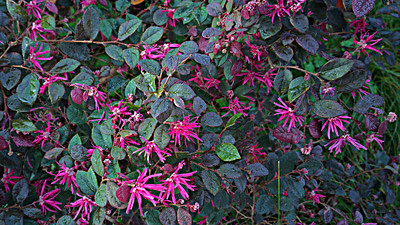
Chinese fringe flower (Loropetalum chinense) is a large evergreen bush with graceful, arching branches. There are many kinds available, but the purple-leafed pink-flowering varieties are especially beautiful. It typically grows six to eight feet tall but can reach 20 feet or more.
This versatile plant can be pruned as a specimen bush, as a small tree, as an espalier against a fence or wall or in a row to form a border or screen. It prefers full sun with some afternoon shade, with well-draining soil. Once established, it’s drought tolerant with no serious insect or disease issues. Prune after flowering to control desired size and shape and remove any dead branches.
| | | | |
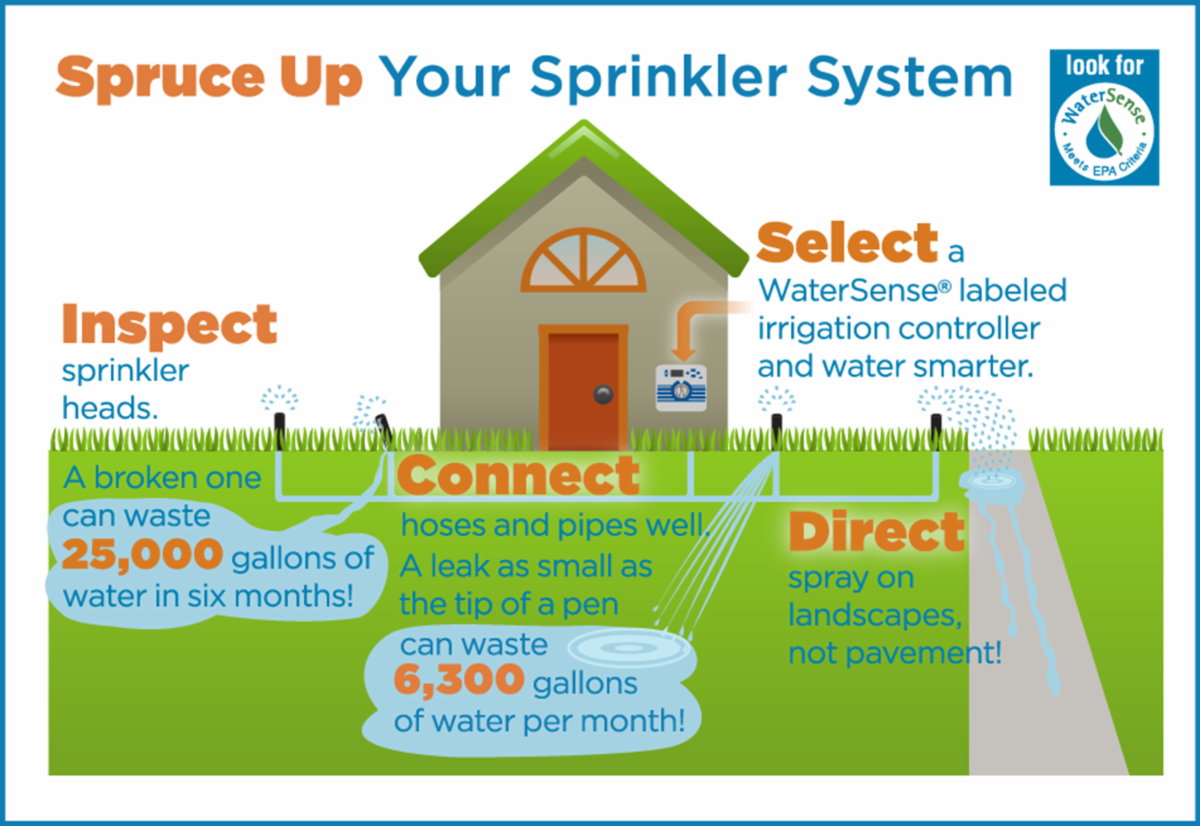
July is Smart Irrigation Month
Celebrate Smart Irrigation Month by sprucing up your sprinklers for the summer irrigation season!
First, check for leaks or breaks in your irrigation system. Simple repairs can save thousands of gallons of water and save money on your water bill.
Set your irrigation controller to the automatic weather adjust mode or enter a customized schedule from our Irrigation Scheduling Tool.
| | | |
Summer Fire Safety in the Garden: July is the Time to Act–Assess and Maintain
With July’s long days, warm winds, and rising temperatures, it's more important than ever to evaluate your landscape for fire risks. Fire-smart landscaping isn’t just about creating a well-spaced yard that is aesthetically pleasing, thoughtful maintenance can mean the difference between a fire-resistant garden and one that becomes fuel in a wildfire.
Begin with a thorough walk-through of your property. Fire-smart landscaping is most effective when it's done by zones, starting closest to your home:
Zone 0 (0–5 feet from your home): This is your most critical zone. Fire safety experts strongly advise that Zone 0 remain free of vegetation, combustible mulch, and other flammable materials.
Clear dead leaves, needles, and debris from gutters, roofs, and between deck boards and crevices. Check corners around your house and hard-to-reach areas where leaves and debris tend to collect. Over time, these areas can quietly accumulate fuel for fire. Check for new debris accumulation frequently.
Zone 1 (5–30 feet): This area still poses a high risk The goal is to reduce the potential heat and flames near your home and create space for the fire department to defend your home.
To maintain this area, first, remove all dead or dying plants and plant debris, and prune out dead and dying branches. Look carefully under shrubs and groundcovers for dry thatch and hidden dead material. A well-maintained plant can be harder for embers to ignite than one surrounded by dead, dry material.
Next, check your space between plants and plant groupings to help interrupt and slow fire spread toward your house. Did plants grow larger than you expected and are they encroaching on your planned fire-smart spacing? Consider pruning and/or removing select plants to ensure adequate spacing is maintained.
Create horizontal space by removing weeds and breaking up mulched areas with some gravel, stones, or leave bare soil, which can be a valuable habitat, including for our native solitary bees.
Maintaining vertical space between ground-level plants and tree branches is important to prevent fire from spreading from ground vegetation into tree canopies. Remove lower tree branches and/or shorten the plants below them.
As you prune excess plant growth, re-evaluate your long-term plant choices and spacing plan. Plant choice and placement are key factors determining your level of ongoing maintenance.
Zone 2 (30–100 feet): Spacing of plant groupings is still important, however, plantings can be closer together in this zone. Prune to maintain separation between shrubs and tree canopies so a fire has fewer chances to move upward or outward.
Mow grasses down to a maximum of 4 inches.
Tips are provided by our Master Gardener colleagues in Marin County. For more fire-smart landscaping information visit our web page at: Wildfire Preparedness in the Home Landscape.
Photo Credit: Marin Master Gardeners
| | Master Gardener Information You Need to Know | | |
Garden Sense is a free program offered by the UC Master Gardener Program of Sonoma County. Our friendly Garden Sense consultants have advanced training in water management, irrigation systems, site assessment, low-water use plants, and sustainable garden practices. We can show you how to easily conserve water (and save money) by creating a climate-appropriate garden that is healthy, environmentally sound, and most of all – beautiful!
Click here to learn more about a free Garden Sense consultation and to find a Water Smart Plant Guide.
| | |
Need gardening advice?
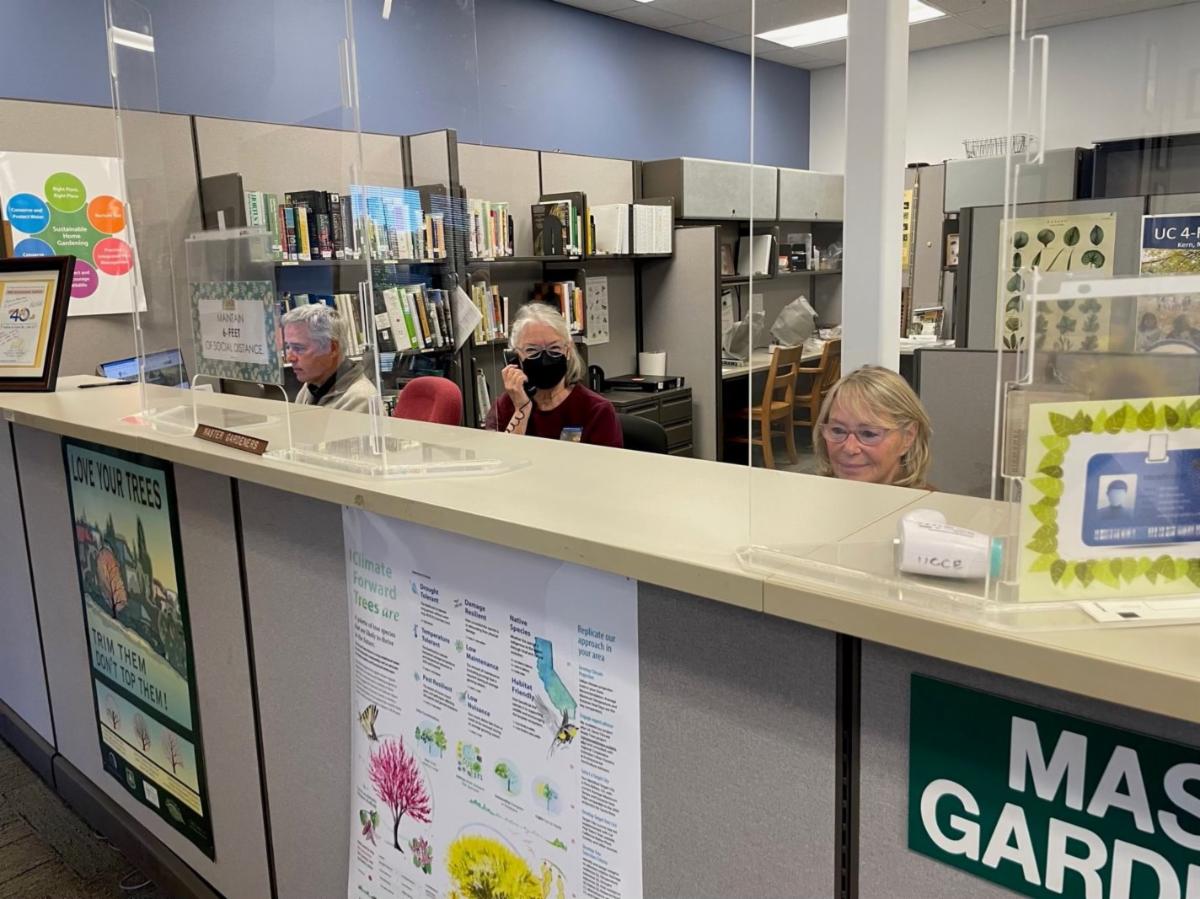
If you have any home gardening questions, contact our Information Desk via email at mgsonoma@ucdavis.edu or call and leave a message at (707) 565-2608. You can also drop off samples at the UCCE office in Santa Rosa (133 Aviation Blvd., Suite 109). If the office is closed, you can leave your sample in the drop box outside the door. Master Gardeners are checking in and will get back to you!
Our website http://sonomamg.ucanr.edu/ offers a bounty of information. You can find garden tips in a month-by-month gardening guide, step-by-step drip irrigation guides, recommended plants for Sonoma County including a list of "Sonoma Superstars," California native plants and so much more!
| | Follow us on social media | | |
Help us have a growing impact!
Click Make A Gift to learn how you can support the UC Master Gardener Program of Sonoma County. Your tax-deductible donation helps us achieve our vision of cultivating environmental stewardship one garden at a time.
| | | | |