Issue #94 Issue #112 | December 2023 | June 2022 | |
|
In This Issue of
Saving Military History One Soldier at a Time
December 2023 Edition
| |
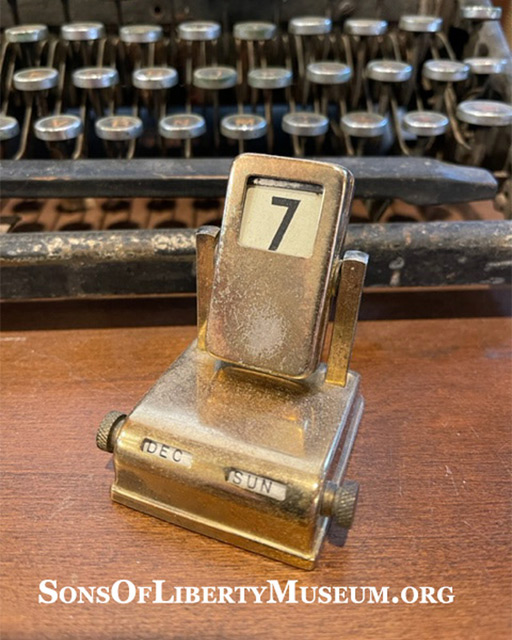 | |
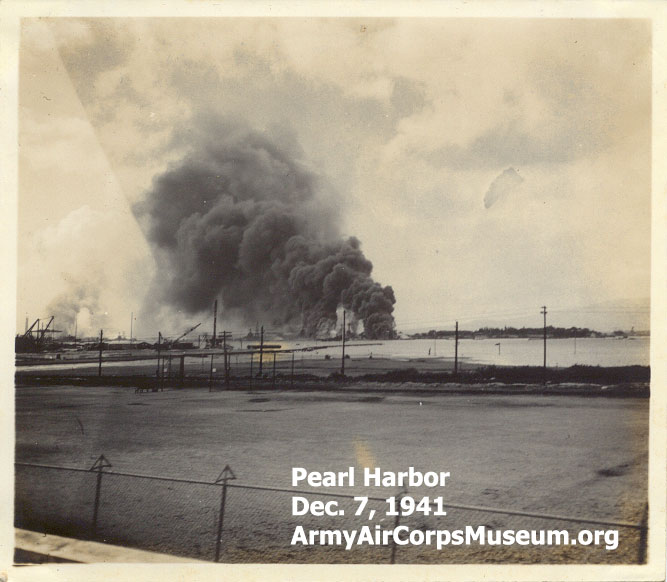
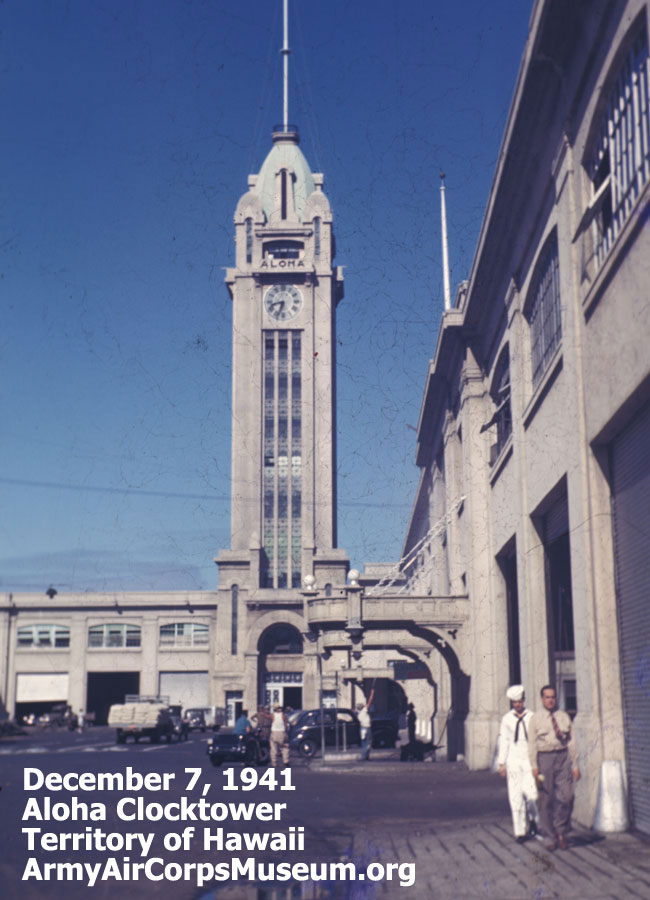
On the anniversary of the December 7, 1941 attack on Pearl Harbor by the Empire of Japan we remember those that made the ultimate sacrifice on that fateful day. This event committed the U.S. to this global war that would not reach its conclusion until 1945.
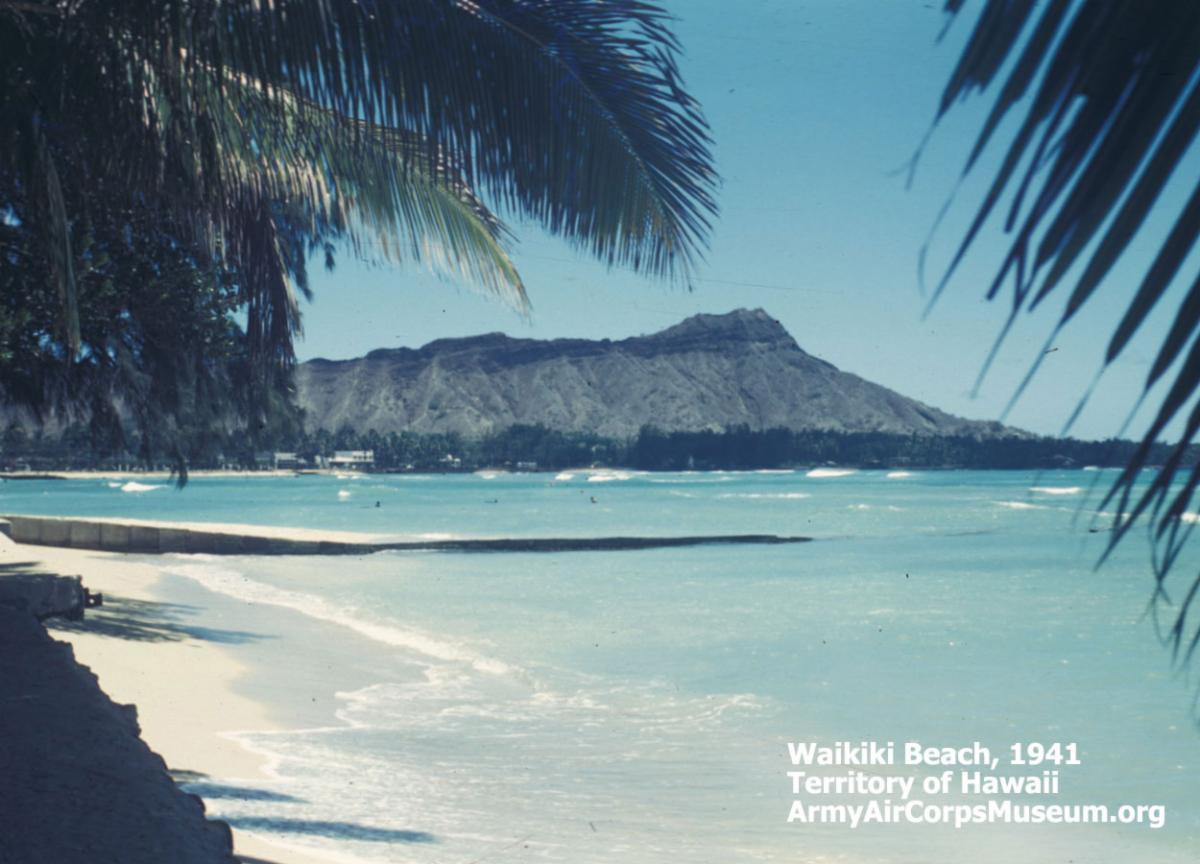
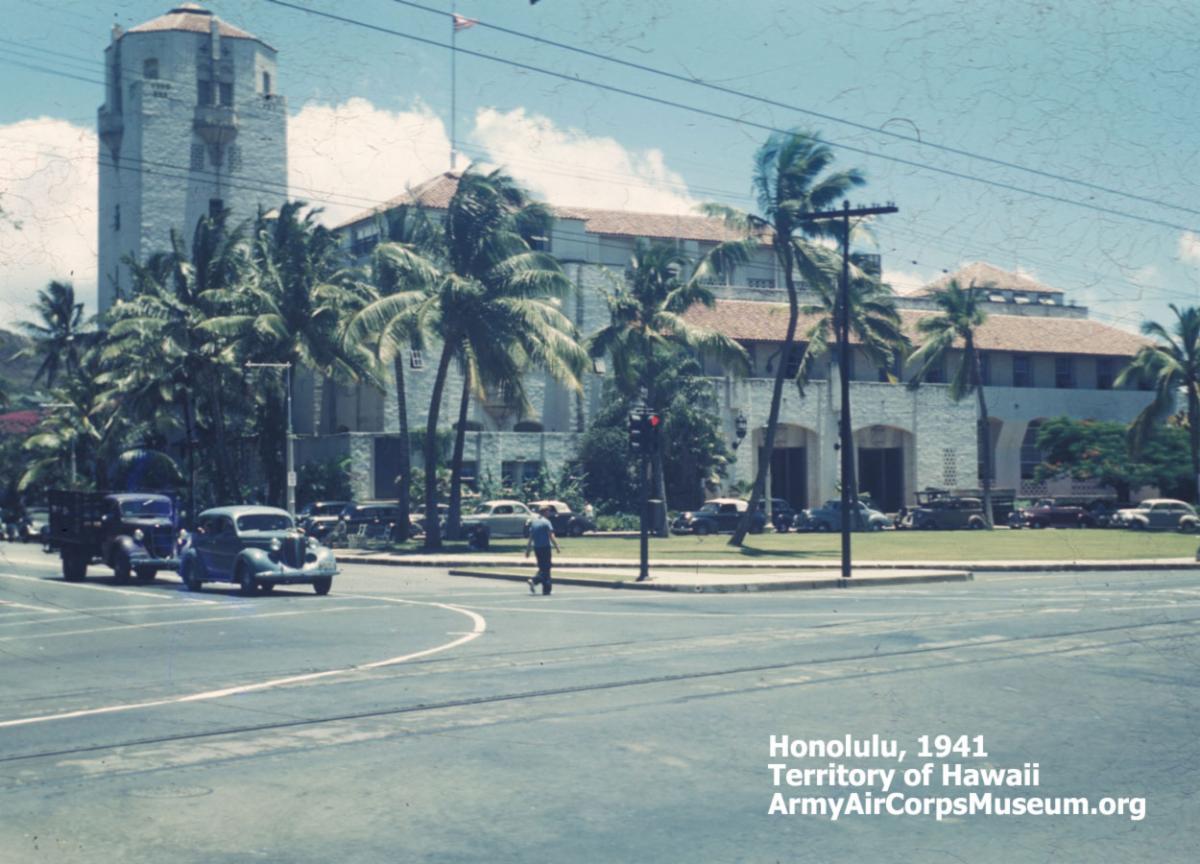
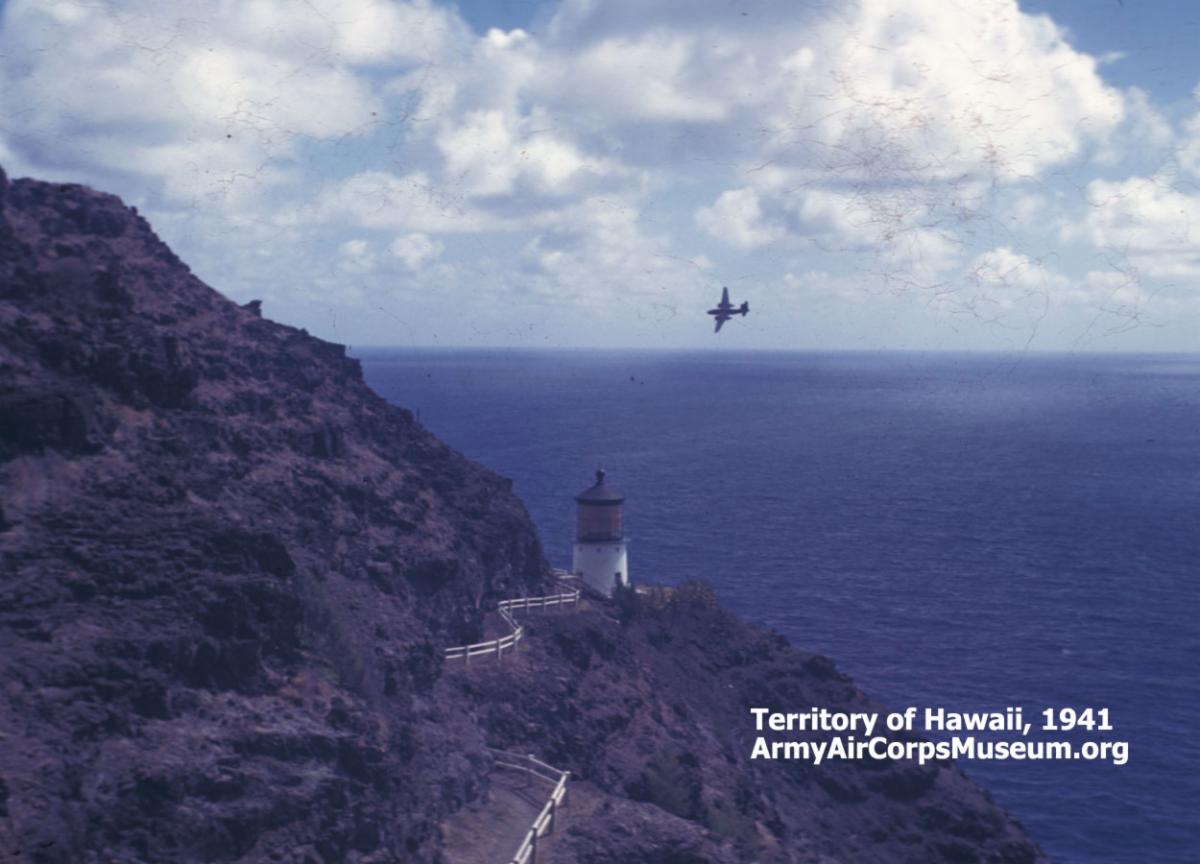
In this issue we have photos of Hawaii in 1941 including a number in color. Read some history of this event and much more in this edition of our newsletter.
Please consider us this giving season. Thank You.
Want to help Support Our Mission?
Sons of Liberty Museum - Secure Donation
Army Air Corps Museum - Secure Donation
Thank you for all of the great artifact donations!
We want to send out a special thank you to all of our volunteers who have been helping us on many projects. We could not have accomplished so much without your assistance!
Thank you for your support!
Artifacts help tell the stories, money makes the engine run, please
Donate Now!
We tell history! Saving Military History One Soldier at a Time.
Remember those that made the #ultimatesacrifice #mia #pow #kia #sonsofliberty. #patriots #army #navy #marines #aircorps #airforce #coastguard #spaceforce #merchantmarine; all those that have worn the cloth.
Join us on this journey.
In Their Memory,
Robert Coalter, Executive Director
Jason Weigler, Executive Director
Major Robert Weigler, Jr. US Army Ret. - Director
"Saving Military History One Soldier At A Time".SM
"Saving History One Soldier At A Time"SM
| |
|
Attack on Pearl Harbor
The populace knew war was coming, they just did not know when and when it did it was a complete surprise. The next day the President of the United States, Franklin D. Roosevelt, would call it "A date which will live in infamy". It all began on Sunday morning December 7, 1941.
The place was Pearl Harbor on the island of Oahu in the then Territory of Hawaii. The home base for the US Navy Pacific Fleet contains Ford Island in the center of the harbor on which numerous docks were located including Battleship Row. This expansive military complex also included Hickam Field that housed elements of the US Army Air Forces bombardment and pursuit groups.
At 7:48 AM, the Japanese surprise air attack began, launched from a floatilla of six aircraft carriers protected by nine destroyers, two battleships, two heavy cruisers, one light cruiser, nine destroyers, submarines and other supporting vessels. Aboard the carriers were over 400 aircraft. The attack force was led by Admiral Chuichi Nagumo under the overall command of Marshal Admiral Isoroku Yamamoto the commander in chief of the Japanese Combined Fleet. While the target and objective of the attack are attributed to Yamamoto, the responsibility for the planning and tactical implementation fell to Captain Minoru Genda a veteran of many Japanese victories to date.
Japanese Objective
The reasons for the Japanese attack were numerous; crippling the US Navy while they could finish their Pacific conquests and consolidate their positions would appear to most to be at the top of the list. The missions' objective therefore was to damage as many ships as possible with the US aircraft carriers being the grand prize. Until 1941 a countries' naval power was measured by its battleships that fired heavy shells over 20 miles. However, as evidenced by the German blitzkrieg of Poland in 1939 Europe using tanks and aircraft, military doctrine was shifting to a strategy of another type of mobility and this relied heavily on aircraft. In the Pacific with the navy required as troop transport, it became logical that the employment of aircraft and thus aircraft carriers would evolve as the striking force before regular army landings. The attack on Pearl would be the culmination of strategy developed over a number of years by the Japanese as the majority of the terrain of their war theater was ocean. While most of their Axis-ally Germany fought on contiguous land mass, Japan fought on both land and sea; but the tactics of mobility had replaced trench warfare and battleship engagements as the new method of conquest.
First Wave
The Japanese attack on Pearl Harbor began. At 6:00 a.m., with 183 aircraft taking off from their carriers led by Commander Mitsuo Fuchida. This included three groups and objectives. In group 1, referred to as Kate Bombers were 50 Nakajima B5N bombers armed with armor piercing bombs targeting the battleships and aircraft carriers. Then 40 more B5Ns armed with torpedoes (Type 91) specially designed for the shallow waters of the Harbor. Group 2 encompassed 54 Aichi D3A, Val, dive bombers with GP bombs targeting the facilities on Ford Island and Wheeler Army Air Field which is adjacent to Schofield Barracks on a plateau in the center of the island of Oahu. Wheeler was home to a number of pursuit squadron aircraft including the 15th Pursuit Group, assigned to the Hawaiian Air Force Command. Group 3 was comprised of 45 Mitsubishi A6M, Zeke, fighters that were tasked with air cover and target strafing at Ford Island's facilities and Naval Air Station, the Army Air Forces' Hickam and Wheeler Fields, Barber's Point and Kaneohe. Hickam was home to the Army Air Forces at Pearl and Barber's Point and Kaneohe were Naval Air Stations situated on the northeast coast and southwest coast of the island respectively.
As the first wave of Japanese attackers approached Oahu from the North, a new radar installation on Opana Point on the northern tip of the island detected inbound aircraft. However, they mistakenly identified them as a flight of B-17s inbound that morning from California. The B-17s were on their way to Clark Field in the Philippines to buttress the 19th Bombardment Group that had been deployed to Clark beginning in September of 1941. They were stopping in Hawaii to refuel as they island hopped across the Pacific to their destination. The flight would be caught in the air without ammunition, some would divert to other air fields such as Bellows, others would attempt to land at Hickam. Some would crash on landing because of lack of fuel others from fire from the Jap fighters.
Second Wave
Led by Lieutenant Commander Shigekazu Shimazaki the second wave consisting of three groups totaling 171 planes took off for Hawaii. In group one 54 B5Ns with general purpose bombs (GP) went after the aircraft and hangars at Kaneohe, Ford Island, Barbers Point and Hickam. Group two, 81 D3As to the harbor targeting aircraft carriers and cruisers. Group three contained 36 Zekes (A6Ms) that were to fly cover for group one and strafe targets of opportunity.
Unfortunately for the Japanese and conversely for the US, the American aircraft carriers were not at Pearl on December 7. The USS Enterprise, USS Lexington and USS Saratoga were out to the west of Hawaii at this time. The carriers lack of presence on this day may have been a strong determining factor in Nagumo's cancelling the third wave attack.
Aftermath
The 5th Bombardment Group, stationed at Hickam Field lost a number of B-17s and B-18s in the attack. Men from their photo group captured many shots of the damage and are in the collection of the Army Air Corps Library and Museum. You can view many of these pictures of Pearl Harbor and Hickam Field.
The Japanese did not obtain Yamamoto's ultimate goal, the carriers' destruction, but nevertheless a large amount of damage was done by the attack. In the battle that lasted approximately 90 minutes, the US lost four battleships, sunk in the harbor (USS Arizona, USS Oklahoma, USS California, USS West Virginia), 3 more were damaged (USS Maryland, USS Pennsylvania, USS Tennessee) and one was grounded (USS Nevada). An assortment of cruisers, destroyers and other ships were sunk or damaged. On the aviation side of the ledger, there were over 400 planes on Hawaii spread among all the airfields. 188 were destroyed 155 of which were on the ground and nearly 160 damaged including the B-17's that were arriving from California that morning. Personnel losses were 2335 soldiers killed, 1143 wounded. Civilian losses were 68 killed and 35 wounded.
Besides the stated damages there were numerous other items that were destroyed: vehicles, buildings, hangars, barracks, equipment, runways and other essential items.
At the time the attack on Pearl Harbor galvanized a nation that sacrificed and worked with one goal that of victory and the unconditional surrender of Japan and Germany. The Japanese may have missed out on the carriers on December 7, but the industrial might of the US would hardly notice the losses of the ship and aircraft of that day as the next few years their production would replace those losses many times over. It would take nearly four years but final victory would belong to America and her Allies.
Background
The global situation leading up to the Japanese attack on Pearl Harbor in 1941 was characterized by complex geopolitical tensions and strategic maneuvering among several major powers. Japan, seeking to expand its influence in the Pacific, faced international isolation due to its aggressive actions in China, including the occupation of Manchuria in 1931 and the subsequent invasion of other Chinese territories.
The conditions were influenced by Japan's desire for natural resources, particularly oil and rubber, which were vital for its military and industrial capabilities. The United States, in response to Japan's expansionist policies and its alliance with Germany and Italy (the Axis Powers), imposed economic sanctions, including an embargo on crucial resources like oil and scrap metal, severely impacting Japan's ability to sustain its military operations.
Strategically, Japan viewed a decisive strike against the U.S. Pacific Fleet at Pearl Harbor as a means to incapacitate American naval power in the Pacific and establish its dominance in the region unopposed. The attack aimed to cripple the U.S. naval forces and create enough of a power vacuum to allow Japan to solidify its control over Southeast Asia and access the resources it desperately needed.
This intricate geopolitical landscape, characterized by conflicting territorial ambitions, resource scarcity, and alliances, culminated in Japan's decision to launch a surprise attack on Pearl Harbor on December 7, 1941, which thrust the United States into World War II.
Order of Battle
The order of battle for the Pearl Harbor Attack on December 7, 1941, involved a well-coordinated Japanese assault on the United States Pacific Fleet stationed at Pearl Harbor, Hawaii. The Japanese strike was carried out by a combination of six aircraft carriers organized into a carrier strike force, supported by various other vessels and aircraft.
The Japanese carrier strike force consisted of six aircraft carriers:
- Akagi: Served as the flagship of the strike force.
- Kaga: Another aircraft carrier under the command of Vice Admiral Chuichi Nagumo.
- Soryu: Contributed significantly to the aerial assault.
- Hiryu: Played a key role in the attack, launching planes against American targets.
- Shokaku: Participated in the assault on Pearl Harbor.
- Zuikaku: Another carrier involved in the attack, carrying out airstrikes.
These carriers carried a total of approximately 350 aircraft, including bombers, torpedo planes, and fighters. The strike force was divided into two waves for the attack.
Supporting the carriers were several other vessels, including cruisers, destroyers, and submarines. Additionally, the Japanese attack involved midget submarines that attempted to infiltrate the harbor.
The strike aimed to hit key targets within Pearl Harbor, focusing primarily on the U.S. Pacific Fleet's battleships, cruisers, and aircraft stationed there. The primary targets were the battleships moored along "Battleship Row," including USS Arizona, USS Oklahoma, USS California, USS West Virginia, and others.
The attack was swift and devastating, catching the American forces by surprise and inflicting significant damage on the U.S. Pacific Fleet. The success of the assault resulted in the sinking or severe damage of several battleships, cruisers, and aircraft, dealing a heavy blow to the American naval capabilities in the Pacific at the outset of World War II.
| |
Recollections of December 7 by Betty Keim
"December 7, 1941 was going to be just another work day for a poor hard working nursing student –me. Or so I thought. I was up at the usual time, pulled on my white cotton (yes, I said cotton) stockings and put on my comfortable but very ugly white duty shoes. (We were now allowed to wear white shoes and stockings). Then I put on my blue and white striped uniform. Actually the uniform was not too bad except it seemed so very long. And it was. The bottom of the hem had to be 12 inches from the floor. It most certainly did not show off our young good looking legs. Then over the uniform went the starched white bib and apron. And of course the very heavily starched collar and cuffs had been pinned in place. The cuffs would still rub our upper arms and even leave marks on the skin but the stiff collar was THE worst. It left marks on our necks so badly that the marks were still present months after we had graduated. Then my prized cap was put on. I was really proud of it especially since I had a black velvet band on it. That meant I was a senior nurse. That was status. Why, in less than a year I would graduate, then on to take state board exams and then I would be a registered nurse (if I passed the exam). I would be so very happy. Then I threw my black and gold nurse’s cape around my shoulders and I headed out for the hospital just ½ block from the nurses home.
I would have breakfast and head up to the floor to go to work. Yes, indeed it was work but it was work that I loved. I loved the patients, I loved my status as a Senior and I loved the responsibility of my job—passing medicines.
As I remember, everything went OK that day. I had no big problems. As I said, I was medicine nurse that day. I had a little brown bakelite tray about 6 by 10 inches on which I carried the medicines to the patients. Liquid medicines were poured in little one ounce glass medicine glasses. Tablets were put on a little metal tray that fit right on top of the medicine glass. In that way you could give both liquids and pills to the same patient without taking up much space on such a little tray. Medicine identification cards would be pushed down in a slot at the back of the little metal pill tray. The cards were different colors depending on what time of day the medicine was to be given. I can remember only the white card which meant the medicine was to be given at bedtime (HS) or when ever necessary (PRN). It was an efficient method.
At any rate I was doing well in getting my meds out and per usual I was anxious to get at my charting before it was time to pour my next round of meds. Charting always seemed to take up so much time but it had to be done—just a necessary evil.
Room 315 was a two patient room about mid way down the hall. The medicine I had with me was for the lady in bed 1, the bed just inside the door. I turned into the room and stepped up to the left side of the bed. It was so long, long ago and I have forgotten the name of the patient but I surely remember how the room looked. It was dark and dreary and a little cluttered but heck, that describes most all the rooms on the floor.
Anyway, the patient was a nice lady and was not critically ill but at this time she just lay there, looking off into space, not even reaching for her medicine. She just had to tell me about the news she had just heard on her little brown bakelite radio.
I have mentioned bakelite before—I guess it was plastic or a fore runner of plastic. Our meal trays were made of it as were such items as the patient’s radio. Jewelry was also made of the stuff and I have noticed in the recent magazines that the jewelry is again more or less in fashion and the old stuff is sought after and brings a nice price when you can find it. I wish I had some of it now.
Well, the little lady said she had just heard that Pearl Harbor had been bombed by the Japanese and President Roosevelt said that we were now at war.
Pearl Harbor. Ships. Bombs. Japanese. War!
I must admit that up to that minute I had never been too interested in any thing other than my training days and getting a job after I got out of school. Oh sure, I knew we had some soldiers stationed at the edge of town—I would often see them up town, out and around. I knew too, that planes flew in and out of Baer Field southwest of town, but so what? And I knew there was fighting in Europe but frankly, all that meant nothing to me. Heck, I was in nurses training; I read text books and very little of the newspapers. Of course television had not yet been invented and while we did have radios, I confess I had never been very interested in the news programs.
So where in the world was Pearl Harbor? And why would the Japanese bomb it and kill us Americans?
The patient told me Pearl Harbor was in the Hawaiian Islands. Well, I did know those islands were way out in the Pacific Ocean somewhere. And I knew they had volcanos on the islands as I even had a piece of lava from one of them. In fact I still have it. I also thought Japan was more far away across the ocean and why would it want to blow up one of the Hawaiian Islands? Why? Why?
The patient said she did not know why, but the Harbor had indeed been bombed and hundreds had been killed. You know, I clearly remember saying to her, “why, they wouldn’t dare!” But of course the Japanese dared, they had already done so.
Well, the lady finally took her medicine and I went out again on my appointed rounds for the rest of the day. Of course never once did I think that a mere 16 months later I would have become a registered nurse, would have worked on general duty at the Wabash County Hospital for 3 months, then 3 months as assistant night supervisor at my old home hospital, the Methodist in Ft. Wayne.
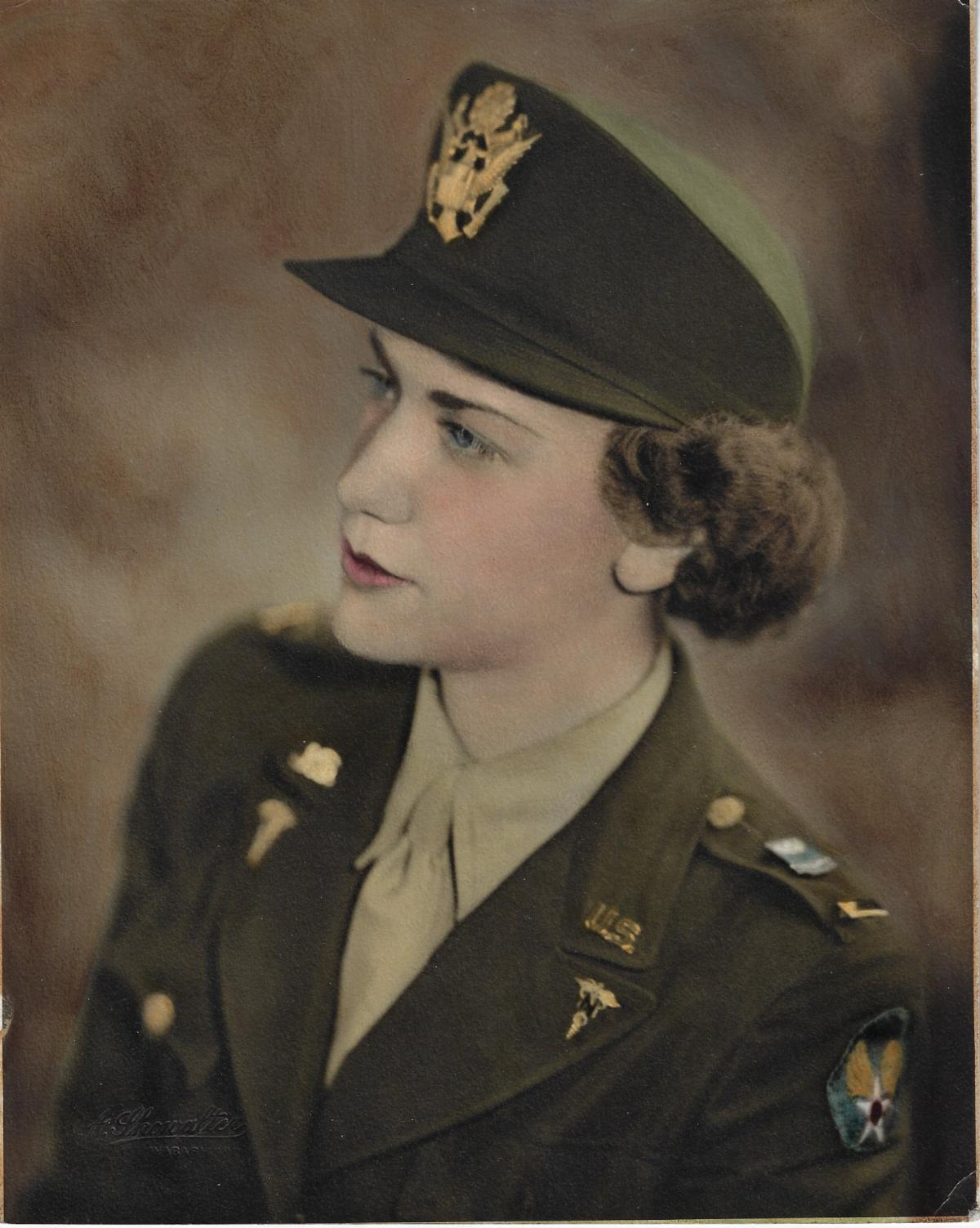
At the end of those 6 months, I actually volunteered to serve in the military nurse corps. I was sworn in as a 2nd. Lt. at that very same Baer Field outside of Ft. Wayne. I had become a member of the Army Air Corps. And even then I never once thought that in 1945 I would be stationed and living at a military base (Hickam Field) which was just a stone’s throw from Pearl Harbor, the place the Japanese had bombed on 7 Dec. 1941—the place I had never even heard of until that patient in bed 1 on third floor in the old Methodist Hospital told me it had been bombed."
---Betty Jane Keim of Ft. Wayne, Indiana would go on to be an Air Evacuation Nurse in the Pacific Theater.
| |
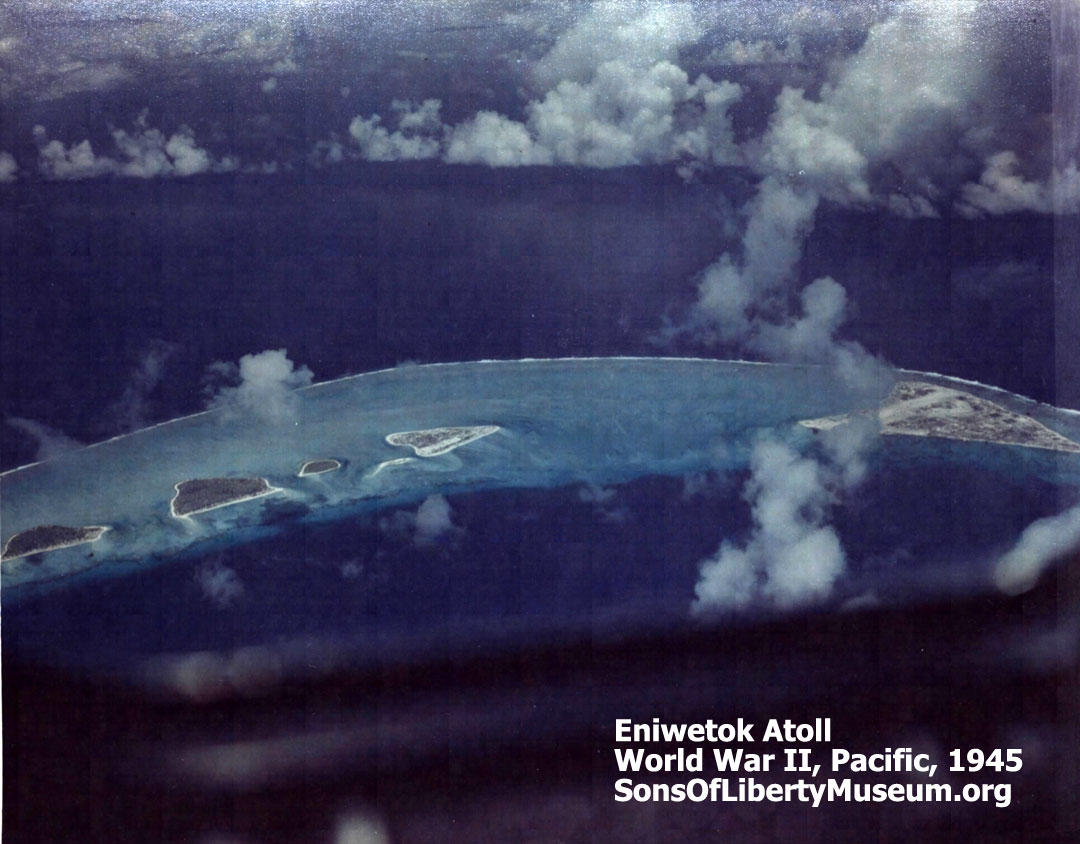
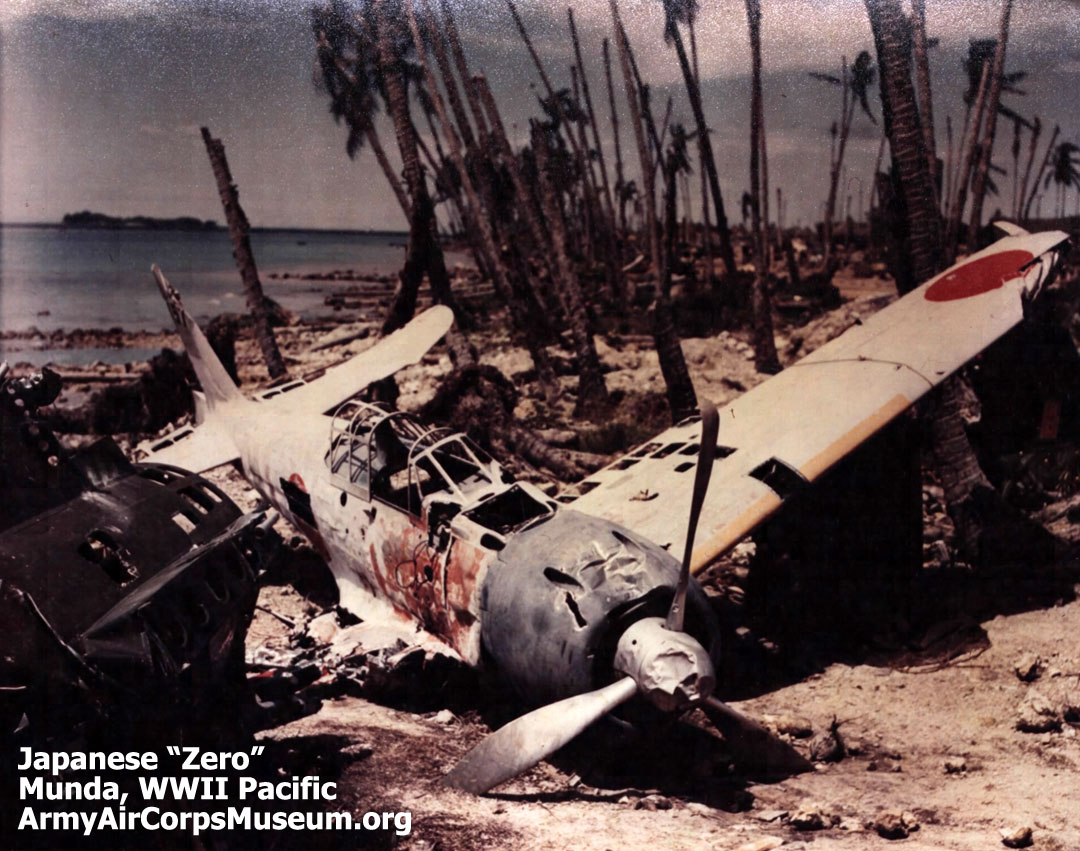
The following two pictures speak volumes about the war in the Pacific following the attack at Pearl Harbor. The first is the Eniwetok Atoll. This made for a natural harbor and would be a strategic location for the US Navy to refit, resupply and rest. In fact, Eniwetok could house more ships than all of Pearl Harbor. The second photo is of a destroyed Japanese Zero. Once American fliers solved the tactics of the Japanese pilots and the mechanical abilities of the Zero, the air component of the Pacific war tipped to the Yanks. | |
USH-Constitution, (MM-1776) | |
|
MM-1776 Launches
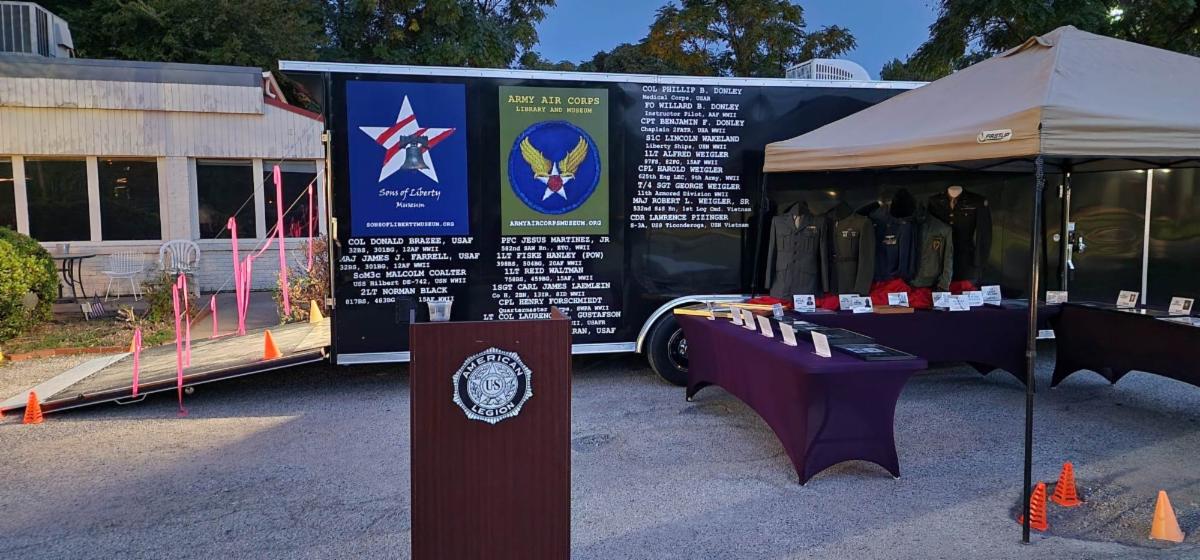
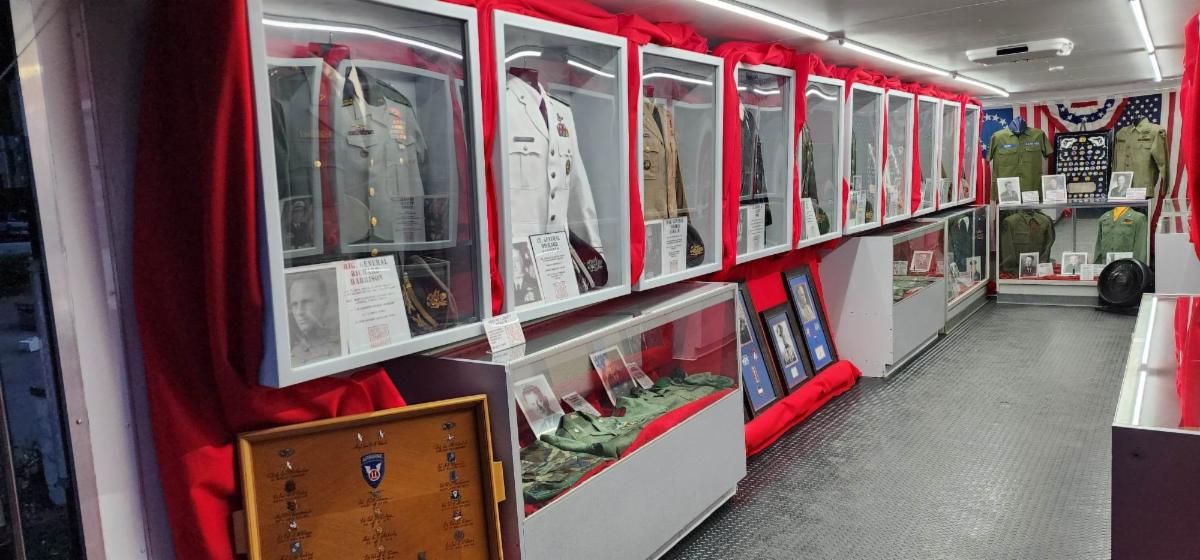
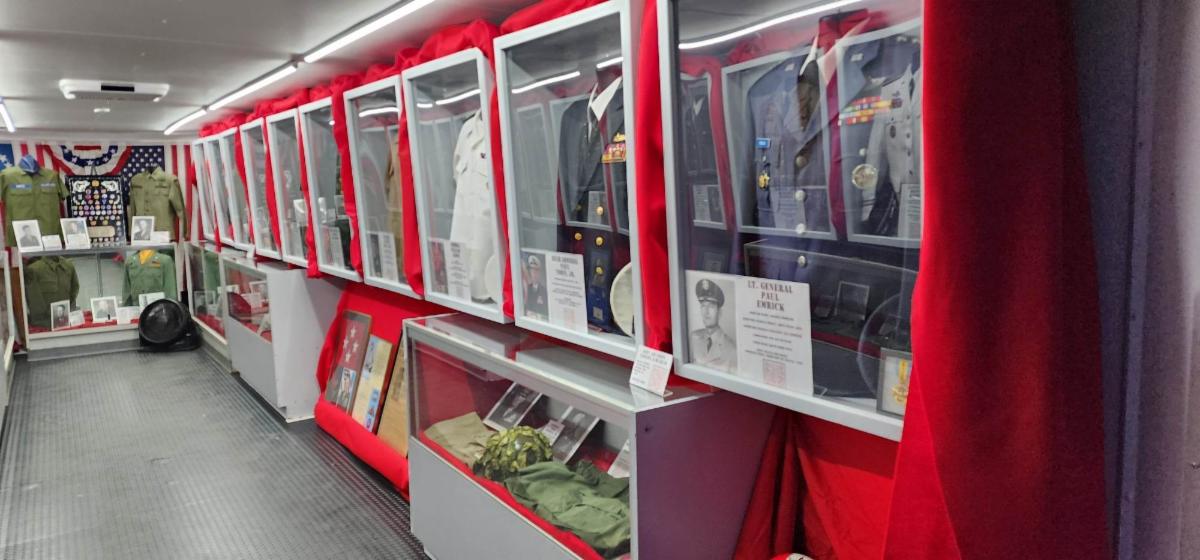
Our grand opening last weekend (Oct 21, 2023) of our new mobile museum, MM-1776.. Thank you to American Legion Post 453 for hosting this event and dinner.
Veteran Memorials
With the launch of our new mobile-museum trailer we have a place for a visual honorarium and memorial for your veteran. Honor your veteran family member with a permanent marker on our new mobile-museum.
Like bricks or pavers, this permanent memorial will be seen by many at schools, veteran and civic events. Get your Veteran Memorial Today!
Read more about Sons of Liberty Memorials
Read More About Army Air Corps Memorials
| |
First Exhibit
The opening exhibit of MM-1776 contained artifacts of admirals and generals.
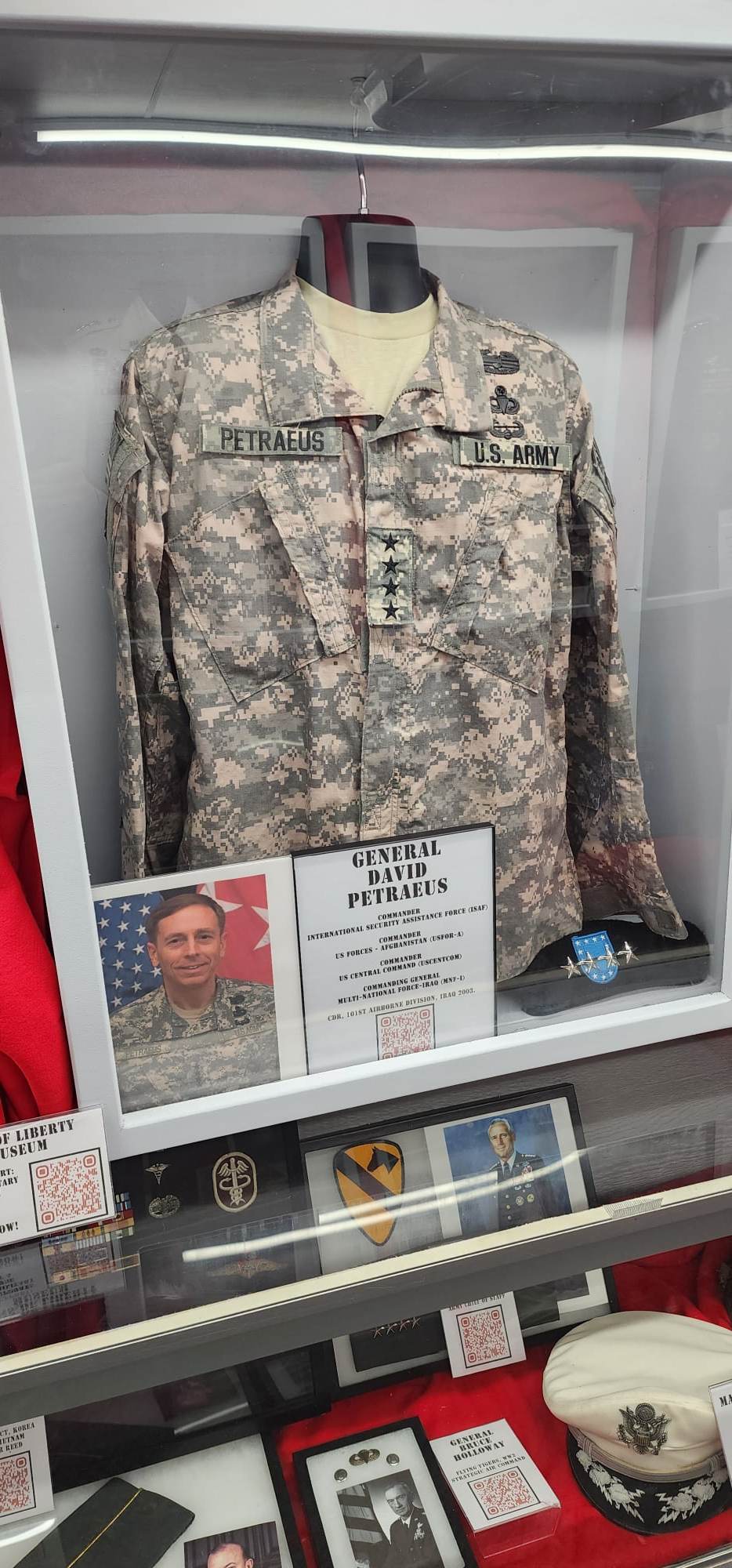
There are over 60 represented in this display. The oldest uniform was from a LT General who as a young Lieutenant fought in the Spanish American War. There is an admiral who had become a Navy Double-Ace in World War II as fighter pilot on both the USS Lexington and USS Enterprise. There is a uniform from one of the commanding generals of the 1st Infantry Division in Vietnam and other commanders during that time. Modern day generals are well represented including the digitals of General David Petraeus, commander of all coalition forces in Iraq/Afghanistan. There are helmets, wings and other artifacts in addition to the uniforms in this snapshot of military leaders of multiple generations.
| |
|
|
If you are looking to volunteer with a non-profit we would welcome your assistance. We have a need to transcribe over 150,000 of these index cards. Distinguished Flying Cross, Air Medal, Soldiers Medal, Bronze Stars and Purple Heart. Getting this information into our database will allow us to make this data searchable. Contact us to get started!
We are also looking for General Orders of World War II, digital copies are welcome; volunteers to transcribe this data.
Transcription of monthly unit histories and other documents are projects to help us recover and preserve history.
| |
Missing in Action & Buried Unknowns | |
|
There are still thousands classified as Missing in Action or as Buried Unknowns. In our partnership with the MIA Recovery Network we have established data on our websites regarding MIAs.
The quest to account for those of our nation's Missing in Action is one of the most noble of endeavors. There are also a large number of recovered remains that are buried in ABMC cemeteries where the identity is unknown. These are known as X-Files.
The recovery of MIAs pose a number of challenges. For example, Navy or Merchant Marine ships that were sunk are unrecoverable and thus ship manifests are the primary and often only source of names for those that have perished but are still accounted.
Each conflict has had its own challenges. At the end of World War II the military had established more than 360 temporary cemeteries, but the dead were being found continually in farm fields, forests, small church cemeteries, isolated graves and the shores of combat zones. These dead were collected and the remains consolidated into the fourteen permanent European, Mediterranean, and North African Cemeteries maintained by the American Battle Monuments Commission along with two permanent cemeteries in the Philippines and Hawaii.
Monetary donations are needed and very welcomed to support these efforts to create case files.
Please consider a DONATION today. Thank You.
#neverforget #bringthemallhome
| |
|
Sons of Liberty Museum
The Sons of Liberty has hundreds of uniforms and thousands of other artifacts in our collection from the U.S. Revolutionary War to Present day. Our web presence now numbers in excess of 500,000 pages. We continue to accept new material for education and research programs.
Our collection includes memorabilia from the front line soldier to the rear echelon clerk. Drivers, infantrymen, pilots, tankers, seaman, medical, artillery, armorers, engineers, quartermasters and much more. Those that were drafted or volunteered; those that did a single tour or made it a career. Those that returned with all types of injuries and those that gave their full measure; killed in action (KIA). All MOS are welcome from the Army, Navy, Air Force, Coast Guard and Marines.
Monetary donations help us preserve and display these pieces of American History. Thank you for your support.
We are Saving Military History One Soldier At A Time. We are honoring the service of the Citizen Soldier.
#sonsofliberty
| |
|
Volunteers
We need volunteers to transcribe award and roster documents. You will place the material into a spreadsheet where it will be added to our database and website. We welcome new dedicated volunteers to work from home and help us with this project!
Interesting Links & Resources
Researching History: https://www.sonsoflibertymuseum.org/military-history-records.cfm
Honor Roll: https://www.sonsoflibertymuseum.org/honor.cfm
Donations
We welcome donations of monies for operational costs. Artifact donations are sought in the form of papers, books, photos, gear, uniforms, jackets, medals, ribbons, weapons, equipment, scrapbooks, biographies, diaries and more. Please Contact Us
Revolutionary War, War if 1812, Civil War, Spanish-American War, World War I, World War II, Korea, Vietnam, Desert Storm, Cold War, Gulf War and current conflict donations accepted. From small to large multi-item donations, they all tell a story.
We need you ! We need your help to further our mission of preserving and bringing this history to the public. As a 501(c)(3) non-profit your qualifying donations are tax deductible.
| |
|
Army Air Corps Museum
The Air Corps Museum online presence encompasses over 500,000 web pages with thousands of photos and other materials. Our artifact collection contains hundreds of uniforms, albums, logs, medals and more from the Army Air Service, Army Air Forces and U.S. Air Force.
World War I, World War II, Korea, Vietnam, Desert Storm, Cold War, Gulf War and current conflict donations welcome!
Volunteers
We need volunteers to transcribe documents, placing the material into a spreadsheet. We welcome new dedicated volunteers to help us with this project! Work from home.
Interesting Links & Resources
Trace a Family Members Military Service: https://www.armyaircorpsmuseum.org/veteran-research.cfm
Honor Roll: https://www.armyaircorpsmuseum.org/honor_roll.cfm
Donations
We welcome donations of papers, books, photos, gear, uniforms, jackets, medals, ribbons, weapons, equipment, scrapbooks, biographies, diaries, letters and more. Please Contact Us
Monetary donations help us preserve and display these pieces of American History. Thank you for your support. As a 501(c)(3) non-profit your qualifying donations are tax deductible.
| |
Items have a story, what tale do yours tell?
| |
Museum Expenditures-Donations | |
|
As a non-profit it's important to let our patrons know where some of their money is going.
This riker-mount display box is one of the most important pieces that we use. They contain ribbons, medals, patches, pictures and other small memorabilia items. They are great to help reserve items as well.
Each year we purchased 500 of these items. We will fill them all with great artifacts in less than 12 months.
$5000.
Constant Contact charges us $1200 annually to create, store and send this newsletter.
Our web servers, domains and hosting cost $7100 / year. Our hosting requirement of storage will only increase over the coming years as we continue to add to our online material.
The annual total for just these three components is $13,000. Naturally, we have other expenditures, but 100% of monetary donations go to operations. All staff and directors are volunteers.
Monetary donations are needed and very welcomed to support these efforts.
Please consider a DONATION today. Thank You.
| |
Rescued History & Museum Quality | |
|
We rescue a lot of military artifacts; items destined for the trash heap. From torn papers and faded ribbons to moth damaged uniforms decades pass and the condition of items deteriorate. These artifacts still have a story to tell.
Many museums only want items in pristine condition, we say differently. Some so called museums only want materials from a well known commander written up in history books or the fighter ace or a man who would fly to the moon or a Medal of Honor recipient.
While we have artifacts such as these we also have the items of the draftee who answered their nation's call and served their tour and then went home. Some were not so fortunate, special place in our hearts for the KIAs. In our mission of "Saving Military History One Soldier at a Time" it is about all who have worn the cloth of our nation's military. Artifacts help us bring stories to life no matter their condition.
We accept donations of artifacts in ALL CONDITIONS.
| |
The Cinema, another way to describe it is it's our own Netflix.
130 combat films represented by 209 clips and 1436 minutes of footage will keep you watching for hours.
Army, Army Air Forces, Navy, Marines. WW2 and Vietnam. There's something for everyone.
This is a subscription service of $14.95/month.
Take a few minutes and go see what's "Now Showing" and decide if you want to signup and start watching. Go now !
| |
301st Bombardment Group, B-17 Flying Fortress. England, North Africa, Italy during World War II.
| |
|
USS Hilbert. Destroyer Escort, DE-742. Pacific Theater of Operations, World War II.
| |
|
Preserve This History, Honor the Service, Provide Education For Future Generations | |
Thank You For Your Support ! | |  |
Thank You For Your Support ! | | |
|
---- What is Liberty ? ----
"definition. the state of being free within society from oppressive restrictions imposed by authority on one's way of life, behavior, or political views."
Merriam-Webster defines it as " the power to do as one pleases, the freedom from physical restraint and freedom from arbitrary or despotic control.
---- So what is a Son of Liberty? ----
In our context and beginning these were the men and women in America who wanted their liberty and freedom from the King of England. They desired a right of self-determination for their lives. They fought for this liberty and codified it in the Constitution of a new country. To keep this liberty they created a military to ward off the any would-be belligerent. Since the War of Independence until and including the present day the men and women who have worn the cloth of our nation's military are its Sons of Liberty. They have fought enemies in other nations, they have fought each other and they have stood as sentinels of the watch.
We celebrate the service of these individuals, we tell the historical story of these selfless patriots.
---- The Sons of Liberty Museum ----
Over 15 years ago we chose a name for this organization and our sister the Army Air Corps Library and Museum. We believe these names accurately describe these men and women who serve. We will not change any name to satisfy a radical viewpoint or computer algorithm. We don't allow for any revisionist history, we tell the factual stories.
We are Saving Military History One Soldier at a Time.
| |
|
Need a Good Book, DVD?
Check out these titles.
| |
|
Somewhere In Italy
I was a navigator in the 459 Bomb Group 758 Bomb Squadron flying B-24's from Torre Giulia Field, tower named 'Coffee Tower', a gravel airfield near Cerignola, on the Foggia Plains of Southeastern Italy during the period August 4, 1944 to May 16, 1945. I flew 50 combat missions over targets in Germany, Austria, Hungary, Poland, Yugoslavia and Northern Italy.
Project Option: 6×9 in, 15×23 cm
# of Pages: 386
IsbnSoftcover: 9781714032860
Publish Date: Dec 12, 2019
Buy It $24.99
| | |
|
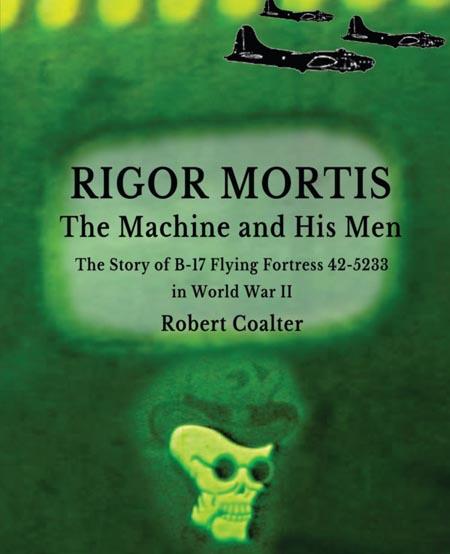
Rigor Mortis:
The Machine and His Men
Most aircraft of World War II had pictures of sexy girls, tributes to sweethearts, songs and home. The planes were fondly referred to in a feminine manor. That was not the case with this B-17 tail number 42-25233. He was Rigor Mortis.
This is the story of Rigor Mortis and his men who flew over 120 missions from North Africa and Italy in 1943 and 1944.
Project Option: 8×10 in, 20×25 cm
# of Pages: 382
IsbnSoftcover: 9781714727803
Publish Date: Apr 20, 2020
Buy It $33.95
| | |
A Novel of MACVSOG in Vietnam. By Gene Pugh a Special Forces Recon Team Member.
| | |
Surrender Not an Option
Survivors guilt is not the only thing that is bothering Allen Purvis. He has to relive in his mind the battles in a denied area when he was assigned to MACVSOG the ultimate secret organization during the Viet Nam war. He is put to the test when he commands his friends to sacrifice themselves to save the others of the unit. Wendy Salas, nurse at the 95th Evacuation Hospital sees the horrors of the war everyday. Her pain is personal. A chance meeting on R&R in Hong Kong brings these two people together as soul mates in a hope that one of them can save the other. Purvis like the others wondered why they were saved and the answer was there all the time.
- Paperback : 312 pages
- ISBN-10 : 1539108333
- ISBN-13 : 978-1539108337
- Dimensions : 6 x 0.71 x 9 inches
Gene is a member of our advisory board.
| | |
|
A Novel. By Gene Pugh a Special Forces Recon Team Member during the Vietnam War..
Hardback: $35.99
Paperback: $19.99
| | |
|
The Reunion Mission
A chance meeting at a military reunion brings Sam Waters together with his former Viet Nam War teammates. But that is not the only surprise. A promise made a long time ago is now called to be cashed in. Will his teammates put their lives on the line for him and his family? Is that bond still there? Because of a rash act on his part the whole mission could be jeopardized. A new future and his past must come to terms for him to move forward.
From Fort Bragg to Dallas and Panama follow the continuing story of Sam Walters and Allen Purvis.
Gene is a member of our advisory board.
| | |
 | |
USAAF
Aircraft Weapons of WWII
By Tom Laemlein
Read More & Order Your Copy
Tom is a member of our advisory board.
Many of the photos and illustrations in this book, some of them in color, are strong enough to be displayed in full page format. The images deliver the gritty details of USAAF armaments’ use down to their nuts and rivets, and the high-velocity rounds they fired. This is a unique photo-study, with many of the photos never-before published.
U.S.A.A.F. Aircraft Weapons of WWII
This book focuses on the war-winning weaponry of the United States Army Air Forces during World War II. With 144 pages containing more than 250 photos it offers stunning visual details of the machine guns, cannons, bombs, and rockets carried into battle by USAAF bombers, fighters, and attack aircraft.Many of the photos and illustrations in this book, some of them in color, are strong enough to be displayed in full page format. The images deliver the gritty details of USAAF armaments’ use down to their nuts and rivets, and the high-velocity rounds they fired. This is the first photo-history of its kind, with many of the photos never-before published.
Combat conditions dictated that many aircraft were adapted into roles for which they were not designed. As necessity is the mother of invention, aircraft were modified in both their roles and their armament. B-25s became ground attackers, A-20s became night fighters, and every wartime USAAF fighter was adapted to carry bombs.
| | |
|
8th Air Force 1943 to D-Day
Enjoy this history of the 8th Air Force from 1943 to D-Day in World War II with this discovered archival film footage. The first footage is in early 1943 on a heavy bombardment mission over Europe. View the heavies as they hit German targets. Watch gun camera footage as fighters of tangle with the enemy in the air. Follow fighters as they attack airdromes and trains.
Watch the men on the ground and in the air with mostly black and white, silent footage.
There is a lot of unidentified aircraft/groups but quite a bit of identified.
Identified: 44th, 91st, 93rd, 94th, 95th, 100th, 303rd, 305th, 385tth and 445th Bombardment Groups.
4th, 55th, 56th, 78th, 352nd, 353rd, 355th, 356th, 357th, 359th and 361st Fighter Groups.
Watch bombers in formation and as they fly through flak (ack-ack). Some have feathered props. Ground crews await the group returns and aid wounded airmen. View some of the nose art that were a source of pride. View B-17s and B-24s in a number of scenes.
Feel like you are in the cockpit of a P-47 or P-51 fighter as they attack Me-109s, FW-190, ME-110, JU-52, JU-88, HE-111 and other German Aircraft. Fly with aces Beeson, Gabreski, Anderson, Blakeslee and many more. Find out which pilots would later become prisoners of war (POWs) and some would be killed in action (KIA). Strafing footage shows fighter pilots attacking aircraft on the ground, airdrome facilities and other strategic and tactical targets including trains and marshalling yards.
Missions include Wilhelmshaven, Berlin, Warnemunde, Solingen, Leverkusen, Emden, Bremen, Munster, Schweinfurt and others.
229 minutes of black and white footage and visual record of the 8th Air Force: 1943 to D-Day in action in World War II from early 1943 to D-Day.
Price Each: $34.99
Read More and Order
| | |
By Kenneth Breaux
The author takes the reader on a compelling odyssey, beginning with a wartime mystery which endured for nearly sixty years. A compelling and often gripping story of loss and discovery.
About the Author:
Kenneth Breaux served as a Naval Officer during the Vietnam era, where he first became acquainted with the plight of MIA's and their families. He spent over twenty years on active and reserve service and retired from the Navy with the rank of Commander.
| | |
|
"Courtesies of the Heart"
In the early morning hours of September 11, 1944, US Army Air Forces P-51 pilot Lt. William Lewis climbed into an overcast sky with the 55th Fighter Group on a mission escorting bombers. He had already flown more than 100 hours of combat over Europe. Over the channel he joined a vast fleet of more than 1,000 airplanes including the B-17’s of the 100th Bomb Group bound for Germany. This day’s combat would be one of the largest aerial engagements of the war, conducted at the very edge of operational range. By the next day, all of the aircraft were accounted for or known to be lost. Among the missing was Bill Lewis, who would remain an MIA for almost sixty years.
A chance discussion in a Texas home on New Years Eve 2001 regarding the movie “Saving Private Ryan”, a renovated Czech schoolhouse in the village of Kovarska, experts from the US Army in Hawaii, and Czech volunteers extended and fulfilled the Courtesy of the Heart begun by a gracious German citizen in September 1944 in the Thuringer Wald of Germany.
This is the fascinating story of how a Tulsa World War II pilot came home on Memorial Day 2004, only a few months short of sixty years from the time he flew his last mission. The book began a new role for the author, whose retirement has since become centered around the families of the missing in action of World War II and the search for their remains, and the origin of a not for profit company called MIA Recovery Network and a second book called “Known But to God: America’s Twentieth Century Wars and the Search for the Missing”.
Read More and Order
| | |
|
James Joseph Farrell
An American Story
By James & Barbara Farrell
Read More & Order Your Copy
James Joseph Farrell was born October 27, 1921 and grew up during the Great Depression. He joined the Army Air Corps in 1939.
He served with distinction in North Africa in 1942-1943 with the 301st Bombardment Group, 32nd Bomb Squadron flying 51 missions as an aerial engineer, top turret gunner.
He earned his pilot wings in 1945. This is his story.
Paperback $34.95
| | |
 | |
Known But to God
America's Twentieth Century Wars and the Search for the Missing
Available December 2022 at Amazon: Paperback $20.00.
There are many books written about epic battles, heroic soldiers and the remarkable events that occur during a war. This book contains little of that history. This book is about the more than 70.000 men who remain missing after America's wars. Their names appear in our cemeteries, on gravestones marked "unknown," on commemorative walls listing the missing or simply in after-action reports inadequate to the task of declaring a life at an end. Americans are sensitive to the injustice and incompleteness of such records. So, the United States is the only country publicly committed to searching for missing warriors' remains and to identifying and finally honoring them. This commitment has been inconsistently fulfilled, however, and results have been mixed. This book shows how modern warfare loses its dead in ways that make them harder than ever to find after battle. It tells the story of families who never give up hope and of the volunteers and officials who try to help them. But it's also the story of how our government too often has failed to make finding the missing possible -- and what we can do about it.
About the Author:
Kenneth Breaux served as a Naval Officer during the Vietnam era, where he first became acquainted with the plight of MIA's and their families. He spent over twenty years on active and reserve service and retired from the Navy with the rank of Commander. He is the Director of the MIA Recovery Network and is a member of the Sons of Liberty Museum Advisory Board.
Available December 2022 at Amazon: Paperback $20.00.
| | |
 | |
The Flying Grunt
by Alan Mesches
Inspiring story of a young man from a humble background to decorated veteran of Korea and Vietnam who was almost selected as an astronaut.
Richard Edward Carey enlisted in the Corps in 1946, he later earned a commission, fighting at Inchon and Chosin in Korea before becoming a pilot—flying every aircraft in the Marine arsenal during his 38-year military career.
Carey would provide critical intelligence decisions enabling the successful defense of the Chinese attack on Hagaru-ri at the Chosin Reservoir, Korea. In 189 days of combat, he escaped death seven times, and was awarded the Silver Star and Bronze Star Medals.
In Vietnam, he flew 204 combat sorties, earning the Distinguished Flying Cross and 16 Air Medals. In 1975, from Saigon, Carey led history’s largest helicopter evacuation of refugees.
This biography is based upon hours of interviews with the general, his papers, speeches, and Marine Corps documents that captured an exceptional and inspiring life.
| | |
|
Lt. General Richard Carey, signs the Museum copy of his biography March 2, 2023.
What's inside 'The Flying Grunt'
Chapter 1 The Early Years
Chapter 2 On to Korea
Chapter 3 A New Role—Chosin Reservoir Campaign
Chapter 4 Reflections on Chosin Reservoir
Chapter 5 After Chosin Reservoir
Chapter 6 Aviation Career Begins
Chapter 7 Mid 1950s to 1960s
Chapter 8 Fighter Pilot in Vietnam
Chapter 9 Vietnam Media Coverage
Chapter 10 Post-Vietnam War
Chapter 11 Evacuation from Vietnam
Chapter 12 General Carey’s Supplement to the Command Chronology on Frequent Wind
Chapter 13 Mayaguez Rescue
Chapter 14 Back to Headquarters Marine Corps (HMC)
Chapter 15 Atlantic Command
Chapter 16 Final Assignment Quantico
Chapter 17 A Brief Entry into Politics
Chapter 18 Aiding the Dallas District Courts
Chapter 19 General Carey Continues to Serve in Retirement
Chapter 20 The Chosin Few Monument Project
Chapter 21 Family
Read More & Get Your Copy
| | | |
MIAs - Missing in Action
We have information on over 90,000 MIAs. This includes most all the World War II MIAs and some from World War I, Korea, Vietnam and the Cold War.
With our strategic partners, the MIA Recovery Network, we want to tell the last chapter in the life of these Citizen Soldiers.
We would also like your help in telling the first chapters of the lives of those still Missing in Action. Do you have service photos of a family member that is or was MIA? News articles? Service related material?
Material on Army, Navy, Air Force and Marines MIAs:
Air Corps:
| | |
X-Files - Buried Unknowns
There are many citizen soldiers whose body was recovered, but they are unidentified. There are thousands of these unknowns buried in American Battle Monument Cemeteries around the world. They are also known as X-Files.
Material on Army, Navy, Air Force and Marines X-Files can be found:
| |
Awards, Rosters
Unit Documents
We need you ! A continued big thanks to our fantastic army of volunteers. We have much more so if you can type and have a couple hours each week we can use you !
Army, Navy, Marines, Air Force
We have received material on many units and are hoping to compile much more.
Unit Citations, Awards, Transfers, Rosters
Many groups received unit citations during their particular conflict. The paperwork, in triplicate, would include a roster of all assigned and attached personnel. We are seeking and requesting copies of those roster documents. Please search your papers, talk to your association and help us out with this information and get them to us pronto!
| | |
|
Attention Website Owners &
Veteran Associations
Many WWII veterans organizations have shut. Many these organizations had developed some type of website, some with enormous amounts of data and history. Sadly, many had/have not made provisions for their website to be continued and thus when the bill stops being paid, the website disappears and all the work and information is lost. We want to help and we need you to help us. If you know of a disbanding group, please have them get in contact with us; we would like to bring their website and information under our wing. If they want to continue to maintain it we can give them access to continue that as well. One of our top goals for this and every year is to preserve this history not lose it!
Not a WW2 unit? That's ok. We are also interested in your history and want to help preserve it. Korea, Vietnam and all other conflicts.
If your organization has physical materials such as uniforms, patches, photos and other memorabilia do you have plans for them when you cease operations? We would be honored to be the custodian of your group's history.
.
| | |
We would like to send a shout out to our website design partner, InterNet Partners, who has helped us with a variety of database programming and web design over the years. | |
Contact
Sons of Liberty Museum
Army Air Corps Library and Museum
Directors' Line: 214.957.1393
| | |
We Need Your Permission
If you wish to continue to receive our newsletters, do nothing; however, please help spread the word and share and like this with your friends and family and on social media. You can help us to preserve this history.
If you DO NOT wish to continue to receive our newsletters, please use the 'Unsubscribe' links at the top or bottom of this newsletter. Thanks!
| | | | | |