"If you take care of the birds, you take care of most of the environmental problems of the world."
Thomas Lovejoy
| | |
~News and Upcoming Events~
-
June 13th SOUTH HILLS BIG DAY Bird Survey and Potluck Picnic
R.S.V.P. Karl Ruprecht (208) 749-1395 for more information and to get a survey assignment
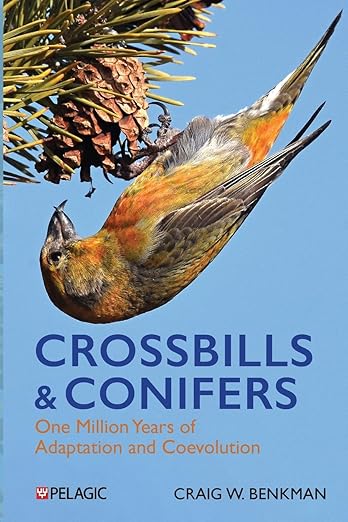
- ~ A new book by Craig Benkman ~ CROSSBILLS & CONIFERS: One million Years of Adaptation and Coevolution
-
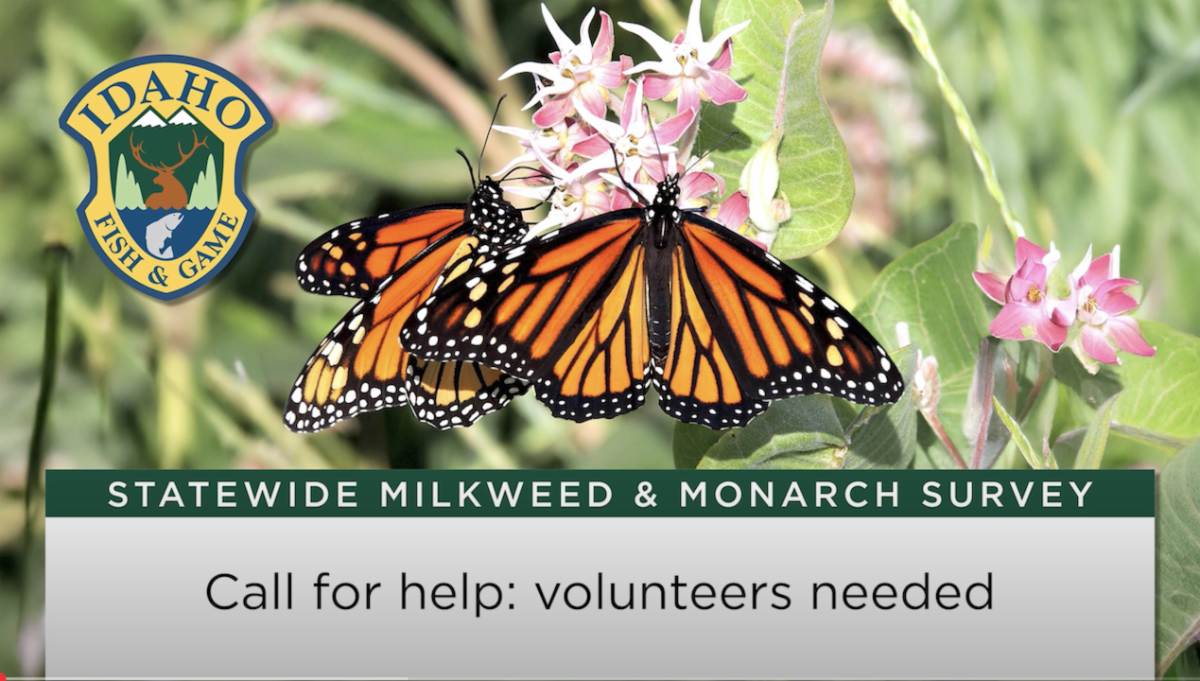
VOLUNTEER! Sign up for the Statewide Milkweed and Monarch Survey! Conduct 1-3 visits to a site between July 1st and August 15th. A training webinar will be held on June 2nd, 2026 from 6:00-8:00PM (Pacific) / 7:00-9:00PM (Mountain). A recording of the 2026 webinar will be available soon after.
-
Check out Cornell Lab of Ornithology BIRD ACADEMY Courses! New courses! Some courses discounted up to 40%! Free courses!
https://academy.allaboutbirds.org/course-list/
-
Show your support for Prairie Falcon Audubon by joining the growing community of members!
Click ❤️ Here
| | |
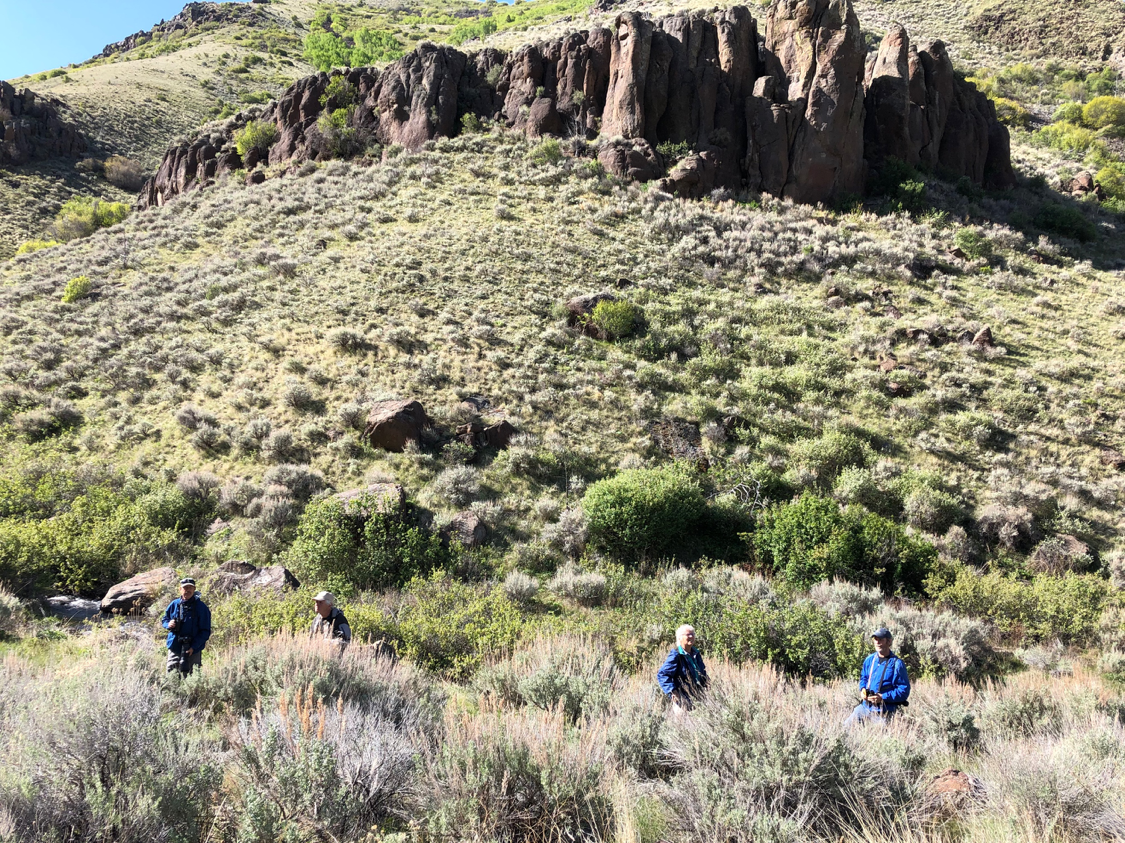
Annual South Hills IBA Big Day
You're Invited!
(OPTIONAL) Friday night, June 12th
Friday night birding begins at 6:00 PM
Saturday, June 13th, 2026
Cassia Crossbill Sign unveiling begins at 5:00 PM at Diamondfield Jack Camp Ground/Picnic Area
Parking Lot
Saturday birding ends at 6:00 PM
Compilation/Potluck Picnic begins at 6:00 PM
Call, text or email Karl Ruprecht to sign up:
208-749-1395
ruprechtjk@hotmail.com
| | |
Karl Ruprecht has been heading up the South Hills survey since 2008, so this will be our 18th census (we've missed a year due to nasty weather)!! He would love to have your help!
The weather should be great! No excuses! Start birding Friday night at 6:00 PM if you want to see/hear owls, Common Poorwill, and Common Nighthawk. If birding in the dark is not your cup of tea, then plan to search for and count birds in the South Hills during the day on Saturday. The odds of seeing something different from what you’ve been seeing at your feeder are very high. At this time of year in the South Hills there are more than 175 regularly occurring species possibilities, including the Idaho endemic Cassia Crossbill! Nearly 200 species have been tallied altogether over the years. Added bonus: Moose (if you don't see one, you're concentrating too hard on the birds) and wildflowers.
Please give Karl a call and he will put you on a team. He tries his best to put novice birders with “experts” and to accommodate your wishes as to where in the South Hills, and for how long, you would like to bird.
Birding will be interrupted for a short time when we all meet up at the big Diamondfield Jack parking area to see the new Cassia Crossbill Interpretive Sign created by the US Forest Service.
From there, we'll all make our way to the Ruprecht cabin for our annual potluck picnic. Everyone is invited, even those who did not bird. Plan to bring your own drinks, dinner-ware, and something to share that can stay in a cooler in a car all day long (salad, dessert, veges, fruit, etc.). Audubon will provide fried chicken (a perennial birder’s favorite!).
Call Karl for more information and to RSVP if you plan to bird or if you plan to attend the potluck picnic. He will provide directions to the Ruprecht cabin and set you up with a team.
| |
|
A Dive into a Coevolutionary Arms Race
a review by Owen Robertson from
aba.org/pdfviewer/birding-april-2026
Crossbills & Conifers: One Million Years of Adaptation and Coevolution
by Craig W. Benkman
Pelagic Publishing, 2025
224 pages, paperback edition will be released on July 14, 2026
Charles Darwin once wrote that in the Galapagos Islands, “We seem to be brought somewhat near to that great fact—that mystery of mysteries—the first appearance of new beings on this earth.” Darwin’s famous “finches” (actually tanagers in the family Thraupidae) stand as testament to this legacy, acting as some of the most powerful examples of evolution known. Now, a genus of genuine finches is poised to take the spotlight.
Before 2017, Red Crossbills were one of the easiest birds in the ABA Area to identify. Large, brick-red finches with bizarre bills were unique, it seemed. But groundbreaking research by Dr. Craig Benkman of the University of Wyoming showed that a little-known population of crossbills in southern Idaho formed a distinct species, and birders across the country became fascinated with crossbill flight calls—the only diagnostic field mark for the newly-minted Cassia Crossbill. Now, in his new book, Crossbills & Conifers: One Million Years of Adaptation and Coevolution, Dr. Benkman presents a comprehensive overview of the ecology, evolutionary history, and not-too-certain future of crossbills across the world, illuminating one of the most complex genera of birds in a book accessible to all readers.
Benkman begins with basic crossbill biology, outlining in detail how seeds are removed from conifer cones, husked, and consumed by hungry crossbills. This seemingly simple interaction is central to a crossbill’s life, and Benkman frames the rest of the book through a pleasingly simple lens: how can crossbills maximize seed intake rates? And what happens when they do? Answering these questions is the real focus of the book. Having such a solidly mathematical basis for the more abstract theorizing that follows is just one way that the book makes its science approachable. Of course, that has more to do with the crossbills them-selves than the writing, but nevertheless, the book keeps the science logical and clear at all times.
Two other assets quickly become clear. First is the genuine enthusiasm Benkman feels for these birds. All science is in some way personal, and the book hits a sweet spot in terms of personal touch, making it an even more enjoyable read. Even if you aren’t a total crossbill nut at the start, Benkman’s infectious wonderment at these birds is quick to rub off. Secondly, it’s about conifers just as much as crossbills. Conifer phenology, ecology, and biology are all major topics, so if you’re more intrigued by ponderosa pines than ponderosa pine (Type 2) Red Crossbills, this book is still for you! Benkman dives deep into the complex and utterly absorbing coevolution between conifers and their dependent crossbills, all while remaining grounded in the concrete experiments and observations that inform his dramatic ecological conclusions. And indeed, both experimentation and drama are on full display. Every chapter seems to showcase a different study that could take up an entire book, demonstrating just how dynamic crossbills can be. For example, Cassia Crossbills have been found to be evolving a more distinctive flight call, in real time, with measurable differences detected over just a few years, and “new” and “old” flight calls produce consistently different responses when presented to crossbills of different types. Such an example of evolution on a human time scale is remarkable (though not unheard of) and is just one of many striking ways in which crossbills seem to flout much of what was known or assumed about avian evolution. This book would be worth the sticker price just as a vehicle to appreciate Benkman’s knack for experimental design!
Special attention is rightly paid to the Cassia Crossbill. While some readers may remain skeptical about bestowing species status on this bird, Benkman’s in-depth research and engaging account of decades of study seem solid. One point to be clear on, however, is that this book is not a traditional field guide. It won’t help you visually separate Cassia and Red crossbills, but there is information on how to differentiate the call types, which should aid in identification.
In addition to Benkman’s comprehensive study of crossbill origins and diversification, attention is duly paid to the all-too-uncertain future of these lovely birds. Benkman details how climate change affects the phenology of conifer seed shedding and is directly responsible for both well-established range limits of Parrot Crossbill and for year-to-year population declines in Cassia Crossbill.
The book is also filled with high-quality charts and photos, displaying foraging crossbills and graphs of seed intake rates, call type plasticity, reproductive isolation, and dozens of other variables. Because crossbill ecology is so tied to the basic physics of foraging, these clear and well-designed diagrams are immensely useful in understanding the evolutionary pressures and responses described in the text.
Overall, this book is a landmark in science writing, and its contents are (in my opinion) some of the most dramatic findings in evolutionary biology. It is quite simply one of those rare, near-perfect bird books, uniting a user-friendly approach with some of the most sophisticated science in evolutionary biology right now. It’s not quite the next On the Origin of Species, but it would blow Darwin’s mind.
| |
Statewide Milkweed & Monarch Survey
A community scientist driven effort to understand milkweed patch distribution, health, and monarch use in Idaho.
Co-lead by Joel Sauder, Casey McCormack and Tempe Regan
To sign up and get more information
CLICK HERE
| |
1. Make Windows Safer, Day and Night
These simple steps save birds: On the outside of the window, install screens or break up reflections—using film, paint, or Acopian BirdSavers or other string spaced no more than two inches high or four inches wide.
| |
2. Keep Cats Indoors
A solution that’s good for cats and birds: Save birds and keep cats healthy by keeping cats indoors or creating an outdoor “catio.” You can also train your cat to walk on a leash.
| |
3. Reduce Lawn, Plant Natives
Add native plants, watch birds come in: Native plants add interest and beauty to your yard and neighborhood, and provide shelter and nesting areas for birds. The nectar, seeds, berries, and insects will sustain birds and diverse wildlife.
| |
4. Avoid Pesticides
A healthy choice for you, your family, and birds: Consider purchasing organic food. Nearly 70% of produce sold in the U.S. contains pesticides. Reduce pesticides around your home and garden.
| |
5. Drink Coffee That’s Good for Birds
Enjoy shade-grown coffee: It’s a win-win-win: it’s delicious, economically beneficial to coffee farmers, and helps more than 42 species of North American migratory songbirds that winter in coffee plantations, including orioles, warblers, and thrushes.
| |
6. Protect Our Planet from Plastic
Reduce your plastics: Avoid single-use plastics including bags, bottles, wraps, and disposable utensils. It’s far better to choose reusable items, but if you do have disposable plastic, be sure to recycle it.
| |
7. Watch Birds, Share What You See
| |
Equity, Diversity and Inclusion Statement
Prairie Falcon Audubon, Inc. fully supports
National Audubon Society's statement on
Equity, Diversity and Inclusion
Prairie Falcon Audubon, Inc. believes that everyone has the right to enjoy birds, the outdoors, and a healthy and safe environment. In order to fulfill our mission to educate the general public about birds, bird watching, and preservation/improvement of the environment that birds and bird watchers share, we will work to include everyone, no matter their race, gender, sexual orientation, religion, political affiliation, age, or disability. We are committed to building an equitable, diverse, anti-racist, accessible, fun, and inclusive organization that supports birds, and the people who watch them, in our community.
| |
CHECK THIS OUT!
Cornell Lab of Ornithology
An incredible resource for anyone (young to old) who wants to learn more about birds!
"Whether you’re a bird lover, an educator, or a student, interactive courses and multimedia-rich resources will lead you into the fascinating lives of birds, from birding basics to comprehensive ornithology."
| |
Learn More About Birds with These Courses
FREE - $130
Start at your level.
Go at your own pace. There’s something for every bird enthusiast.
| |
Watch a Short Video
FREE
A curated collection of educational videos from Cornell Lab
| |
Play games Powered by Birds
FREE
Birds are awesome. Play games that explore flight, song, dance, feathers, and so much more.
| |
Listen to a Lecture
FREE
Keep learning with this curated collection of videos from the Cornell Lab. Each is about an hour long.
| | | | |