Note:
My organizing work in the South has largely focused on civil and human rights. Doing this work across the South requires knowledge of the history of the region and to associate with, as well as to learn from,
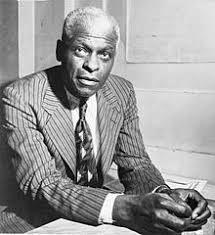
when possible, southern historians. One of the remarkable contemporary southern historians is Dr. Vernon Burton who is from Ninety 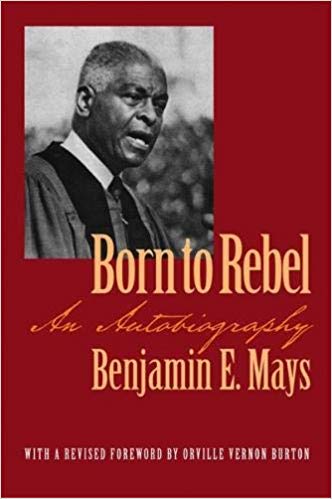 Six, South Carolina that was also the home of the renowned Black leader, Dr. Benjamin E. Mays. I have been fortunate to communicate with Vernon Burton and to learn from him for a few years now. Six, South Carolina that was also the home of the renowned Black leader, Dr. Benjamin E. Mays. I have been fortunate to communicate with Vernon Burton and to learn from him for a few years now.
The late Dr. Mays asked Vernon Burton to write the foreword to his biography "Born to Rebel" that he has shared with me as well. I will be sending out this foreword in segments, but first I want to 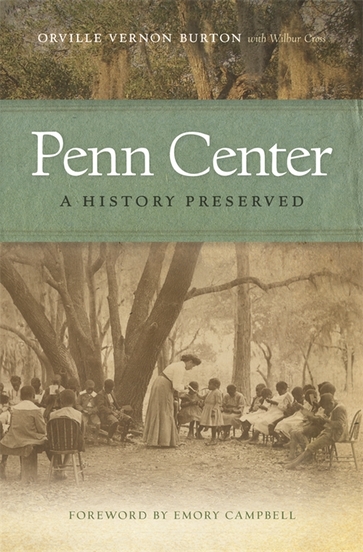 provide some information about Vernon Burton that includes an excerpt from an interview with him in 2001 on History Matters in which he wisely discusses the importance of teaching and learning history altogether. provide some information about Vernon Burton that includes an excerpt from an interview with him in 2001 on History Matters in which he wisely discusses the importance of teaching and learning history altogether.
On Justice Initiative I will also be sending out information about this remarkable Penn Center book and history.
But first, below is information about Vernon Burton.
November 12, 2019
Justice Initiative
Position
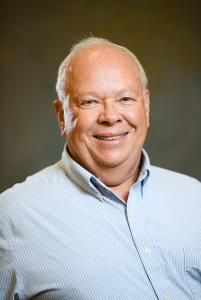 Professor of History; Director of the Clemson Cyberinstitute Professor of History; Director of the Clemson Cyberinstitute
Research Interests
American history, southern history
Education
Ph.D., Princeton University (1976)
Orville Vernon Burton is the inaugural Judge Matthew J. Perry Distinguished Chair of History and Professor of Pan-African Studies, Sociology and Anthropology, and Computer Science at Clemson University, and the Director of the Clemson Cyber Institute. From 2013-2015 he was Creativity Professor of Humanities; in 2016 received the Clemson Dean's Award for Research in the College of Architecture, Art, and Humanities, and in 2018 received the initial University Research, Scholarship and Artistic Achievement Award. From 2008-2010, he was the Burroughs Distinguished Professor of Southern History and Culture at Coastal Carolina University. He was the founding Director of the Institute for Computing in Humanities, Arts, and Social Science (I-CHASS) at the University of Illinois, where he is emeritus University Distinguished Teacher/Scholar, University Scholar, and Professor of History, African American Studies, and Sociology. At the University of Illinois, he continues to chair the I-CHASS advisory board and is also a Senior Research Scientist at the National Center for Supercomputing Applications (NCSA) where he served as Associate Director for Humanities and Social Sciences from 2002-2010. He serves as Executive Director of the College of Charleston's Low Country and Atlantic World Program (CLAW). Burton served as vice-chair of the Board of Directors of the Congressional National Abraham Lincoln Bicentennial Foundation, 2009-2017. In 2007 the Illinois State legislature honored him with a special resolution for his contributions as a scholar, teacher, and citizen of Illinois. A recognized expert on race relations and the American South, and a leader in Digital Humanities, Burton is often invited to present lectures, conduct workshops, and consult with colleges, universities, and granting agencies.
Burton is a prolific author and scholar (twenty authored or edited books and more than two hundred articles); and author or director of numerous digital humanities projects. The Age of Lincoln (2007) won the Chicago Tribune Heartland Literary Award for Nonfiction and was selected for Book of the Month Club, History Book Club, and Military Book Club. One reviewer proclaimed, "If the Civil War era was America's 'Iliad,' then historian Orville Vernon Burton is our latest Homer." The book was featured at sessions of the annual meetings of African American History and Life Association, the Social Science History Association, the Southern Intellectual History Circle, and the latter was the basis for a forum published in The Journal of the Historical Society . His In My Father's House Are Many Mansions: Family and Community in Edgefield, South Carolina (1985) was featured at sessions of the Southern Historical Association and the Social Science History Association annual meetings. The Age of Lincoln and In My Fathers' House were nominated for Pulitzers. His most recent book, is Penn Center: A History Preserved (2014).
Recognized for his teaching, Burton was selected nationwide as the 1999 U.S. Research and Doctoral University Professor of the Year (presented by the Carnegie Foundation for the Advancement of Teaching and by the Council for Advancement and Support of Education). In 2004 he received the American Historical Association's Eugene Asher Distinguished Teaching Prize. At the University of Illinois he won teaching awards at the department, school, college, and campus levels. He was the recipient of the 2001-2002 Graduate College Outstanding Mentor Award and received the 2006 Campus Award for Excellence in Public Engagement from the University of Illinois. He was appointed an Organization of American Historians Distinguished Lecturer for 2004-16.
Burton's research and teaching interests include the American South, especially race relations and community, and the intersection of humanities and social sciences. He has served as president of the Southern Historical Association and of the Agricultural History Society. He was elected to honorary life membership in BRANCH (British American Nineteenth-Century Historians).
Among his honors are fellowships and grants from the Rockefeller Foundation, the National Endowment for the Humanities, the Pew Foundation, the National Science Foundation, the American Council of Learned Societies, the Woodrow Wilson International Center for Scholars, the National Humanities Center, the U.S. Department of Education, National Park Service, and the Carnegie Foundation. He was a Pew National Fellow Carnegie Scholar for 2000-2001. He was elected to the Society of American Historians and was one of ten historians selected to contribute to the Presidential Inaugural Portfolio (January 21, 2013) by the Joint Congressional Committee on Inaugural Ceremonies. Burton was elected into the S.C. Academy of Authors in 2015 and in 2017 received the Governor's Award for Lifetime Achievement in the Humanities from the South Carolina Humanities Council.
Interview with Orville Vernon Burton
1. What drew you to history teaching?
I grew up and attended school in the rural cotton mill town of Ninety Six, South Carolina. The high school history teacher was our football coach, and those of us on the team sometimes went to the gym or had team meetings instead of attending class. We did have a very good football team and won the state championship, but I learned very little about history in high school. I did read a lot, including all the history and biographies in the bookmobile that visited every other week. Also, as I rolled newspapers for my paper route each morning, I read three different papers with totally contrasting political views, which was intriguing to me.
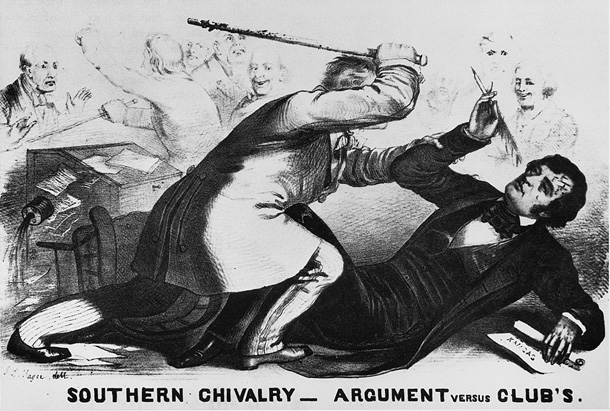
Ninety Six is a very old colonial town surrounded by reminders of history. Today, it calls itself the "garden spot of history." Like many people, I learned my history from the memorials that surrounded me-the old house that someone pointed out as historical, the Revolutionary battlefield that was about three miles outside of town, and local historical markers. One marker celebrated native son and U.S. Congressman Preston Brooks and his brutal caning of Massachusetts abolitionist Senator Charles Sumner in the Senate Chamber. In Brooks's own words:
"I struck him with my cane and gave him about thirty first rate stripes with a gutta percha cane. . . . Every lick went where I intended. . . . Towards the end he bellowed like a calf. I wore my cane out completely." The
New York Times
reported in 1856 that Ninety Six honored Brooks with the largest gathering ever in the upcountry.
Thousands of canes were presented to Brooks to replace the one he had destroyed while beating Sumner. Sad to say, but Sumner's caning was what I saw celebrated as history.
As a youngster in Ninety Six, I liked all the people, and all people were so good to me, so I could not figure out the negative attitudes towards others in the community. As a religious child, I was perplexed about the animosity of some whites towards African-Americans, especially in the years after
Brown v. Board of Education
. I wondered why the white people in my church who were so good to me, could have such strong negative feelings about African-Americans.
Why would they not want them to attend our church? That "why" question led me into thinking about the history of race relations.
Thus, as a young man growing up in the South during the Civil Rights Movement and the Vietnam War, I was witness to the abuses of history, a history that justified exploitation and racism. I realized then that history should explain the past, not glorify it. I came to believe that history is a way of life, a way of making sense of the world and of oneself. But that was not until much later.
2. You talk about your deep affection for your hometown but also your deep criticism for the version of the past that you learned there. Did that realization that you were witnessing "abuses of the past" come suddenly or as a gradual process?
That view came gradually, but fairly early. I also learned much about the complexity of history by growing up in a bi-racial rural, cotton mill area. We had triple segregation in the early years, African-Americans in one school, white rural and town kids in my school, and kids whose parents worked in the mill went to the mill school for elementary grades. So there was an early recognition of class and caste along with race.
Something very important to me was my friendship with Charles Willis Williams; our homes were near each other's, only across the cow pasture, and he and I were pretty much inseparable. Like everyone in his family, I called him "brother." I was pretty naïve; it took me a long time to know why some whites teased me about my "black brother." So I learned rather early on from African-American friends that there were other versions of history, another view of my hometown community, and a different understanding of people's motivations.
3. Did your historical views change in college?
I had wonderful history professors at Furman University. At first I was pretty quiet, because I talked "country" and dressed rather unstylishly. Even in 1965 Furman was the best school in South Carolina, and most of the students were from upper middle-class families with a few poorer students who might be heading for the ministry. One day, Dr. Winston Babb, a wonderful professor and human being, was talking in history class about how when he first came to Furman everyone knew what a "lint head" was, but that for the last fifteen years not one student had any idea of what the term referred to. For some reason, I spoke up and told him I knew, and that I had worked in a cotton mill. From that day forward Dr. Babb "adopted" me. I suppose I became a history major because of his personal interest in me. And the personal caring about students that the Furman faculty exhibited certainly influenced me.
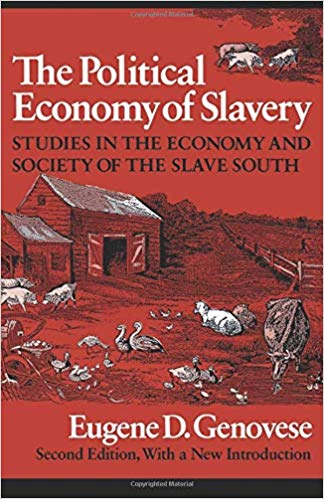 I suspect it was mainly Dr. Babb's doing, though I do not know for certain, that I was selected for the Ford Carnegie Harvard-Yale-Columbia Intensive Summer Studies Program (ISSP). It was a wonderful program that was designed for minority students. There were about five or six non-African-American participants out of a total of probably one hundred students. In 1967 at Columbia University I took the Great Books "Contemporary Civilization" course that was set up for us in the program, and I had to take another "regular" summer course being offered. Someone placed me in a graduate lecture course on the Old South. They assumed, I suppose, that since I was from the South, that I should be ok in this graduate-level course, but I had never had any American History. Visiting Professor Eugene Genovese from Rutgers, celebrated at the time for his opposition to the Vietnam war, had just published a book,
The Political Economy of Slavery
, that electrified the profession. He was an extraordinary lecturer, weaving a remarkable web of ideas, and, if you bought into the tenets of his argument, you were hooked.
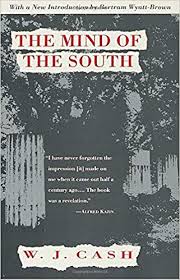 What I remember about the course (in addition to wondering why Gene and I were the only two males not wearing a beanie-never having seen a yarmulke before) is the paper we had to write on W.J. Cash,
Mind of the South
. I was so angry with Cash's depiction of mill workers that instead of the four-page required paper, I wrote about thirty pages about how great the folks working in the cotton mill were and how Cash was wrong. Gene did not like the paper. He just wanted us to say that other areas besides the South had a frontier. He had no idea where I was from, and he assumed I was being presumptuous about my knowledge of the South. Gene got me very interested in southern history. Interestingly, while Gene was a masterful teacher, I later elected a very different style from his. I prefer to present students with multiple interpretations in addition to mine, very different from Gene's effective way of presenting a tight argument.
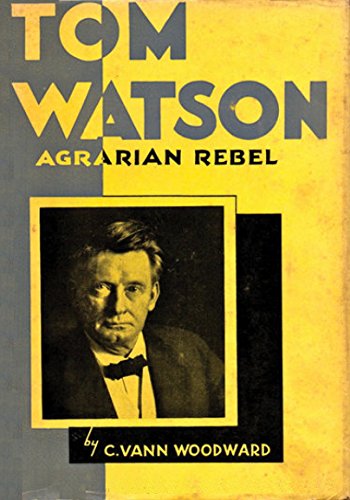 The following summer at Yale University I had a class with Bill McFeely and Joe Ellis. We read C. Vann Woodward's
Tom Watson: Agrarian Rebel
. That book showed me that history could make a difference, and that is when I considered becoming a historian. Because of Woodward, I began to see that one could use history to help people understand, and a new understanding can change the world, especially in terms of race relations.
In college I became active in the Civil Rights Movement and voter registration. In February 1968, the South Carolina Highway patrol killed three African-American students and wounded twenty-seven others who were protesting a segregated bowling alley in Orangeburg. This Orangeburg Massacre and the way the state officials tried to explain it away in the papers had an influence on me; I again realized how powerful the truth is and how important it is who wrote and taught history. I remember at a sit-in at the attorney general's office, questioning the spin that the state was putting on what happened.
|
|
 |
|
Mays as the 6th president of
.
|
|
My senior year at Furman University, Dr. Benjamin E. Mays spoke during Religious Emphasis week. I had known a great deal about Preston Brooks from Ninety Six, but I had never learned that Ninety Six is also the home of Benjamin E. Mays, the long time president of Morehouse College, the spiritual mentor of the Reverend Martin Luther King, Jr., and the godfather of the modern Civil Rights Movement. No memorial markers commemorated this apostle of peace whose very life represented a heroic struggle for dignity and for civil rights. Getting to know Dr. Mays, learning that he often visited our same hometown, and that whites were unaware of who he was also influenced me about wanting to become a teacher and a historian. (There is now a memorial to Dr. Mays in Ninety Six.)
The wonderful professors I had at Furman encouraged me to go on to graduate school. Because of the Harvard-Yale-Columbia ISSP, I was also recruited for graduate school, and I elected to go to Princeton. There I encountered other really great teachers and role models.
I am still learning and changing my historical views of teaching. This last year has been terrific for me as a Carnegie Scholar. Through that program I have begun to explore the scholarship of teaching and learning in a systematic way. I was introduced to the work of Sam Wineburg, who studies how historians and students learn history. I have been trying to use some of what I have learned in my own teaching.
4. You have mentioned a number of positive and negative role models of history teaching that you have encountered from your high school days through graduate school. Which teachers do you think most influenced the kind of teacher you have become?
My Furman teachers influenced me because of how much they cared for students. They reached out to me and made me work hard to learn and to make up for my background. I will always treasure those relationships with my professors at Furman. I appreciated Bill McFeely's passion for history and Joe Ellis's encouragement. At Princeton, Sheldon Hackney was a role model as someone who is inspired by ideas. I am still using his ideas thirty years later, and they still seem fresh and new. Jim McPherson was a role model in the incredible breadth of his knowledge and his ability to synthesize and explain different interpretations. Both Sheldon and Jim made me feel like a part of the Princeton intellectual community and that made me work even that much harder in graduate school. I have tried to show that sort of respect for my undergraduates (and graduate students), and I believe that they work harder, are willing to read and write more, because they know that I genuinely respect them and their ideas, and that I care about them.
5. When did you start teaching?
I taught at Mercer County Community College while a graduate student at Princeton. I have been teaching at the University of Illinois since 1974
.
In the summer of 1987, I taught at the Governor's school for high school students in South Carolina (located at the College of Charleston). But the spring of 2001, when I visited at The Citadel, was the first time I taught full-time outside of Illinois.
6. What courses have you taught?
There are just too many to name, literally dozens of different courses. At the undergraduate level, I have particularly taught courses on Southern history, race, family, Civil Rights, and historical methods as well as the U.S. history survey. For graduate students, I have taught a similar range of courses, particularly Southern history and historical methodology.
7. Which are your favorite courses to teach?
What I really enjoy teaching is the students. But I guess my favorite courses are Southern History, race relations, Civil War and Reconstruction, and the Civil Rights Movement because they deal with race relations, and teaching race relations can make a real difference in someone's life.
8. Having been at the University of Illinois for more than twenty-five years means you have taught about the history of race and race relations in some fairly different historical moments. How has teaching about race changed over the years?
When I first went to Illinois, we were still in the aftermath of the Civil Rights Movement. My students seemed to believe that the U.S. was tilted so that all the evils rolled down into the South. As I taught race relations over the years, this view has shifted. I still remember in the 1980s when I was teaching a course on race relations and a white student came up to me and said,
"Professor Burton, you don't understand, you are from the South where all races of people are cordial." She went on to explain in terminology very similar to the old pro-slavery "bestiality" arguments that
"'those people' in South Side Chicago are like animals." The South has now become in popular movies and books-a place where race relations are ok. Now it is the inner-city North that has the problem. African-American as well as white students reflect this naïve view.
Perhaps an even more important way that the teaching of race relations has changed is the reflection and awareness of the diversity of America. The increasing Hispanic and Asian-Americans population and the recognition of Native American rights (especially with the University of Illinois's retention of the "Chief" as their athletic symbol, clearly an insult to Native Americans), have all come to be more important in the teaching of race relations. When I began teaching race relations in 1974, one of the questions we explored was which came first, race or slavery. Of course, this would not have been a question of significance if it did not have ideological implications relevant to our own times and the Civil Rights Movement. If the institution of slavery was a very slow growth and was not complete until the beginning of the eighteenth century, then racial prejudice was not the inherent and automatic reaction of the British and European people when meeting Africans for the first time. The corollary of this line of thinking is that the eradication of racial prejudice would come with the elevation of the economic status of the subjugated group, and prejudice would melt away quickly. It's a relatively happy view.
On the other hand, if the reaction of the English and Europeans when first meeting Africans was to enslave them, then racial prejudice may be so ingrained in human nature that the truly integrated society that we want is impossible. This sort of dichotomous thinking worked well for students to wrestle with in those years. But as we became more aware of the many sides and forms of racism in our multi-ethnic society, this dichotomy does not ring true. Now we talk about the creation of race and the creation of "whiteness." The relationship of class and gender to race relations has to occupy a large portion of any class. I like to present these arguments to students as scholars developed and changed the arguments over the years. Then, I have the students ponder why historians wrestling with these issues might have come up with the theories they did at a particular time.
The issues of affirmative action and minority rights, especially the end of segregation under the 1964 Civil Rights Act and the emergence of voting rights under the 1965 Voting Rights Act, have also influenced the circumstances in which I teach about race. I do not hesitate to bring in my experiences in the courtrooms as an expert witness for minority plaintiffs in voting rights or discrimination cases. Students learn, just as I learned, that the discrimination against Latinos in El Centro, California, was very much like the discrimination against African-American laborers in the South. I often share with them how people in El Centro elected African-Americans to the school board, although African-Americans were only about 3 percent of the population, but would not elect Hispanics who were over 40 percent. These sorts of real life issues help students understand the relevance of history in race relations and how important it is that all peoples have their stories told. A recent case where a San Diego African-American Postal Worker was called "boy" by white co-workers really engaged the interest of my class. They tried to understand why that term is so demeaning to an African-American male and does not have the same negative connotation for whites. This was precisely the issue that I was asked to explain to the court. Thus, seeing how history is used in the courtroom, helped my students understand the power of history.
Interview conducted by Roy Rosenzweig; completed in August 2001.
|