Our Mission: To create the landscape and conditions for commercial Space Solar Power technology by the U.S. to become successful and self-sustaining. | |
| Would you like to continue receiving Space Solar Power newsletters from SFF? | | | | |
Space Frontier Foundation Updates
-
SFF met with Sanjay Vijendran, Founder and Director of Space Energy Insights and former Lead of ESA SOLARIS, during his visit to the U.S. The discussion covered a range of topics related to advancing international support for SSP and coordinate efforts and share lessons on international cooperation, advocacy, policy and public communications of SSP.
| | |
Notable Updates
-
Science and Technology Facilities Council (STFC), part of UK Research and Innovation, alongside Satellite Applications Catapult, has awarded the Cross-Cluster Proof of Concept Grant Call: Pump-Priming Grant – In-Space Economy to Space to Space Solar for their “ALBATRUSS in-space robotic truss builder demonstrator." Space Solar has also recently completed the CASSiDi project, the design study for their CASSIOPeiA satellite, which advanced important parts of the satellite's design and confirmed that their mass targets are achievable.
-
Star Catcher has announced their partnership with the company Mission Space which monitors space weather and solar events in order to further improve SSP satellite capabilities. Star Catcher has also recently released an infographic that details how energy is concentrated, collected, and how it is then beamed to client satellites in Low-Earth Orbit.
-
CEO of Virtus Solis, John Bucknell, attended a recent RAPID Conference in Detroit to share about how their company uses additive manufacturing technologies in their hardware development.
-
Having included SSP in recent legislation, Japan has recently announced their OHISAMA test, which is set to launch next year. The satellite includes a 22-square-foot solar panel, which will convert electricity into microwaves and beam 1 kW of energy to Earth. It will be collected by 13 receivers over a 600 square foot area in Japan.
SSP Systems Enablers
-
Eric Schmidt, former-CEO of Google, has apparently acquired Relativity Space in order to launch data centers into orbit. Considering the energy demands of cooling data centers that Microsoft has recently quantified, these data centers will be powered by attached solar panels and radiate heat into space, a potential solution to the growing data center power crisis which leverages the abundant power in space.
-
Airbus has started a new project for the European Space Agency, In-Space Assembly and Construction (ISAAC), a robotic assembly demonstrator that can assemble large space infrastructures, such as the ones required for SSP.
-
A recent study published by Felix Lang of the University of Potsdam has shown that lunar dust could be melted and used to create a solar cell. These cells have achieved efficiencies as high as 40% and being lightweight, more such cells can be used to harvest the desired energy. However, cost remains a concern, as the process of using sunlight to melt the lunar dust is a difficult process.
-
The Aerospace Corporation recently held a workshop on space power, where power beaming systems and technical advancements necessary for various technologies inherent to SSP were discussed. Topics covered can be found here.
Recent Studies
-
Caltech released a preprint technoeconomic analysis of SSP, which has shown that the proposed 10 GHz dispatchable SSP system is viable and competitive with leading clean energy sources today.
-
Khaldon Ahmed Qaid and Colin McInnes, of the University of Glasgow, and Onur Celik, of the Delft University of Technology, have published a paper on how Orbital Solar Reflectors can be used in conjunction with terrestrial solar farms, especially during peak demand.
-
Jody Muelaner has published a study on the advancements in technologies such as reusable launch vehicles, thin film solar cells, modular satellite systems, can make space solar power economically viable.
-
The Space Studies Institute has put together and digitized the ISU Final Report on the Space Solar Power Program Summer Studies, which was held in 1992. The table of contents leads to links to separate sections and is meant to be readable and for a general audience.
-
Paul Monus, founder of Energy Transition Dynamics, has released a report on the what consumer prices will look like for SSP. He concludes that of the other renewable energy sources, hydro, nuclear, geothermal, and thermal, SSP is the cheapest option in delivering power to consumers, particularly for wholesale demand.
Upcoming Events
-
Co-CEO of Space Solar, Martin Soltau, will be giving a talk on how space solar power is the future of energy at the OK, bye climate festival in Reykjavik on Thursday, May 15th.
-
Aetherflux founder, Baiju Bhatt will be speaking at a fireside chat hosted by TechCrunch, in Menlo Park, California. The event is set for June 18th, and he will be discussing Aetherflux's recent funding milestone and future plans.
| | Photo Credit: MIT Technology Review | |
Power Grid Costs
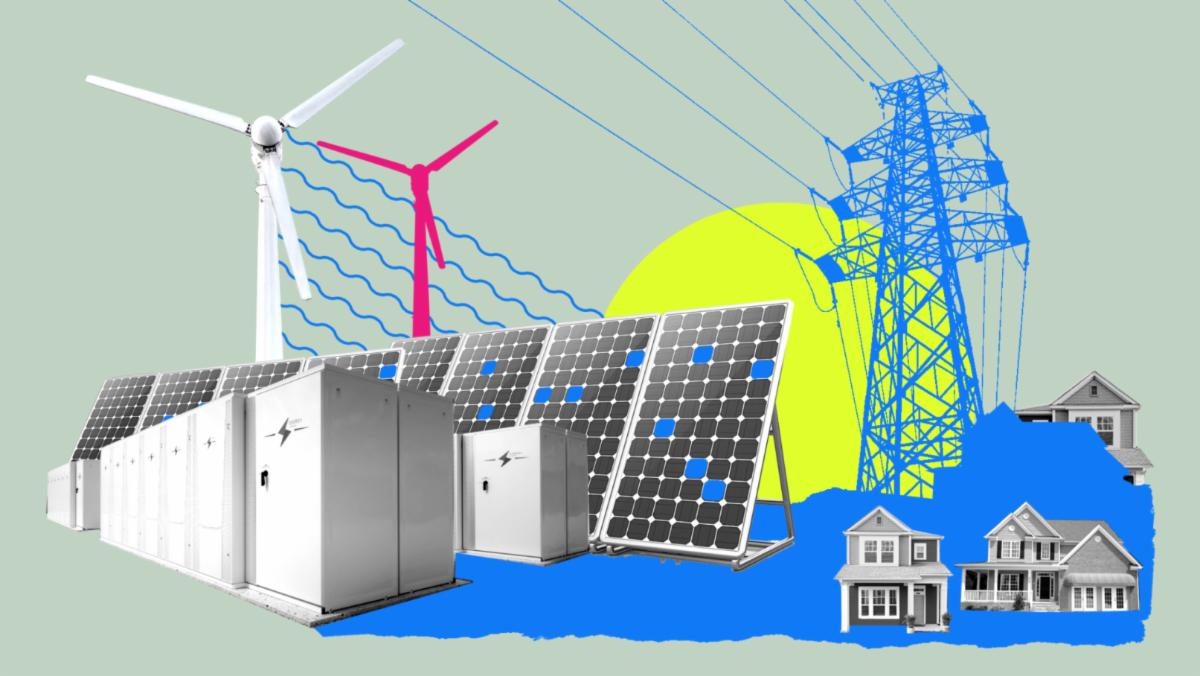
Gas peaker plants are used today to quickly supply electricity when there is a spike in demand. However, there have been proposals of using batteries instead, as their costs are rapidly decreasing. A recent study by Thunder Said Energy has shown that batteries are still not economically viable, as they cost 2-20 times more than gas peaker plants. Thus, it is evident that the cost of innovation and change in power grids is quite expensive, and addressing the growing strain on power grids from data centers and during peak demand, such as summers and winters, is a major challenge. SSP offers a creative solution that can even be more cost effective than current alternatives in the long run.
| | | |
Outsiders' Perspectives
-
Andy Tomaswick, of Universe Today, has detailed Astrostrom's plans to create their space solar power satellite. He describes Astrostrom's unique approach of mining the necessary materials from the moon and assembling with parts mass-produced on Earth in space, which would minimize launch costs. Due to the moon's weaker gravity, Astrostrom plans to use a Lunar Space Elevator to get the materials to the manufacturing station, most likely at the Earth-Moon L1 point. Tomaswick concludes that Astrostrom has a long way to go, but has a lot of potential due to their scalable design.
-
Debra Werner, a Space News correspondent, has written an article highlighting the progress made by Virtus Solis, Space Solar, and Star Catcher in implementing SSP. She also highlights the revenue each of the companies has made, their collaboration with military research, and the obstacles they face.
| | |
Experts and Advocates on SSP
-
For the first time after the launch of his company Space Energy Insights, Sanjay Vijendran was interviewed on the podcast Thinking on Paper. He discusses how SSP can address energy insecurity, enable future space operations, the science behind power beaming, and the economic viability of SSP.
-
Sam Adlen and Martin Soltau, co-CEOs of Space Solar, appeared on the podcast Raw Green to share how SSP can revolutionize the future of energy and the necessary regulatory frameworks, international cooperation, and investment.
-
Andrew Rush, CEO of Star Catcher, has been a guest on the Energy Central podcast, where he talks about his company's development of space-to-space power beaming, which will enable a more robust space infrastructure.
-
Paul Stimers, space policy attorney, in his Space News article, presents an optimistic view of space solar power, its history and potential for growth. He also calls for the Trump Administration to make clear regulatory pathways, provide funding for research, and make SSP a commodity that government agencies like NASA and the Department of Defense can purchase.
| | | | |