|
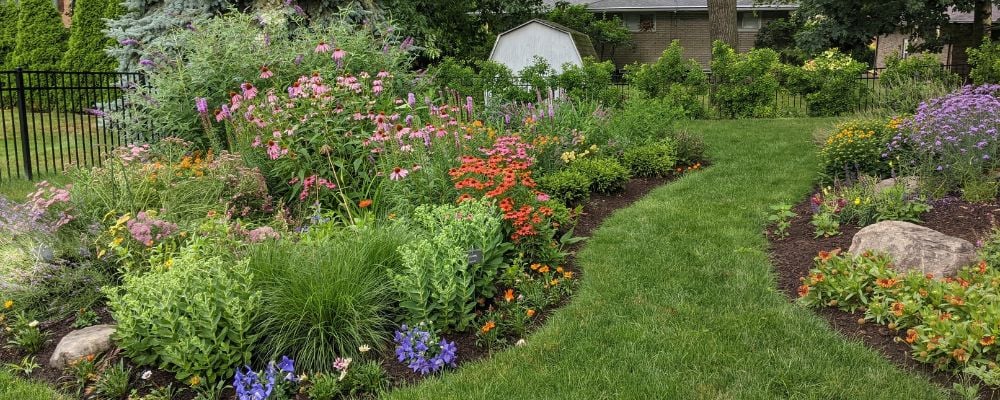
Example of a yard with grass and native garden beds
We’ve shared plenty of river‑friendly alternatives to lawns, but many of us still like to feel grass underfoot between days on the river. With 1.3 million acres of lawn in Maryland, how do you keep yours healthy and good for the river?
Check your site conditions. If your yard is deeply shaded, steeply sloped, or poorly drained, turf grass won’t thrive. Forcing a lawn where it doesn’t belong wastes time, money, and patience.
Test your soil. Knowing whether you have clay, sand, or a mix—and how much organic matter is present—guides every decision. UMD Extension offers easy instructions and labs.
Core aerate. Aeration opens compacted soil, improves infiltration, and helps roots access oxygen and organic matter.
Over-seed in autumn. Fall seeding thickens turf, crowds out weeds, and takes advantage of cooler temperatures.
Choose the right grass. Technically speaking, Maryland has no native carpet-like grasses. So if you want to feel the grass beneath your feet, stick to varieties that stay where they’re planted.
Accept some weeds. A few weeds won’t harm a healthy lawn—and spring bloomers like clover and dandelion feed pollinators.
Grow only what you use. If you’re not hosting croquet tournaments or regularly kicking a soccer ball around, consider converting unused lawn areas to low‑maintenance native plantings.
|