|
Deaf individuals are also two to three times more likely to face emotional or social difficulties. The good news is that when mental health services are accessible and culturally aware, outcomes improve greatly.
Recommended changes to reduce barriers include having ASLfluent mental health providers, qualified mentalhealth trained interpreters, captioning, protactile communication options, and spaces designed to be fully accessible for Deaf, Hard of Hearing, and DeafBlind individuals. Making services accessible is not an extra feature, it is a basic human right.
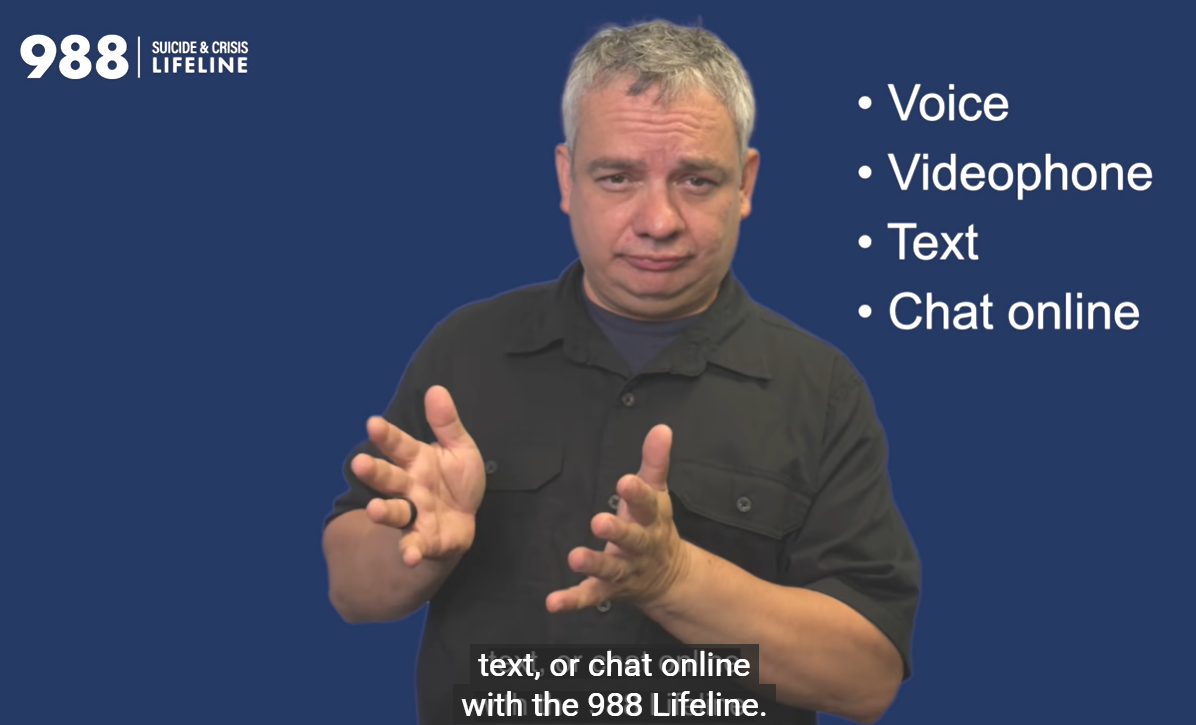
During the month of May, and all year, if you’re experiencing a suicidal crisis or emotional distress, the 988 Suicide & Crisis Lifeline is available 24/7 with support for Deaf, Hard of Hearing, and DeafBlind individuals. You can connect in several accessible ways:
-
Videophone: Dial 988 directly using your videophone or smartphone through a video relay service app.
-
Text: Send a text message to 988 to reach a crisis counselor.
-
Chat: Visit the 988 website and click the “Chat” button to connect online.
By raising awareness and improving access to services, we can help ensure that Deaf, Hard of Hearing, and DeafBlind individuals receive fair, respectful, and culturally appropriate mental health care. Thank you for helping promote understanding, visibility, and support during Mental Health Awareness Month.
|