|
Why Learn Salsa On2?
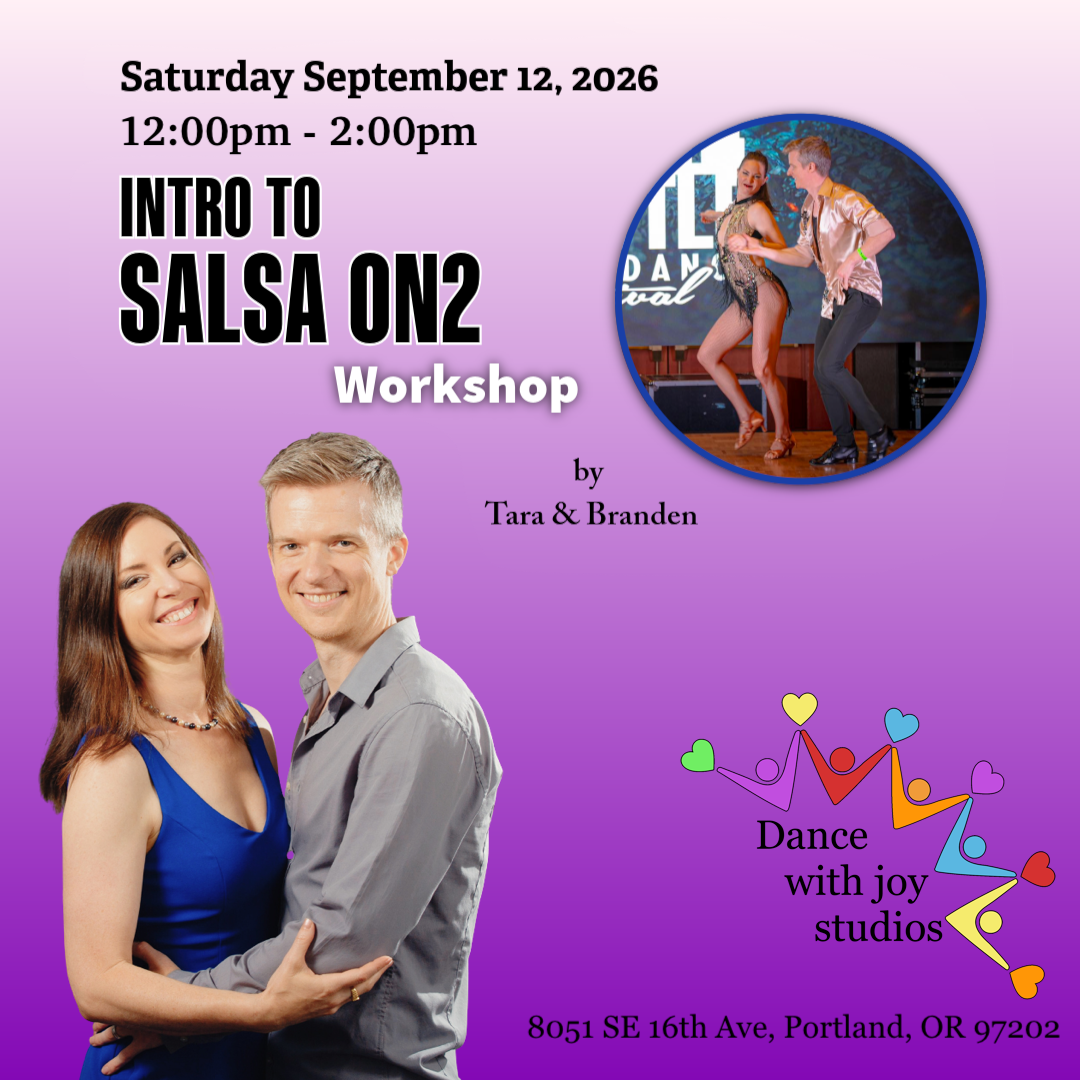
If you've trained in ballroom or on1, you already have rhythm and technique - but on2 is a gritty, swaggy, and playful dance that brings us back to the origins of where salsa began. This is because on2 is improvisational, grounded in history, and meant to be felt in the music! On2 isn't just a different count; the stepping pattern locks in with the core salsa rhythm, the conga's tumbao, allowing us to dance inside the music. On2 will allow you to FEEL the music and your dancing will become syncopated with the drum, responsive to the song's phrasing, and not just its beat.
That connection isn't incidental, it's the whole point! Salsa's rhythms (clave, tumbao, guaguancó) trace back to Afro-Cuban traditions carried across the Atlantic through the slave trade, reshaped in Cuba, and carried again by Cuban and Puerto Rican immigrants into New York City. In Harlem, those rhythms fused with jazz, and through the Palladium era, a generation of dancers built the vocabulary that salsa still runs on. On2 was a social dance born on crowded club floors, danced in a tight linear slot, built around a soft, responsive frame, playful shines, and musicality rather than choreography.
That's a different lineage than what you might be familiar with. Ballroom is a technical, competition-oriented form, often set to other genres of music. LA-style, popularized in the 1990s, is flashy and performance-driven style, and its connection to fundamentals are shared with on2. In contrast, learning on2 means exploring salsa the way it was danced by the people who created it, a history worth carrying onto the dance floor!
|