|
In this Issue:
- News
- Events & Webinars
- Community Resources
- Los Recursos Familial en Español
- Family Resources in English
- Job Opportunities
| |
Spotlight On: Wisconsin DHS Urges Parents and Caregivers to be Aware of Signs of Self-Harm after School Breaks
| |
|
Citing data that students are at extra risk of self-harm when returning to school after the holidays, the Wisconsin Department of Health Services is urging parents and caregivers to look out for signs of self-harm among the youth in their care.
Signs that a young person may be self-harming include:
- Increased secrecy
- Emotional withdrawal or changes in mood and behavior
- Reduced time with peers or family members
- Unexplained cuts, burns, or bruises; these typically occur on the arms, legs, and stomach
- Finding razors, sharps, knives, or other items that may be used to self-injure
- Keeping arms and legs covered even when it is inconvenient to do so
"Have regular check-ins with your child. Listen nonjudgmentally. Discuss healthy coping skills to manage academic and social stress. Encourage healthy habits - physical activity, adequate sleep, nutritious foods - all of which help to build resilience," said Office of Children's Mental Health Director Linda Hall. "95% of kids trust their parents to provide them with the right information and when it comes to mental health, they are ready to talk."
| |
Real Talks: We Want to Hear from You | |
|
If you have a question about your substance use or if you’re concerned about a loved one’s drinking or drug use, just click on the link to ask it. Your anonymous and confidential questions will help the Alliance for Wisconsin Youth have a real conversation about alcohol and other drug use in Wisconsin.
| |
RISE Drug Free MKE Contributes to
the Milwaukee Times
| |
|
The RISE Drug Free MKE coalition is happy to announce that as part of our outreach strategy we are publishing an op-ed every month in the community newspaper the Milwaukee Times. You should find our newest op-ed, "It's Not Too Late to Make a New Year’s Resolution," in the "Focus on Health" section of the current issue. Please share it widely!
| |
Conference Workshop Proposals Wanted | |
|
Youth Anxiety, Stress, and Worry: What Is Typical?
Tuesday, January 30
| |
|
This training will provide resources to mental health and school professionals on identifying anxiety in youth and understanding different symptoms as they relate to typical developmental trajectory. The training will also provide strategies to address worry in youth, especially youth of color, with free resources to help in the identification and treatment of anxiety disorders. An important emphasis will focus on culturally adaptive anxiety and how to best meet youth needs. This webinar from the Mountain Plains MTTC will be held from 2 to 3:30 p.m. on January 20.
| |
|
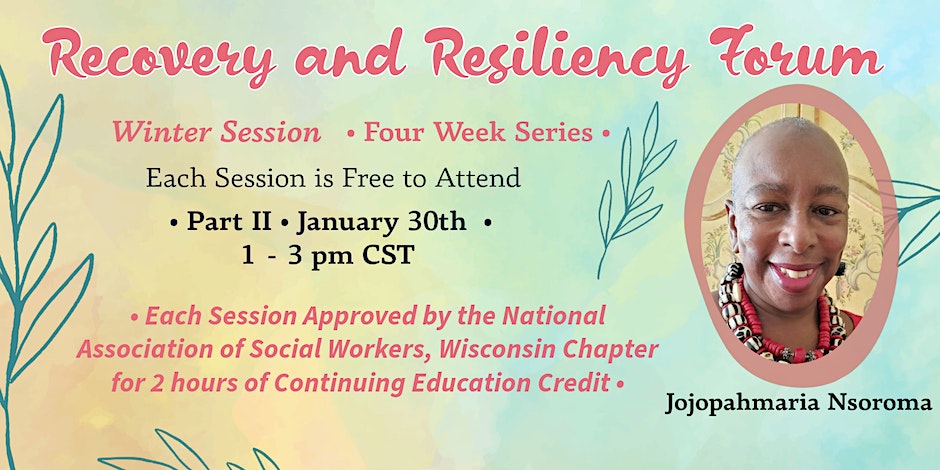
Recovery Forum Part II, Celebrating DEI & Individual Cultural Wisdom
Tuesday, January 30
| |
|
Author Jojopahmaria Nsoroma will be leading this webinar, in which attendees will explore the intersection of DEI, Cultural Reverence, trauma-responsive, and recovery programming. Racial injustice will be explored as a chronic, systemic, collective, and personal form of trauma. This webinar, hosted by WCS, will be held on Tuesday, January 30, from 1 to 3 p.m.
| |
|
Responding to a Growing Demographic:
Supporting Older Adult Populations within the Criminal Justice System
Tuesday, January 30
| |
|
It is estimated that by 2030, a third of all incarcerated individuals will be over 55. Older adults often face additional challenges related to medical, mental health, social, and legal needs which must be considered at all intercept points within the criminal justice system. Speakers will discuss considerations related to the medical and social care needs of older adults involved with the criminal justice system; improving outcomes; and strategies to address the challenges faced by this demographic prior to and following contact with the system. A reentry program that is specifically designed to support the older adult population following incarceration will also be featured. This webinar, organized by SAMHSA’s GAINS Center, will begin at 11:30 a.m. on January 30.
| |
|
Unspoken Truths:
Being a Young Person in Advocacy Spaces
Tuesday, January 30
| |
|
Mental Health America's 2022-2023 Young Leaders Council recently released their annual report, "Challenging, Sustaining, and Evolving: An Anthology on Youth Mental Health Advocacy (and Hope)." This anthology is a reflection on the complexities that young people are confronted with in the world of mental health activism, as told firsthand by members of MHA's Young Leaders Council. Join MHA to learn what it means to be a young person in advocacy spaces and the truths that often go unspoken – the victories, defeats, hope, adversity, and everything in between. This webinar will be held from 11 a.m. to 12 noon on January 30.
| |
Establishing a Foundation for Motivational Interviewing Skills
Tuesday, January 30 and Thursday, February 1
| |
|
This highly interactive introduction to Motivational Interviewing (MI) provides the "what" and "why" behind this highly sought, evidence-based skill for helping people change and grow.
In this UW-Madison Continuing Studies-led course, you will also build a solid foundation for understanding the "how" of MI, practice the fundamentals, and create a plan to continue your MI skills development.
Registration is required and fee is $149.
| |
|
Stimulants 101
Wednesday, January 31
| |
|
This one-hour training is intended to provide an overview of stimulant use disorders. Topics include stigma, pharmacology, and physiology of methamphetamines and cocaine, identifying stimulant overdose (overamping), managing acute stimulant intoxication, de-escalation techniques, and evidence-based treatment for people with stimulant use disorders. This webinar organized by the Opioid Response Network will begin at 11 a.m. on January 31.
| |
|
Embedding Equity in 988 Crisis Systems
Wednesday, January 31
| |
|
With 988, we have the opportunity to build equitable behavioral health crisis response systems from the ground up. This webinar will provide participants with the context and rationale for equity, as well as a vision for equity at all system levels – community, state/territory, tribal, and federal. After the presentation, participants are invited to stay logged into the webinar for a 30-minute Office Hour session with the National Crisis Systems Response Training and Technical Assistance Center to engage in deeper discussion on considerations to make to ensure equity is embedded in their behavioral health crisis response systems. This SAMHSA webinar will begin at 12 noon on January 31.
| |
|
Where Do I Start? Professional Development for New Prevention Practitioners
Wednesday, January 31
| |
|
Join the Northeast & Caribbean PTTC for their webinar event led by prevention experts Sandra Puerini Del Sesto and Jessica Goldberg. This workshop is perfect for professionals who are still in the early stages of their prevention career, as this webinar will allow participants the chance to develop a solid foundation in the prevention field, learn where to find professional development opportunities, and learn more about prevention as a whole.
This event will be held on Wednesday, January 31, at 12 p.m. and is free, though advance registration is required.
| |
Stigma and Bias in Behavioral Health
Wednesday, January 31
| |
|
The Prevention Technology Transfer Center Network and The Danya Institute will be hosting a free webinar on Wednesday, January 31 at 12 p.m. Led by instructor Laura Hinds, this webinar will focus on the role of bias in substance misuse treatment.
| |
|
Behavioral Health Equity Best Practices
for African Americans
Monday, February 5
| |
|
Behavioral health equity and access to high-quality and affordable healthcare services and support is the right of all individuals, regardless of race, age, ethnicity, gender, ability, socioeconomic status, sexual orientation, or geographical location. Advancing behavioral health equity means working to ensure that every individual has the opportunity to be as healthy as possible. During this virtual Black History Month celebration, participants will learn how collaborations to leverage best practices can advance health equity within African American populations and for underserved communities. This SAMHSA session will be held from 12:30 to 2 p.m. on February 5 on Zoom.
| |
|
The Ethics of Advancing Mental Health Equity
Wednesday, February 7
| |
|
In this session Dr. Christine Coleman, founder of POC Thriving, will explore how behavioral health equity impacts health care outcomes. Drawing from her deep experience, Dr. Coleman will walk participants through not only the risks associated with inequitable care, but the opportunities to meaningfully address mental health disparities.
This event will be held online on Wednesday, February 7 from 10 to 11: 30 a.m. This event is free, though registration is required.
| |
|
Fathers Supporting Fathers
Wednesday, February 7
| |
|
Organizations that seek to strengthen families and promote child well-being offer a variety of programming and resources to support parents. In this webinar, we will focus on father-to-father programs and peer support groups as an important way for organizations to create space for fathers to ask questions, share concerns, and find the support they need.
This webinar is co-produced by the UW Institute for Research on Poverty and the Wisconsin Child Abuse and Neglect Prevention Board and will be held from 12 to 1 p.m. on February 7.
| |
|
The 1% Panel: Black Men in Mental Health
Thursday, February 8
| |
|
For many seeking mental health services, finding the right therapist is key. But, that can be a tough task when only 4% of therapists in the United States are African American, and only 1% are African American males.
Panelists include: LaNelle Ramey of MENTOR Greater Milwaukee; Montreal Cain of MERA Cares; Officer Dominique Thompson of the Milwaukee Police Department; and Kenneth Ginlack of Serenity Inns.
Panelists will discuss how we can create more access to mental health services, how we can create better representation amongst therapists, and much more.
Join the Wellpoint Care Network on Thursday, February 8, from 5 to 7 p.m. in the Wellpoint Care Network Training Center (8901 W. Capitol Drive, Milwaukee) for The 1% Panel: Black Men in Mental Health.
Doors will open at 4:30 p.m. Space is limited, so please reserve tickets prior to the event.
| |
|
Trauma and the Brain: An Introduction
Tuesday, February 13
| |
|
As a result of this workshop, participants will gain a better understanding as to how trauma affects the brain, discuss risk factors for substance use disorders, and develop their strategy for intervention methods for a particular population. This webinar, organized by Community Advocates Public Policy Institute, is free and open to the public. It will be held from 9 to 10:30 a.m. on February 13.
| |
|
QPR Question Persuade Refer Suicide Prevention Training
Tuesday, February 20
| |
|
The QPR mission is to reduce suicidal behaviors and save lives by providing innovative, practical and proven suicide prevention training. The signs of crisis are all around us. We believe that quality education empowers all people, regardless of their background, to make a positive difference in the life of someone they know.
This two-hour interactive introduction to suicide awareness and prevention is presented by Community Advocates Public Policy Institute and will be held from 10 to 11:30 a.m. on February 20.
| |
|
Addressing Stigma at the Intersection of Substance Use Disorders (SUD) and Mental Health:
Stories of Recovery in Native American Communities
Tuesday, February 20
| |
|
February’s WISE Coalition meeting will feature guest speakers Debra A. Valentino, Certified Recovery Coach and Certified Facilitator, and Clint Peterson, who is active in the recovery community. The meeting will be facilitated by Mark Powless, who is the General Manager over programs and services for the Oneida Nation. This virtual meeting will be held from 9:30 to 11:30 a.m. on February 20.
| |
|
ECOM Workshop for Advocates:
Housing, Shelter & Warming Rooms
Wednesday, February 21
| |
|
The Empowerment Coalition of Milwaukee (ECOM) is a monthly gathering of social services professionals, advocates, and consumers organized by Community Advocates Public Policy Institute. ECOM meets monthly and explores topics that are vital to Milwaukee’s human services professionals. This month’s topic is Housing, Shelter & Warming Rooms, and will be held from 9 a.m. to 12 noon on February 21; location is TBD. Fee is $5 for light refreshments and materials. Kindly make sure to RSVP by Friday, February 16. Our entire 2024 ECOM workshop schedule is available at the link below.
| |
|
Samad’s House Second Annual
Harm Reduction Drive-thru
Saturday, February 24
| |
|
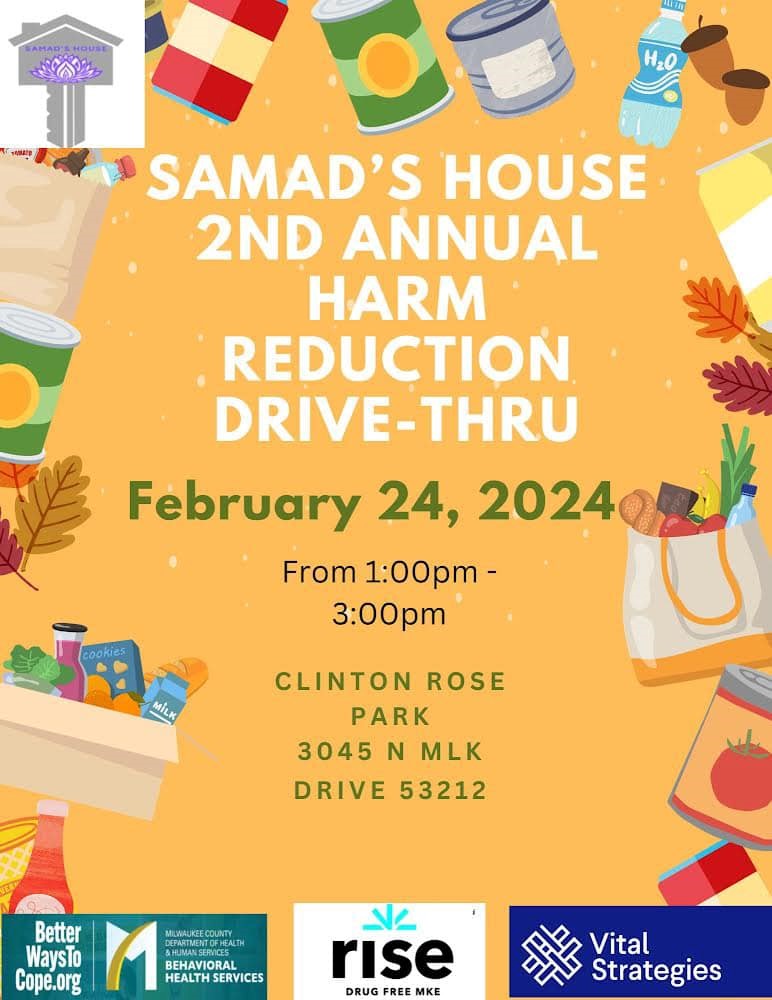
Samad’s House, RISE Drug Free MKE, Vital Strategies, and Milwaukee County’s Better Ways to Cope project are sponsoring this harm-reduction drive-through event for those seeking information and resources to save lives. It’ll be held at Clinton Rose Park, 3045 N. MLK Drive, Milwaukee, from 1 to 3 p.m. on February 24.
| |
|
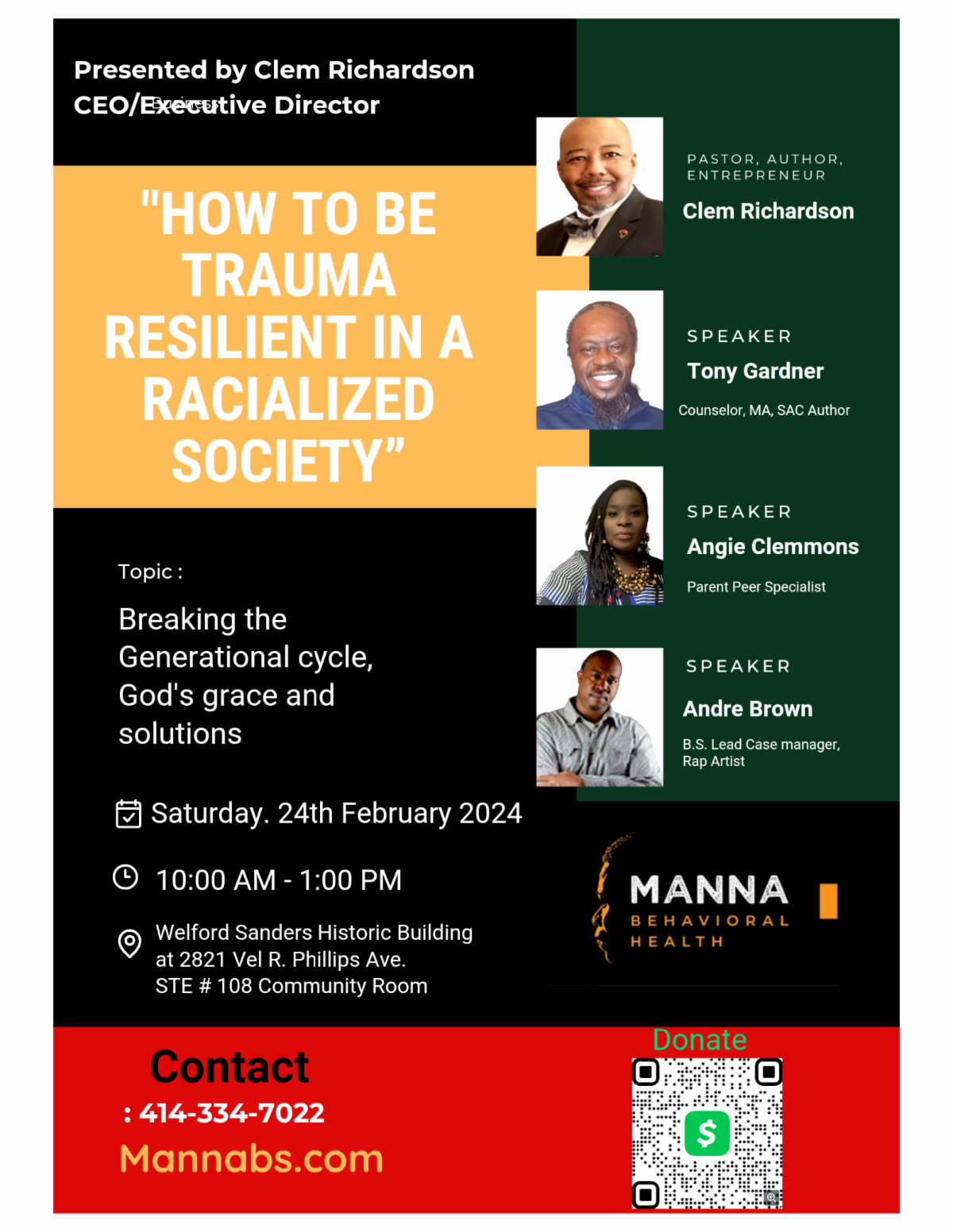
How to Be Trauma Resilient in a Racialized Society
Saturday, February 24
| |
|
This discussion on "breaking the generational cycle, God’s grace, and solutions" will feature Clem Richardson of Manna Behavioral Health, Tony Gardner, Angie Clemmons, and Andre Brown. It will be held from 10 a.m. to 1 p.m. on February 24 at Welford Sanders Historic Building, 2821 Vel R. Phillips Ave., Suite 108. Contact 414-334-7022 to learn more.
| |
|
Resilience and Thriving: The Secret Power of Stress
Wednesday, February 28
| |
|
How well do you cope with stress? And can stress ever be good for you?
In this two-hour webinar, participants will be able to:
- Identify the early warning signs of stress, types of stress, and effects of stress
- Understand positive and negative coping styles, plus your personal coping style
- Learn specific skills to cope well with and thrive from stress
This session is organized by Community Advocates Public Policy Institute will be held from 9 to 11 a.m. on February 28, and is free and open to everyone.
| |
|
Family-Based Youth Suicide Risk Management Workshop
Wednesday, February 28
| |
|
This workshop provides an introduction to state of the art, empirically supported family-based suicide risk management practices to help therapists and clinical staff manage suicide concerns when they arise. Participants will learn about trauma informed care; adolescent and family development; the national concern about adolescent suicide risk; a family-centered care approach to risk assessment and safety planning; and strategies for engaging families into the treatment process and how to conduct a first family session. Lecture, discussion, experiential exercises, and therapy videos are used throughout the workshop. This webinar is organized by UW-Green Bay and the fee is $35. CEUs are available.
| |
|
Fulfilling the Promise Conference
Monday, March 11 through Wednesday, March 13
| |
|
This workshop provides an introduction to state of the art, empirically supported family-based suicide risk management practices to help therapists and clinical staff manage suicide concerns when they arise. Participants will learn about trauma informed care; adolescent and family development; the national concern about adolescent suicide risk; a family-centered care approach to risk assessment and safety planning; and strategies for engaging families into the treatment process and how to conduct a first family session. Lecture, discussion, experiential exercises, and therapy videos are used throughout the workshop. This webinar is organized by UW-Green Bay and the fee is $35. CEUs are available.
| |
|
Hey, there,
-- do you have:
-
Job openings?
- Upcoming events?
- News to share?
- Suggestions?
Forward the information to Prevention@CommunityAdvocates.net.
Thank you for your service to Milwaukee!
| |
|
Overdose Prevention and Response Toolkit
This updated toolkit from SAMHSA, designed to augment overdose prevention and reversal training, provides guidance on the role of opioid overdose reversal medications, including naloxone and nalmefene, and how to respond to an overdose. It also contains appendices for specific audiences, including people who use drugs (PWUD), people who take prescription opioids, first responders, healthcare practitioners, and others. Access it here.
| |
|
Challenging, Sustaining, and Evolving: An Anthology on Youth Mental Health Advocacy (And Hope)
This report from Mental Health America’s Young Leaders Council is a reflection on the complexities that young people are confronted with in the world of mental health activism – as told firsthand by the members of MHA’s YLC. Download the report.
| |
Los Recursos Familial en Español | |
|
Eliminar las influencias tóxicas
Ciertas personas y situaciones en la vida pueden provocar que nos sintamos mal con nosotros mismos o que tengamos comportamientos destructivos. Identificar las influencias tóxicas en nuestras vidas y tomar medidas para establecer límites o generar una nueva vida sin ellas puede mejorar la salud mental y física con el tiempo. Este hoja de trabajo de Mental Health America le puede ayudar a cumplir estos pasos en papel. Descarguelo aqui.
| |
|
Programa de intervención familiar (FIP)
Objetivo del programa de intervención familiar es eliminar importantes barreras que impiden latinos y afroamericanos individuos y familias de buscar servicios de asesoría tradicional. Este programa de manejo de caso intensivo, basado en el hogar, enfoque familiar ofrece servicios de apoyo a las familias que luchan con el impacto de la adicción a la sustancia y la violencia doméstica. Servicios son proporcionados sin costo a la familia. Para obtener más información sobre el programa de intervención familiar, por favor llame a 414-270-4600. Aprende más.
| |
Family Resources in English | |
|
Positive Options for Women Entering Recovery
Are you worried about your drinking or drug use? You aren’t alone. The Positive Options for Women Entering Recovery (POWER) is here to help. The Milwaukee Women’s Center’s POWER provides FREE day treatment for women struggling with alcohol and other drug issues. Click here to learn more or call 414-270-4600 to get help.
| |
|
Family Intervention Program (FIP)
Struggling with drug and alcohol use can make you feel alone. Not being able to find a counselor who understands your unique treatment needs can make things even harder. The Family Intervention Program is a no-cost, bilingual English and Spanish drug and alcohol treatment program specifically designed for Black and Latinx individuals and families in Milwaukee. To learn more about the Milwaukee Women’s Center’s Family Intervention Program, please call 414-270-4600 or click this link.
| |
|
Detoxing Your Life
What do you do once you decide something or someone is toxic to you? Setting boundaries and making changes is difficult, and sometimes we don’t have the confidence to take the leap. This worksheet from Mental Health America will help you work through the positive and negative aspects of the influences in your life. It will also help you build confidence to make positive changes that might be uncomfortable or difficult. Download it here.
| | | | |