Spotlight on Christine Hodges :
Being My Own Advocate
At the age of 43, when I made an appointment with my GP for a litany of health issues I had no idea that those issues would lead to a diagnosis of MGUS, a pre-curser to multiple myeloma. After many tests and ultrasounds, an endoscopy, and a visit to the head of the Allergies and Clinical Immunology Department at a leading hospital in Toronto, it was discovered that I had an elevated level of M-protein in my blood.
I began to see an oncologist at the local cancer centre and on my second visit it was decided a bone marrow aspiration was required. This procedure took place on my 45 th birthday and I was diagnosed with smouldering myeloma. 
Although I felt fine for the next couple of years, I had made two important decisions. The first was that I needed to be my own advocate and educate myself and the second was that I needed to tell my children. Up to this point, my children did not know about my diagnosis but knew I was seeing my doctor every three months. My husband and I did not want them to worry; in the age of Google where everything is accessible on the Internet, it can be very difficult to find credible information. Having MGUS and smouldering myeloma mean the doctors don’t treat the disease, but “watch and wait.” It was unreal to me and my family that someone could receive a cancer diagnosis and not receive treatment. This was one of the most difficult things to deal with. I thought to myself, “how can I have cancer but not do anything about it?” Friends and family would ask the same thing over and over. I looked good and I felt fine and soon people began to think that everything was okay because I did not look like a “cancer patient.” I soon discovered that treatments can be very difficult on patients and that waiting ultimately meant those treatments worked better and longer.
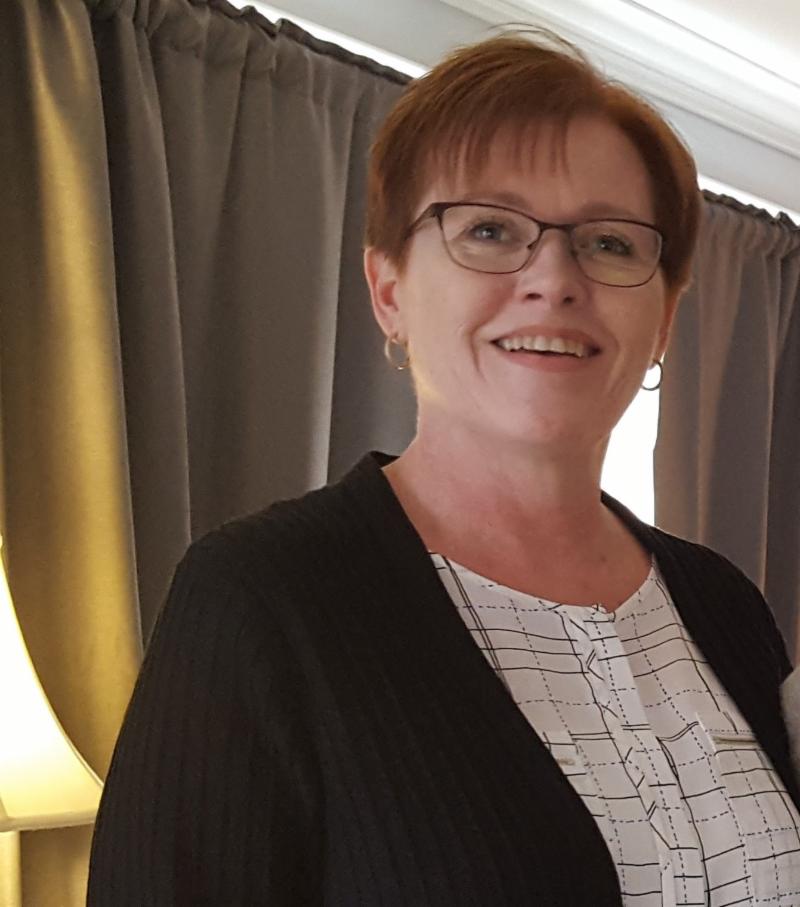
Christine Hodges
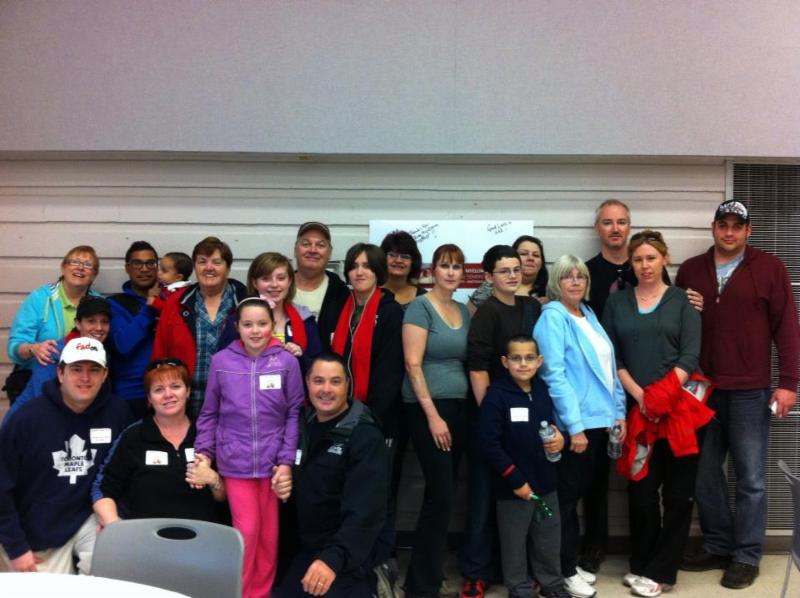
Christine and her family's team pictured at the Mississauga Multiple Myeloma March
Then I heard about the Multiple Myeloma March in Mississauga, organized by Myeloma Canada and a host of volunteers. I’m not good at watching and waiting so this was the perfect way for me to tell my family and friends (who did not know about my diagnosis) but more importantly for me to advise my children. This was a way for us to take some action, let my girls feel that we were doing something proactive, and that I was okay. It was extremely hard telling my then 12 and 9-year-old daughters, but this event brought us closer in ways I did not think possible. I felt so much better knowing we were participating and fundraising for research. We had a large team consisting of family and friends who participated and raised over $10,000 for our first march and we had FUN!
Prior to that first walk, I attended an InfoSession hosted by Myeloma Canada. For the first time I met other multiple myeloma patients. I learned so much from the guest speaker and Aldo Del Col. All the people I met that day had different symptoms but share one thing in common; we were all affected by a disease that we all knew little about. This was the catalyst for me to take charge of my life and my myeloma. I needed to educate myself and be my own advocate. 
It was then that I decided I wanted, not needed, to see a myeloma specialist at the Princess Margaret Cancer Centre (PMCC) - one of the top 5 research centres in the world. As I began to educate myself on new drugs being developed and new clinical trials, it made me feel like I was doing something even though I was still on a watch and wait.

In 2015 I learned about a new drug called daratumamab (Darzalex) and a clinical trial at the PMCC. I think I surprised my doctor when I brought it up long before the trial start date at PMCC. This was a trial for smouldering myeloma patients. At that time, trials for smouldering patients were very rare. Once the trial opened, my doctor, my husband and the trial coordinator discussed the pros and cons and decided that I was a good candidate for the trial. There was much paperwork to review and sign. I cannot describe how happy I was to finally be doing something about this disease. To be one of the first people in Canada to be treated with daratumamab was very exciting as there seemed to be few major side effects reported and preliminary results were promising.

My journey began with testing for the clinical trial. I must say that I have never had such an extensive and exhaustive health work-up in my life. I got to listen to the sound the chambers of my heart make during an ultrasound. It sounds like a symphony of classical music – it really does! I was put in a clear plastic box for pulmonary function testing, just like the ones that you see on TV where game show contestants try to grab dollar bills swirling in the air. I had a full-body MRI. I must confess that I am one of the few people who don’t mind this test. I find it relaxing being in the tube with a warm blanket over me. The pulsing sounds of the machine lull me to sleep.
 
Unfortunately, that MRI discovered a lesion on my T10 vertebrae and my M protein and IgA levels quickly increased. I was disqualified from the trial and that was incredibly disappointing. I was devastated but I called Myeloma Canada and the person I spoke with was incredibly supportive and reminded me that I was very lucky that all these changes were caught so quickly before there was any significant organ damage.

I had a bone marrow aspiration in my spine which confirmed the presence of myeloma cells. My specialist and the team at PMCC recommended a stem cell transplant. What a whirlwind that was! In just a few weeks, I went from being a candidate for a trial to an active myeloma patient. I began with four cycles of CyBorD which is Velcade (bortezomib), dexamethasone and cyclophosimide. Each cycle lasted a month. I made so many trips to the PMCC that I was on a first-name basis with many of the nurses. It was not an easy time, but my doctor and nurses really got me through it and supported me all the way.

I received a call on the afternoon of April 30, 2016, advising me that a bed was ready and I needed to be at the hospital by 7pm that evening. I was in the hospital until May 16.
 
Maintaining a positive attitude has helped me immensely. This doesn’t mean that there were not more difficult days. Every day I got up, showered, and got dressed and sometimes that was all that I could bring myself to do but I did it every day!

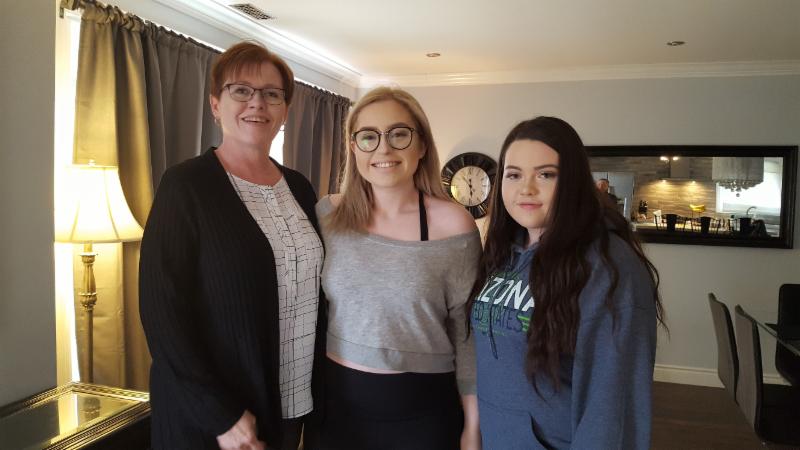
Christine Hodges with her children Evan and Carly
Each day has been a bit better than the last and support groups and the social workers at my center have been there to help me find resources and to help me deal with everything from how to pay for drugs, changes in my personal life and going back to work. I just passed my 1-year back-to-work anniversary on March 28 and my colleagues and employers have been extremely supportive and continue to be.
Since my initial diagnosis I’ve learned that several people close to me had multiple myeloma, including my step-mother’s father and the sister of a close friend at work. Slowly, myeloma is becoming more widely known as more and more patients continue to live with the disease. This, because of the work of Myeloma Canada and all the patients and volunteers. Not everyone who has cancer looks or acts like they do. I don’t like the term “warrior”. I have two kids who need me, family and friends who support me and an incredible myeloma specialist at one of the top 5 research centers in the world who looks after me.

Life can be uncertain, and some days are scary, but I have things I want and need to do. There have been many changes in my life. My oldest child will be attending college in the fall, my youngest is in grade 10 and I am now separated. I make plans weeks, months, and sometimes years in advance. I decided I won’t stop living and enjoying my life because of multiple myeloma. It’s a part of my life but only a small part. Besides, there are many new drugs and clinical trials on the horizon and I need to find out all I can, so I can make sure my doctor knows that I am my own best advocate and I’m ready to participate in another trial.

Christine Hodges
To find a local support group in your area or for information on how to start one,