|
Running Toward Recovery
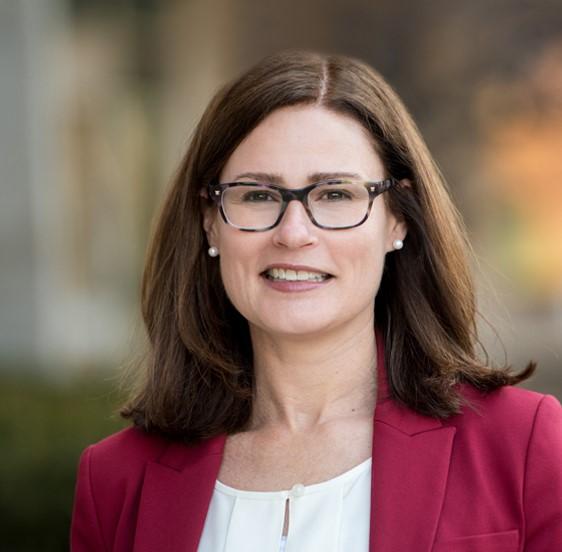
We are pleased to share the latest video in our series highlighting Spaulding’s incredible researchers and what inspires them personally and professionally. Hear from Fabrisia Ambrosio, PhD, MPT, Atlantic Charter Director of the Discovery Center for Musculoskeletal Recovery, about the pursuits and experiences that have shaped her work in the laboratory where she strives to understand the biological mechanisms that contribute to how we recover from injury or disease, particularly as we age. Learn why her efforts to develop tailored interventions and therapeutics that will maximize health and quality of life keep her always on the run!
| | Dr. Ambrosio’s most recent paper in the Journals of Gerontology examines using an innovative mathematical technique in a completely novel way to analyze how the molecular communication in skeletal muscle cells deteriorates as we get older. Applying this “information-theoretic” approach, she and her colleagues were able to demonstrate that these normally tightly regulated processes become increasingly disorderly over time. An enhanced understanding of how these biological functions are sustained or compromised during the lifespan may aid in the design of targeted therapeutics to maintain function and overall health. | | |
Consciousness Efforts
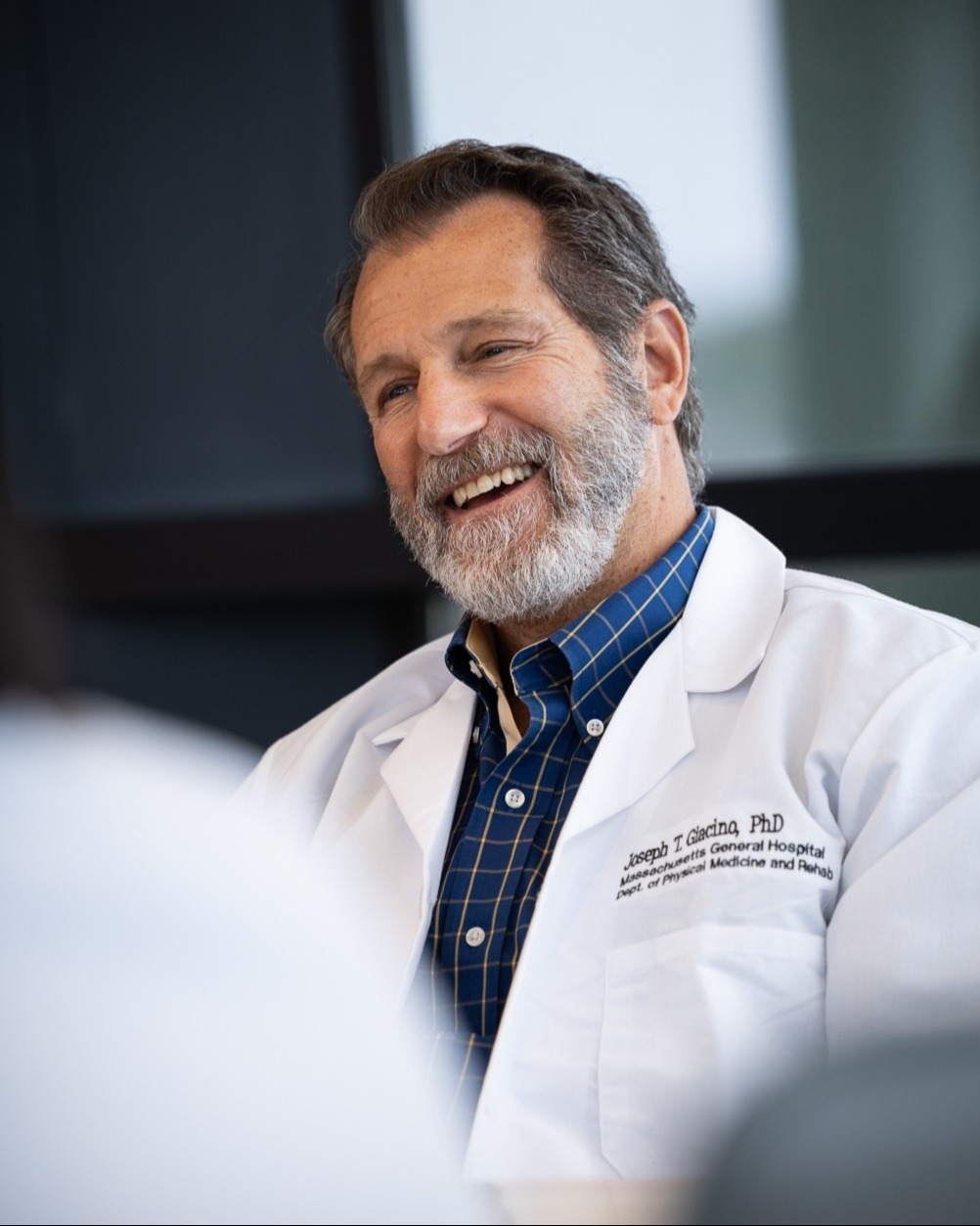
Joseph Giacino, PhD, director of Rehabilitation Neuropsychology at Spaulding, has focused much of his professional career around advancing our understanding and treatment of disorders of consciousness (DOCs). Encompassing a wide spectrum of clinical syndromes including coma, DOCs are caused by severe damage to brain circuits that regulate arousal and awareness. The diagnosis and clinical management of these complex conditions is notoriously challenging, and in recent years, Dr. Giacino and his colleagues have been making significant inroads to elucidate the nuances in describing and diagnosing DOCs and predicting patients’ long-term outcomes.
| | In this article from the latest issue of the Journal of Head Trauma Rehabilitation, Dr. Giacino and two other DOC experts reflect on the progress of research in the field over the last two decades, noting marked successes in translating discovery into clinical practice and the positive impact of interdisciplinary collaboration on quality of care. Notably, the enormous amount of recent of evidence-based work in the DOC field has garnered the attention of organizations that set standards for the delivery of optimal care, including CARF International, the major accrediting entity for rehabilitation facilities. CARF will be updating their standards manual accordingly as of July 1, 2026. | | “We are at an exciting moment in the DOC field, where the incorporation of years of research is creating a new trajectory for how we care for these patients,” says Dr. Giacino. “Our work today is laying the foundation for transformational changes over the next decade as we incorporate technological advances — brain–computer interfaces, wearable sensors, artificial intelligence — to detect consciousness and tailor treatment.” | | Check out the first installment of The Harvard Gazette’s “One Word Answer” series, where Dr. Giacino delves into the subtleties of defining “consciousness.” | | |
“Continuous, interdisciplinary research is essential to ensure that AI in mental health care evolves responsibly, effectively, and equitably. The most pressing scholarly questions must center not on AI in the abstract but on the specific clinical and administrative tasks it is meant to perform — and whether it does those jobs better than existing methods.”
Dr. Daniel Barron, AI and Mental Health Care: Issues, Challenges, and Opportunities
| | |
Using Artificial Intelligence Intelligently
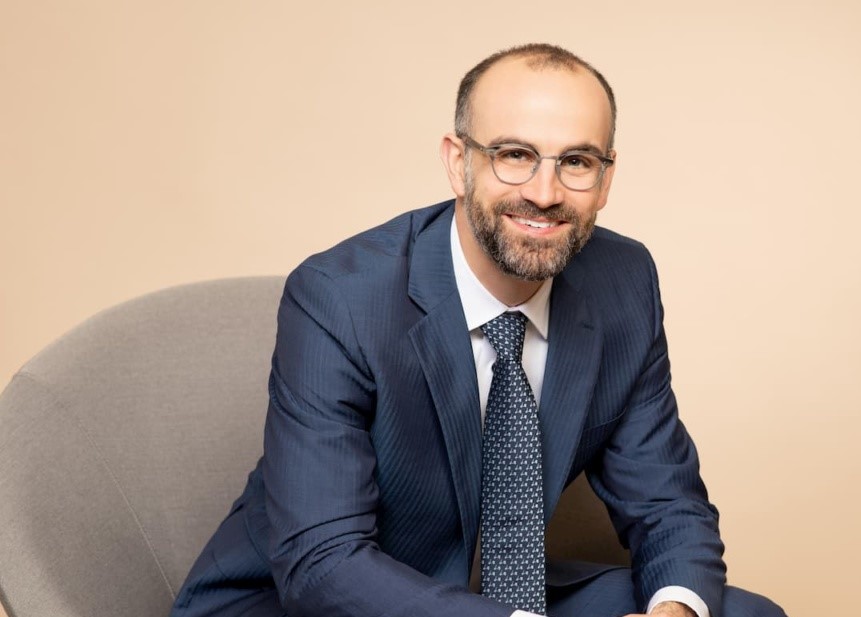
Daniel Barron, MD, PhD, director of the Pain Intervention and Digital Research Program at Spaulding and Brigham and Women’s Hospital, took part in a recent project of the American Academy of Arts & Sciences (AAAS) reflecting on the use of artificial intelligence (AI) technologies in the delivery of mental health care. A psychiatrist and pain medicine expert, Dr. Barron has focused his research on using digital tools to measure the metrics clinicians typically ask patients about — things like activity, sleep, and heart rate — with the understanding that better and more accurate data will lead to better and more useful treatment decisions. As part of the project’s Steering Committee, over the space of 18 months, Dr. Barron joined 18 other experts invited to explore the opportunities and limitations of AI in the diagnosis, treatment, and prevention of mental illness.
“My clinical perspective provided grounding that was, I believe and was told, useful to the Committee,” says Dr. Barron. “With a topic like AI, conversation can quickly devolve into existential debates about the future of human intelligence in the workplace, the nature of human empathy; however it was helpful to ground our conversations in the real-world, pressing needs of patients. Being very concrete about these needs and how technology can be deployed to solve specific problems was a helpful reminder.”
The group’s responses, which are compiled in this AAAS report published last month, are intended to provide a launching point for future research and analysis on the topic.
| | |
Strength of Feet
A specialist in non-surgical sports medicine, Adam Tenforde, MD, applied his expertise on foot/ankle conditions and understanding the role of muscle function to a recent study exploring MRI measures of foot-muscle size and recurrent falls in the elderly. Reduced foot-muscle strength is common in older adults with a history of falling, but there has been little research on the link between the imaging characteristics of foot-muscle size and fall recurrence. In this small retrospective pilot, recently published in the Cureus Journal of Medical Science, Dr. Tenforde and his colleagues at the Mass General Brigham–Harvard Foot & Ankle Research and Innovation Lab reported that smaller foot-muscle cross-sectional areas measured using MRI were associated with repeated falls in the elderly. These results support the role of foot-strengthening rehabilitation to reduce fall risk in this population, and the team proposes further work on a larger scale to enhance fall prevention and intervention.
| | |
Strong Showing
Spaulding faculty featured prominently at the 8th Annual Stepping Strong Trauma Research and Innovation Symposium in November. This year’s event, entitled “Post-Acute Care and Rehabilitation for Traumatic Injury,” explored strategies to advance rehabilitation, optimize functional outcomes, and integrate innovative therapies to improve long-term quality of life for trauma survivors. The event is hosted each year by The Gillian Reny Stepping Strong Center for Trauma Innovation at Brigham and Women’s Hospital (BWH), which was established by the Reny family, generous supporters of both BWH and Spaulding.
| | |
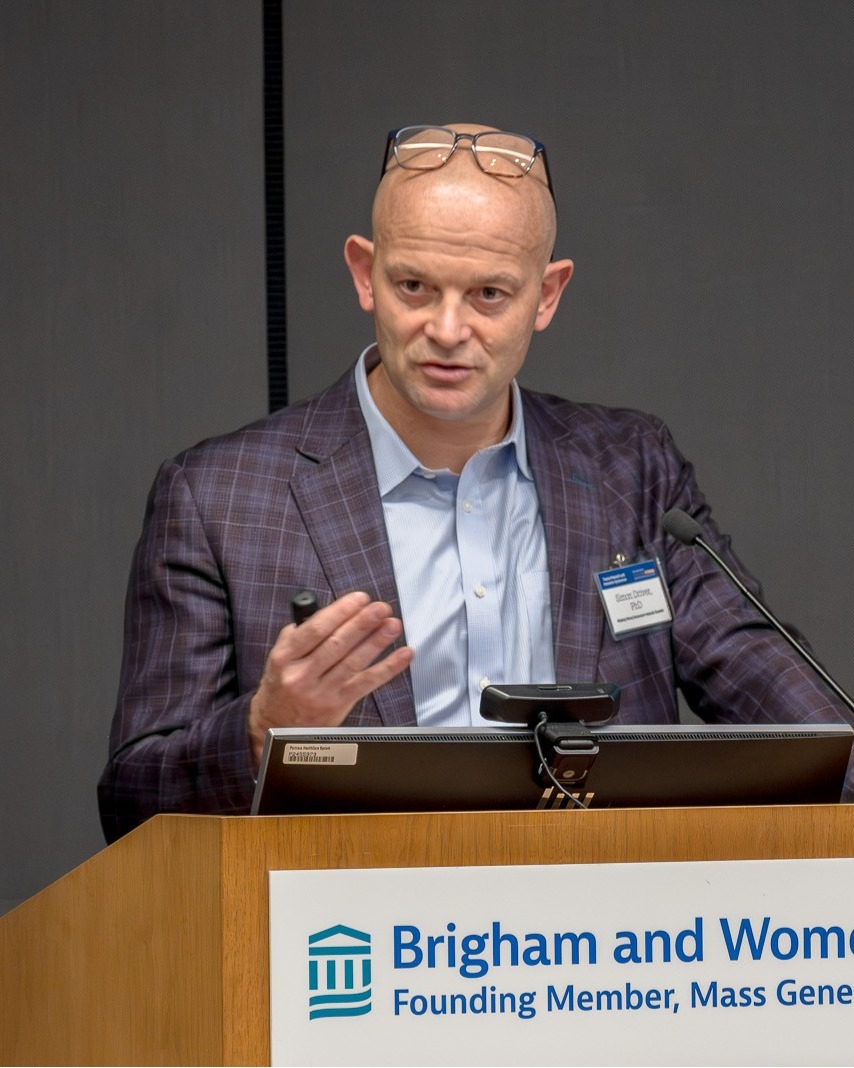
Simon Driver, PhD, director of Spaulding’s Discovery Center for Brain Injury and Concussion Recovery, delivered the keynote presentation highlighting the role that healthy behaviors, like physical activity and diet, play for patients with traumatic brain injury (TBI). He shared that TBI survivors are at greater risk for chronic health issues compared to people without a TBI, including diabetes, high blood pressure, and obesity. To help address this issue, Dr. Driver shared his successes in tailoring a coach-based diabetes prevention program in this population, which significantly improved weight loss, reduced blood pressure, and increased confidence. His team’s ultimate goal is to build on their positive research findings by implementing these programs in the community setting to have a tangible impact on people’s health. They recently received major National Institute on Disability, Independent Living, and Rehabilitation Research funding to do just that.
| |
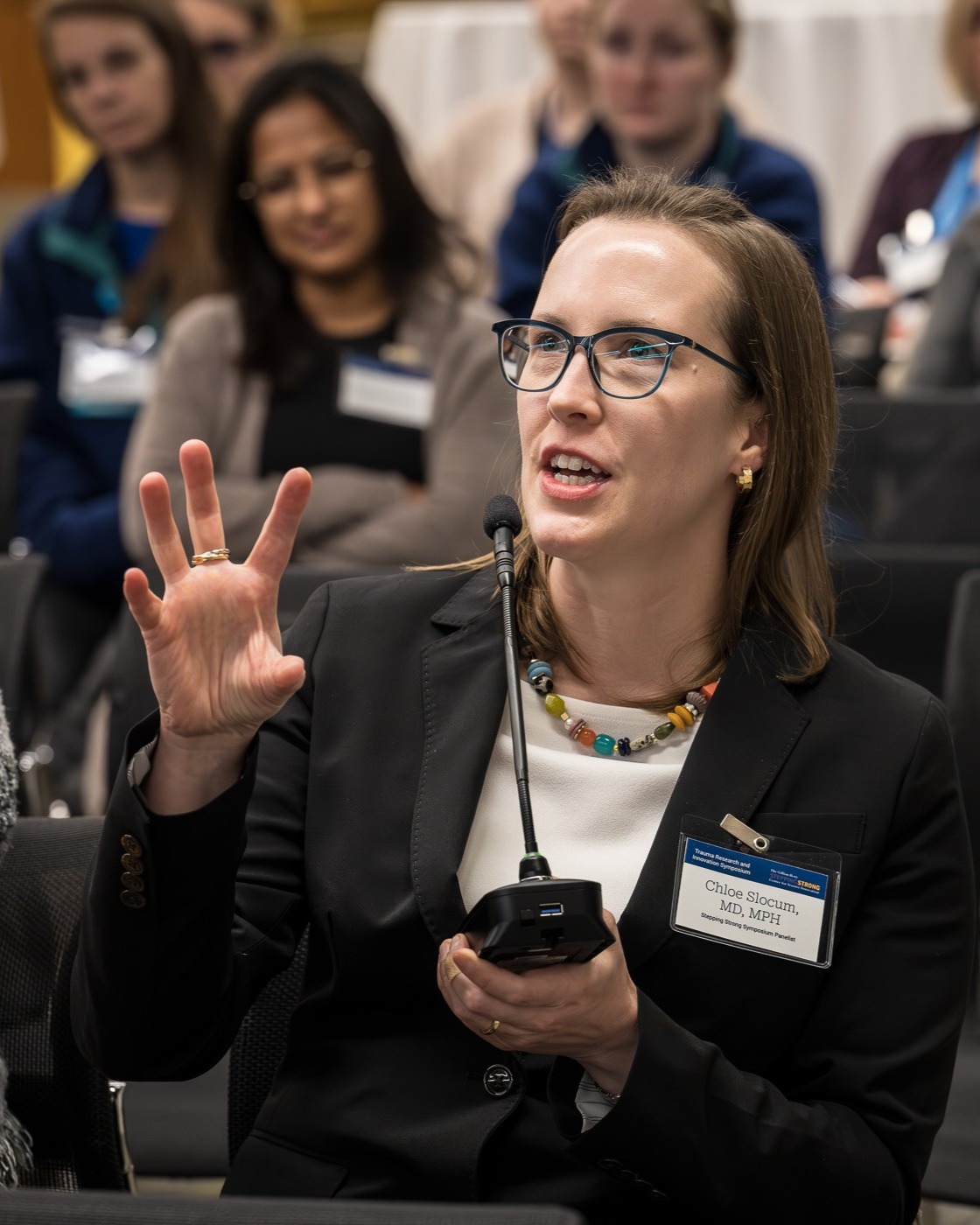
Chloe Slocum, MD, MPH, director of Health Policy and head of Spaulding’s Model System in spinal cord injury (SCI), participated in a panel discussion on trauma recovery along the continuum of care. Dr. Slocum spoke about the history of progress and innovation in traumatic SCI, observing that rehabilitation’s path in the field has mirrored our surgical colleagues in terms of developing structures and processes to capture increasingly meaningful outcomes over time. In that vein, she noted how this movement has laid the foundation for critically evaluating the root causes of health disparities, referencing current research at Spaulding that explores how information from personal social networks can influence health, function, and participation after SCI.
| | |
New Role
Spaulding faculty member Kelly C. McInnis, DO, has been appointed director of Non-Operative Sports Medicine for the Mass General Brigham Sports Medicine Program. In this role, Dr. McInnis will lead the strategic growth, coordination, and integration of all non-operative sports medicine services across the Mass General Brigham healthcare system, strengthening existing relationships and fostering future advances. With extensive experience in clinical management and study of sports injuries, she will guide the development of innovative care pathways, quality initiatives, and interdisciplinary collaborations that support athletes at every level. Check out this recent reel of Dr. McInnis explaining her approach to sports injury recovery on Facebook or Instagram.
| | |
New Fellow
Yuchu Liu, PhD, was named a new Gordon Postdoctoral Research Fellow at Spaulding, a position created through the generosity of Ellen R. Gordon and her family, who have been longstanding supporters of Spaulding’s work in paralysis and spinal cord injury recovery. Dr. Liu’s research focuses on the mechanisms by which the brain and spinal cord communicate and how spinal cord injuries (SCI) disrupt these connections, making recovery especially challenging. By studying key brainstem pathways and testing regenerative therapies, his work aims to restore movement and vital bodily functions in people with SCI. Dr. Liu will be mentored jointly by Randy Trumbower, PT, PhD, director of the Paula Ness Speers and Mark S. Speers Discovery Center for Spinal Cord Injury Recovery, and Zhigang He, PhD, BM, a neurology researcher at Boston Children’s Hospital.
| | |
New Award
Anna Carolyna Gianlorenco, PhD, a postdoctoral fellow in the Spaulding Neuromodulation Center, recently received a Harvard Catalyst Award to support her pilot research project, “Vocal Biomarkers and Symptom Correlations in Parkinson’s Disease: Analyzing Speech!” People with Parkinson’s disease (PD), the second most common brain disorder in the United States, often have voice problems, which researchers are now assessing to see how they might relate to other symptoms of the disease. Dr. Gianlorenco’s project will explore how voice measurements relate to both motor and non-motor symptoms in PD, collecting data that might ultimately be used to develop technologies for diagnosing and tracking PD using voice analysis.
| | Spotlight on Spaulding Science is a quarterly e-newsletter for donors and friends of the Schoen Adams Research Institute at Spaulding Rehabilitation. For questions or to submit your own research news item, please contact: Alexandra Molloy at amolloy@mgb.org. | |
If you do not wish to receive certain or all fundraising communications from the Spaulding Rehabilitation Development Office, please email us; write us; call us at 617-952-6880; or visit giving.spauldingnetwork.org/optout.
| | | | |