Spotlight on
Wanda Joyce McLean :
Undergoing an Umbilical Cord Stem Cell Transplant
|
|
|
|
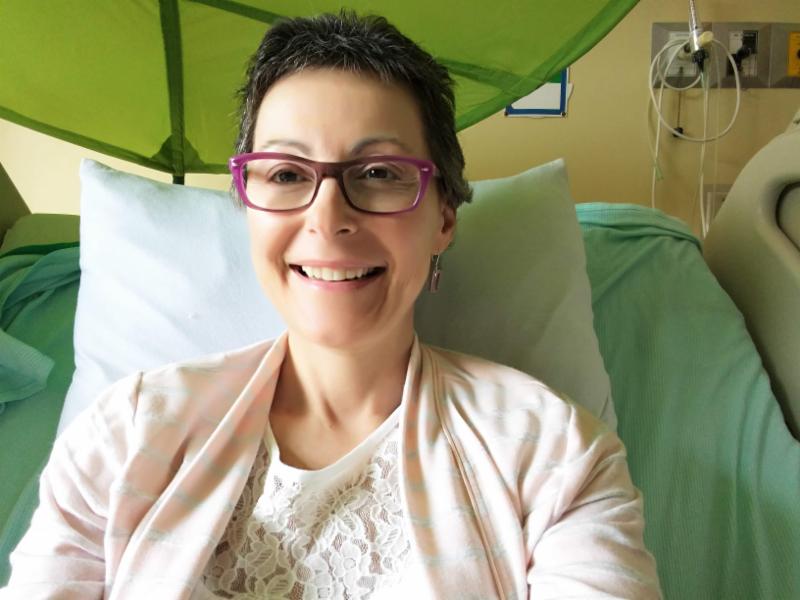
My name is Wanda Joyce McLean, I’m a 49-year-old mom and high school teacher and as a cancer patient on sick leave since April 2017, I wanted to share my story.
After teaching full-time in Trois-Rivières for 26 years, I began experiencing severe fatigue. I suffered a bad case of influenza and was hospitalized for a week with pneumonia and acute anemia. The doctor said it was nothing to be overly concerned about and that everything would be fine. I was followed closely by a hematologist for my anemia which dissipated quickly.
|
|
However, nothing prepared me for what was about to come. About two months later while undergoing a gastroscopy for irritable bowel syndrome, the gastroenterologist noticed an abnormal protein in my blood, which led to a series of tests, full-body X-rays and a bone marrow aspiration in Montreal.
I was 48 years old when I was told I had cancer. I remember how difficult it was for my doctor to share this news with me. My initial reaction was to question what multiple myeloma was. I was told it was a rare form of bone marrow cancer. I don’t remember anything else about our conversation, and I am thankful my partner was with me to gather the information provided. I was in a state of shock. I asked my doctor where I had gone wrong? I exercised daily, I always planned nutritious and well-balanced meals for my family, I went to bed early, and I was not a drinker. My doctor reassured me I was not to blame, and that there was nothing I could have done differently.
|
|
I have never been a quitter, and with a 13-year-old daughter at the time, I was not about to give up. My diagnosis marked the start of my battle and I would begin my undergoing four months of intense treatment therapy. I remember noticing I was the youngest patient in the chemo room as this disease generally affects people in their mid-sixties on average. My doctor reassured me that the treatments were usually well tolerated by patients; simple injections and many pills to swallow. However, for me, the treatments made me very sick and I was scared I would not make it through. Lucky for me, given that my cancer was discovered in its early stage, my kidneys and bones were not affected, and my body responded well.
|
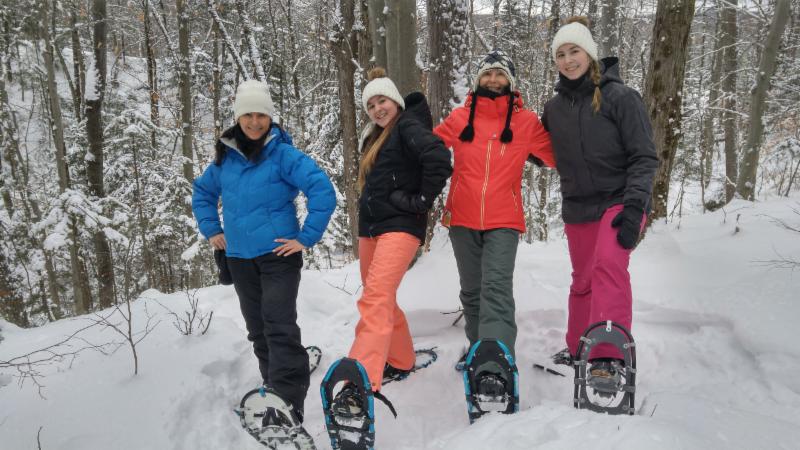
Wanda with her daughter and her friends
|
I was then scheduled for an autologous a stem cell transplant at the Maisonneuve-Rosemont Hospital in Montreal after my chemotherapy. At the time, I remember feeling very depressed and frustrated with the system that I had to wait three months post-chemo for my transplant. I felt I had slipped through the cracks. Had I been forgotten? How could this be, I was asking myself. I had so much to live for and didn’t want my life to end. I kept asking myself why my case was not considered urgent? The stem cell transplant was difficult, but I pulled through without any complications.
|
|
I was not prepared for the news that followed. My doctor informed me that after further testing, they discovered I had abnormal chromosomes, which put me at a high-risk for early relapse. I could relapse at any time in the next couple of years. I was told that the stem cell transplant did not mean I was cured and that it would be a chronic disease to be treated indefinitely. It was suggested I undergo an allogeneic transplant, but that involved a series of possible complications which scared me. I felt discouraged and without any real solution.
After working very hard at changing my mental state, I agreed to undergo a second transplant, but this time an allogeneic (allo) transplant. I had a 75% chance of finding a suitable donor worldwide and my two sisters agreed be tested. For a moment, I felt like luck was on my side as I have a non-identical twin sister, who seemed to be an ideal donor. My sister would save my life! Unfortunately, after extensive testing, I sadly found out that I fell within the 25% of patients with no suitable donor because my DNA was difficult to match and my twin sister being genetically identical (sharing the same DNA as me) could not be my donor because her immune system would not recognize my myeloma as an enemy and would not fight it off. I was desperate for a solution.
|
|
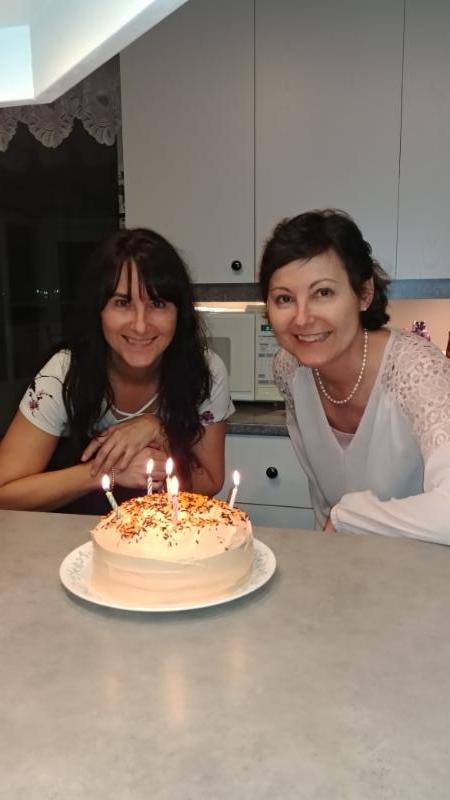
Wanda and her twin sister
|
|
|
|
My doctor then suggested I undergo an umbilical
cord blood transplant
. I had my doubts at first, since this was relatively new and experimental. I didn’t feel like being a guinea pig but what other choice did I have? I certainly wasn’t about to give up, I had to do whatever it took to be here for my daughter. I agreed to the transplant, which took place in May this year.
It wasn’t an easy road, but the transplant went very well overall except for some minor graft versus host disease (GVHD) intestinal and skin problems. After a bone marrow biopsy, my doctor was happy to report that there was no more trace of myeloma cells in my bone marrow. This felt like music to my ears after a year of chemo and two transplants. I could finally see the light at the end of the tunnel.
|
|
Life isn’t always fair and sometimes it throws us a curve ball that we aren’t prepared for. I’m too young to die from this disease! We need to invest in the younger cancer patients as well, they have a whole life ahead and their number is growing. Each day, eight Canadians are diagnosed with multiple myeloma, and patients seem to be diagnosed at a younger ago. I’m slowly regaining my strength and have faith in the future. I believe that I will fully recover and come out stronger. My cancer has helped me grow as a person. Overall, I am very grateful for the extraordinary medical team at the Maisonneuve-Rosemont Hospital, whose expertise and compassion have helped me through my journey.
With my warmest thanks,
Wanda Joyce McLean
|
|
For more information on the breakthrough umbilical cord stem cell transplant research based out of Montreal’s Maisonneuve Rosement Hospital, click
here
|
|
To find a local support group in your area or for information on how to start one,
|
|
|
|
|
|
|