Marilynn Ault:
A Lifetime of Activism
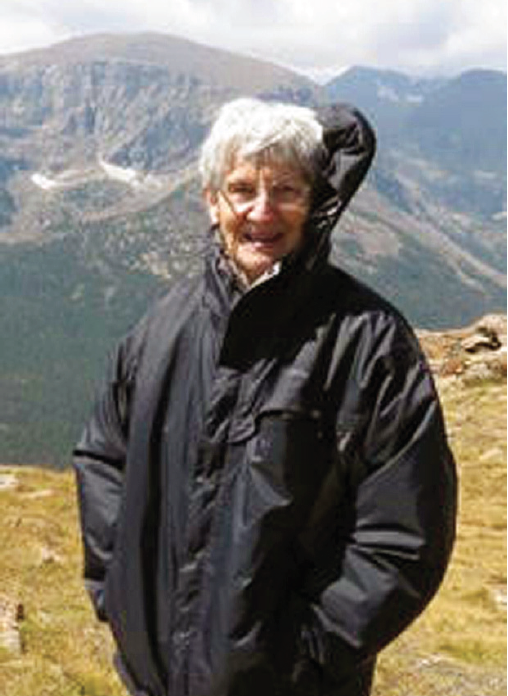
Marilynn has been on the board of the Peggy Bowman Second Chance Fund since the mid-1990s. She has devoted her life to activism, social justice and women’s rights, nationally and locally.
Marilynn’s first experiences with abortion happened when she was college-aged. The year was 1959, and abortion was illegal in Kansas. Marilynn’s roommate Jane, came to her for help because she was pregnant, about to graduate, and had a new job waiting in California. They were told the name of a doctor in a small Kansas town, but when they made the trip, he refused to perform the procedure. “He was really concerned that his name was out there. He said, ‘Absolutely no, I can’t help you.’”
That doctor directed the women to a chiropractor in yet another town. When the time came for Jane’s procedure, “I didn’t go back in the room with her,” Marilynn says. Afterward, the doctor told them, “I used an electrical charge. If you have trouble after this, just tell them I used a negative charge and if they’ll use a positive, that will fix her right up.”
“I still don’t know what that meant or quite what he did,” Marilynn says.
The doctor sent them on their way, saying Jane would begin to cramp and abort at home. He advised if anything went wrong, to go to an emergency room and say it was a miscarriage. Marilynn and Jane went back to their apartment, and Marilynn helped Jane dispose of the results of the abortion. She was only nineteen years old. Jane was just a couple years older.
“Then she started bleeding and bleeding and bleeding, and we didn’t know what was normal. We got really panicky.” Marilynn went to a nearby pharmacy and asked the pharmacist if there were drugs to help after a miscarriage. He said there were, but he couldn’t dispense them without a prescription. “I just bought more boxes of Kotex and went back. Eventually, it cleared up and the next day, she went back to school. That was my first experience with abortion.”
After finishing college, Marilynn moved to Topeka for her first job as a speech therapist. A year or so later, she and her boyfriend Robert married. He was an artist and art therapist. They were together for over forty-seven years.
“The Seventies were wonderful,” recalls Marilynn. “There was an interest, generally, in rights for women. Here in Topeka, we started a group called Women Aware. We had meetings to discuss what we could do legislatively; what bills were coming up. We had a little newsletter called Behold the Woman.”
Marilynn was heavily active in pushing for the Equal Rights Amendment. Kansas was the seventh state to ratify the ERA. “Then the antis got organized nationally, and for years there was an effort to take back that ratification and undo it. So we started Kansans for the ERA. The antis were just unbelievable. They were sure if the ERA passed, they wouldn’t be able to get their husbands to support them anymore. They were sure women would get drafted into combat. And of course there were the horrors that abortion would be upheld and homosexuals would be able to marry.”
In 1973, a man who worked for court services in Topeka suggested women who had been sexually assaulted needed extra support. “Wichita had just started an all-volunteer sexual assault program, so three of our group went to visit them. We realized for sexual assault, you need 24-hour intervention. So we got some staff from the Menninger Foundation to do some training .” They also worked with Topeka police. Marilynn recalls a Saturday, when some women with the the KBI labs came to the Topeka YWCA with a van-full of supplies. There, wearing gloves, volunteers put together Topeka’s first rape kits. “What we found over the years was that the police would pick up those boxes (rape kits), take them back to the police station and they’d get put back in a corner and never turned in anywhere.”
This was also the year Roe Vs. Wade was decided. “When Roe V Wade passed, that was party time. We thought that solved everything,” Marilynn says, chuckling at the irony.
Over the next thirty or so years, Marilynn continued to help expand the services provided at the Topeka YWCA. “In 1977 a couple of people from the local YWCA went to a national conference and came back and said that YWCAs were starting domestic violence programs across the country,” Marilynn says. “The three towns in Kansas that first did those were Lawrence, Wichita and Topeka.”
In 1988, she was hired full-time to combine the sexual assault program with the battered women task force, and she worked with clients until 2001.
She took a year off, then went to work for three years with the Kansas Coalition Against Sexual and Domestic Violence (KCSDV).
These days, Marilynn is the intake person for the Peggy Bowman Second Chance Fund. She fields the phone calls from the clinics when they have questions, and she continues to work for justice and equality. We’re grateful to have her on our board.