Spring 2025

The Canadian Dementia Learning and Resource Network (CDLRN) is a knowledge hub that facilitates collaboration between community-based projects across Canada and amplifies their successes.


Led by the Schlegel-UW Research Institute for Aging (RIA), CDLRN and the community-based projects are funded by the Public Health Agency of Canada's Dementia Community Investment (DCI).

News and Events

Foundational Knowledge Videos


What do stigma, fostering community partnerships, and meaningful engagement of people living with dementia have in common? They are among the seven values and considerations that are essential for any dementia community initiative, as identified by DCI projects. These short videos bring these concepts to life with powerful testimonials.

Watch the Videos
Read More

CDLRN lunch and learn promotes Hope, Empowerment and Living Well With Dementia


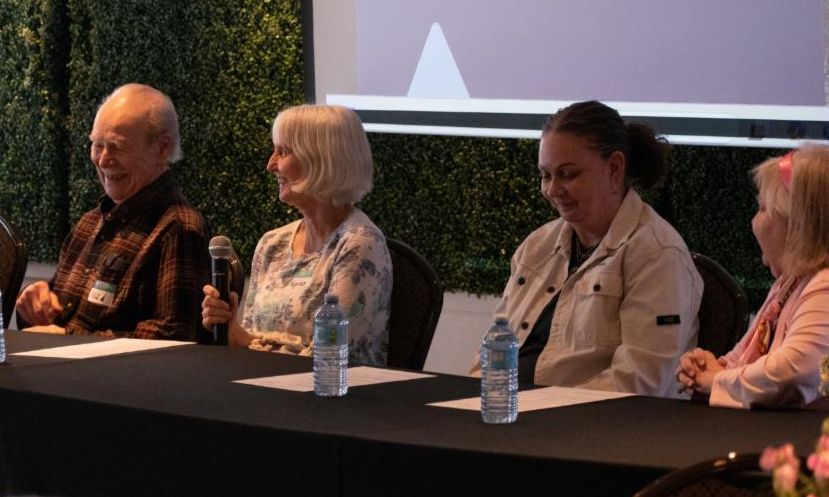
DCI projects and members of the CDLRN Community Advisory Committee have consistently emphasized the importance of hope, empowerment, and living well with dementia. CDLRN hosted a public lunch and learn event, held at the Waterfront Banquet & Conference Centre in Hamilton on March 20, 2025, featuring a panel discussion with Carrie McAiney, Schlegel Research Chair in Dementia, Laura Middleton, Schlegel Research Chair in Dementia and Active Living, and four advocates who are living with dementia.


Panellists shared how they found and maintain a sense of hope and empowerment following their diagnosis, and spoke of the importance of involving people living with dementia as true partners in community-based dementia work and research. They shared advice on creating a more inclusive and supportive community where people living with dementia are empowered to contribute. Afterward, attendees connected with local community organizations to learn more about becoming involved in dementia initiatives.


Thank you to our panellists and all who attended!

Project Spotlight


Community-based music intervention as a means to enhance health and well-being of people living with dementia and bring support to their family and caregivers


Led by the University of Ottawa, this project is implementing and evaluating the impact of two community-based music interventions (musical movement and percussion ensemble playing) on the well-being and quality of life of people living with dementia and care partners. The project specifically targets at-risk populations aged 55+ in the National Capital Region and rural communities in Northern Ontario, aiming to prevent and/or delay the onset and progression of dementia.


There are three short films highlighting the impact of the program in different settings: Music and Geriatric Psychiatry, The Royal’s partnership with Vanier Community Service Centre, Bruyère Music Program.


Featured Resource

The Dementia Lifestyle Intervention for Getting Healthy Together (DELIGHT) project promotes health and well-being for people living with dementia and care partners through exercise, healthy eating, and strategies to live well with dementia. Find resources that have been co-designed alongside people with lived experience to support care partners and people living with dementia to incorporate physical activity and healthy eating into their daily lives.


Check out resources related to Physical Activity and Healthy Eating.

Voices of Dementia


Community Advisory Committee member Debbie Keay shared her experience adjusting to new challenges and abilities following her dementia diagnosis during the Hope, Empowerment and Living Well With Dementia panel. In the article below, Debbie shares about her 3 C’s - Can’t, Challenge, and Can.


My 3 C’ s – Can’t, Challenge, Can, by Debbie Keay


When I was first “given” my diagnosis of dementia - “taken” from me was the life I knew. Despite my extreme feelings of loss, I was encouraged not to think about the things I can’t do and encouraged to focus on the “can’s”. This well-intended suggestion was easier said than done and did not work for me initially. The CAN’Ts were all I was focused on at the time. Those supporting me would say: “There is a light at the end of the tunnel”. I would respond: “But, I am the caboose and cannot see the tunnel”.  


Not only was I having to adapt to my new circumstances, I had to adapt to the different way people around me were seeing and treating me. Those finding out about my diagnosis were at a loss of what to say and do, and relationships started to fade.  


Addressing and mourning my losses was instrumental in my self-care and my journey forward. Slowly, things started to change. I began by accepting my CAN’Ts, the things I cannot change. This acceptance gave me the energy to begin focusing on my CHALLENGES. This was not easy, but I guess that’s why they are called challenges! This is when something wonderful started to happen. Facing my challenges and experiencing mini accomplishments gave me a confidence boost and I began to tackle more difficult challenges. I had not realized how much I had allowed dementia to take from me. 


The more I succeeded at adapting to the “challenges”, I started to focus on the CANs. As my list of CANs grew, I began to feel more like my old self. While my life today is not the same as it was before I was diagnosed, or what I envisioned my life would be like, I can honestly say that I am enjoying moments of my life today. I feel a sense of purpose. I feel a sense of accomplishment. Most importantly, in living with dementia, I still feel like me.

Get Involved
Contact Us
RIA Website
Facebook  X  Linkedin  Youtube  

We value your input and partnership! Contact us to give feedback or make an inquiry.

CDLRN is hosted by the Schlegel-UW Research Institute for Aging (RIA). Production of this project has been made possible through a financial contribution from the Public Health Agency of Canada. The views expressed herein do not necessarily represent the views of the Public Health Agency of Canada.