POPULATION HEALTH IN ACTION | | |
Bringing Mental Health into the System: From Innovation to Implementation
Contributing Authors: Brittany Hoeffner, Co-founder of NextBreath, 3rd Year Medical Student, Robert Wood Johnson Medical School
In recognition of Mental Health Awareness Month, the 2026 New Jersey Integrated Behavioral Health (IBH) Summit, held in partnership with Rutgers Robert Wood Johnson Medical School, the Medical Society of New Jersey, Middlesex County, and the American Medical Association, convened clinicians, policymakers, and patient advocates across the state to explore how mental health can be integrated into the broader healthcare system. As a co-lead organizer, Brittany Hoeffner helped design a collaborative forum focused on systems-level strategies that improve access, coordination, and outcomes, key priorities in shaping population health.
A central feature of the summit was the IBH Case Competition, which brought together trainees from undergraduate and graduate programs, as well as resident physicians, to develop policy-ready solutions addressing gaps in behavioral health integration. Finalist teams presented initiatives spanning neurodiversity-informed care, psycho-oncology, and community-based screening and referral pathways, reflecting both the breadth of unmet needs and the necessity of cross-disciplinary innovation.
The competition reinforced a critical insight: while identifying clinical challenges is essential, meaningful translation requires understanding the systems that determine whether new models of care reach patients. In practice, this includes how reimbursement structures influence uptake and how regulatory frameworks shape broader implementation.
This perspective has informed Hoeffner’s work developing Next Breath, a digital mind–body intervention for individuals with chronic obstructive pulmonary disease and anxiety. For many patients, shortness of breath is not only physically distressing but deeply intertwined with panic, yet this connection is often under-recognized and under-treated. The program integrates guided breathing, cognitive behavioral therapy–based strategies, and exercise conditioning into brief, home-based modules. Through support from New Jersey’s Commission on Science, Innovation and Technology (CSIT) and the NSF I-Corps program, the NextBreath team refined its approach to adoption and stakeholder engagement. Building on this work, they submitted an R34 application to the National Center for Complementary and Integrative Health (NCCIH) to advance the clinical trial pathway required to enable scalable, equitable patient access. Together, these efforts reflect a shared goal across Rutgers Health and its partners: advancing patient-centered models of care that recognize mental health as inseparable from physical health to better serve our community.
| | |
Rutgers Health Joy at Work Mini-Grants: Building Cultures of Well-Being
Contributing Authors: Chantal Brazeau, MD, Chief Wellness Officer, Rutgers Health
On March 19, 2026, Rutgers Health Office for the Promotion of Well-being hosted the third Annual Joy at Work Mini-Grant Symposium and sharing event, a virtual gathering celebrating 25 culture-of-well-being projects awarded by the Joy at Work Mini-Grants for the 2025-2026 academic year.
Rutgers Health and the Joy at Work Mini-Grant program leadership believe that members of a work unit are best positioned to identify and address their unique local well-being needs, and they provide funding to support projects that foster community, collegiality, and teamwork. The program emphasizes initiatives where team members work together respectfully and supportively, know one another as individuals rather than solely by job description, feel their values are in sync with the organization, and experience a strong sense of belonging.
Grantees’ creativity and enthusiasm were evident as each team shared a video summarizing accomplishments from July 2025 to March 2026, including team-building activities, well-being committees with listening sessions, wellness rooms, community outreach, gratitude practices, support for clinicians after adverse events, peer recognition programs, and recurring well-being events such as physical activity, crafts, relaxation, book clubs, affinity groups, and collegial gatherings.
In addition to convening at the symposium, current and former grantees meet quarterly to exchange “pearls of wisdom” and support one another in their well-being efforts. The most recent application cycle for the 2026–2027 season closed on March 26, and we look forward to announcing the mini-grant recipients this Spring!
| | |
Rutgers Health Service Corps Microgrant Program: Empowering Youth-Driven Public Health Initiatives
Contributing Authors: Brandi Blackshear, Special Projects Coordinator, Office of Population Health
This year, the Rutgers Health Service Corps Microgrant Program was launched to challenge and empower students to design and implement real-world population health service projects. Through this initiative, students lead innovative, youth-driven programs that directly enhance community health while gaining hands-on workforce experience. In addition to addressing critical health needs, these projects help students develop leadership, creativity, and problem-solving skills.
Funded Projects This Year:
Social Gardening: Cultivating Connection and Well-Being:
Led by high school senior Yazan Albean, this initiative addresses high rates of depression and social isolation among long-term care residents through structured planting activities that combine horticultural and social therapy. By giving residents hands-on opportunities to plant and care for greenery, the program promotes mental stimulation, light physical activity, and a renewed sense of purpose. Student involvement also encourages social interaction, helping reduce loneliness, and improve overall well-being.
Students United for Nurturing Skin Health and Advocating for Education (SUNSAFE): Promoting Skin Health and Sun Safety for All
Led by high school students Sophia Ahmad, Olivia Leblanc, Leila Qadri and Noah Dym, this initiative raises awareness about sun safety and ensures equitable access to sun protection resources for underserved communities. By educating residents and providing essential tools such as sunscreen, the program aims to prevent skin cancer, promote long-term health, and empower communities to take proactive steps to protect their skin.
| | |
Rutgers Health Collaboration Advancing Student Health and HPV Prevention
Contributing Authors: Mary E. O'Dowd, MPH, Executive Director, Health Systems and Population Health Integration, Rutgers Health
Rutgers Health has been collaborating with the NJ Department of Health, ScreenNJ and the School of Communication and Information for several years to improve vaccine uptake an documentation for our student population. This has resulted in technological advancements in sharing student vaccine status, the public health response to the COVID-19 pandemic, and HPV vaccine promotion as an STI and cancer prevention strategy. Some of the impact of this work has recently been published in the Journal of American College Health.
| | |
Rutgers Health Policy Intern Advocates for Recent Law Change Advancing APN Practice
Contributing Authors: Matthew Milewski, HPAC Intern, Rutgers School of Nursing DNP Candidate, John (Jack) Hemphill, Program Manager & Director, Rutgers Health Service Corps, Office of Population Health
| |
The Rutgers Health Service Corps received a grant from the Rutgers Democracy Lab to launch a new Student Health Policy and Advocacy Corps, providing students with hands-on policy and advocacy experience to advance public and population health. Through this program, students are placed with partner organizations to contribute to policy- and advocacy-related projects.
Matthew Milewski—a Rutgers School of Nursing DNP candidate in the Psychiatric and Mental Health track—has been working with Rutgers School of Nursing–Camden Dean Donna Nickitas to examine and advocate for reform of Advanced Practice Nurse (APN) practice authority in New Jersey. As part of this work, Matthew developed a detailed policy brief on Assembly Bill A4052 / Senate Bill S2996—legislation that modernizes practice requirements for primary and behavioral health care APNs by removing the joint protocol mandate for those who have completed 5,000 hours of supervised clinical practice under a collaborative agreement with a physician—and presented it directly to lawmakers. The policy brief examined workforce shortages, access barriers, and interstate competitiveness, highlighting that New Jersey’s adult psychiatrists are projected to meet only 48% of demand by 2038 and that 27 states have already adopted full practice authority.
In March, Governor Mikie Sherrill signed Assembly Bill A4052 / Senate Bill S2996 into law. To learn more, we invite you to review the policy brief and the related op-ed published on NJ.com, authored by the deans of Rutgers School of Nursing and Rutgers School of Nursing–Camden.
| |
The Ripple Effect in Action: Workforce Development for Healthier Communities | | |
Contributing Authors: Mitchel A. Rosen, PhD, Center Director for the Rutgers School of Public Health: Center for Public Health Workforce Development
The Rutgers School of Public Health Center for Public Health Workforce Development Annual Impact Report, The Ripple Effect, highlights our achievements from academic year 2024–25. This past year demonstrated a remarkable 166% increase in the number of trainees and a 108% increase in year‑over‑year trainee contact hours. While these quantitative outcomes are important, the impact of the programs on people’s lives and the communities in which they live is equally impressive.
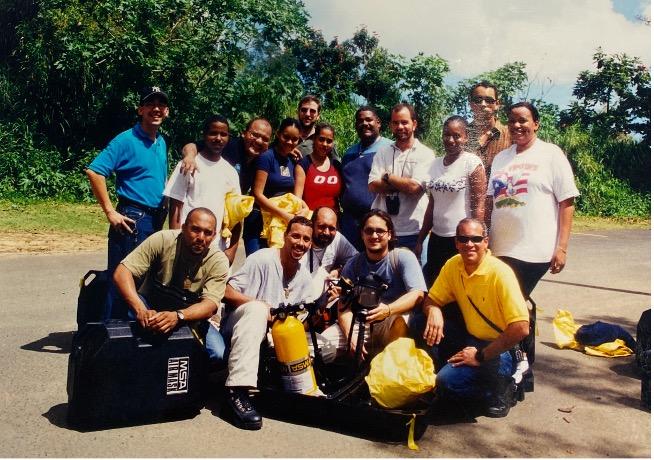
One story featured in this year’s report illustrates that impact clearly. In 2000, a new partnership with Universidad Ana G. Méndez (UAGM) in Puerto Rico began. From that collaboration emerged a powerful example of long-term influence through the work of trainee Harry Peña. After completing a 40‑hour Hazardous Waste train-the-trainer course at Rutgers, Peña went on to train hundreds of workers across Puerto Rico in hazardous materials safety. The 40-hour course was a pivotal moment in his career. It equipped him with the technical expertise and confidence to assist in major emergency responses, including 9/11 where he helped lead critical air-monitoring operations at Ground Zero. Peña later played a central role in building a robust hazardous waste training infrastructure in Puerto Rico and throughout Latin America. What began as one week of training became the foundation for a lifetime of leadership in environmental health and safety. Peña’s work has protected communities, mentored thousands of workers, and helped shape safety standards across an entire region.
Harry Peña represents just one example of the Ripple Effect created by the Center for Public Health Workforce Development. In this report, you will also find stories from several signature initiatives, ranging from workplace safety to public health technical assistance to community living for people with intellectual and developmental disabilities. Together, these stories demonstrate not just program accomplishments, but why they matter, how programs shape lives and create safer, healthier, and more inclusive communities.
| | MINDFULNESS CORNER
by The Office of Promotion of Well-Being: | | |
This month, we invite you to try a simple grounding practice called the “5-4-3-2-1” technique. This exercise can help bring your attention to the present moment, especially during times of stress or overwhelm. Pause for a moment and notice: 5 things you can see, 4 things you can feel, 3 things you can hear, 2 things you can smell, and 1 thing you can taste. Move through each step slowly, allowing yourself to fully engage your senses.
Even taking one minute to pause in this way can help create a sense of calm and clarity in your day.
To learn more about mindfulness resources and upcoming offerings, please visit the Office for the Promotion of Wellbeing website: Well-Being at Rutgers Health | Rutgers Health.
| | |
July 8, 2026
Save the Date: New Jersey Oral Health Conference
The New Jersey Department of Health will be hosting their second annual Oral Health Conference at the Crowne Plaza on July 8. This conference is focused on bringing dental, medical, and public health professionals who are committed to improving oral health outcomes across New Jersey, together. The submission deadline for posters is May 15, 2026.
| | UPCOMING HEALTH OBSERVANCES | | |
May
- National Mental Health Awareness Month
- National Women’s Health Month
- National Nurses Month
- Preeclampsia Awareness Month
- Maternal Mental Health Week (May 4 - May 10)
- HIV Vaccine Awareness Day (May 18)
June
- Alzheimer’s & Brain Awareness Month
- Men’s Health Month
- National Cancer Survivors Day (June 1)
- World Sickle Cell Day (June 19)
July
- Sarcoma Awareness Month
- BIPOC Mental Health Awareness Month
- World Brain Day (July 22)
- World Hepatitis Day (July 28)
| | | Office of Clinical and Health Affairs | 89 French Street | New Brunswick, NJ 08901 US | | | | |