|
Prayer, Work, Table, Neighbor, Rest | |
Spring Forest Newsletter
July 2026
| | | |
We are so grateful for your support of our CSA, which helps to fund our free farmer's market for refugee families, and generous contributions to our local food bank. Last year over 64% of our produce went to people experiencing food insecurity. We could not offer this kind of assistance without our faithful subscribers and volunteers.
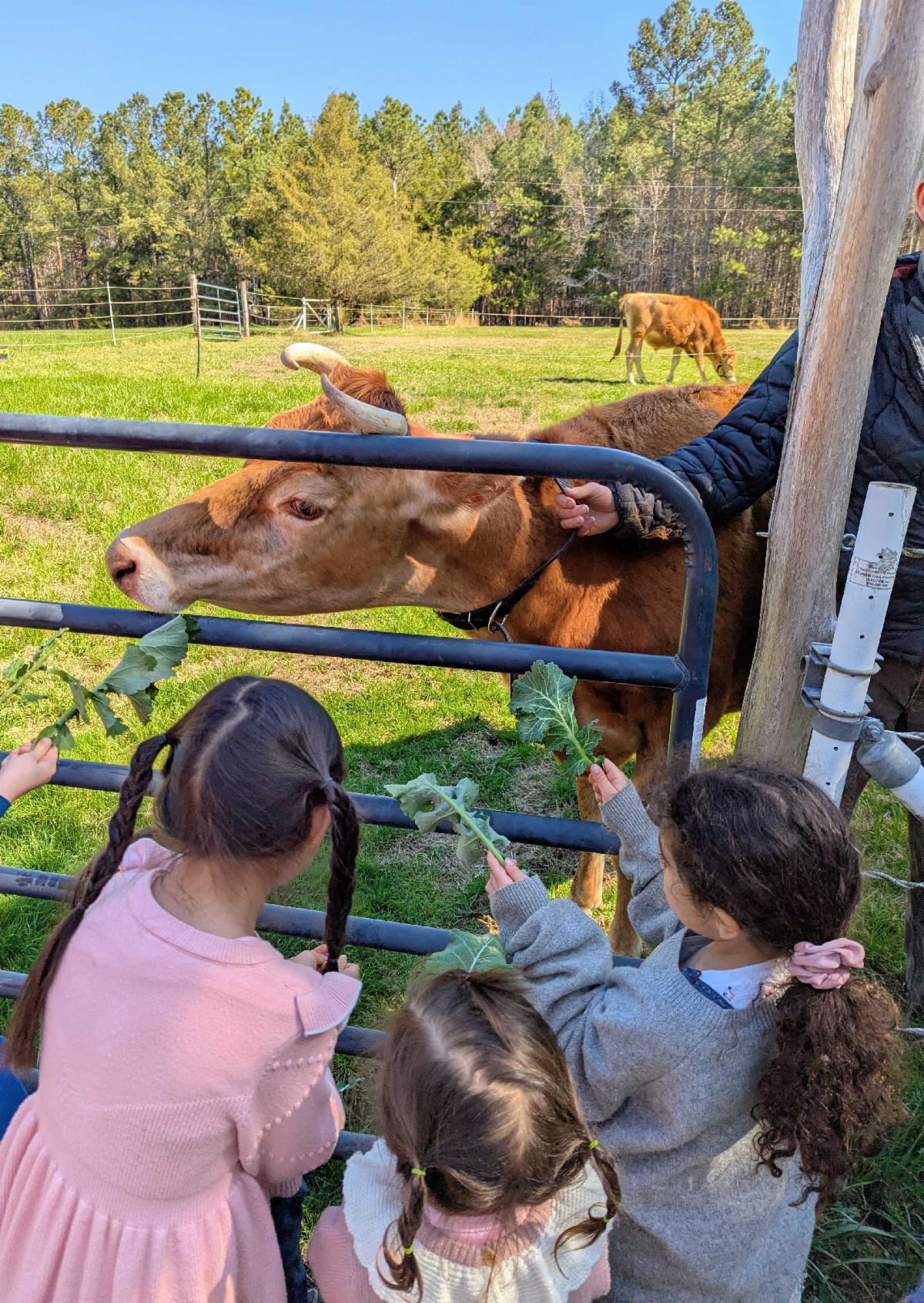
From the livestock department--two of our baby goats have had to shift to bottles due to a milking challenges, so they are becoming especially friendly with all the handling and milk. Some of our turkey babies are now the size of chickens, and Larrilou the cow is expansively pregnant, ready to deliver in a couple of weeks!
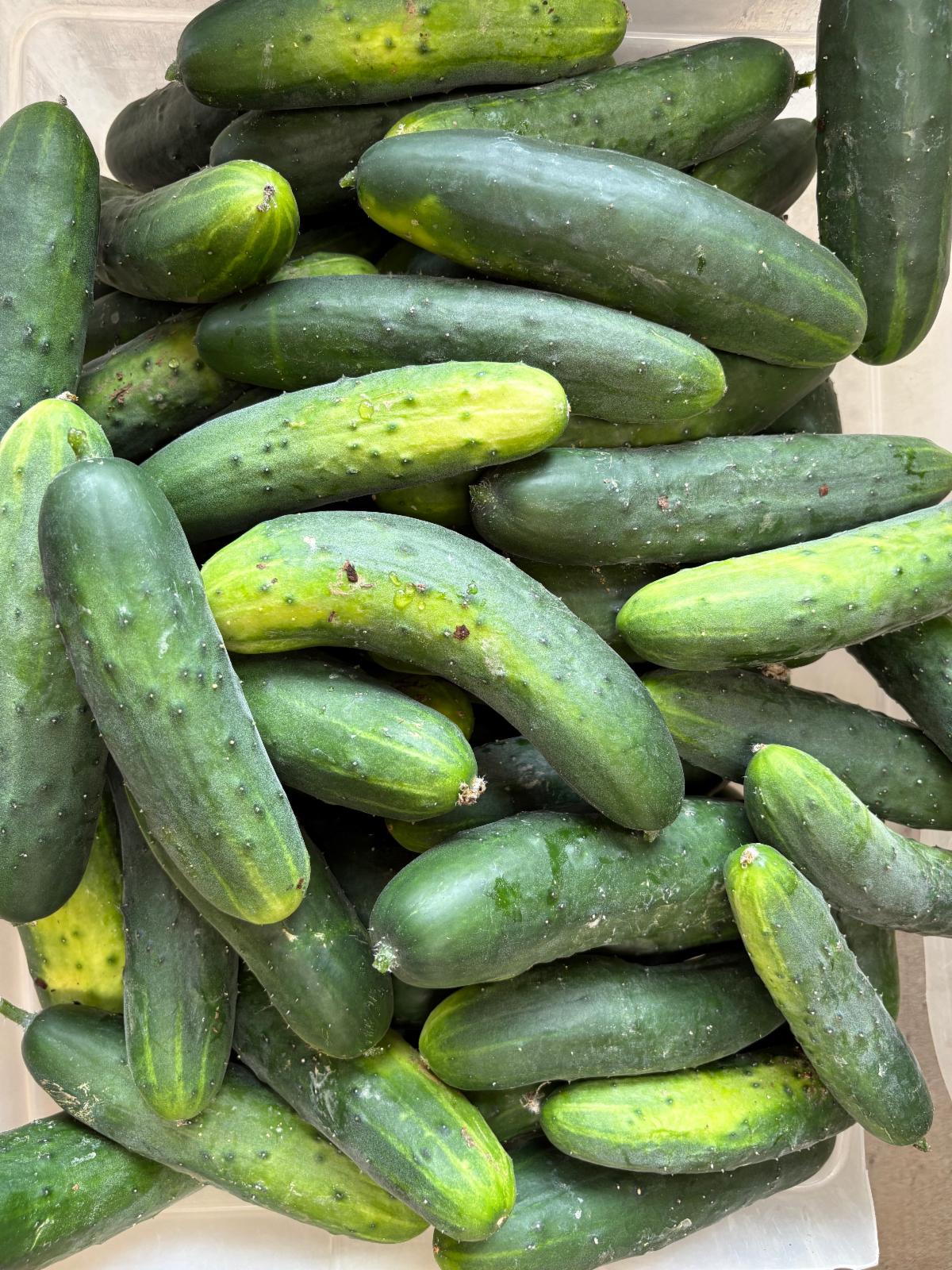
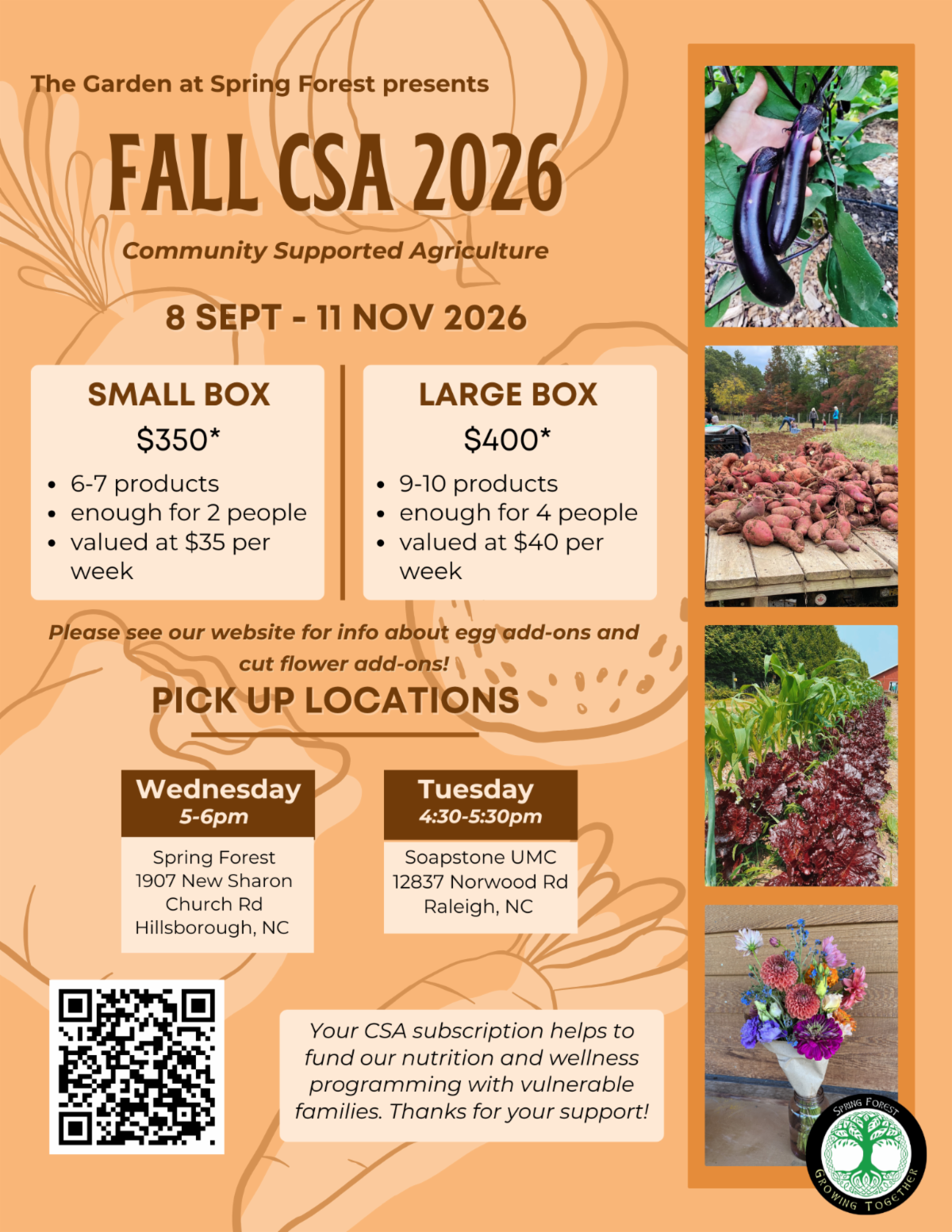
Just two more weeks to go, and then we'll be taking a break to transition our crops from summer to fall. Shares are limited, so please sign up soon for your fall subscription, which will bring sweet potatoes, okra, several kinds of winter squash, green beans, kale, tomatoes, cucumbers, lettuce, and more.
| Farm + Forest Summer Camp | |
We still have a few spots available for camp next week!
July 20-24
Reach out to Whitney at camp@springforest.org with any questions.
| |
Until We Meet Again
By Sam Fisher
It is a strange thing to have expectations reshaped when you were never quite sure what to expect in the first place. For several years, Elaine’s invitation to come to Spring Forest lingered quietly within me, tugging at something deeper than curiosity. I had heard about the farm, the goats, the retreats, and the Grow It program, but I had not heard about the spirit of the place. I did not yet know about the grounding presence of the grandmother tree, or the quiet, steady energy of those who tend the land and care for its creatures.
Earlier this year, after my divorce, I found myself searching, longing for a place where I could tend to my grief. I needed somewhere that felt safe, a place that could hold the fullness of who I am while also making space for sorrow. Spring Forest was the first place that came to mind.
What I did not anticipate was how quickly I would fall in love with it.
There is something sacred in the rhythm of that place. The shared work, the honest conversations that emerge while thinning carrots, the gentle unraveling of control as you witness others doing things differently and begin to trust the wisdom of the collective. It is a quiet surrender, one that invites both humility and connection.
My days were spent among some of the most remarkable people I have encountered, not because we agreed on everything, or worked in the same way, or even shared the same beliefs, but because we were united in the conviction that the work mattered. And it mattered in a deeper way. It mattered because it rooted us in creation. It mattered because it made space for healing, both individually and in community. It mattered because the mission of Spring Forest is not just spoken; it is lived, embodied, and contagious.
The work itself offered something just as vital. It gave me permission to breathe deeply again. It invited me to slow down and pay attention to the small and often overlooked details of life. My ever-running internal clock began to reset. I found rest in the stillness of sunsets, in the crackling of a fire, and in the breathtaking sight of bugs crawling slowly across leaves. The greatest gift of Spring Forest (for me, and I hope others) has been the beginning of a new and healthier rhythm, one that is grounding me as I continue the work of healing and one day hope to move toward thriving.
I carry deep gratitude for this beautiful community and the gift it has been to me. I look forward to returning in the fall, perhaps to find newly married farmers settling into their shared life, to meet the now-grown turkeys and the piglets who will no longer be so small.
Until we meet again, you remain with me.
| |
Flourishing Together
By Ben Yosua-Davis
Are humans any good for this planet? In the environmental circles in which I work, this question is brought up often, as our planet experiences the Sixth Great Extinction, rising temperatures, destroyed ecosystems, and a host of other interlocked environmental crises. In the face of the devastation we have caused our other-than-human kin, I frequently hear others ask whether the Earth would be better without us - whether humanity is an invasive species that has reached the end of its productive purpose.
In response to these doubts, Psalm 8:4-6 offers a powerfully positive vision for the role of the human in the more-than-human community. Here’s how the First Nations Version says it:
It made me wonder. Why do you think so much of humanity? Why do you watch over human beings so carefully?
You made them a little lower than spirit-messengers. You placed a headdress of honor on their heads.
You chose them to watch over all the works of your hands. You have put all of creation under their loving care.
Psalm 8 has often been used as an affirmation of human supremacy: the idea that the Earth was made primarily for our benefit and even for exploitation. But within an indigenous perspective, humanity is not at the top of a pyramid staring down the rest of creation, but is at the center of a web, using their incredible God-given agency to assure flourishing for all of God’s creation.
| | |
Around the Table
by Chef Netta
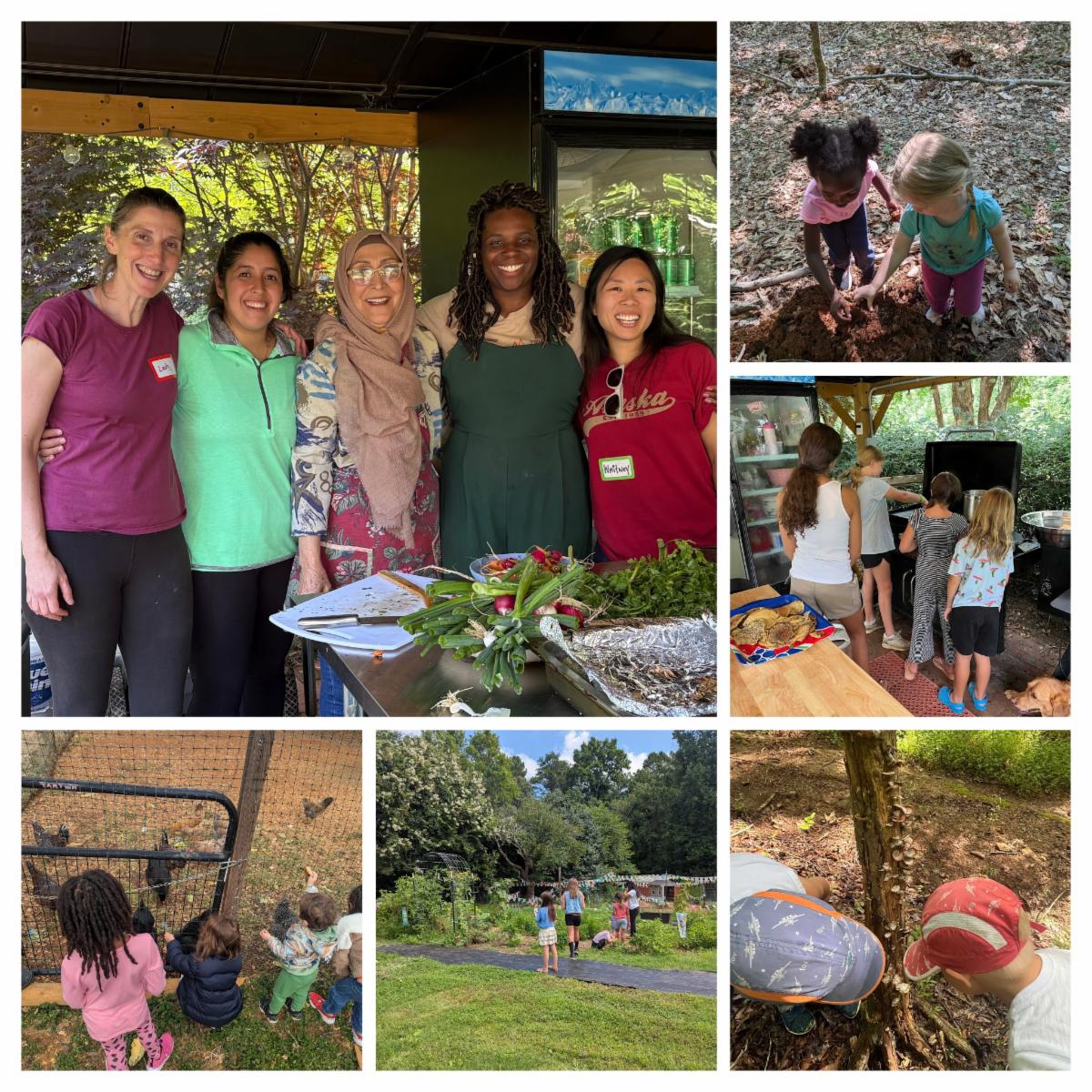
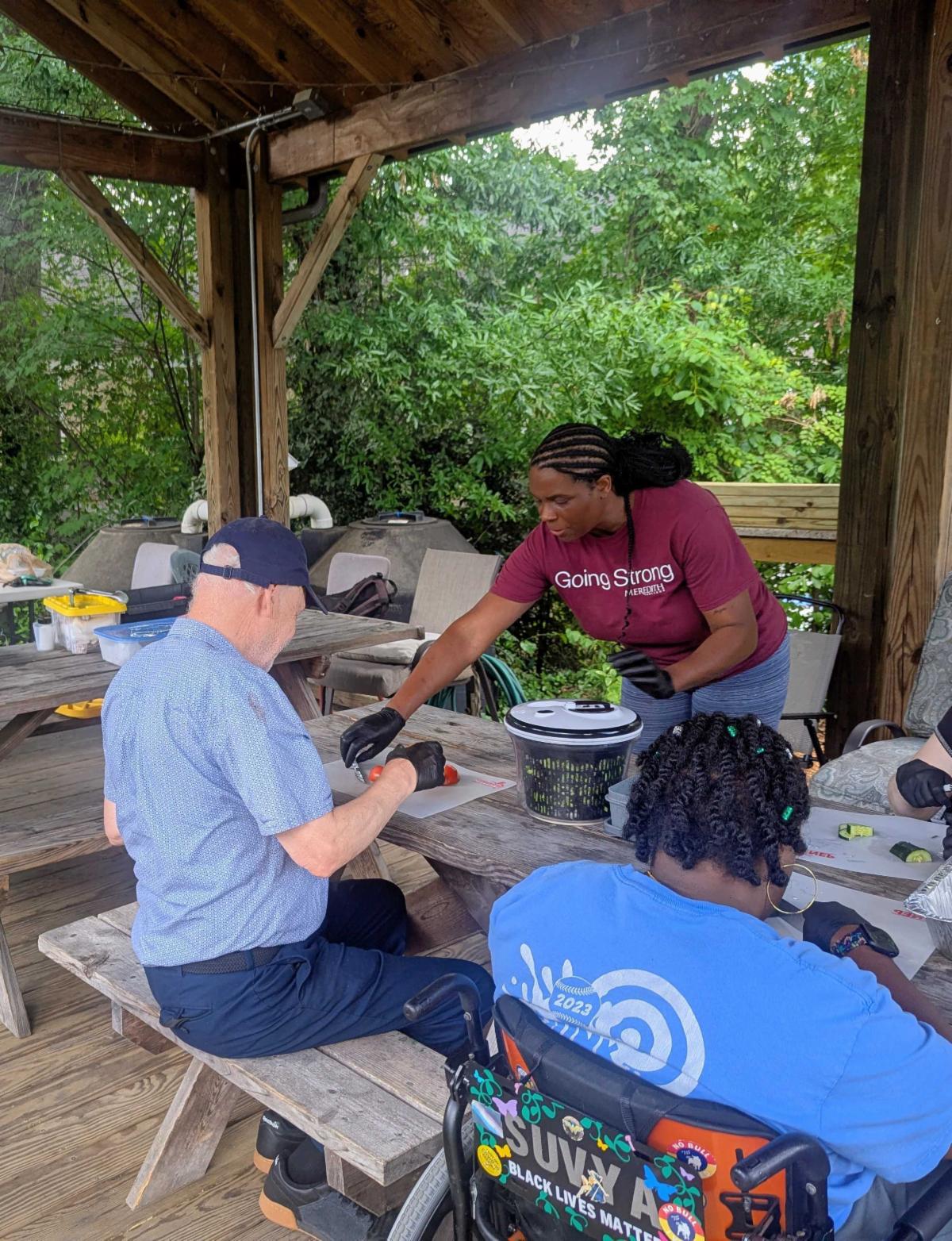
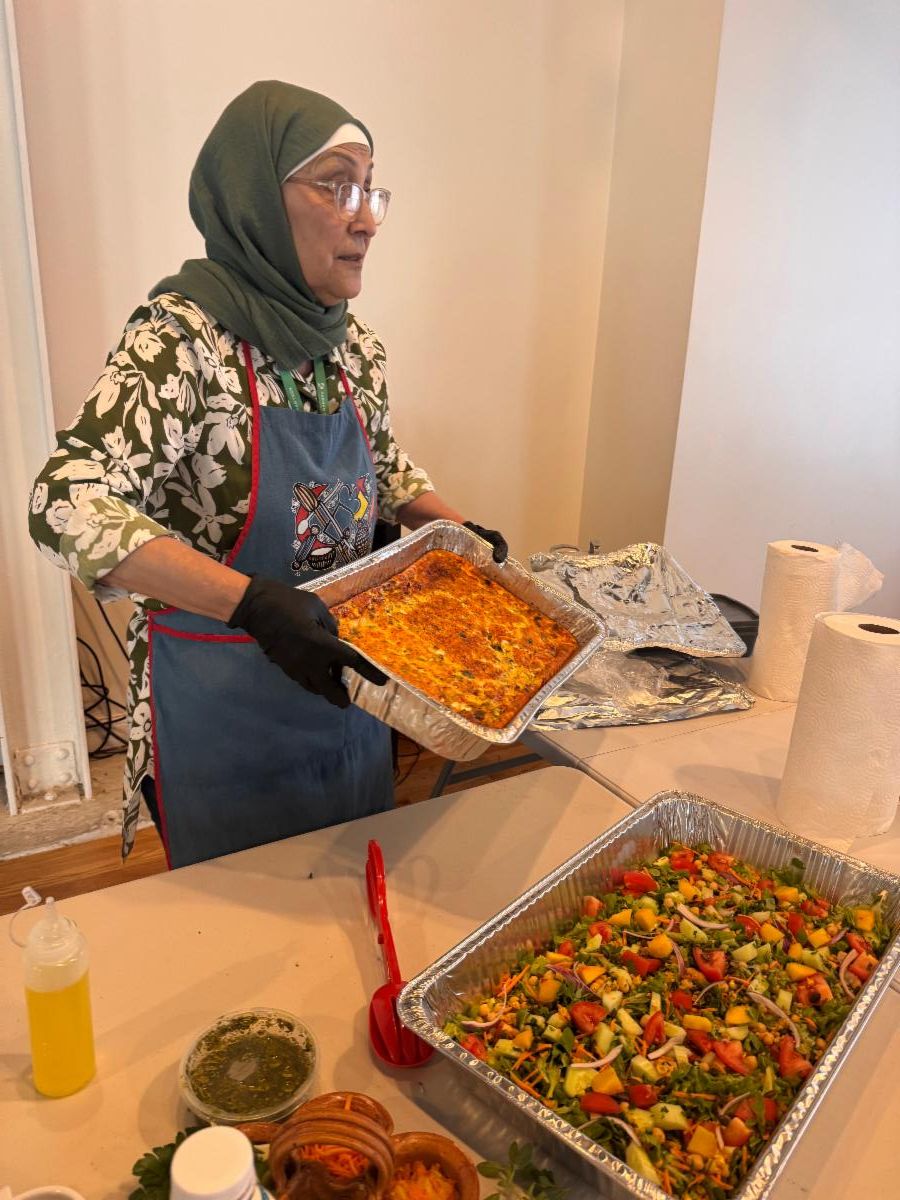
Each Thursday during our CSA season, Shaima and I bring fresh vegetables from Spring Forest and our mobile kitchen to two community partners in Durham, where we cook, learn, and share meals together.
Participating in the World Relief and North Street cooking classes has been a meaningful experience that extends far beyond learning new recipes. Each class brings together people from diverse countries, cultures, and culinary traditions, creating opportunities to connect through food.
By combining Shaima's traditional Afghan dishes with my own Southern roots, we are able to show that food is a universal language. Whether we're exploring new ways to prepare seasonal vegetables, cooking together, or sharing stories around the table, everyone has something to contribute. These classes remind us that food has a unique way of building community, extending hospitality, and celebrating the richness of our different cultures.
|
Tree of Life
by Joanne Pizzino
Do you really know how to feed yourself? The statistics suggest that many of us struggle to do so. Although I am a medical doctor, I have also focused on fields such as naturopathy, which emphasize the healing power of nature.
The Earth—and the things that grow on and in it—has much to teach us about how to nourish ourselves and thrive.
Let's try to simplify what "eating healthy" actually means. Many people think about food primarily as fuel to get through the day or simply because they enjoy the way it tastes. With energy dense and highly processed foods so readily accessible, many of us have lost touch with what true hunger feels like and what it means to nourish ourselves in a way that supports long-term health and vitality.
So what is the most important thing to know about feeding ourselves? Simply this: fill your plate with as much of the abundance of the earth as you can.
Every cell and molecule of your body is, quite literally, formed from the earth. Millions of years of evolution have shaped our bodies to depend on what grows from the land. The closer the foods we eat are to the earth that produced them, the more they retain the nutrients and vitality that nourish us.
Consider these basic ideas about where the energy for life comes from:
- All life on Earth ultimately depends on the sun. Plants are uniquely able to capture that energy and transform it into nourishment for themselves—and, ultimately, for the rest of us.
- Eating a wide variety of plant foods is one of the best ways to benefit from that nourishment.
- Different parts of plants contribute different nutrients. Fruits, roots, stems, seeds, and leaves all have an important place in a healthy diet.
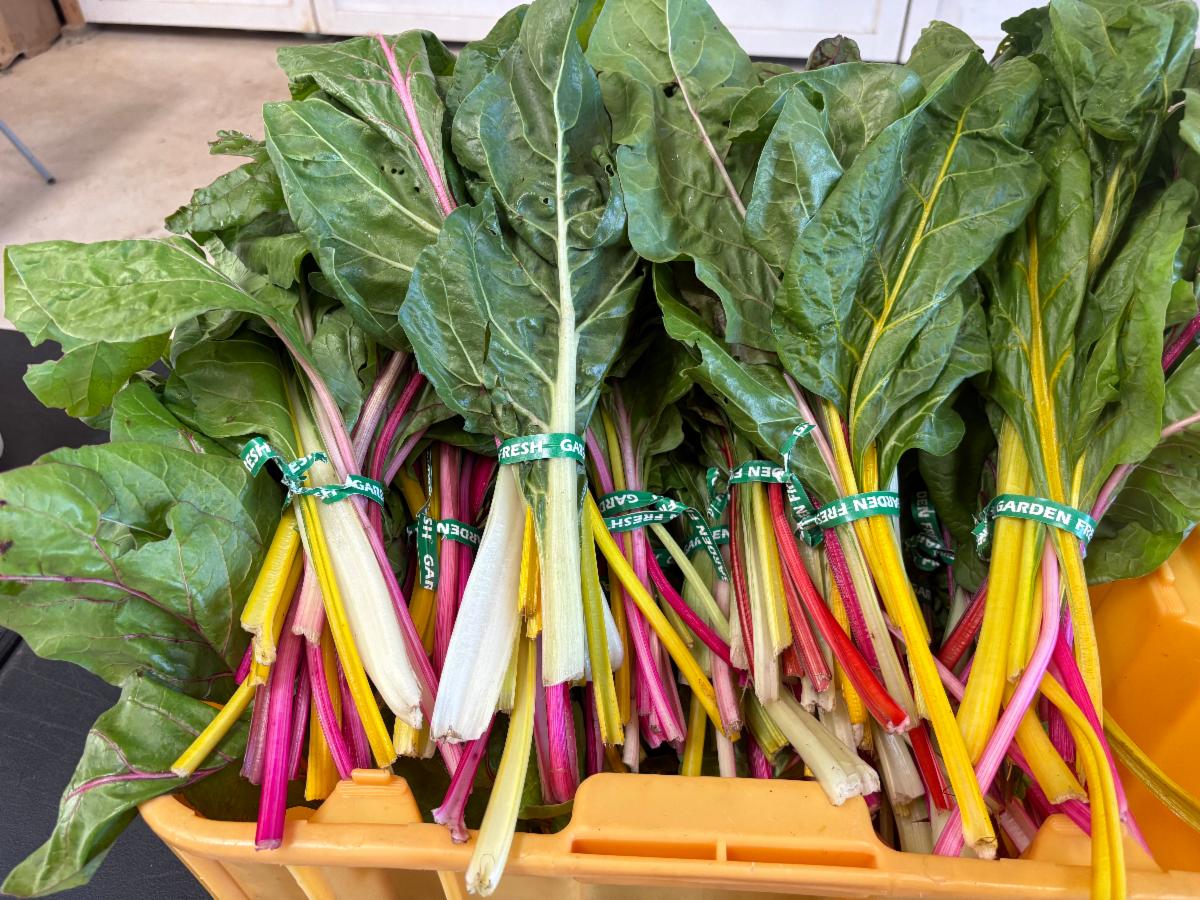
- Dark leafy greens are among the most nutrient-dense foods we can eat, providing an abundance of vitamins, minerals, and beneficial plant compounds.
There are many different approaches to healthy eating, but most have one thing in common: they encourage us to eat more colorful plant foods. Whatever eating pattern you follow, filling your plate with the abundance of the earth is a simple and nourishing place to begin.
Joanne Pizzino, MD, MPH, is board-certified in Preventive Medicine and diplomate-certified in Integrative Medicine.
|
The Movement of Sunflowers
By Larry Petrovick
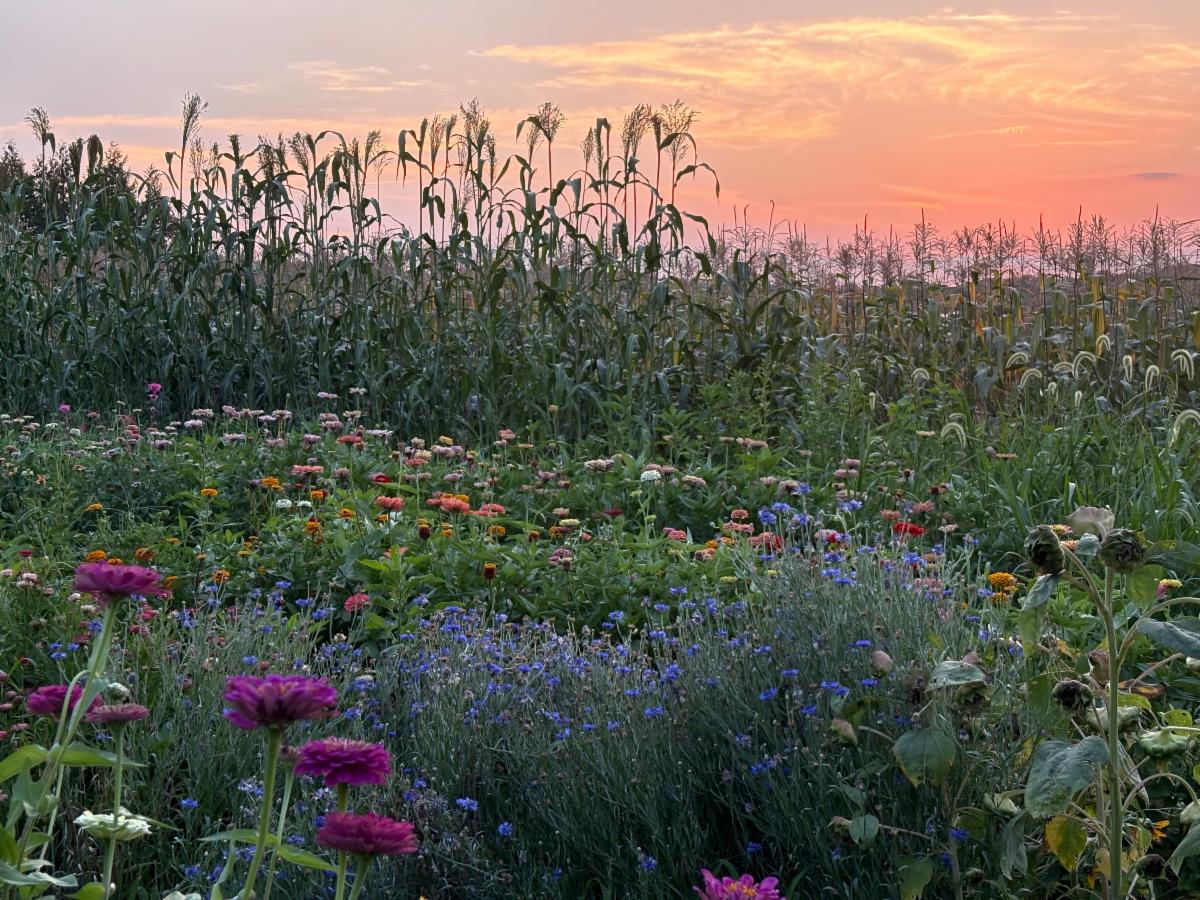
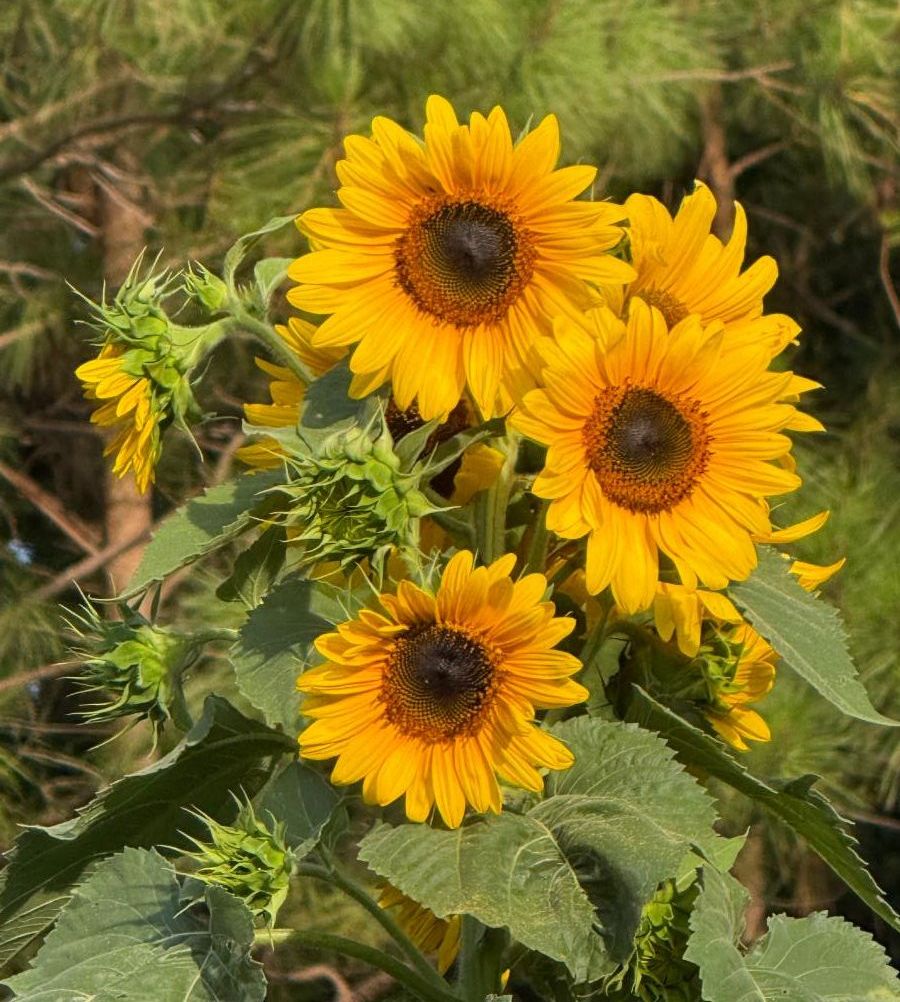
Over the last few weeks the sunflowers of Spring Forest have begun to bud and blossom. As they develop, the buds of sunflowers turn toward the east facing the sun during the day. At night, they reverse course and the flower buds turn back to the west, until morning when they follow and turn toward the sun again, guided by the sun and their inner rhythm. When the sunflower matures to full blossom, they face the sun for good. The blossoms are warmed in from morning to evening attracting pollinators to ultimately produce seed for future generations.
The movement of the sunflowers pose questions for reflection:
What inner or outer stimuli cause growth in my life?
When was a time when a bud of an opportunity took time to fully blossom in my life?
| |
Spring Forest Gear
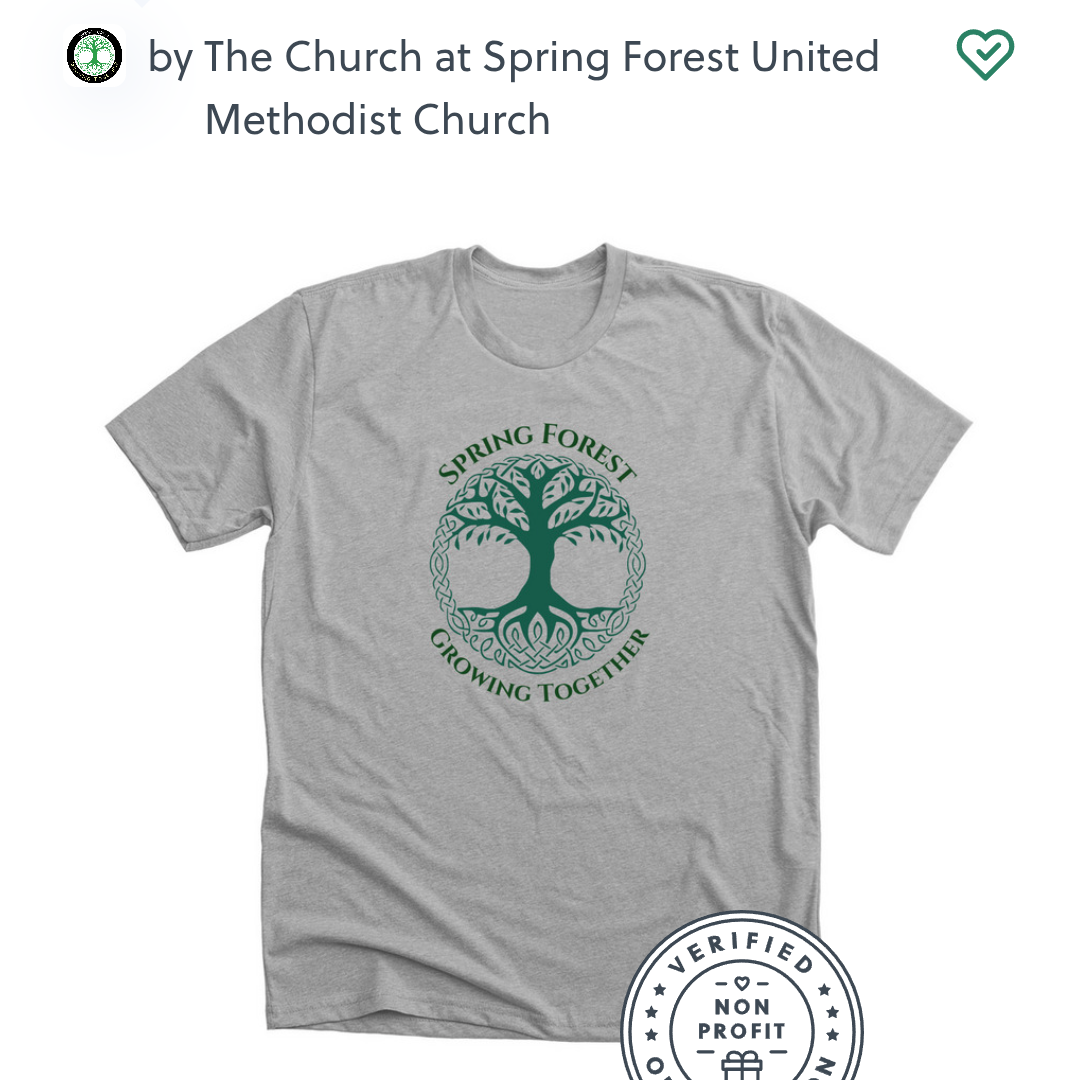
Love Spring Forest? Now you can take a little piece of it with you wherever you go! Our new online shop features t-shirts, hoodies, hats, mugs, tote bags, and more—all featuring the Spring Forest logo.
Every purchase helps spread the word about Spring Forest and supports our mission and programs.
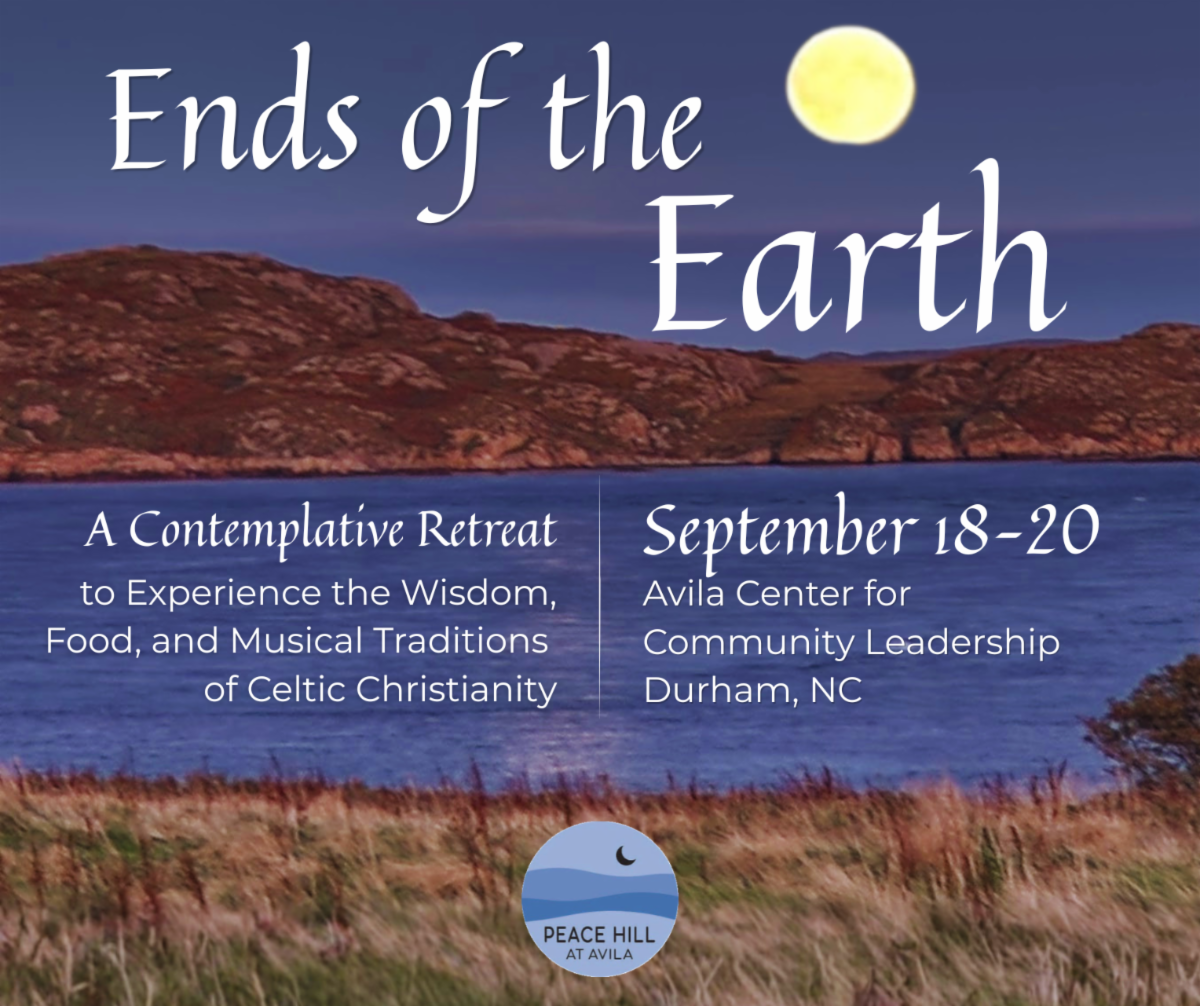
| An offering from our friends at Peace Hill: |
Financial Support
We appreciate donations of any amount to support programs like Grow It, Summer Camp Scholarships, Hope 4 Humanity, Free Farmers Markets, and infrastructure for our community gathering spaces.
| | | | | Regular Events on the Farm |
- Community Potlucks (Forest Feast)
1st and 3rd Saturday of every month at 5:30pm.
- Grow It! Wednesdays at 10am
Children and families are invited to come explore the farm and forest, enjoy time for yoga and cooking, and connect with other families. Note: We will not have Grow It! on July 15, July 22, or August 12
See Events Page for more details
| | | | | |