|
|
Kathy Hochul, Governor
Mark M. Finkle, Chairman
John C. Callaghan, Executive Director
| |
|
Message from the
Executive Director
| |
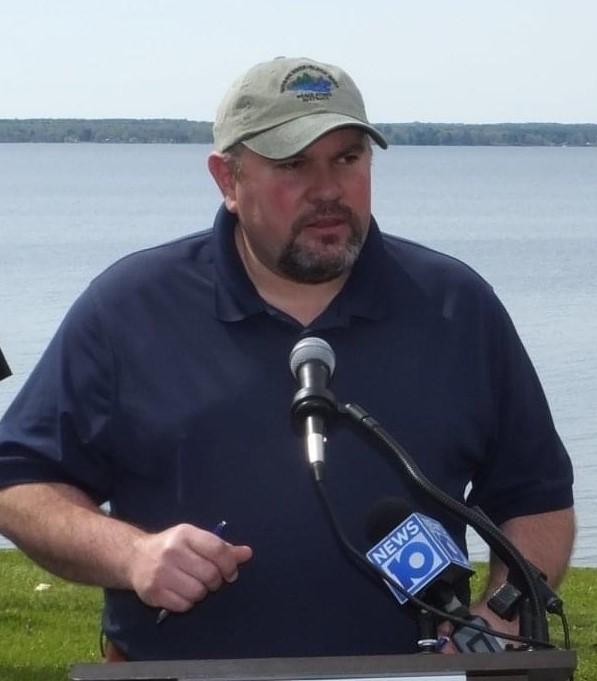
2025 is off to a great start at the Regulating District as my colleagues and I work to deliver on our century-plus-old mission of providing flood protection and flow augmentation through operation of storage reservoirs in the Adirondacks. We take great pride in the public health and safety role we play, and the next few years will feature enormous strides in that area as we make generational investments in our infrastructure.
Investing in the Future
As we continue to fully rehabilitate the 126-year-old Indian Lake Dam in the Hudson River Area, we are finding additional work that should be addressed while the contractor – C.D. Perry of Troy – is on site. A more detailed update on this project appears later in this newsletter.
Last year, the Regulating District completed a comprehensive rehabilitation of the Hawkinsville Dam, located on the Black River in the town of Boonville, Oneida County. This project included changes to the low-hazard dam’s earthen embankment and water control structures, in order to bring the facility into full compliance with modern dam safety regulations. Other public access and recreational enhancements were also incorporated into the project, including a new ADA-compliant fishing pier.
Design and permitting phase work also continues in advance of a major, multi-year rehabilitation of the Conklingville Dam on Great Sacandaga Lake. The Regulating District has worked closely with the Governor and New York State Legislature over the last few years to secure funding for the project, which is estimated to cost upwards of $40 million. Preliminary design plans for the project, which is being overseen by the NYS Office of General Services, have been completed and construction work is expected to begin in 2026. Importantly, the three-year project will not necessitate any changes to normal water elevations, meaning residents on – and visitors to – Great Sacandaga Lake during this timeframe should not notice any construction-related impacts.
Making Customer Service a Priority
We are happy to report that use of our online GSL access permit system continues to increase, with 67 percent of GSL permittees using the system to renew this year. We have also added new functionality to the system for 2025 – access permit holders who have registered for a new account can now use the online system to apply for a work permit! Signing up for an online account is easy…simply go to our website at www.hrbrrd.ny.gov and click “GSL Permit System” and then “Online Access Permit System” and click “Create Your Account.” For assistance, email techsupport.permits@hrbrrd.ny.gov.
We work for the people we serve, and are always looking to improve in the ways we provide that service. To that end, we are asking you to take a few moments to click on this link and take a brief customer service survey. Your responses will help us continually improve how we help our customers!
Tornado Response / Cleanup
Just like many residents of South Shore Road and elsewhere, our team members faced unprecedented challenges beginning in July of last year as they responded to catastrophic damage along the Great Sacandaga Lake shoreline. We’d like to think the Village of Northville, the Town of Northampton, the Town of Edinburg, Saratoga County, and NYS Canal Corporation for assisting with equipment and/or personnel, and area residents for their support & cooperation. Our team continues to work to address remaining debris on New York State lands under our jurisdiction, and we appreciate the cooperation and patience of those impacted during this severe weather event. View tornado cleanup photos here!
Brookfield Dispute Update
Since July 2023, the Regulating District has not received revenue of $1.5 million annually from Brookfield Renewable Energy for the right to use the head provided by Conklingville Dam and the water from Great Sacandaga Lake in the production and sale of electricity at its E.J. West hydroelectric plant, located adjacent to and at the same elevation of Conklingville Dam. This revenue, which the Regulating District had received in some form from the company or its predecessors dating to the dam’s construction, had been a critical part of the Regulating District’s funding model, helping us control the share of operational and capital construction expenses that permit holders and beneficiaries, like the Counties of Saratoga, Warren, Washington, Albany, and Rensselaer, have been called on to bear. After enacting the first increase in Great Sacandaga Lake permit fees in 20 years in 2021, the Board has been clear that no additional permit fee increases will be proposed anytime in the near future. This means that the impact of Brookfield Renewable suspending payments to the Regulating District continues to be felt primarily by taxpayers in those downstream counties. The Regulating District will continue to fight to ensure that Brookfield is required to once again pay its fair share, and is represented by the New York State Attorney General in the matter.
In the meantime, the Regulating District continues to coordinate closely and effectively with the water management professionals at Brookfield in the day-to-day operation of Great Sacandaga Lake and other facilities. Members of the public who rely on the responsible management of our reservoirs for flood protection, flow augmentation, livelihood, recreation and other quality of life benefits should rest assured that the ongoing legal dispute has not yet resulted in operational issues, nor will the Regulating District allow it to.
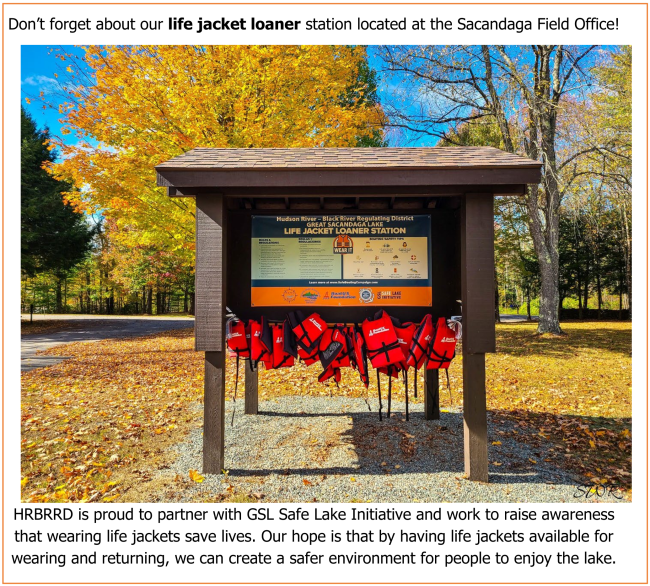
Boating Safety
Finally, as the summer boating season approaches we ask all those who spend time on the water to make a plan, be alert, boat sober, “wear it”, and always be on the lookout for hazards. Importantly, following passage of Brianna’s Law in 2019 and a multi-year phase in of its requirements, all boaters in New York must have taken an approved Safe Boating Course to operate a motorized vessel in New York beginning this year, regardless of age. To find a Safe Boating Course near you, visit Upcoming Events - New York Safe Boating Course
National Safe Boating week is right around the corner but we all have a shared responsibility to help keep each other safe each and every day. One way to do so is to visit the GSL Safe Lake Initiative on Facebook at www.facebook.com/groups/203634077638678/ and don’t forget to download – and use – the Henry D. Ross III “Send It” app to help keep your fellow boaters safe. Google “Send It – HDRIII” and you’ll have no trouble finding it on Google Play or the Apple Store.
| | | | |
STILLWATER HYDROELECTRIC PLANT MARKS SIX-MONTH MILESTONE UNDER NEW OPERATOR
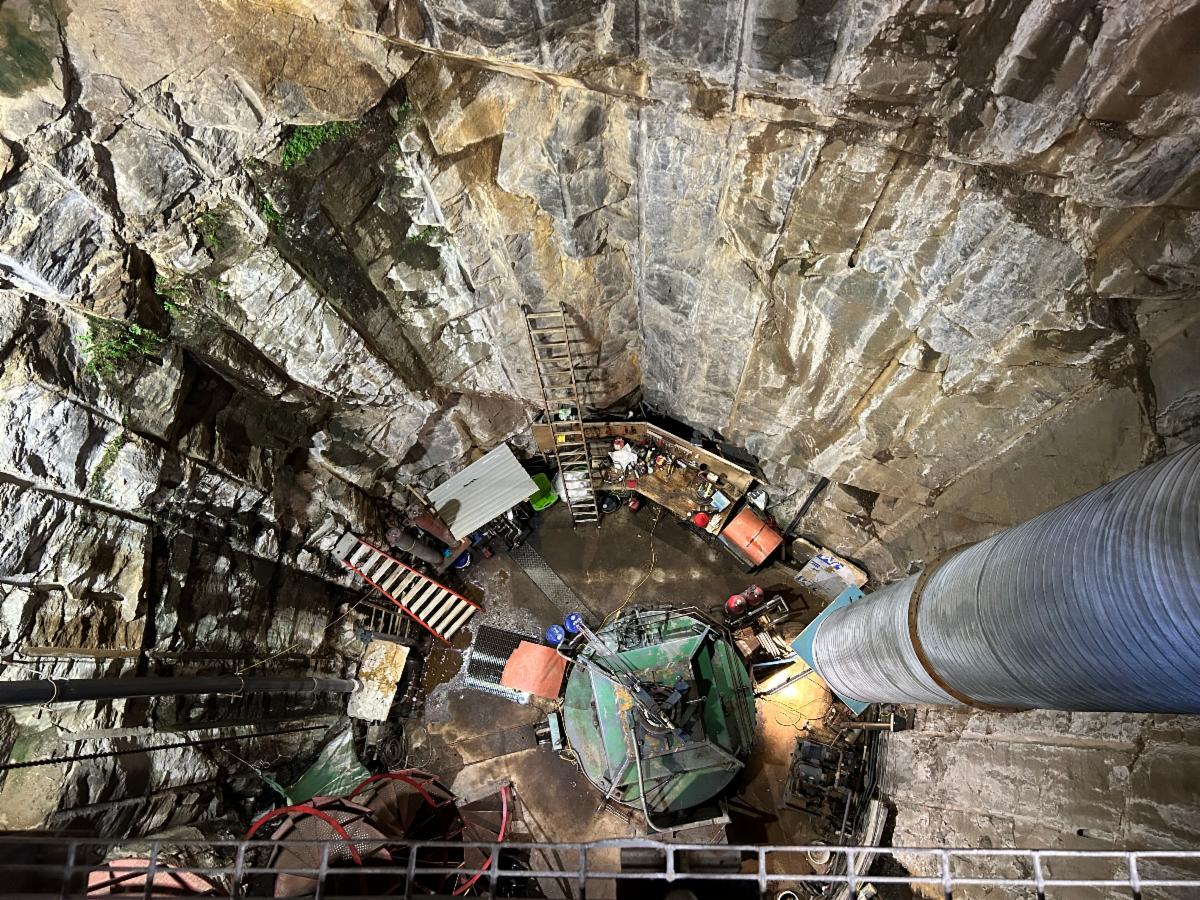
Among the many significant benefits of the Regulating District’s flood protection and flow augmentation operations, supporting a reliable source of water for the generation of clean, renewable energy at downstream hydroelectric plants stands out as particularly important. One such hydroelectric plant is located adjacent to the Regulating District’s Stillwater Dam in the Black River Area. Constructed in 1987 and operated by Stillwater Associates until last year, the facility contains a single, 1.8 megawatt vertical shaft turbine with a rated flow of 760 cubic feet per second.
Pursuant to the terms of a long-term lease with the previous operator, the Regulating District purchased the hydroelectric plant in 2024, necessitating a search for a new operator to continue generating renewable power at the site. In April, 2024, the Regulating District solicited proposals from operators interested in leasing the plant.
| |
In October 2024, following this competitive process, the Regulating District entered into a multi-year agreement with Northern Power & Light of Saranac Lake, NY to be the new operator of the plant. With a long history of operating hydroelectric plants in the Adirondacks dating to the 1970s, Northern Power & Light is well poised to continue the renewable energy benefits of the Stillwater Hydroelectric Plant in the years ahead.
“We are pleased to have expanded our portfolio into the western Adirondacks to support our mission of providing locally-generated renewable energy to our customers,” Emmett Smith of Northern Power & Light said. “The Regulating District has been great to work with and we look forward to our continued collaboration in the years ahead.”
John Callaghan, Executive Director of the Regulating District, said, “We very much valued our long-standing relationship with Stillwater Associates, the company which developed the project and operated it for nearly 40 years. We know that we have the ideal partner to continue producing clean, renewable energy at the site in Northern Power & Light, and look forward to working with Emmett and his associates in the years ahead.”
The agreement with Northern Power & Light for the operation of the plant extends out to 2030, with an option for an additional, 20-year term.
| | |
Repairs and Improvements at
126-Year-Old Indian Lake Dam Continuing
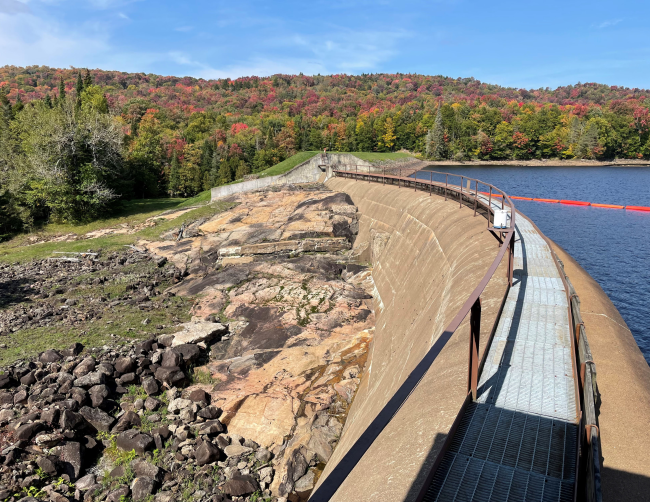
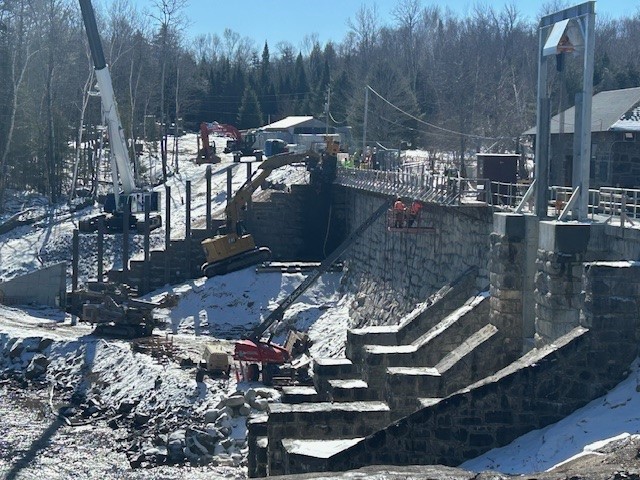
Work has continued full speed ahead over the winter months on a comprehensive, $10.8 million rehabilitation of the 126-year-old Indian Lake Dam, designed to bring the structure into compliance with modern dam safety standards, while providing enhanced recreational access to Indian Lake for area residents and visitors alike.
C. D. Perry, LLC of Troy, NY has been performing the work with engineering support by Bergmann Associates. Though the project schedule originally contemplated an end to substantial construction activities by the end of the 2024 calendar year, challenges encountered on site during the course of the complex project have lengthened the expected construction schedule considerably.
Still, considerable progress has been made on the majority of items included in the work. Efforts to fully seal gaps in the stone masonry structure by injecting grout have concluded successfully. The most visual evidence of this success for residents and visitors to the dam will be the absence of water seeping through the stone masonry spillway, which has been a hallmark of the dam for decades, alarming many people making their first trip to the site.
Other less visible, but no less essential, work has been completed as part of the project. A new pedestrian walkway over the dam’s spillway for worker access has been installed, increasing levels of safety for Regulating District personnel. The previously inoperable logway sluice gate has been replaced with a new, operable gate which will be instrumental in facilitating subsequent gate replacement, as well as enhancing water management capabilities over the long term. A new concrete extension to an embankment wall which will help accommodate a new “flattened” embankment slope on the dam’s downstream side has been completed, allowing that portion of the dam to meet NYSDEC’s dam safety standards.
Perhaps the most critical component of the project from a structural stability standpoint, new post-tensioned anchors on the spillway structure have also been installed. Installation of anchors that are attached to bedrock at existing dams is a common practice to address structural concerns related to the potential for overturning and/or sliding. This aspect of the project is critical to ensuring that the Indian Lake Dam is fully compliant with modern, NYSDEC dam safety standards, despite the structure’s advanced age. Work to install similar anchors in the dam’s embankment section is ongoing.
Work to increase the elevation of the embankment itself is similarly a continuing effort. Importantly, the warmer spring weather which is just around the corner will be more conducive to the material which will be used to raise the embankment meeting compaction standards and functioning as designed once placed.
As is often the case with any comprehensive work on a century-plus-old structure, other necessary work has been identified over the course of construction. In the course of underwater grouting efforts, divers engaged on the project were able to access stone masonry components of the dam’s gatehouse foundation. While accessing the chambers directly below the gatehouse, divers identified gaps in the gatehouse foundation significantly worse than the pre-project investigatory dive inspections on the exterior of the gatehouse foundation had revealed. Though not integral to the structural stability goals of the overall project, these voids are likely most easily and efficiently addressed during the course of the existing construction process, rather than at a later date through a separate construction contract. The Regulating District continues to analyze different approaches to address these issues collaboratively with the contractor and consultant engineer. While it is possible that one approach to completing this work in 2025 could necessitate a more rapid drawdown of the reservoir elevation in the fall than normal, and to a lower winter level than normal, that determination will likely be made over the next month or so in consultation with Indian Lake residents and stakeholders.
Installation of the new water control gates, which have been fabricated and are on site, will occur at a later date in coordination with work to address the gatehouse foundation issues described above. In the meantime, the Regulating District continues to have full operational capability at the dam to make releases or store water in accordance with its mission.
Click here to view a slideshow on construction progress photos.
The Regulating District completed the initial Engineering Assessment on the Indian Lake Dam in 2015, consistent with new dam safety regulations adopted by the New York State Department of Environmental Conservation (DEC) in 2009. Among other necessary improvements, this assessment, which was updated in 2018 based on comments from DEC, identified several areas at the dam requiring repairs or modification including seepage through the masonry dam, repairs and/or improvements to intake gates, repairs and/or improvements to a log sluice, and seepage flow collection at the base of the dam.
Though the Regulating District has long sought to address deficiencies at the dam, as well as other structures in its jurisdiction, the agency’s finances had prevented it from moving forward with this and other projects. In 2022, the Governor and Legislature enacted financial reforms as part of the adopted FY 2023 State budget allowing the Regulating District to move forward with several dam safety projects, including the rehabilitation of the Indian Lake Dam, which is being funded through a combination of “pay as you go” financing, in addition to approximately $10 million in financing through the New York State Environmental Facilities Corporation.
Completed in 1898 by the Indian River Company, the dam was transferred by the International Paper Company to the State of New York in 1989.
| | Old Forge & Sixth Lake Dams | | |
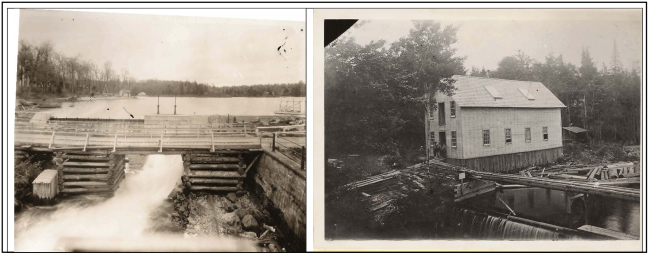
New York State had a problem. The Erie Canal and Black River Canal – though facing increasingly stiff competition from railroads – were thriving more than ever in the mid-to-late 1800s with millions of tons of cargo passing through their locks each year. These canals, and the water needed to supply them, put a significant strain on the existing water resources throughout the western Adirondack region, drawing complaints from downstream mill owners who also relied on natural river flows for their own operations.
To ease impacts on these resources, the State began construction of additional reservoirs in the Black River basin to store water during periods of high flow, and release water during the dryer, summer months to help support canal navigation (and in so doing, necessitate less diversion from natural flows, reducing impacts to mill owners and other users.)
In 1879, to further reduce impacts associated with these diversions, the State of New York authorized construction of new dams at Old Forge – the site of John Brown’s original 1799 dam – and Sixth Lake. Completed in 1880, the reservoirs created by these dams would not supply canal navigation directly. Rather, they would be “compensating” reservoirs which would ensure a reliable source of water year-round for downstream mills that would otherwise lose precious flow for the sake of canal navigation.
Upgrades to the two dams, including new concrete spillways, were completed in 1905. Following the creation of the Black River Regulating District in 1919, the State transferred jurisdiction over the dams to the Regulating District, which has managed them ever since. (The Black River Regulating District and the Hudson River Regulating District were statutorily combined in 1959 to form the Hudson River – Black River Regulating District.)
Following revisions to New York’s Dam Safety Regulations by the New York State Department of Environmental Conservation (NYSDEC) in 2009, the Regulating District has been working collaboratively with NYSDEC to develop a timeline and approach for addressing deficiencies identified at the more than century old structures. In 2017, Arcadis Design & Consultancy completed a hydrologic, geotechnical and stability assessment of the structures, as well as a recommendation for rehabilitation. Since that time, under the direction of the Regulating District’s Board, we have worked with the consultant to advance to final design.
This comprehensive rehabilitation project for the Old Forge and Sixth Lake dams will be a generational investment in this critical infrastructure, the first such effort in over a century, and will bring the dams into full compliance with modern dam safety standards.
Work on the dams will include replacement of spillways with new “labyrinth” spillways to increase capacity, construction of new gate enclosure structures that will retain the architectural style of existing gatehouses, replacement of water control gates, reconstruction of downstream concrete aprons, installation of emergency standby generators, embankment improvements, and other community enhancements.
Community Considerations
The Regulating District is committed to undertaking this project in a way that minimizes disruption and temporary inconveniences for area residents to the greatest extent possible, and also enhances post-project community use in meaningful ways.
At Sixth Lake Dam, the Regulating District has heard from the Sixth and Seventh Lakes Association regarding concerns over residential parking during the project. The Regulating District is working with Arcadis to ensure constructing sequencing is such that existing parking is not impacted during year one construction activities, as it considers options for temporary auxiliary parking during the subsequent phases of construction. The project will also incorporate improvements to an existing bulkhead and dock used by residents to access seasonal camps.
At Old Forge Dam, the Regulating District is working closely with the Town of Webb to incorporate elements of the Town’s Waterfront Revitalization Plan, including improved access, lighting, and docking facilities. Once the rehabilitation of both dams is complete, area residents will enjoy improved water regulation (less variation due to intense short duration summer rainfall) and an enhanced community asset, as well as the peace of mind which will accompany completion of the critically-important dam safety improvements driving the project.
Permitting and Regulatory Approvals
The HRBRRD continues to engage with various regulatory bodies to secure necessary permits for the rehabilitation work. This includes coordination with the New York State Department of Environmental Conservation (NYSDEC), the U.S. Army Corps of Engineers (USACE), the Adirondack Park Agency, and the New York State Office of Parks, Recreation and Historic Preservation (NYSOPRHP). Compliance with the State Environmental Quality Review Act (SEQRA) is also a critical component of the planning process.
| | |
Project timing / schedule
These projects are expected to be competitively bid later this year, with construction activities commencing early fall, 2025. Work at both sites will progress concurrently, with coffer dams isolating one portion of each dam during each successive construction season, in order to maintain normal water levels during construction, while allowing the contractor to complete construction of a portion of the new structure. Accordingly, to complete the work properly and avoid unnecessary impacts to residents and visitors alike, the project will take up to three years to complete, including major construction activities during the summer of 2026 and 2027.
These rehabilitation projects underscore the HRBRRD's commitment to maintaining and enhancing critical infrastructure within the Adirondack region, ensuring the continued safety and enjoyment of these waterways for years to come. Without the support of the Governor and New York State Legislature to allocate the necessary resources to complete this work, these projects would not be possible. The Regulating District looks forward to working closely with local government officials, residents, and other stakeholders as we advance this long-anticipated project to address structural concerns, extend the operational lifespan of the dams, and enhance public safety.
| | |
Guest Column Featuring
Great Sacandaga Lake Association
| |
The Great Sacandaga Lake Association: Advocating, Educating, Preserving, and Protecting the Great Sacandaga Lake for over 70 years.
The work that the GSLA does is critical to the preservation of the beautiful Great Sacandaga Lake, the health of the water and wildlife, permit holders and all who simply enjoy the lake year round for all sorts of recreation.
It is a magical place and one the GSLA is working hard - with your help - to preserve and protect.
Your membership and support is critical to our success as we are 100% membership funded.
To those of you who are members, we would like to thank you for your generous and continued support. We could not do it without you. If you are not a member, please consider joining us!
We welcome all members to our monthly meetings and events and are always happy to have new volunteers and board members.
Here are some of the important things we accomplished in 2024:
Created a new and vibrant GSLA Website that helps us fulfill our mission to educate all about the work we do and the critical issues the lake is facing
Continued our Annual Coliform Water Testing (started in 1990) and worked with local government and agencies to make them aware of the results (access to the reports on the GSLA website is a benefit of membership)
Grew our social media presence on Facebook by sharing important news, meetings, permit applications and updates regarding the lake
Revitalized the board and created a nominating committee to assist with succession planning and strong board development
Secured $2500 Grant from the GSLAC for an Annual GSLA Clean-up Event to take place on Saturday, June 7th (more details to follow but we need volunteers!)
Updated our Citizenship Award and Scholarship for senior high school students graduating in 2025 (to be presented at the Annual Clean-up Day event in the spring)
Connected with other key organizations and associations working to protect the GSL and the Adirondacks such as the Adirondack Council, the HRBRRD, the GSLAC, the SPC, the GSL Safe Lake Initiative and the GSIFF
The GSLA goals for 2025 include growing our membership to include all permit holders, marinas, business owners around the lake and everyone who uses and loves the Great Sacandaga Lake.
Growing our membership will allow us to continue our important Coliform Water Testing, allow us to support fish stocking and research on the lake as well as other initiatives that benefit the overall health of the Great Sacandaga Lake and its surrounding communities.
Thank you all for you support and I do hope to see many of you joining us in Advocating, Educating, Preserving, and Protecting, the Great Sacandaga Lake
Jane Kinney Denning - President - GSLA
| | | |
NOW HIRING FOR SEASONAL EMPLOYEES
We are fortunate each year to be able to employ additional staff to assist during our very busy summer season. This year again, we are hiring staff for our Sacandaga Field Office in Mayfield and at Stillwater Reservoir in the Black River Area.
See application information on our website
| |
| | |
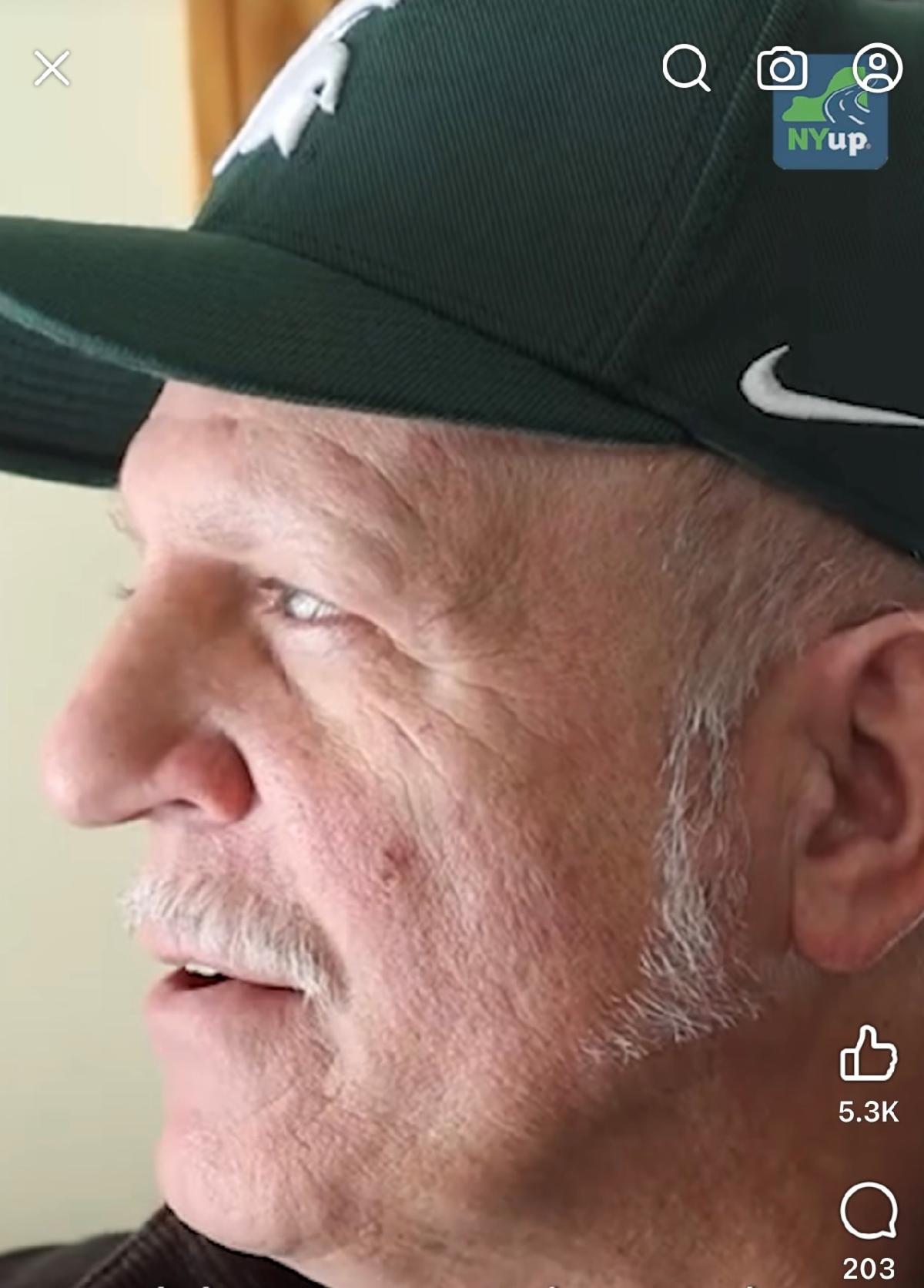
ICYMI…Did you happen to catch the coverage in NYup.com of Bill Hancheck, one of our dedicated weather observers in the Black River Area? The data collected day-in and day-out by these dedicated individuals like Bill provide invaluable information to our Chief Engineer, Operations Engineer, and our operations and maintenance team in the Black River Area to help determine reservoir releases. Thank you to Bill and our other weather observers who provide this critical data day-in and day-out!
| | | | | | |