|
NOTE FROM THE EXECUTIVE DIRECTOR | |
Dear Friends,
Recently, the number one movie on Netflix was "American Murder: Gabby Petito" which explores the tragic events surrounding Gabby Petito's disappearance and death. This powerful docuseries offers an insider’s look at the events leading up to her death, exposing the missed opportunities and systemic challenges that those of us working in the domestic violence field know all too well.
The docuseries shows Gabby being pulled over by the Moab Police Department following a report that a man was slapping a woman outside a restaurant. What follows is a lengthy roadside investigation. The officers appear genuinely concerned for Gabby but, unfortunately, fail to ask critical questions that could have led them to different conclusions. Their struggle to do the right thing, while faced with two young people traveling together, highlights the complexities of domestic violence investigations.
In our field, we know that these cases often involve life-and-death decisions. When officers respond to domestic violence calls, they traditionally focus on establishing what occurred in that moment to determine probable cause. However, this approach overlooks the critical need to consider the history and context of the violence—factors that are essential to assessing the risk of future harm.
This is where evidence-based risk assessment tools, such as the Danger Assessment for Law Enforcement (DA-LE), play a vital role. These tools shift the focus beyond the current incident and prompt officers to ask essential questions like:
· Has the physical violence increased in severity or frequency over the past year?
· Has your partner/ex-partner ever tried to choke (strangle) you?
· Do you believe your partner/ex-partner is capable of killing you?
By asking about the history and context of violence, officers gain a clearer picture of the potential for lethal or near-lethal outcomes.
Finally, the docuseries reveals a missed opportunity: Gabby was not connected to critical domestic violence services. It is both heartbreaking and haunting to wonder how the outcome might have been different if she had been referred to a hotline or connected with an advocate who could have helped her recognize the danger she was in and guided her next steps.
At the Geiger Institute, we firmly believe that risk assessment tools are life-saving. They empower law enforcement to navigate the complexities of domestic violence calls with greater precision and insight. We applaud the Gabby Petito Foundation for championing the widespread use of these instruments and for driving a national conversation about improving the systemic response to domestic violence.
Let us continue to advocate for evidence-based practices that close the gaps in the system and prevent future tragedies.
With gratitude,
Kelly Dunne
Executive Director
| |
Where We Are
In fiscal year 2024, the Geiger Institute provided over 50 trainings to over 1,700 professionals across the country and received requests for training and technical assistance from over 25 jurisdictions.
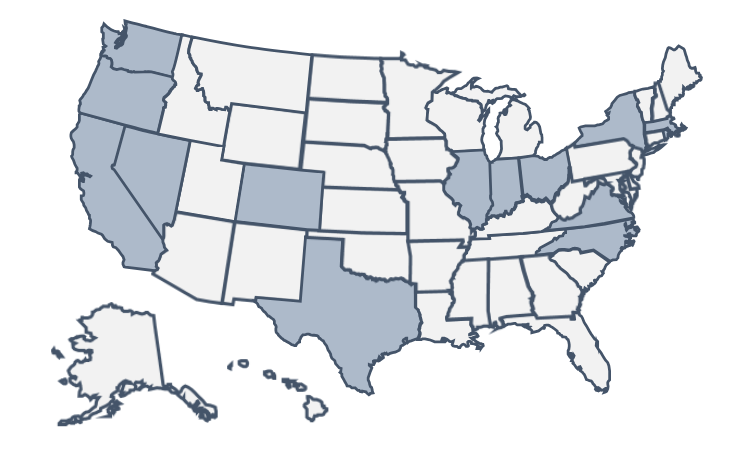
75 police departments across 13 states have implemented the Danger Assessment for Law Enforcement (DA-LE).
| Follow Geiger Institute on social media: | | | |
"If this lethality assessment… had been used,
I know in Gabby’s case if it had been used,
I believe she would still be here today."
- Nichole Schmidt, Gabby Petito’s mother
|
|
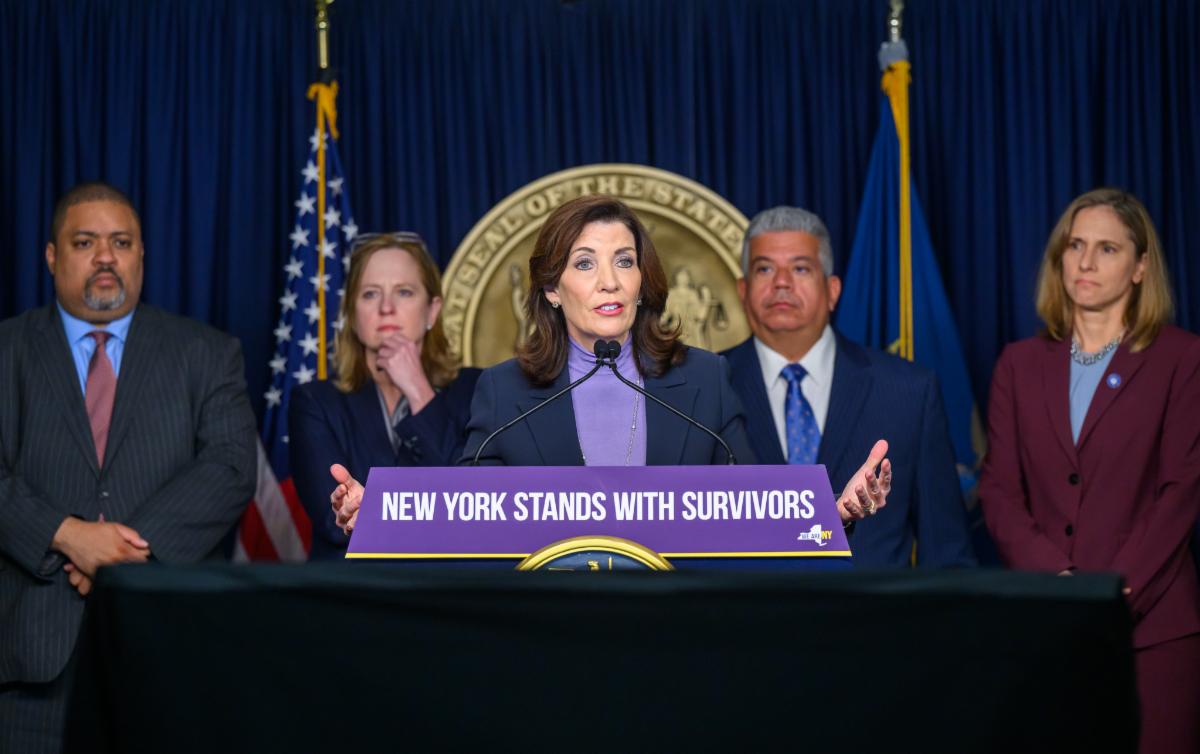
Photo: Courtesy of Susan Watts/Office of Governor Kathy Hochul | | |
New Partnership with STRIVE Initiative in New York State
The Geiger Institute is excited to announce a partnership with the New York State Division of Criminal Justice Services’ new STRIVE initiative. STRIVE, an acronym for Statewide Targeted Reductions in Intimate Violence, aims to improve the public safety response to intimate partner and domestic violence and better address needs of survivors in 20 counties across New York State.
The following counties participating in the initiative reported the largest volume and rate of domestic and intimate partner violence: Albany, Broome, Cayuga, Chautauqua, Cortland, Dutchess, Erie, Fulton, Genesee, Jefferson, Monroe, Nassau, Niagara, Oneida, Onondaga, Orange, Rensselaer, Schenectady, Suffolk, and Westchester counties.
Plans developed by counties participating in STRIVE must use evidence-based strategies and ensure that community members and programs that serve victims and survivors are actively involved in strategy selection and implementation. The Domestic Violence High Risk Team (DVHRT) Model and Danger Assessment for Law Enforcement (DA-LE) are amongst several tools that can be used by the counties.
This week, Senior Project Specialists Heather Davies and Sarah Galgano are presenting at the STRIVE Orientation in Albany and officially kick off this life-changing work.
To learn more about NYS Governor Kathy Hochul’s landmark investment in a coordinated community response and evidence-based strategies to enhance the safety of survivors of domestic violence, you can read the full October 2024 announcement here.
| |
| |
Words from the Field
We're honored to share these words from Mark Wynn, Domestic and Sexual Violence Prevention Trainer and Consultant.
Mark is legendary in the domestic violence field and has trained thousands across the country for over 25 years.
Learn more here about Mark's new documentary, This Is Where I Learned Not To Sleep, and watch the trailer below.
| | | |
Signs of Systems Change in Harris County, Texas
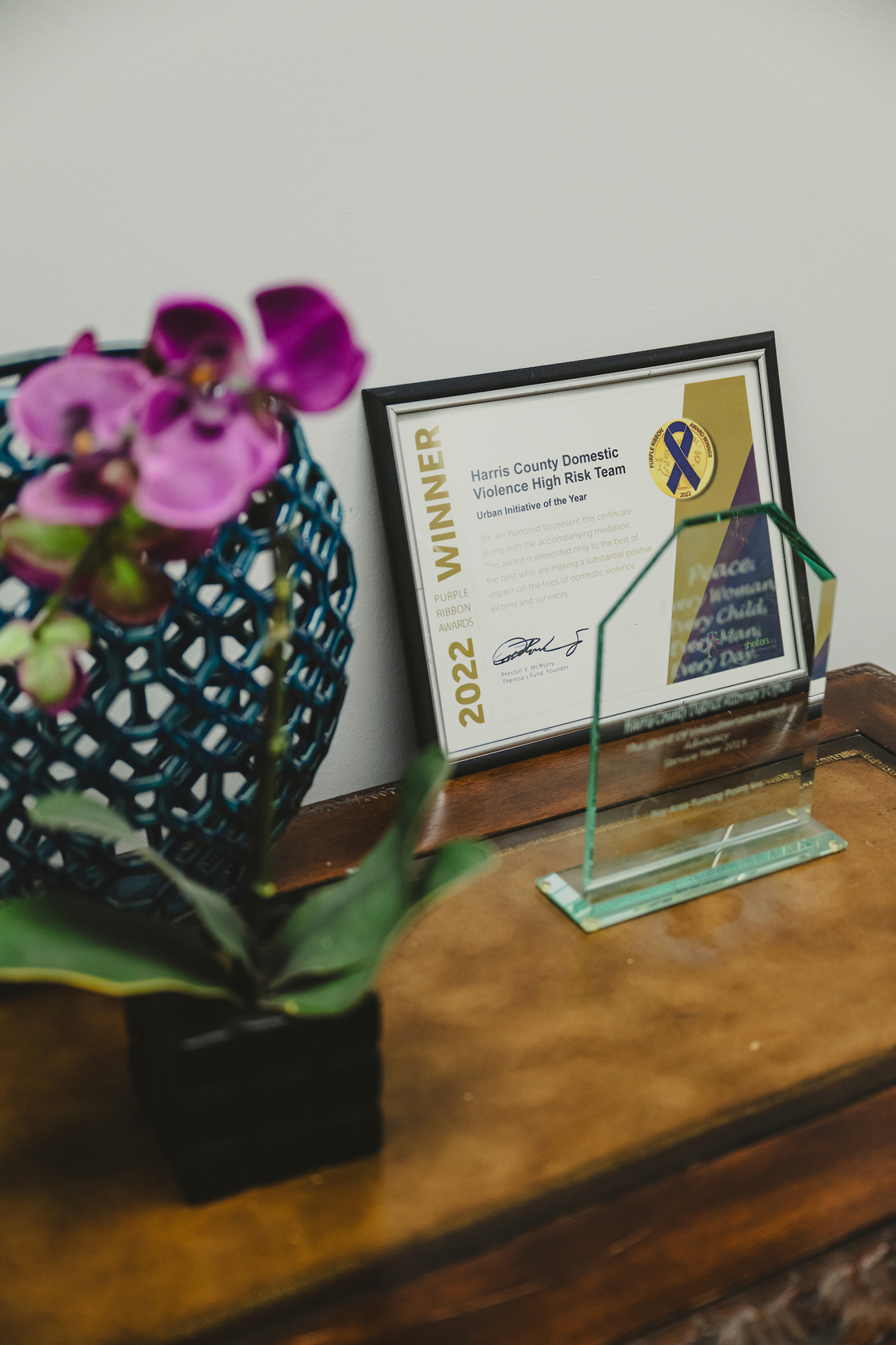
Good news from our friends in Harris County, where our team first partnered to implement a Domestic Violence High Risk Team (DVHRT) back in 2019. Newly elected Harris County District Attorney Sean Teare recently announced the creation of a Domestic Violence Bureau, a subdivision of specialized prosecutors, investigators, and social workers to handle the county's domestic violence cases. Per the new Bureau Chief Mary McFaden, the creation of this new bureau will allow for policies and procedures to be standardized and will give room to serve each survivor of domestic violence on a more individualized basis.
We spoke with our partner Alicia Nuzzie, the Harris County DVHRT director with the Harris County Domestic Violence Coordinating Council (HCDVCC), who shared how excited she is about this investment to handle the volume of high-risk cases that are identified.
Alicia also shared with us, "This is systems change work at its finest – a huge advancement made possible by looking at high-risk cases and understanding the gaps we have in our current systems thanks to the DVHRT model."
Read more here
| | Photo: Meridith Kohut for Houston Landing | | |
Looking Ahead:
Conference on Crimes Against Women
The Geiger Institute team is looking forward to attending and presenting alongside our partners at the annual Conference on Crimes Against Women again this year. We're excited for this year's workshops, and to share new learnings and lessons from the field.
Below is information on each of the workshops where Geiger Institute will be co-presenting. For more information, visit the conference website: www.conferencecaw.org.
| |
Leveraging Relationships to Save Lives: Creating a Successful Domestic Violence High Risk Team
May 20, 2025 2:00 PM-3:30 PM CT
Presenters:
- Sarah Galgano, Senior Project Specialist, The Geiger Institute
- Brandon Wootan, Owner/Operator, Light The Way Consulting, LLC
- Stacie Sutter, Program Director, Crossroads Safehouse
| | |
Mastering Meetings: Best Practices for Leading DVHRT and other Multi-Disciplinary Team Collaboration
May 21, 2025 10:00 AM-11:30 AM CT
Presenters:
- Nidia Cantu, Manager of the Harris County DVHRT Initiative, Harris County Domestic Violence Coordinating Council
- Sarah Galgano, Senior Project Specialist, The Geiger Institute
- Stephen Lopez, DVHRT Coordinator, The Bridge Over Troubled Waters
- Alicia Nuzzie, Director – Harris County DVHRT Initiative, Harris County Domestic Violence Coordinating Council
| | |
Slow & Steady Wins the Race: Using Lessons Learned from Piloting a Lethality Assessment to Inform Community-wide Rollout
May 21, 2025 12:00 PM-1:30 PM CT
Presenters:
- Miles Earwood, Deputy Chief, San Antonio Police Department
- Sarah Galgano, Senior Project Specialist, The Geiger Institute
- Erica Haller-Stevenson, Violence Prevention Administrator, City of San Antonio Metropolitan Health District
| | | | |
How Radiologists Can Help Identify Victims of Domestic Violence
"The team suggested that radiologists should take a moment to take note of a patient’s imaging history if they have any suspicion they may be experiencing domestic violence. In doing so, they could help patients’ care teams to investigate further and potentially intervene. "
Read more
| | | |
Partnership Opportunities
Philanthropic support is vital: it is the backbone of our efforts to end domestic violence homicide. Your investment will build safer communities and save lives.
By choosing the Geiger Institute, a leader in reducing domestic violence homicides, we can expand our reach, provide life-saving tools, and implement innovative strategies that protect the most vulnerable in our society.
We offer a range of partnership opportunities, and your support can make a profound impact in these critical areas:
- Supporting our scaling strategies to increase the nationwide impact of our work and reach more communities.
- Expanding our technology solutions to innovate and enhance our ability to prevent domestic violence before it leads to tragedy.
- Funding communities to implement proven homicide reduction strategies that save lives and transform outcomes.
Together, we can create lasting change and safer communities.
Contact:
Kelly Majewski
kmajewski@jeannegeiger.org
978-255-9165
| | | | |