As we welcome spring and wait for sunshine and warmer days, it is important to prepare for spring weather, including tornadoes, which can continue occurring throughout the summer. Although emergency drills can interrupt daily tasks and workflow, establishing a plan for both home and work is essential for ensuring we make sound decisions during a real crisis.
As the weather improves, encourage your patients to be aware of the risks associated with outdoor activities. Patients should be educated regarding water safety, heat related illnesses and the risks of orthopedic injuries. This newsletter covers steps that we can all take to prevent mosquito and tick-borne illnesses.
With measles still a concern, the current data clearly supports the benefits of vaccination,. As providers, please take a moment to chat with your patients regarding the benefits of the measles vaccine.
This newsletter also reviews communicable disease, surveillance and reporting changes. All three of our health department offices can assist with how and when to report diseases.
Our great state continues to support programs for women and children. This issue discusses some changes in the Women, Infants, and Children (WIC) Program and also gives some details on Early On. Remember to get your kindergarten and young 5 patients ready for their upcoming school year by discussing the need for hearing and vision screenings, immunizations, and the Kindergarten Oral Health Assessment. We have also included as a reminder, the requirements for universal lead testing.
Spring and summer are so beautiful in Michigan. I hope that you find time to get outside with family and friends. Enjoy the upcoming weather and stay safe.
Karen Luparello, DO, MPH,
Medical Director
luparellok@bhsj.org
517-933-3125
Vector-Borne Disease
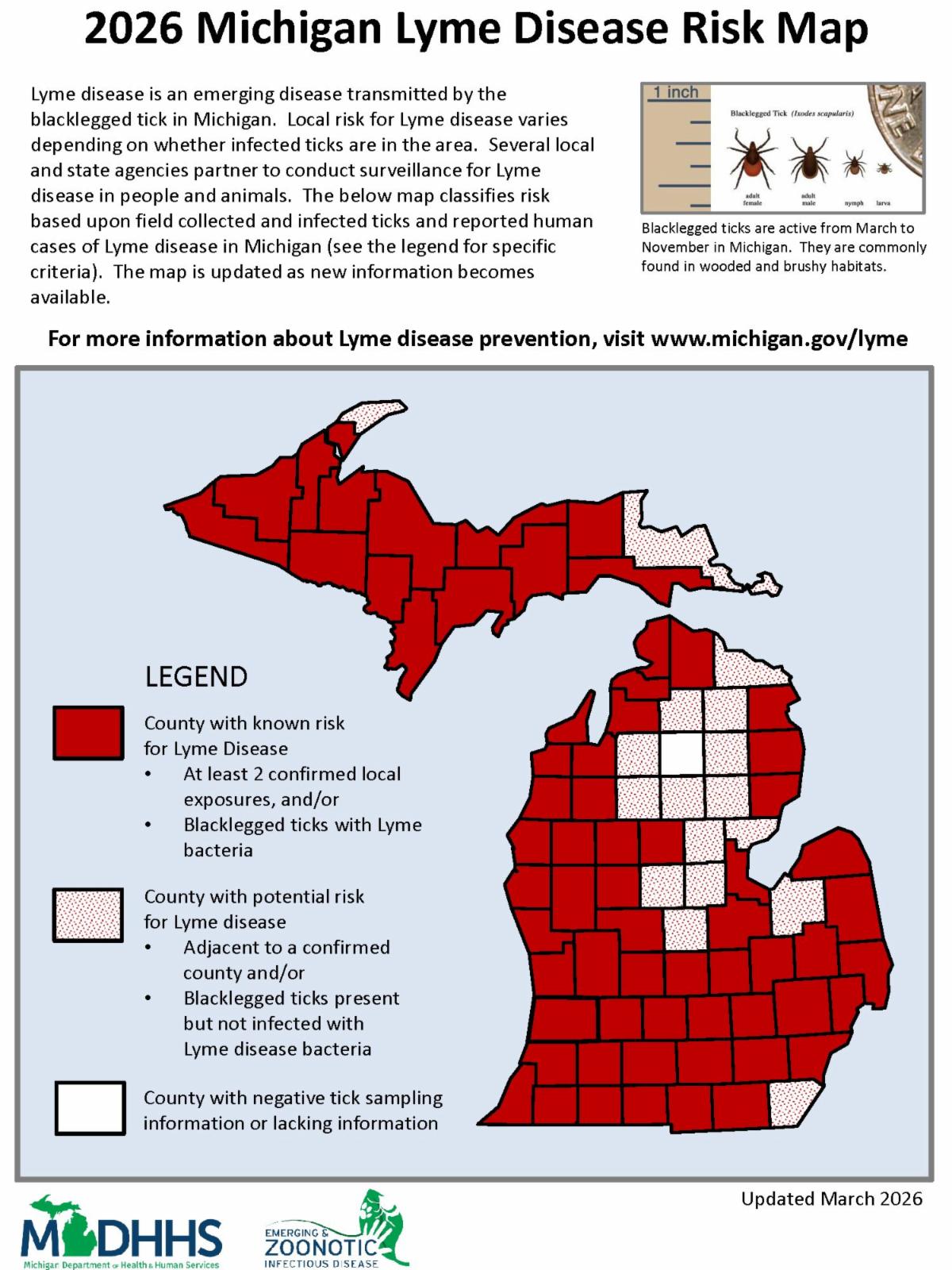
Mosquito and tick-borne diseases are a yearly concern in Michigan, posing risks to human and animal health. For Michigan data on mosquito-transmitted viruses, visit: Arbovirus Summary 2025.
Ticks have been emerging already and we have seen a few cases of Lyme disease in March. Although tick exposure can occur year-round, they are most active from April to September.
To report Vector-Borne Illness, call your local office:
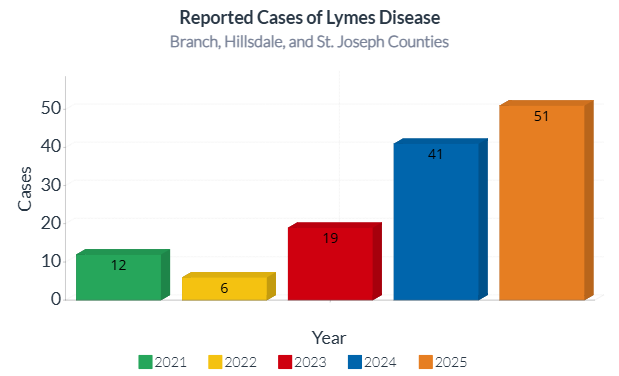
In the jurisdiction lyme disease cases have increased substantially over the latest five-year period. Reported cases declined from 12 in 2021 to 6 in 2022, then rose sharply to 19 cases in 2023. This upward trend continued, with cases more than doubling to 41 in 2024 and increasing further to 51 in 2025.
Overall, Lyme disease cases increased more than fourfold from 2021 to 2025, indicating a growing public health concern. The sustained rise since 2023 suggests expanding risk in the area and highlights the need for continued surveillance, provider education, and public prevention efforts.
Inclement Weather Preparedness
Prepare your business for a tornado.
Develop an emergency plan: Include details on suitable places to take shelter, policies to ensure all personnel are accounted for, and procedures for addressing hazardous materials on-site.
Identifying Shelter Locations
An underground area, such as a basement or storm cellar, provides the best protection from a tornado. If an underground shelter is unavailable, consider the following:
Seek a small interior room or hallway on the lowest floor possible
Stay away from doors, windows, and outside walls
Stay in the center of the room, and avoid corners because they attract debris
Rooms constructed with reinforced concrete, brick or block with no windows and a heavy concrete floor or roof system overhead
Avoid auditoriums, cafeterias and gymnasiums that have flat, wide-span roofs.
Accountability Procedures
The following steps are recommended to help ensure the safety of personnel if a tornado occurs:
Develop a system for knowing who is in the building in the event of an emergency
Establish an alarm system to warn workers
Test systems frequently
Develop plans to communicate warnings to personnel with disabilities or who do not speak English
Account for workers, visitors, and customers as they arrive in the shelter
Use a prepared roster or checklist
Take a head count
Assign specific duties to workers in advance; create checklists for each specific responsibility. Designate and train alternates in case the assigned person is not there or is injured
-Stay informed: Monitor tornado watches and warnings, and be aware of the dangers of rapidly increasing wind speeds, dark and greenish skies, large hail and a loud roar.
Tornado WATCH: Means tornadoes are possible in and near your area. Be Ready to act fast!
Tornado WARNING: Means Take Action! A tornado is near. There is danger. Move to a safe location right away.
The links below provide a summary of changes. Also attached is a updated resource that clarifies the reporting of select respiratory viruses in Michigan. All documents can be found under “Communicable Disease Reporting in Michigan” at www.michigan.gov/cdinfo.
For inquiries regarding reportable diseases, reach out to Heidi Hazel, Director of Personal Health & Disease Prevention, at 517-279-9561 ext. 143.
Communicable Disease:
Measles: As of March 19th, 1487 confirmed cases were reported in the US for 2026. For the full year of 2025, a total of 2,280 cases were confirmed.
Recent outbreak in Washtenaw County
Washtenaw County Health Department (WCHD) is confirming a seventh case of measles in an unvaccinated child who was a close contact of the first case reported on March 11. Unfortunately, this most recent case may have exposed others at a local health care facility.
Additionally, the suspect case announced on March 21 is now a confirmed case. This means the
public exposure locations for March 17 (Washtenaw Community College and Kroger on Whittaker Rd) are confirmed as possible measles exposure locations.
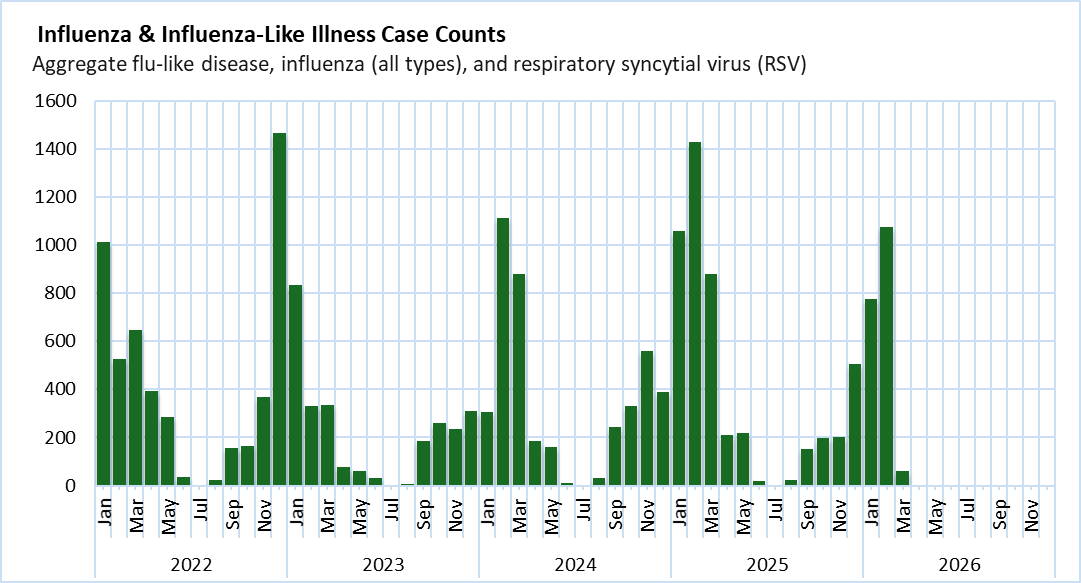
Influenza and respiratory illness cases, including RSV, show a consistent winter peak each year, mostly between December and March. The largest surge occurred in early 2024, while 2023 was milder. Early 2025 trends indicate a typical flu season onset. These Patterns highlight the need for timely vaccination and continued vigilance for flu and RSV during the winter months.
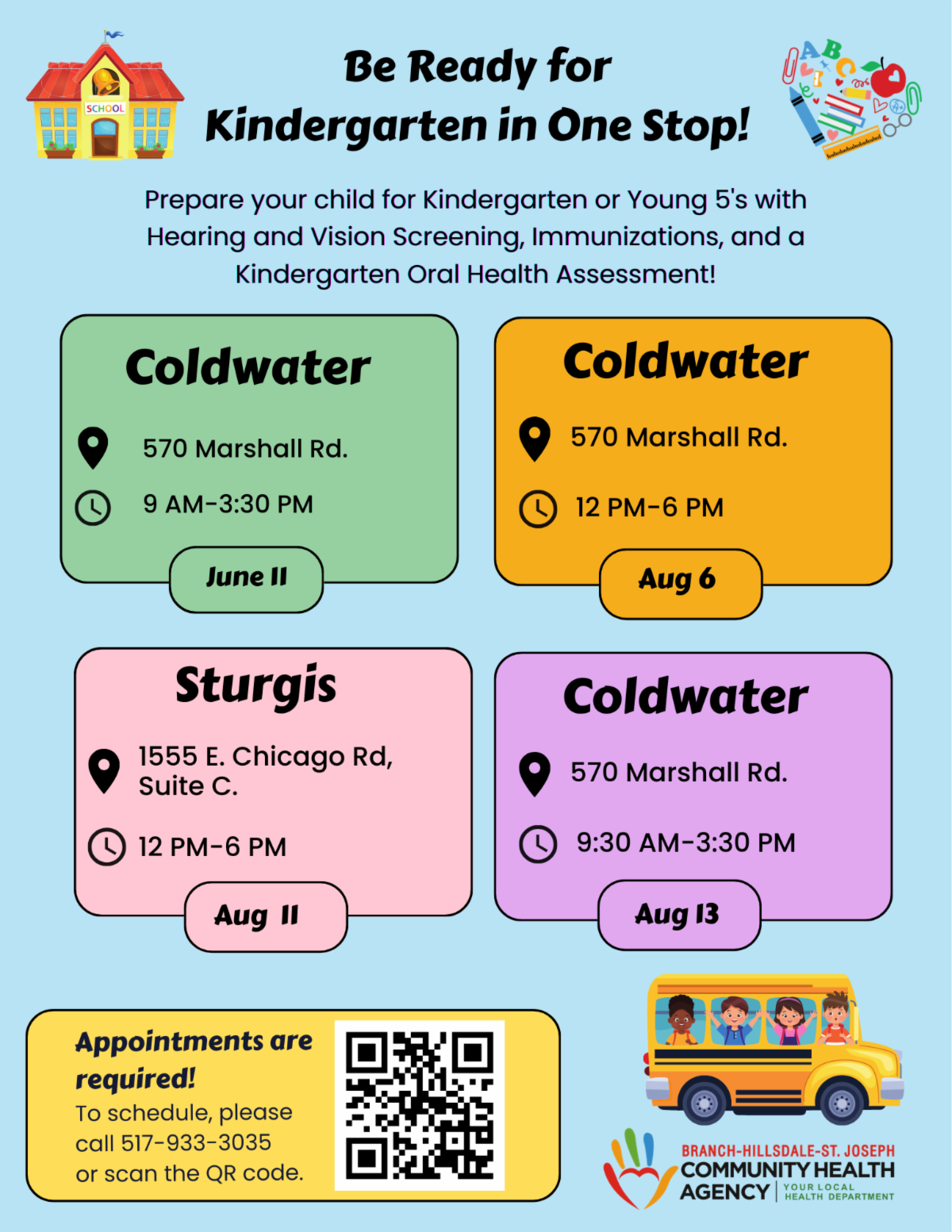
Be Ready for Kindergarten in One Stop
Please share this flyer with families who have children entering Kindergarten or Young 5's. We will offer Hearing and Vision Screenings, Immunizations, and Kindergarten Oral Health Assessments on the dates and at the locations mentioned.
In October 2023, two laws were passed that require physicians to: (1) test, or order a test, for lead in blood of minors at selected ages and with certain risk factors, and (2) ensure that test results are available in minors' certificates of immunization. Children must be tested at 12 months and 24 months of age or by 72 months of age (age 6) if there is no record of a previous test. If the child lives in one of the 82 high risk cities or townships, they must also be tested at 48 and 60 months of age.
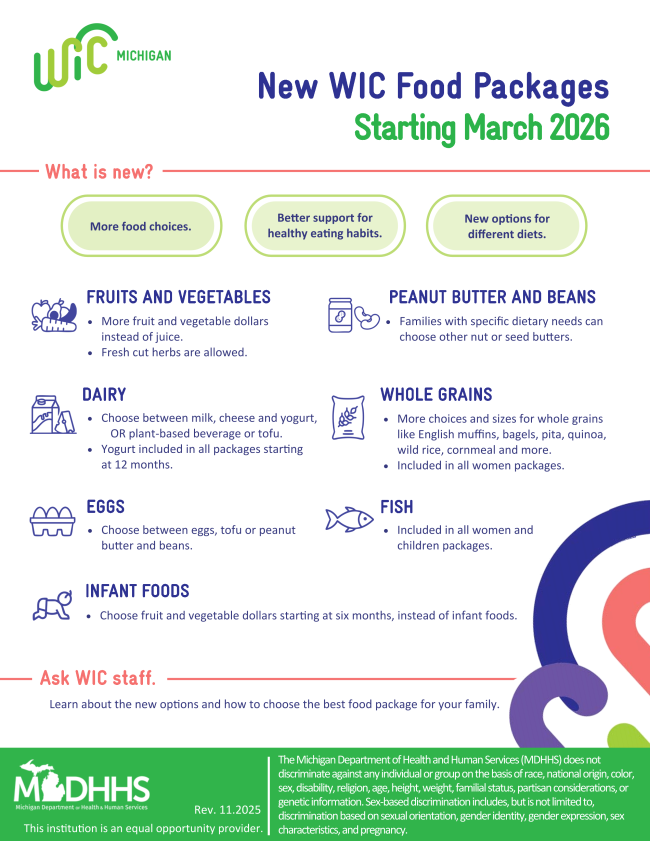
The new WIC Food Package launched in March 2026, offering more food choices, stronger support for healthy eating habits, and new options for various diets.
Our agency promotes and refers families to the Early On program, which supports infants and toddlers (birth to age 3) who may experience developmental delays or disabilities. The program focuses on development in key areas, including:
- Physical: Reaching, rolling, crawling, and walking
- Cognitive: Thinking, learning, and problem-solving
- Communication: Talking, listening, and understanding
- Social-Emotional: Feeling secure and playing with others
- Self-Help: Eating and dressing
Early On partners with families to use their daily routines to encourage their children's growth and development.
The Overdose Prevention Engagement Network (OPEN) - Clinician to Clinician Consult Service
OPEN supports primary care, community providers, and hospital staff in Michigan who are managing patients with substance use disorders or complex pain.