New Climate and Health Data

Preview of the cold-related illness data report.
 

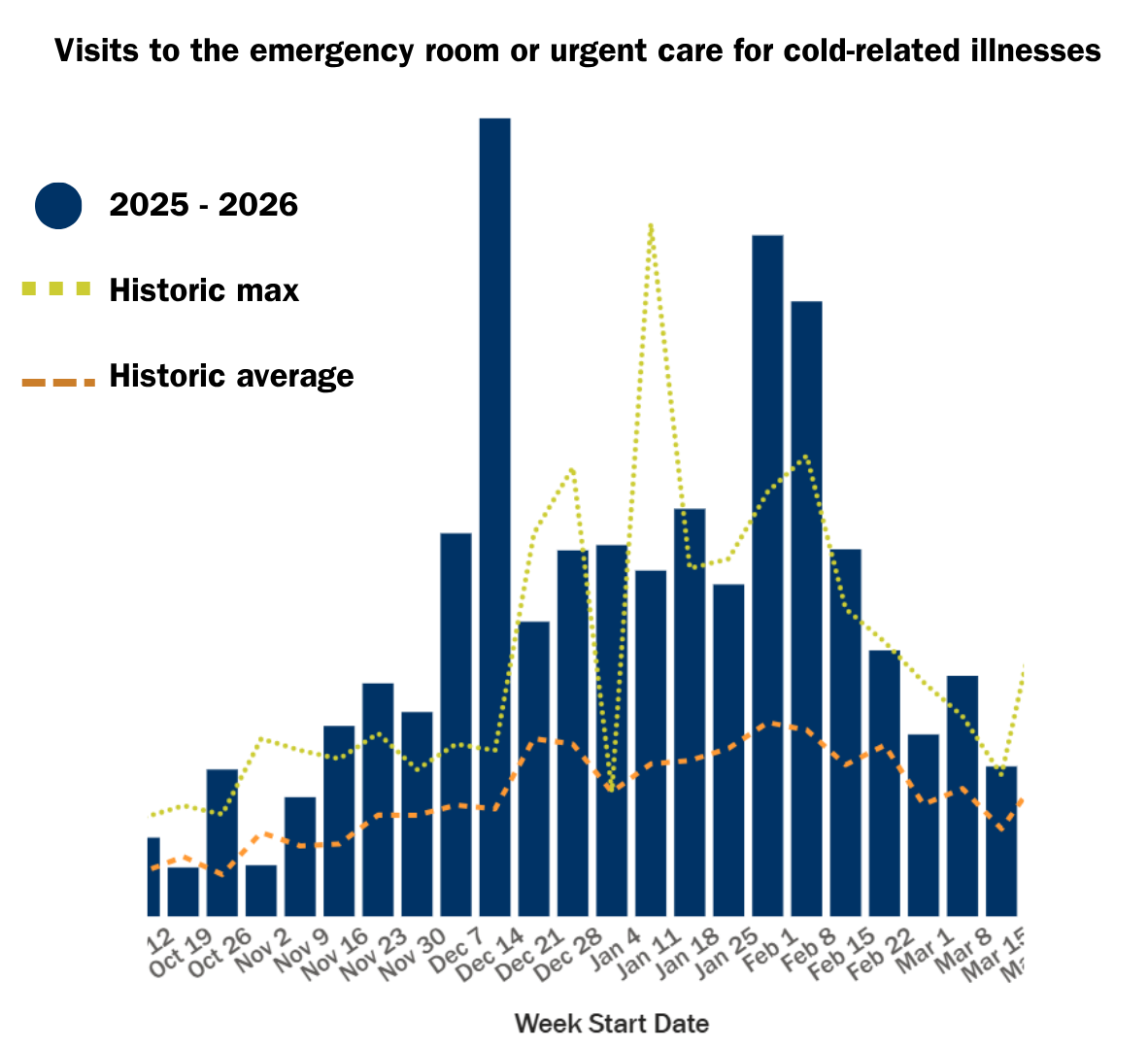
Vermonters are just coming out of a long, cold winter - and our newly updated cold-related illness report shows the health impacts. This winter, visits to the emergency department for cold-related illness were higher than average almost every week. In some weeks, the number of visits more than doubled compared to previous years.


There's more to this data than emergency department visits. Our 2025 season summary shows that some populations, like American Indian and Black or African American Vermonters are seeking care for cold-related emergencies at higher rates. The data also shows that unhoused Vermonters make up about 29% of all cold-related illness visits.


Extreme weather of all kinds has serious health effects for people experiencing houselessness. The new Heat & Houselessness Storytelling Project features real stories of unhoused people living with climate-related impacts.


Explore both cold- and hot-related illness reports and season summaries on our Climate and Health page.


It's Pollen Season!

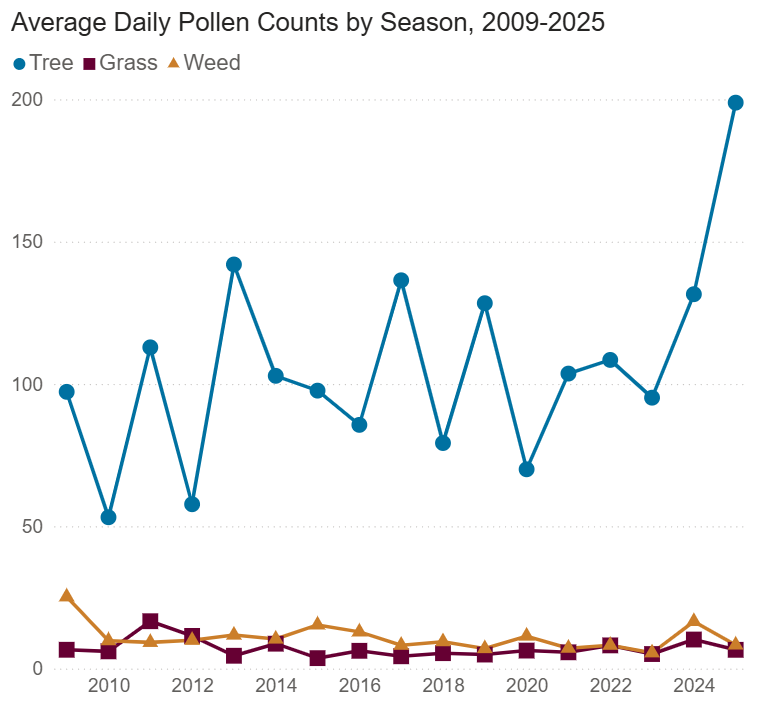
Despite a snowy start, we're finally seeing some signs of spring in Vermont: rain, mud, and...sneezing? If your allergies have been acting up, it's not just you. Tree pollen counts have spiked in recent years, rising from an average count of 95 in 2023 to 199 in 2025. Thanks, climate change! Factors like changing yearly temperatures, precipitation and the amount of carbon dioxide in the air affect the timing, length and severity of pollen season.


Learn more and keep an eye on pollen counts with our Pollen Tracker.

Happy Healthy Homes Month!

Graphic of a green house on a blue background.

Whether you're spring cleaning or redecorating, April is a great time to make sure your home environment is as healthy as it is welcoming! Follow these tips this National Healthy Homes month:

New Home for Some Tracking Reports

Have you noticed that some of our reports have found a new home? This past winter, we worked with the Health Department's Health Statistics & Vital Records division to combine related pages, so that data by topic is available and easy to find all in one place. You can find these Tracking reports in their new homes with more topic data from across the Department:

To explore all the data the Health Department has to offer by topic, check out our A-Z Data Library:

About Environmental Public Health Tracking

The Vermont Tracking Program is part of a nationwide network of partners funded by the CDC. At the local, state, and national levels, the Tracking Program uses a network of people and information systems to deliver a core set of health, exposure, and hazards data, information summaries, and tools to enable analysis, visualization and reporting of insights drawn from data.

Follow Us!

Facebook  Instagram  LinkedIn  YouTube