|
April 2025 | Issue #163
*make sure to click "View entire message" to get access to the full newsletter!*
| | | |
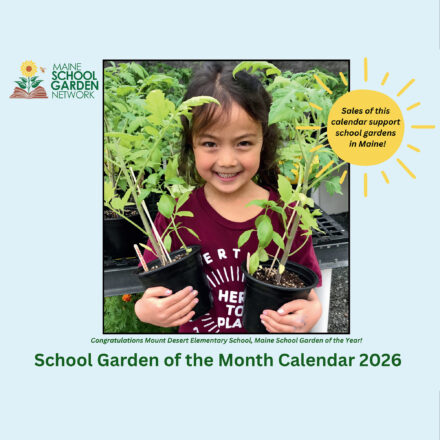
The Maine School Garden Network is now taking orders for their 2026 School Garden of the Month Calendar, a new fundraiser to benefit both MSGN and Maine school gardens across the state.
The 12 School Gardens of the Month featured in the inaugural 2026 calendar have been selected from photographs entered by Maine school gardens who are listed in MSGN's online Garden Directory. The calendar includes a fun fact about each school garden, monthly gardening tips plus events and programs. Order one for yourself or gift to a friend!
Calendars are available for purchase on the MSGN website as well as participating businesses and school gardens across the state with a suggested retail price of $15 each.
| |
| |
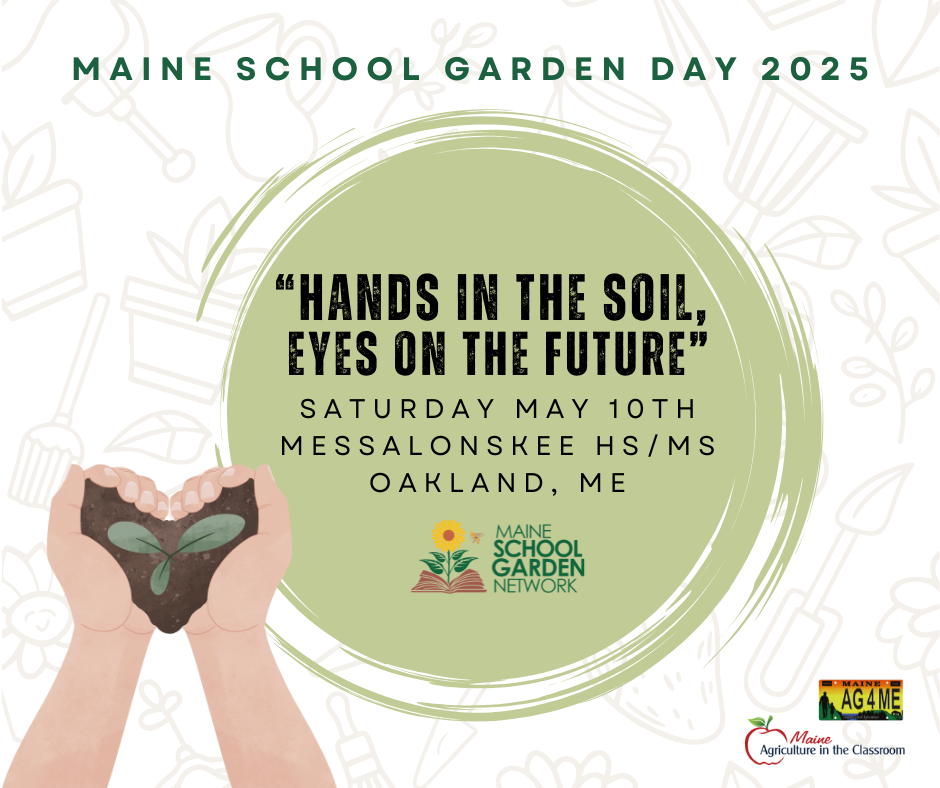
Maine School Garden Day 2025 | | | | | |
Maine School Garden Day 2025
Saturday May 10th
Messalonskee HS/MS, Oakland, ME
Hands in the Soil, Eyes on the Future
This year’s event theme, inspired by Maine’s Year of Youth in Agriculture, celebrates the impact of school gardens in shaping future farmers and land stewards. Join us to connect, learn, and grow with fellow educators and garden leaders! (6.5 contact hours for educators)
For a full event description and to register, please visit the event page.
| | |
|
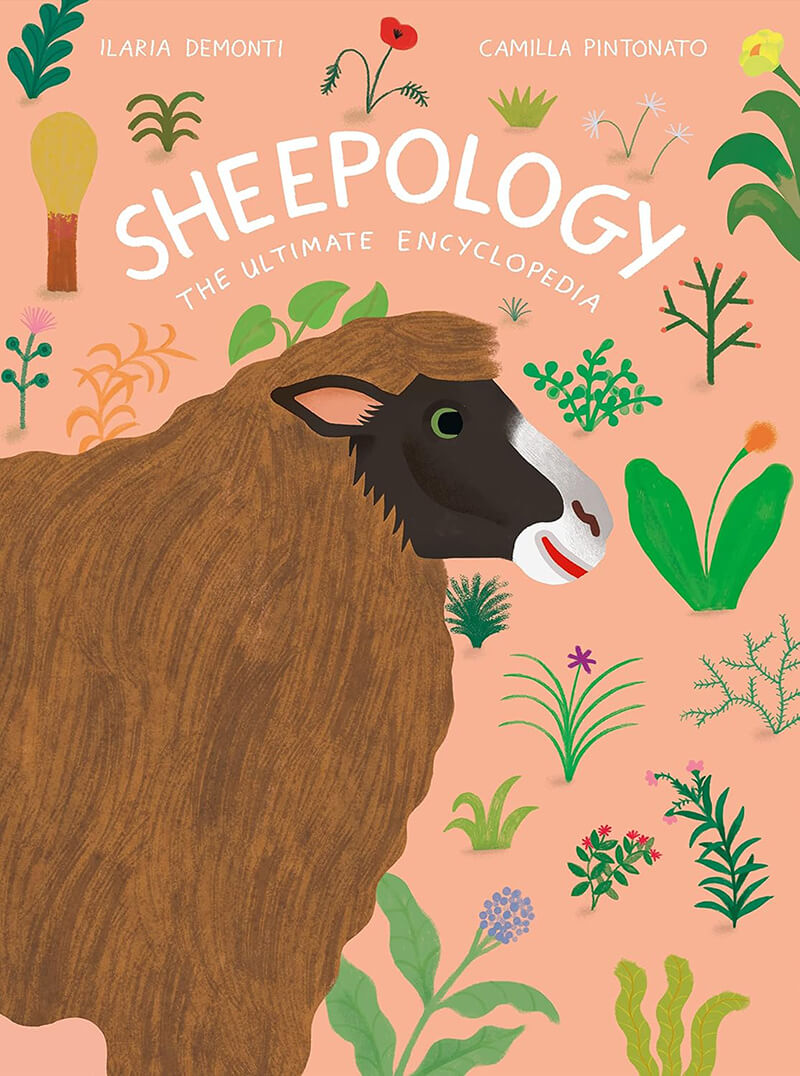
Also at Maine School Garden Day will be the author of this year's Read ME Agriculture book, Jacqueline Briggs Martin!
Jackie will share her presentation on "Rooting for Stories" and sign copies of her books, including Farmer Eva's Green Garden Life, if you bring your copies to the MAITC table.
| | | |
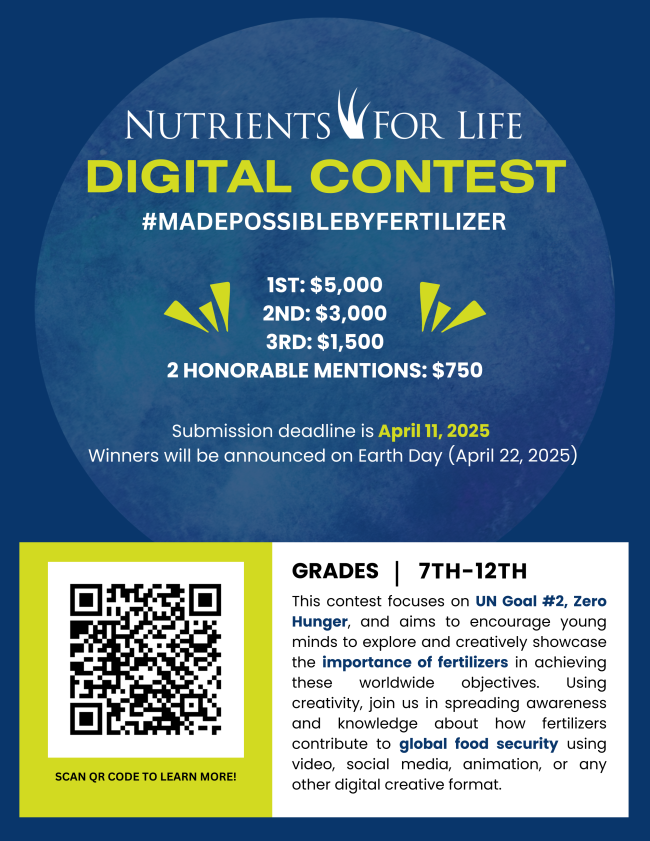
Nutrients for Life, a program dedicated to providing educational resources that promote soil science, is excited to announce an engaging digital contest designed to inspire middle and high school students. It encourages students to explore the vital role fertilizers play in addressing global food security and achieving the United Nations' Sustainable Development Goal #2: Zero Hunger.
Theme: #Madepossiblebyfertilizer
Who: Classrooms in grades 7-12
Prizes:
- 1st Place: $5,000
- 2nd Place: $3,000
- 3rd Place: $1,500
- Two Honorable Mentions: $750 each
Submission Deadline: April 11, 2025
Winners Announced: National Earth Day, April 22, 2025
For more information, click here.
| |
| |
Growing Your Community Challenge | | | |
There is still time left to participate in the Spring 2025 Purple Plow Challenge- Growing Your Community!
Often, we think of individuals that are living with food insecurity to be homeless or easy to identify, yet they could be your neighbor or even a classmate. Are you ready to help solve this problem? In this challenge, students will assess their local food system and create a solution to help minimize food insecurity in their community. The final product will be a functioning soil-based growing space for edible plants and products to benefit the area's food system, with an emphasis on community partnerships.
Entries are due on May 2nd and winning teams get some awesome prizes! Learn more or submit your challenge entry here.
| |
Virtual Webinar:
Investigating the Impacts of Climate Change on Growing Conditions Through the Use of Data and Hands-on Activities
April 17 | 12pm | Virtual
Education staff from The Gulf of Maine Research Institute will share their experiences using data visualizations with educators and young people to investigate patterns and changes in the environment that affect our ability to grow food. They will also share resilience-based curriculum resources related to maple production and potato farming that can be used both in and out of school settings.
Hosted by the Farm-Based Educators Network and Shelburne Farms
Register Here.
| |  | |
Curriculum Workshop: Predators and Prey in a Warming Gulf of Maine
April 29th | 4pm-8pm | Surrey, ME
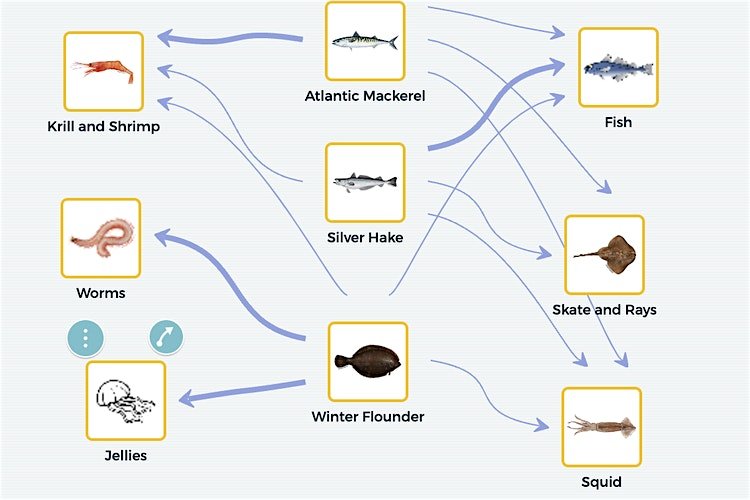
How are warming ocean temperatures impacting fish species in the region? How do scientists study changing predator/prey relationships throughout this complex ecosystem? Investigate these questions and more as you learn about a new NGSS-aligned middle school curriculum based on ongoing research being conducted by researchers at The University of New Hampshire and the Gulf of Maine Research Institute.
Participants will experience hands-on and interactive lesson activities, engage with data-based learning and develop an ecosystem model. In addition to middle school students, resources from this module are also relevant for high school science students. Check out the full curriculum module here.
Participating educators will receive a $100 stipend, mileage reimbursement, dinner and contact hours.
| | | |
Maine 4-H Agriculture Symposium | | | |
Dates: April 21-22, 2025
Location: University of Maine Orono
The 4th annual 4-H Agriculture Symposium is an overnight experience for Maine youth ages 14-18. Participants will take part in hands-on learning opportunities, engage with industry professionals on the University of Maine Orono campus, develop leadership skills, and make friendships with teens from around the state.
Youth will participate in hands-on learning experiences like laboratory examinations of parasites related to animal health, exploring cellulose nano materials from tree pulp at the Process Development Center, a fun activity with Maine Bound Adventure, and much more!
Current 4-H membership is not required. Assistance with transportation may be available upon request.
Current 4-H members can REGISTER HERE.
New 4-H members can REGISTER HERE.
For questions regarding the registration process, please email here.
For more information or to request a reasonable accommodation, contact Alisha Targonski, 207.622.7546.
| | |
Harvest of the Month - March is Maine Dairy! | | | |
Lessons
A Taste of Leafy Greens. Students will explore a variety of greens to identify their structure and function in plant growth and prepare, cook, and differentiate, and enjoy the health benefits leafy greens have to offer. Grades K-2.
The Soil We Grow In. Grades K-2. Students determine the importance and complexity of the Earth’s soil.
Caring For the Land. Grades 3-5. Students explain why people have different opinions regarding soil management and identify cause and effect relationships relating to agriculture and the environment
Tropism Twist. Students investigate how light affects plant growth by observing changes in a plant’s growth and movement as light availability is altered through an experiment. Grades 3-5
The Quicker the Better? Food Processing. Students explore different levels of food processing and the ways in which processed foods affect the health of our diets by looking at examples of foods from the grocery store and by closely examining food labels. Grades 3-5
Backpack Garden. Through project-based learning, students use school resources to construct and grow a school garden to supplement the school Backpack Program with fresh fruits and vegetables. Grades 3-5
Aeroponic Engineering and Vertical Farming. Students will use the Engineering Design Process to develop and construct an aeroponic garden to grow a food crop. Students will develop and apply an understanding of plant anatomy and physiology related to plant growth and ultimately discuss the possibilities and limitations of using vertical farming to produce our food. Grades 6-8
Weighing in on Egg Labels, Supply, and Demand. Students will apply a basic understanding of the laws of supply and demand, learn about different types of egg laying farms, and recognize the impact labeling has on consumer choices. Grades 9-12
Looking for more? Explore the Agricultural Literacy Curriculum Matrix HERE
| | |
Slicing Up Earth's Land Resources
How much land is available on Earth to grow the food we eat? No matter how you slice it, agricultural land is a limited resource. This demonstration uses an apple to represent the Earth.
| | | |
If Earth Was an Apple
Just a small percentage, only 3%, of our Earth's surface is available for farmland. Click the video to learn exactly how much land is available, and this lesson is in the free curricula in lesson 5 of the middle school and high school versions.
| |
Resources
Conservation Word Scramble. Check out this learning activity. Farmers care for the land. Use the clues to help unscramble each word!
Keys to Stewardship. Online game from My American Farm. In this game solve a series of tangrams and discover the cool way farmers and ranchers are stewards of our natural resources and wildlife.
Pollinator Garden E-Comic. Pollinators are very important for a healthy Earth! Learn all about pollinators and what they do in this eComic!
Garden Activities for Earth Day. From Kidsgardening.org. Every day should be Earth Day! How can we expect the next generation to care for our environment if they have little interaction with the natural world we are asking them to protect? These activities highlight some garden-related fun that helps kids get motivated to protect our planet.
Four Ways Farmers Steward the Land. These are just a few examples of how farmers steward the land by using soil conservation practices. Farmers work hard to keep the land and soil healthy now and for future generations. They know their actions affect the environment. No one is closer to the earth than farmers and it is important to them to care for the land, water and natural resources.
Maine DOE Climate Education Page. Did you know the Maine Department of Education has a climate education specialist? To learn more about Teddy Lyman and climate education in Maine, visit the Climate Education web page.
Nutrients For Life Kahoot Games. Our Earth is our most vital resource, providing all we need to live. It's important we protect it for today and for the future! Treat your students to some fun using the following Kahoot! games created for Earth Day. Kahoot 1. Kahoot 2. Kahoot 3.
| | |
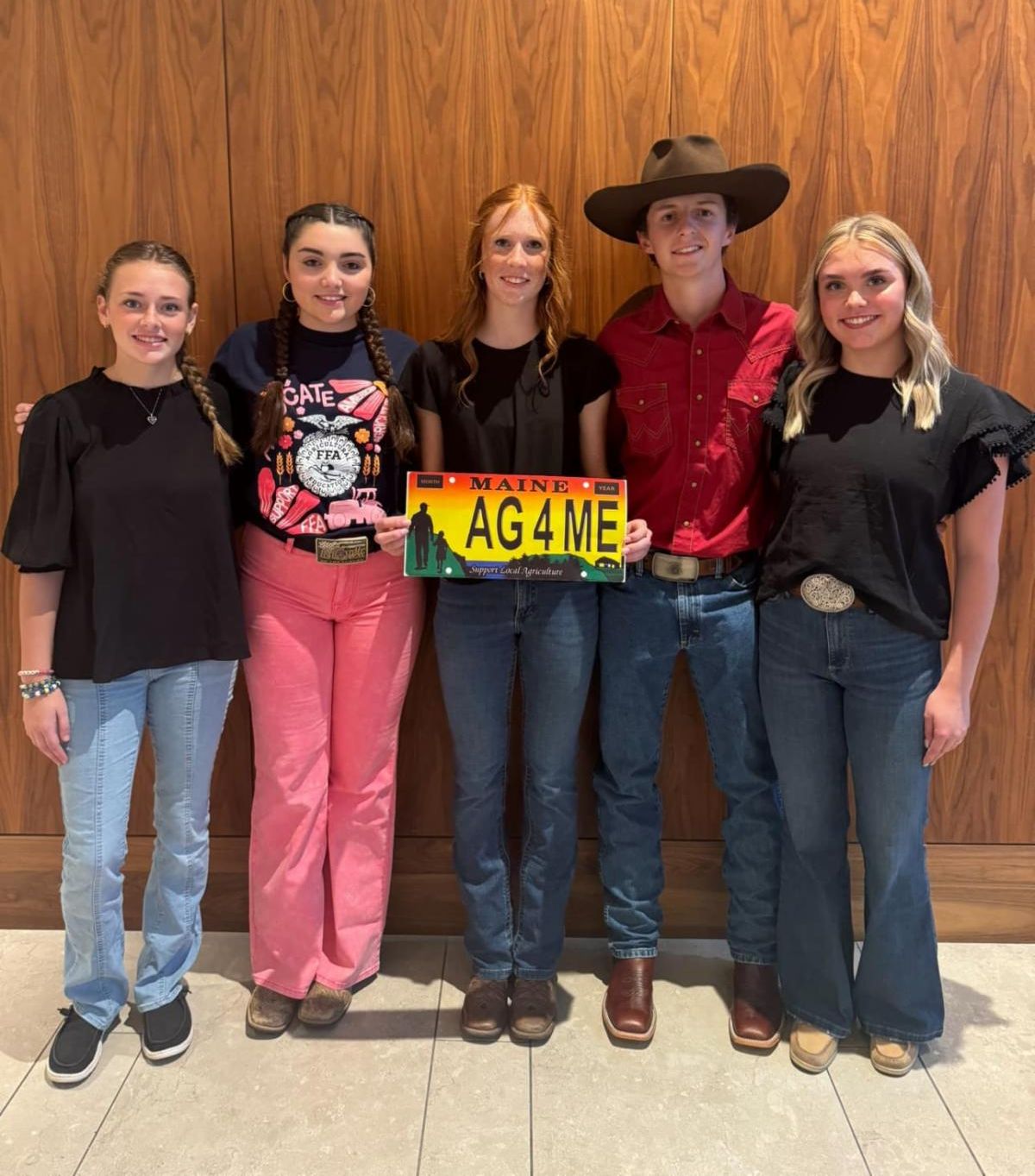
Funding from this plate has impacted up to 200,000 students annually with lessons, materials, volunteers and teacher training. Annually up to $60K is distributed in grants to schools, FFA, 4-H and other Non-profit programs for Ag education initiatives by the Maine Agriculture in the Classroom Council.
| | |
Donate today to The Maine Agriculture in the Classroom Association. The nonprofit, completely volunteer, portion of MAITC. These funds are used directly to support teacher scholarships and recognition, and support volunteer participation for Ag education programs. Your donation is completely tax deductible and you can make a one-time donation or a recurring monthly donation which will support the mission, "to promote the understanding of agriculture and natural resources among students, educators, and the general public." If you have any other questions or would like to join this group please contact the chairman, Laurie Bowen. Donate Here.
| | |
|
The MAITC Association is organizing a fundraiser for materials and teacher scholarships this year. Hats and T-shirts with the MAITC logo and a picture of the agriculture specialty license plate are available to order for a small donation.
For more information contact Nancy Wright at dnwright191@gmail.com
| | |
Our Mission Statement
"To promote the understanding of agriculture and natural resources among students, educators, and the general public"
| | | |
28 State House Station
Augusta, ME 04333
(207)287-5522
| |
| | | |