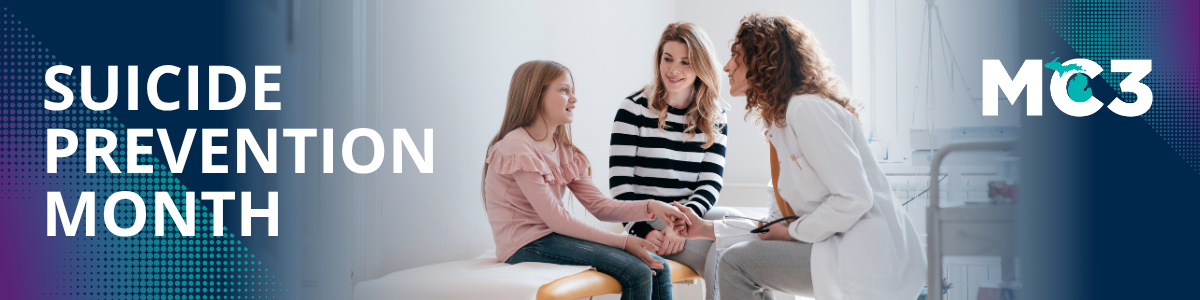
Suicide Prevention Month header with image of a doctor comforting a teen patient next to her mother.
 

During Suicide Prevention Month, we are invited to move toward connection and coordinated action to make an impact on the lives of youth at risk and their families. Every team member, from clinicians to staff to community members to families, has a role in keeping youth safe.


Partnering with families and communities strengthens the youth's safety net and infuses the voice of lived experience. As clinicians, we have made great strides by following the Zero Suicide framework, sharing 988 and crisis services, and adopting universal screening and safety planning. Yet we must continue to work together to improve our practices.


This important work requires continued education, risk screening delivered consistently and compassionately, and clear processes for assessment, safety planning, and mental health referral. To guide you through this process, we developed a five-part Youth Suicide Prevention Video Series designed to help you effectively and empathetically start the conversation about mental health with your patients. Learn more about this series below.


When we ask directly, listen without judgment, and collaborate on assessment and treatment, we replace stigma with hope and a better tomorrow.

Nasuh Malas, M.D., M.P.H.

MC3 Emergency & Crisis Services Clinical Lead

Clinical Professor

U-M Department of Psychiatry & Department of Pediatrics


For assistance with supporting a specific patient, request a consult with MC3 psychiatrists by phone or online.


If you or someone you know is experiencing a mental health crisis, call or text 988 immediately. 

Youth Suicide Prevention Video Series

Video 1: Suicide Risk Screening

with Dr. Lia Gaggino


Learn about the prevalence and severity of suicide risk among youth and how to use evidence-based risk screening and assessment to mitigate risk.


Video 2: Risk Assessment

with Dr. Lia Gaggino


Learn how to effectively use suicide risk assessment tools through case examples and scripted "patient" conversations.


Video 3: Safety Planning

with Dr. Alejandra Arango


Learn about the role of safety planning and caregiver involvement in youth suicide prevention with scripted "patient" conversations.

Preview of Youth Suicide Prevention video 3.
 

Video 4: Lethal Means Safety

with Dr. Alejandra Arango


Learn about the importance of lethal means safety counseling, safe storage or removal, and strategies for communicating with caregivers through scripted "caregiver" conversations.

Preview of MC3 Youth Suicide Prevention video 4.
 

Video 5: Emergency Department and Hospital Considerations

with Dr. Nasuh Malas


Learn about the importance of coordinated care efforts and how to use evidence-based strategies in an ED setting to provide personalized care to youth experiencing suicidal ideation.

Preview of MC3 Youth Suicide Prevention video 5.
 

Resources

Depressed teen sitting with her head in her hand being comforted by a person sitting next to her.

MC3 Pediatric Resource Library: Suicide & Risk of Harm Resources

Geared toward pediatricians and family medicine providers, this toolkit includes handouts for families, screening tools, treatment guidelines, and recommended websites for preventing suicide and self-harm.

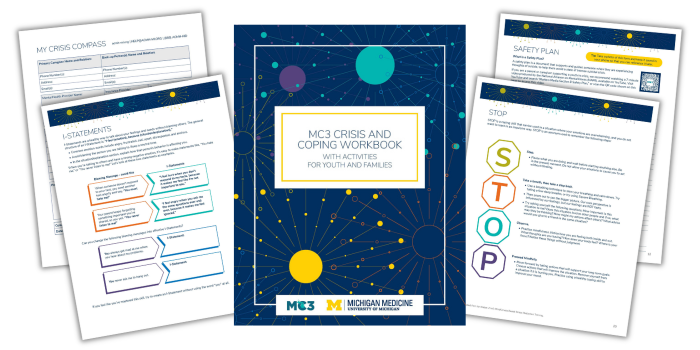
MC3 Crisis and Coping Workbook

A practical workbook designed for youth and caregivers navigating a mental health crisis, with resources including a Crisis Navigator Guide & Crisis Compass Form, safety plan, coping skills, and activities.

 
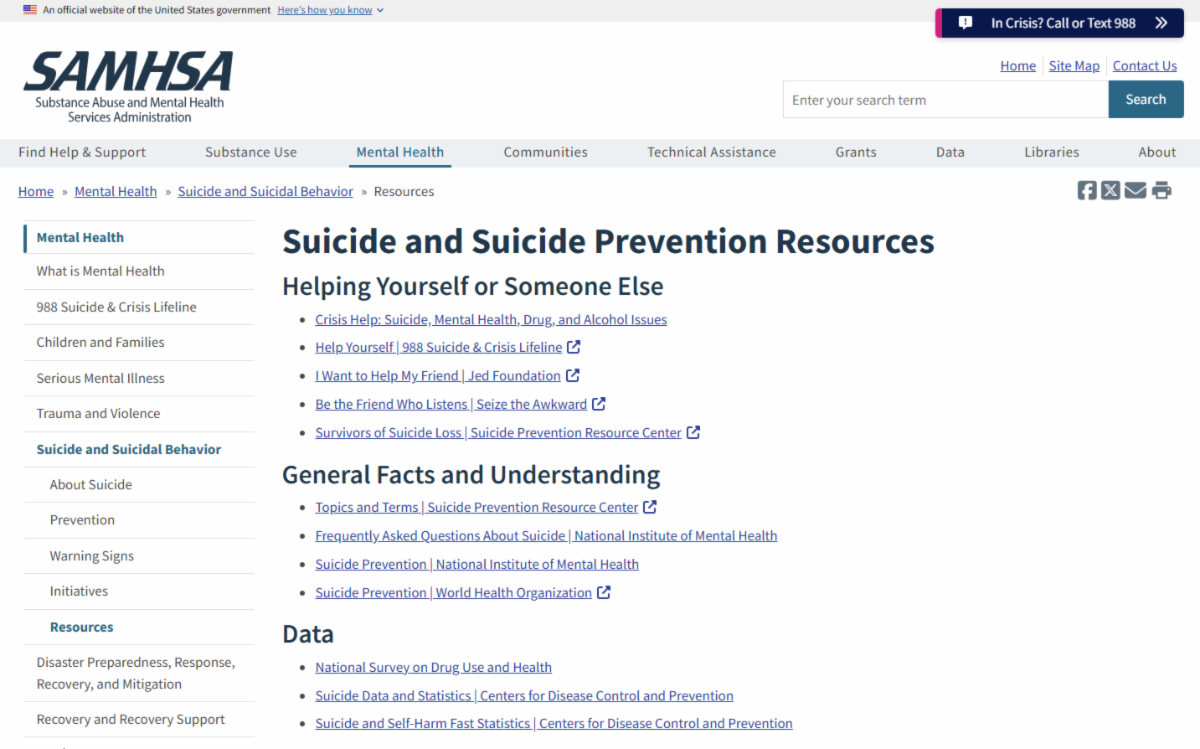
Preview of SAMHSA resources page.

SAMHSA Suicide Prevention Resources

A collection of resources to support and inform suicide prevention, including guidance for providers, resources for youth and specific populations, and data on suicide.

988 logo.

Free 988 Suicide & Crisis Lifeline Materials

The 988 online store offers free informational materials, including stickers, magnets, posters, and window clings, to remind patients that help is available 24/7 by texting or calling 988.


We invite you to share these resources with other providers, healthcare professionals, colleagues, and parents. We all play a role in saving lives.


MC3 is part of the Michigan Medicine Department of Psychiatry and is funded by the Michigan Department of Health and Human Services (MDHHS) via general funds, Medicaid Administration funds, and Health Resources and Services Administration (HRSA) funds.

Michigan Medicine Department of Psychiatry logo