|
Please share this edition of Wildlife Highlights with other outdoor enthusiasts
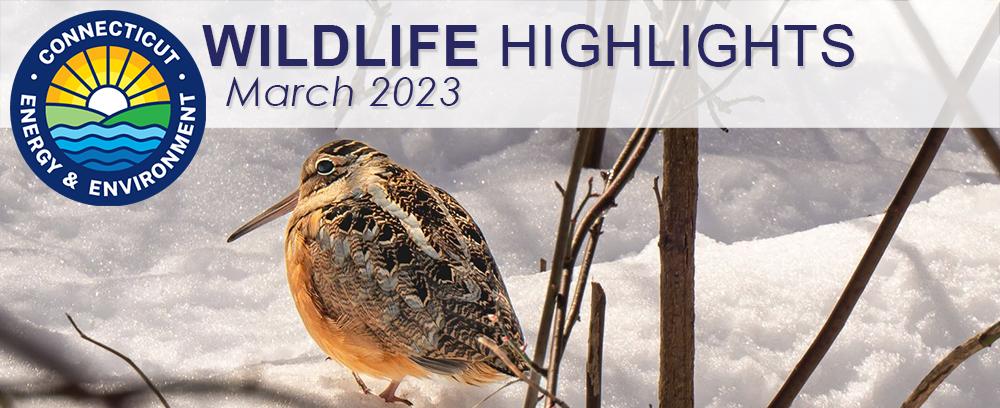
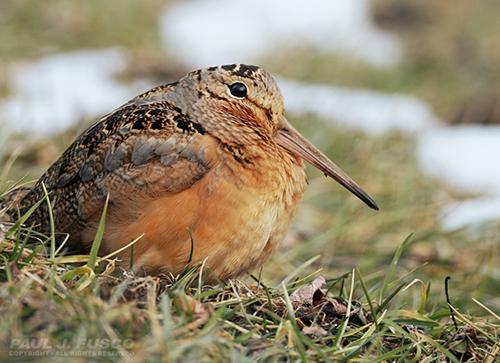
and help our subscription list grow! American woodcock photo courtesy of Catherine Angiolillo.
| |
The State of the Bears Report | |
|
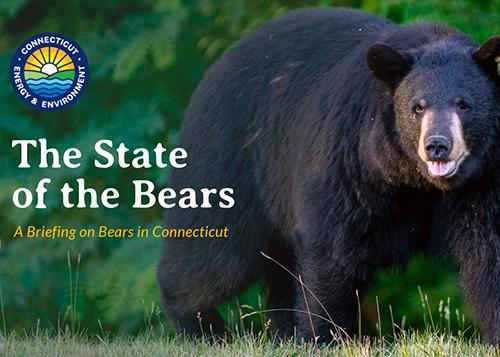
Connecticut’s black bear population continues to increase, and it is important to know how to best coexist given their continued range expansion. The State of the Bears report provides the most up-to-date information on Connecticut’s growing black bear population.
As we make the transition to spring, black bears will soon become more active. It is important to properly manage birdfeeders, garbage, and other attractants with bears in mind. Access to these food attractants directly leads to habituation and increased bear activity around homes. The Wildlife Division advises residents to stop feeding birds by late March, but some residents may need to stop even earlier or all together if bears are active nearby. It only takes one warm spring day to cause bears to begin to stir. Be prepared. #BeBearAware.
A briefing on bears in Connecticut . . .
| |
Studying an Iconic Waterfowl Species | |
|
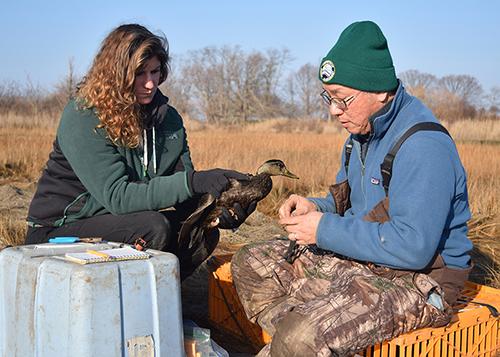
DEEP Wildlife Division waterfowl biologist Min Huang and Seasonal Resource Assistant Beth Amendola were out early last month banding mallard and black ducks. The Wildlife Division has been participating in winter banding for roughly 17 years. Banding waterfowl provides biologists with important information on waterfowl dispersal, lifespan, survival rates, and much more. Min and Beth are also testing wild ducks for avian influenza to monitor the prevalence of this disease that appeared in North America last year.
As part of a larger regional effort, Min and his crew are further studying black ducks by affixing select individuals with lightweight radio transmitters. Data gathered by the transmitters provide critical information on black duck nesting habitat use and reproductive success rates from their breeding grounds in the boreal forest region of Canada.
| |
Spring Is Around the Corner, Amphibians Will Soon Emerge | |
|
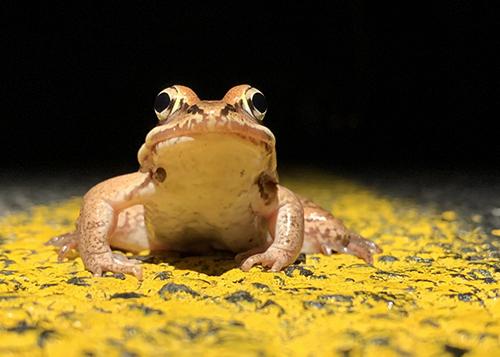
Several familiar amphibian species, including the spotted salamander and wood frog, are beginning to emerge. Due to mild winter temperatures this year, some residents have already heard the familiar sounds of wood frogs calling from the forest.
Many of the amphibian species that inhabit our state require temporary bodies of water, known as vernal pools, to breed. Despite most amphibians overwintering within just a quarter of a mile of their breeding pool, reaching the pool often requires them to cross roadways, which can be fatal due to motorists.
During warm, rainy spring nights, please keep your eyes on the road and look out for crossing amphibians. If you are aware of a migration hotspot, consider taking an alternate route to your destination or simply avoid traveling on smaller, wooded roads. You can also speak with your local town officials about installing amphibian crossing signs.
More on Connecticut's spring amphibians . . .
| |
Bats Count: Live Bat Cam and Celebration Coming Soon! | |
|
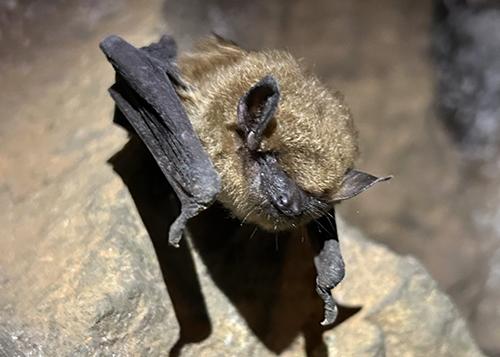
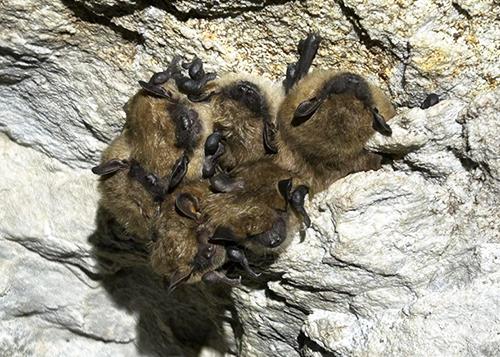
The DEEP Wildlife Division and White Memorial Conservation Center in Litchfield are working together to establish a "Bat Cam" in a barn at White Memorial where female big brown bats give birth to and raise their young every year. The Bat Cam, which is expected to be installed by April 2023 in time for the big brown bats to emerge from hibernation and take up residence in the barn, will provide a sneak peek into the amazing life of bats without disturbing them. An in-person ribbon cutting ceremony is planned for June 16, 2023, at the White Memorial Conservation Center. Join the celebration and watch the bats fly from the barn at dusk as they embark on their nightly feeding frenzy. Bat experts will be on hand and fun activities are planned. More details to come!
More on Bats Count . . .
| |
Deadline Approaching for Duck Stamp Art Contest | |
|
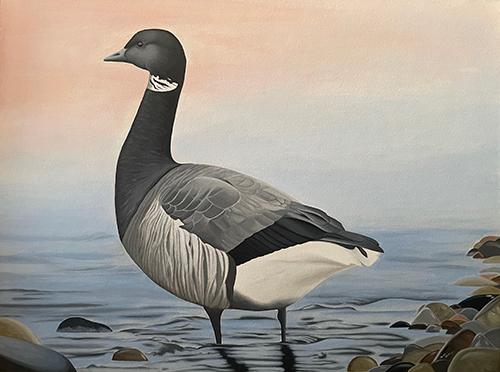
If you are planning to enter the 2023 Connecticut Junior Duck Stamp Art Competition, your entry must be postmarked by March 15, 2023. This is a great opportunity for Connecticut students, kindergarten through grade 12, to help raise awareness for waterfowl and wetland conservation! The “Best in Show”, in addition to being featured on the Connecticut Duck Stamp, will be entered into the National Junior Duck Stamp Contest, which is sponsored by the U.S. Fish and Wildlife Service (USFWS). Judging will take place later this month.
Last year, Sophie Archer's painting of an Atlantic brant (pictured) won "Best in Show" and is featured on the 2023 Connecticut Migratory Bird Conservation (Duck) Stamp. Whose artwork will be featured on the 2024 stamp? We will soon find out!
More on the Connecticut Duck Stamp . . .
| |
Providing Shelter for Chimney Swifts | |
|
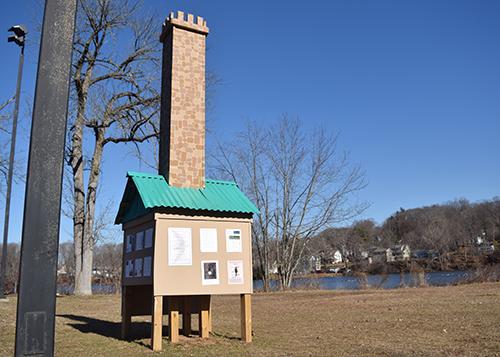
Chimney swifts are known for their amazing flight demonstrations in autumn, when they gather in enormous flocks around large chimneys before migration. However, these aerial insectivorous birds have been declining since the 1960s. The birds got some help in the City of Meriden with the construction of a new chimney swift tower at Habershon Field, which provides habitat for chimney swifts and other birds. The tower’s kiosk also features information about swifts and ways to help our environment.
The tower provides a nesting site for a family of chimney swifts in summer and a roosting site for an entire flock of swifts during migration. During winter, the tower and kiosk cavities are equipped with tree branches to offer roosting shelter for songbirds. The tower stands 14 feet tall and is designed to emulate Meriden’s famous Castle Craig Tower. Funding was provided by the Connecticut Ornithological Association and Hartford Audubon Society. The tower was constructed by local youth and volunteers from H.C. Wilcox Technical and Lyman Hall High Schools, Ball Headz, Gallery 53, and others.
A family of chimney swifts consumes about 12,000 flying insects per day! Swifts never stop flying except to roost at night or care for the nest. They put on a great show with aerial acrobatics and twittering songs as they feed on mosquitoes and other insects while in flight.
| |
Don't Let Tax Season Drive You "Batty" | |
|
Tax season is winding down, and if you have not yet filed your Connecticut state income tax, then there is still time to help support wildlife conservation in Connecticut by making a donation to the Endangered Species, Natural Area Preserves, and Watchable Wildlife Fund (listed as “Endangered Species/Wildlife” on your tax form). This dedicated fund has helped protect barn owls and iconic birds like osprey, funded research on sturgeon and banded sunfish, examined the emerging conservation threat of snake fungal disease, and more!
The “Bat Cam” project described above is being partially funded through this program to provide a Watchable Wildlife opportunity, while also serving as a monitoring tool for biologists and allowing students and others to follow along and learn about the secret life of an active big brown bat maternity colony.
More on the Wildlife Income Tax Check-Off Fund . . .
| |
Species Spotlight: American Woodcock | |
|
Despite its classification in the sandpiper family, the American woodcock, or "timber-doodle", inhabits young second-growth hardwood forests and open habitats, such as old fields, forest clearings, bogs, and blueberry fields.
Amongst the leaf litter of the forest floor, the woodcock is incredibly well camouflaged and can be very difficult to spot. This short-legged, plump bird uses its long bill to probe the soil in search of its primary food source, earthworms.
In late January and February, woodcock begin to migrate north, arriving in the Northeast from mid-March to early April to begin courtship and breeding. Shortly after their arrival, males begin performing courtship flights at dusk in forest openings called "singing grounds". The display consists of a series of spiraling flights interspersed with ground-strutting during which the male utters a nasal "peent" repeatedly. Each evening's activities may last 30 to 60 minutes and may consist of 10 to 20 such performances. The singing ground is a relatively open area containing scattered brush, small trees, and shrubs. Singing grounds have also been observed in grazed pastures and fields.
| |
|
Stay Connected!
Follow us on Social Media
| |
|
-- Quick Links --
Your Feedback Is Important to Us!
Send your comments or suggestions to deep.ctwildlife@ct.gov
|  | |
The Connecticut Department of Energy and Environmental Protection is an Affirmative Action/Equal Opportunity Employer that is committed to complying with the requirements of the Americans with Disabilities Act. If you are seeking a communication aid or service, have limited proficiency in English, wish to file an ADA or Title VI discrimination complaint, or require some other accommodation, including equipment to facilitate virtual participation, please contact the DEEP Office of Diversity and Equity at 860-418-5910 or by email at deep.accommodations@ct.gov. Any person needing an accommodation for hearing impairment may call the State of Connecticut relay number - 711. In order to facilitate efforts to provide an accommodation, please request all accommodations as soon as possible following notice of any agency hearing, meeting, program or event.
This program receives Federal financial assistance from the U.S. Fish and Wildlife Service.
Under Title VI of the 1964 Civil Rights Act, Section 504 of the Rehabilitation Act of 1973, Title II of the Americans with Disabilities Act of 1990, the Age Discrimination Act of 1975, and Title IX of the Education Amendments of 1972, the U.S. Department of the Interior prohibits discrimination on the basis of race, color, national origin, age, sex, or disability. If you believe that you have been discriminated against in any program, activity, or facility, or if you need more information, please write to:
Office of Diversity, Inclusion and Civil Rights
U.S. Department of the Interior 1849 C Street, NW
Washington, D.C. 20240
| | | | |