State Action on Data Centers Continues to Evolve ... and React | |
The conversation surrounding data centers in Oregon continues to shift rapidly.
With renewed urgency, Democratic lawmakers have announced plans to pursue a three-year moratorium on new large data center developments in Oregon. At the same time, Governor Tina Kotek's newly established Data Center Advisory Committee has begun meeting to develop recommendations intended to address the growing concerns surrounding these facilities, with findings expected later this year.
These developments reflect a growing recognition that the state must revisit the policies that have fueled rapid data center growth across Oregon.
It is important to understand how we arrived at this point. For years, the Oregon Legislature established the land use framework that encouraged data center development while repeatedly extending Enterprise Zone tax incentives that local governments were required to administer within state law. Earlier this year, the Legislature also enacted the POWER Act. While the legislation addressed important utility cost allocation issues, its implementation timeline created a 60-day window during which companies filed numerous applications seeking to preserve long-term tax abatements under the existing rules.
Local governments have had limited authority to respond beyond the tools provided under state law. Oregon law requires zoning amendments and development moratoria to follow a public legislative process with multiple hearings before they can be adopted. Communities cannot simply halt projects in response to changing public sentiment.
Recognizing concerns following a November 2024 land-use decision, the Forest Grove City Council acted in 2025 by updating portions of the City's development code and establishing separate electrical rate classes for residential and industrial customers. Under that structure, the data center under construction will pay an electric rate approximately 40 percent higher than the residential rate, while also funding the electrical infrastructure necessary to serve its property. City staff further negotiated changes to the project's cooling technology to significantly reduce water consumption.
The Council also allowed the City's Enterprise Zone Program to expire while evaluating stronger eligibility standards and public benefit expectations before considering future participation.
The Council has exercised every meaningful tool currently available under Oregon law to reduce the impacts of data center development and protect Forest Grove residents from unnecessary costs. Going further will require action by the Legislature and state agencies. The issues now receiving statewide attention—including utility costs, tax incentives, land use authority, infrastructure impacts, and long-term community benefits—are fundamentally matters of state policy.
As this discussion continues, I encourage residents to stay engaged. The decisions made in Salem during the 2027 legislative session will shape how Oregon balances economic development, energy infrastructure, environmental stewardship, and local control for years to come.
| |
References
Democratic lawmakers propose a three-year moratorium on new large data centers in Oregon. News in the Grove article.
The governor's Data Center Advisory Committee to begin crafting recommendations expected to be released next month. OPB article.
Remarks from a August 3 Salem City Council Special Meeting regarding Data Center moratorium & zoning code amendments. Video replay.
The articles below from previous newsletters provide additional background and context that remain relevant as this conversation continues to evolve.
| Local Control Protected Residents Before the POWER Act 7/3/26 | |
Action by the Oregon Public Utility Commission in June brought welcome news for Portland General Electric (PGE) utility customers, although PGE has already signaled resident rate increases since. However, Forest Grove residents have already benefited from decisions made locally, by the City Council.
The State Commission recently approved new electric rate structures for PGE that significantly increase rates for large data centers while modestly reducing costs for residential customers and small businesses. Forest Grove, however, is in a different position. Because our community owns and operates Forest Grove Light & Power, we negotiate its own wholesale power supply and establish local electric rates independent of PGE's rate structure.
That local control proved valuable.
In 2025, the City of Forest Grove established separate electric rate tiers for residential and industrial customers, before the passage of the POWER Act. Under that structure, the data center currently under construction will pay an electric rate approximately 40% higher than the residential tier. In addition, the company is responsible for funding the electrical infrastructure needed to serve its facility and modified its original cooling design to utilize a significantly smaller volume of water.
The city also took a measured approach to economic incentives. While a limited number of Enterprise Zone applications were approved by Washington County, the tax abatement is limited to five years. More recently, the Forest Grove City Council allowed the city's Enterprise Zone program to expire while it evaluates stronger eligibility standards, performance expectations, and public benefit requirements before considering any future participation.
Residents and small businesses should not bear the financial burden of serving exceptionally energy-intensive industries. The recent state action acknowledges that concern by shifting a greater share of system costs to those large industrial users whose demand places extraordinary pressure on the electric grid.
The Broader Policy Context | Understanding the State's Role
The broader policy discussion, however, extends beyond utility rates. Oregon's Legislature established and repeatedly extended the Enterprise Zone framework that encouraged rapid growth of data centers across the state. More recently, the delayed implementation of the POWER Act created a window that prompted a surge of tax abatement applications in Hillsboro, where subsequent disputes have resulted in litigation.
Forest Grove's experience demonstrates the value of local decision-making. By maintaining control of its municipal electric utility, establishing differentiated rate structures early, requiring developers to fund necessary infrastructure, and reexamining local tax incentive policies, the city positioned itself to better protect residents while remaining compliant to state law.
The POWER Act represents an important statewide policy correction, but it also highlights how thoughtful local governance can anticipate emerging challenges and put community interests first. As the Legislature considers additional utility and economic development reforms during the 2027 session, Forest Grove will continue to adapt to new state requirements while preserving the local decision-making that has served our community well.
| | Enterprise Zone: Aligning Incentives with Community Benefit 6/8/26 | | |
On Monday, City Council reached consensus to allow the current Forest Grove Enterprise Zone program to expire on June 30, 2026, while conducting due diligence on a potential renewal application. No timeline has been established for that review, and there will be opportunities for public input as recommendations are presented.
The Council discussion centered on strengthening public benefit expectations and ensuring economic development incentives are aligned with community priorities. The review presents an opportunity to evaluate how the program can best support quality job creation, capital investment, and long-term economic development outcomes for Forest Grove residents.
At its core, the conversation is about how growth occurs and how we responsibly plan for it. What public safeguards should accompany major industrial investments? How are infrastructure costs allocated? How do zoning decisions, energy planning, and community benefit expectations work together? Which industries should be encouraged, and how do we minimize impacts on surrounding neighborhoods?
Council direction coincides with a recent change in state law. Effective June 6, 2026, Oregon implemented a one-year moratorium on new property tax exemptions for data centers within municipal enterprise zones through House Bill 4084. The statewide pause is intended to provide time for policymakers to evaluate the industry's impacts on energy demand, land use, and economic development.
As Forest Grove evaluates the future of its Enterprise Zone program, several considerations will be important. Any changes should be aligned with long-term industrial and employment objectives, infrastructure capacity, and compatibility with surrounding neighborhoods. Incentives should be meaningful enough to attract and retain investment while remaining accessible to local industrial employers.
The Enterprise Zone has historically been an important economic development tool. The upcoming review provides an opportunity to ensure it continues to serve Forest Grove's interests by balancing business attraction, fiscal stewardship, infrastructure readiness, and measurable community benefit.
🔗Learn more about the policy questions and current standards
| |
|
WHAT IS AN ENTERPRISE ZONE?
- A state-sponsored economic development program that gives businesses a property tax exemption for up to 5 years if they meet requirements
- Designed to attract living wage jobs, encourage new and reinvestment, target specific industries, and increase the long-term tax base
- Enterprise zones do not exempt income and payroll taxes
- Limited to industrial and some commercial businesses, specifically, industrial uses, manufacturing, warehousing, distribution, food processing, and technology
- Administered by local governments and comply with state requirements
- State law sunsets the Program in 2032, unless the Legislature extends
🔗Learn more about the Enterprise Zone program
| | | | The Crane Data Center in Forest Grove will pay more for electricity and infrastructure, predating the Power Act 5/19/26 | | |
Forest Grove’s approach to the Crane data center was designed to protect residents and small businesses from absorbing the costs of large-scale energy demand — and it was established before the state’s recent Power Act.
Because Forest Grove operates its own electric utility, the city created a separate and legally distinct customer class for large industrial energy users. That structure allows the city to directly assign the costs of major infrastructure, transmission upgrades, and power-related investments to the facilities creating the demand, rather than spreading those costs across residential ratepayers.
In practical terms, Crane will pay a higher electric rate that more accurately reflects the strain and infrastructure requirements associated with data center operations. The city also established enforcement mechanisms to ensure those costs remain tied to the customer generating them. Residential utility bills are not subsidizing the project’s energy expansion needs.
The broader objective remains: maintain reliable utility service, support strategic economic development, and protect households and smaller businesses from unnecessary cost impacts. As additional revenues from this development are directed toward system reliability, energy efficiency, infrastructure replacement, and alternative energy generation, there is also long-term opportunity to help offset future rate pressures across the community.
In many ways, Forest Grove’s framework became an early local example of the same principles later reflected in the state-level Power Act legislation: large industrial users should pay the costs associated with their own growth and energy demand.
🔗background on the Crane Data Center in Forest Grove
| |
Neighboring Residents and Future Development
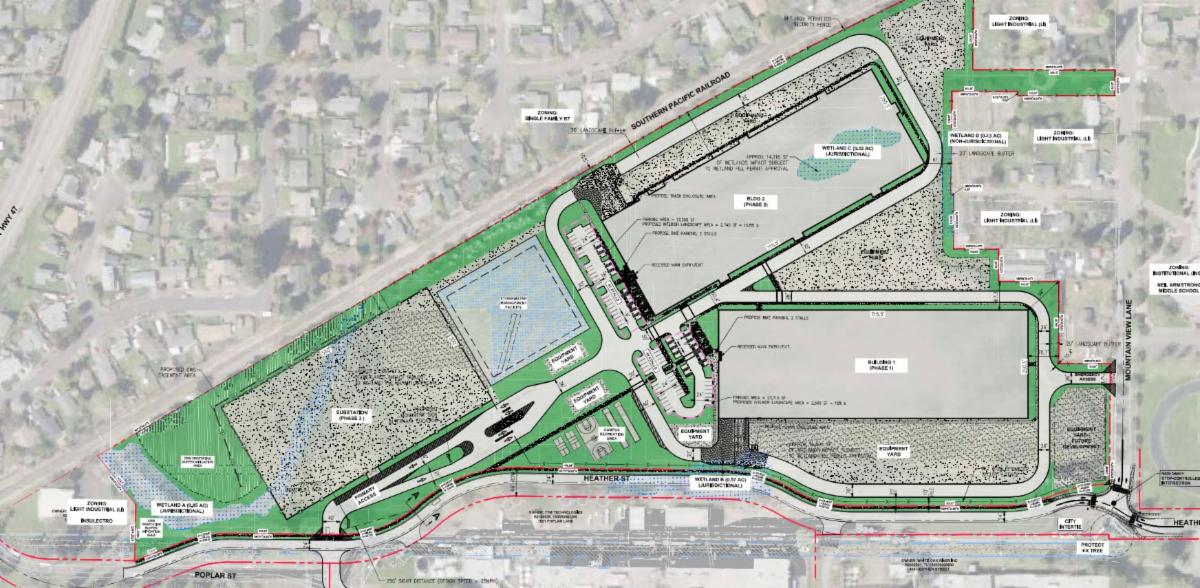
Most residents recognize the unfortunate reality of the project’s location adjacent to an established residential neighborhood and nerby wetland. Concerns related to quality of life, noise, visual impacts, wildlife, natural resources, and future property values are real and deserve acknowledgment.
Since the Crane proposal, the City Council has updated development code and zoning standards intended to better align future industrial development with Forest Grove’s community values, long-range planning goals, and expectations around buffering, compatibility, and community impact.
To area farmland owners, agricultural families and wetland preservationists: I grew up on a 200 acre family dairy farm, forging the same work ethic and a deep respect for preserving valuable farmland and supporting those who steward it. I understand why concerns about land use, water, and long-term viability command our attention.
I encourage engaging in the ongoing work of balancing agricultural protection with economic and infrastructure realities. Please reach out to me directly for a conversation. bschimmel@forestgrove-or.gov
| | | | |
Legitimate Concern and Shared Dependence About Data Centers
Data centers are understandably viewed through the lens of local impact — size, energy demand, water use, aesthetics, quality of life and proximity to neighborhoods. Those concerns are real and deserve thoughtful land use planning. It is also important to recognize that modern communities already depend on the infrastructure data centers provide toward everyday life.
They are part of the unseen backbone behind hospitals, emergency response systems, medical records, telehealth appointments, pharmacies, banking, logistics, utilities, schools, business operations, and public safety communications. They support the digital systems and social media platforms that allow families to stay connected, businesses to operate, and residents to express their voice and to access services, education, and commerce from their homes.
In practical terms, data infrastructure is becoming as foundational to modern life as roads, power grids, water systems, and telecommunications. Society increasingly expects instantaneous connectivity, cloud storage, streaming media, online purchasing, social media engagement, remote work capability, and digital access to healthcare and government services — all of which rely on physical computing infrastructure somewhere.
That does not mean a data center belongs in any location. Communities have a legitimate role in shaping where and how industrial-scale facilities are developed, protecting farmland and established residential areas. Appeals for improved technology can also reduce the demand on water. But the broader conversation benefits when we acknowledge both realities at once: the impacts are local, while the benefits and dependencies are deeply woven into modern life.
Municipalities are not powerless in this process. Local governments possess significant land-use authority to shape industrial development through zoning, development code, design standards, utility agreements, buffering requirements, transportation planning, environmental protections, and conditional use processes.
Communities can establish where industrial uses are appropriate, what performance standards must be met, how infrastructure costs are allocated, and what protections are necessary for adjacent neighborhoods, farmland and natural resources.
Communities feel the impact–oppose the location.
Understand the utility–society depends on the data infrastructure.
| |
Enterprise Zone Tax Abatement
Crane applied through Washington County for a Construction in Process property tax exemption tied to the Enterprise Zone program. This temporary exemption applies only to equipment not yet installed and buildings not yet completed, and is limited to a maximum of two years during construction.
Once the facility is operational and placed into service, the standard five-year enterprise zone exemption period begins. There is no opportunity to extend that timeline beyond the established deadline.
When the exemption period concludes, the Crane facility is expected to become one of Forest Grove’s largest property taxpayers, contributing substantially to the city’s general fund and long-term financial capacity.
The City Council will hold a work session in the near future to discuss eligibility standards for its Enterprise Zone exemptions and consider.
| | | | | | |
Let's Chat ...
Reach out with a date, time and preferred location to meet for individual or groups conversations.
An open invitation to ask questions and share your experiences about what's going on in the Grove.
| | Stay tuned for information, updates and events | | | | | |