|
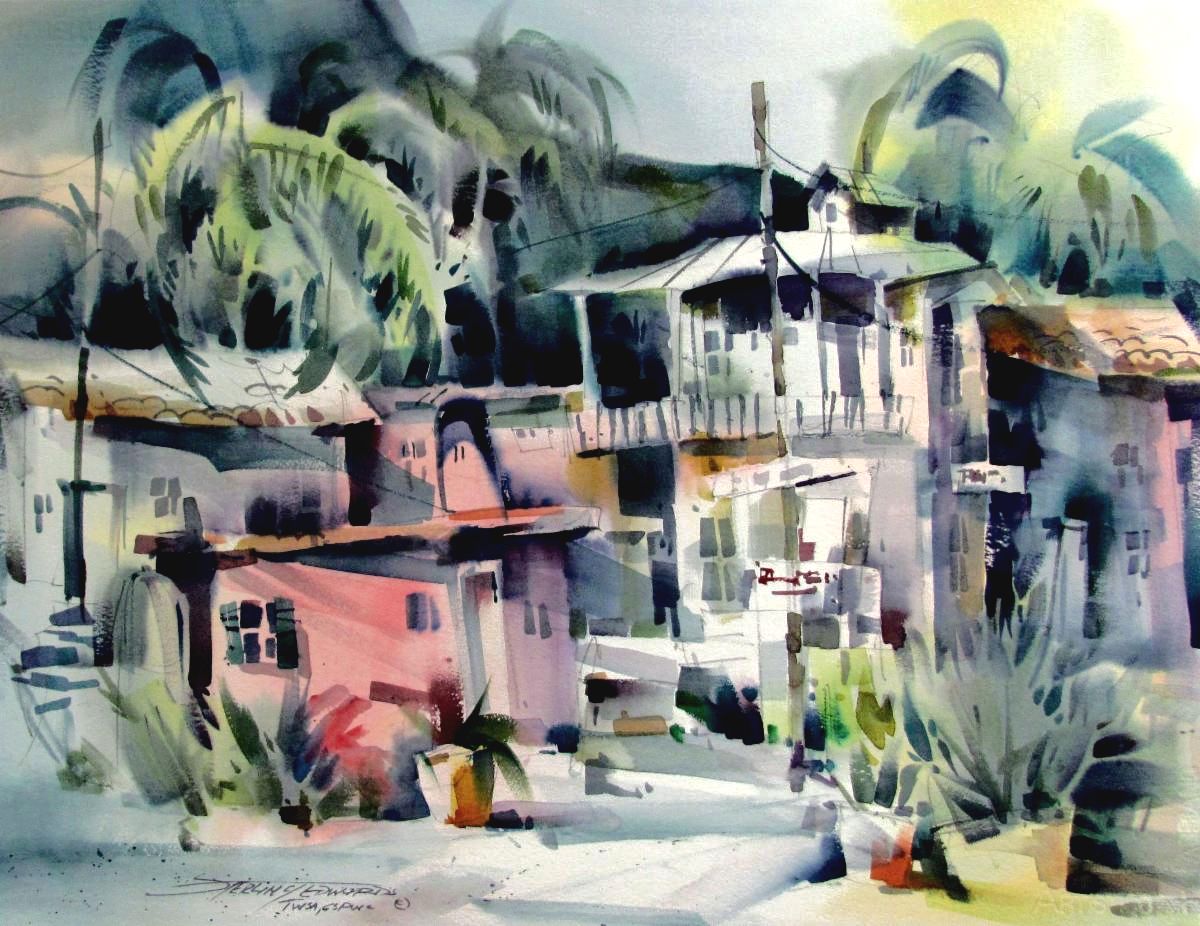
"Pareidolia"
22" x 15" Watercolor
Tips for becoming a successful artist
Part Two
I have been asked by artists for years to tell them what it takes to be a successful artist. As discussed in my previous editorial, first and foremost, become really good at what you do. Then look for ways to get your work and your name established in the art world or art circles. There is no one size fits all way to do this. In this editorial we'll discuss some things that worked for me over the course of my career. Each of them was a learning curve and required perseverance; some much more than others. I will mention some of the products that I have used along the way but want it to be clear that these are NOT paid endorsements and I do not receive compensation. There are many good companies to chooses from; these are just the companies that I have decided to use.
Essentially, you need a way to let as many people as possible know what you have to offer. You may be the next Rembrandt but if no one knows you exist or sees your work you are destined for failure. In the art world, exposure is everything. The more exposure you have the more likely you will create sales or have others spread the word about your art. I highly recommend that you have a website where potential customers can see your work, read about your journey, see a face shot of you, find out where your work is on display or where you might be attending an art exhibit, and so on. The thought of building and maintaining a website is terrifying to a lot of people and it was for me as well. I finally had to bite the bullet and do it. I use a web design service called FineArtStudioOnline (FASO.com) They are very reasonably priced and they offer different packages that you can purchase, depending on your needs and your budget. They can also assist you in registering your website domain name and help you set up an e-Commerce page where you can accept instant payments on sales using PayPal or credit card purchases. You can actually build your own custom website that is tailored to your needs, regardless of the size of your business. I know some of you are shuttering right now, but I assure you that you can do this. They have a great tech support team and are very easy to work with. I designed and built my website, www.sterlingedwards.com myself and just like many of you, I had to go through that awkward learning curve. Was it worth it? YES! Diane and I have built a successful business around my art and literally every penny of income that our business generates originates from our website in one way or another.
Having a website is very important but it will not guarantee your success. In my opinion it's the most important tool that you will have but it's only good if people see it. There are literally hundreds of thousands of artist websites. You need ways to direct potential buyers to your site instead of just hoping that someone stumbles onto it. Here are a few ways to promote your website. The more people that see your website and what you have to offer, the more sales you can potentially generate.
Art Society newsletters...There are hundreds of these and some of them allow artists to advertise. Google "Art Societies".
Get your work into art galleries... Look for galleries that have work that is generally in your price range and genre. The galleries will charge a commission on sales but they can attract potential customers that you might not have access to. If you are just starting out, consider a Co-Op art gallery. They usually charge less commission and it's good exposure.
Business Cards...Anytime you are discussing your art with someone give them a business card with your contact information and your website address. I use Vista Print. It's easy to design your own cards with their program and the price is very reasonable.
Art shows and exhibits...These can be a great way to network with potential customers. They not only get to see your art but they get a chance to know you and learn your story. People love to say that they know the artist.
Teach a local class... There are a lot of people that want to learn how to create a piece of artwork regardless of your medium. Teaching a local class is a great way to advertise your art because the place where you teach will also promote the class and you which in turn promotes them.
Offer to do free demonstrations for groups... This is another way to network and tell your story as well as showcase your work. It is also a good way to get people to sign up for your classes. If it is allowed, pass out fliers that have a few images of your paintings and some information about your classes. Be sure and add a photo of yourself and all of your your contact information.
Enter art competitions... Acceptance in an art competition adds a level of prestige and credibility to your work. Most shows are judged by other artists that are respected and considered an authority in the art world, whether it is local or international. It is also something that can be added to your resume. It tells potential buyers that not only do I think that my work is good, other professional artists think so too.
Reach out to interior designers or decorators...These are professionals that get paid by their clients to find artwork for their homes or business. Many of them contract through art galleries for a discount but there are also those that do not rely on galleries. Getting to know them and discussing their needs can be time well spent. If you are willing, discuss offering them a discount.
Consider writing a Newsletter... Once you have a list of customers or those who have expressed interest in your work, a newsletter is a great way to stay in touch with them and showcase new works of art, shows that you will be exhibiting in, special announcements, etc. The service that I use for my newsletters is Constant Contact. You can also design and post email blasts of new works that are available to all of your customers or mailing list. These are very effective ways of keeping your name out front.
Essentially, look for every opportunity to get the word out about your art, your background, your philosophy, and anything else that defines you as a professional artist.
All of these take time and dedication but are good stepping stones to becoming recognized as a professional artist. In this business name recognition is just as important as the quality of your work.
In my May Newsletter I will discuss different things that I feel are important to fine tune your marketing. Stay tuned.
|