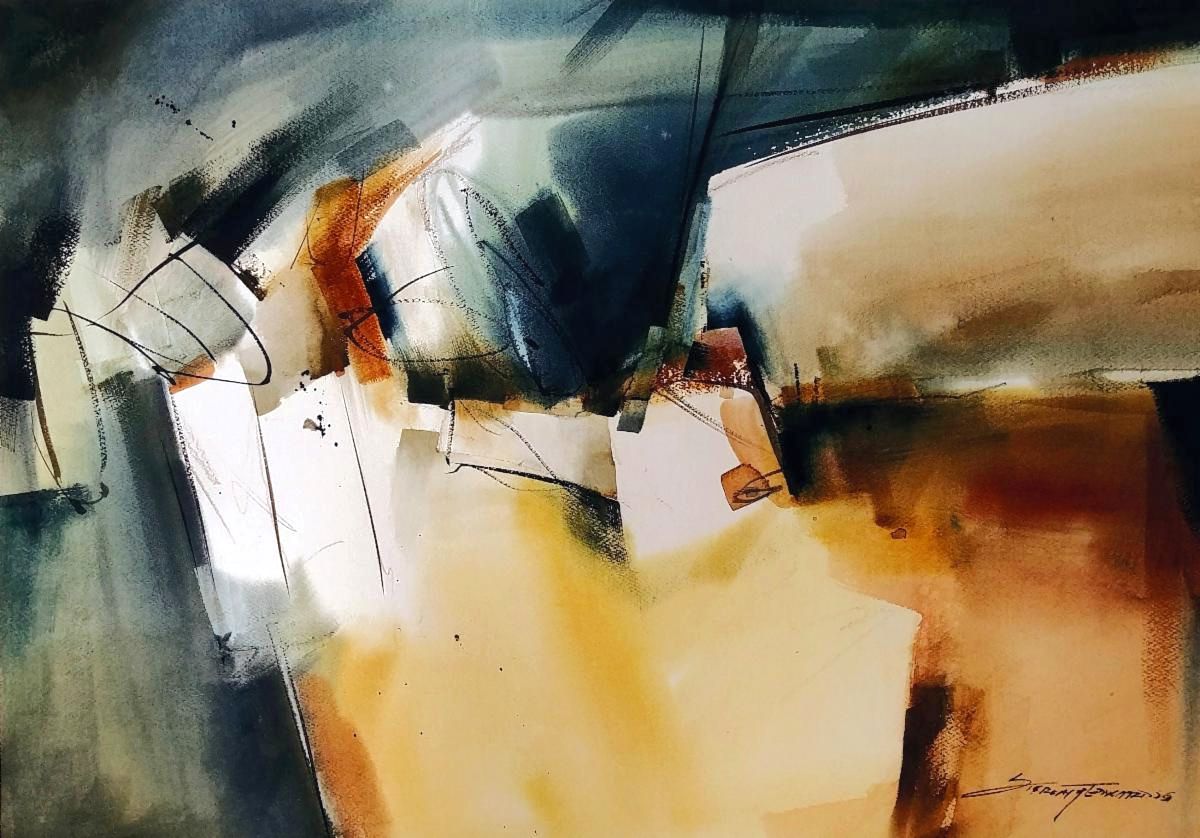
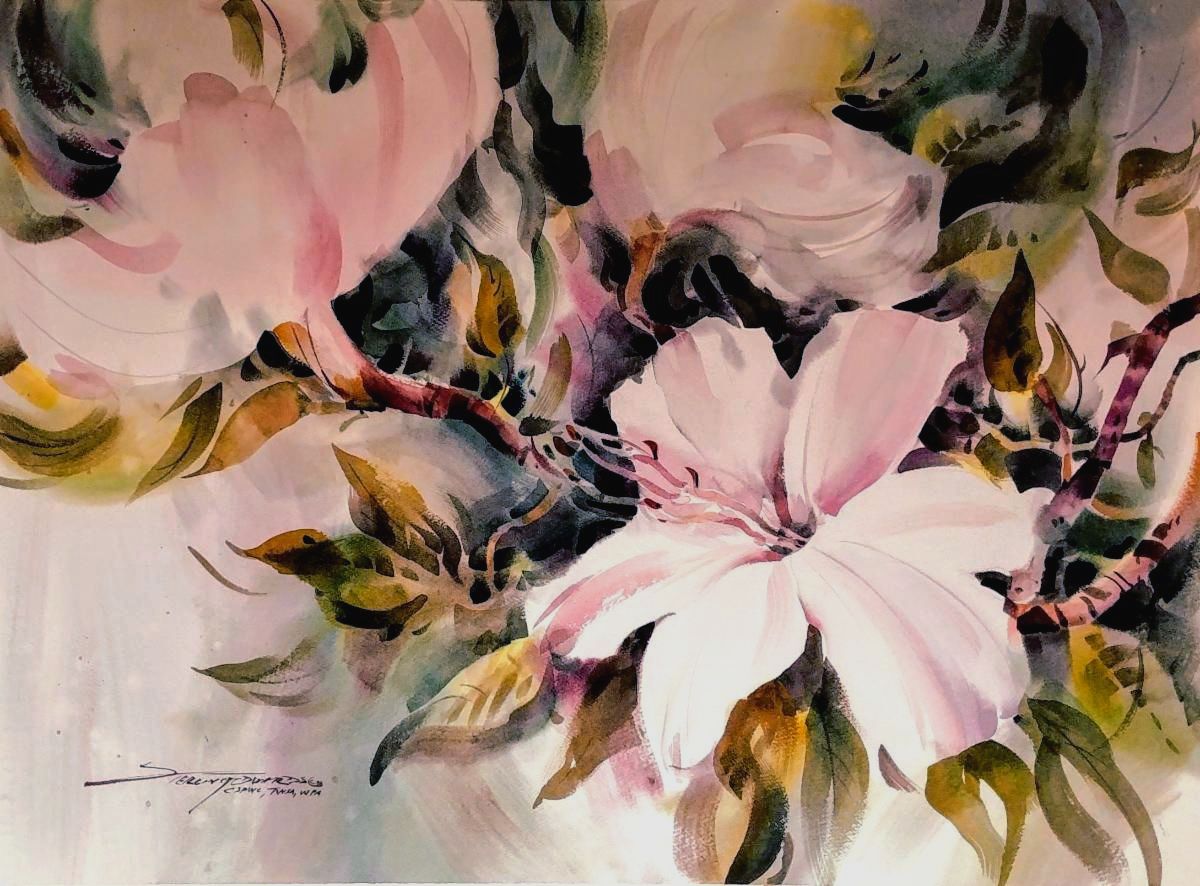
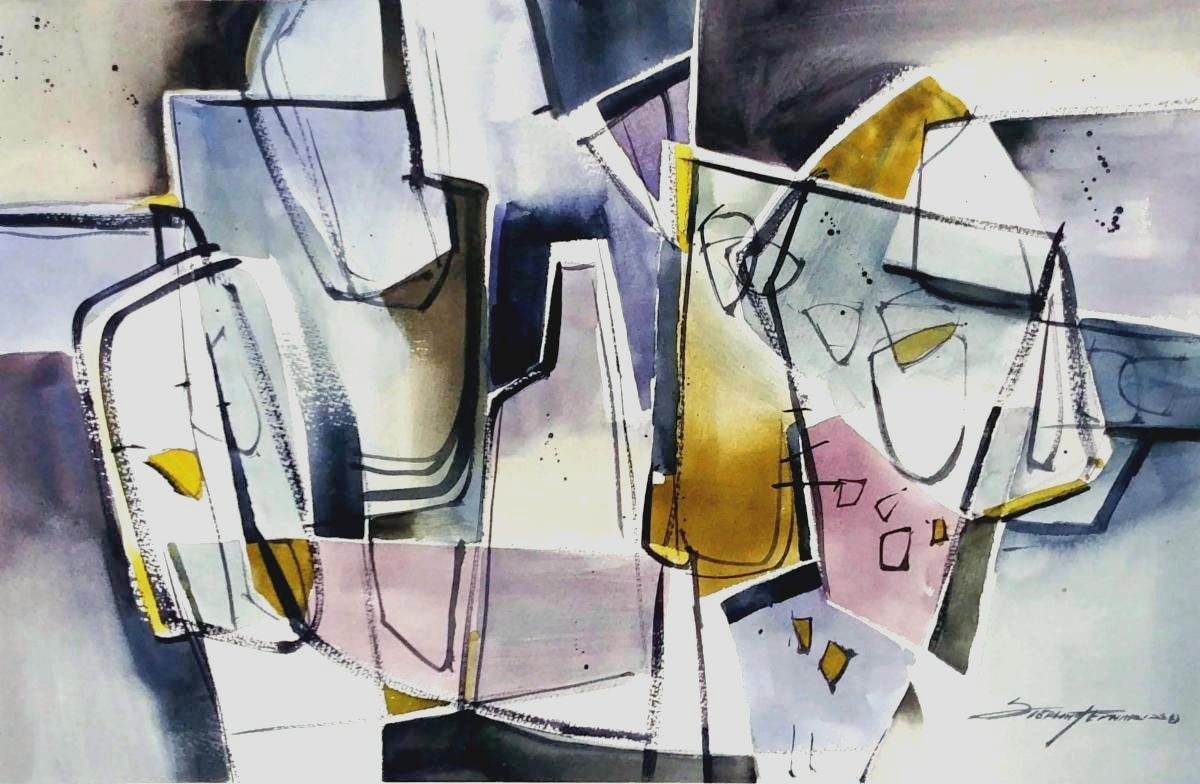
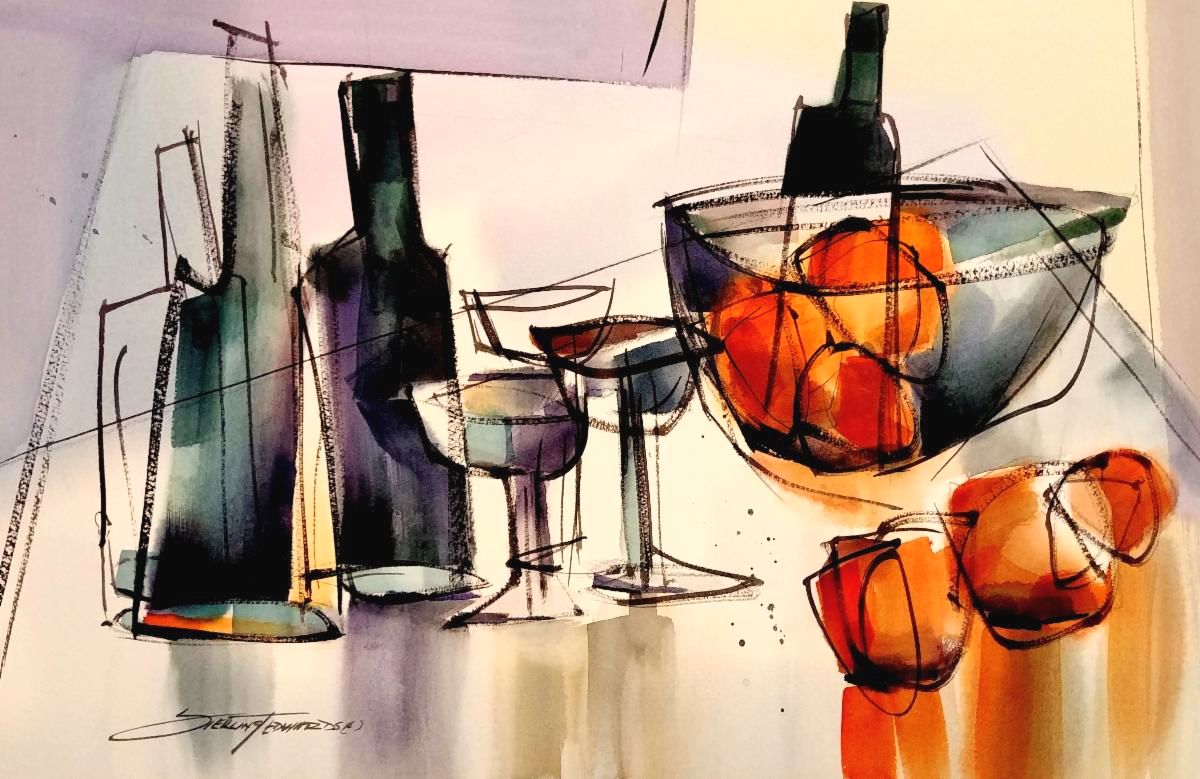
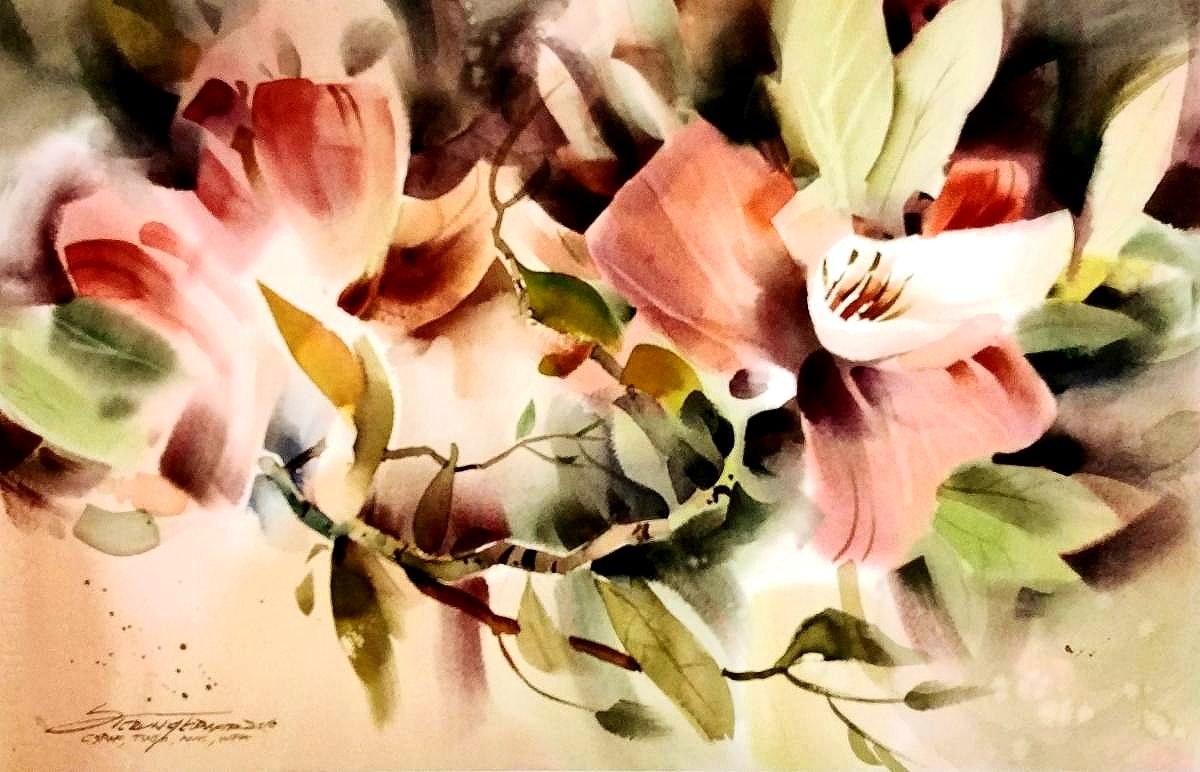
"My Lincoln ", 20"x 28" Watercolor
This painting is a demonstration piece that I painted at my recent watercolor workshop in Boise, Idaho.
Pricing your art...
Quite often at my workshops I will open the floor to discussions on various aspects of being an artist. Topics generally range from "How do I sell my work ?", Where do I sell my work?', and "How do I price my work?". As much as it pains me to tell them, there really is no sure fire answer to any of these questions. Each artist needs to research their prospective geographical areas and do some detective work to find the answers, or at least have a fighting chance at making the correct decisions. Basically what it narrows down to is exposure and competitive pricing based on how good your work is in relation to others of equal skill level and notoriety based and past accomplishments. Remember, your competitors are trying to attract the same customer. Let's face it; most people that buy art are not art collectors but rather decorators. They want some thing that will match their home of office decor for the lowest price possible. This is not always the case, but I can safely say that there are a lot more decorators than there are collectors of fine art. Unless the potential customer is looking for bragging rights, they really don't care who painted the piece as long as the price is right and it fits their decorating scheme. The collector, on the other hand, is usually someone who really admires the art enough that they will purchase it even if it does not exactly fit their decorative scheme. They will find a way to make it fit. It's also not unusual for a collector to start collecting works by a specific artist because they admire the artist's style and proficiency. The collectors quite often look beyond the decorative quality of the art and focus much of their attention on the artist. In my opinion they are the dream customer. But even the collectors sometimes have budgetary constraints . If you price your work too low they may not take you as a serious artist who is worthy of his or her investment. If you price your work too high you will likely lose much your decorator market. So what do you do?
I have been in a lot of art galleries over the last forty years and I spent many years selling at art shows and art fairs. The price of the piece is, without doubt, at the top of the list of why someone does not buy a piece of art, even if they are drooling over it. When I am looking for a place to hang my art I look at galleries that have work that is similar in style to my work but not enough that mine would blend in with the other pieces there. I also look to see what price they are asking for pieces of the same size and medium. There is usually a high end and a low end of the price range. I like to keep my price about mid-stream. For example; if pieces that are similar in size and style are priced from $1,500 to $3,000 I would price my pieces in the $2,100 to $2,600 range. The decorator who really likes the piece might be willing to pay a few hundred dollars more for a piece that they think is perfect for their decor and the collector who really likes your piece might feel that they are getting a good deal on a very nice piece from an artist who is worth collecting. In the art world it's referred to as "Perceived Value". As artists, we always need to be aware of the perceived value we are placing on our work if we price it too low. We have spend years learning to do and perfect what we do. We have a major investment in dollars and sweat equity that should be compensated for just as any serious professional, not to mention, all of the expensive materials that we use to produce our art. Another reason that we do not want to price our work too low is because we may at times decide to have a special sale or offer a discount on our pieces. You want you the price to be high enough that you can absorb the discounted price without jeopardizing a respectable profit for your work. It's not unusual for art galleries to have a sale once in a while to attract new customers into the gallery. It's also a nice incentive to draw former customers back in as well.
Lastly, we can't have a discussion on pricing your art without factoring in the commission you'll pay the gallery if they sell a piece. Having owned two art galleries I can be an advocate for the art gallery as much as I can for the artists that sell in the gallery. Most art galleries charge a 50% commission on sales. Some artists almost need a trip to a therapist upon hearing this but it is a very expensive business owning an art gallery. For the sake of relevance, let's say that you just finished a 16" x 20" oil painting on a canvas that you paid $20.00 for. You probably used another $20.00 in paint and varnish. Then you had it professionally framed at a cost of $125.00. Your total monetary cost of producing that painting is $165.00. Depending on the average price point at which you price your work, you need to factor that cost into your total retail price. Let's also say that you priced the painting at $1,500 and paid a 50% commission to the gallery. Your total take home pay on the sale after commission and materials is $585. That may leave you a little wiggle room if the gallery wanted to offer the customer a slight discount to close the sale. The gallery on the other hand made $750 profit on the sale. Some people think that that's unfair since they are making
$165 more than the artist, who by the way invested time , talent, materials, and framing to create the piece. All that the gallery had to do was pay rent for the building, utilities, advertising, insurance, maintenance on the building and parking lot, employees, office equipment, and a host of other typical business expenses. All of these things have to be paid EVERY MONTH if they are going to stay in business. In other words, they have to sell a lot of pieces each month just to make ends meet, let alone make any income. As for me, I don't mind paying a good gallery a commission provided they market my name and my work. That leaves me a lot more time to create new pieces of art or teach others which is the best use of my time. I would be doing you an in service if I did not mention the importance of consistent pricing when selling in art galleries. There are few things that will get you expelled from an art gallery quicker as selling comparable pieces for a lower price at another art gallery.
In summary; price your work in a respectable range that you see similar works selling for in your area or the area where you want to sell. Keep your prices high enough to peak the interests of the collectors while at the same time not turn off the decorators. Always remember the "Perceived Value" component as it applies to art. Who knows, you may find that a few of your decorators will become collectors. It happens sometimes.
Gift Certificates
We have received several request for Gift Certificates recently so Diane and I have decided to offer Gift Certificates that can be redeemed for Videos, Live Classes, Art Supplies, and Paintings. (Not redeemable for workshops)
To purchase a Gift Certificate go to www.sterlingedwards.com. Click "Contact the artist". Let us know that amount you would like to purchase and the recipients name. We will send you an invoice.
On a personal note:
(Please read)
Lately I have seen more and more artists selling copies of my paintings on their artist websites, at my workshops, and in small shops and galleries. This is both illegal and unethical. It is also illegal and unethical to enter a copy of someone else's painting in a competition.
All work that you sell or enter in a competition should be of your own design and execution. Not a copy of someone else's work.
I really don't like having to even write this but it is becoming a big problem and it needs to STOP IMMEDIATELY.
It's theft of Intellectual Property and can result in severe consequences.
____________________________________________________
Well, it's official
(At least until I change my mind)
As many of you know, for years I have offered my students a discount on my watercolor paintings at workshops and on my website. I do this because it's a way of showing appreciation for their support while at the same time increasing sales, which every business needs. I've been asked several times if the discount on paintings is available to those who take my Zoom classes as well as those who attend my four and five day on-location workshops. After thinking it over, Diane and I have decided to offer a flat 25% discount off of the listed retail price on ALL of my unframed and unmatted paintings (on paper) to anyone who has attended one of my Live Zoom Classes or on-location workshops. In addition, I will pay the shipping and insurance provided it is being shipped to an address in the U.S.
So if you are one of our students and see a watercolor painting or an acrylic on paper on my website that you are interested in purchasing, go to the "Contact" page and send an email telling us which painting you are interested in buying and what class or workshop you attended. We will email the discounted student price and instructions on ways to pay for the purchase if you decide to get the painting.
This offer is NOT available for works on canvas or Whiskey Paintings