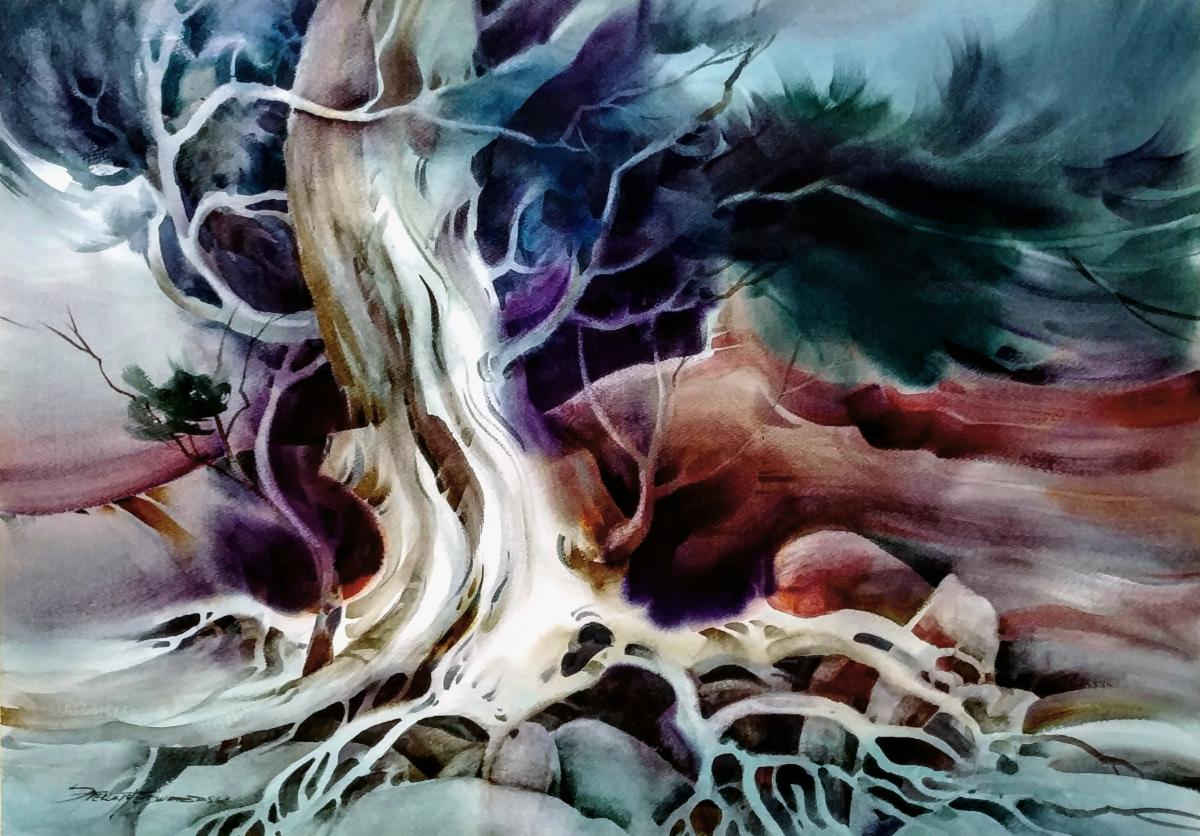
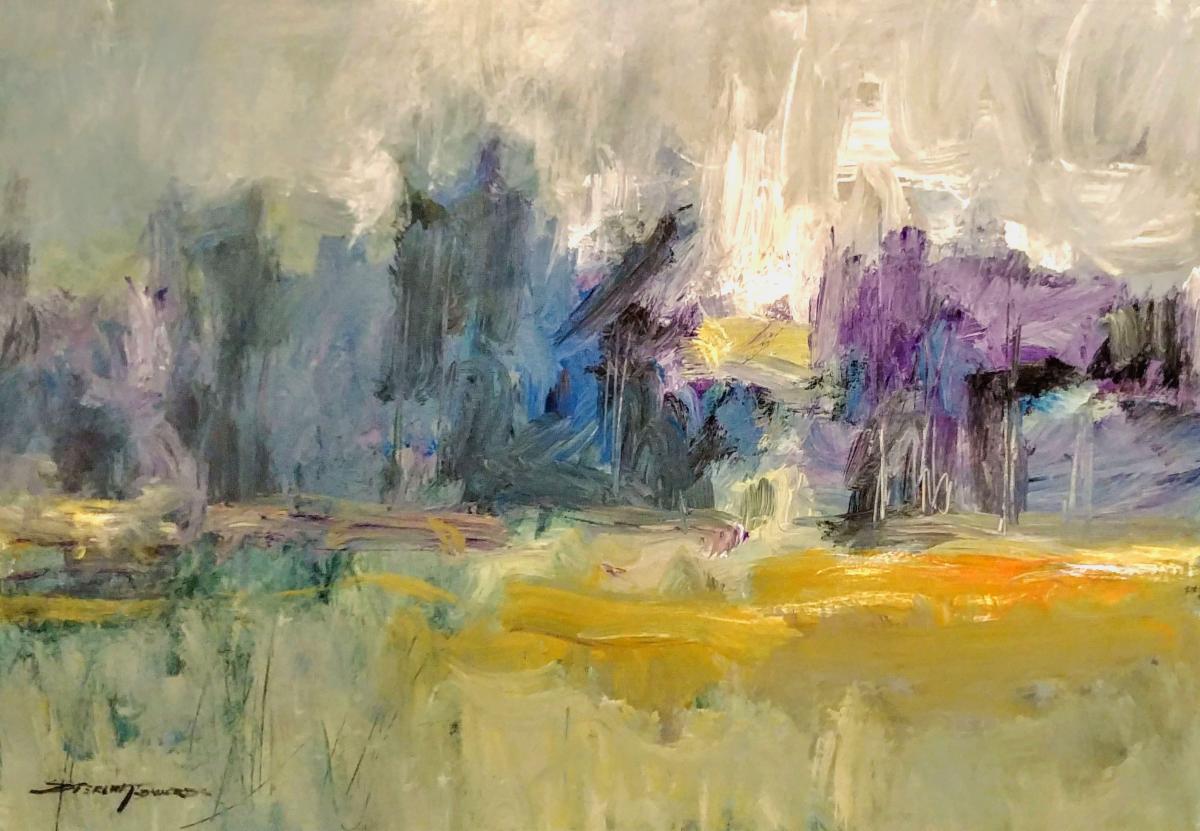
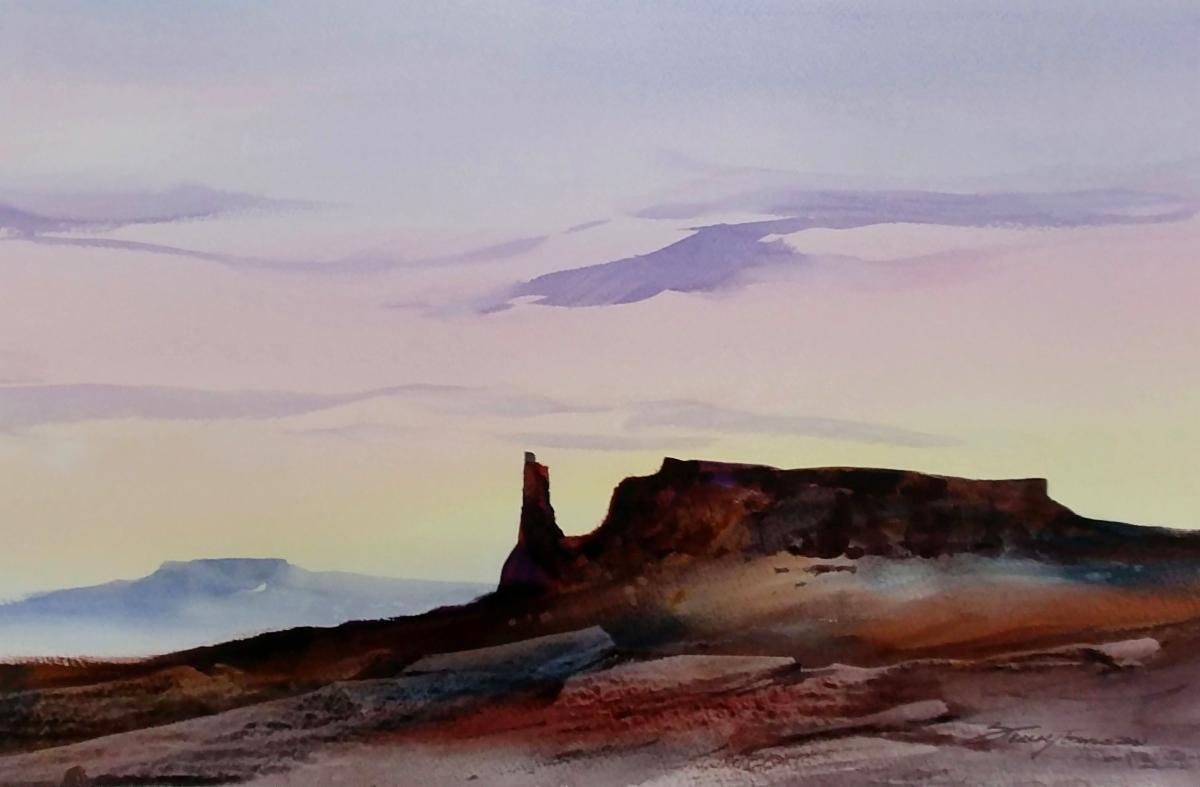
"Living on the Rocks"
22" x 30" watercolor using Holbein paint on Fabriano paper.
The "30%" Rule Explained
Let me begin by acknowledging that I am fully aware that reading about copyright legalities or issues is not the most exciting thing to read when you'd rather spend the same time reading about painting techniques. Trust me, I'm with you on that. Never-the-less, it is a real issue that is widely misunderstood or not even considered by many artists.
In the last year or so there has been a lot of controversy and discussion about the importance of copyright laws. I have written about them on a few occasions and I even discuss it in my workshops and in my newsletters. It is something that every artist, regardless whether you are a hobbyist or professional, needs to familiarize themselves with and make every effort to adhere to the laws. I think that overall most artists do when they know and understand the laws. Unfortunately however; there are those who do not think that the copyright laws pertain to them. They often find ways to get around the law or just totally ignore it. Sometimes it is intentional but more often than not, it is a misunderstanding of the law based on incorrect advise. Case in point; a lot of you have probably heard of the 30% Rule when discussing copyright. I can honestly say that every class in which I discuss copyright someone will mention the 30% Rule. In fact, it usually becomes the main focus of the conversation. I hope that the following article with clarify some of the the misunderstanding surrounding this very important topic.
I have received written permission to post a blog by Eric Perrot, Esq. of the Gerben Law Firm, www.gerbenlawfirm.com. Mr. Perrot is a Copyright Attorney and has written an excellent explanation dispelling the idea of the 30% Rule in regarding copyright.
The general rules and principles of copyright laws apply to visual works of art the same as they do for literature, music, or other creative works.
Here is the complete and unedited article:
The 30 Percent Rule in Copyright Law
"There is no “30% Rule.”
I work with a lot of clients who are building their brands and their content, and one question I frequently get is “isn’t there a rule where you can copy something as long as you change 30% of it?”
This myth of the “30% rule” is pervasive and widely cited around the Internet, but it is simply false. There is no 30% rule, and any time you copy someone else’s writings, drawings, website, or other creative work, you run the risk of copyright infringement.
Many people think of copyright infringement as piracy or the creation of unauthorized reproductions of a copyrighted work, like a song, photograph, or writing. If you download a TV show, you are making an unauthorized copy of the TV show. However, the purpose of copyright law is to both reward ‘makers’ and incentivize others to create new artistic works, as opposed to merely taking the work done by others and claiming it as their own. Therefore, copyright protection extends beyond just ‘exact’ reproductions and into ‘substantially similar’ reproductions. But how far away does a work need to get before it is no longer confusingly similar?
The Myth of the 30% Rule and Things to Consider
According to internet lore, if you change 30% of a copyrighted work, it is no longer infringement and you can use it however you want. This, as a rule, is false. The truth of the matter is much more complicated.
While different courts have different legal tests, the key to determining whether something is substantially similar will depend on the similarities between the two works in context. This determination also changes depending on the medium.
If an infringer changes every tenth word in an 800-word article, for example, but keeps the perspective of the underlying work, the sentence structure, etc. in place, then it is likely to still be “substantially similar.”
It also depends on how much is copied: single words or short phrases are not subject to copyright protection, as copyright law is not meant to give a monopoly on those items. Also, there is a concept called “merger” wherein the idea and the expression of that idea are merged into one – essentially, if there is only one way to logically express an idea, then no one can claim exclusive ownership of that expression.
For example, the instructions in an instruction manual on how to operate a machine cannot be protected under copyright law – but the advertising and non-instructional materials can. A set of board game rules is not protectable under copyright law, but the ‘flavortext’ and narrative in the rulebook can.
Keep in mind there is a different analysis (called “fair use”) as to when you can use parts of someone else’s work for criticism, quoting, etc. This requires its own in-depth analysis but typically does not cover situations where a copier is attempting to pass off someone else’s work as their own.
Best Practices for Avoiding Copyright Infringement
DO
When writing, read many different perspectives on issues and synthesize your own viewpoint and analysis. If you ultimately agree with an article that has been written, take the main idea and write your own article in your own words.
DON’T
Don’t copy a blog post, change a few words, and pass it off as your own content. If you are quoting a blog post, quote thoughtfully and only take as much as needed to make your point. Otherwise, you could be exposing yourself to liability. Using an “article spinner” that changes some of the words of a work you don’t own can expose you to significant liability.
DO
Be skeptical of who you hire for content. “I didn’t know what my contractor/employee was doing” is not a defense to copyright infringement. You may be held jointly and severally liable for the infringement, regardless if it was your contractor that was the actual infringer.
DON’T
Don’t assume that content found on the internet can be freely copied without recourse. Businesses often spend hundreds of thousands of dollars on digital marketing and their advertising text is extremely valuable. Further, for SEO purposes, copies made and posted elsewhere detract from the uniqueness of the content and reduce its effectiveness in driving traffic to the creator’s website.
If you have questions about whether you can use someone else’s content in any way, contact an experienced intellectual property attorney to discuss – and they can help you to protect your own creative works from infringers as well!"
Thank you Mr. Perrott for permission to post your insightful and educational blog.
On a personal note:
(Please read)
Lately I have seen more and more artists selling copies of my paintings on their artist websites, at my workshops, and in small shops and galleries. This is both illegal and unethical. It is also illegal and unethical to enter a copy of someone else's painting in a competition.
All work that you sell or enter in a competition should be of your own design and execution. Not a copy of someones else's work.
I really don't like having to even write this but it is becoming a big problem and it needs to STOP IMMEDIATELY.
It's theft of Intellectual Property and can result in severe consequences.
____________________________________________________
Our Websites
I now have two websites that feature my paintings. The first is: sterlingedwards.com which has our workshop schedule, store, FAQ page, paintings, newsletter sign-up, and more.
Both of the websites will be edited from time to time with new artwork and announcements.
ALSO
The original paintings in this gallery are priced 50% off of the regular retail price. We have already sold several of the paintings and will be adding others from time to time. Once on the website, click on "Paintings" to see the sale gallery and the other galleries as you scroll down.