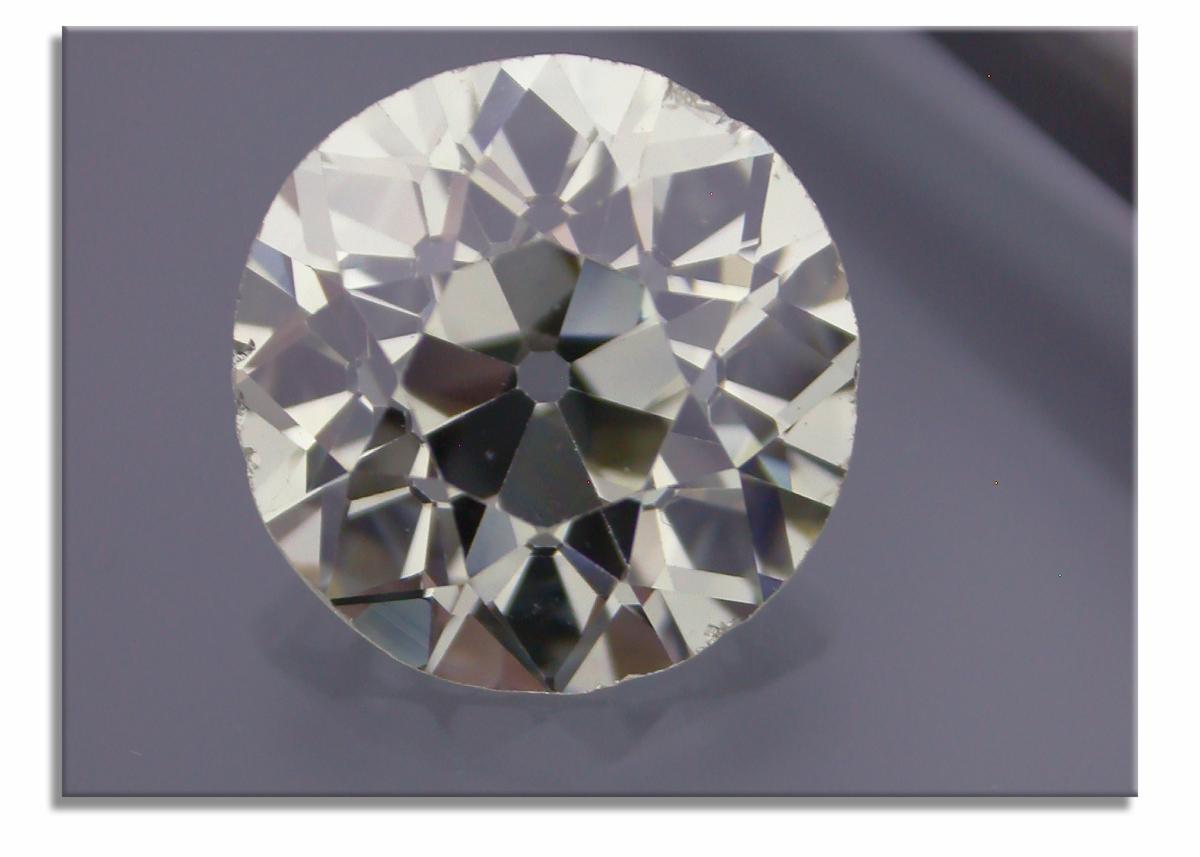
Rough diamond crystal. Transmitted and reflected light. Image by Gary Roskin. Diamond provided by AMGAD. | | | | |
Issue 17, August 24, 2026
| | |
This Week
in the Roskin Gem News Report
| |
Stone-Faced Watches
Time Is Set in Stone
| |
Gary Roskin
Roskin Gem News Report
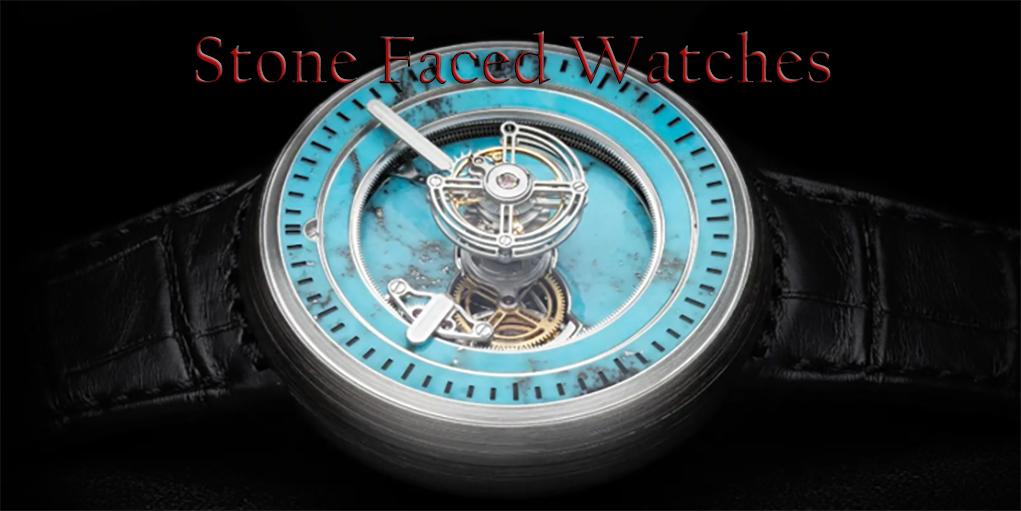
Have you noticed lately that watchmakers have been getting a little stone-faced?
Malachite, sodalite, black opal, charoite, aventurine, onyx, turquoise, obsidian — even meteorite — are putting some gemological faces on watches.
And making those faces isn't easy.
The gem material may have to be sliced into fractions of a millimeter, precisely oriented, polished and backed without cracking or chipping.
Kurono Tokyo even X-rays its malachite to find the desired pattern before cutting — and says only two out of every ten dials survive the process. (What?)
Then there are the questions that caught our gemological eye.
For example, why did Piaget list the carat weight of its sodalite dial?
Is that extraordinarily thin black opal bonded to a support?
And why is Gerald Charles setting one of its watches with stones it calls “red sapphires” rather than rubies?
We take a closer look at what’s currently rockin’ watch faces — with a proper shout-out to veteran watch journalist Roberta Naas.
Come take a look at some of our favorite stone-faced watches.
Tap here for the gemologically fun pictorial.
| | National Association of Jewelry Appraisers | | Accredited Gemologists Association | | Gemological Institute of America | |
Schmuckmuseum Pforzheim Presents ...
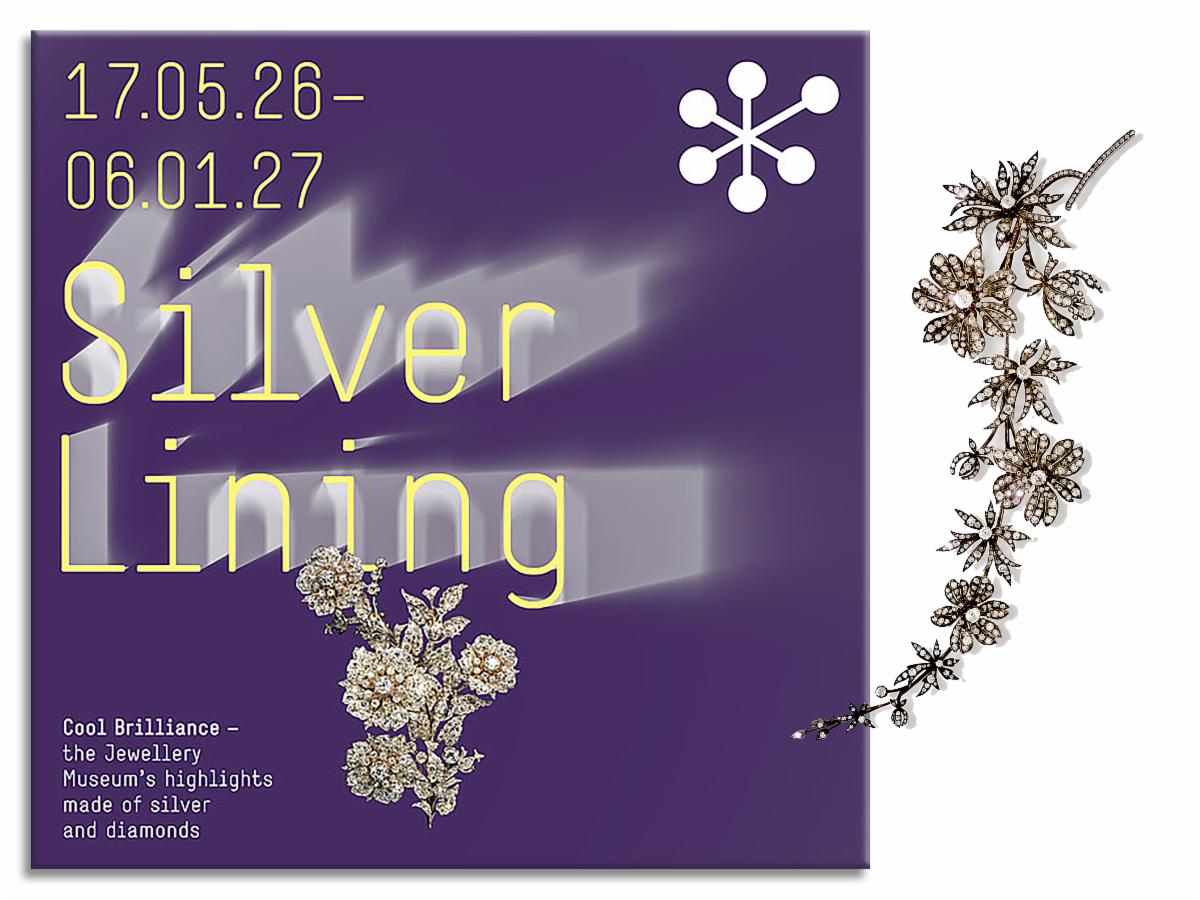
“Silver Lining”
Diamonds, Gemstones and the Changing Role of Silver
| | |
Gary Roskin
Roskin Gem News Report
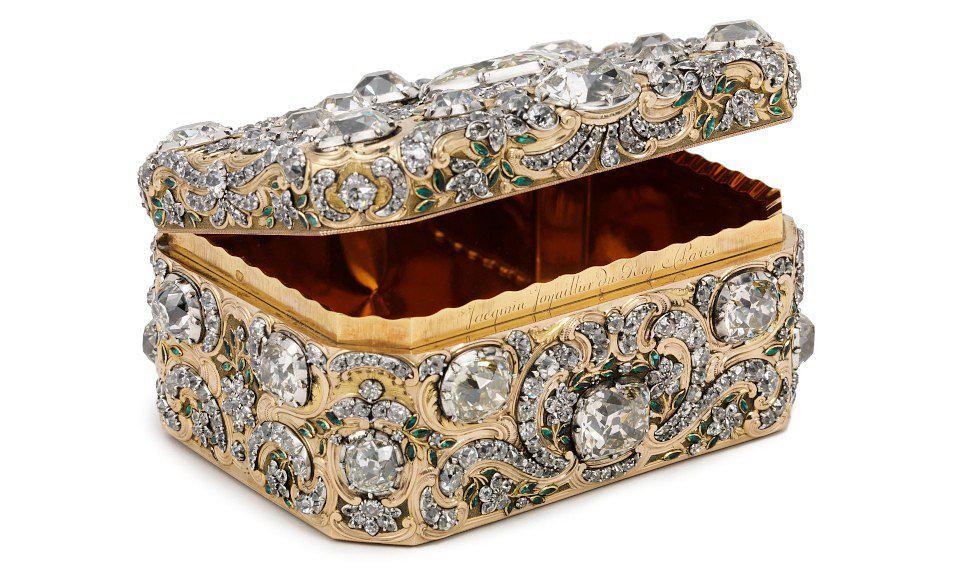
A new exhibition at the Schmuckmuseum Pforzheim reminds us that jewelers were thinking about the color of their metal centuries before platinum and white gold became familiar choices.
And before platinum and white gold, diamonds were set in silver.
That relationship is at the heart of “Cool Brilliance — Highlights of the Jewellery Museum in Silver and Diamonds,” one of three exhibitions presented under the umbrella title “Silver Lining.”
During the Baroque period (roughly 1600–1750) and Rococo period (roughly 1730–1770), diamond cutting was changing, and diamonds were becoming increasingly important in aristocratic European jewelry.
Gold remained widely used. But silver offered jewelers something different: a bright white precious metal surrounding a colorless or near-colorless diamond.
Jewelers even combined the advantages of both metals in silver-topped gold — silver around the diamonds on the visible face of the jewel, with gold forming the body or reverse.
By the late 19th and early 20th centuries, advances in working platinum, followed by the development of white gold, gave jewelers new white-metal choices.
But silver certainly didn't disappear.
The larger “Silver Lining” presentation takes the story further, with two additional exhibitions exploring globally collected gem-set silver jewelry and the work of contemporary silversmiths.
Why silver then — and why silver now?
Tap here for the full feature in the Roskin Gem News Report.
| | |
American Gem Trade Association
| |
It's Mathematical
We Think We’re Being Subjective,
but Our Brain is Doing the Math.
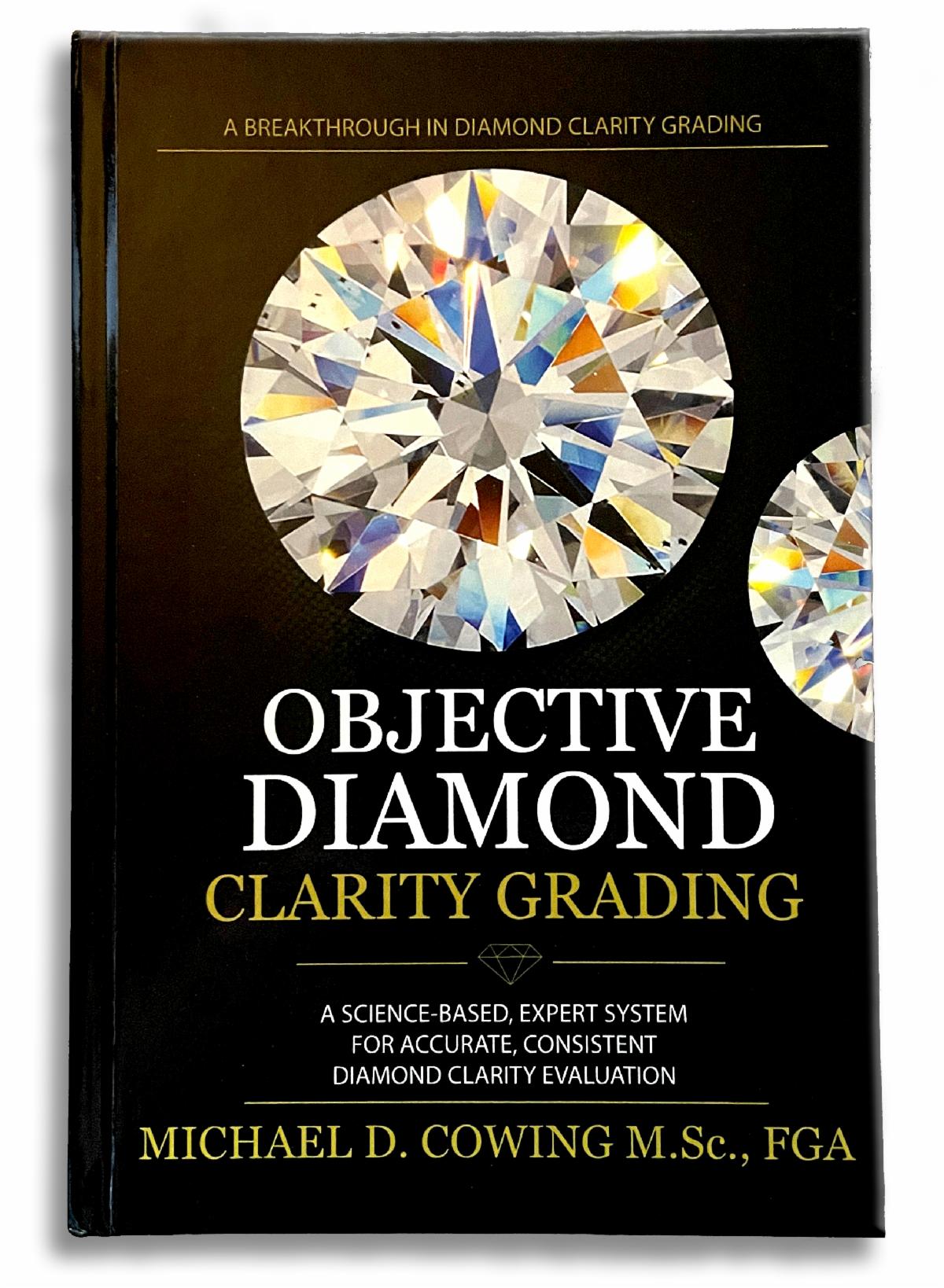
OBJECTIVE DIAMOND CLARITY GRADING
by
Michael D. Cowing, M.Sc., FGA
| | |
Gary Roskin
Roskin Gem News Report
Diamond clarity grading has always been considered subjective. An experienced grader looks at a diamond and says, “That looks like a solid SI₁ to me.” But why? What is our brain seeing that tells us SI₁ is more appropriate than VS₂ or SI₂?
Years ago, after hearing a presentation about Fibonacci, the Golden Ratio, and how our brains recognize aesthetically pleasing proportions mathematically, I posed a question to Michael. Perhaps something similar was happening with diamond grading.
"Is our brain doing the math?"
Cowing took that question and did what Cowing does. He did the math.
Using objective metrics for inclusion size, contrast, number, and position, Cowing developed a system that closely correlates with the familiar GIA clarity grades. And remarkably, he found an approximate fourfold increase in inclusion area from one clarity grade to the next.
The work itself isn't new. Cowing published Objective Diamond Clarity Grading in The Journal of Gemmology in 2014, and it has long been available through his website here. Michael's work has also made its way into the classroom. Geoffrey Dominy of the World Gem Foundation uses it in teaching diamond grading.
What's new?
It’s finally a hardback book! 🌟
Michael asked me to write the foreword way back when, and in it I tell a little more of the story behind his decades-long pursuit of putting mathematics to what we gemologists have traditionally called subjective clarity grading.
Tap here to read the Foreword and
learn more about Objective Diamond Clarity Grading.
| |
Photomicrography: Images from Within
by Sammantha Maclachlan
| | |
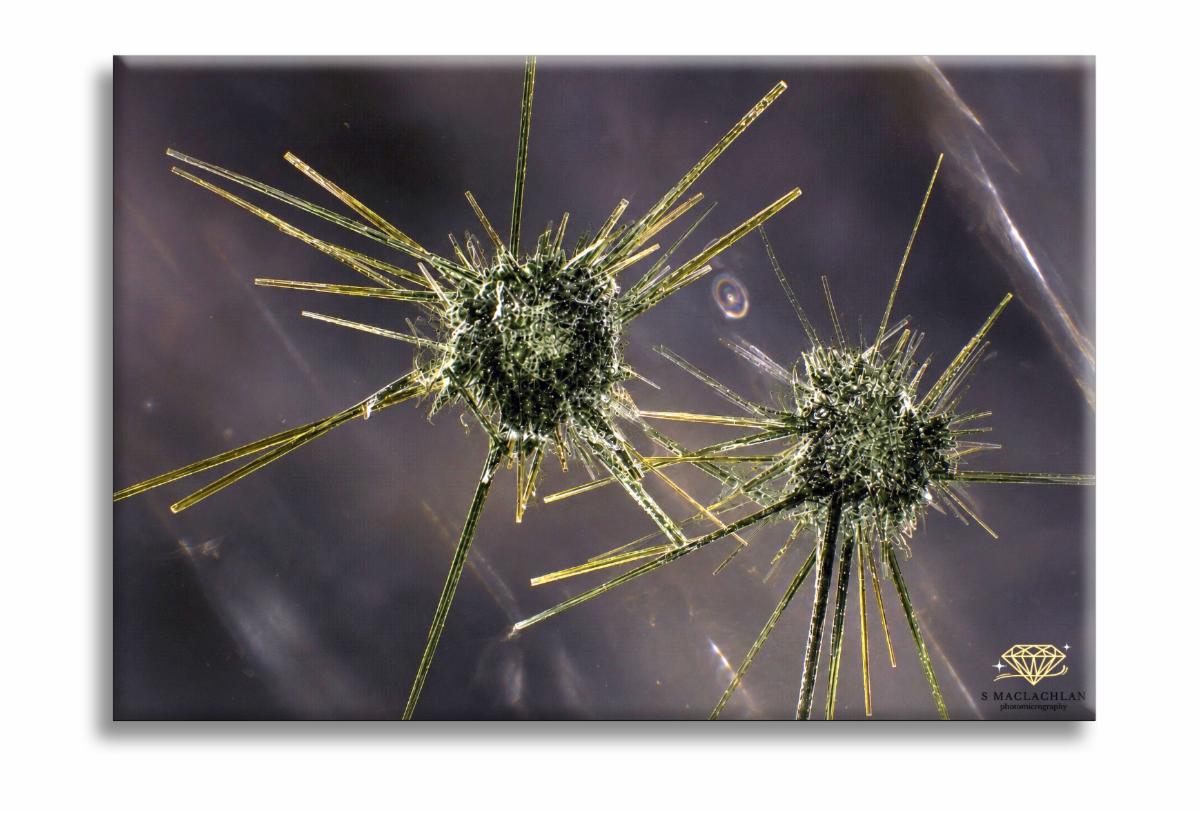
Another amazing image from Sammantha Maclachlan, this time, radial clusters of actinolite in quartz from Brazil.
This is a stack of 18 images and was taken at 60x magnification.
[Actinolite: generally a transparent green mineral, as acicular needle-like inclusions in quartz. - gr]
Tap here to see this close-up!
Sammantha Maclachlan is an accomplished gemmologist and photomicrographer. Her attention to gemmological detail and beauty is evident within the incredible shots shown here and in the Roskin Gem News Report online magazine. We thank Sammantha for sharing her images, and welcome you to enjoy the page!
| |
Gems on Mars?
Rubies, Opals and the Hottest New Gem from Jezero Crater
| | |
Gary Roskin
Roskin Gem News Report
Corundum. Opal. Chalcedony. Quartz. And now natural glass formed by meteorite impacts.
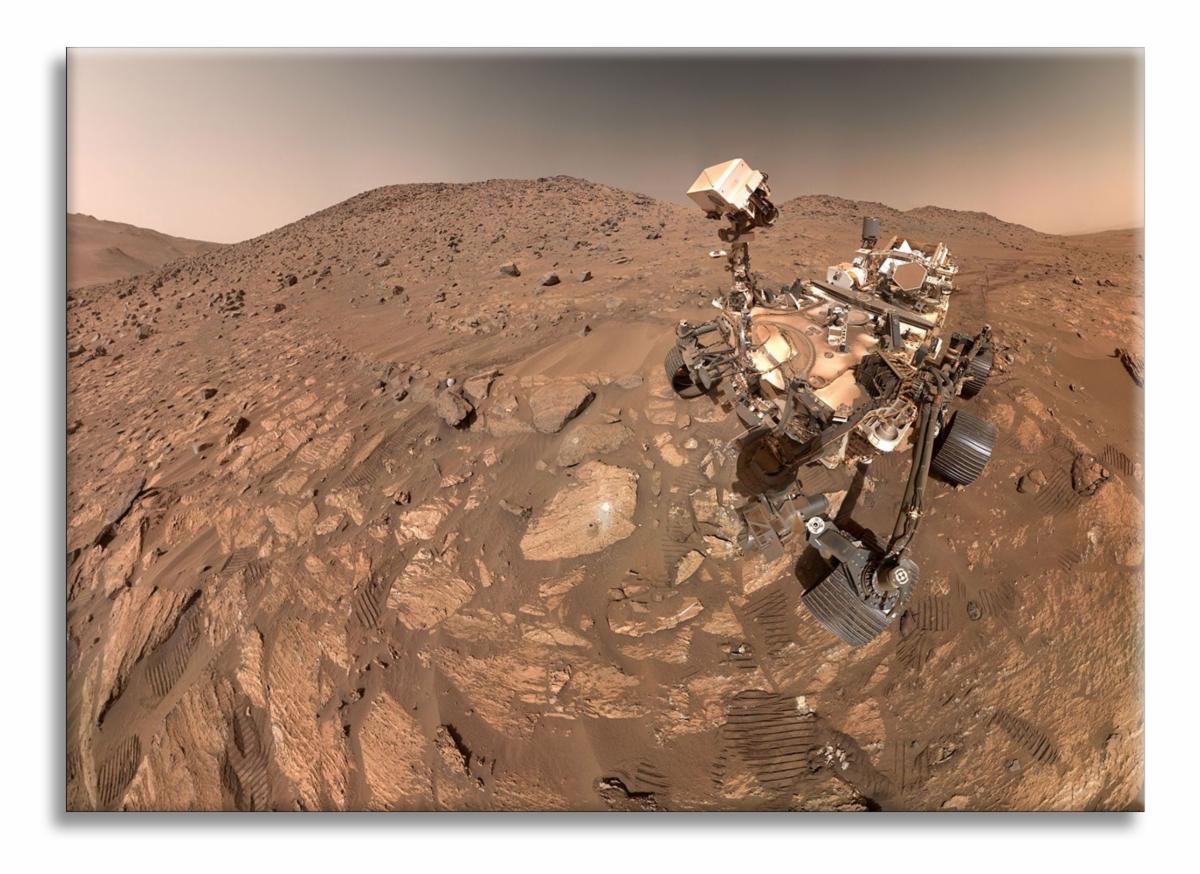
NASA’s Mars rovers have been assembling a rather unexpected collection of gem materials on the Red Planet.
We’ve been following the Martian gem hunt for a while. Back in 2023, when headlines announced the discovery of opal on Mars, we went directly to the scientists and asked the question gemologists wanted answered: What kind of opal?
Now there’s more.
Perseverance has identified chromium-bearing corundum in Jezero Crater. Corundum + chromium = ruby?
Well… is it red?
Scientists have also identified quartz, chalcedony and Opal-A — and new research examining some of Mars’ most ancient rocks has revealed tiny beads of natural glass apparently formed by meteorite impacts.
Natural glass created by a meteorite impact?
If you’re thinking moldavite, so are we.
But this is Mars. And Jezero Crater.
So perhaps we need a new name.
Introducing Jezerite — The Hottest New Gem from Mars.
Not available in Tucson. Yet.
There is, of course, some serious planetary science behind all this fun. We take a gemologist’s look at what Perseverance has actually found — and, just as importantly, what it hasn’t.
Tap here for our Martian gem hunt.
| |
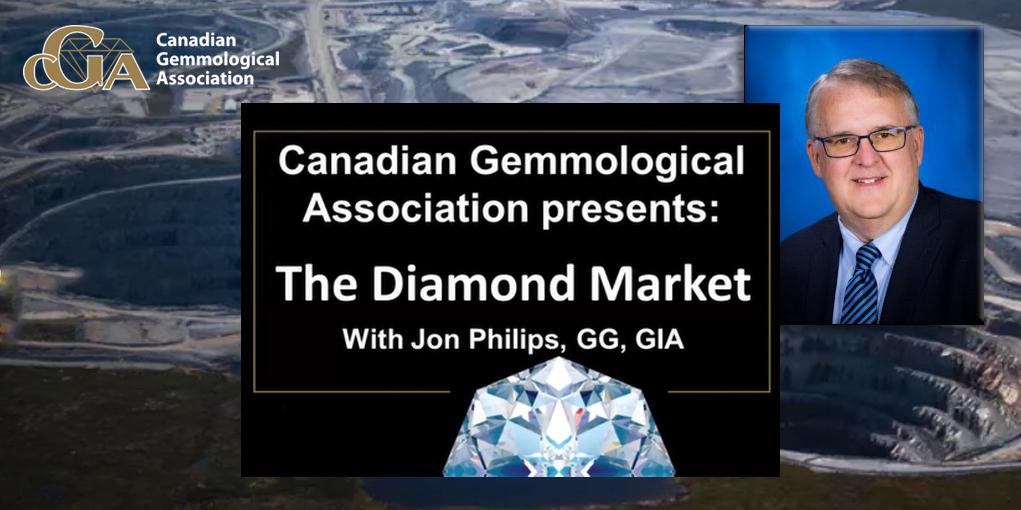
The Diamond Market
Canada Falls, Synthetics Rise, and the Diamond Market Splits in Two: Jon Phillips and the Diamond Industry
Canadian Gemmological Association
presents
Webinar with Jon Phillips
| | |
Gary Roskin
Roskin Gem News Report
“It’s been a tough few years in the natural diamond market,” notes gemologist and diamond-market analyst Jon Phillips.
Canada has slipped to fourth place among the world's diamond-producing countries — and according to Phillips, it may have considerably farther to fall — and soon.
“This time next year, we might have no commercial diamonds being mined in Canada,” Phillips told members of the Canadian Gemmological Association.
That's a remarkable possibility for a country that, not so long ago, ranked among the world's leading diamond producers.
But Canada was only part of Phillips' look at a diamond industry being reshaped from both directions.
Russia remains the world's largest rough diamond producer by volume despite sanctions.
Synthetic diamond manufacturers are producing an estimated 100+ million carats of gem-quality material annually. Prices for synthetics continue to fall.
And natural diamond mines producing smaller, lower-value goods are finding themselves in increasingly direct competition with manufactured diamonds at a fraction of the price.
At the same time, Phillips sees a very different story at the upper end of the natural diamond market.
From Millennials and engagement rings, to falling synthetic prices, mine closures, marketing, residual value — and what happens when an insured Canadian diamond needs to be replaced — Phillips covered a lot of ground.
And his outlook suggests natural and synthetic diamonds aren't going away. The question is where each is headed from here.
Tap here for more on Canadian Diamonds - the full report in the Roskin Gem News Report!
| | Royal Treasures Take Center Stage in Lisbon | | |
Crowns, tiaras, royal jewels and historic gemstones come together this November at Lisbon’s Royal Treasure Museum for TREASURES 2026 — Royal Crowns and Tiaras International Colloquium.
Held November 13–14 at the Ajuda National Palace, the two-day program brings together museum curators, gemologists, historians and jewelry specialists from Portugal, Brazil, India, Japan, Switzerland, Germany, Austria, the Netherlands and the United States.
The setting is part of the story.
The Royal Treasure Museum houses some of Portugal’s most important royal jewels, including Queen Maria Pia’s diamond star diadem and necklace, the Crown of King João VI, the great emerald lasso of Maria Bárbara de Bragança, and King João VI’s insignia of the Order of the Golden Fleece.
TREASURES was launched in 2024 as an international meeting place for specialists in gems, jewelry and royal collections. The second edition returns in 2026 with a new theme devoted specifically to Royal Crowns and Tiaras.
Among the presentations are talks on the Crown of King João VI, the Imperial Crowns of Brazil, Mughal crowns and turban jewels, gemstones in medieval crowns, the Crown of the Andes, Queen Maria Pia’s Star Tiara, historic tiaras examined from a gemological laboratory perspective, and the Diamond Tiara of Queen Amélie d’Orléans and Braganza.
The pre- and post-colloquium Lisbon Gem & Jewellery Tours with Rui Galopim de Carvalho are already sold out.
TREASURES 2026
November 13–14, 2026
Royal Treasure Museum — Ajuda National Palace, Lisbon
Tap here for the complete program,
registration information and event details.
| | |
If you think you missed it, you did not.
AGA's interview with Chris Smith of AGL will be rescheduled. Watch for the announcement here in the Roskin Gem News Report!
| | Gem & Jewelry Conferences | |
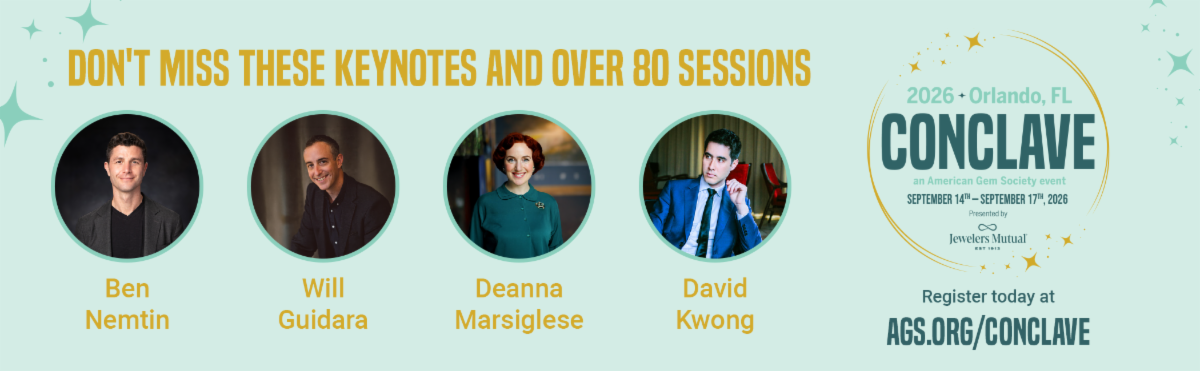
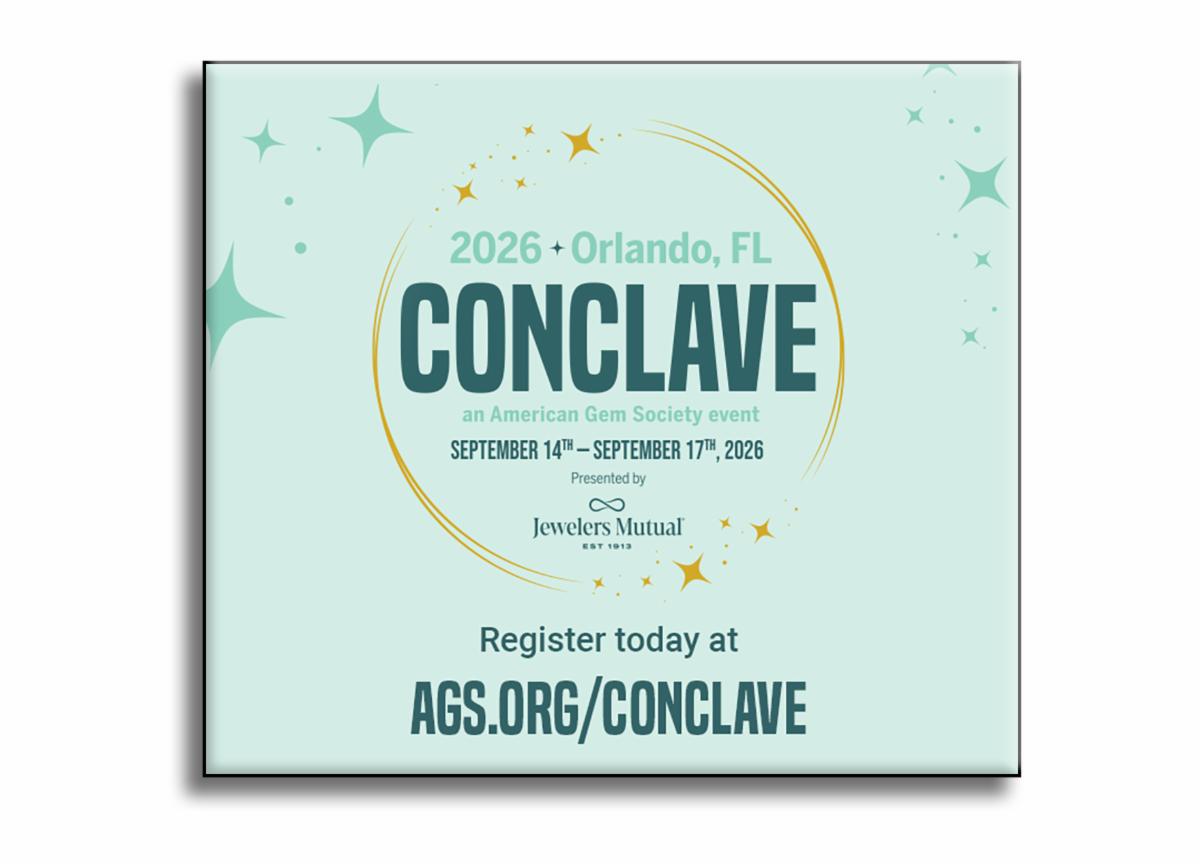
American Gem Society Conclave, Orlando
A Focus on the Gemological Sessions
| | |
AGS Conclave: Come for the Business — Stay for the Gemology
There's plenty of business education on the schedule for this year's AGS Conclave.
But we went looking for the gemology.
And there's a lot of it.
Synthetic vs. Natural - Stuller's Guy Borenstein will look at the strengths — and blind spots — of current synthetic diamond screening technology.
GIA's Amanda Hawkes and Lisa Kennedy will explore contrast and dark zones in fancy-shaped diamonds — and offer attendees a sneak peek at GIA's upcoming fancy-shape cut grade system.
Dr. Mike Breeding takes another look at that perennial diamond question — Is fluorescence a good thing or a bad thing? — with new research measuring what it actually does to color, brightness and transparency.
And here's one we couldn't resist: Can an inclusion be a good thing? GIA's Evan Smith and Jason Quick ask whether exceptionally rare, fascinating — even beautiful — inclusions might deserve a way of being positively recognized on a gemological report. And they want your opinion.
That's only part of it.
Colored stone treatments and origin, ruby and sapphire identification, luminescence, natural diamond identification, colored gemstone grading and pricing, pearl terminology, underappreciated gems, appraisal education, historic ruby and spinel mines — even the making and photographing of a major gem collection — are all on the schedule.
If you're headed to AGS Conclave, we've pulled together the gem-related sessions you'll want to know about.
TAP HERE — AGS CONCLAVE: THE GEM SESSIONS
| |
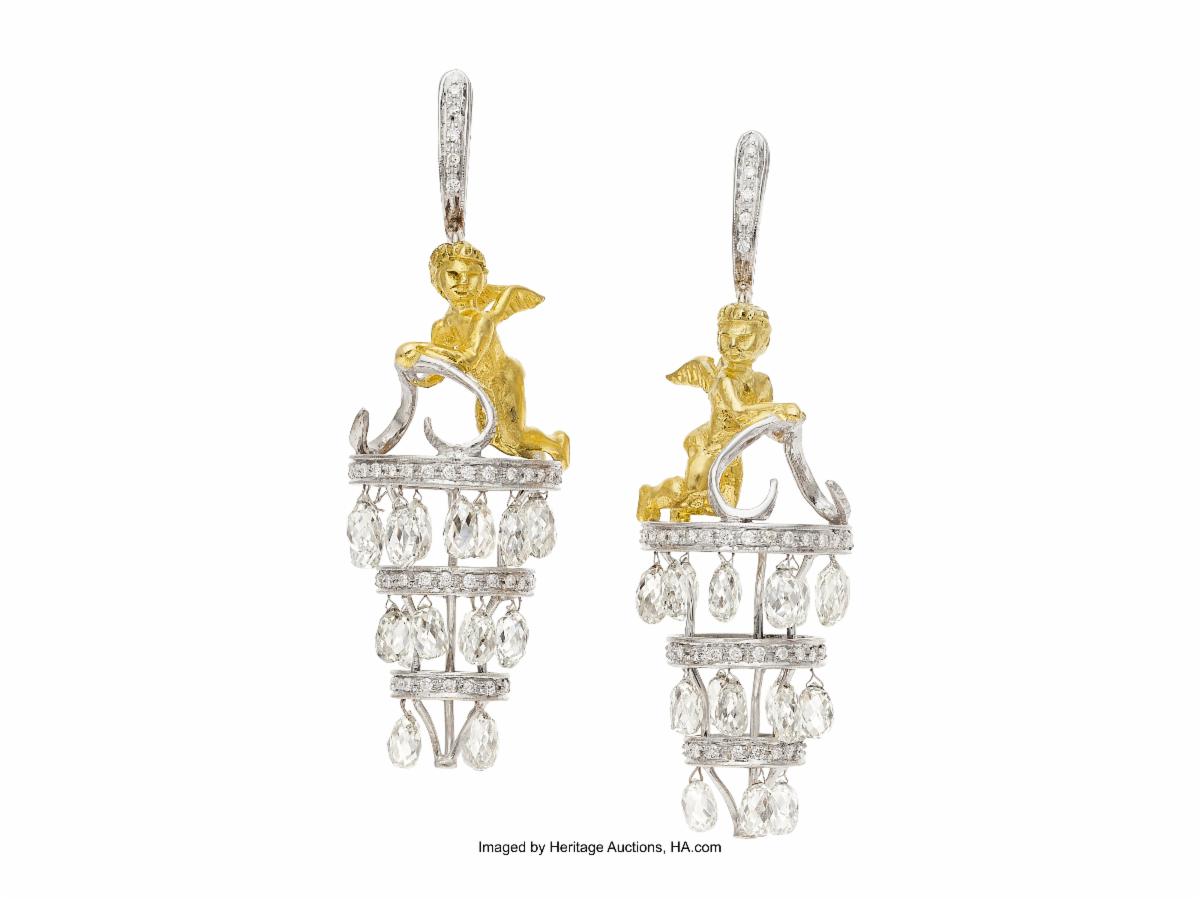
Heritage Auctions
a very quick peek
| | Internatinal Gemological Conference | |
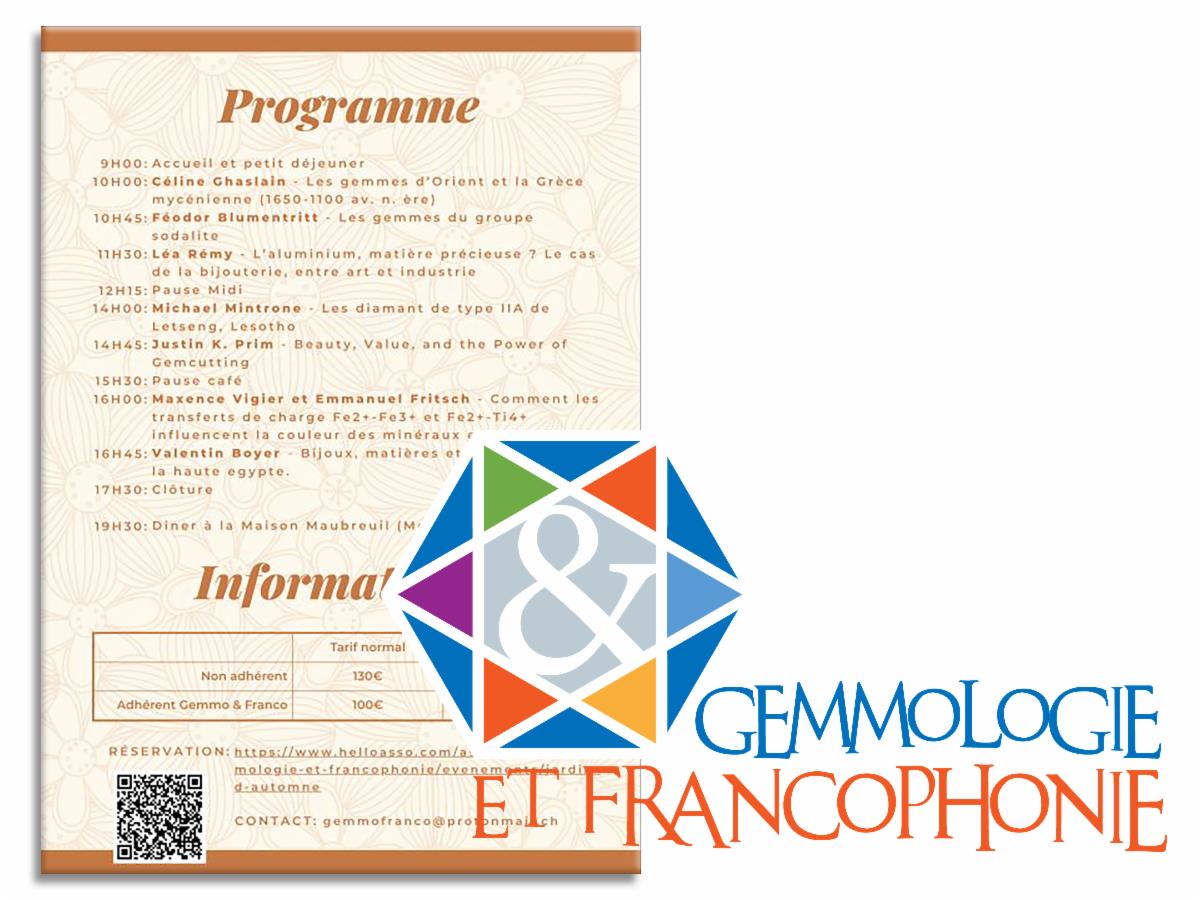
Jardin d’Automne: Gemmologie & Francophonie Announces November Conference in Nantes
| | |
Gary Roskin
Roskin Gem News Report
Gemology, diamonds, ancient jewelry, color science and the art of gem cutting come together November 20 at Nantes Université.
Gemmologie & Francophonie will hold its first full day conference, Jardin d’Automne, hosted at the Laboratoire de Planétologie et Géodynamique in Nantes, France.
The theme for the day is “Matière” — Matter — bringing together speakers from several disciplines to look at gems and jewelry from very different perspectives: laboratory gemology, mineralogy and color science, archaeology and jewelry history, materials, and the techniques and history of gem cutting.
◈
Gemmologie & Francophonie is a relatively young association created to bring together gemologists, researchers, students and enthusiasts throughout the French-speaking gemological community. The association also publishes Gemmes, its French-language gemological journal, with Issue No. 8 scheduled for publication in September.
| |
United States Patent Office
Process for the Manufacture of Artificial Pearls
| | |
Gary Roskin
Roskin Gem News Report
◈
We continue with our ongoing series of gem-related patents dating back more than a century, uncovered and shared by William “Bill” D. Hoefer Jr., GG (GIA), FGA — educator, expert in appraisal law, and host of the website Appraising Demystified.
This is patent number three in that series.
◈
You may think you know this story, but do you?
Let us lure you into a little fish story... about the creation of artificial pearls... in France.
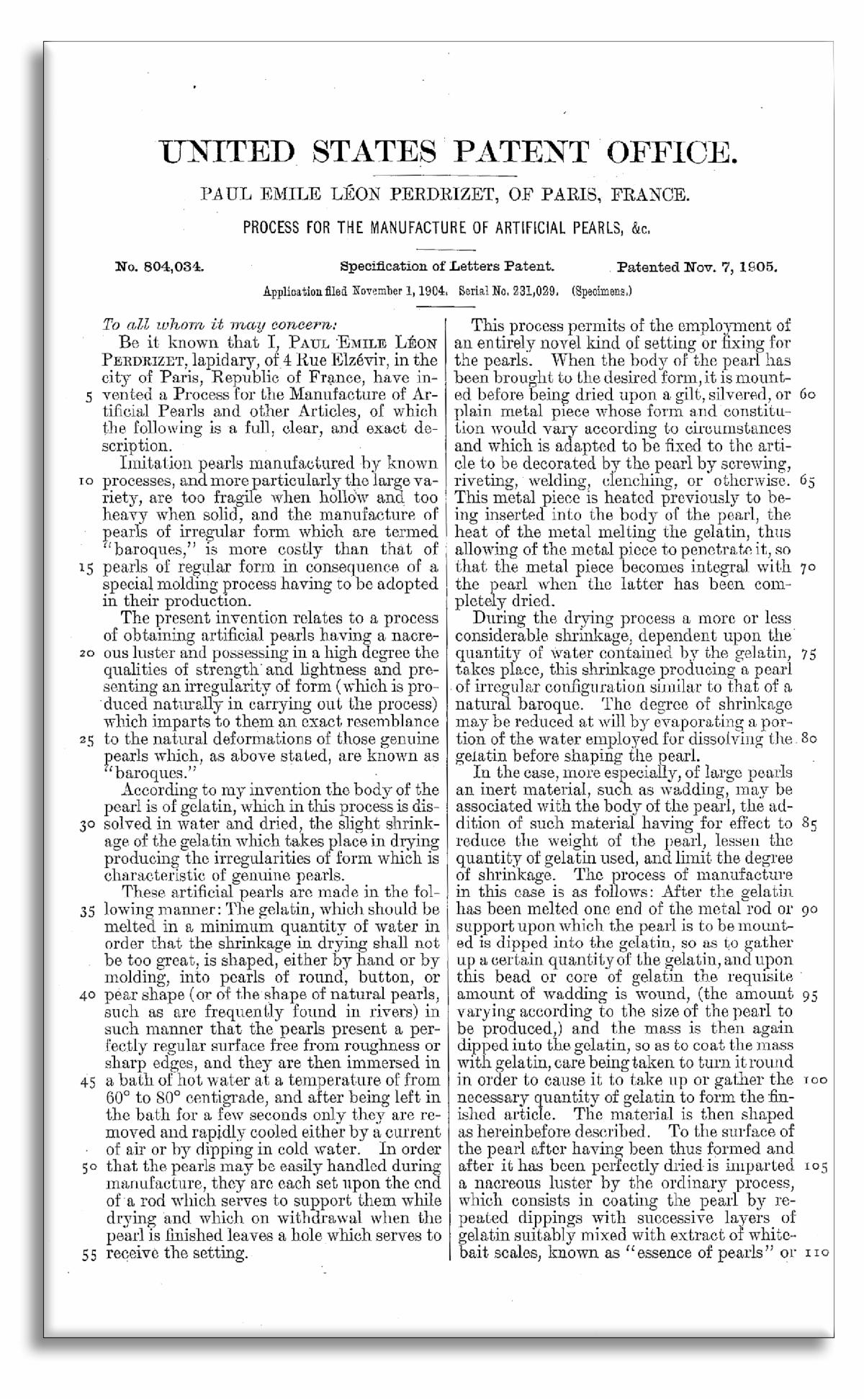
It was 1905, and French lapidary Paul Emile Léon Perdrizet of Paris received U.S. Patent No. 804,034 for a “Process for the Manufacture of Artificial Pearls.”
His idea was rather clever.
The body of the artificial pearl was made principally from gelatin. As the gelatin dried, it shrank — producing the irregular shape Perdrizet wanted to imitate a natural baroque pearl. (That's the clever part.)
But that's only half the story.
Making something shaped like a pearl and making it look like a pearl required a little something special.
That something special came from "whitebait."
Perdrizet instructed manufacturers to give the dried gelatin pearl its nacreous luster using repeated coatings containing an extract of whitebait scales, known as “essence of pearls” or “Orient.”
Yes. You guessed it - fish scales. (Wait - that's not the whole story. Read on...)
◈
Those of you familiar with Majorica — or Mallorca — imitation pearls may already be thinking, “Fish scales? Of course.”
For a little time scale (pun intended), Majorica traces its pearl-making history back to 1890, when German engineer Eduard Hugo Heusch began developing artificial pearls in Paris before moving the operation to Manacor, Mallorca.
Majorica still describes its pearlescent coating as containing material derived in part from fish scales.
But Heusch wasn't the first to go fishing for that pearly effect.
The use of fish scales to give glass beads a pearl-like iridescence can be traced in France back to the 17th century.
Which means, by 1890, and especially 1905, there were apparently plenty of people fishing in these waters. (Sorry.)
◈
Perdrizet wasn't exactly casting into uncharted waters. In fact, his patent described applying this nacreous coating as the “ordinary process.” He knew.
By then, the pearlescent material had long been known in France as essence d’Orient.
Still on the Line?
We could dive much deeper into essence d’Orient, but instead we're going to reel ourselves in and turn you over to the French — Gemmologie & Francophonie.
French gemologists Jean-Pierre Gauthier and Martial Bonnet have documented the history of essence d’Orient and the modern revival of traditional pearl making at Saint-Gingolph in their 2024 article, “Les Perles de Saint-Gingolph,” published in GEMMES magazine.
Their story takes you from fish scales to pearls — and considerably farther into the subject than we're going to venture here.
Tap here to read the 1905 Perdrizet U.S. patent!
Tap here to dive into “Les Perles de Saint-Gingolph”
— Gauthier & Bonnet, GEMMES, 2024!
| |
Manuel Marcial de Gomar
How One Gem Defined a Life
| | |
Gary Roskin
Roskin Gem News Report
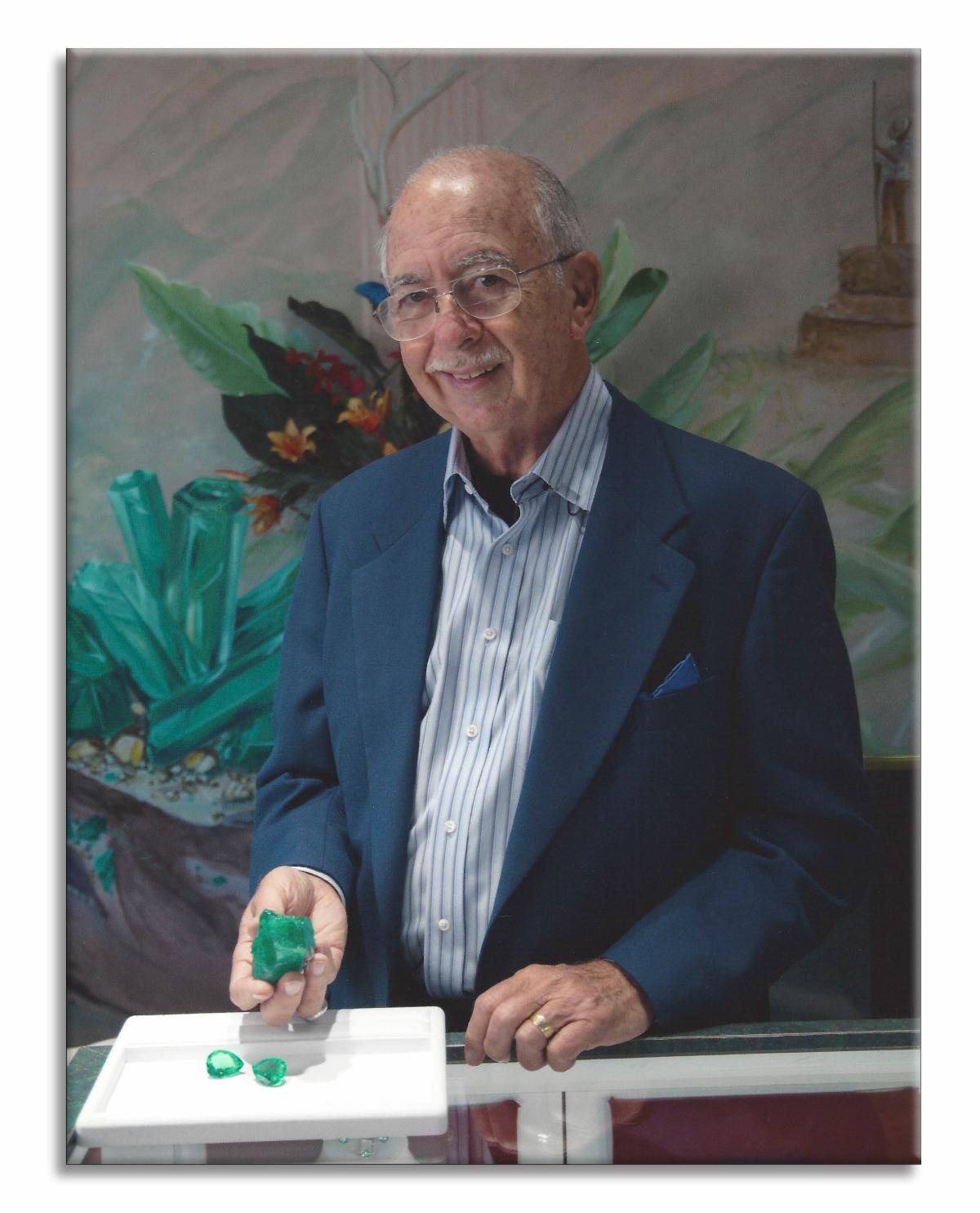
The emerald community lost one of its longtime ambassadors on July 23 with the passing of Manuel Marcial de Gomar at the age of 90.
For more than 70 years, emeralds were the constant in Manuel's career.
And remarkably, it all began with a chance encounter.
In 1955, 19-year-old Manuel was on a flight to Colombia when he happened to sit next to a mining executive headed to the famed Chivor emerald mine. The executive didn't speak Spanish.
Manuel did.
By the time the flight was over, Manuel had a job as an interpreter.
That conversation would lead to years of exploring Colombia's emerald country and a career that eventually included Emeralds International in Key West, appraising the emeralds recovered from Mel Fisher's Nuestra Señora de Atocha, lecturing and teaching, assembling the Marcial de Gomar Collection, and the discovery of an exceptionally rare 25.86-carat star emerald later documented by GIA.
His career also included one extraordinarily difficult chapter—a criminal prosecution arising from the sale of an emerald ring and subsequent appraisals. I reported on the trial for JCK in 2001. Manuel was acquitted after just 35 minutes of jury deliberation, but the case came at an enormous personal and financial cost.
There is a lot to Manuel Marcial de Gomar's story.
And to think, it all started because a 19-year-old happened to sit in the right seat on the right plane.
Tap here to read: Manuel Marcial de Gomar
— How One Gem Defined a Life.
| | |
Upcoming Trade Shows & Events
| | |
AUGUST
The International Jewellery & Watch Fairs
Sydney, Australia
– August 22-24, 2026
Japan Jewellery Fair – Informa Markets
Tokyo, Japan
– August 26-28, 2026
SEPTEMBER
The Jewellery Show
Olympia, London, UK
– September 2-3, 2026
VicenzaOro
Vicenza, Italy
– September 4-8, 2026
66th NAJA ACE©it
Mid Year Virtual Education Conference
September 5 – 6, 2026
Bangkok Gems & Jewelry Fair
Queen Sirikit National Convention Center, Bangkok, Thailand
74th Edition – Bangkok, Thailand
– September 8-12, 2026
HardRock Summit
Westminster, Colorado, USA
– September 10-13, 2026 (inside)
– September 10-18, 2026 (outside)
Jewellery & Gem World Hong Kong – Informa Markets
Hong Kong, China
NEW DATES
– September 14-18, 2026 AWE
– September 16-20, 2026 HKCEC
September 14-17, 2026
Omni Orlando Resort at ChampionsGate
Orlando, Florida, USA
Madridjoya
Madrid, Spain
– September 24-27, 2026
InStore – Chicago
Chicago (Rosemont), Illinois, USA
– September 27-28, 2026
Tap here for the full year global trade show calendar
| | |
◈
TOP NEWSLETTER FEATURES
FROM OUR LAST REPORT
◈
| |
#1.) The Thieves Are Talking,
but the Crown Jewels Are Still Missing
Louvre Heist Update
Gary Roskin
Roskin Gem News Report
Nine months after the brazen October 2025 robbery at the Louvre, two of the accused thieves have finally begun talking.
According to the French newspaper Le Monde (subscription required), the suspects have described how the robbery was planned, admitted that one of them knew the target was the Louvre, and even claimed the alleged mastermind complained they "could have taken more."
What they still won't reveal is what happened to France's stolen Crown Jewels after they were handed over in an underground parking garage.
Meanwhile, the Louvre has reopened the Galerie d'Apollon—but without the Crown Jewels. Reuters reports the display cases are gone, and the jewels will eventually be exhibited in a new, more secure gallery.
There is one bright spot.
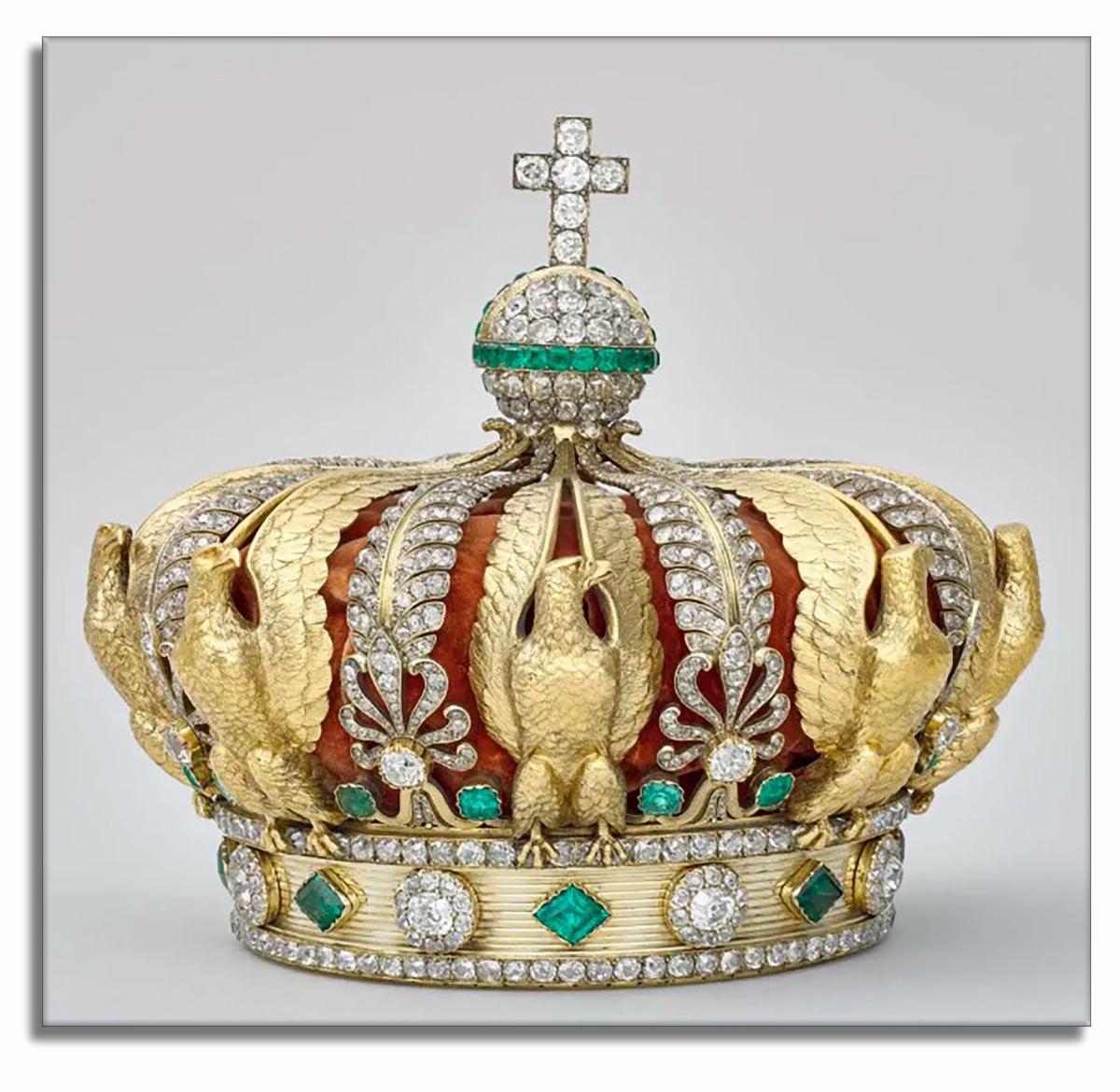
Empress Eugénie's crown, recovered after being damaged - and dropped in the middle of the street - during the escape, retained all 56 of its emeralds. Only about ten of its 1,354 diamonds are missing, allowing conservators to restore the historic crown rather than reconstruct it.
Tap here for the latest investigation, remarkable restoration details, and what French investigators still don't know.
| |
#2.) Van Cleef & Arpels Revisits Egyptian Revival at Vienna's MAK Museum
June 10 - September 27, 2026
... and in its New High Jewelry Collection
"Fascinating Egypt"
Gary Roskin
Roskin Gem News Report
When most people think "High Jewelry," they imagine flawless diamonds, Kashmir sapphires, Burmese rubies, or Colombian emeralds.
Van Cleef & Arpels has something else in mind.
Lapis lazuli.
Turquoise.
Coral.
Black onyx.
Malachite. Chrysoprase.
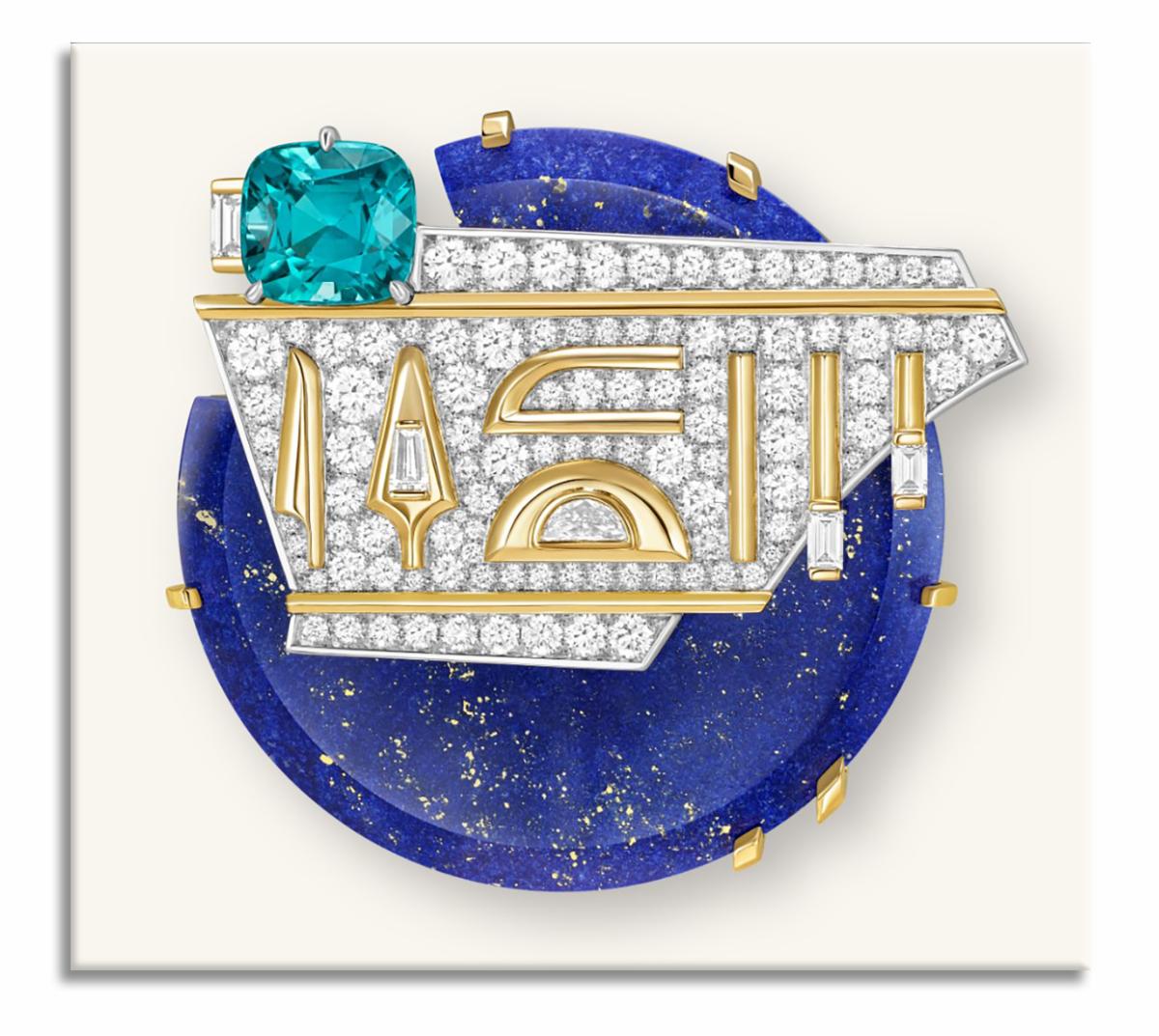
Those are hardly the gem materials one would expect to headline a High Jewelry collection. Yet in Van Cleef & Arpels' newest Fascinating Egypt collection, they become hieroglyphs, winged scarabs, temple columns, Egyptian goddesses, and some of the most imaginative jewels the maison has produced in years.
This summer, Van Cleef & Arpels is exploring more than a century of Egyptian-inspired design in two complementary presentations: Fascinating Egypt, its new High Jewelry collection in Paris, and a remarkable exhibition at Vienna's MAK Museum featuring more than 300 historic Van Cleef & Arpels creations—many reacquired over the years and rarely seen by the public.
Together, they demonstrate a lesson every gemologist understands: exceptional jewelry isn't defined solely by rare and expensive gem materials.
Imagination, design, lapidary skill, craftsmanship, and expert setting can transform familiar ornamental gem materials into unforgettable masterpieces.
Take a tour through more than a century of
Van Cleef & Arpels' Egyptian-inspired design.
| | |
#3.) GemGuide Updates Old European Diamond Prices
Price adjustments reflect a maturing specialty market
Gary Roskin
Roskin Gem News Report
GemGuide has updated its Old European-cut diamond pricing charts, lowering values across all size categories.
◈
For a period of time, exceptionally strong demand pushed Old European-cut diamonds (OECs) to very high premiums.
Today however, while demand remains healthy, those premiums have eased from their peak.
◈
At first glance, lower prices might suggest demand for OECs has softened.
Not so, according to Gemworld International President Stuart Robertson.
In an interview with the Roskin Gem News Report, Robertson explains that the extraordinary premiums seen over the past several years have eased back to more sustainable levels—not because the market has weakened, but because it has matured.
Not All Old Europeans Are Old
Authentic Old European-cut diamonds continue to trade in a specialty market where rarity, authenticity, and historical significance are major drivers of value.
This feature story also explores why authentic period stones command premiums over modern Old European-cuts, and why GemGuide continues to exclude Old Mine-cut diamonds from its pricing guide.
As Robertson explains, "The days of automatically discounting Old Europeans against modern round brilliants are long gone."
Tap here to read Robertson's insights into one of the diamond market's most specialized categories - Old European Cuts.
| | |
Mayer & Watt
Bear Essentials
The Arkenstone
Lotus Gemology
Michael Goldstein
Heritage Auctions
Gemworld International
Sparkles and Colors USA
Australian Opal Exhibition
The American Gem Society
American Society of Appraisers
GIA - Gemological Institute of America
CGA - Canadian Gemmological Association
AGTA - the American Gem Trade Association
GAA - Gemmological Association of Australia
AGA - the Accredited Gemologists Association
Gem-A - Gemmological Association of Great Britain
NAJA - the National Association of Jewelry Appraisers
| | |
What do we have for you this week?
Well, we've been busy!
First, we really want you to tap into any of the feature stories here today as our magazine has had a major design upgrade! We hope you like it!
Now, on to this week....
Watches are getting Stone-Faced. Natural stone and gemstone watch dials are back in a big way — but making a wafer-thin dial out of a rock isn't quite as simple as it looks.
Before platinum and white gold, there was silver. We head to Pforzheim's Jewellery Museum for Cool Brilliance and a look at the historic relationship between diamonds and silver.
This is truly worth the read: Is diamond clarity grading really subjective? Michael Cowing says there's a lot more math going on than you might think — and he's written the book on it. (AND IT WORKS!)
Sammantha MacLachlan takes us inside another gemstone. Her latest photomicrograph reminds us that sometimes the most interesting gem scenes are the ones you can't see without a microscope.
Rubies and opals on Mars? Well... not exactly. But NASA's Perseverance rover has found corundum, chromium, opal-A and some intriguing glassy material. We take a gemologist's look at what scientists have actually found on the Red Planet.
Then we head north to Canada.
What happened to Canada's diamond mines? Jon Phillips walks us through the extraordinary rise — and increasingly difficult economics — of Canadian diamond mining.
Then we are off to Portugal - Royal Treasures in Lisbon. An international colloquium at Portugal's Royal Treasure Museum will bring together researchers and specialists to discuss royal jewelry, gemstones, collections and their history.
Heading to AGS Conclave? We are!
We picked out the gem-related sessions — and there are quite a few worth putting on your schedule.
Back to Europe! And another gemological gathering, this time in France. Gemmologie & Francophonie heads to Nantes Université for Jardin d'Automne, bringing together gemology, mineralogy, archaeology, color science and gem cutting.
And finally, we remember Manuel Marcial de Gomar — a man whose life became inseparable from the emeralds of Colombia.
That's what we have for you this week.
There's a LOT to read.
...and More
of course. 😁
◈
ENJOY!
If there is anything you want us to cover, let us know!
Our email address is Gary@RoskinGemNews.com
- or you can text us at +1-610-269-0121 (good for WhatsApp too!)
That's all for now from here!
Keep in touch. We’d love to hear where you’ve been and what gems you’ve discovered!
As always, we will continue to post features on the website, so feel free to log on to the Roskin Gem News Magazine any time:
www.RoskinGemNewsReport.com
| | |
Want to contribute?
If you would like to contribute, or you have read something somewhere that you feel would be perfect to share with the community, then please feel free to contact me directly at Gary@RoskinGemNews.com
I will see you again SOON!
Stay safe and stay healthy!
Gary Roskin
| | |
The Roskin Gem News Report, Newsletter and online Magazine, is your one-stop destination for all current global gem news.
You are receiving this newsletter because you were most likely already on our subscribers list or we picked up your business card somewhere along the way. We would love for you to remain a subscriber. To do so, please tap the subscribe button and complete the form.
If you wish to be removed from our mailing list, please tap the unsubscribe line below and complete the form.
If you feel your membership association, club, or school would find value in this free report, please let us know. Contact information is provided below.
| | |
Roskin Gem News
www.RoskinGemNewsReport.com
+1(610) 269-0121 text/call/WhatsApp
| The creation of this newsletter is the work of Gary A. Roskin Ltd, dba Roskin Gemological Services. If you should have any comments or suggestions regarding the contents of this newsletter, please do not hesitate to contact us at Gary@RoskinGemNews.com | |
|
Hardcopy mail correspondence:
Roskin Gem News
256 Eagleview Blvd., suite 357
Exton, PA 19341 USA
Copyright 2026
| | | | |