"Without courage we cannot practice any other virtue with consistency. We can't be kind, true, merciful, generous, or honest."
- Maya Angelou
"The chief task in life is simply this: to identify and separate matters so that I can say clearly to myself which are externals not under my control, and which have to do with the choices I actually control. Where then do I look for good and evil? Not to uncontrollable externals, but within myself to the choices that are my own"
- Epictetus
"And a commitment to justice in your own acts. Which means: thought and action resulting in the common good. What you were born to do."
- Marcus Aurelius
The B-52 is truly one of those things about which we can say, "they don't make them like the used to." (along with the DC-3 and the C-130).
Excerpts:
The Air Force wants the new motors to improve the B-52's fuel-efficiency by at least 20 percent while maintaining its ceiling and take-off performance. A B-52 with TF-33s can carry 35 tons of bombs and missiles as far as 4,500 miles without aerial refueling at a top speed of 650 miles per hour.
...
Don't laugh. Few plane designs aside from the DC-3 and the C-130 are likely to fly for more than 100 years. But the B-52 very well could join that exclusive club. After all, the bomber's actual components aren't actually that old.
Ask yourself what limits the service life of a warplane. To keep flying, a plane must be safe, economical and useful. The B-52 has met all three criteria since the 1950s. There's no reason to doubt it will continue to meet them in 2050 or later.
...
The most fragile element of a B-52 is the skin of its upper wing. Boeing replaced that skin in the late 1970s.
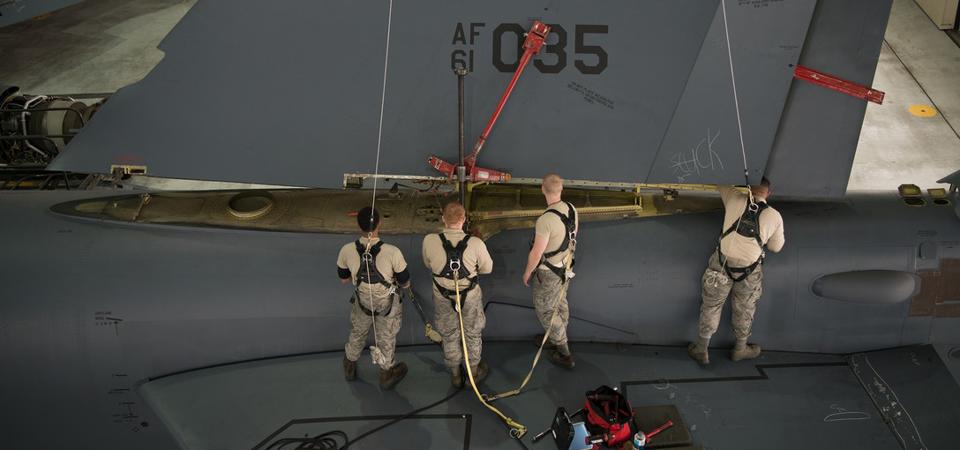
Every four years, a B-52 spends a few months at Tinker Air Force Base in Oklahoma, where workers strip off the plane's paint, remove panels and inspect every component, repairing or replacing the broken ones.
That's been going on for decades. ''I would be surprised if there's an original rivet in any of those airplanes we have out on the ramp," Col. Robert Durkin, commander of the 28th Bombardment Wing-a B-52 unit in South Dakota-told a reporter in 1983. "It's been re-winged. It's been re-skinned. It's been re-tailed. It's not an unsafe airplane.''
The B-52 is economical. It costs around $70,000 to fly a B-52 for one hour. That's roughly the same as what a B-1 costs for an hour of flight, and
half what a B-2 costs. And the B-52's per-hour cost eventually could drop owing to the greater fuel-efficiency of the new motors.
Stop Calling The B-52 Bomber 'Old' - It's More Youthful Than A B-2 Stealth Bomber
... [+]
U.S. Air Force photo by Staff Sgt. Philip Bryant
The U.S. Air Force
has asked industry to pitch a new engines for the service's 76 B-52 bombers. With new motors, the B-52s could keep flying into the 2050s.
Or longer. The youngest B-52 rolled off Boeing's Wichita production line in 1962. But it's not fair to call the B-52 a 59-year-old airplane. Very little of any B-52 actually dates to the 1960s. In many ways, a B-52 is "younger" than airplanes from the 1980s and '90s.
It's not for no reason that, in 2018, the Air Force
announced it would retire its 62 '80s-vintage B-1Bs bombers and 20 newer B-2 stealth bombers by the 2030s, while retaining the the updated B-52s alongside a fleet of at least 100 new B-21 stealth bombers.
After decades of dithering, the Air Force on May 19 issued a request for proposals as part of the Commercial Engine Replacement Program. Responses are due in July ahead of a mid-2021 contract award.
General Electric
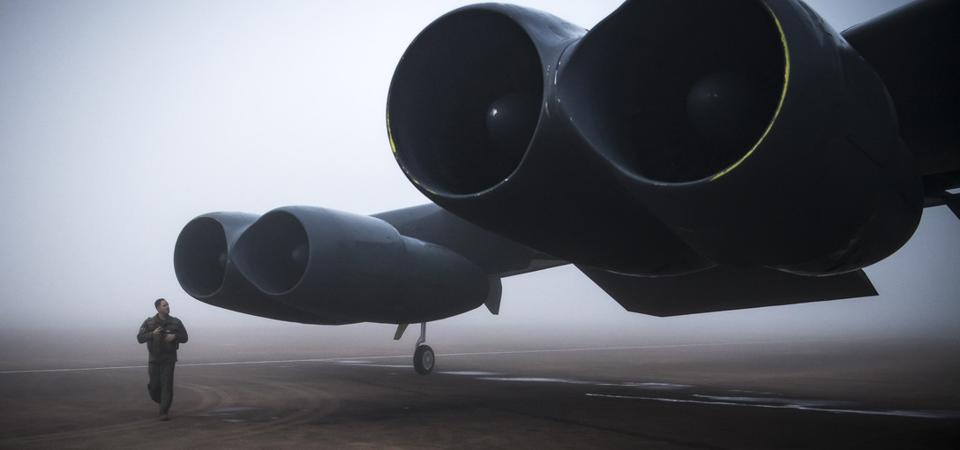
GE, Pratt & Whitney and Rolls-Royce all plan to compete for the effort, which combined with other upgrades could cost U.S. taxpayers more than $20 billion. The winner will have to build 608 engines that fit the cowlings for the B-52's current Pratt & Whitney TF-33s.
The Air Force wants the new motors to improve the B-52's fuel-efficiency by at least 20 percent while maintaining its ceiling and take-off performance. A B-52 with TF-33s can carry 35 tons of bombs and missiles as far as 4,500 miles without aerial refueling at a top speed of 650 miles per hour.
A modern turbofan such as General Electric's CF34-10 or Passport, Pratt & Whitney's PW800 or Rolls-Royce's F130 can operate for 30,000 hours or more between overhaul. The B-52 have racked up around 20,000 flight hours apiece over their nearly 60 years of service. Assuming the Air Force installs the B-52's new engines in the late 2020s, the service might not need to remove them until, oh, 2090 or so.
Don't laugh. Few plane designs aside from the DC-3 and the C-130 are likely to fly for more than 100 years. But the B-52 very well could join that exclusive club. After all, the bomber's actual components aren't actually that old.
Ask yourself what limits the service life of a warplane. To keep flying, a plane must be safe, economical and useful. The B-52 has met all three criteria since the 1950s. There's no reason to doubt it will continue to meet them in 2050 or later.
... [+]
U.S. Air Force photo by Airman Jesse Jenny
The B-52 is safe. Built tough by Boeing, the B-52 "has good bones," Gen. Robin Rand, then head of Air Force Global Strike Command,
toldAir Force Magazine prior to his 2018 retirement.
The most fragile element of a B-52 is the skin of its upper wing. Boeing replaced that skin in the late 1970s.
Every four years, a B-52 spends a few months at Tinker Air Force Base in Oklahoma, where workers strip off the plane's paint, remove panels and inspect every component, repairing or replacing the broken ones.
That's been going on for decades. ''I would be surprised if there's an original rivet in any of those airplanes we have out on the ramp," Col. Robert Durkin, commander of the 28th Bombardment Wing-a B-52 unit in South Dakota-
told a reporter in 1983. "It's been re-winged. It's been re-skinned. It's been re-tailed. It's not an unsafe airplane.''
The B-52 is economical. It costs around $70,000 to fly a B-52 for one hour. That's roughly the same as what a B-1 costs for an hour of flight, and
half what a B-2 costs. And the B-52's per-hour cost eventually could drop owing to the greater fuel-efficiency of the new motors.
... [+]
U.S. Air Force photo by Airman 1st Class Duncan C. Bevan
The same simplicity that makes the B-52 so cheap to operate also makes it
more reliable than other bomber types are. The B-52 fleet in 2019 boasted a mission-capable rate of 66 percent. The B-2's rate was 61 percent. The B-1's-an embarrassing 46 percent.
The B-52 is useful. It might not be fast like the B-1 is or stealthy like the B-2 is, but it doesn't need to be. For high-intensity warfare-nuclear or conventional-the B-52 is a missile-truck. A wide range of new long-range missiles are in development to allow the B-52 to strike targets from hundreds or even thousands of miles away.
The Long-Range Stand-Off nuclear cruise missile. The Long-Range Anti-Ship Missile. The hypersonic Air-Launched Rapid-Response Weapon.
And to make it a better missile-truck, the Air Force is spending billions of dollars upgrading the B-52's radios, wiring and sensors.
Arguably the most important of these upgrades is a new radar. The Air Force in 2019 tapped Raytheon to install a new electronically-scanned array radar on the B-52 starting in 2024. "The advanced radar upgrade will ensure the aircraft remains mission-ready through 2050 and beyond," Raytheon
stated.
If a bomber's rivets, skin, engines, wiring, sensors and weapons are new, is the bomber actually old-even if its born-on date is 1962?
FDD is a Washington-based nonpartisan research institute focusing on national security and foreign policy.
If you do not read anything else in the 2017 National Security Strategy read this on page 14:
"A democracy is only as resilient as its people. An informed and engaged citizenry is the fundamental requirement for a free and resilient nation. For generations, our society has protected free press, free speech, and free thought. Today, actors such as Russia are using information tools in an attempt to undermine the legitimacy of democracies. Adversaries target media, political processes, financial networks, and personal data. The American public and private sectors must recognize this and work together to defend our way of life. No external threat can be allowed to shake our shared commitment to our values, undermine our system of government, or divide our Nation."