Wednesday Weblog for June 4, 2025 | | |
It never ceases to amaze me: we all love ourselves more than other people, but care more about their opinions than our own.
-Marcus Aurelius
| | Leading Off: Something I Didn't Know | | |
The recent weblog regarding backing into parking spots generated some buzz, with an equal number of vocal responders on both sides of the fence.
A totally surprising take, one that I had never considered or thought about, came from another consultant I know, Tim Forrest, and it caused me to sit up and pay attention and perhaps reconsider my opinion and actions.
Moving forward, I might be more gracious to those who back in.
Here's Tim's response to the Weblog:
| |
Hi Ed,
I can understand folks disliking back-in parkers: it holds up traffic, looks selfish or they're showing off. Unfortunately, the parking driver might have lost a loved family member or pet in a rollover accident.
Are you aware of the 1000's of children that are killed or seriously injured in back-over incidents each year? Unfortunately, it's an even worse tragedy when you consider 70% of these are a parent or close relative behind the wheel.
If you've ever driven a commercial vehicle, backing into a spot is how you control the space in front of your vehicle for leaving. In the military, this is called "combat parking" or "reverse parking."
More on the safety for children at this link..
| | |
Reasons to dislike back-in parking:
Takes longer to complete the parking maneuver.
Disrupts the expected flow of traffic.
Breaks common parking norms/etiquette.
Seen as selfish (prioritizing driver's easy exit later).
Looks unnecessarily complex or like showing off.
Immediate annoyance feels more real than abstract safety risks.
People tend to downplay safety statistics or feel "it won't happen to me."
Regards,
Tim
| | Stopping, Dropping, and Rolling | | |
Talent comes without a guarantee.
Whether it is singing, dancing, writing, painting, speaking, building, listening, hitting a baseball, throwing a football, dribbling a basketball, leading, teaching, swimming, playing the guitar, weightlifting, or solving mathematical equations, talent does not guarantee success.
In my opinion, talent is way over-rated and quite frankly, not much good on its own. Those of us who are fans can rattle off the names of talented players who never succeeded, or talented musicians who were one or no-hit wonders. And of course, you’ve been around plenty of people in your life who maybe have more talent than you do, but they are less successful. How can that be?
| | |
I think we wish for the wrong thing when we wish for more talent. I wish I had more athletic talent and was more photogenic.
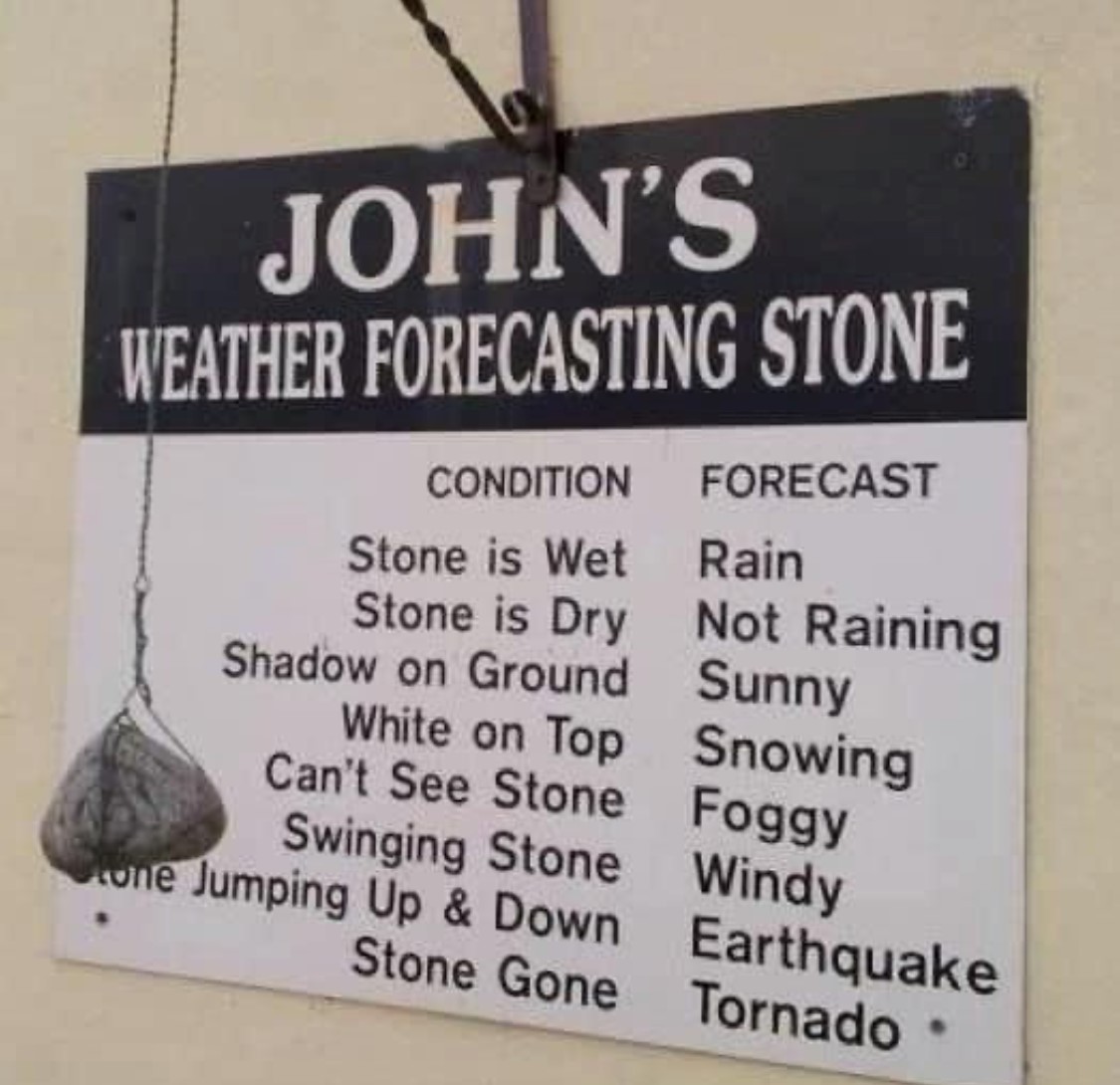
After all, my primary goal was to be a Catcher for the Boston Red Sox and my secondary career aspiration was to be a television weatherperson (where I could have a job and be wrong 75% of the time and still be employed) but not only didn’t I have enough ‘talent’ for those things, but I lacked a few other attributes as well.
When I was an aspiring marathon runner, it sure would have been good to have bigger lungs and stronger legs, but the reality is that I, and you, pretty much have the talent we were born with. Sure, we can acquire skills, I’m not downplaying the importance of learning and development to success: it is very important.
But you can’t teach height and you can’t teach speed, and you probably can’t teach good eyesight or hand-eye coordination.
If talent is something many of us wish for, my question is simply ‘why?’ Do we forget that people with talent don’t always succeed? Do we not remember that talent level and success level are not the same? Don’t we know that people with limited talent sometimes have unlimited success and people with unlimited talent have limited success?
| |
It is easy to forget that talent alone, is never enough.
So, if talent isn’t enough what determines whether or not talent makes an impact? What ignites talent to achieve success? What prevents talent from being successful?
Sometimes there are environmental or situational factors that affect the impact of talent. Snow on an important day can negatively impact talent, for a football player or a racehorse, for example. Your mentor or boss getting fired might also affect the impact of your talent in a given year. And although it is hard to believe when it happens to you, these situations are not the rule, they are the exception.
What really determines the impact of any talent is: prioritization or working on the first things first. The skill/ability/willingness to ‘self-direct’ is the most important factor in determining whether your talent will have the impact you want.
Work on the wrong things at the wrong time, and I don’t care if you have all the talent in the world, you will lose. Some people whine about spending time with their calendar or planning ahead or a million other things associated with prioritizing, but the reality is: if you are good at those things, your talent will flourish, and if you are not good at those things, your talent will remain a figment of your imagination because the outside world won’t recognize it.
At the beginning of this piece, athletes with talent who didn’t succeed were referenced, and if you have been in the business world, you know someone personally who ‘wasted all that talent’. It could have been a peer, a direct report, a co-worker, or a supervisor.
Show me that person and I will show you someone who was not good at self-directing, not good at priority setting and not good at time and task management. I didn’t invent the concept of prioritizing, but it invented effectiveness and efficiency, two of the greatest measurements of talent.
| |
Is there a simple way to improve prioritization and self-direction and in effect ‘unleash’ your talent? Absolutely. Remember that learning and development is actually learning and developing talents. If you are great with a bow and arrow as a kid and don’t pick one up for 25 years, you are not great anymore. Here are a few things I believe are necessary to maximize your talents: the gifts you were given.
| |
Work at it.
There is no substitute for hard work. If you rarely give thought to your priorities, if you occasionally plan next month or next year, if you ‘get to things’ when you get to them, you are wasting your talent.
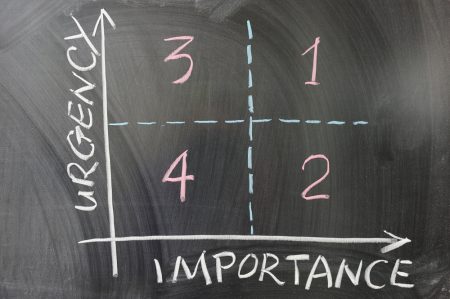
Spend more time planning and prioritizing. Nothing modifies, crystalizes or focuses priorities like spending time thinking about them. You can use Covey’s Matrix, that some attribute to President Eisenhower, that creates an Importance and Urgent grid, or another method, but there is no substitute for time spent evaluating priorities.
Not happy with your situation? Spend more time planning and deciding what to do next. Remember: spending more time figuring out ways to maximize your talent benefits you first.
Ask Someone.
Why is it so hard for most people to say ‘Is this the most important thing I should be doing?’ to their supervisor or a co-worker? Guess what? Everyone has the same question.
Most people really do ‘guess’ at what to do next or what is the most important. Sure, sometimes it is handed to you on a silver platter in the form of an order or a companywide mandate. But most of the time, we’re just guessing about how to use our time.
A great way to reduce the guesswork is to ask. The best person to ask is either the boss or a mentor. Most people who don’t ask the boss, don’t do so because they think it will be viewed as a sign of weakness i.e. “I should know.” Wrong answer.
The boss would rather have you ask than do it wrong. The boss would rather have you ask and work on the right thing, than not ask and work on the wrong thing.
Remember, it’s your talent, and getting inside information that saves wasted time benefits you first.
| |
Stop. Drop. Roll.
Remember elementary school when you thought the school was going to burn down any day because you were always having fire drills and learned to stop, drop, and roll? It is still good advice.
As an adult, ‘stop, drop, and roll’ means that when a career, project, department, team, or whatever is ‘on fire’ and not productive or impactful. Stop. Put out the ‘fire.' Drop everything until it is out. Then roll on when the fire is out. Nothing drains talent more than un-extinguished fires.
When you are forced to use your talent for firefighting, unless you are a fire-fighter, that talent is drained below the effectiveness line. Someone with talent, who is facing a situation that is on fire, has to focus on putting the fire out because it is always first things first, and until you get the fire out, you don’t have the time to make an impact on anything else.
Some make the mistake of simply reducing the blaze, thinking they will be dealing with a 'smaller' fire. Don’t. Put it out completely. If you cut it back, it is going to flame up again, maybe even higher, the next time you look. Stop. Drop. And Roll. Still good advice.
If you won a million dollars, there is no guarantee that you will invest it wisely and turn it into two million. Talent is the same. It comes without a guarantee.
Whether it is singing, dancing, writing, painting, speaking, building, listening, hitting a baseball, throwing a football, dribbling a basketball, leading, teaching, swimming, playing the guitar, weightlifting, or solving mathematical equations, talent does not guarantee success.
Prioritization and working on first things first, is the way to ensure your talent makes an impact. Every time.
| | Surprise Photo at the End: | | Joe's Positive Post of the Week | | Join the Smart Subscribers | | If you are reading this on a social media platform, click below and you'll automatically receive a 'different' story every week on Wednesday. | | |
The Roll Call of states and countries where readers reside: Arizona, California, Colorado, Connecticut, Delaware, Florida, Georgia, Hawaii, Illinois, Indiana, Iowa, Kansas, Kentucky, Louisiana, Maine, Massachusetts, Michigan, Mississippi, Missouri, Montana, New Hampshire, New Jersey, New Mexico, New York, North Carolina, North Dakota, Ohio, Pennsylvania, Puerto Rico, Rhode Island, South Carolina, South Dakota, Tennessee, Texas, Vermont, Virginia, Washington and Washington DC, Wisconsin plus Canada, Conch Republic, Australia and the United Kingdom.
| | Refer a friend to Sign Up for the Wednesday Weblog | | |
Ed Doherty
774-479-8831
www.ambroselanden.com
ed-doherty@outlook.com
Forgive any typos please.
| | | | | |