|
“You learn a lot as a nurse practitioner,” said Marie drolly—especially in the Sawtooth Valley in the 1970s, when she not only was treating broken bones and delivering babies but also pulling porcupine quills from dogs.
She drove a 1958 Army surplus ambulance across washboard mountain roads and a snowmobile across wind-whipped flats, responding to calls in blizzards and the middle of night, on the side of Highway 75 and on the rocky edges of the Salmon River. Someone had fallen down a ridge while hiking; someone had rolled their truck after drinking too much; someone had fallen in the river and had hypothermia. Marie responded.
She gave shots in a little office with orange Formica countertops and she delivered a baby in the back of a car near Galena Summit. She removed countless fish hooks from tender skin. She tended the bodies of those who did not survive a fall, a heart attack, an icy road. She had to have grit as well as knowledge to respond to the situation at hand.
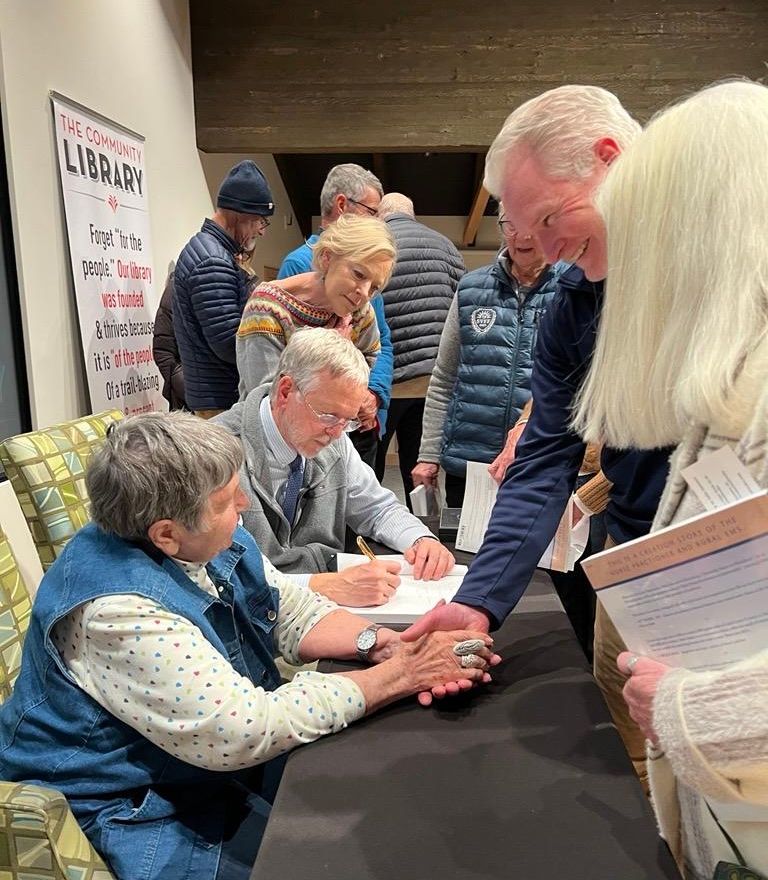
Marie Osborn was Idaho’s first nurse practitioner and the founder of the Salmon River Emergency Clinic in 1972. Fifty-three years later, at the age of 94, she sat on the stage in The Community Library’s Lecture Hall alongside her son, John, and Dr. Bryan Stone, who practiced medicine in the Wood River Valley and the Sawtooth Valley from 1974 to 1993. Between the two of them, Marie and Bryan, they sutured a lot of wounds, and they also patched together an increasingly professional medical response system for a rural, rugged stretch of the West.
On this Thursday evening in late October, they made a few more stitches together as they recalled decades of rescues and births and deaths. They know a Central Idaho landscape of accidents and injuries, healings and cures. Marie and Bryan talked about reaching out “over the hill” of Galena Summit to each other for counsel and assistance with tricky medical matters, and people in the audience shared their own stories of being treated by them, often in rough mountain situations.
The windows of the Lecture Hall turned dark as people kept talking, and everyone knew the temperature was dropping. But people lingered.
Stories, it seems, are sutures, too.
(You can view the program recording online and check out the book, Moving Mountains, at the Library.)
|